Tag: Grocery

  • RedMart Now: Shaking Up Singapore’s Grocery Scene with 30-Minute Deliveries

    RedMart Now: Shaking Up Singapore’s Grocery Scene with 30-Minute Deliveries

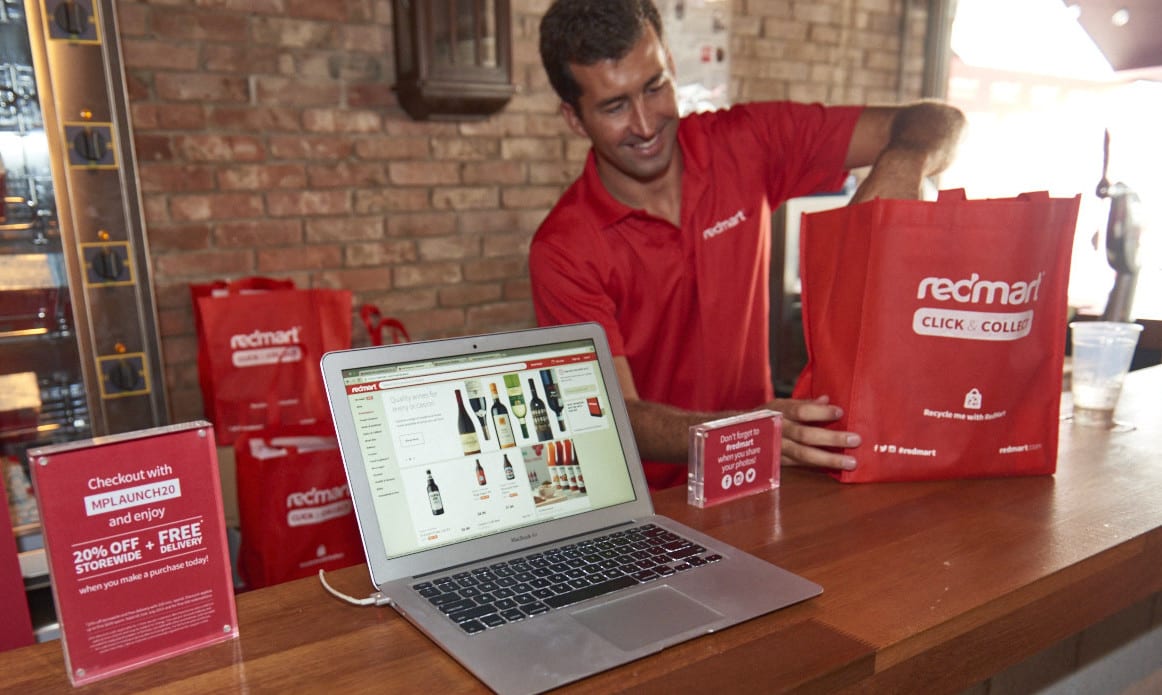
    Lazada’s RedMart has recently announced the launch of a new on-demand grocery delivery service in Singapore, RedMart Now, which guarantees to deliver orders within 30 minutes.

    Expanded Delivery Options

    The latest service supplements RedMart’s pre-existing same-day delivery offerings, including two-hour and six-hour delivery windows. RedMart Now will initially operate across selected southern and central neighborhoods such as Sentosa, Telok Blangah, Alexandra, Pasir Panjang, Clementi, Queenstown, Orchard, River Valley, Tanglin, and Bukit Timah. Plans are in place for a phased rollout across the rest of the island.

    Curated Product Range

    RedMart Now will feature a tailored selection of frequently used essentials such as fresh produce, snacks, beverages, festive goods, and household items. The delivery fee is set at S$3.99 for orders exceeding S$30.

    Martin Daney, SVP, Head of RedMart at Lazada, explained the rationale behind launching RedMart Now. He articulated that the aim of the service is to cater to urgent and unexpected shopping needs. He emphasized how the service was designed to allow customers to receive their needed items in as little as 30 minutes. The overall goal is to become the leading platform for both regular grocery shopping and urgent needs, thus allowing consumers to dedicate less time to running errands and more time to activities they enjoy.

    Entering the Quick Commerce Market

    The introduction of RedMart Now places the company in direct competition with other fast-delivery providers in Singapore’s dense and high-value grocery market. It also signifies a deeper penetration into the nation’s rapidly expanding quick commerce sector.

    Quick commerce presently constitutes about one-third of Singapore’s online grocery delivery revenue. Last year, according to Statista, the segment was projected to hit approximately US$371.75 million within a broader online grocery market estimated at US$1.04 billion.

    Questions & Answers

    What is RedMart Now?
    RedMart Now is a new on-demand grocery delivery service launched by Lazada-owned RedMart in Singapore, promising delivery within 30 minutes.

    Where will RedMart Now initially operate?
    RedMart Now will initially operate across selected southern and central neighborhoods in Singapore, with a phased rollout planned for the rest of the island.

    What does the launch of RedMart Now signify?
    The launch of RedMart Now signifies a deeper penetration into Singapore’s rapidly expanding quick commerce sector and places the company in direct competition with other fast-delivery providers in the country’s high-value grocery market.

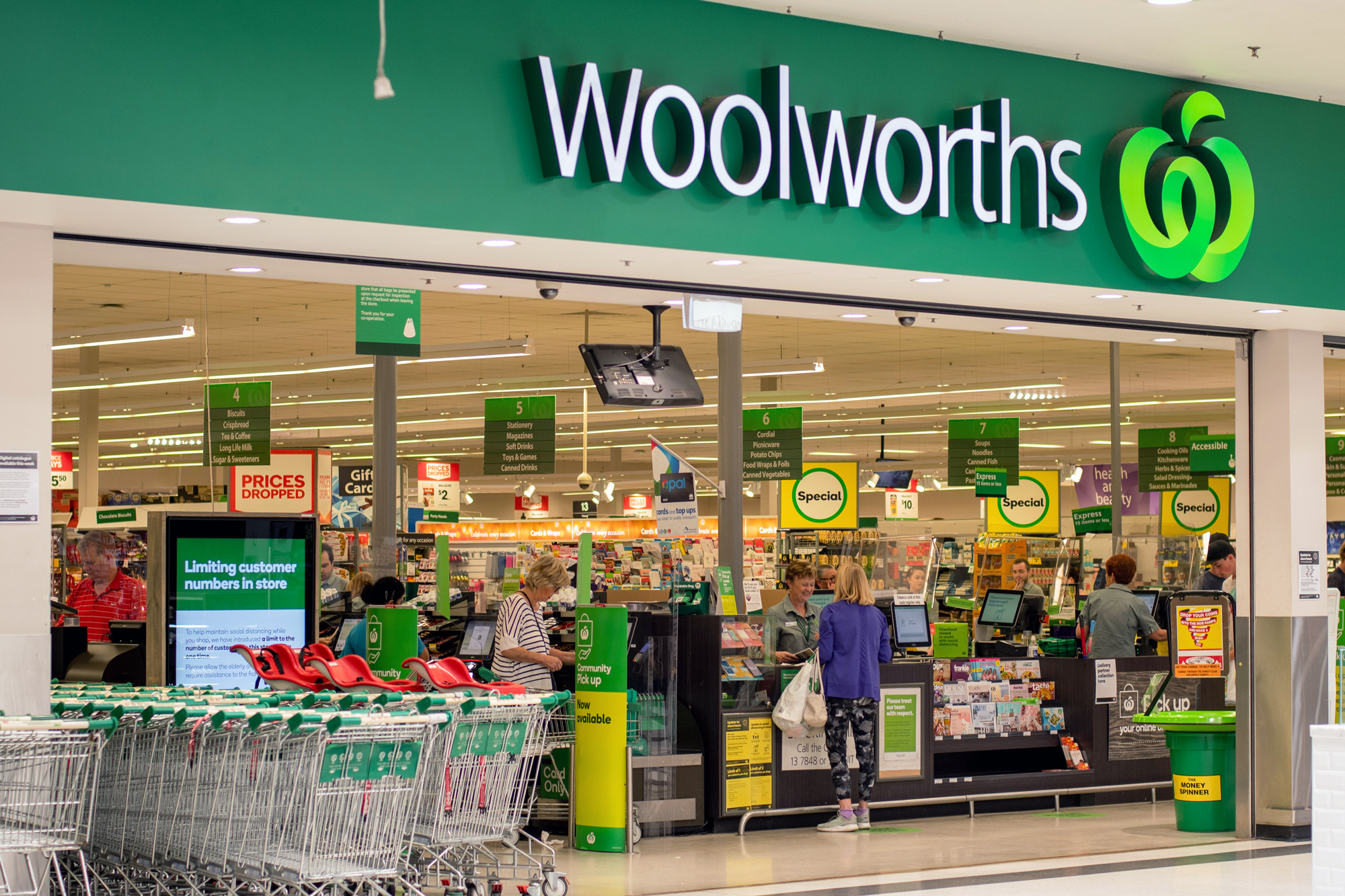
  • Woolworths Faces Potential New Zealand Regulatory Breach Amid Alleged Grocery Industry Competition Act Violations

    Woolworths Faces Potential New Zealand Regulatory Breach Amid Alleged Grocery Industry Competition Act Violations

    Woolworths, a prominent supermarket chain, has recently been cautioned about potentially violating the Grocery Industry Competition Act. This situation arose due to the delisting of certain products in its New Zealand branches.

    Grocery Industry Competition Act: Purpose and Management

    The Grocery Industry Competition Act is governed by the New Zealand Commerce Commission (NZCC). Its primary objective is to regulate the relationship between suppliers and supermarkets. By demanding greater transparency when products are delisted from store shelves, it seeks to protect the interests of smaller suppliers.

    The act, which was established in 2023, is expected to incorporate the Grocery Supply Code in May. Non-compliance with the code could lead to penalties, as per the statement from the commission.

    Investigation into Non-Compliance

    The NZCC has been scrutinizing the product-range review methods of leading supermarkets to ensure they are complying with the code.

    A spokesperson commented on the situation, saying, “Through this process, we identified and investigated situations where it appeared that Woolworths New Zealand might not be fulfilling its responsibilities.” Post investigation, Woolworths New Zealand was issued a warning for a probable breach of the Grocery Industry Competition Act. However, the spokesperson noted that only a court can establish whether an actual breach has occurred. Since the warning, Woolworths has amended its procedures to comply with the regulations.

    Impact on Groceries and Suppliers

    Alice Hume, the head of groceries at NZCC, stated that this action was taken in response to suppliers’ concerns. She highlighted the pressure on suppliers with the possibility of their products being delisted. This situation could further exacerbate the imbalance of power between major supermarkets and smaller suppliers.

    “The fear of losing market access can pressure suppliers into accepting unfavorable conditions and foster distrust towards supermarkets’ decision-making processes,” Hume explained. “The code is instrumental in equalizing the power dynamics between large supermarkets and smaller suppliers, so we treat compliance with the utmost seriousness.”

    Hume also mentioned that the NZCC continues to assess the product ranges available at supermarkets, inviting any worried suppliers to reach out to the commission.

    Questions & Answers

    What is the purpose of the Grocery Industry Competition Act?
    The Grocery Industry Competition Act is designed to govern the relationship between supermarkets and suppliers, with a demand for more transparency during product delisting to protect smaller suppliers.

    What are the consequences of breaching the Grocery Supply Code?
    Non-compliance with the Grocery Supply Code, which is part of the Grocery Industry Competition Act, can result in penalties.

    What are the concerns of the smaller suppliers?
    Smaller suppliers are concerned about potential product delisting, which could reinforce power imbalances with major supermarkets, pressurize them into accepting unfavorable conditions, and induce a lack of trust in supermarkets’ decision-making processes.

  • Inaba Breaks Into Australian Market With Innovative Cat Treat Range

    Inaba Breaks Into Australian Market With Innovative Cat Treat Range

    Inaba, a renowned Japanese pet food brand, has made its debut in the Australian market with the introduction of its Churu cat treat range.

    The Innovative Inaba Churu Treats

    Inaba Churu treats stand out due to their fresh chicken and seafood ingredients, absence of preservatives, and high moisture content. Their unique texture can be either soft or chewy, and they are also low in calories.

    According to Adam Heelis, Inaba Australia’s Country Manager, the cat treat industry has been lacking in novelty for a long time. The introduction of these innovative products is expected to stimulate the growth of the cat treat sector.

    Product Availability

    The Churu treat range, which includes Puree, Bites, Stew, and Sprinkles flavours, will be made available nationwide in Woolworths and Coles supermarkets from September. Customers will also be able to purchase these treats online.

    The Inaba Brand Legacy

    Inaba was established in 1989 and has its roots in the family tradition of Yoshizo Inaba, who was a seafood harvester. The brand has been selling its cat food lineup in the United States since 2016. In 2020, it introduced sustainable tuna for cats.

    Questions & Answers

    What makes Inaba Churu treats unique?
    The Churu treats are created with fresh chicken and seafood, have no preservatives, and are high in moisture. They can be either soft or chewy and are low in calories.

    Where can customers purchase Inaba Churu cat treats in Australia?
    The Churu cat treat range will be available at Woolworths and Coles supermarkets nationwide. They will also be available for online purchase.

    When did Inaba start selling its cat food lineup in the United States?
    The Inaba cat food lineup has been available in the United States since 2016.

  • Online Grocery Sales Bounce Back in June, Reigniting Momentum After May Dip

    Online Grocery Sales Bounce Back in June, Reigniting Momentum After May Dip

    As the retail landscape in Asia continues to evolve, the concept of omnichannel shopping is rapidly gaining traction, reshaping how consumers engage with brands. A recent study highlights the innovative strategies retailers are employing to create a seamless shopping experience that spans both online and physical storefronts.

    Transforming the Shopping Journey

    The survey, which surveyed over 5,000 consumers across major Asian markets, revealed that more than 70% of respondents prefer an omnichannel shopping approach. This affinity indicates a deep-rooted desire for flexibility, allowing shoppers to browse products online while still enjoying the tactile experience of in-store purchases. Retailers are transforming the shopping journey by integrating digital and physical channels, ensuring products are available wherever and whenever consumers wish to engage.

    Retailers like Japan’s Uniqlo and South Korea’s Shinsegae are setting the standard by leveraging technology to bridge the gap between online and offline experiences. Imagine walking into a store and finding items that have been filtered through your online wish list—an experience made possible through advanced inventory management systems that sync in real time.

    The Role of Technology

    Technology plays a pivotal role in this evolution. Retailers are increasingly adopting mobile apps and interactive kiosks to enhance shoppers’ decision-making processes. In addition, augmented reality is becoming a fun and compelling feature; consumers can now virtually try on clothing or visualize how furniture may look in their homes before making a purchase.

    This intersection of convenience and innovation also fosters a sense of community, encouraging brand loyalty in an age where consumer choices are plentiful. The ability to connect with brands through social media platforms, customer reviews, and personalized marketing further solidifies the relationship between retailers and consumers.

    Challenges Ahead

    However, the omnichannel strategy is not without its hurdles. Companies must navigate supply chain complexities and ensure an equitable distribution of resources to keep pace with consumer demand. Moreover, maintaining a consistent brand experience across channels is critical. Retailers who fail to deliver seamless integration risk alienating a savvy customer base that values cohesion and clarity.

    As brands venture deeper into the omnichannel realm, the industry’s dynamics are sure to transform further. A little sprinkle of creativity could turn even the most mundane shopping task into an unforgettable experience—and isn’t that what we’re all after?

    Questions & Answers

    What is the main finding of the recent study regarding omnichannel shopping in Asia?
    The study found that over 70% of consumers in major Asian markets prefer an omnichannel shopping approach, highlighting their desire for flexibility in how they engage with brands.

    How are retailers like Uniqlo and Shinsegae enhancing the omnichannel experience?
    These retailers are leveraging technology such as advanced inventory management systems and mobile apps, enabling a seamless experience where online wish lists translate directly to in-store offerings.

    What challenges do retailers face while implementing omnichannel strategies?
    Retailers must tackle supply chain complexities and ensure consistent brand experiences across channels to retain customer loyalty in an increasingly competitive market.

  • South Korean e-grocery startup Kurly scraps IPO plan

    South Korean e-grocery startup Kurly scraps IPO plan

    Kurly Corp. the operator of South Korean e-grocery platform Market Kurly, said Wednesday it will postpone the initial public offering (IPO) originally planned for early this year, due to harsh market conditions.

    “We decided to push back our planned IPO with the Korea Exchange (KRX), considering the contracting investor confidence amid global economic uncertainties,” the company said in a statement.

    “Kurly will resume our public listing at an optimal moment when the company can be fully valuated for its worth.”

    Kurly received preliminary approval for its public listing in August last year.

    The e-grocery giant originally sought to complete its public listing in the second half of 2022, but the review process had been delayed amid worries over its “unstable” ownership structure in which its founder has a small stake, along with continuing losses from its business.

    The company reportedly promised in its IPO plan that its financial holders will maintain their stakes in the company for a certain period after the KOSPI debut.

    Founded in December 2014, Kurly has appealed to customers by providing early morning deliveries of fresh food through its e-grocery platform, Market Kurly.

    The company has been expanding business to other areas, such as cosmetics, ahead of its market debut originally planned for last year.

    Following its decision, Kurly will have to undergo a preliminary review again should it hope to push ahead with the public listing again in the future.

    Various companies had withdrawn their IPO plans last year due to harsh market conditions.

    CJ Olive Young, South Korea’s largest health and beauty store operator, refinery Hyundai Oil Bank Co. and SK shieldus, a securities subsidiary of SK Group, also gave up their IPO plans in 2022.

  • The changing face of Australian grocery shoppers

    The changing face of Australian grocery shoppers

    The latest Focus Insights 2022 Grocery Shopper Report again highlights the need for suppliers and retailers alike to be mindful of changes in shopper behaviours and to focus on regularly reviewing these changes as a means of assessing where both innovation and product and promotional offers align with shopper trends and expectations.

    From a macro level, we see that the earlier trends in changes in shopper behaviour continue post the Covid period, and are in line with pre-Covid trends. From a top-line perspective, there has been a move back to the supermarket for fresh items, after increased support levels for independent operators such as butchers and greengrocers at the height of the pandemic.

    A key outtake from the table above highlights these continued trends and the need for focus of retailers to allocate the appropriate space, innovation, offers, freshness management and excitement to keep their shopper’s interest in these important categories and allow for a more complete shopper basket profile from these categories and centre of the store.

    From a supplier perspective, it also means focusing at a channel level to ensure the appropriate tailored solutions to enhance their role in each channel, allowing them to maximise their revenue and margins. In simple terms, suppliers need to focus on the key elements of ‘what is their role in the category’ and ‘what do they want to be famous for’ and activate those plans that deliver and enhance that profile.

    The Focus Insights 2022 Grocery Shopper Report also highlights trends among fruit and vegetable shoppers: this profile is important for both retailers and suppliers alike on how they maximise these changes in behaviour to innovate new product offerings that meet shopper expectations. There has been a move back towards more loose/single items after the increased demand for pre-packaged fruit and vegetables during the peak of the pandemic where more consumers demanded pre-packaging as a “protection” against other people touching/handling the product. There has also been a noticeable shift toward packaged/prepared meal size portions which supports the ongoing shopper trends for more meal kits and meal solutions.

    The current trend of plant-based purchasing by shoppers also continues with 39 per cent of Australian shoppers having purchased a plant-based meal product, up from 27 per cent last year. While this category continues to experience strong growth and interest, price (it is perceived as too expensive) is still the number one reason why people are not continuing to buy (or try) plant-based meat alternatives.

    With the constantly changing supermarket environment, it is imperative, that retailers and suppliers keep abreast of shopper behaviours and preferences and be open and agile in responding to the evolving and ever-changing behaviour of Australian grocery shoppers.

    To learn more, register for the Focus Insights 2022 Grocery Report webinar here.

  • Grocery chain Bach Hoa Xanh to profit in Q4

    Grocery chain Bach Hoa Xanh to profit in Q4

    Bach Hoa Xanh is set to become profitable in the last quarter this year after closing 400 ineffective outlets in the first seven months, Mobile World Chairman Nguyen Duc Tai has said.

    The bulk closure is part of the company’s plan to renovate the grocery chain and remove seven low-performing product categories, he told shareholders at a recent meeting, adding that the plan is nearly complete.

    “It is true that we closed hundreds of outlets. But what happened? Total revenue continued to rise.”

    There were 1,735 Bach Hoa Xanh outlets by the end of last month, with a monthly average revenue of VND1.3 billion recorded by each.

    The chain’s revenue has been rising monthly since March and hit VND2.35 trillion in July, accounting for 18.6 percent of Mobile World’s total.

    In the 2017-2020 period, Bach Hoa Xanh pursued to offer customers a better shopping experience than traditional markets, and there were times when it opened a new outlet every day with hundreds of employees recruited each month.

    But now Mobile World wants to transform the chain’s model from “modern market” to “mini supermarkets” as it seeks to make customers feel like they are shopping at big stores.

  • Ex Grab exec launches Philippine grocery-delivery startup Supah

    Ex Grab exec launches Philippine grocery-delivery startup Supah

    Social commerce startup SariSuki has introduced a new rapid grocery delivery service called Supah that delivers groceries across select parts of Metro Manila.

    During a media round table in Pasig City on Wednesday, SariSuki Co-Founder and Chief Executive Officer Brian P. Cu said that Supah offers a delivery service for grocery items such as snacks, condiments, beverages, fresh produce, and dry and frozen goods within 15 minutes.

    Supah’s delivery services are currently available in Makati City, Bonifacio Global City in Taguig, Pasig City, Mandaluyong City, San Juan City, Binondo district in City of Manila, and both New Manila and Timog areas of Quezon City.

    “Our business puts tremendous value on our customers’ time and needs. We see doing the grocery as effortless, time-saving and economical, while still making it possible to attend to other things. Thanks to our efficient ecosystem of suppliers, vendors and riders, we are able to fulfill this commitment without a delivery fee,” Mr. Cu said.

    Supah currently has eight “dark stores” where the goods are stored, and over 100 riders that cater close to 5 million people, and categorizes under quick commerce.

    Mr. Cu, a former president of Grab Philippines, said that Supah has been “quietly tested” since March over certain areas and has garnered a positive response, adding that the company raised around $11 million last year to fund the new venture.

    “When we first started it, no one thinks they need 15 groceries until they get groceries in 15 minutes, sometimes even a little bit less. The goal of Supah is [to] help reduce the time used up by today’s busy consumers in going to the supermarket, and in spending time away from the other activities that they can use with the time that they have,” Mr. Cu said.

    Lance Y. Gokongwei, JG Summit Holdings, Inc. president and chief executive, said that the company can help Supah by making products from its Universal Robina Corp. (URC) more accessible.

    JG Summit’s corporate venture capital, JG Digital Equity Ventures (JGDEV), is an investor in SariSuki. Mr. Gokongwei is also a board director of SariSuki.

    “I think my role really is to advise and provide some experience that I can share. As far as the JG Summit resource, of course, our ecosystem, we want to help as much as possible in terms of making products, for instance, from URC as accessible as possible to the company,” Mr. Gokongwei said.

    “Supah offers great potential as it tries to address the consumers’ evolving needs in grocery shopping by finding the optimal balance among several critical factors like speed, assortment, value, and convenience. This innovative technology will help shape the future of grocery shopping in the country,” he added.

    Moving forward, Mr. Cu said that the company seeks to expand, saying that 40 dark stores is enough to cover the entirety of Metro Manila.

    “We’re looking at expansion. But we want to prove (there’s) enough demand in the existing stores that we have now before we start investing in expansion,” Mr. Cu said.

    “To cover the entire Metro Manila in 15 minutes, we need to have 40 dark stores. But we’re not saying that we’re going to go to 40 next year,” he added.

  • Uber, BP partner in global grocery delivery partnership

    Uber, BP partner in global grocery delivery partnership

    Convenience giant bp is teaming with Uber Technologies on a new global strategic convenience delivery partnership, extending their existing local arrangements to reach more consumers across the world, the companies announced Tuesday. Together, bp and Uber Eats will offer an extensive range of quality convenience products, including fresh and prepared foods, from select retail locations in parts of the United States and globally.

    bp is the first convenience retailer to team up with Uber Eats on a global level and aims to have more than 3,000 retail locations available on the delivery platform over the next three years. The partnership supports bp’s goal of growing its access to customers and expanding its delivery footprint, in response to soaring demand for food, groceries, and everyday essentials brought to the door.

    The new partnership covers retail sites on the West Coast of the United States as well as Australia, New Zealand, Poland, and South Africa. Sites in the eastern United States and UK will be added to the app for the first time this year, with plans to launch in other European markets beginning in 2023.

    “We’re thrilled to team up with Uber Eats globally giving us the opportunity to reach many more consumers online in addition to those who currently visit our retail sites,” said Emma Delaney, executive vice president of customers & products for London-based bp. “We’ve seen how the pandemic has accelerated customer demand for delivered convenience and this partnership will allow us to scale up quickly on the Uber platform. And for the first time, we will be able to offer delivery options to existing customers on our own BPme app by the end of 2023.”

    With 20,500 bp retail sites across the world and 550 million customers living within 20 minutes of a bp retail site, bp and Uber see enormous opportunities for growth. bp sites offer a range of products tailored to local markets that include hot and cold drinks, prepared food options, grocery staples, fresh produce, as well as wine, beer, and flowers.

    As part of the agreement, Uber Eats and bp will work to introduce delivery options onto bp’s own app, BPme — initially planned to be available in the U.S., UK, and Australia by the end of 2023 — powered by Uber Direct. This new offer will allow bp to directly connect its customers to delivery riders, making Uber Eats the select partner in fulfilling these orders. Since 2019, bp has seen a three-fold increase in users of the BPme app, with 16 million active loyalty users worldwide.

    In the U.S., Uber Eats will be made available to bp’s network of independently owned retail locations with the goal of making it easy for these partners to sign up to the Uber Eats platform and access benefits based on bp’s scale.

    “With more than 20,500 locations around the world, bp’s reach is enormous — making them critical partners as we pursue our ambitions of helping consumers across the world get what they need delivered to their doorsteps,” said Pierre Dimitri Gore-Coty, Uber’s senior vice president of global delivery. “We are proud to support this next phase of the company’s convenience growth through this delivery partnership and look forward to deeper collaboration in the future.”

    bp and Uber already work together in mobility with bp providing electric vehicle charging for Uber’s ride-hail drivers. The companies will explore other areas for future cooperation in convenience, including opportunities to utilize low carbon delivery methods to fulfill orders from bp sites.

    The bp partnership falls in line with Uber Eats’ plans to add more grocery delivery options. Since launching grocery delivery in July 2020, Uber has seen consistent growth in the U.S. for the category. The San Francisco-based tech company partnered with Southeastern Grocers, operator of Winn-Dixie and Fresco y Más stores, in September 2020, and last summer expanded its home delivery reach with the addition of 1,200 Albertsons Cos. stores, began a pilot program with Costco in Texas, expanded on-demand delivery to pharmacy chains Walgreens and Rite Aid and partnered with the Smart & Final grocery warehouse chain in January of this year.

  • Uber, Carrefour Expand Partnership To Speed Up Deliveries In Paris

    Uber, Carrefour Expand Partnership To Speed Up Deliveries In Paris

    U.S.-based ride-hailing app owner Uber Technologies and Europe’s largest retailer Carrefour are to launch a new rapid grocery delivery service in Paris, extending their 18-month partnership, the two companies said on Tuesday.

    Carrefour Sprint will offer a 15-minute grocery delivery service to Parisians exclusively via the Uber Eats mobile app from nine “dark stores” – shops closed to customers where workers prepare orders for delivery – operated by Carrefour’s partner Cajoo.

    Earlier this year, the French retailer agreed to take a minority stake in the newly founded start-up Cajoo, which operates “dark stores” across the country.

    Established retailers and food deliverers face intense competition from a crop of newer, well-funded start-ups running networks of “dark stores” that can dispatch groceries ordered on a smartphone app to the doorstep within minutes.

    “Over the past 18 months people have increasingly come to expect quick and reliable delivery … in Europe alone we’ve seen a triple-digit increase in demand for grocery delivery,” Eve Henrikson, Regional General Manager, Uber Delivery EMEA, said in a statement.

    Uber and Carrefour are already offering 30-minute deliveries in France from Carrefour’s almost 2,000 shops available on Uber’s app under a deal agreed last year.

    Both companies have also separately struck deals to speed up delivery with other market players like Britain’s Deliveroo and France’s supermarket chain Casino.

    Uber and Carrefour plan to expand the 15-minute service to other major French cities such as Lyon, Bordeaux, Toulouse, Lille and Montpellier in coming weeks, they said.

  • Coles doubles down on payments with launch of Flypay for grocery

    Coles doubles down on payments with launch of Flypay for grocery

    By using Flypay, Coles customers will no longer need to enter their payment and delivery information separately when shopping at Coles group retailers online.

    Once customers set up their Flypay account, all they do is select ‘Flypay’ when completing the transaction.

    This new way to pay also includes the Flybuys reward card, so customers can collect points.

    Coles chief of emerging businesses George Saoud said the new system makes shopping online faster, easier and more secure.

    “Coles is committed to helping our customers shop more easily anytime, anywhere, and we are thrilled to introduce Flypay as a payment option for customers shopping at any of our online liquor retailers,” he said.

    The payments system was co-developed by Coles and Bell Identification, a Visa solution.

    Visa head of merchant sales and acquiring Dan Parsons said speedy and secure ways to pay are “more important than ever”.

    Eligible retail outlets include:

    • Coles online
    • Coles Liquor
    • Liquorland
    • First Choice Liquor and Liquor Market

    More Coles-branded retailers will be added in the coming months, according to the group.

    The Foundation for Alcohol Research and Education (FARE) has flagged concern about easy online ordering of alcohol during COVID-19.

    FARE chief Caterina Giorgi said it would be “seriously worrying” if it were easier for retailers to sell alcohol to people who are intoxicated or who are underage.

    “Even now, fundamental community standards around the way alcohol is sold are not upheld by online alcohol retailers and there is not enough alcohol industry accountability,” she said.

    “Alcohol companies have been taking advantage of people’s fear and anxiety by urging us to drink to cope with the COVID-19 pandemic.

    “This is concerning because the evidence shows that drinking alcohol can make people’s stress, anxiety and depression worse.”

    There are also concerns around alcohol-fuelled harm according to Ms Giorgi.

    “Alcohol-fuelled harm in the home is often invisible and there are strong indications of family and intimate-partner violence escalating,” Ms Giorgi said.

    “As online alcohol retailing increases and expands across platforms we need common sense controls in place to keep families and communities healthy and safe, including ending rapid and late-night delivery and requiring age verification at point of sale and delivery.”

    “We are most concerned about children and young people, and people who are intoxicated being sold alcohol well into the night by online alcohol retailers who aren’t even required by law to verify proof of age.”

    However, a Coles spokesperson told Savings.com.au that Flypay does not make it any easier to pay for alcohol than other ways to pay.

    “We take our responsible service of alcohol obligations seriously,” they said.

    “While Flypay makes it easier for customers to complete their transaction, it does not make it any easier to purchase alcohol than using any other form of payment.

    “For online alcohol purchases, customers need to show ID when they have it delivered.

    “This is the same process for card purchases or Paypal, which we already offer on these websites.”

    In the past week, FARE released a study in conjunction with Women’s Safety NSW that found 51% of family violence specialists across that state have seen an increase in the involvement of alcohol in cases since the COVID-19 restrictions were introduced.

    Earlier in May, FARE also released a report that found in just one hour on a Friday night, 107 sponsored alcohol advertisements were displayed on a person’s Facebook and Instagram accounts – one alcohol advertisement every 35 seconds.

    The report found 58% of the ads’ main message was getting easy access to alcohol without leaving the home.

  • Youfoodz begins selling groceries online

    Youfoodz begins selling groceries online

    Ready meals business Youfoodz has begun selling groceries essentials for home delivery, alongside Seasonal Fruit & Veg Boxes, amid high demand for online groceries during COVID-19.

    Youfoodz’s Grocery Essentials, includes a selection of grocery items, from proteins such as chicken breast, mince, Porterhouse steak, and Tasmanian salmon, all of which are under $12, to eggs, milk, and vegetables.

    The convenience meals business said the range is “premium yet affordable” and will allow customers “to purchase all their fresh food from one place”.

    “In this time of unprecedented uncertainty and disruption many Aussies are doing it tough and as a business Youfoodz have a duty of care to play a small part in supporting the local community, customers, partners, and suppliers to ensure they come out the other end ok – if not better,” the convenience meals business said in a statement.

    “That’s why Youfoodz have boosted production capability, are continuing to develop and introduce new products, as well as taking an active role in supporting great initiatives.”

    The decision to pivot into online groceries is likely in response to changing shopping behavior prompted by COVID-19.

    Last week at Coles Q3 results, CEO Steven Cain noted that consumers are doing more home cooking and baking during the lockdown, and convenience meals are taking a hit.

    Cain said that Coles, which is a stockist of Youfoodz ready meals, has seen people shopping fewer times per week, and buying more when they shop.

    “With fewer trips, you get fewer impulse items being purchased,” Cain said.

    “Home cooking is a more economic way to feed the family than buying convenience meals or impulse items.”

    Cain noted that consumers are eating more fresh food, with veg sales at the highest penetration they have ever been.

    Youfoodz is also taking advantage of increased demand for fresh produce, with a selection of Fruit & Veg boxes available, ranging in price from $44.95 to $69.95.

    Chief executive Lance Giles said the concept for Fruit & Veg Boxes came about when a local supplier felt the hit when restaurants and cafes slowed trading due to Coronavirus.

    “I received a call from Michael, one of our key suppliers, and the director of V One. He explained how his business had been significantly affected by COVID-19 and that he was days away from having to lay off the majority of his workforce,” Giles said.

    “After helping each other grow our businesses for many years, I felt there must be a way to help. That’s how fruit and veg boxes was created.”

    Youfoodz grocery items and fresh produce are sold online alongside the ready meals range, as individual items are as part of The Ultimate Grocery Box, but are packed separately for delivery. Discounts are offered if ready meals are bought alongside the grocery box.

  • Foodpanda to drive Covid-19 vaccination awareness campaign across Asia

    Foodpanda to drive Covid-19 vaccination awareness campaign across Asia

    Food and grocery delivery service Foodpanda has launched a Covid-19 vaccination awareness campaign across Asia in the lead-up to WHO’s World Immunisation Week. The campaign, which aims to reach more than 10 million people across Asia, will include a series of content across digital and social media channels, providing information and resources on local vaccination programs.

    It will be rolled out in phases across Singapore, Malaysia, Thailand, Hong Kong, Cambodia, Japan, Bangladesh, Pakistan, and the Philippines.

    “The region’s battle with Covid-19 is ongoing, and we have to stay vigilant on keeping our ecosystem safe,” said Jakob Angele, CEO of Foodpanda. “Leveraging existing channels with our network of riders, merchants, employees and customers, we can raise greater awareness around fighting misinformation and share information around local vaccination programs so that our entire delivery ecosystem can be informed and mobilized.”

    Besides its social media campaign, Foodpanda will also join hands with local authorities to support vaccination programs in Singapore, Cambodia, and the Philippines.

    “We will continuously explore ways to play a part in the fight against Covid-19.”

  • Malaysian online grocery player Jocom lists in Singapore

    Malaysian online grocery player Jocom lists in Singapore

    Singapore’s first regulated private securities exchange and a member of leading integrated private market ecosystem CapBridge Financial, today announced the direct listing of Jocom International Holdings, operator of leading Malaysia-based M-commerce platform JOCOM. The JOCOM mobile app connects over 500 vendors providing over 15,000 products with about 3 million customers across the whole of Malaysia.

    About 26.7% of JOCOM total shares outstanding were listed on 1X at an aggregate value of S$5.6m. The 1X listing process was conducted entirely online and facilitated by the CapBridge platform.

    Mr Joshua Sew, CEO of JOCOM, said, “In the past year, the demand for our integrated M-commerce solution has grown exponentially across both consumers as well as merchants and vendors.

    JOCOM has enabled traditional businesses to tap on the power of digital technology to engage existing and new customers, connecting many rural farmers and traders with affluent consumers seeking quality products in a convenient way. With this listing on Singapore’s 1Exchange, we look forward to going further to serve our shareholders, customers, and partners with even more innovative mobile commerce solutions.

    Mr Choo Haiping, CEO of 1X, said, “We are pleased to welcome JOCOM, Malaysia’s fastest-growing mobile commerce platform. For many customers, JOCOM’s specialist mobile app has been a reliable, convenient, and efficient one-stop-shop for their groceries and lifestyle needs. JOCOM has also contributed greatly to the digital transformation of many traditional businesses in Malaysia, through its accessible mobile commerce solutions. JOCOM can count on the 1X platform as it continues on its growth journey.”

    Based in the global financial hub of Singapore, 1X is the first regulated private securities exchange with a Recognised Market Operator license granted by the Monetary Authority of Singapore (“MAS”). 1X is part of CapBridge Financial, backed by Singapore Exchange (“SGX”), SGInnovate, South Korea’s Hanwha Investment and Securities Co, Hong Kong’s Cyberport Macro Fund, and AMTD Digital.

    Mr Mohamed Nasser Ismail, Senior Vice President and Global Head Equity Capital Markets, SGX, witnessed the listing and added, “As a strategic partner and shareholder of 1X, SGX is pleased to witness the continued interest by many growth companies to seek a listing on the private exchange. I am heartened at the listing of JOCOM, which adds to the vibrancy of the broader capital markets and provides shareholders and other interested investors a market for tradeable private equities. We look forward to supporting JOCOM and other such companies to prepare for an eventual public listing when they are ready.

    The direct listing on 1X was marked by a virtual gong-striking ceremony this morning, attended by representatives from JOCOM, placement agent CapBridge Pte Ltd, trust administrator Equiom Singapore, as well as a strategic partner and shareholder SGX.

    On 1X, private companies and funds have the flexibility to list a portion of their shares in the form of tradeable private equities. A direct listing on 1X enables companies to simply convert their existing shares to tradeable shares, in a cost-effective and efficient manner. This regulated asset class traded on 1X provides investors additional portfolio diversification with higher-than-market returns potential while giving shareholders options for exits.

  • Chinese shopping app Xingsheng Youxuan raises US$2 billion in funding

    Chinese shopping app Xingsheng Youxuan raises US$2 billion in funding

    Chinese community grocery shopping app Xingsheng Youxuan has raised about US$2 billion in a new funding round that values the company at US$6 billion prior to the fresh capital injection, three people with knowledge of the matter said.

    Private equity firms FountainVest Partners, Primavera Capital Group and KKR & Co are among investors in this round, two sources said. Internet and gaming giant Tencent Holdings, which is an early backer of Xingsheng Youxuan, also invested in this round, one of them said.

    The fundraising signed just before the Lunar New Year, was led by Sequoia Capital China and has also attracted property developer China Evergrande Group and Singapore’s sovereign wealth fund Temasek, said a separate person with direct knowledge.

    Xingsheng Youxuan’s spokesman Li Hao declined to comment when contacted by Reuters. Representatives for Sequoia China, FountainVest, Tencent and Temasek declined to comment.