Retail News CRM

Tag: Grocery

  • How micro-fulfilment is re-shaping the Southeast Asia grocery supply chain in 2021

    How micro-fulfilment is re-shaping the Southeast Asia grocery supply chain in 2021

    The pandemic has accelerated the proliferation of eCommerce by up to six years, and the grocery sector has been one of the most impacted, albeit positively, due to vast surges in online sales. However, there are associated challenges when it comes to eCommerce fulfilment and delivery, particularly in parts of Southeast Asia where there is a high reliance on imports, but land availability and limitations on international travel are disconnecting the flow of the eCommerce supply chain.

    Online grocery delivery and rapid ‘store-to-door’ delivery exploded in Southeast Asia during the pandemic, with businesses such as foodpanda in Singapore offering delivery of over 40,000 products across groceries, drinks, health, pharmaceuticals and electronics in under 25 mins through a mobile app. Singapore’s largest online supermarket, RedMart, also offers fast and flexible delivery with a ‘sunrise’ 7am next day delivery option catering to professionals who want their groceries delivered before work, as well as an eco-friendly option that allows RedMart to deliver to more homes in an area within certain windows of time.

    As online sales and ‘store-to-door’ delivery popularity is set to continue to rise well beyond the end of the pandemic – research from GoogleTemasek Holdings Pte and Bain & Co. shows eCommerce is set to grow from $62 billion in 2020 to $172 billion by 2025 in Southeast Asia – many grocers and retailers are struggling to keep up with the competitiveness and turn a profit from online deliveries. To combat this, one innovation gaining pace for a proactive and resilient supply chain is micro-fulfilment centres.

    Micro-fulfilment is the new 2021 supply chain

    COVID-19 did not just fast-track eCommerce uptake, it also accelerated advances in technology, pushed corporate boards to revaluate their traditional business models and forced them to rethink relationships between retailers, disruptive start-ups, and automation innovations. This set the scene for a potentially radical shake up of fulfilment strategies across Southeast Asia and the world into 2021 and beyond.

    At its core, micro-fulfilment aims to speed up the delivery of goods to consumers by bringing the product closer to the consumer. As the name suggests, micro-fulfilment sites are far smaller than the traditional retail model of sprawling, labour-intensive distribution centres located in just a few remote locations. By adding more automated operations to smaller urban sites and even the backs of physical stores, retailers have the goal of slashing delivery times for online orders, allowing products to reach customers in a matter of hours, rather than days.

    Micro-fulfilment also comes with a number of additional benefits. Cheaper than larger, fully robotics-equipped warehouses, the approach of a fully automated micro-fulfilment improves COVID-19 safety, reducing the costs of floorspace and expediting the picking process. It also enables late ordering cut-offs, which reduces the carbon footprint of delivery networks by being closer to the consumer and providing additional collection points away from busy store locations, which in a region like Southeast Asia, can become incredibly advantageous.

    The fundamentals of micro-fulfilment

    Beyond the challenges of adapting to a more entrepreneurial mindset, the practical aspects of making micro-fulfilment centres work efficiently rests on three core pillars. Firstly, making sure that you have an effective omnichannel offering that connects eCommerce orders to the appropriate micro-fulfilment centres is essential. Secondly, ensuring you have complete visibility of inventory is an equally important factor for maintaining accurate insights into stock availability, so you will never end up out of pocket. Finally, making sure you have an in-warehouse system in place to meet the exact delivery demands of the end customer will see you through to a well-managed and proactive micro-fulfilment strategy.

    Other beneficial aspects of micro-fulfilment centres for retailers in Southeast Asia are the options available when it comes to setting them up. You can set up micro-fulfilment centres to primarily service customers in the local area of one store, or you can also set up a ‘spoke-hub’ distribution model where one centre is able to serve many different stores. Another approach could even be to set up a ‘dark store’ as a micro-fulfilment centre.

    Smart fulfilment to streamline 2021 supply chain operations

    While there is no doubt that the pandemic accelerated a more flexible and innovative approach to supply chain operations for many businesses in 2020, 2021 will push even more business in Southeast Asia to redefine their fulfilment strategy to future-proof operations. As many grocers and retailers remain reluctant to use their current store base for eCommerce fulfilment – because it can interrupt customers and cause issues around social distancing – concepts such as automation and micro-fulfilment will likely be the winners this year and beyond.

    While there are still many challenges ahead, we should have a positive outlook. 2020 showed the willingness of retailers and senior leadership decision makers in Southeast Asia to go above and beyond normal conventions, and as this approach carries into 2021, this should herald an exciting year during which fresh innovations, such as micro-fulfilment, build momentum.

    Receive up-to-date product, customer and partner news directly from Manhattan Associates on Twitter and Facebook.

    About Manhattan Associates

    Manhattan Associates is a technology leader in supply chain and omnichannel commerce. We unite information across the enterprise, converging front-end sales with back-end supply chain execution. Our software, platform technology and unmatched experience help drive both top-line growth and bottom-line profitability for our customers.

    Manhattan Associates designs, builds and delivers leading edge cloud and on-premises solutions so that across the store, through your network or from your fulfilment centre, you are ready to reap the rewards of the omnichannel marketplace. For more information, please visit www.manh.com/en-au

    By, Richard Wright, Managing Director, SEA, Manhattan Associates
     

  • Sheng Siong Group boosts sales during virus lockdown

    Sheng Siong Group boosts sales during virus lockdown

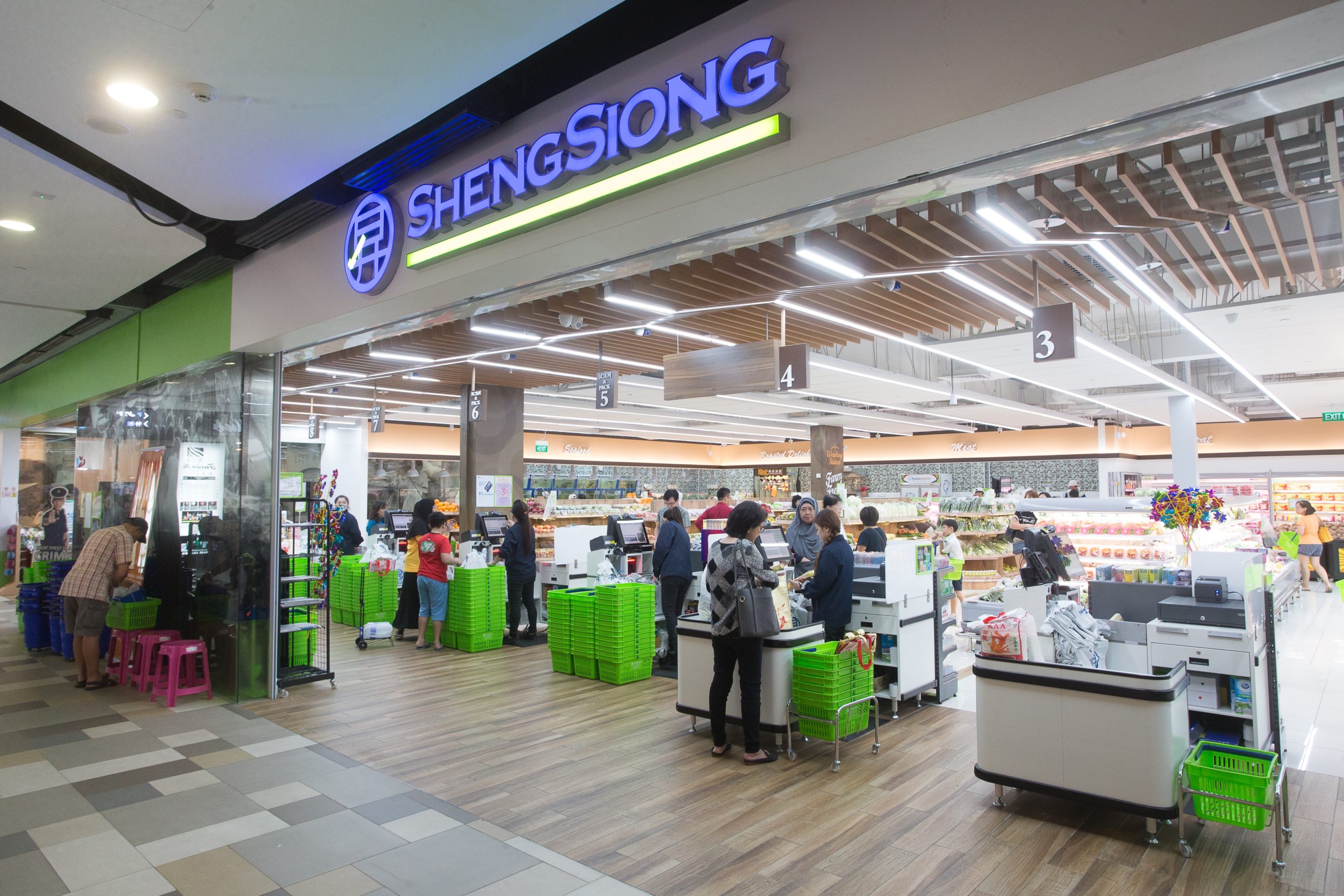
    Singapore consumers’ migration from food halls to supermarkets during the Covid-19 pandemic has proven a windfall for grocery operator Sheng Siong Group.

    Sales for the June quarter surged 75.8 percent to US$304.3 million, gross profit margin improved from 27.4 percent to 28.1 percent and net profit soared 150.7 percent year on year to $33.6 million.

    While new stores accounted for 13.3 percent of the 75.8-per-cent increase in sales the vast majority of the balance came from same-store turnover.

    “This was mainly driven by the elevated demand arising from Covid-19, as consumers stocked up to hedge against the risks of disruption to the supply chain and the implementation of the “Circuit Breaker” restricting people’s movements and forbidding eating out, thereby benefiting retailers of fresh and uncooked food,” the company said in a statement.

    However, the company has warned the gradual easing of restrictions on Singaporeans’ movements it expects the elevated demand for goods fuelled by Covid-19 will ease.

    “Competition in the supermarket industry is expected to remain keen and challenging among the traditional brick-and-mortar operators and e-commerce platforms which seem to have gained better visibility because of the Circuit Breaker,” the company said. “Demand may be affected if post-Covid-19, economic recovery is slow or remains depressed.”

  • Taobao looks to boost young entrepreneurs showing originality talent

    Taobao looks to boost young entrepreneurs showing originality talent

    Chinese social commerce platform Taobao has inaugurated a new rating system to reward deserving young creators and small enterprises with broader market exposure on the fifth anniversary of the firm’s Taobao Maker Festival.

    The exposure is designed to bring more attention to outstanding creativity and better promote products to the platform’s 840 million users.

    Taobao’s new system is the latest example of the firm’s content-driven commerce strategy that has been part of its promotional apparatus since 2016, transitioning the platform from being primarily transactionally driven to a broader social-commerce playbook.

    “The new rating system promotes and celebrates originality and creativity,” said Alibaba Group CMO Chris Tung. “It will enable merchants to leverage their participation in the Taobao Maker Festival into a source of year-round benefit for growing their business and customers.”

    “We continue to leverage our unique content-driven strength to help young entrepreneurs and small businesses win market traction and bringing a better experience to consumers,” said the head of Taobao operations Kaifu Zhang.

  • Grab expands grocery-delivery service into eight SE Asian markets

    Grab expands grocery-delivery service into eight SE Asian markets

    Grab has expanded its grocery-delivery service GrabMart into eight Southeast Asian markets within the last three months.

    Initially launched in two countries as an on-demand daily essentials delivery service during the Covid-19 pandemic, GrabMart is now available in 50 cities across eight Southeast Asian countries, including Myanmar and Cambodia.

    “Covid-19 has accelerated the adoption of on-demand delivery services across Southeast Asia, and we were able to tap on existing technologies, our extensive delivery network, and operational footprint to quickly scale GrabMart across the region,” said Demi Yu, regional head of GrabFood and GrabMart.

    The delivery company has teamed with more than 3000 stores and supermarkets in the region including FairPrice Xpress in Singapore, Lawson in the Philippines and FamilyMart in other countries.

    In Indonesia and Malaysia, GrabMart partnered with traditional market operators, delivering fresh produce from several market stalls in a single order to customers’ doors.

    “In a post-Covid-19 normal, we anticipate demand for grocery-delivery services to remain elevated. We will continue to double down on expanding our GrabMart service to support consumers’ shopping needs,” she said.

  • Dairy Farm sells Wellcome Taiwan to Carrefour

    Dairy Farm sells Wellcome Taiwan to Carrefour

    Hong Kong-headquartered Dairy Farm is to sell its Wellcome Taiwan grocery retail business to Carrefour, with settlement later this year after regulatory approvals have been granted.  The deal – worth about €97 million – includes about 224 stores and warehouses, along with some property assets. Wellcome Taiwan’s turnover last year was approximately €390 million.

    The business currently has 199 Wellcome stores with an average sales area of 420sqm – and 25 Jasons, with an average sales area of 820 sqm. The Dairy Farm stores trading under the Wellcome banner will be converted to its Market format, and those trading under Jason’s brand will be converted to the Carrefour format.

    “Dairy Farm believes this change of ownership will set the business up for future growth and prosperity, building on Wellcome’s strong sales momentum over the past 12 months following the successful implementation of its price reinvestment campaign and increasing customer loyalty,” the Hong Kong company said in a statement.

    “This strengthened network represents greater opportunities for our team members as well as better service and value to our customers.”

    A spokesperson for Dairy Farm told Inside Retail Asia that the company was committed to its remaining major investment in Taiwan, Ikea.

    “Ikea Taiwan remains very much part of Dairy Farm’s portfolio. Through the Ikea brand, Dairy Farm is committed to delivering a unique home furnishing and Swedish food experience to our customers in Taiwan.”

    Meanwhile, the MD of Wellcome Taiwan, Laurent Piazza, says the sale is a testament to the hard work and determination of the Dairy Farm team to offer the best to its customers.

    “By bringing these businesses together, team members and customers will benefit from being served by a larger group that can use their combined strength and scale to improve quality, service, and price competition.

    “We have complete confidence in the future success of the business and believe, by bringing these businesses together, we have created a strong future for the team and a better shopping experience for our customers.”

    Carrefour currently operates 137 stores in Taiwan, including 69 under its Market banner. The group posted net sales of €1.968 billion last year and posted pre-tax earnings of €209 million.

  • Grocery shopping online in China booms due to virus outbreak

    Grocery shopping online in China booms due to virus outbreak

    Grocery shopping online is poised for explosive growth in China, with more than half consumers saying they are buying more online even after stores reopen.

    According to research by GlobalData, consumers in the region got used to purchasing online during the Covid-19 lockdown and the habit has stuck.

    The data shows 56 percent of Chinese consumers are now grocery shopping online more frequently than before the pandemic hit.

    “The impact of Covid-19 will leave a permanent mark on how we shop for groceries,” said Globaldata retail analyst Thomas Brereton, “with demand for home fulfillment soaring around the world as consumers follow the ‘stay at home’ message from many governments.

    “With a population of 1.4 billion, the potential value growth in the Chinese online grocery market is phenomenal.”

    Chinese food delivery service Meituan – founded in 2010 – is an example of the trend, recently hitting a US$100 billion valuation.

  • Foodpanda in the Philippines expands into groceries delivery

    Foodpanda in the Philippines expands into groceries delivery

    Food-delivery service Foodpanda in the Philippines has expanded into grocery deliveries. Partnering with major retailers such as 7-Eleven, the company said it has introduced a “Shops” function on the Foodpanda app.

    “Shops provide Foodpanda users more options and upgrades so they will never have to run out of everyday essentials,” said Paolo Biondi Te, head of the grocery at Foodpanda in the Philippines.

    “With this newly added service, we are confident that this will bring delight and satisfaction to our customers who need easy access to their daily essentials while providing elevated experiences to Filipinos’ everyday lives,” he added.

    The “Shops” function works similarly to other grocery-delivery services which allow customers to place orders from a shop and track it through the Foodpanda app.

  • Malaysia’s Mygroser looks to expand as Covid-19 boosts sales

    Malaysia’s Mygroser looks to expand as Covid-19 boosts sales

    Malaysian digital grocer Mygroser is raising its first public funding round as it enhances its delivery capacities in the midst of the continuing coronavirus pandemic.

    The business is targeting profitability within 12 months followed by expansion within the territory. Funding is expected to be used to meet incoming customer demand as the brand extends its grocery delivery services in Malaysia’s US$20 billion grocery and supermarket space. The firm has continuously operated throughout the country’s Movement Control Order (MCO) period.

    “We have seen the demand for grocery delivery locally grow by over 1000 per cent during the first part of this year, and have seen our own revenues and number of deliveries made daily grow ten times during just the past two months,” said Mygroser CEO Stephen P Francis.

    “On the back of this, we are accelerating our expansion plans to better meet the demand for convenient, fresh and affordable produce, everyday essentials and groceries that we are seeing from our consumer and business customers.”

    Working through the MCO, the online-only grocery service has deployed various technology enhancements – as well as daily delivery slot increases – across its cloud-store powered premium grocery service model. Investments in machine learning-based supply chain management, new product offerings, an enhanced grocery list and new membership offerings are currently in planning stages as the firm targets regional coverage within three years.

  • South Korea’s Kurly wins funds for expansion

    South Korea’s Kurly wins funds for expansion

    Kurly, a South Korea-based grocery-delivery startup, has netted Series E funding totaling KRW200 billion (US$160 million).

    The funding round for the five-year-old company was led by DST Global, with additional participation from several existing backers – including Hillhouse Capital, Sequoia Capital China, Fuse Venture Partners, SK Networks, and Translink Capital. Newcomer Aspex Management also contributed to the new financing.

    Total funding in Kurly has now reached KRW420 billion won ($328 million), confirming unicorn status for the venture. The company expects to use the funding to set up a new fulfillment center in Seoul, more than twice as large as its current facilities.

    “Kurly has been showing incomparable growth in the fast-expanding online grocery market,” said DST Global investment partner and head of Asia Pacific John Lindfors, “and as the first to establish morning deliveries, has demonstrated its ability to disrupt the logistics industry and change the grocery shopping habits of Korean consumers”.

    The firm recorded annual average revenue growth of 3.5 times since opening, and extended its fulfillment capability area by a factor of 4.9 last year, with a 2.9 times increase in total deliveries.

  • Online grocery-delivery startup Kurly wins US$150m funding

    Online grocery-delivery startup Kurly wins US$150m funding

    South Korean premium grocery-delivery firm Kurly has procured funding of US$150 million from its existing investors.

    Backers contributing to the Series E funding round were Sequoia Capital, Hillhouse Capital, and Digital Sky Technologies, placing the firm’s valuation at roughly $780 million, according to Deal Street Asia.

    Despite the positive outlook as a successful attraction of more than KRW400 billion ($329 million) over five rounds, the firm remains in the red as labor and operational costs drain profits while competition intensifies. It is expected that the coronavirus epidemic may yield a positive benefit to the firm as South Koreans stay home to avoid infection and order their food online.

    The Market Kurly app introduced the “full cold-chain” temperature-controlled supply chain system to the country, allowing users to order fresh produce in the evening to be delivered to the home by dawn.


  • FamilyMart Taiwan plans rolling out 200 new stores

    FamilyMart Taiwan plans rolling out 200 new stores

    Familymart Taiwan is aiming to open 220–230 new stores in the territory this year, as the Japanese convenience-store chain franchise, emerges unaffected by the coronavirus turmoil.

    The firm’s takings in this year’s first financial quarter are anticipated to rise 8.4 percent year -on year to NT$19.71 billion (US$652.3 million). FamilyMart Taiwan reported net earnings of NT$1.83 billion ($60.56 million) last year.

    The franchise has suffered minimal fallout from the coronavirus pandemic, with only a low percentage of its earnings derived from operations in Mainland China.

    The firm is the second-largest convenience-store chain in Taiwan, operating 3606 locations nationwide and more than 1200 stores in nine cities on the mainland. The number of closed stores in China dropped from 600 to 100 last month as the Covid-19 pandemic eased. The firm expects operations in China to normalize in July.

  • Thai grocery Loxley pivots to delivery

    Thai grocery Loxley pivots to delivery

    Thai grocery wholesaler Loxley is pivoting to delivery services as the coronavirus pandemic continues.

    Loxley’s distribution subsidiary LTC has set up an online grocery store for essential items during the country’s lockdown period, with some of the firm’s fleet of delivery trucks converted into mobile grocery stores.

    The mobile stores are retailing goods such as packed rice, cooking oil, fish sauce and roasted peas to consumers residing in crowded communities such as Klong Toey and Phra Khanong. Items are discounted at 15 to 20 percent below regular sales channels.

    LTC is a leading FMCG distributor within the territory, covering more than 30,000 wholesale, retail, modern trade and convenience stores nationwide, including hotels and restaurants. The firm has seen a 40-per-cent spike in sales over the past two months, predominantly caused by panic buying.

  • Demand overwhelms grocery-delivery services in Malaysia, Singapore

    Demand overwhelms grocery-delivery services in Malaysia, Singapore

    Online grocery-delivery services in Malaysia are facing overwhelming demand, with some firms forced to suspend or limit delivery operations.

    A 600-per-cent spike in orders recorded last month was fuelled by panic buying while stay-at-home orders remain in force throughout the territory.

    Jaya Grocer suspended online deliveries in response to the surging demand, while Tesco is still operating as usual but has requested customers who have pre-booked delivery slots to cancel orders if they expect not to be at home so as to free up resources for other buyers. Restrictions have been put in place allowing only three items per customer across every product line.

    Local hypermarket chain Mydin has asked customers to avoid panic buying due to delays in restocking supplies. It has placed restrictions on buying to ensure that all customers can make purchases.

    “This situation has stemmed from the sudden growth of demand, and hypermarkets and grocery stores were not prepared for this outage,” said Malaysia Retail Chain Association VP Datuk Liew Bin. “The delivery team could not complete their rounds, although some of them work from morning to night to deliver all the customers’ orders.”

    Liew added that many independent sellers and small farmers now have found their own way to sell their goods, with some trading directly with buyers via instant messenger apps such as Whatsapp and food ordering platform Oddle.

    The situation is similar in Singapore, where Lazada’s RedMart e-commerce grocery unit refused to accept new orders for a period earlier this month. The Singaporean public had been advised by the island’s government to purchase groceries online.

    Online grocery-delivery services “now have to deal with a new situation where demand for essential items outpaces operational capacities,” said Insignia Ventures founding managing partner Yinglan Tan. “Players that manage shorter supply chains may be more equipped to handle the stress.”

    Shoppers “have been buying four to 10 times more food staples, 3.5 to five times more paper products, and two to six times more personal care and household cleaning supplies,” said Lazada Singapore CEO James Chang.

    Since the temporary suspension of operations, RedMart has limited orders to 35 items, blocked customers from adding items once an order is placed, and has stated that orders exceeding 100 kg may be canceled.

  • Philippine grocery MerryMart to raise US$31 million in IPO

    Philippine grocery MerryMart to raise US$31 million in IPO

    Philippines grocery operator MerryMart has filed to raise up to PHP1.6 billion (US$31 million) in its forthcoming IPO.

    The firm is seeking the funds to finance its nationwide expansion program, according to DealStreetAsia. It expects to operate 1200 stores within the territory following its expansion drive, including potential franchises, in an attempt to reach its target revenue of PHP120 billion ($2.36 billion). It will also establish a network of warehouses and distribution centers.

    The firm intends to sell 1.6 million shares – about 21 percent of its total holdings – at PHP1 (2c) per share. PNB Capital and Investment will serve as lead underwriter, issue manager, and book-runner for the offering.

    “Our family initially had no plans to expand the retail business,” said company owner Edgar Sia, “but our recent experiences made us realize the need for us to be in the modern retail business, and we believe we will be in it while the transition from traditional retail to modern retail is still ongoing.”

  • Chinese giants dominate Asia’s online grocery market

    Chinese giants dominate Asia’s online grocery market

    China’s two e-commerce giants are driving the most growth in Asia’s online grocery market according to a new report from international researcher IGD.

    JD and Alibaba now boast a combined grocery-sales growth which in value terms is outstripping that of the overall market.

    Asia’s online grocery market has a current value of US$99 billion, according to IGD, which projects expects it to achieve a compound annual growth rate (CAGR) of 24.4 percent to reach US$295 billion by 2023.

    IGD’s forecasts show that JD.com’s grocery sales will grow 28.8 percent by 2023 to reach $9.8 billion and Alibaba’s grocery sales will grow to $9.5 billion, with a CAGR of 25.6 percent.

    Alongside pure e-commerce retailers, Asia’s online grocery market consists of brick-and-mortar retailers that are developing their online capability, as well as forming alliances and partnerships to accelerate growth.

    Nick Miles, head of Asia Pacific research at IGD, says the growth of online grocery in Asia will continue to be led by online marketplaces, especially JD.com and Alibaba, with food and grocery products helping to drive up the number of times shoppers use these retailers’ platforms.

    “Other pureplay retailers including Rakuten, Amazon and Coupang are also strengthening their online grocery operations and will increasingly play a more prominent role in the channel,” he said.

    “Brick-and-mortar retailers are scaling up their online operations and building partnerships with online players, delivery partners, technology companies and payment solution providers. These partnerships are vital for retailers to compete successfully with online marketplaces and online specialists.”

    Miles says there are several ways suppliers can capitalise on growth in online retailing, including developing long-term partnerships with retailers in areas such as marketing campaigns and tailored promotions.

    “Collaborating across the full chain is also important and suppliers should integrate their systems with retailers’ systems, to access real-time data on stock levels and ensure product availability for shoppers.

    “Finally, suppliers can really engage in the mobile space by making sure they stay up-to-date with new apps and social media platforms and other programs that are enhancing experiences for shoppers.”