Tag: group

  • AS Watson Group Promotes Queennie Fung to Lead Global Corporate Communications

    AS Watson Group Promotes Queennie Fung to Lead Global Corporate Communications

    AS Watson Group, a leading global health and beauty retailer, has announced the promotion of Queennie Fung to the position of General Manager of Group Corporate Communications. In this role, Fung will be responsible for overseeing the company’s brand positioning, reputation management, and stakeholder engagement across its 31 markets worldwide.

    Professional Journey of Queennie Fung

    Queennie Fung joined AS Watson Group in 2014 and has since made notable advancements within the organization. Prior to her promotion, she served as the Head of Corporate Communications, a position she assumed in 2024. In this capacity, she successfully led integrated communications initiatives across various markets, working in close collaboration with numerous business units to ensure the delivery of consistent messaging.

    In addition to this, Fung has been at the forefront of several campaigns aimed at bolstering AS Watson Group’s brand presence and amplifying community engagement. Her strategic and impactful contributions have been instrumental in refining the group’s global communications strategy and enhancing relationships with customers, partners, and communities.

    Looking Ahead: AS Watson’s Global Vision

    Commenting on the promotion, Malina Ngai, Group CEO of AS Watson Group, emphasized Fung’s pivotal role in shaping the company’s communication strategy. Ngai expressed confidence in Fung’s leadership, envisaging her as instrumental in fostering a more integrated and purpose-driven brand across all markets.

    The decision to promote Fung is in line with AS Watson’s ongoing efforts to strengthen its global brand and stakeholder engagement across its international business divisions.

    Questions & Answers

    Who is Queennie Fung?
    Queennie Fung is the newly appointed General Manager of Group Corporate Communications for AS Watson Group. She joined the company in 2014 and has held various roles within the organization.

    What will be Fung’s responsibilities in her new role?
    As the General Manager of Group Corporate Communications, Fung will oversee AS Watson Group’s brand positioning, reputation management, and stakeholder engagement worldwide.

    What has been Fung’s contribution to AS Watson Group so far?
    Fung has played a critical role in shaping the company’s global communications strategy and strengthening its relationships with customers, partners, and communities. She has led integrated communications initiatives and driven campaigns to enhance the brand and boost community engagement.

  • Danone Boosts Australian Footprint with Profitable Made Group Takeover

    Danone Boosts Australian Footprint with Profitable Made Group Takeover

    Global food corporation Danone is extending its foothold in Australia by acquiring Made Group, the parent company of Cocobella and Rokeby. This transaction is an element of a two-part acquisition designed to increase Danone’s influence in the Asia Pacific region. In addition to this, Danone has also announced the full ownership of its fresh dairy joint venture with Saputo Dairy Australia by acquiring the remaining 49% stake.

    Made Group’s consistent performance with “appealing profit margins”, backed by its sales of $490.7 million in the last fiscal year, was a driving factor behind the acquisition. Made’s portfolio includes popular brands such as The Collective, Nutrient Water, and Impressed.

    Mutual Values and Profitable Growth

    According to Antoine de Saint-Affrique, CEO of Danone SA, Made Group has had a remarkable history of fast and profitable growth, thanks to its robust brand portfolio and health-focused nutritional products. He notes that both companies share a belief in promoting health through food and expressed excitement about welcoming Made into the Danone family.

    Made Group was sold by US-based TPG Capital in a transaction that earned TPG approximately $2 billion, a mere five years after it had purchased the beverage business.

    Shared Commitment to Health and Innovation

    Amanda Butler, CEO of Made, views this as an exciting new phase for the company. She acknowledged Danone’s shared commitment to health and enthusiasm for innovation, expressing optimism about future prospects. Butler anticipates that their joint efforts will unlock new infrastructure, capabilities, and research and development expertise, spurring growth across the region.

    Questions & Answers

    What companies has Danone recently acquired in Australia?
    Danone has recently acquired Made Group, the parent company of Cocobella and Rokeby.

    What motivated Danone’s acquisition of Made Group?
    Made Group’s consistent “attractive profit margins” and sales performance, coupled with its strong brand portfolio and focus on health-focused nutritional products, influenced Danone’s decision to acquire the company.

    What are the anticipated benefits of this acquisition for Made Group?
    Following the acquisition, Made Group expects to access new infrastructure, capabilities, and research and development expertise to accelerate growth in the region.

  • Frasers Group Boldly Bids $2.3 Billion for Complete Control of Hugo Boss

    Frasers Group Boldly Bids $2.3 Billion for Complete Control of Hugo Boss

    Frasers Group, a prominent UK retail corporation, recently unveiled an unexpected voluntary takeover bid for Hugo Boss. Their goal is to procure the remaining shares of the renowned German fashion brand and obtain complete ownership. Currently, Frasers Group possesses a 26.06% stake in Hugo Boss, and their proposal to acquire the unowned 73.94% stake stands at €38 per share in cash. This proposition elevates the total bid value to roughly US$2.3 billion.

    Frasers Group’s Confidence in Hugo Boss

    Frasers Group’s proposed takeover reflects its sustained assurance in Hugo Boss’s potential and facilitates possibilities for additional business investment. The company regards Hugo Boss as one of its most critical strategic brand associates. Furthermore, Frasers Group continues to back the growth strategy and management team of the fashion firm.

    However, Hugo Boss confirmed that it had received the unrequested bid and emphasized that the company had no prior involvement in coordinating the proposal. The fashion group’s management board and supervisory board will assess the proposal document once it is officially available. Subsequently, they will issue an informed viewpoint for the shareholders.

    The company also assured that it would keep its shareholders and the public updated about any future developments and the following steps as per the legal and regulatory stipulations.

    Frasers’ Association with Hugo Boss

    The affiliation between Frasers Group and Hugo Boss traces back to 2020. This was when Mike Ashley, the founder of Frasers, initiated an investment in the German fashion company. The group also secured representation on Hugo Boss’s supervisory board through its CEO, Michael Murray.

    Questions & Answers

    What is Frasers Group’s current stake in Hugo Boss?
    Frasers Group currently holds a 26.06% stake in Hugo Boss.

    What is the proposed offer per share by Frasers Group for the remaining stake in Hugo Boss?
    The proposed offer by Frasers Group for the remaining stake in Hugo Boss is €38 per share in cash.

    What is the history of the relationship between Frasers Group and Hugo Boss?
    The relationship between the two companies began in 2020 when Frasers Group’s founder, Mike Ashley, started investing in Hugo Boss. Additionally, Frasers Group has representation on Hugo Boss’s supervisory board through CEO Michael Murray.

  • ZWC Partners Fuels Global Expansion of Korean Lifestyle Group Iicombined and Flagship Brand Gentle Monster

    ZWC Partners Fuels Global Expansion of Korean Lifestyle Group Iicombined and Flagship Brand Gentle Monster

    Asian private equity firm, ZWC Partners, has recently made an investment in the South Korea-based company, Iicombined, the force behind the renowned eyewear brand, Gentle Monster. This move is part of the firm’s plan to expedite its global expansion across the fashion, beauty, and experiential retail sectors.

    Investment to Bolster International Growth

    Established in 2011 and based in Seoul, Iicombined has evolved from being a single eyewear brand to a multi-brand lifestyle conglomerate. Its diverse portfolio includes the fragrance and beauty brand Tamburins, the experiential cafe concept Nudake, the headwear label Atiissu, and the tableware brand Nuflaat. These are in addition to its flagship business, Gentle Monster.

    The investment is intended to facilitate the group’s ongoing global growth, especially across Asia, encompassing regions such as China and Southeast Asia. Moreover, it aims to further the expansion into European and North American markets.

    ZWC Partners has expressed strong confidence in Iicombined’s capability to expand globally whilst preserving its design-first identity. According to Michael Yao, a partner at ZWC Partners, the firm believes that Iicombined is favorably positioned for rapid expansion, primarily in thriving consumer sectors like eyewear and fragrances, across China and Southeast Asia. This perspective aligns well with ZWC Partners’ long-standing emphasis on consumer and technology sectors.

    Driving Forward a Global Fashion Powerhouse

    Yao further stated that with the support of their offices and resources in Europe, Japan, and other key Asian markets, they are excited to aid Iicombined’s expansion across the Asia-Pacific region and further afield. Their assistance will include providing prime retail locations and brand elevation support as the group continues its journey towards becoming a global fashion powerhouse.

    The deal enhances ZWC Partners’ consumer portfolio, which already encompasses investments in global sports group Amer Sports, which owns brands such as Arc’teryx and Salomon, and the Italian luxury linen brand Frette. It also includes logistics, technology, and cross-border commerce companies such as J&T Express, GoTo, and Vevor. The financial specifics of the deal have not been disclosed.

    Questions & Answers

    **What is Iicombined’s flagship business?**

    Iicombined’s flagship business is the eyewear brand Gentle Monster.

    **How is ZWC Partners assisting Iicombined’s expansion?**

    ZWC Partners is aiding Iicombined’s expansion by providing prime retail locations, brand elevation support, and leveraging their offices and resources in key markets.

    **What are some other brands in ZWC Partners’ consumer portfolio?**

    ZWC Partners’ consumer portfolio includes global sports group Amer Sports, Italian luxury linen brand Frette, and logistics and technology companies like J&T Express, GoTo, and Vevor.

  • Chinese E-commerce Titan JD Eyes £2 Billion Acquisition of UKs The Very Group

    Chinese E-commerce Titan JD Eyes £2 Billion Acquisition of UKs The Very Group

    JD, the Chinese e-commerce titan, is reportedly considering a significant expansion within the UK market, with a potential £2 billion ($2.69 billion) acquisition bid for the British online retail platform, The Very Group.

    JD’s Expansive Strategy in the UK

    This move is the latest in a series of attempts by JD to strengthen its foothold in the UK market. Previously, the company had made a failed attempt to acquire the electricals group Currys and, in 2020, had withdrawn from negotiations aimed at acquiring Argos from Sainsbury’s. These activities indicate JD’s strong interest in expanding its operations in the UK, despite previous setbacks.

    Representatives from JD and The Very Group have refrained from commenting on these market speculations.

    The Very Group’s Recent Ownership Changes

    The owner of The Very Group, Carlyle, was reported earlier this year to be planning a £2 billion sale of the enterprise. This news came just a few months after Carlyle assumed ownership from the Barclay family, who had been long-time stakeholders in the business.

    Questions & Answers

    What is the estimated value of the deal between JD and The Very Group?
    The value of the potential deal is speculated to be around £2 billion ($2.69 billion).

    What other UK ventures has JD been involved in?
    In the past, JD has attempted to buy the electricals group Currys and also entered negotiations to acquire Argos from Sainsbury’s.

    Who is the current owner of The Very Group?
    The Very Group is currently owned by Carlyle, which took over from the Barclay family last year.

  • Miniso Group Reports Surging Q1 Sales: All Sectors Power Past Revenue Projections

    Miniso Group Reports Surging Q1 Sales: All Sectors Power Past Revenue Projections

    Miniso Group, a prominent retailer based in China, reported a significant growth in sales in its first quarter, owing to strong performances across all business areas. The company’s revenue saw a year-on-year increase of 28.5%, totalling up to US$824.6 million for the quarter ending on March 31. The impressive results, primarily fueled by a noticeable boost in same-store sales, surpassed the management’s initial projections.

    Consistent Growth Across Segments

    Miniso’s business in Mainland China marked its fifth successive quarter of revenue growth, registering a 29.6% increase. Concurrently, the company’s overseas revenue saw a rise of 21.9%. The Top Toy segment also maintained its growth trajectory in the pop toy industry, posting a sales growth of 51.4%.

    The company’s profit for the period skyrocketed by 199.7% year-on-year to $180.9 million. This surge was primarily attributable to an unrealised market gain of $126.8 million arising from fair value alterations in an investment related to a limited partnership in the AI industry. Moreover, the adjusted net profit witnessed an 8.1% increase, amounting to $79.8 million.

    Guofu Ye, the founder, chairman, and CEO of Miniso Group, expressed his delight at the company’s remarkable performance in the quarter. He underscored the growing momentum of the company, stating his intent to increase his holdings as a testament to his faith in the company’s future prospects. He went on to add that the current valuation of Miniso Group does not fully encapsulate its intrinsic potential.

    Ye, who presently owns approximately 63.7% stake in the company (excluding treasury shares), had earlier disclosed his plans to increase his stake by at least $6.4 million over the course of the upcoming year.

    Looking Forward

    Heading into the second half of 2026, Ye expressed the company’s commitment to intensify its globalisation and IP strategies, aiming to drive high-quality growth. The company plans to achieve this through continuous product mix optimisation, expansion and upgrade of store networks, and leveraging a multi-dimensional IP matrix, all in line with its long-term objectives.

    As of March 31, Miniso’s store count stood at 8565, indicating a net increase of 797 stores year-on-year. The Miniso brand boasted 8210 stores, including 4593 in Mainland China and 3617 overseas.

    Questions & Answers

    What was the key driver behind Miniso’s impressive sales growth in the first quarter?
    The company’s outstanding sales growth was primarily driven by strong performances across all business segments, with significant contribution from mid-single-digit same-store sales growth.

    What are Miniso’s plans for the second half of 2026?
    Miniso intends to deepen its globalisation and IP strategies, continuously optimize its product mix, expand and upgrade its store network, and leverage a multi-dimensional IP matrix to drive high-quality growth.

    How many stores does Miniso currently operate?
    As of March 31, Miniso operated a total of 8565 stores, with the Miniso brand having 8210 stores, including 4593 in Mainland China and 3617 overseas.

  • SSI Group Sees Profits Plunge as Luxury Spending Goes Out of Style in the Philippines

    SSI Group Sees Profits Plunge as Luxury Spending Goes Out of Style in the Philippines

    In the first quarter of 2021, SSI Group, a leading luxury retailer in the Philippines, witnessed a significant drop in profits. The company reported a decrease of 58.5 per cent in net income to US$2.4 million (PHP$152.9 million), even though revenue increased by 11.4 per cent to $123.8 million. This decline in earnings is attributed to consumers prioritizing essentials over luxury goods.

    Financial Performance and Consumer Behavior

    A more promotional business environment impacted SSI’s profitability, shrinking the merchandise gross margin from 44.6 per cent the previous year to 42.6 per cent. The main reason for this change is the growing price sensitivity among consumers due to inflation and escalating living costs. Operating expenses also increased by 15.8 per cent to $48.3 million, due to inflationary pressures and store network expansion, which led to a decrease in EBITDA by 18.4 per cent to $12.3 million.

    During this same period, consumer demand was primarily focused on the essential and lifestyle categories with a 48.5 per cent sales increase in SSI’s ‘others’ segment, which includes personal care, food, and home products. Footwear, accessories, and luggage also experienced a 32.7 per cent increase in sales. However, the group’s core luxury and bridge segment witnessed a 1.7 per cent drop in sales, indicating decreased spending on premium discretionary items.

    Online Sales and Store Operations

    E-commerce sales reached $9.1 million, making up 7.4 per cent of total revenue, while rental income from its Central Square property saw an 8.1 per cent increase to $387,270.

    SSI Group also made adjustments to its physical stores. The company closed 14 underperforming stores permanently, opened five new locations, and renovated 12 stores during the quarter. At the end of the quarter, SSI Group operated 631 stores nationwide.

    SSI Group’s portfolio includes a broad range of brands, from luxury labels like Hermès, Cartier, and Salvatore Ferragamo to fashion and lifestyle brands such as Zara, Bershka, Stradivarius, Pull&Bear, Gap, Old Navy, Lacoste, and Muji. The retailer also offers beauty brands like Mac, Lush, and Beauty Bar; home retailers like Pottery Barn and West Elm; and dining concepts like Shake Shack, SaladStop!, and Venchi.

    In February, the retailer announced the termination of its franchise agreement with Marks & Spencer, which had been in operation since 1980.

    Questions & Answers

    What contributed to the decline in SSI Group’s profits for the first quarter of 2021?
    Consumers shifting their priorities from luxury goods to essentials, coupled with inflation and increased living costs, resulted in the decline of SSI Group’s profits.

    How has SSI responded to this change in consumer behavior?
    In response to changing consumer behavior, the group has focused on promoting essential and lifestyle categories more. It has also optimized its physical store network by closing underperforming stores and opening new ones.

    What is the future of SSI’s relationship with Marks & Spencer?
    SSI Group has decided to end its franchise agreement with Marks & Spencer, which had been operational since 1980. The future of this relationship is not clear at this point.

  • US-Based Carlyle Group Acquires KFC Korea: Sets Sight on Nationwide Expansion

    US-Based Carlyle Group Acquires KFC Korea: Sets Sight on Nationwide Expansion

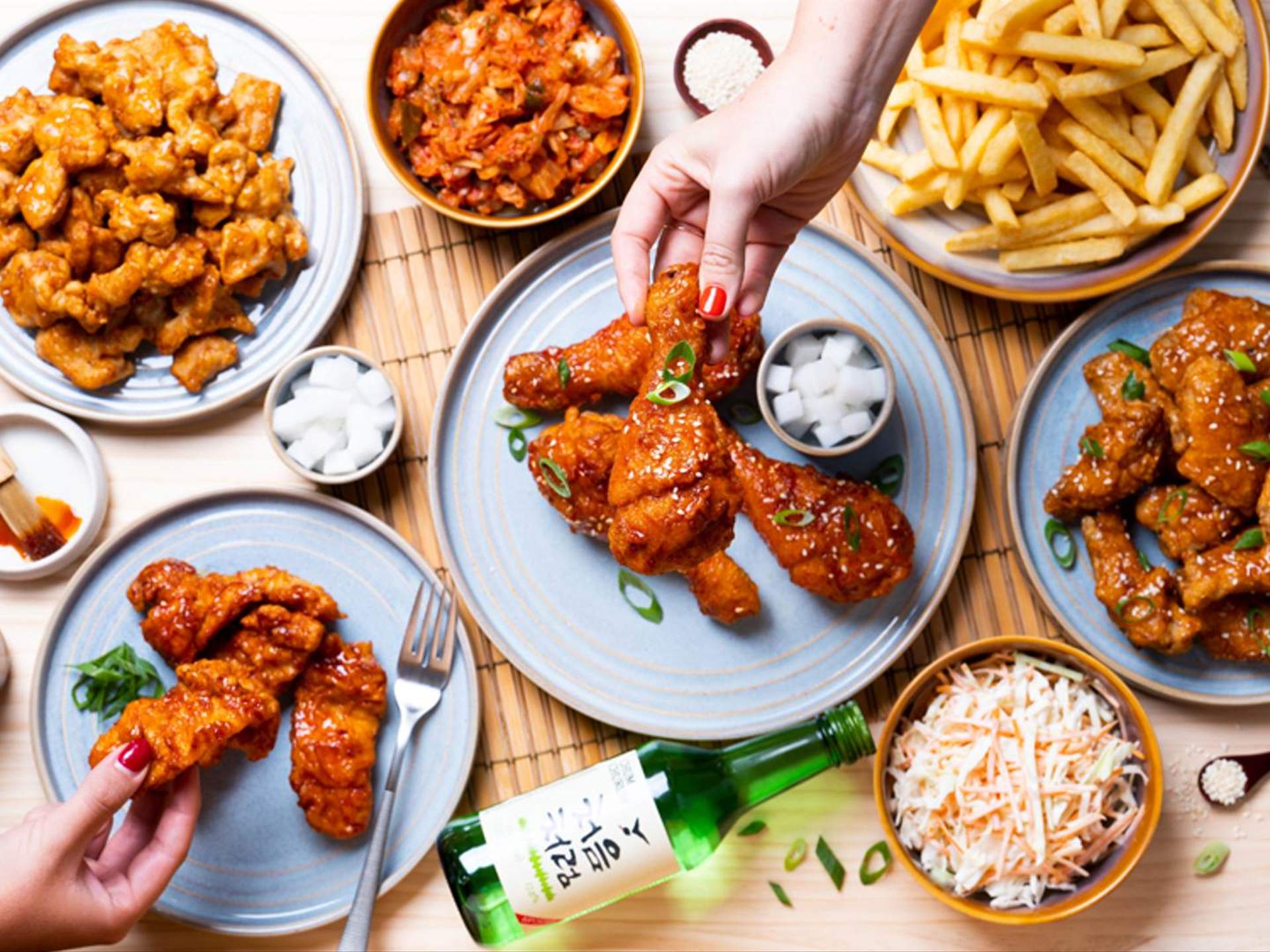
    The US-based private equity firm, The Carlyle Group, has successfully acquired KFC Korea. With this acquisition, the firm aims to expand the existing 200-store portfolio of the popular restaurant chain in South Korea.

    The deal, which was initially announced in December, has now been finalized, with Carlyle gaining full ownership of KFC Korea. KFC Korea operates in South Korea under a master franchise agreement with Yum! Brands. The Carlyle Group bought the stake from Orchestra Private Equity.

    Envisioning Growth and Expansion

    John Kim, a partner and the head of Carlyle Korea, expressed enthusiasm about the partnership with Yum Brands. Kim said that Carlyle is eager to work with KFC Korea’s management team to grow the iconic brand in South Korea.

    Kim spoke highly of KFC Korea, stating that the brand’s strong heritage and market position make it ripe for expansion. He also mentioned the growing demand for quick-service dining among Korean consumers, which KFC Korea could effectively cater to.

    Carlyle’s current holdings include A Twosome Place, a dessert cafe chain boasting over 1700 stores in South Korea, as well as KFC in Japan.

    An Exciting Milestone

    Tony Shin, CEO of KFC Korea, also voiced his excitement about the partnership with Carlyle. He highlighted Carlyle’s extensive experience in the quick-service restaurant and F&B sectors, expressing optimism that the partnership will drive continued growth and innovation.

    Questions & Answers

    Who has acquired KFC Korea?
    The Carlyle Group, a US-based private equity firm, has acquired KFC Korea.

    What is the Carlyle Group’s plan for KFC Korea?
    The Carlyle Group plans to expand the restaurant chain’s existing 200-store portfolio in South Korea.

    Who previously owned the stake in KFC Korea that The Carlyle Group purchased?
    The stake was purchased from Orchestra Private Equity.

  • DFI Retail Group Sees Robust Sales Boost Driven by Beauty and Health Segment Amid Global Challenges

    DFI Retail Group Sees Robust Sales Boost Driven by Beauty and Health Segment Amid Global Challenges

    The Hong Kong-based DFI Retail Group has recently announced a steady increase in sales for the first quarter of the year, primarily fueled by their health and beauty sector.

    Driving Growth with Health and Beauty

    Excluding cigarette sales, the DFI Retail Group reports a 4% sales rise on a year-on-year basis, using a constant currency, and a 3% increase on a like-for-like (LFL) basis. The health and beauty division is credited with a large part of this growth, with a 7% boost in LFL sales, thanks to increased transaction counts and larger basket sizes.

    In Hong Kong, Mannings saw notable growth due to a surge in tourist store sales, driven by an uptick in visitor arrivals. Similarly, Guardian’s sales in Southeast Asia reflected a robust performance in the wellness category. Standout growth was seen in Indonesia and Vietnam, which delivered double-digit LFL sales growth due to increased customer traffic.

    Divisional Performance and Growth

    Excluding cigarette sales, the convenience division, which includes 7-Eleven, saw a 2% growth on a LFL basis. Sales at 7-Eleven increased by 3% in both Hong Kong and Singapore, while sales in South China remained stable.

    The food division showed signs of improvement, with a reported 1% sales increase in Hong Kong. Home furnishings (Ikea) also showed positive trends, with a 4% growth. Both Hong Kong and Taiwan saw mid-single-digit LFL sales growth, owing to Chinese New Year promotions. Meanwhile, Indonesia bolstered its omnichannel strategy with robust online sales growth.

    Profit Growth Despite Market Challenges

    Operating profit from continuing businesses, excluding impacts from the divestment of the Singapore food business and the closure of Mannings China, grew by 12%. The underlying profit from ongoing businesses significantly increased by 49%.

    Despite a dynamic trading environment and increasing geopolitical uncertainties, DFI management stated the group remained resilient. This resilience was attributed to sourcing improvements and cost optimization, which supported price competitiveness and mitigated the impact of oil price volatility.

    DFI confirmed its full-year guidance of an underlying profit in the range of US$270 million to $300 million, supported by an organic revenue growth of approximately 2-3%.

    Questions & Answers

    What division drove the most growth for DFI Retail Group in the first quarter?
    The health and beauty division was the primary driver of growth in the first quarter, with a 7% increase in LFL sales.

    How did geopolitical uncertainties impact DFI Retail Group’s performance?
    Despite geopolitical uncertainties, DFI remained resilient due to sourcing improvements and cost optimization, which helped maintain price competitiveness and minimize the impact of oil price volatility.

    What is the projected full-year guidance for DFI’s underlying profit?
    DFI’s projected full-year guidance for underlying profit is in the range of US$270 million to $300 million, supported by an expected organic revenue growth of about 2-3%.

  • Moncler Group Soars in Asia: China and Korea Power Double-Digit Growth

    Moncler Group Soars in Asia: China and Korea Power Double-Digit Growth

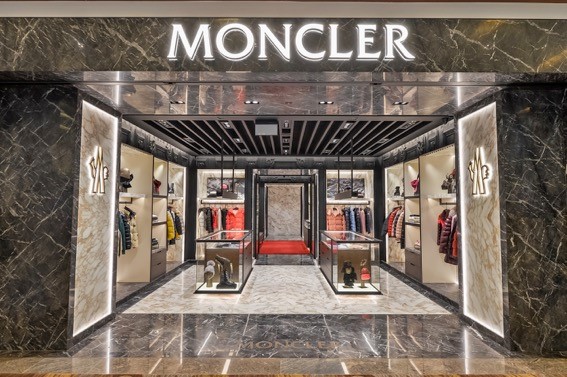
    Moncler Group, the parent company of Moncler and Stone Island, has announced a robust first quarter. The company’s earnings were primarily driven by sales in Asia.

    First Quarter Sales Surge

    The group registered a substantial $1.03 billion in sales during the first quarter. It reported double-digit growth for both of its brands, leading to an overall year-on-year increase of 12 per cent.

    The Asian Market Triumphs

    In Asia, Moncler’s sales grew by an impressive 22 per cent. Moncler attributes this significant increase to strong performances in China and South Korea. However, the sales in Europe, the Middle East, and Africa experienced a minor dip of one per cent year-on-year.

    Brand Performance

    The Moncler brand was the group’s star performer with $900 million in sales. This was propelled by a 14 per cent rise in direct-to-consumer traffic. Stone Island, on the other hand, contributed a solid $134 million to the total sales.

    The Asian market continues to escalate its share of Moncler’s brand revenue. It now represents 56.5 per cent of total sales, marking a 3.7 per cent annual increase.

    Moncler Group’s Future Outlook

    Remo Ruffini, executive chairman of Moncler Group, expressed the company’s anticipation for the future. He stated that the first quarter not only demonstrated strong revenue performance but also the depth of relationships that their brands continue to build with their global community.

    Despite a global context shaped by conflicts and instability, both Moncler and Stone Island have exhibited considerable energy and cultural relevance.

    Ruffini also touched on the appointment of Bartolomeo Rongone as the group’s CEO that was announced earlier this year. He highlighted this as part of the group’s “next phase.” He further reiterated the group’s commitment to remain adaptable and responsive, guided by a clear strategic vision, in the face of an increasingly complex external environment.

    Questions & Answers

    What were the first quarter sales for Moncler Group?
    Moncler Group reported $1.03 billion in sales during the first quarter.

    Which market led the sales for Moncler Group?
    The Asian market led the sales for Moncler Group, with a 22 per cent growth.

    How does the Moncler brand perform in comparison to Stone Island?
    The Moncler brand outperformed Stone Island, with a contribution of $900 million in sales, as compared to Stone Island’s $134 million.

  • Cotton On Group Dissolves Inactive Singapore Entity in Strategic Asian Restructuring Move

    Cotton On Group Dissolves Inactive Singapore Entity in Strategic Asian Restructuring Move

    The Australian fashion retail giant, Cotton On Group, has announced the shuttering of its regional division, Cotton On Asia. This decision comes in the wake of a resolution passed by shareholders that approved the winding up of the business and the appointment of liquidators.

    Despite the closure of this regional subsidiary, Cotton On Group has no intentions of withdrawing from the Asian market. Cotton On Australia’s main office has clarified that the liquidated entity was not responsible for operating any stores or hiring employees.

    “We have no plans to exit the Asia region,” a company representative stated.

    It was further explained that Cotton On Asia was an inactive holding company and its existence was no longer necessary. The closure will not affect customers, team members, stores, suppliers or operations within the Asian region in any way.

    Official documents from the Government Gazette reveal that the Singapore-based entity has entered a creditors’ voluntary liquidation. This action was a result of an extraordinary general meeting where members passed a special resolution under the Insolvency, Restructuring and Dissolution Act 2018.

    This move is reportedly part of a more extensive restructuring of the group’s corporate setup in Asia. Although the details have not been specified, it is generally believed that such actions are intended to streamline legal structures and enhance operational efficiency across different markets.

    Cotton On was first established in Singapore in 2007 and over the years have expanded its brand portfolio. The group now includes a variety of brands such as Cotton On, Cotton On Body, Cotton On Kids, Typo, and Rubi.

    The company was founded by Nigel Austin, who still maintains control over the business operations.

    Questions & Answers

    What is the reason behind Cotton On Group closing its regional division, Cotton On Asia?
    The closure is part of a broader restructuring strategy of the group’s corporate setup in Asia, aimed at streamlining legal structures and enhancing operational efficiency across different markets.

    Will the closure of Cotton On Asia affect the company’s operations in the region?
    No, the company has made it clear that the closure of this division will not impact customers, team members, stores, suppliers, or operations within the Asian region.

    Who founded Cotton On Group, and who currently oversees its operations?
    The Cotton On Group was founded by Nigel Austin, who continues to control the business operations.

  • Ferrero Group Dives into Healthy Snacks, Acquires Brazilian Protein Brand Bold Snacks

    Ferrero Group Dives into Healthy Snacks, Acquires Brazilian Protein Brand Bold Snacks

    The Ferrero Group, an Italian confectionery company, has recently expanded its business by purchasing Bold Snacks, a Brazilian enterprise that specializes in protein snacks. This acquisition is part of Ferrero’s plan to diversify and expand its range of health-conscious products.

    Bold Snacks: A Rising Star in the Health Food Sector

    Bold Snacks was established in 2018 and has quickly gained popularity with its high-protein bars. More recently, the company has broadened its product range to include whey powders. The addition of Bold Snacks to the Ferrero Group’s portfolio is expected to provide new growth opportunities in key markets.

    Daniel Martinez Carretero, CFO of Ferrero Group, expressed his enthusiasm about the acquisition, stating, “Bold Snacks is a unique brand that has been gaining significant traction in Brazil. This deal bolsters our position in the health food category and allows us to continue diversifying our offerings across pivotal markets.”

    Acquisition Details & Future Prospects

    As part of the agreement, Ferrero Group will take ownership of Bold Snacks’ office and manufacturing facility, located in Divinópolis, Minas Gerais. Approximately 300 employees currently working for Bold Snacks will become part of Ferrero Brazil. The completion of the transaction is expected in the coming months, subject to the usual closing conditions.

    This acquisition comes shortly after Ferrero Rocher, another brand under the Ferrero Group, debuted its new Easter product line.

    Questions & Answers

    What is Bold Snacks renowned for?
    Bold Snacks is popular for its protein bars and has recently introduced whey powders to its product range.

    How will the acquisition of Bold Snacks benefit Ferrero Group?
    The acquisition will strengthen Ferrero’s presence in the health food category and support the ongoing diversification of its product portfolio across key markets.

    What will happen to Bold Snacks’ staff following the acquisition?
    Approximately 300 Bold Snacks employees will transition to Ferrero Brazil.

  • Bluebell Group Ushers in New Era: Appoints Philippe Guettat as CEO in Key Leadership Revamp

    Bluebell Group Ushers in New Era: Appoints Philippe Guettat as CEO in Key Leadership Revamp

    The Bluebell Group recently announced the confirmation of Philippe Guettat as its permanent group president and CEO. This decision is part of an extensive leadership overhaul aimed at bolstering harmonization throughout its Asian operations.

    Guettat, who previously served in the role temporarily, received the official nod from the board after demonstrating a period of strategic focus and operational discipline. Chairman of the board, Laurent de Rougemont, expressed admiration for the distinct clarity and strategic discipline Guettat brought to the group during his temporary tenure.

    Rougemont said, “His dedication to operational excellence and delivering value for our stakeholders solidifies him as the ideal choice to guide the group into its next phase of success.”

    Leadership Update

    As part of the leadership transformation, Bluebell has elevated the roles of people and culture to the executive level. The company has appointed Ivan Zenovic as the new Chief People and Communications Officer. Zenovic, who will report directly to Guettat, will be in charge of talent processes and striving to standardize retail excellence across various markets.

    Rougemont added, “We move forward with a reinforced leadership structure and a straightforward goal: to ensure Bluebell remains the top sophisticated, high-performance home to the world’s most iconic brands.”

    Bluebell, a privately-owned company established in 1954, operates in vital markets throughout the Asia-Pacific region. It manages over 170 international brands through approximately 650 sales outlets, in addition to e-commerce and travel retail channels.

    Questions & Answers

    What is Philippe Guettat’s new role at Bluebell?
    Philippe Guettat has been confirmed as the permanent group president and CEO of Bluebell Group.

    What are the responsibilities of Ivan Zenovic, the new Chief People and Communications Officer?
    Ivan Zenovic will oversee talent processes and work to standardize retail excellence across various markets.

    What is the main goal of Bluebell following this leadership reshuffle?
    The main goal is to ensure Bluebell remains the top sophisticated, high-performance home to the world’s most iconic brands.

  • Lanvin Group Sharpens Focus with Strategic Spin-off of Italian Luxury Brand Caruso

    Lanvin Group Sharpens Focus with Strategic Spin-off of Italian Luxury Brand Caruso

    The Lanvin Group has recently completed the strategic divestment of the Italian luxury menswear brand, Caruso. This move is a part of the group’s plan to concentrate on their primary brands, especially in light of the ongoing instability in the luxury market.

    Caruso has now been procured by MondeVita Italy, which is a constituent of the Mondevo Group based in Abu Dhabi. This marks the end of the Lanvin Group’s proprietorship of the esteemed tailoring house. The financial details related to this transaction have not been made public.

    Caruso: A Brief Overview

    Caruso, established in 1964 and based in Soragna, Italy, is famed for its superior tailoring skills and manufacturing proficiency. The brand primarily functions through wholesale channels and has chosen retail collaborations across Europe, Asia, and the U.S.

    Lanvin Group’s Alignment With Broader Strategy

    The Lanvin Group has stated that this divestment is in agreement with its expansive strategy to streamline operations and channel resources towards its fundamental luxury labels. This transaction is part of a larger restructuring endeavor aimed at enhancing operational efficiency and boosting long-term profitability.

    The Fosun Group, which has recently rebranded itself as the Lanvin Group, became the principal shareholder of Caruso in 2017 through a capital increase. This was subsequent to its acquisition of a 35 per cent stake in 2013.

    In the early part of the previous year, the group, which is based in China, reported a substantial drop in annual sales whilst continuing to put its revitalization strategy into action.

    Questions & Answers

    What is the Italian luxury menswear brand that Lanvin Group has divested?
    The brand is Caruso, an esteemed tailoring house established in 1964 and known for its superior tailoring skills and manufacturing proficiency.

    Who has now acquired Caruso?
    Caruso has been procured by MondeVita Italy, a subsidiary of the Mondevo Group based in Abu Dhabi.

    What is the reason behind Lanvin Group’s divestment of Caruso?
    This divestment is part of the Lanvin Group’s strategy to streamline operations and focus resources on their core luxury labels, amidst ongoing market instability.

  • KK Group Debuts First KKV Flagship Store in Vietnam, Amplifying Its Southeast Asia Presence

    KK Group Debuts First KKV Flagship Store in Vietnam, Amplifying Its Southeast Asia Presence

    KK Group, a key player in retail, has unveiled its first independent KKV flagship store in Vietnam, signifying the company’s second international flagship venue as it continues its expansion in Southeast Asia.

    Store Location and Features

    The new outlet is strategically situated at 28 Le Loi Street in the bustling city of Ho Chi Minh. This high-end retail location is directly across from Saigon Centre, a prominent shopping hub.

    Breaking away from traditional retail designs, the multi-story store integrates unique themed displays, such as the ‘Colorful KKV Moto Park’. This motorcycle-inspired installation is placed at the entrance, utilizing what was previously a parking space.

    The store boasts an extensive selection of lifestyle goods, including toys, beauty products, food, and household items. Approximately 5,000 additional products will be gradually unveiled, just in time for the Tet (Lunar New Year) holiday season.

    Future Expansion Plans

    Rojen Wu, Chief Operating Officer of KK Group’s international business, expressed the company’s commitment to further global expansion. He stated, “We will continue to open global flagship stores in various countries, offering local consumers an enriched and inspirational shopping experience.”

    Vietnam is a crucial market for KK Group in Southeast Asia. The company presently manages around 20 stores across its three brands—KKV, The Colourist, and X11—in Vietnam, with a goal of reaching 50 outlets within the year.

    Founded in China, KK Group runs over 1,000 stores in more than 200 cities within its home market and more than 150 in Southeast Asia. For this year, the group aims to increase that number to over 300 stores across the region.

    Questions & Answers

    Where is the first standalone KKV flagship store in Vietnam located?
    The store is located at 28 Le Loi Street in Ho Chi Minh City, across from the Saigon Centre.

    What unique feature does the new KKV store in Vietnam possess?
    The store is designed with themed installations such as the ‘Colorful KKV Moto Park’, a motorcycle-themed structure at the entrance.

    What are KK Group’s expansion plans in Southeast Asia?
    KK Group plans to continue opening more flagship stores in various countries across Southeast Asia, with a target of over 300 stores across the region for this year.