Tag: group

  • Fintech investment fund Senjo Group opens new HQ in Singapore

    Fintech investment fund Senjo Group opens new HQ in Singapore

    Senjō Group, a privately held investment firm, unveiled today its new global headquarters in Singapore. The leading financial technology investor has leased the entire 56th floor of One Raffles Place in Singapore’s Central Business District.Established in 2015, Senjō Group was first set up as a holding company for a portfolio of payments and financial technology companies with operations spanning Asia, Europe, North America and Africa.

    This growing portfolio of companies operate across payments processing, cross-border remittance, foreign exchange, trade finance, e-commerce, mobile payments, commodity trading and factoring – functions split between Senjō’s core business units: Payments, Commerce, Ventures, Trading and Finance.

    “Senjō offers deep operational expertise across e-commerce, payments, technology and corporate finance. Our strategy has always been to invest in profitable financial technology firms with high growth potential in Asia and around the world. Our goal is to build a world-class financial technology group, and to do that we need the right space,” said Yoshio Tomiie, Head of Commerce, Senjō Group, “Singapore has established an enviable position as a leading Asian financial technology centre with an exciting innovation eco-system, a great talent pool and fantastic infrastructure. It also boasts a business-friendly environment so it was therefore an obvious winner when considering locations for new headquarters for our global operations.”

    Senjō invests in both start-ups and established companies that are profitable and scalable, as well as partnering with companies who are looking to benefit from its global footprint, financial support and operational expertise. Senjō aims to increase its portfolio significantly over the coming years.

    “Our mission is to make commerce better, faster, easier. All our portfolio companies are dedicated to identifying and addressing inefficiencies – in transactions and payments, e-commerce, financial markets and trading – to create value for our customers, our partners and our shareholders,” added Yoshio Tomiie, Head of Commerce, Senjō Group. “Senjō’s management team has had significant experience in the acquisition, operation, and growth of financial technology companies, and we’re very well equipped to continue operating in this space.”

    The Group’s commitment to expanding their business is also reflected in recent executive appointments: Gavin Lock joins as Chief Operating Officer and Sam Evans joins as the Vice President of Business Development and Head of Ventures. Lock has had over 20 years of global experience working in both technology and communications sectors, and he has held primarily executive roles in strategy, M&A and management consulting. He joins from Accenture, where he was Senior Manager/ Principal of Strategy Consulting. Evans brings over 30 years of experience from the financial technology and payments industries, where he has held positions in business development, sales and general management, with familiar names such as Unilever, First Data and Sun Microsystems.

    In addition to the new Singapore headquarters, Senjō also has regional offices in Japan, Indonesia, Malaysia, Myanmar, Thailand, Luxembourg and the UK, and operations in most major markets.

  • Save the Date for Volvo Group Capital Market Day 2017

    Save the Date for Volvo Group Capital Market Day 2017

    The Volvo Group invites financial analysts and institutional investors to the Volvo Group Capital Market Day, to be held in Eskilstuna, Sweden on May 23, 2017.

    The Capital Market Day on May 23 will start at 9:00 a.m. at Volvo CE Customer Center in Eskilstuna, Sweden, and finish with a dinner in the evening. The program will include presentations by the CEO and the Executive Management as well as the possibility to test drive products.

    A formal invitation with a complete agenda and registration information will follow in early spring 2017. Further information will also be made available on the Volvo Group website well in advance of the event.

    The Volvo Group is one of the world’s leading manufacturers of trucks, buses, construction equipment and marine and industrial engines. The Group also provides complete solutions for financing and service. The Volvo Group, which employs about 100,000 people, has production facilities in 18 countries and sells its products in more than 190 markets. In 2015 the Volvo Group’s sales amounted to about SEK 313 billion (EUR 33,4 billion). The Volvo Group is a publicly-held company headquartered in Göteborg, Sweden. Volvo shares are listed on Nasdaq Stockholm.

  • KION Group completes acquisition of Dematic

    KION Group completes acquisition of Dematic

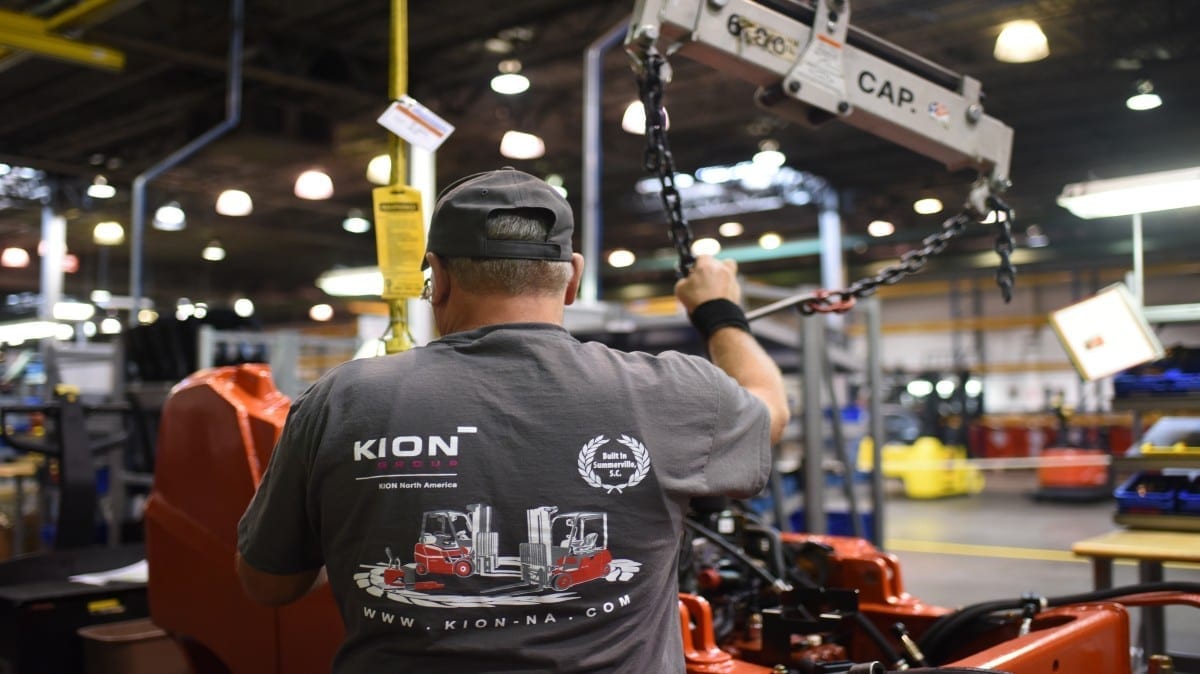
    “Today marks the dawn of a new era for the KION Group, Dematic and our customers,” said CEO of the KION Group, Gordon Riske. “The transaction brings together the world’s most profitable manufacturer of forklift trucks and warehouse technology with one of the largest and fastest-growing warehouse automation and software solutions providers. Our combined global presence, intelligent and tailored material handling as well as comprehensive automation and software technology solutions, plus now more than 30,000 dedicated and highly skilled employees will enable us to deliver even more value for our customers.”

    The new Dematic operating unit will be led by John Baysore, previously CEO of Dematic North America, who will hold the role of president and CEO and has a proven track record in growing supply chain solutions business.

    “At Dematic, we are proud to move forward as part of the KION Group, which even better positions us to assist our customers with supply chain performance. The newly established solution portfolio affords our customers the ability to accommodate their ever changing business requirements and will dynamically optimize their warehouse and distribution functions,” said John Baysore. “The market for system solutions is expected to grow by around 10 percent per year in the medium term. We have the innovative technology, software expertise and global network to meet the supply chain requirements of the future, such as those resulting from the rapidly growing e-commerce sector and the many other vertical markets we serve.”

  • Rhenus opens its first office in South Korea

    Rhenus opens its first office in South Korea

    The Rhenus Group is opening its own business operations in South Korea at the beginning of November. The logistics specialist also founded the national company known as Rhenus Logistics Korea at the same time. The office in the South Korean capital Seoul will organise sea and air freight operations, third-party logistics and domestic transport services in future.

    “The primary motive for opening the business site in South Korea is to continue consolidating our Asian network; we’ve been continually expanding this during the past few years. Seoul forms the centre of South Korea and is the focal point of the Sudogwon metropolitan district.

    “More than 25 million people live there and this accounts for half of the population of the country; it therefore provides an excellent starting point for our range of logistics solutions,” says Tobias Bartz, who is responsible for the logistics specialist’s Asian business on the Rhenus Management Board, citing the reasons for the latest developments.

    The Rhenus Group is particularly aiming to establish itself as a partner for transporting, handling and storing raw materials, semi-finished products and industrial and consumer goods in the South Korean market with its complete range of services. Rhenus Logistics Korea then plans to develop the individual solutions for specific sectors, combined with local expertise.

    Much of the country’s trade takes place with Europe – but the new company will also focus on transport between different Asian countries. In terms of its infrastructure, South Korea provides excellent conditions for sea and air freight services for the new national company with Incheon International Airport, one of the largest in Asia, and the port of Busan, which is one of the top 10 in the world according to the number of containers handled. “We also envisage further growth in this market in future after completing the starting phase in Seoul,” says Bartz.

  • Lippo Group betting on e-money in digital age

    Lippo Group betting on e-money in digital age

    Indonesia’s Lippo Group is turning e-commerce, electronic money and other information technology-related enterprises into a new pillar of its business, closely monitoring spending trends to gain a better foothold in the greater Southeast Asian market.

    The next phase for the banking and real estate conglomerate “will be the fourth industrial revolution,” CEO James Riady told The Nikkei Tuesday on the sidelines of the 18th Nikkei Global Management Forum here.

    Lippo Group was founded as a banking institution by Mochtar Riady, the current CEO’s father and a former head of Bank Central Asia. It branched out into real estate in the 1990s when subsidiary Lippo Karawaci developed a plot outside Jakarta that the group collected as collateral. Lippo Group has since also developed retail and hospital operations, which help boost property value. It now has more than 20 listed subsidiaries and rings up a total of about $7 billion in annual revenue.

    But the fall in resource prices and China’s economic slowdown have dealt a blow to the Indonesian economy, including to its real estate sector. Lippo Karawaci suffered a 23% drop in sales last year to 9.19 trillion rupiah ($702 million), as well as a 79% plunge in net profit to 535.3 billion rupiah.

    Business of the future

    Meanwhile, the proportion of smartphone users in Indonesia has risen from about 20% of the population in 2014 to almost 40% — about 100 million people — in 2015. “We must have inward creative disruption so that we can be transformed into a new area of growth, which is the digital economy,” James Riady said.

    In addition to its communications and media businesses, Lippo Group launched e-commerce site MatahariMall in September 2015. One of the platform’s strengths is that it can use Lippo Group’s retail network throughout Indonesia to move and distribute products — a definite plus in the face of competition from Lazada Group, a subsidiary of Chinese titan Alibaba Group Holding, and Tokopedia, in which Japan’s SoftBank Group has a stake. It was revealed in October that Japanese trading house Mitsui & Co., bullish on MatahariMall’s growth potential, was investing in the site’s operating company.

    Riady considers e-money his new focus. The goal is to get Lippo Group’s 120 million customers on board by allowing them to pay at hundreds of retail locations using the service. He plans to expand the group’s e-money offerings to other Southeast Asian countries, as well as include such services as depositing and transferring e-money. Riady sees a complete transformation in the way banks do business.

    Lippo Group and Singaporean ride-hailing company Grab agreed in July to cooperate on launching a mobile payment platform. The service will roll out in earnest at the end of the year.

    Following trends

    The spread of e-money will allow Lippo Group to closely track spending by its customers at retailers, e-commerce sites and other outlets. Riady hopes to use the service to bolster overseas expansion of the group and improve products and services associated with retail operations.

    Lippo Group is currently operating real estate businesses in Singapore and Hong Kong. But it will target Southeast Asia in the future to win over the region’s young, eager consumers. “What matters is how we can capture the [Association of Southeast Asian Nations] population of 600 million into our e-money accounts and world of services,” Riady said.

    In terms of Lippo Group’s real estate business, Riady expressed his interest not just in property development but in creating entire communities spanning retailers, hospitals and schools. The group has already built hospitals in Myanmar, and the CEO said the company is looking into Vietnam and Laos as well.

  • Modernland finds new stepping stone with Jardine group

    Modernland finds new stepping stone with Jardine group

    Indonesia’s promising property market has attracted multinational real estate firms to collaborate not only with domestic peers but also international partners. An alliance between the Astra group, Hongkong Land and Modernland Realty shows this well.

    Astra Land Indonesia and Mitra Sindo Makmur have created a joint venture to acquire 70 hectares of land in Cakung, East Jakarta, worth Rp 3.4 trillion. The collaboration was marked under an agreement inked on Oct. 12 in Jakarta.

    Astra Land is a joint venture between Astra International (ASII) and Hongkong Land, while Mitra Sindo Makmur is a subsidiary of Modernland Realty (MDLN). The new entity will develop the land for a project dubbed Jakarta Garden City.

    This should provide positive sentiments for Modernland, given the fact that the new partners are well-known firms in Asia. Astra is a well-known Indonesian conglomerate while Hongkong Land is a leading property investment, management and development group in Hong Kong, Singapore and mainland China.

    They are indirectly affiliated companies as Jardine Matheson sits as the main shareholder, owning more than 50 percent of shares in the two companies.

    While Astra has only three years of experience in the real estate business, Hongkong Land has laid foundations in Indonesia for over 30 years. Currently managing US$32 billion of assets in Asia, it has been operating in Indonesia since the 1970s.

    Under a collaboration with Central Cipta Murdaya, Hongkong Land built the WTC Complex in Sudirman, Jakarta, as its first project. It has also developed two other big projects in Indonesia, namely Nava Park (joint venture with Sinarmas Group’s Bumi Serpong Damai) and Anandamaya Residence (joint venture with the Astra group).

    Financially beneficial

    In its latest research report, Mandiri Sekuritas appraised the joint venture as it will provide security for Modernland in terms of marketing sales and earnings, in light of Hongkong Land’s established track record and experience.

    Furthermore, this action could benefit Modernland as the cash inflow from the transaction could reduce its debt ratio, especially as it was sealed amid the economic slowdown.

    * Bloomberg estimate

    As of the first half of 2016, Modernland had booked Rp 1.1 trillion in revenue, down by 18 percent year-on-year from Rp 1.35 trillion last year, due to fewer projects launched this year. This brought down net income by 88 percent to Rp 26 billion.

    Therefore, the newly formed joint venture with Astra and Hongkong Land in Jakarta Garden City will give better prospects for Modernland. As for Jardine Matheson group, the joint venture will augment its portfolio in the largest property market in Southeast Asia.

  • VW’s Audi steps up collaboration with Chinese tech groups

    VW’s Audi steps up collaboration with Chinese tech groups

    Volkswagen’s luxury car unit Audi has agreed to deepen collaboration with Chinese internet technology groups to offer more digital services in the world’s largest car market.

    Audi and FAW-Volkswagen, VW’s joint venture with FAW Car Co Ltd (000800.SZ), have signed letters of intent with Alibaba (BABA.N), Baidu (BIDU.O) and Tencent (0700.HK), Audi said on Sunday. Financial terms were not disclosed.

    Parent Volkswagen has been hobbled by a scandal over the rigging of emissions tests, distracting it in a race with global carmakers to develop computer-aided services for drivers.

    VW’s CEO told a newspaper on Sunday that it has to remain in control of its relationship with car users, which is why it stopped talks with U.S. ride-hailing service Uber and technology giants Google (GOOGL.O) and Apple (AAPL.O).

    Under the agreement with online search company Baidu, Audi aims to improve the use of smartphone apps in its cars.

    Its projects with social network and online gaming group Tencent include helping drivers to make better use of the WeChat communication app.

    The alliance with Alibaba aims to develop more real-time traffic news services and 3D maps.

    VW in May took a $300 million stake in smaller ride-sharing company Gett.

  • Inflight Sales Group captures Garuda Indonesia concession

    Inflight Sales Group captures Garuda Indonesia concession

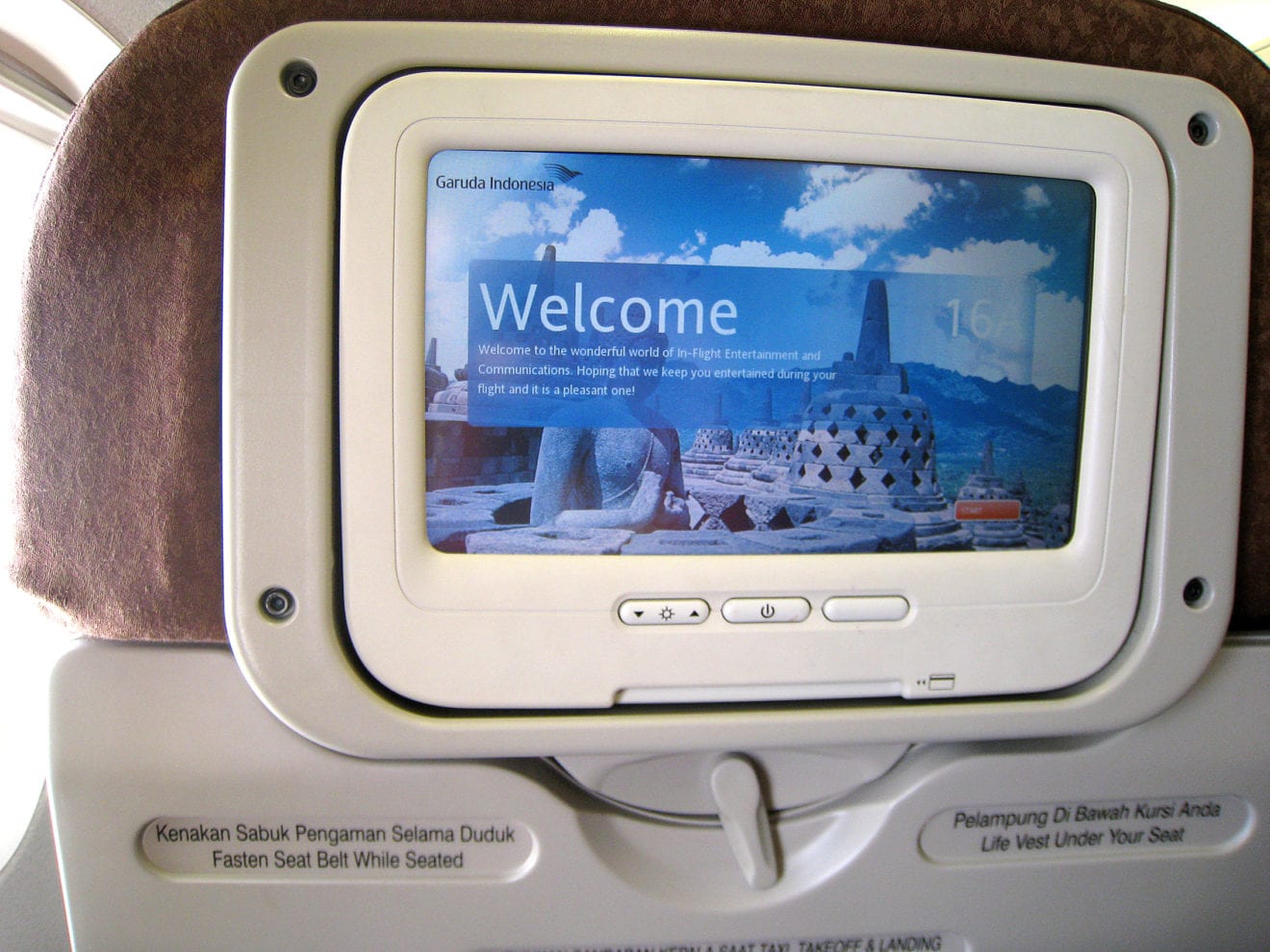
    Inflight Sales Group (ISG) has reinforced its position in Asia with the addition of the inflight duty-free and duty-paid concession onboard Garuda Indonesia airline.

    The new programme will be launched April 1 under a partnership with parent company PT Garuda Indonesia (Persero) Tbk.

    Together with the current contract with Citilink, a low-cost subsidiary of the same group, ISG has strengthened its footprint in Indonesia and the agreement continues the growth momentum within ISG, said the inflight concessionaire.

    ISG executive director Vimal Rai said: “Winning a competitive partner selection process is always delightful! ISG now stands ready to deliver an exciting and dynamic inflight retail programme for Garuda. We are confident to take it to the next level, commensurate with Garuda’s five-star status as an airline. We, together with the PT Rodamas Wirasakti team in Indonesia, have had a long history of retail partnership with Garuda already, and after a short break, we are happy to be bringing new insights and innovations to the airline’s inflight retail offering.

    ISG managing director Tony Detter added: “While we are expanding in the European market, we continue to see great potential in the Asian market. With the extensive network that Garuda is flying and its forecasted growth, we foresee that there is an opportunity to further expand ancillary revenues through inflight sales.”

  • Pranda Group expands in Vietnam and Indonesia

    Pranda Group expands in Vietnam and Indonesia

    Reporting from Pranda Group, the progress of its retail business expansion throughout the year 2015 in Vietnam and Indonesia; the country members of AEC has strengthened PRIMA GOLD brand by creating impressive experience to the target customers such as product perception, marketing activities, brand reinforcement, etc. Particularly in Vietnam, the marketing activities using brand ambassador made the output in Vietnam meet the company’s target. Moreover, Pranda Vietnam Retail recently increased new branches “Lotte Center” and “Vincom Center Nguyen Chi Thanh” in Hanoy to support the needs of consumers as well as extended distribution channels especially in the economic center of Vietnam. Presently, there are 8 branches located in the shopping malls of economic cities covering 5 branches in Ho Chi Minh and 3 branches in Hanoy.

    In 2016, the Company plans to expand one more branch at Saigon Center Department Store in Ho Chi Minh City, as  new Department Style of Viet Nam that the mix between the Plaza and Takashimaya from Japan. Over 57 square mates, Prima Gold sets a goal to make the Flagship store to create brand experiences and support to consumer needs.

    For the retail business in Vietnam where the rate of economic growth is attractive among AEC, Pranda Marketing Indonesia plan to increase channel and to expand its retail business in various brands. Recently, a new branch managed by Central Thailand in cooperation with PT Grand Indonesia was officially opened in Central Grand Indonesia. Pranda Marketing Indonesia aims to push forward PRIMA GOLD and Julia Brand to support consumers’ needs which have increasingly purchasing power. Currently, PRIMA GOLD has 3 branches, Julia 19 branches, and Lovelinks 8 branches. By the year 2016, the Company plan to expand 4 more PRIMA GOLD branches and 20 more Julia branches in order to accommodate a growing customer base and future growth.

    Pranda Group plan to expand in Asian jewelry market for leading to AEC 2016. The company is clearly to aim and extend to the retail network of Asian Economic Community or AEC. That integrates market to be a center of the region. Certainly, it will have a population more than 600 million people in this market. Pranda Group has consider in this market that sufficient to forward product, service, labor and open free market investment in this year. This is a chance to push forward ours brand to be recognized and opportunity to build our retail marketing channel to grow up.

  • Sussan Group CEO Naomi Milgrom says no more bricks and mortar

    Sussan Group CEO Naomi Milgrom says no more bricks and mortar

    Australian retail needs to reinvent the shopping centre, prepare for more of the world’s biggest retailers setting up here, and bridge the gap between bricks and mortar and the “mindblowing” experience of online, says the boss of Australia’s largest privately held specialty fashion retailer.

    Naomi Milgrom is the owner, chair and chief executive of the Sussan Group, which owns the Sportsgirl, Sussan and Suzanne Grae brands, and is one of Australia’s richest women.

    She said Australian retailers needed swift change as the falling dollar lifts import prices, newly arrived international retailers take market share, and amid gloomy predictions about the future of US shopping centres. With more than 500 stores, Milgrom said she didn’t want to open any more.