Retail News CRM

Tag: group

  • LG Chem picks first CEO from outside group

    LG Chem picks first CEO from outside group

    LG Chem said Friday it nominated Shin Hak-cheol, vice chair and executive vice president of 3M, as its new head. It is the first time the chemical company hired a chief executive from outside the company since its foundation in 1947. Current LG Chem CEO Park Jin-su climbed the ladder during his 42-year career at the company.

    LG Chem said it has been looking for a person who can systemize global business operations as overseas production and marketing of lithium-ion batteries has increased along with demand for electric cars.

    “Shin has gained global perspective and experience in operating a global materials and components business,” LG Chem said in statement. “He is the right person capable of responding to a rapidly changing business environment and bringing change in corporate culture and structure.”

    Shin started at 3M Korea in 1984 as a technical supervisor and then joined 3M Philippines in 1995 as its managing director. In 2011, he was named executive vice president of 3M International Operations, becoming the first Korean to lead 3M’s overseas businesses, LG Chem said.

    His most recent role at 3M was leading global teams, including the research and development, strategy and business development and business transformation teams, as vice chair and executive vice president at the 3M headquarters in Saint Paul, Minnesota.

    Shin will begin commute to work and be officially inaugurated as the chief executive during the shareholders meeting in March.

    Park will retire as Shin is inaugurated, but the exact date has not been announced yet. The company grew into a 28 trillion won ($24.8 billion) company under Park. In 2011, it posted around 22.6 trillion won in sales.

    Industry analysts say this may be the beginning of a major transformation at LG under the leadership of 40-year-old Chairman Koo Kwang-mo.

  • Mulberry Group looking for a JV Parter in Korea

    Mulberry Group looking for a JV Parter in Korea

    Despite a profit decline for its latest year, UK luxury leathergoods company Mulberry Group plans to form a JV to develop its business in South Korea.

    It says it has signed an agreement with SHK Holdings to form Mulberry (Korea) Co. It will own 60 per cent of the new entity and the two companies will invest £4.6 million (US$6.1 million) to buy assets and to develop the business in South Korea.

    Mulberry last year had plans to launch an equal-share JV with another company as well as plans to launch into Hong Kong.

    Meanwhile, for the financial year to March 31, Mulberry made a profit of £6.9 million, down from £7.5 million the year earlier.

    Revenue rose 1 per cent to £169.7 million, it said. Retail sales grew 3 per cent, with UK sales broadly flat and international sales up 20 per cent. Digital sales grew 14 per cent, making up to 17 per cent of group revenue, the company said.

    For current trading, Mulberry says retail like-for-like sales fell 7 per cent in the 10 weeks to June 2 with international sales up 1 per cent. However, UK sales were down 9 per cent because of lower footfall.

  • Fast Retailing Group’s profit soars despite efforts

    Fast Retailing Group’s profit soars despite efforts

    Fast Retailing Group’s profit soared 30.5 per cent in the six months to the end of February – on sales up a healthy 16.6 per cent.

    The Japanese fast-fashion company, which owns Uniqlo and GU, among other brands, said consolidated revenue totalled ¥1.1867 trillion (US$11.05 billion) while operating profit reached ¥170.4 billion (US$1.587 billion).

    Uniqlo’s international business drove the growth, with both Uniqlo Japan and the fast-growing GU brand performing strongly as well.

    As it pursues its medium-term vision to become the world’s largest apparel retailer, the company is focusing on Uniqlo and GU. It sees opening global flagships and large-format stores in major cities around the world as a key strategy “to help consolidate Uniqlo’s position as a key global brand”.

    “Within the Uniqlo International segment, Greater China (Mainland China, Hong Kong and Taiwan), Southeast Asia and South Korea are entering a new stage of growth as the key drivers of operational growth for the Fast Retailing Group,” the company said in an earnings statement.

    Operating losses at Uniqlo USA contracted, putting that business on track to turn a profit going forward.

    “In terms of the GU operation, we plan to open more GU stores in Japan, while expanding the brand’s international presence, especially in Greater China.”

    Uniqlo’s domestic Japanese operation also achieved an increase in sales and profit in the first half year. Revenue totalled ¥493.6 billion (up 8.5 per cent) and operating profit ¥88.7 billion (up 29 per cent). In the six months to February 28, same-store sales, including online sales, expanded by 8.4 per cent year-on-year. Online sales increased 31.6 per cent to constitute 7.5 per cent of total revenue.

    Uniqlo International’s profitability improved in Greater China and South Korea on higher sales, driven by strong sales of winter ranges such as HeatTech and down. Uniqlo Southeast Asia and Oceania continued to generate a strong performance, with solid demand for summer clothing and firm demand from travellers for winter clothing resulting in significantly higher first-half revenue and profit.

  • Catch spends millions on trust play

    Catch spends millions on trust play

    Catch Group’s first foray into the world of TV advertising has cost the e-commerce company millions, as it looks to bolster its brand awareness ahead of the imminent arrival of Amazon.

    It’s first TV campaign, which has been airing for two-weeks, is part of a long-term marketing play to first establish Catch’s new marketplace image in the local market before beginning to communicate price and range later down the line.

    Catch Group’s head of marketing, Ryan Gracie, told that the campaign was initially designed alongside the company’s re-brand to drive awareness and begin building trust – something pureplay retailers have struggled with in recent years.

    “Building a brand online is very hard and you have to really take yourself above the line if you want to be a trusted, credible brand,” Gracie said.

    “We’re a pureplay, we don’t exist physically so it’s important for us to exist on these other channels.”

    Gracie was unable to say what the return looks like so far, but said a decision was taken by management on TV knowing that assessing the benefits wouldn’t be clear cut.

    “The hard costs of the media spend is a major inhibitor, because you can’t explicitly measure the impact of it,” he said.

    “What do you get when you advertise on TV? You get a warm and fuzzy feeling, but you have to trust it’s going to work.”

    The ads themselves depict Australians in various scenarios screaming “catch” – in line with the company’s “screaming good deals” philosophy.

    Catch is investing in marketing on both sides of the market at the moment, having also stepped up its B2B marketing since its brand relaunch to encourage more suppliers to jump on its platform.

    Catch Group co-founder Gabby Leibovich told sister site Internet Retailing in August that more than 200 brands have signed up to the marketplace, with 25,000 new SKUs recently added across several new categories.

    Nati Harpaz, CEO of Catch Group, is the chairman of Octomedia, Inside Retail’s parent company.

  • Thailand’s Central Group to invest $512 million in Vietnam

    Thailand’s Central Group to invest $512 million in Vietnam

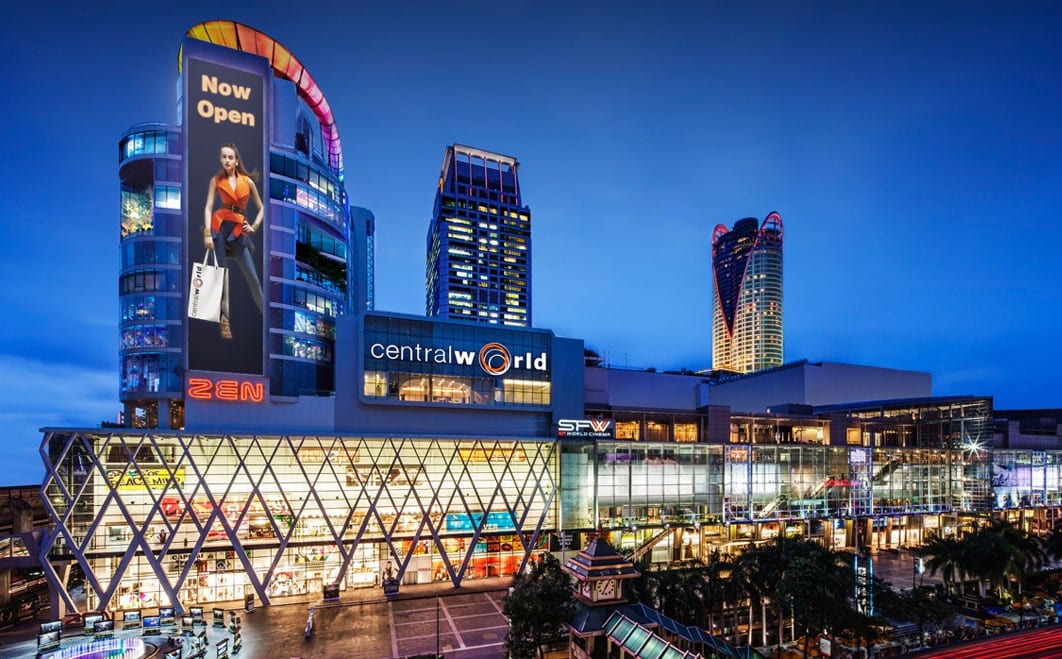
    Thailand’s Central Group has revealed plans to invest US$512 million in Vietnam over the next five years, to expand its retail operations.

    The company, which has acquired local businesses and is introducing its own Thai retail banners into the fast-growing market, is aiming to achieve sales growth of between 20 and 30 per cent annually there. It already has 160 outlets, including Robins department stores and the Big C hypermarket chain, the latter of which recorded 11 per cent sales growth in July.

    Central Group believes its Vietnam sales can reach 35 billion baht (US$1.05 billion) in 2017.

    Central Group Vietnam CEO Philippe Broianigo says the investment will be especially focused on food and electronics. Shopping malls, stationery shops, hotel management and wholesaling will also be nurtured.

    In early 2013, Central acquired a 49 per cent share of local electronics retailer Nguyen Kim and Central Group CEO Tos Chirathivat says there are plans to open a further 30 branches of the chain this year alone.

    Next year, Central will open 20 branches of Big C and its wholesale sister company Lanchi Mart.

    Tos was speaking at the second Vietnamese Goods Week in Thailand, aimed at promoting international business and trade opportunities in Bangkok.

    “We will continue to expand our business in Vietnam because of the country’s strong potential as an emerging market with high GDP growth,” Tos said.

    “Vietnam and Europe are our investment priorities. We are interested in building our own hotel in Ho Chi Minh City in the future.” The hotel would have between 200 and 500 rooms.

  • Lippo explores investment possibilities in border with Timor Leste

    Lippo explores investment possibilities in border with Timor Leste

    Lippo Group is exploring investment possibilities in the eastern province of Nusa Tenggara, which borders Timor Leste, to generate development and improve living standards in the region.

    “Increased investments in the border region is very important as it can help to improve the welfare of the local population. We are now studying the regions investment potential,” said Lippo Group President Theo L Sambuaga on Saturday (Jan. 21).

    He added that explorations to see if the region had any investment potential would be done in the districts of Timor Tengah Utara, Belu and Malaka.

    Businesses under the Lippo Group include those in education, health and the retail sector.

    Sambuaga stated there are possibilities of establishing a world-class health service, as well as a BPJS (government-subsidized health insurance scheme) scheme for poor people that live along the border region.

    With regards to the education sector, he added that Lippo are planning to provide scholarships for promising university students from the region.

    “We have already offered scholarships to students at State Timor University (Unimor) in Kafemenanu totaling Rp150 million, this was announced to the university on Friday,” he said.

    The Lippo Group also has an education division that was involved in the building of 340 schools across the country, as well as a health division that has built several general hospitals.

    “We have one hospital in East Nusa Tenggara province and also one in Kupang and another one in Labuan Bajo. We are still exploring the possibilities of building others in the border regions, such as in Timor Tengah Utara and Belu,” said Sambuaga.

    With regards to the retail sector, Lippo Group includes a chain of Hypermarts and Matahari Department Stores, which they claim to be a boost for local economies.

    Its chain of Hypermarts are located across the region, totaling up to 120 stores. There is also a possibility that the company may set up more in Kafemenanu in Timor Tengah Utara or Atambua in the Belu district. The group also has 150 department stores across the country.

    “The investment possibilities are there in view of our capacity, in addition to the positive impact our investments will bring for the development of the welfare of the people in the border region,” added Sambuaga.

    As one of its major stakeholders, he also stated that the Indonesian government shares the same level of responsibility with Lippo in improving the welfare of the local people.

    “This is about shared responsibility and I hope that this could motivate other parties to join our efforts. Cooperation between the government and the public is a must,” he said.

  • Bata: Shoemaker to the world

    Bata: Shoemaker to the world

    IT’S inevitable that the world’s first family in footwear, Bata, would partner with the Philippines’s premier retail family, the Sys of the SM Group.

    “First of all, their whole philosophy is business, their heritage coming from footwear. It’s particularly strong. Also, we have a friendship with the SM Group and the Sy family going on for some time. All these make them great partners, and we never hesitated. They were the only partner we were interested to work with in the Philippines,” Thomas Archer Bata said at the launch of the first Bata store in the Philippines, which can be found at the third floor of SM Megamall Building B.

    Ambassador; Bubblegummers; and Valtina Prima Ballerina

    The Bata Shoe Co., which is the biggest in the world, originated in Zlin, in what is now the Czech Republic, on September 21, 1894. It was founded by Tomás Bat’a. His son, Thomas J., propelled the company to greater profitability after suffering losses in World War II. The grandson, Thomas George, is currently in the management board with his sisters Christine, Monica and Rosemarie. Thomas Archer (who will be referred to as Mr. Bata from hereon in the article), the chief marketing officer, belongs to the fourth generation of cousins who add vigor and vitality to the company.

    Bata has 5,000 retail outlets in 70 countries. In Senegal, Rhodesia and Zimbabwe, Bata became the local name for shoes when in the 1950s, the company conquered the African continent. “Opportunities abound, everyone barefoot,” came one cable from a salesman to headquarters.

    It has a strong presence in Asia, particularly India. It also opened a factory in Thailand in the 1970s. But Bata’s entry into the Philippines came only recently. “To be completely honest, it’s because of legal reasons and legal complications related to our trademark here,” Mr. Bata bared. “It took many, many years to resolve. Fortunately, with the help of SM, we managed to resolve it and we’re back.”

    Mr. Bata, who strikes me as a mix of actors Chris O’Dowd and Aidan Quinn, is quite optimistic about his family’s prospects in the country. “We think our model and our proposal is very interesting. We think it’s fairly unique in the market today. We’re going to tread cautiously. We’re opening [between eight and 15 Bata stores in SM malls in Metro Manila], communicate and try to build our consumer base, teach people about our products. From there, we’ll see where we’re going to go.”

    The Bata business of “responsible capitalism” is guided by a “Moral Testament” left behind by its founder: The company should not be treated as a source of private wealth but, rather, as a public trust, a means of improving living standards within the community and providing customers with good value for their money.

    Bata prices curiously end in the digit 9. “Back over a hundred years ago, it was partially a marketing tactic to make the prices look even more affordable. It has been in our heritage and our blood ever since we started, and it’s just to emphasize the value [of our product],” Mr. Bata explained.

    The company has an “insistence on focusing on the local market not only as a matter of structure and strategy but, rather, as an essential aspect of the Bata brand and philosophy. Shoes always followed culture and climate.” Thus, the Weinbrenner sandals will be a hit for their tropical, outdoorsy appeal, in tune with the penchant of Filipinos who love flip-flops.

    By some quirk, towns with the company’s factories have the Bata name: Batanagar in India, Bataville in France, Bata-Kolonie in Switzerland, Batadorp in the Netherlands, Batapur in Pakistan, Borovo-Bata in Croatia and Batawa in Canada, a play on the capital Ottawa. If a factory were to be built here, it would most likely be in Batangas.

    “Never say never. You know, we have to see what opportunities come up. If we see the opportunity to produce shoes in the Philippines, it could happen,” Mr. Bata said of the possibility of Filipinos becoming “Batamen”, who are of every race, creed and nationality. A lot of the materials to produce the shoes come from Brazil. Italy is the source for premium products. Raw materials also come a little bit from China and India. These are the four main areas where Bata gets its materials from, depending on the shoes that you’re looking for.

    “We are very environment-friendly. Our factories on a yearly basis are audited for their sustainability. We manufacture our own shoes. We actually issue a Sustainability Report every year about the progress we’re making on reducing waste. We’re very lucky in so much, as our founder over a hundred years ago believed in sustainability, in producing as little waste as possible, and that exists till today. We always use environment-friendly materials, suppliers, recyclable papers in our boxes, to make as little negative impact on the environment as we can,” Mr. Bata assured.

    Bata has three creative teams, with the biggest one based in Italy. One is in Toronto, Canada and another in Singapore. “In the Philippines 50 percent of the products come from Italy, 30 percent from Singapore, 20 percent from Canada. Not all brands are here,” Mr. Bata said. “We’re bringing primarily Bata and a little bit of our other brands for the moment. We’re still very much in the learning stage for us, to see what the Filipino consumer likes the most before we commit to specific product ranges.”

    Are they open to designer collaborations? “Yes, absolutely. We’re interested to do that. We’re actually talking to potential partners in the Philippines to work on some collaborative projects.”

    What about celebrity endorsers? “It’s a possibility. We’ll see. We believe the best kind of endorsement is user experience and word-of-mouth. So we tend to focus on ‘loyalizing’ people who come to buy with us more than anything else. I won’t rule it out but for the time being, it’s not on the agenda.”

    Has the company learned that “bata” here means “child”? “Yes, I’ve heard that.” So is there a possibility to have a Bata Children’s Program here? “Very high probability. We actually intend to do that. It’s a big part of our legacy and it’s very important for our family. We have our own schools and, specifically, we focus on the education of young girls. So we’re actually planning and discussing this with SM, how we can roll this, especially in the rural communities in the Philippines.”

    Thomas J. Bata would often wear a different type of shoe on each foot as a way of constantly testing their products. At the launch, his grandson Thomas Archer wore a pair of leather brogues. “These are Bata shoes from our factory in India, in Calcutta. Very comfortable. It’s from the Ambassador line but not yet available in the Philippines, but they will be in a few weeks’ time,” Mr. Bata said with delight.

    Did you also learn how to make shoes? “Yes, I did. My holidays as a child were going to factories, making shoes and visiting stores. I’m lucky I grew up with shoes. I like shoes. Not everybody who grew up in the shoe business actually likes them!”

  • Reliance Group launches dedicated IoT venture

    Reliance Group launches dedicated IoT venture

    Indian conglomerate Reliance Group, parent company of Reliance Communications (RCom), has teamed up with Cisco Jasper to launch a new dedicated IoT venture in the market.

    The new venture, UNLIMIT, will provide enterprise customers throughout India with a service that combines the RCom mobile network with Cisco Jasper’s IoT connectivity management platform.

    As part of the partnership, Cisco will also improve its IoT engineering talent base in India by hiring more expert staff for its Cisco Innovation Center in Bangalore.

    Indian customers seeking to expand their IoT services to new overseas markets will be able to take advantage of Cisco Jasper’s partnerships with operator groups representing more than 120 mobile networks worldwide.

    The new service is also expected to play a key role in supporting the government’s Digital India project, which aims to transform 100 cities across the nation into smart cities.

    “IoT is a critical enabler for India’s growth, and businesses throughout the country are already utilizing its huge potential to help deliver innovative new services to their customers, while reducing cost and increasing revenue,” commented Juergen Hase, CEO of Reliance Group’s Unlimit IoT business group.

    “We are delighted to partner with Cisco Jasper, and this strategic partnership will strengthen the market position of UNLIMIT significantly.”

  • DFS Group, Make-a-Wish and Louis Koo Help Make Superhero Wish Come True

    DFS Group, Make-a-Wish and Louis Koo Help Make Superhero Wish Come True

    DFS Group (DFS), the world’s leading luxury travel retailer, alongside Make-A-Wish (worldwish.org), the world’s largest wish-granting organization, and actor Louis Koo, came together at T Galleria by DFS, Canton Road today to help Yuet-Lun, a 4-year-old boy from Hong Kong with congenital nephrotic syndrome, fulfill his wish of being a superhero. The event, which kicked off DFS’ #GiveJoy campaign in Hong Kong, saw Yuet-Lun transformed into his favorite superhero, fighting crime in T Galleria by DFS with the help of his father and Louis Koo dressed as superheros.

    “DFS is committed to supporting the communities where we live and work, and the holiday season is a particularly important time to give back to those in need,” said Jay Frame, DFS Group’s Vice President Corporate Communications and CSR. “We are thrilled to partner with Make-A-Wish to make Yuet-Lun’s wish come true in Hong Kong and to help grant the wishes of nine other children around the world.”

    Yuet-Lun, dressed as a superhero, arrived with his father at T Galleria by DFS, Canton Road and was greeted by Louis Koo and given a special mission and map to find treasure inside the store to save Hong Kong. As he began his mission, actors posing as thieves jumped out and stole his mission map, requiring Yuet-Lun to fight off the thieves throughout the store in order to complete his mission. After defeating the thieves, Yuet-Lun found the treasure on the third floor of T Galleria by DFS and successfully saved Hong Kong.

    The mission of Make-A-Wish is to grant the wishes of children with life-threatening medical conditions to enrich the human experience with hope, strength and joy. Since its inception in 1980, Make-A-Wish has collectively granted the wishes of more than 380,000 children in nearly 50 countries. Each wish that comes true inspires these seriously ill children to persevere against their illnesses.

    “We are proud to renew our partnership with DFS and its ambassadors this holiday season to help grant even more wishes to deserving children facing critical illnesses,” said Make-A-Wish International President and CEO, Jon Stettner. “We are particularly grateful to DFS and Louis Koo for helping to make Yuet-Lun’s wish come true in Hong Kong. It’s through the support of partners like DFS and its customers around the globe that make these life-changing wishes possible.”

    This is the third year DFS has partnered with Make-A-Wish International and in 2016, DFS will help grant 10 wishes to children like Yuet-Lun in the communities where DFS operates. Donation boxes will also be placed in T Galleria by DFS stores in Hong Kong and Macau for shoppers to make a contribution to Make-A-Wish:

    • T Galleria Beauty by DFS, Hong Kong, Causeway Bay
    • T Galleria by DFS, Hong Kong, Canton Road
    • T Galleria by DFS, Hong Kong, Tsim Sha Tsui East
    • T Galleria by DFS, Macau, City of Dreams
    • T Galleria by DFS, Macau, Shoppes at Four Seasons
    • T Galleria by DFS, Macau, Macau Studio City
    • T Galleria Beauty by DFS, Macau, Galaxy Macau Store

    DFS customers can help grant wishes by following @DFSOfficial and liking posts about Make-A-Wish from @DFSOfficial and other influencers throughout December. For every post that receives 1,000 “likes,” DFS will donate to Make-A-Wish International to help grant up to ten wishes to children around the globe.

  • Two Thai clans stay on Forbes rich list

    Two Thai clans stay on Forbes rich list

    The Chearavanont and Chirathivat families are among the 50 richest Asia families in 2016 as ranked by Forbes Asia magazine. Families in the top five of this year’s list are in businesses that span technology, livestock, real estate and oil and gas, the magazine reported in its latest issue published yesterday. Leading the list for the second year in a row is South Korea’s Lee family, the founder of Samsung Group, with a combined wealth of US$29.6 billion, up from $26.6 billion last year.

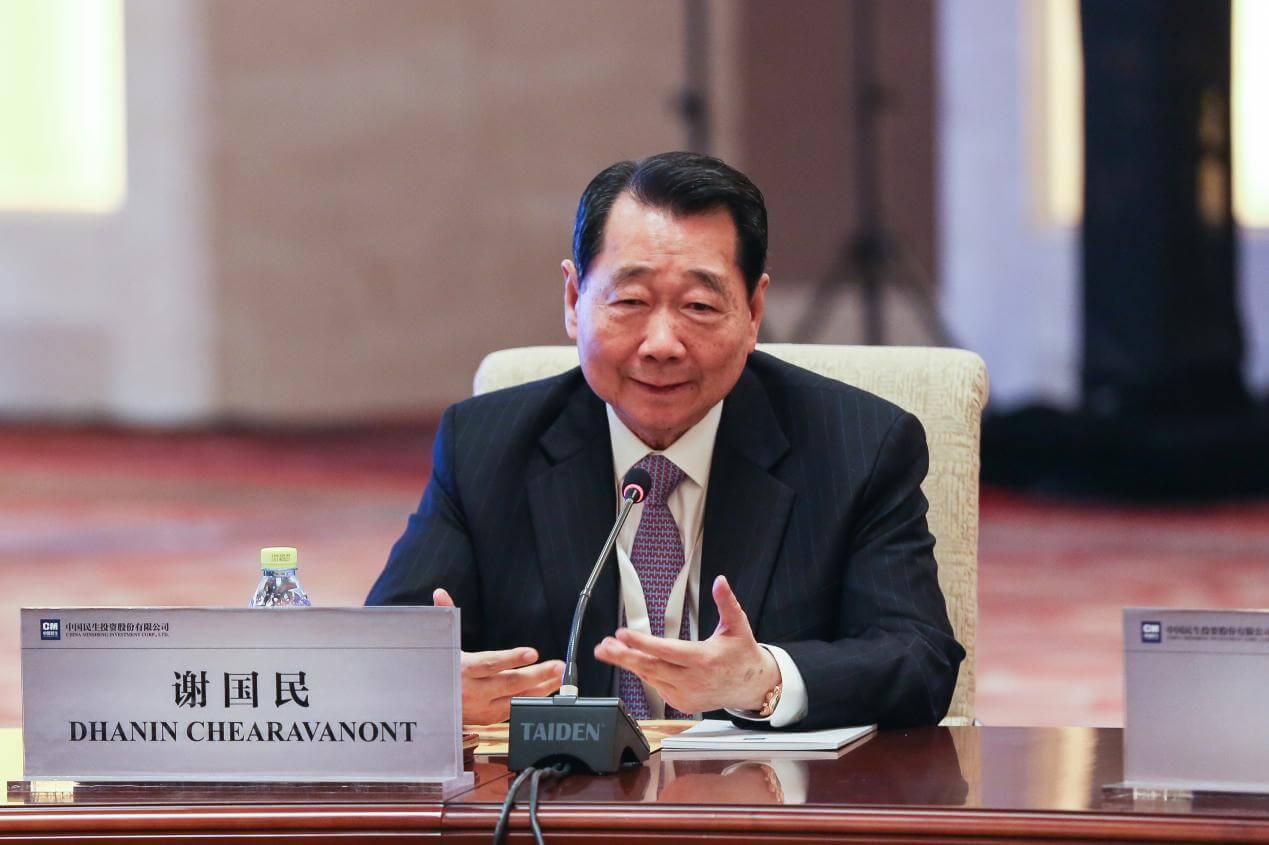
    Thailand’s Chearavanont family, which controls the Charoen Pokphand Group (CP Group), rose to second place with US$27.7 billion in wealth, moving up from fourth place and $19.9 billion last year.

    CP Group led by billionaire Dhanin Chearavanont operates various businesses ranging from poultry, telecom and retail under the 7-Eleven convenience chain in Thailand.

    Third-richest are the Ambanis of India’s Reliance Group with a combined net worth of $25.8 billion, followed by the Kwok family of Hong Kong with $25.2 billion, Asia’s richest real estate family. The Lee family from Hong Kong ranks fifth with $24.7 billion.

    The Chirathivat family, which owns giant retail businesses in Thailand under the Central Group, retains the 14th spot with $13.8 billion. Its combined wealth grew from $11.7 billion last year.

    Headed by chief executive Tos Chirathivat, Central Group just restructured its organisation by recruiting professionals to run the group’s operations, including property, trading, food and online, which have combined sales revenue of about 320 billion baht this year.

    Slipping from this year’s list is the Ratanarak family, a Thai clan that controls Bangkok Broadcasting’s Channel 7 and ranked 45th with $3.5 billion in net worth last year.

    The reports notes that Indian families stood out on the 2016 Forbes list of Asia’s richest families, with 17 of the top 50 families hailing from India.

    Many of these Asian families’ conglomerates have worldwide footprints. Collectively, the top 50 families are worth US$519 billion.

    “Sources of Asian wealth are broadening. You can see that among the rich families here, and even within many of the families — no particular sectors of the economy dominate,” said Tim Ferguson, editor of Forbes Asia.

    The minimum net wealth to qualify for the list was $3.4 billion, up from $2.9 billion a year ago.

  • Fintech investment fund Senjo Group opens new HQ in Singapore

    Fintech investment fund Senjo Group opens new HQ in Singapore

    Senjō Group, a privately held investment firm, unveiled today its new global headquarters in Singapore. The leading financial technology investor has leased the entire 56th floor of One Raffles Place in Singapore’s Central Business District.Established in 2015, Senjō Group was first set up as a holding company for a portfolio of payments and financial technology companies with operations spanning Asia, Europe, North America and Africa.

    This growing portfolio of companies operate across payments processing, cross-border remittance, foreign exchange, trade finance, e-commerce, mobile payments, commodity trading and factoring – functions split between Senjō’s core business units: Payments, Commerce, Ventures, Trading and Finance.

    “Senjō offers deep operational expertise across e-commerce, payments, technology and corporate finance. Our strategy has always been to invest in profitable financial technology firms with high growth potential in Asia and around the world. Our goal is to build a world-class financial technology group, and to do that we need the right space,” said Yoshio Tomiie, Head of Commerce, Senjō Group, “Singapore has established an enviable position as a leading Asian financial technology centre with an exciting innovation eco-system, a great talent pool and fantastic infrastructure. It also boasts a business-friendly environment so it was therefore an obvious winner when considering locations for new headquarters for our global operations.”

    Senjō invests in both start-ups and established companies that are profitable and scalable, as well as partnering with companies who are looking to benefit from its global footprint, financial support and operational expertise. Senjō aims to increase its portfolio significantly over the coming years.

    “Our mission is to make commerce better, faster, easier. All our portfolio companies are dedicated to identifying and addressing inefficiencies – in transactions and payments, e-commerce, financial markets and trading – to create value for our customers, our partners and our shareholders,” added Yoshio Tomiie, Head of Commerce, Senjō Group. “Senjō’s management team has had significant experience in the acquisition, operation, and growth of financial technology companies, and we’re very well equipped to continue operating in this space.”

    The Group’s commitment to expanding their business is also reflected in recent executive appointments: Gavin Lock joins as Chief Operating Officer and Sam Evans joins as the Vice President of Business Development and Head of Ventures. Lock has had over 20 years of global experience working in both technology and communications sectors, and he has held primarily executive roles in strategy, M&A and management consulting. He joins from Accenture, where he was Senior Manager/ Principal of Strategy Consulting. Evans brings over 30 years of experience from the financial technology and payments industries, where he has held positions in business development, sales and general management, with familiar names such as Unilever, First Data and Sun Microsystems.

    In addition to the new Singapore headquarters, Senjō also has regional offices in Japan, Indonesia, Malaysia, Myanmar, Thailand, Luxembourg and the UK, and operations in most major markets.

  • Save the Date for Volvo Group Capital Market Day 2017

    Save the Date for Volvo Group Capital Market Day 2017

    The Volvo Group invites financial analysts and institutional investors to the Volvo Group Capital Market Day, to be held in Eskilstuna, Sweden on May 23, 2017.

    The Capital Market Day on May 23 will start at 9:00 a.m. at Volvo CE Customer Center in Eskilstuna, Sweden, and finish with a dinner in the evening. The program will include presentations by the CEO and the Executive Management as well as the possibility to test drive products.

    A formal invitation with a complete agenda and registration information will follow in early spring 2017. Further information will also be made available on the Volvo Group website well in advance of the event.

    The Volvo Group is one of the world’s leading manufacturers of trucks, buses, construction equipment and marine and industrial engines. The Group also provides complete solutions for financing and service. The Volvo Group, which employs about 100,000 people, has production facilities in 18 countries and sells its products in more than 190 markets. In 2015 the Volvo Group’s sales amounted to about SEK 313 billion (EUR 33,4 billion). The Volvo Group is a publicly-held company headquartered in Göteborg, Sweden. Volvo shares are listed on Nasdaq Stockholm.

  • KION Group completes acquisition of Dematic

    KION Group completes acquisition of Dematic

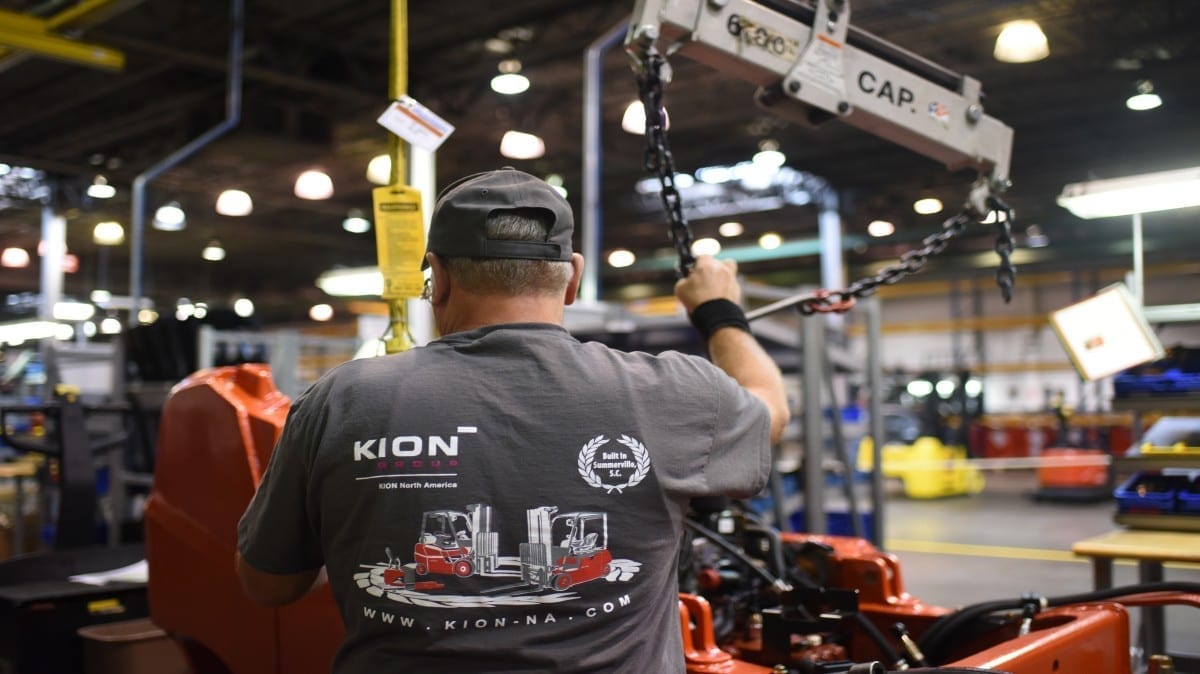
    “Today marks the dawn of a new era for the KION Group, Dematic and our customers,” said CEO of the KION Group, Gordon Riske. “The transaction brings together the world’s most profitable manufacturer of forklift trucks and warehouse technology with one of the largest and fastest-growing warehouse automation and software solutions providers. Our combined global presence, intelligent and tailored material handling as well as comprehensive automation and software technology solutions, plus now more than 30,000 dedicated and highly skilled employees will enable us to deliver even more value for our customers.”

    The new Dematic operating unit will be led by John Baysore, previously CEO of Dematic North America, who will hold the role of president and CEO and has a proven track record in growing supply chain solutions business.

    “At Dematic, we are proud to move forward as part of the KION Group, which even better positions us to assist our customers with supply chain performance. The newly established solution portfolio affords our customers the ability to accommodate their ever changing business requirements and will dynamically optimize their warehouse and distribution functions,” said John Baysore. “The market for system solutions is expected to grow by around 10 percent per year in the medium term. We have the innovative technology, software expertise and global network to meet the supply chain requirements of the future, such as those resulting from the rapidly growing e-commerce sector and the many other vertical markets we serve.”

  • Rhenus opens its first office in South Korea

    Rhenus opens its first office in South Korea

    The Rhenus Group is opening its own business operations in South Korea at the beginning of November. The logistics specialist also founded the national company known as Rhenus Logistics Korea at the same time. The office in the South Korean capital Seoul will organise sea and air freight operations, third-party logistics and domestic transport services in future.

    “The primary motive for opening the business site in South Korea is to continue consolidating our Asian network; we’ve been continually expanding this during the past few years. Seoul forms the centre of South Korea and is the focal point of the Sudogwon metropolitan district.

    “More than 25 million people live there and this accounts for half of the population of the country; it therefore provides an excellent starting point for our range of logistics solutions,” says Tobias Bartz, who is responsible for the logistics specialist’s Asian business on the Rhenus Management Board, citing the reasons for the latest developments.

    The Rhenus Group is particularly aiming to establish itself as a partner for transporting, handling and storing raw materials, semi-finished products and industrial and consumer goods in the South Korean market with its complete range of services. Rhenus Logistics Korea then plans to develop the individual solutions for specific sectors, combined with local expertise.

    Much of the country’s trade takes place with Europe – but the new company will also focus on transport between different Asian countries. In terms of its infrastructure, South Korea provides excellent conditions for sea and air freight services for the new national company with Incheon International Airport, one of the largest in Asia, and the port of Busan, which is one of the top 10 in the world according to the number of containers handled. “We also envisage further growth in this market in future after completing the starting phase in Seoul,” says Bartz.

  • Lippo Group betting on e-money in digital age

    Lippo Group betting on e-money in digital age

    Indonesia’s Lippo Group is turning e-commerce, electronic money and other information technology-related enterprises into a new pillar of its business, closely monitoring spending trends to gain a better foothold in the greater Southeast Asian market.

    The next phase for the banking and real estate conglomerate “will be the fourth industrial revolution,” CEO James Riady told The Nikkei Tuesday on the sidelines of the 18th Nikkei Global Management Forum here.

    Lippo Group was founded as a banking institution by Mochtar Riady, the current CEO’s father and a former head of Bank Central Asia. It branched out into real estate in the 1990s when subsidiary Lippo Karawaci developed a plot outside Jakarta that the group collected as collateral. Lippo Group has since also developed retail and hospital operations, which help boost property value. It now has more than 20 listed subsidiaries and rings up a total of about $7 billion in annual revenue.

    But the fall in resource prices and China’s economic slowdown have dealt a blow to the Indonesian economy, including to its real estate sector. Lippo Karawaci suffered a 23% drop in sales last year to 9.19 trillion rupiah ($702 million), as well as a 79% plunge in net profit to 535.3 billion rupiah.

    Business of the future

    Meanwhile, the proportion of smartphone users in Indonesia has risen from about 20% of the population in 2014 to almost 40% — about 100 million people — in 2015. “We must have inward creative disruption so that we can be transformed into a new area of growth, which is the digital economy,” James Riady said.

    In addition to its communications and media businesses, Lippo Group launched e-commerce site MatahariMall in September 2015. One of the platform’s strengths is that it can use Lippo Group’s retail network throughout Indonesia to move and distribute products — a definite plus in the face of competition from Lazada Group, a subsidiary of Chinese titan Alibaba Group Holding, and Tokopedia, in which Japan’s SoftBank Group has a stake. It was revealed in October that Japanese trading house Mitsui & Co., bullish on MatahariMall’s growth potential, was investing in the site’s operating company.

    Riady considers e-money his new focus. The goal is to get Lippo Group’s 120 million customers on board by allowing them to pay at hundreds of retail locations using the service. He plans to expand the group’s e-money offerings to other Southeast Asian countries, as well as include such services as depositing and transferring e-money. Riady sees a complete transformation in the way banks do business.

    Lippo Group and Singaporean ride-hailing company Grab agreed in July to cooperate on launching a mobile payment platform. The service will roll out in earnest at the end of the year.

    Following trends

    The spread of e-money will allow Lippo Group to closely track spending by its customers at retailers, e-commerce sites and other outlets. Riady hopes to use the service to bolster overseas expansion of the group and improve products and services associated with retail operations.

    Lippo Group is currently operating real estate businesses in Singapore and Hong Kong. But it will target Southeast Asia in the future to win over the region’s young, eager consumers. “What matters is how we can capture the [Association of Southeast Asian Nations] population of 600 million into our e-money accounts and world of services,” Riady said.

    In terms of Lippo Group’s real estate business, Riady expressed his interest not just in property development but in creating entire communities spanning retailers, hospitals and schools. The group has already built hospitals in Myanmar, and the CEO said the company is looking into Vietnam and Laos as well.