Tag: Kuala Lumpur

  • Asia OneHealthcare Plans RM7 Billion Malaysia IPO at RM30 Billion Valuation

    Asia OneHealthcare Plans RM7 Billion Malaysia IPO at RM30 Billion Valuation

    Asia OneHealthcare plans to raise up to RM7.5 billion in a Kuala Lumpur initial public offering in the first quarter of 2027.

    The listing would value the hospital operator at roughly RM30 billion. That valuation would make it one of Southeast Asia’s largest healthcare floats.

    Malaysian billionaire Quek Leng Chan’s Hong Leong Group and US private equity firm TPG back the company. It aims to raise between RM7 billion and RM7.5 billion (US$1.7 billion to US$1.9 billion), with offering documentation due in November.

    Valuation and Asset Footprint

    Formerly known as Columbia Asia Healthcare, the group runs 23 private hospitals across Malaysia and Vietnam. The business serves mid-to-upper income urban households seeking shorter wait times and specialist care outside state systems.

    Private hospital valuations across Southeast Asia trade at high multiples because patient demand holds up across economic cycles. Rising incomes and an ageing middle class in both core markets secure bed occupancy and strong pricing power.

    Private Equity Exit Pipeline

    For TPG and Hong Leong, the deal offers a clean exit path after years of buying regional healthcare assets. Hospital networks provide predictable revenues. Institutional investors understand the cash flows without complex forecasting models.

    The float’s size will test liquidity on Bursa Malaysia, where multi-billion-dollar listings remain rare. A clean debut at the targeted RM30 billion valuation would set a high bar for rival hospital operators weighing listings in Singapore or Jakarta.

    The Rebranding Step

    This share sale follows the group’s restructuring and transition from Columbia Asia to Asia OneHealthcare. That revamp combined its regional clinical operations, digital patient records, and procurement networks under one umbrella across Malaysia and Vietnam.

    Advisers will distribute formal offering documents in November, leading into institutional bookbuilding and final pricing ahead of the early 2027 market debut.

  • Mixue Shifts Malaysia Strategy Toward Food Safety and Quality Control

    Mixue Shifts Malaysia Strategy Toward Food Safety and Quality Control

    Mixue has shifted its operational focus in Malaysia to food safety and standardized store management this quarter. It has slowed its rapid store openings to protect franchise consistency.

    The value-priced ice cream and tea operator is standardizing ingredient handling, audits, and franchise training across hundreds of independently run franchised outlets in the country.

    Standardising Store Operations

    Headquarters teams are rolling out stricter supplier checks, central storage compliance, and mandatory staff retraining. The goal is curbing hygiene inconsistencies across high-volume suburban counters.

    For franchisees, the tightened rules raise daily discipline and audit frequencies. Store managers face unannounced inspections covering temperature logs, equipment sanitization, and ingredient shelf-life tracking.

    Pressure on Value Tea Rivals

    Rival low-cost bubble tea chains in Malaysia now face immediate pressure. Many compete on single-digit ringgit price points. Churning out high volumes at discount prices leaves little room for error in cold chain logistics or store sanitation.

    Protecting customer trust before hygiene lapses damage the brand drives the compliance push. The main risk sits behind the counter. Enforcing uniform standards across hundreds of independently run franchised outlets demands continuous oversight costs.

    Next Phase of Southeast Asian Expansion

    Mixue entered Southeast Asia aggressively, relying on low franchise fees and an integrated Chinese supply chain to blanket Indonesia, Vietnam, and Malaysia. Rapid expansion quickly secured brand recognition across shopping malls and commercial shop lots.

    Maintaining product consistency across thousands of regional outlets poses a major challenge as local health authorities step up inspections of quick-service beverage chains.

    Malaysian franchisees will complete updated audit cycles over the coming quarter as headquarters evaluates network compliance across Peninsular Malaysia.

  • Eddie Ong Raises Hextar Retail Stake to 35.42%, Triggering Mandatory Offer

    Eddie Ong Raises Hextar Retail Stake to 35.42%, Triggering Mandatory Offer

    Hextar Retail Bhd major shareholder Datuk Eddie Ong Choo Meng has triggered a mandatory takeover offer for the company after his investment vehicle, Hextar Portfolio Sdn Bhd, raised its stake to 35.42 per cent.

    Hextar Portfolio acquired 22.41 million shares at prices not exceeding the cash offer price of 43 sen per share, increasing the collective stake held with Ong to 164.7 million shares from 142.29 million shares on Sept 1.

    Crossing the 33 per cent threshold requires Ong and parties acting in concert with him to make a mandatory offer for all remaining shares, following a conditional voluntary takeover offer announced on Aug 10.

    Crossing the mandatory threshold

    Filings from principal adviser RHB Investment Bank show the group held 30.6 per cent, or 142.29 million shares, on Sept 1. By 5pm on the transaction date, the offerors also secured valid acceptances for 0.15 per cent of the company, with another 0.08 per cent under verification. That brought their confirmed stake to 35.57 per cent.

    Hextar Portfolio confirmed the offer price will stay at 43 sen. Neither the offeror nor concert parties bought shares above that price during the reference period, exempting them from an upward price revision under Malaysian takeover rules.

    Expansion beyond picture frames

    Tighter control lets the sponsor group speed up capital reallocation inside an operating business that has shifted far from its roots. For minority investors, the cash offer sets a firm price floor.

    Heavy ownership concentration also centralises supply chain decisions between manufacturing and consumer-facing units. Controlling shareholders can route procurement internally through existing logistics, chemical inputs and retail channels, though public investors remain exposed to governance and allocation risks across disparate divisions.

    What happens next on Bursa Malaysia

    Hextar Retail started as Classic Scenic, a wooden picture frame moulding manufacturer running nine production facilities across Rawang in Selangor and Bidor in Perak. The business later diversified into food and beverage operations and apparel retailing, taking the Hextar name to align with Ong’s wider corporate stable.

    The offerors plan to maintain Hextar Retail’s listing on the Main Market of Bursa Malaysia. They will not take the company private if the required public shareholding spread stays intact.

    Independent advisers will dispatch the formal offer document detailing closing dates, verification tallies for the pending 0.08 per cent stake, and the final deadline for shareholder acceptances.

  • ShardLab Backs StoreHub to Roll Out Payment-Linked Merchant Rewards

    ShardLab Backs StoreHub to Roll Out Payment-Linked Merchant Rewards

    Singapore-based venture studio ShardLab has made an undisclosed strategic investment in StoreHub to build payment-linked rewards products across Southeast Asia, the companies said on Wednesday.

    The partnership gives ShardLab direct access to StoreHub’s network of more than 20,000 merchant locations across Malaysia, the Philippines, Thailand and Japan, which together process over 200 million transactions worth roughly US$3.5 billion annually.

    Alongside the equity investment, the two firms will establish a joint venture to build consumer payment and loyalty software. The products aim to tie merchant promotions directly to payment processing rather than relying on separate stamp cards or third-party apps.

    Plugging loyalty into payment hardware

    ShardLab operates as the innovation arm of South Korean blockchain investment firm Hashed, established through a partnership with Thai financial group SCBX. The venture studio develops programmable loyalty systems designed to embed rewards rules directly into point-of-sale transactions.

    For small restaurants and boutique retailers, managing fragmented payment options, ranging from cash and bank transfers to QR codes and mobile wallets, often makes running structured loyalty programmes impractical. StoreHub sells cloud-based point-of-sale hardware and management software that consolidates sales, inventory and ordering for small businesses.

    StoreHub chief executive Wai Hong Fong said the joint venture is part of a broader push to automate merchant operations, including rebuilding the core platform around artificial intelligence tools to handle demand forecasting and staff scheduling.

    Distribution over experimental software

    Point-of-sale software providers across Southeast Asia are competing to control the merchant checkout counter. StoreHub contends with regional competitors including Singapore-based Qashier and Oddle, Indonesia’s iSeller, and global platforms such as Block and Lightspeed.

    While blockchain and Web3 developers have spent years running digital loyalty pilots, most failed to scale because they required separate consumer onboarding or complicated checkout steps. Tying reward issuance directly to StoreHub’s existing register hardware removes friction for both shop staff and shoppers during peak business hours.

    The joint venture partners plan to roll out their first joint payment and rewards features in select Southeast Asian markets before expanding across StoreHub’s regional store network.

  • Carsome Posts US$8.3 Million Quarterly EBITDA as Retail Shift Widens Margins

    Carsome Posts US$8.3 Million Quarterly EBITDA as Retail Shift Widens Margins

    Malaysian used-car platform Carsome posted an operating EBITDA of US$8.3 million for the second quarter of 2026. That is a 38 per cent increase from the same period a year earlier.

    Sales reached 35,903 vehicles during the three months ended June 30, up 11 per cent. That volume lifted gross profit 15 per cent to US$43.8 million. The result gave Carsome its tenth straight profitable quarter on an EBITDA basis. Consumer retail transactions and auto financing drove the gains.

    Retail and Financing Drive Margin Expansion

    Gross profit outpaced unit sales as the platform shifted volume toward retail buyers. Ancillary products helped widen margins. Financing packages, extended warranties and direct retail margins yield higher earnings per transaction than wholesale dealer auctions.

    Under a new agreement, Carsome will serve as the exclusive official trade-in partner for Suzuki Cars Malaysia. The pact channels structured inventory directly into its inspection network. It secures steady supply while carmakers use trade-in valuations to support new-vehicle sales as borrowing costs pinch consumer budgets.

    Other players across Southeast Asia show a similar pattern. Regional rivals Carro, based in Singapore, and Indonesia’s Moladin have also pivoted away from venture-funded volume acquisition. Both now target unit profitability, credit distribution and ancillary services.

    Showroom Additions in Malaysia and Jakarta

    Physical inspection hubs and retail centres led network growth during the quarter. In Malaysia, Carsome opened three locations in Sungai Petani, Bukit Tinggi in Klang, and Sungai Buloh. That took its domestic network to 55 inspection centres and showrooms.

    Across Indonesia, the company added four locations in Greater Jakarta, expanding its local footprint to 10 sites. Vehicle ownership in Indonesia trails Malaysia and Thailand. Even so, the market offers heavy transaction volume for operators able to resolve fragmented title transfers, vehicle vetting and buyer credit access.

    Looking ahead, management will focus the rest of the financial year on transaction growth, financing attachment rates and fixed-cost efficiency across its 65 combined retail locations.

  • Yeo’s Launches Teriyaki Canned Tuna in Malaysia Protein Push

    Yeo’s Launches Teriyaki Canned Tuna in Malaysia Protein Push

    Yeo’s added Teriyaki and Chilli Spicy canned tuna to its Malaysian packaged food lineup, claiming the country’s first teriyaki-flavoured shelf-stable tuna variant.

    The product expansion targets consumers seeking convenient high-protein meals across supermarket and hypermarket channels.

    Protein Counts on Front-of-Pack Formats

    Both seafood products arrive in standard metal cans tailored for direct consumption or quick meal preparation. Yeo’s is positioning the line alongside its recent ready-to-eat ambient poultry launches, which use retort packaging to deliver traditional Malaysian recipes without refrigeration.

    Those retort pouch releases, Boneless Chicken Curry and Boneless Chicken Rendang, package 33 grams and 24 grams of protein per pouch respectively. Yeo’s engineered the poultry line for microwave heating, printing protein counts directly on the outer packaging to court shoppers monitoring macronutrient intake.

    Shifting Away From Commodity Canning

    Packaged seafood brands across Southeast Asia traditionally sell canned fish on basic functional attributes like omega-3 content and budget affordability. That strategy leaves margins exposed to rising raw fish costs and competition from supermarket private labels.

    Flavour-forward seasonings allow ambient seafood processors to command higher unit prices. Western brands successfully recast canned seafood into premium lifestyle items through specialty sauces and design-led branding, creating a playbook Asian food manufacturers now adapt for local retail shelves.

    Category Push Across Packaged Foods

    The tuna rollout follows a broader cycle of recipe and packaging adjustments at Yeo’s. The company pushed into modern convenient cooking earlier in the year with ambient cooking pastes and unsweetened heritage teas, testing whether legacy Asian food brands can capture younger urban households.

    Retail buyers are tracking initial off-take figures for both seasoned tuna variants across Malaysian grocers as Yeo’s prepares distribution for regional convenience chains.

  • GetGo Launches Cross-Border Car Sharing from Singapore into Malaysia

    GetGo Launches Cross-Border Car Sharing from Singapore into Malaysia

    Singapore car-sharing operator GetGo rolled out a cross-border rental feature letting users drive vehicles directly across the Causeway into Peninsular Malaysia. The service gives drivers access to cars pre-registered with Malaysia’s mandatory Vehicle Entry Permit.

    Users can collect a car from local Singapore neighbourhoods and drive across the border to destinations including Johor Bahru and Kuala Lumpur. Unlike point-to-point cross-border taxis and ride-hailing services, the rental imposes no fixed route requirements or designated drop-off points during the booking window.

    How the Causeway booking works

    The feature, branded Drive to Malaysia, handles the regulatory paperwork required by Malaysian transport authorities before drivers leave the city-state. Each eligible vehicle comes fitted with a registered Vehicle Entry Permit RFID tag, avoiding the administrative delays that private vehicle owners face when securing cross-border clearance.

    Drivers retain full control of the itinerary throughout Peninsular Malaysia for the entire duration of their scheduled reservation. They pick up the car at an assigned Singapore bay and return it to the same spot once their trip concludes.

    Shifting border transit demand

    The service targets weekend shoppers, business commuters, and holiday travellers who previously depended on cross-border coach networks, licensed cross-border cabs, or private vehicle ownership. Cross-border transit across the Johor-Singapore Causeway ranks among the busiest land crossings worldwide, yet car-sharing models in the region historically restricted fleets to domestic borders.

    By clearing regulatory permit hurdles in advance, fleet operators open a new revenue line during peak travel weekends. The next operational test for cross-border car sharing centres on fleet availability and user adherence to Malaysia’s digital toll and fuel regulations during peak holiday travel periods.

  • Malaysia to Impose Registration Rules on E-Commerce Platforms After 1,964 Complaints

    Malaysia to Impose Registration Rules on E-Commerce Platforms After 1,964 Complaints

    Malaysia will impose mandatory registration and product compliance rules on e-commerce platforms after regulators logged 1,964 consumer complaints over defective items, scams and misleading halal claims.

    The regime forces online marketplaces to verify that all electrical appliances meet domestic SIRIM safety benchmarks before listing.

    Communications Minister Datuk Seri Fahmi Fadzil said the government will not block or shut down e-commerce operators. The policy instead targets platform accountability, requiring marketplaces to filter out uncertified inventory and fraudulent merchants.

    Enforcing standards and registration

    Data from the Malaysian Communications and Multimedia Commission (MCMC) shows 1,964 platform-related complaints recorded through Aug. 25, with 118 cases still under active investigation. Electrical and electronic products triggered 191 reports, while four complaints involved fraudulent halal certification labels.

    Regulators plan to adapt the oversight framework recently rolled out for social media networks to police online shopping portals. This will include platform registration rules designed to hold operators liable for counterfeit goods and non-compliant hardware.

    Marketplace liability across Southeast Asia

    The policy mirrors a wider regional push to rein in marketplace imports and protect consumer safety. Platforms such as Shopee, Lazada and TikTok Shop have faced heightened regulatory scrutiny across Southeast Asian markets over unverified merchant listings and cheap, uncertified cross-border electronics.

    MCMC is currently drafting the operational guidelines for the e-commerce framework, with compliance timelines to be announced once agency reviews conclude.

  • I’m Donut? Expands into Southeast Asia with Kuala Lumpur Store in September

    I’m Donut? Expands into Southeast Asia with Kuala Lumpur Store in September

    Japanese bakery brand I’m donut? Will open its first Southeast Asian store in Kuala Lumpur this September. The store brings the company’s signature raw nama donuts to Malaysia for its regional debut.

    The concept built long queues across Tokyo with fried dough that uses pumpkin puree and high hydration to achieve a soft texture. The brand now enters Southeast Asia as international food and beverage operators target urban shopping destinations across the region.

    Expansion beyond Japan

    Malaysia frequently serves as an entry point for Japanese food brands testing regional appetites. Operators rely on high consumer familiarity with Japanese retail concepts and strong mall foot traffic in the Klang Valley to build brand momentum before expanding into neighbouring countries.

    Specialty dessert brands across Southeast Asia have shifted toward focused single-item menus. High-turnover bakery concepts allow operators to keep production footprints compact while driving customer traffic through distinct product formats.

    Competition in premium baked goods

    Artisanal bakery chains and overseas dessert operators are competing directly for prime retail space in major Malaysian retail centres. Premium baked goods have maintained steady foot traffic even as broader consumer discretionary spending faces pressure from food inflation and import costs.

    RetailNews Asia notes that dessert chains expanding internationally must balance localized supply chains with the need to match the taste profiles of their original domestic stores. The company plans to announce the exact retail site and opening schedule in Kuala Lumpur ahead of the September launch.

  • CelcomDigi Debuts Sophia AI to Automate SME Workflows in Malaysia

    CelcomDigi Debuts Sophia AI to Automate SME Workflows in Malaysia

    CelcomDigi rolled out an agentic artificial intelligence platform called Sophia AI in Malaysia, targeting operational bottlenecks across retail, supply chain, and small-business operations. The carrier developed the tool after testing more than 400 internal automations across its own corporate workflows.

    Unlike simple conversational bots, agentic AI operates autonomously across connected business systems. The platform executes multi-step tasks, flags processing exceptions, and updates enterprise software without requiring manual intervention from staff.

    Automating Retail and Supply Chains

    For retail and wholesale distribution networks, the platform takes over the invoice-to-payment cycle. Sophia AI reads supplier invoices, validates billing data against purchase orders, routes payment approvals, and updates accounting records across multi-store operations.

    CelcomDigi also designed the architecture to handle procurement and inventory tracking in manufacturing, appointment scheduling and claims processing in healthcare, and document verification for public sector agencies. Businesses can adjust the tool to match their existing infrastructure rather than overhauling internal software systems.

    “Our focus now is helping other organizations, particularly SMEs, achieve the same benefits,” said T. Kugan, chief enterprise business officer at CelcomDigi. “With our agentic AI solution, we can successfully eliminate repetitive administrative tasks while empowering employees to devote time on higher-value work.”

    Closing the Enterprise Adoption Gap

    Regional telecom operators are pitching automation software directly to commercial clients to grow enterprise revenue beyond standard mobile connectivity. Similar rollouts by Singtel in Singapore and HKT in Hong Kong show carriers bundling proprietary software with 5G data pipelines and cloud hosting.

    Adoption among smaller merchants remains uneven. Findings from Malaysia’s Ministry of Finance Economic Outlook 2026 report show SMEs struggle with artificial intelligence deployments because of unclear returns on investment and software tools built only for large corporations. CelcomDigi is pairing Sophia AI with its enterprise data, cloud, and cybersecurity bundles to lower onboarding friction for smaller accounts.

    Commercial rollouts for Malaysian enterprise clients begin immediately through CelcomDigi’s business division.

  • BYD and Bus Cap Plan Electric Commercial Vehicle Plant in Malaysia

    BYD and Bus Cap Plan Electric Commercial Vehicle Plant in Malaysia

    BYD Malaysia and local manufacturer Bus Cap signed an agreement in Shenzhen to develop a joint electric commercial vehicle platform in Perak. The deal targets local electric bus assembly and manufacturing. It also covers sales and after-sales operations.

    Under the exclusive memorandum, the partners are evaluating assembly sites and supply chains across the northwestern state. Capital commitments and operating structures depend on definitive contracts.

    Expanding Beyond Bus Fleets

    Bus Cap listed on Bursa Malaysia’s ACE Market in June 2026. Its coach-building roots date back to 1968 through subsidiary Sin Hock Leong Coach Works. BYD commercial vehicle division general manager Luo Zhongliang said the venture could broaden into electric trucks, vans, forklifts, and rail transit hardware. These would serve Malaysia and neighboring Southeast Asian markets.

    Executive director Bernard Ng Chong Yan said the alliance pairs BYD vehicle technology with local engineering. It also uses existing fleet customer relationships.

    Questions Over Passenger Plant

    The commercial venture gives BYD another production foothold in Malaysia as uncertainty surrounds its separate passenger car plans. In August 2025, BYD announced a 600,000-square-metre Tanjung Malim assembly plant scheduled for the second half of 2026. Malaysia’s Ministry of Investment, Trade and Industry said earlier this month that it has received no confirmation that BYD will proceed with that project as planned.

    Negotiators must now finalize binding agreements to lock in the Perak project’s investment budget and production start date.

  • Fire Engulfs Cars at Kuala Lumpur’s KL Gateway Mall

    Fire Engulfs Cars at Kuala Lumpur’s KL Gateway Mall

    Kuala Lumpur’s KL Gateway Mall experienced a fire in its parking facility on August 17, 2026. The blaze, which originated on the P1 level of the basement parking, led to significant damage to two vehicles.

    City officials confirmed that a BMW was completely destroyed by the fire, while a Perodua Axia sustained partial damage. Emergency services were promptly on the scene to manage the situation.

    Emergency Response And Cause

    The Kuala Lumpur Fire and Rescue Department was alerted to the incident around 12:43 AM. A team from the Pantai fire station, along with assistance from Seputeh, was dispatched to the mall.

    Firefighters successfully extinguished the blaze using water from their trucks, bringing the situation under control by 1:33 AM. Investigations are currently underway to determine the exact cause of the fire, though no injuries were reported from the incident.

    Impact On Mall Operations

    While the fire was contained to the basement parking area and quickly put out, such incidents can cause temporary disruptions for mall operators and visitors. The immediate aftermath often involves assessment of structural integrity, clearing smoke, and ensuring safety protocols are maintained.

    KL Gateway Mall, a mixed-development complex featuring retail, residences, and offices, is a significant urban hub in Kuala Lumpur. Mall management is expected to cooperate fully with authorities during the investigation and remediation process.

    Questions & Answers

    When and where did the fire occur?
    The fire took place on August 17, 2026, in the basement parking lot (P1 level) of KL Gateway Mall in Kuala Lumpur, Malaysia.

    What was the extent of the damage caused by the fire?
    A BMW vehicle was completely destroyed, and a Perodua Axia suffered partial damage. Fortunately, no injuries were reported as a result of the incident.

    Which authorities responded to the fire?
    The Kuala Lumpur Fire and Rescue Department, with teams from the Pantai and Seputeh fire stations, responded to the alarm and successfully extinguished the blaze.

  • Resintech Subsidiary Secures RM41 Million for Hostel and Retail Project in Selangor

    Resintech Subsidiary Secures RM41 Million for Hostel and Retail Project in Selangor

    Johan Panglima (M) Sdn Bhd, a subsidiary of Malaysia-based plastic pipe and fitting manufacturer Resintech Bhd, has secured financing totaling RM41 million from Alliance Islamic Bank Bhd. These funds are designated for the redemption of land and to partially finance a new hostel and retail complex in Selangor.

    The financing facilities, structured as commodity murabahah term financing, will cover 80 percent of the construction expenses for the planned development. The project includes a total of 158 hostel units, four retail shops, a canteen, and various other communal amenities.

    Project Details and Financial Impact

    According to a filing with Bursa Malaysia, the financing specifically targets the redemption of four land parcels situated in Mukim Telok Panglima Garang, located in Kuala Langat, Selangor. The new development will contribute to the local retail and accommodation landscape with its blend of commercial and residential facilities.

    Resintech stated that the acceptance of these facilities is expected to increase the group’s gearing ratio for the financial year ending March 31, 2027 (FY2027). The company also clarified that the financing does not involve the issuance of new ordinary shares, therefore having no impact on its issued share capital or the shareholdings of its directors and major shareholders.

    Board Approves Financing Terms

    Resintech’s board of directors has evaluated the terms of the financing and concluded that its acceptance is in the best interest of the Resintech group. The company confirmed that no directors, major shareholders, or any connected persons have a direct or indirect interest in these facilities.

    Furthermore, the financing arrangements are not subject to the approval of Resintech’s shareholders or any regulatory authorities. The project represents a strategic move for the subsidiary into the real estate development sector, leveraging the current market for both student accommodation and local retail services.

    Questions & Answers

    What is the purpose of the RM41 million financing secured by Resintech’s subsidiary?
    The financing is intended to redeem four parcels of land in Selangor and to part-finance 80 percent of the construction cost for a new hostel and retail development.

    What will the proposed development by Johan Panglima (M) Sdn Bhd include?
    The development will feature 158 hostel units, four retail shops, a canteen, and other associated facilities.

    How will this financing impact Resintech Bhd’s financial position?
    Resintech expects the financing facilities to increase the group’s gearing ratio for the financial year ending March 31, 2027. It will not affect the company’s issued share capital or shareholder structures.

  • Ombak KLCC Mall to Ignite Kuala Lumpur Retail Scene with Grand Opening

    Ombak KLCC Mall to Ignite Kuala Lumpur Retail Scene with Grand Opening

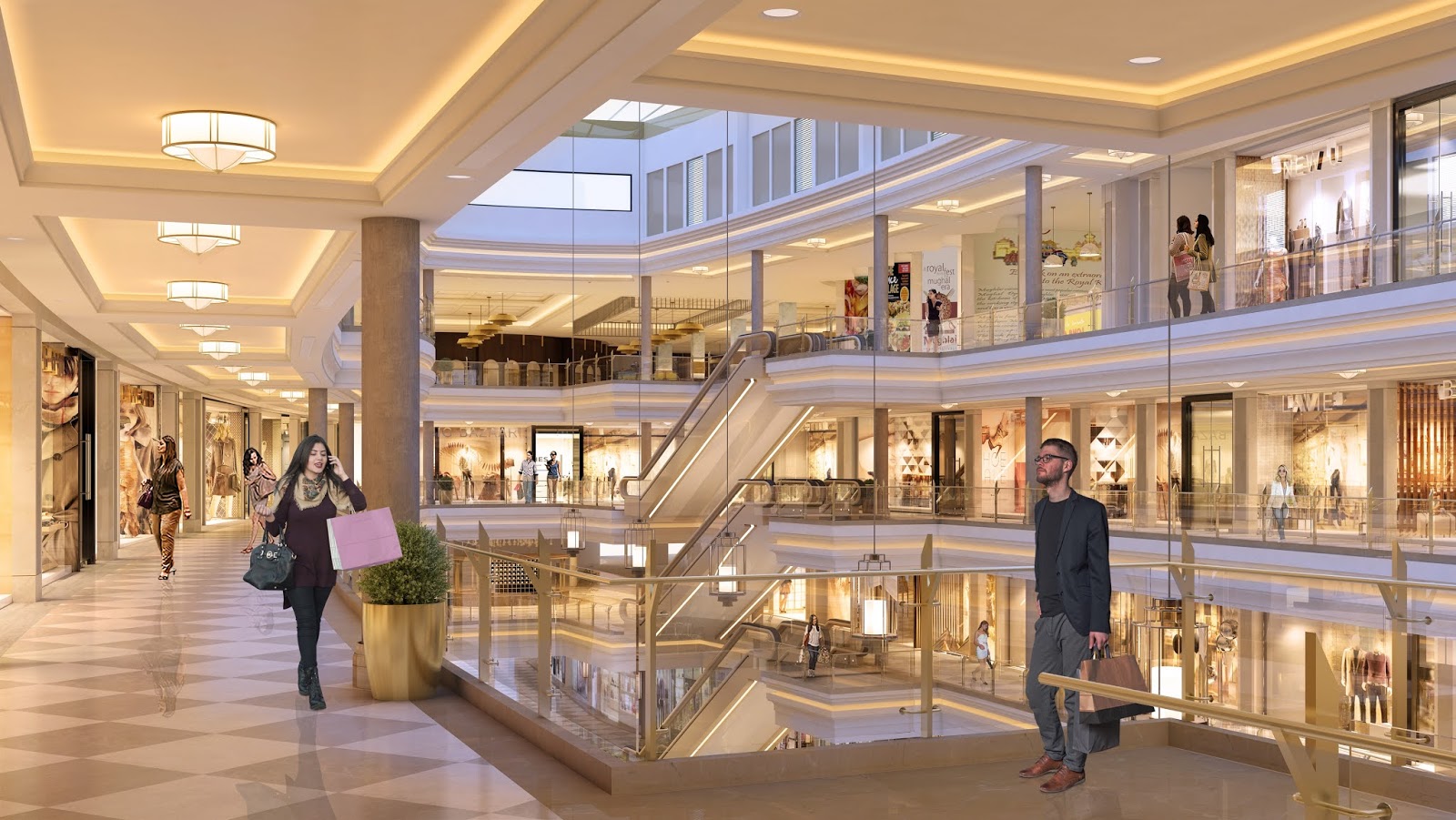
    The retail market of Kuala Lumpur is poised to welcome another addition. Ombak KLCC, a new shopping complex, is slated to commence operations from August 21 in the KLCC precinct.

    The project, sprawled across 420,000 square feet, will serve as a host for approximately 120 retail and food & beverage outlets. The tenant composition is diverse, accommodating a range of sectors from coffee and dining to lifestyle, technology, and convenience.

    Moreover, the mall is set to be the fresh location for Galeri Petronas, which will be transitioning from its current position in Suria KLCC. The gallery will open in separate stages, marking a phased transition.

    More than just retail

    Apart from the retail component, Ombak KLCC has a broader appeal with additional features planned to enhance the overall visitor experience. A rooftop garden and open-air plaza have been incorporated in the design, purposed for staging events and facilitating leisure activities. The shopping center is also connected to the wider KLCC precinct, ensuring seamless access to KLCC Park and nearby public transportation links.

    Ombak KLCC is also preparing for a grand inauguration by lining up some significant pop-up attractions. Both Nintendo Pop-Up Store and Pokémon Center Pop-Up Store are slated to be operational from September 12 until the end of the year.

    Questions & Answers

    What is the expected date of Ombak KLCC’s opening?
    Ombak KLCC is scheduled to open on August 21.

    What kind of tenants will Ombak KLCC house?
    Ombak KLCC will house a mixture of retail and food & beverage outlets spanning various sectors like coffee, dining, lifestyle, technology, and convenience.

    What are some special features of Ombak KLCC?
    Apart from retail stores, Ombak KLCC features a rooftop garden and an open-air plaza designed for events and leisure activities. It is also linked to the wider KLCC precinct, including KLCC Park and nearby public transport connections.

  • Swedish Fashion Sensation Acne Studios Marks Malaysian Debut with Kuala Lumpur Flagship Store

    Swedish Fashion Sensation Acne Studios Marks Malaysian Debut with Kuala Lumpur Flagship Store

    Acne Studios, a renowned Swedish fashion label, has marked its maiden foray into the Malaysian market with the inauguration of its first outlet at Pavilion Kuala Lumpur. This move serves as the latest progress in the ongoing collaboration between Acne Studios and Bluebell Group. The latter also manages the brand’s operations in Singapore and Taiwan, as the duo continue their collective expansion throughout Asia.

    The store, under the creative guide of Jonny Johansson, Acne Studios’ Creative Director, is a collaboration with Halleroed, a Swedish architecture firm. The outlet stays true to the brand’s unique retail concept, reflecting the design ethos prevalent in its global store network.

    Bluebell Group, the company behind the launch, views this venture as a means to bolster Acne Studios’ regional presence. This is achieved by synergizing the brand’s innovative identity with the group’s local market acumen and retail proficiency. Bluebell Group stated that the joint venture amalgamates profound local expertise, market acuity, and a dedication to crafting extraordinary brand experiences that strike a chord with consumers across the region.

    The debut of Acne Studios in Malaysia follows the fashion brand’s ongoing growth in Southeast Asia. In the previous year, the Stockholm-based label expanded its regional imprint by launching its first outlet in Thailand at Siam Paragon.

    Questions & Answers

    What significant step has Acne Studios recently taken in its Asian expansion?
    Acne Studios has entered the Malaysian market with the launch of its first store at Pavilion Kuala Lumpur.

    Who is responsible for the design of the new Acne Studios outlet?
    The store was designed by Jonny Johansson, Acne Studios’ Creative Director, in collaboration with Swedish architecture studio Halleroed.

    What is the strategic vision behind the partnership between Acne Studios and Bluebell Group?
    The partnership aims to strengthen Acne Studios’ regional footprint by blending the brand’s creative identity with Bluebell Group’s local market expertise and retail capabilities.