Tag: manila

  • Manila’s Record-Breaking 12% Minimum Wage Boost Benefits Over a Million Workers

    Manila’s Record-Breaking 12% Minimum Wage Boost Benefits Over a Million Workers

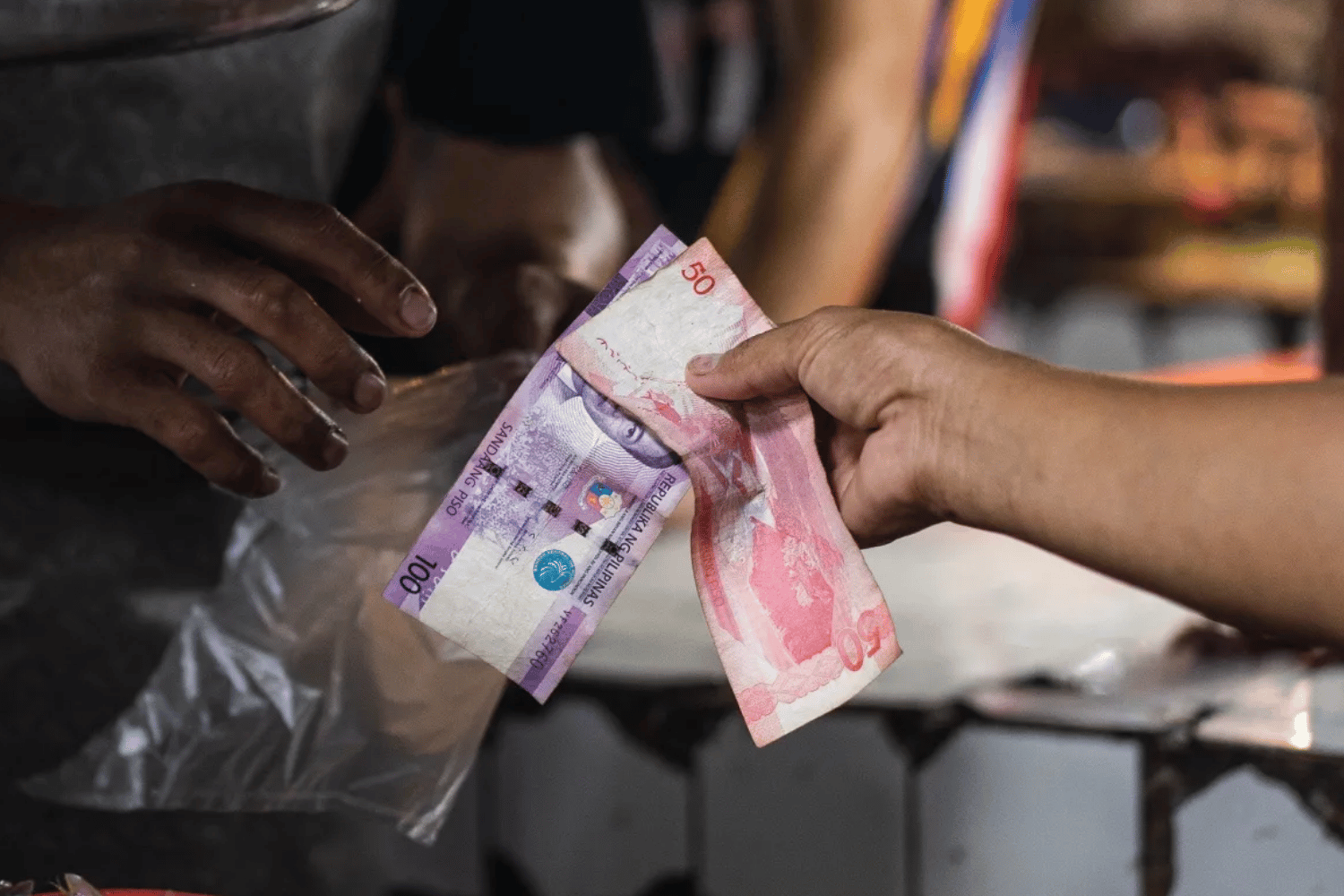
    The Philippine government has sanctioned an unprecedented 12% increase in the daily minimum wage for Metro Manila, providing an additional 85 pesos (US$1.4) in two separate instalments beginning later this month. This decision is set to impact over 1.1 million minimum wage workers in Metro Manila with the largest single wage adjustment ever made in the capital region.

    Increased Wages and Phased Approach

    The wage hike will be implemented in two parts, with an initial 60 pesos increase on July 19, and a follow-up rise of 25 pesos on January 20, 2027. Once both increases have been fully enacted, non-agriculture workers will earn a daily minimum wage of 780 pesos (US$12.73). The hike also extends to other sectors, with workers in agriculture, service and retail establishments employing 15 or fewer staff, and manufacturing companies with fewer than 10 workers experiencing a 13% increase to their daily minimum wage, reaching 743 pesos.

    The adjustment comes at a time when the price of fuel and basic goods in the Philippines have surged since March, due to the conflict between the U.S. and Iran. This has consequently escalated inflation and diminished consumer purchasing power.

    Inflation in the Southeast Asian nation decreased to 6.8% in May from a three-year peak of 7.2% in April, though it still considerably surpasses the central bank’s maximum target of 4%.

    Metro Manila: Highest Minimum Wage in the Country

    Metro Manila, which is composed of 16 cities, currently holds the record for the country’s highest legislated daily minimum wage. According to research, the living wage for an average family of five in the capital region is 1,289 pesos.

    John Paolo Rivera, a senior research associate at the government-operated Philippine Institute for Development Studies, has expressed that the wage increase will provide “meaningful relief” to workers by “boosting purchasing power in a high-inflation environment and facilitating household consumption.” However, he also cautioned that it could elevate costs for small and medium-sized businesses, which may respond by increasing prices or slowing recruitment.

    “The overall effect will hinge on the adaptability of firms and whether productivity improvements accompany higher wages,” he stated. The Trade Union Congress of the Philippines, however, has criticized the two-part implementation and characterized the increase as “grossly inadequate considering the erosion of workers’ purchasing power.”

    Questions & Answers

    What is the new minimum wage for Metro Manila?
    The new minimum wage for non-agriculture workers in Metro Manila will be 780 pesos (US$12.73) once both increases have been fully implemented.

    When will the wage increase take effect?
    The wage increase will be implemented in two stages, with the first increase of 60 pesos starting on July 19, and the second increase of 25 pesos on January 20, 2027.

    What are the potential impacts of this wage increase?
    While the wage hike is expected to provide “meaningful relief” to workers by boosting purchasing power in a high-inflation environment, it may also raise costs for small and medium-sized enterprises, potentially leading to higher prices or slower hiring.

  • Riding the Retail Wave: SM Investments Sees Profit Surge Despite Weather Challenges

    Riding the Retail Wave: SM Investments Sees Profit Surge Despite Weather Challenges

    SM Investments, a conglomerate with operations in retail, banking, and property, experienced solid retail sales during the first three quarters of the year. These robust sales contributed to a consolidated net income of US$1.09 billion, a 6% rise compared to the same period in the previous year.

    The Impact of Weather Disruptions

    Despite significant weather disturbances in the Philippines, the company maintained steady performance. Frederic DyBuncio, President, and CEO of SM Investments remarked on the resilience of the company. He said, “In the face of adversities such as severe weather and flooding, our businesses have demonstrated sustained financial performance.”

    Income Breakdown

    Banking was the predominant contributor to SM Investments’ net income, accounting for 50% of the total. This was followed by property at 28%, retail at 15%, and portfolio investments at 7%.

    SM Retail’s Performance

    SM Retail disclosed a net income of $206.78 million, marginally lower than the $216.95 million recorded last year. Despite this slight dip, revenues grew by 5% to reach $5.39 billion. As a result, consolidated revenues climbed 4% to $8.17 billion.

    Consumer Behavior Shifts

    DyBuncio highlighted changes in consumer expenditure patterns as a factor impacting quarter-to-quarter comparisons. He explained that the earlier start of the school year in June shifted some expenditures from the third quarter to the second. Despite this shift, there was growth in niche retail spending, particularly in health and beauty, fashion, and kids categories. Essential spending also continued to bolster growth in food retail.

    Category Performance

    In terms of categories, department stores recorded a 3% revenue growth in fashion and children’s items. Food retail saw a 7% surge, largely attributable to store expansions. Specialty retail grew by 4%, driven mainly by increased demand in children’s and home categories.

    DyBuncio expressed confidence in the company’s outlook despite external challenges, declaring, “While external factors may impact the overall economic growth, we remain positive as we head into the fourth quarter.”

    Questions & Answers

    What was the significant factor contributing to SM Investments’ net income?
    Banking was the main contributor, accounting for 50% of the total net income.

    What consumer behavior change affected SM Investments’ quarterly comparison?
    The shift in school opening from the third to the second quarter caused some changes in consumer spending patterns.

    Which categories demonstrated notable growth in SM Investments’ retail sector?
    There was notable growth in specialty retail spending, particularly in health and beauty, fashion, and kids categories, as well as in food retail due to store expansions.

  • Revival on the Horizon: Metro Manila Retail Vacancy Rate Expected to Bounce Back to Pre-Pandemic Figures

    Revival on the Horizon: Metro Manila Retail Vacancy Rate Expected to Bounce Back to Pre-Pandemic Figures

    The retail vacancy rate in Metro Manila is projected to return to pre-pandemic levels by 2022, according to a recent study by Colliers Philippines. The rate of empty retail spaces in Metro Manila eased to 11.4% as of September 30, 2021. By the close of next year, forecasts indicate a reduction to 9.5%, almost matching the 9.3% recorded in the third quarter of 2019.

    Long-Term Forecasts

    The report also offers long-term projections, with a predicted rate of 8.2% by the end of 2027. This figure is notably lower than the pre-pandemic benchmarks, signaling a positive recovery trend for the retail sector in the region.

    The study attributes the anticipated improvement to two main factors. The first is the continuous entry of international retail brands into the Filipino market. The second is the rapid expansion of existing brands.

    The Role of Foreign Brands

    According to Joey Bondoc, Research Director at Colliers, foreign brands play a crucial role in this trend. He noted that many of these brands have previously exited the market but are now making a significant comeback.

    Bondoc further highlighted the attractive refurbishment strategies of major developers in the region, which are drawing in these companies. These refurbishments are focusing more on experiential retail, adding another layer of attraction for both brands and consumers.

    Industries Occupying Retail Spaces

    The report also shed light on the dominant industries in retail space occupancy. The food and beverage sector, fast fashion, and general retail were listed as the primary occupiers of retail spaces. Their continued presence and growth contribute to the overall decreasing trend of retail vacancies.

    Questions & Answers

    What is the anticipated retail vacancy rate in Metro Manila by the end of 2022?
    The retail vacancy rate is expected to decrease to 9.5% by the end of 2022.

    What factors are contributing to the decrease in retail vacancies?
    The entry of foreign retail brands into the Philippines market and the accelerated expansion of existing brands are primarily driving this improvement.

    Which industries are the biggest occupiers of retail space in Metro Manila?
    The food and beverage sector, fast fashion, and general retail industries are the main occupiers of retail spaces.

  • Inditex’s Oysho Debuts In Philippines With Innovative Retail Concept At Mall Of Asia

    Inditex’s Oysho Debuts In Philippines With Innovative Retail Concept At Mall Of Asia

    Oysho, an activewear brand under the umbrella of Inditex, the same company that owns Zara, has recently made its grand entrance into the Philippine market with a store opening at the Mall of Asia in Manila.

    A Fresh Concept for Retail Space

    The newly launched 659 square meter, single-level Oysho store is innovatively partitioned into several distinct areas, each offering a unique shopping experience. To begin with, customers are greeted by the Welcome Zone, featuring a ceramic block wall which proudly displays the Athleisure range.

    Following this, there’s the Club Zone, characterized by its oak wood finishes, and the Basics Zone featuring zipper rails for product display. To ensure privacy and comfort during the product trial phase, oak-paneled fitting rooms have also been incorporated into the design.

    The store’s Wow Zone, positioned strategically at the entrance, showcases seasonal collections bolstered by immersive, branded light imagery to captivate and draw in shoppers.

    Consistent Aesthetics and Expanded Presence

    The store’s external facade is adorned with natural stone, giving it a rustic and earthy appeal. Inside, a continuous linear lighting system illuminates the space, delivering a uniform aesthetic throughout the store.

    Oysho’s brand introduction to the Philippines is part of Inditex’s ongoing retail strategy. The company operates eight retail concepts, including Zara, Pull&Bear, and Massimo Dutti. The expansion into the Philippines strengthens Oysho’s presence in Asia, adding to their existing markets in countries such as China and South Korea.

    Questions & Answers

    What makes Oysho’s new store in the Philippines unique?
    The store is uniquely designed with distinct zones, each offering a different shopping experience. It also features branded light imagery and a continuous linear lighting system for a consistent look throughout the space.

    Who owns Oysho?
    Oysho is owned by Inditex, the same company that owns Zara, Pull&Bear, and Massimo Dutti.

    What is the significance of Oysho’s expansion into the Philippines?
    The expansion into the Philippines strengthens Oysho’s presence in Asia, adding to their existing markets in countries such as China and South Korea. It’s an indication of the brand’s growth and success in the Asian market.

  • Analyst Warns: Manila’s Retail Supply Pipeline Set to Challenge Market Resilience

    Analyst Warns: Manila’s Retail Supply Pipeline Set to Challenge Market Resilience

    An estimated 177,000 square meters of new retail space is on the horizon, set to make waves in Manila’s market by the second half of 2025. As the bustling holiday season approaches, tenants are revamping their strategies and gearing up for a promising turnaround. JLL’s latest report highlights that this influx of new store openings in prime malls may counterbalance the negative absorption reported in the first half of the year.

    Market Resilience Faces a Test

    According to the report, the significant volume of new supply is likely to challenge the market’s resilience. However, it also points to a silver lining: improving consumer sentiments and lower borrowing costs are expected to facilitate a gradual absorption of new spaces. With this context, rents are projected to increase by the end of the year alongside a rise in leasing activity.

    Quarterly Trends Revealed

    In the second quarter of 2025, net absorption dipped further to -20,700 square meters, continuing a downward trend that started in the first quarter. Notably, Mandaluyong and Muntinlupa accounted for most of the move-outs, while Quezon City and Makati City saw a flurry of new store openings, reflecting a dynamic albeit challenging landscape.

    The food and beverage sector remains the powerhouse for new store openings, confirming its dominance in the retail space. Interestingly, general retail has also shown resilience, emerging as a top contender for new entries this quarter, signaling ongoing expansion even amid cautious market conditions.

    Static Supply and Rising Vacancies

    Retail supply held steady in Q2 2025 as developers opted to stagger completions to the latter half of the year. With 177,000 square meters of additional space anticipated before year-end, analysts caution that this new supply could further inflate vacancy rates, which already crept up to 7.5%—an increase of 33.9 basis points quarter-on-quarter—mainly attributed to slower store openings.

    Mixed Signals in Financial Metrics

    While retail rents saw a slight uptick of 0.5%, reaching PHP 1,759 per square meter per month, operators are maintaining stable asking prices to keep demand alive. On the investment front, capital values are modestly appreciating at PHP 239,532 per square meter, indicating a careful approach among investors. However, the central bank’s recent interest rate cut to 5.5% is anticipated to boost investor confidence and expedite pending deals as financing becomes more accessible.

    In a retail landscape that seems to be a game of chess, strategists are positioning themselves for the next big play. Who knows? The unexpected twists and turns ahead could make for an exhilarating game as 2025 unfolds.

    Questions & Answers

    What are the key expectations for Manila’s retail market in H2 2025?
    Analysts anticipate a surge of new store openings, totaling 177,000 square meters, which could improve market conditions despite a challenging first half, as consumers become more confident.

    Which areas are experiencing the most retail movement?
    Mandaluyong and Muntinlupa have seen significant move-outs, while Quezon City and Makati City are witnessing a rise in new store openings.

    How are rental rates trending in the current market?
    Rental rates are showing stability with a slight increase of 0.5% in Q2 2025, while operators maintain stable asking prices to foster demand amidst growing vacancies.

  • PLDT and Globe Launch Exciting Laser Internet Pilots, Connecting Remote Areas with Cable-Free Access

    PLDT and Globe Launch Exciting Laser Internet Pilots, Connecting Remote Areas with Cable-Free Access

    The Philippines is witnessing an exciting technological leap as leading telecommunications operators PLDT and Globe Telecom embark on trials and initial deployments of Taara, a cutting-edge laser internet system developed by Google’s ambitious X Moonshot Factory. Launched as an independent Alphabet company in March 2025, Taara leverages free-space optical communication (FSO) to transmit data using invisible light beams, bypassing the hefty costs and logistical hurdles associated with traditional underground fiber cables.

    Redefining Connectivity with Laser Internet

    Often dubbed “fiber without the cables,” laser internet employs concentrated beams of light as “light bridges” to relay data between terminals. Each terminal can connect over a distance of up to 20 kilometers, with extended links achievable by sequentially placing additional terminals. Taara’s innovative Lightbridge system incorporates mirrors, sensors, and precision optics, all governed by smart software that tracks and locks onto light paths. Once aligned, this technology can deliver impressive speeds of up to 20 Gbit/s—providing a fiber-like performance that turns the traditional challenges of installing cables across rivers and rugged terrains into a problem of the past. Of course, if it starts raining cats and dogs, users will have to wait a while for the connection to clear up.

    Strategic Deployments Across the Archipelago

    PLDT is leading the charge with the activation of three strategic Taara sites: Talim Island in Rizal, Dipaluda in Isabela, and Bagong Pag-asa in Quezon City. The link on Talim Island stretches an impressive 11.8 kilometers across the waters of Laguna de Bay, directly connecting the island to the mainland. In Isabela, the system covers a mountainous 13-km stretch, where conventional fiber installation would be prohibitively expensive. Meanwhile, the deployment in Quezon City aims to mitigate single-point-of-failure (SPOF) risks within its metro network, ensuring a more resilient connectivity infrastructure.

    Butch Jimenez, PLDT’s Chief Operating Officer and Head of Network, expressed the significance of the project: “This is a game changer for us in connecting remote areas. It simplifies the process of providing fiber-like internet to new locations. We’re excited for the residents of Talim Island and Dipaluda to experience the benefits of fiber-to-the-home connectivity.”

    Erick Santiago, who heads Network Strategy at PLDT-Smart, emphasized the company’s proactive stance: “We’ve evaluated this technology for over a year. I’m proud of our network team, who made it viable for us to launch it while others are still in the testing phase.”

    Pioneering Technology in Action

    On the other hand, Globe Telecom is also making strides through its subsidiary, Fiber Infrastructure and Network Services Inc. (FINSI). The company recently reported promising results from a pilot run of the Taara system over Laguna Lake. The trial spanned 11 kilometers, with approximately 80% of the connection floating across open water, achieving wireless optical connectivity of 10 Gbit/s. The trials adhered to the Enhanced RFC 2544 test suite for throughput, latency, jitter, and frame loss, alongside a rigorous 24-hour bit error rate test (BERT), all of which met Globe’s stringent technical standards. In short, the future of internet in the Philippines is looking abundantly bright, if not a little sparkly!

    Questions & Answers

    What is Taara and how does it work?
    Taara is a laser internet system that transmits data using invisible light beams, bypassing the need for traditional underground fiber cables. It uses “light bridges” to connect terminals over distances of up to 20 kilometers, delivering speeds comparable to fiber-optic systems.

    What areas in the Philippines are benefiting from Taara’s deployment?
    PLDT is activating Taara in Talim Island, Dipaluda, and Quezon City, targeting remote areas that struggle with conventional fiber internet installation.

    How has Globe Telecom tested the Taara system?
    Globe successfully completed a pilot run across Laguna Lake, covering 11 kilometers with 80% of that distance over open water, achieving connectivity speeds of 10 Gbit/s while meeting technical performance standards.

  • Chagee: Chinese Tea Giant Set To Brew Success In The Philippine Market

    Chagee: Chinese Tea Giant Set To Brew Success In The Philippine Market

    Chagee: The Chinese Tea Brand Poised to Enter Philippine Market

    Chagee, a renowned Chinese tea brand, is poised to infiltrate the Philippine market. This expansion is earmarked for August, with three branches slated for unveiling in Metro Manila.

    The fresh outlets will be strategically located at notable locales such as SM North EDSA, Robinsons Galleria, and Venice Grand Canal Mall.

    A Modern Take on Traditional Tea

    Chagee has carved a niche for itself as a contemporary tea bar that fuses traditional Chinese tea-making techniques with an emphasis on natural ingredients.

    The brand’s signature concoctions are milk-based tea beverages, expertly brewed using whole tea leaves from a variety of plants including green, black, and oolong. These teas are free from artificial sweeteners or flavorings, underscoring the brand’s commitment to all-natural products.

    Chagee’s Global Footprint

    With its roots in Yunnan, China, Chagee has successfully extended its reach across Asia and beyond. The company presently boasts of over 6000 stores worldwide. Its international presence can be felt in a number of markets such as Malaysia, Thailand, Singapore, and the United States among others.

    Questions & Answers

    What is Chagee?
    Chagee is a Chinese tea brand that is recognized for infusing modern flavors with traditional Chinese tea-making methods.

    Where are the new Chagee outlets in the Philippines going to be located?
    The new Chagee outlets in the Philippines are planned to be located at SM North EDSA, Robinsons Galleria, and Venice Grand Canal Mall.

    What distinguishes Chagee’s tea beverages?
    Chagee’s signature tea beverages are milk-based and are brewed using whole tea leaves from a variety of plants such as green, black, and oolong. These teas are free from artificial sweeteners or flavorings.

  • Manila Set to Unveil 2,680 New Hotel Rooms by 2025: Exciting Growth in Hospitality Awaits!

    Manila Set to Unveil 2,680 New Hotel Rooms by 2025: Exciting Growth in Hospitality Awaits!

    According to a recent report by Colliers, the Philippine hospitality sector is on the upswing, bolstered by significant infrastructure improvements and an influx of international visitors. In 2024, the country welcomed nearly 5.95 million tourists, a figure ensuring it’s still catching up to pre-pandemic expectations. Despite not hitting the ambitious tourist arrival targets, spending reached a record-breaking PHP 760 billion, making the Philippines a leader in Southeast Asia regarding per-visitor expenditures.

    Emerging Opportunities for Developers

    With an optimistic outlook for the future, Colliers advises developers to keep an eye on emerging destinations, particularly with the newly approved 99-year land lease law making strides through the legislative process. This development is poised to attract foreign brands and facilitate the creation of integrated leisure hubs, providing a fertile ground for investment.

    Foreign Brands Join Forces with Local Developers

    In a striking trend, foreign hotel brands are aggressively expanding by forming partnerships with local developers in both established and up-and-coming markets. Major players such as Dusit, Wyndham, Accor, Marriott, and The Ascott Group are leading the charge. The ongoing integration of land lease extensions and Real Estate Investment Trusts (REITs) is anticipated to further drive investment, especially in tourism-centric townships and convention facilities.

    Rising Occupancy Rates Amid Construction Delays

    Metro Manila has seen its hotel occupancy rates rise to 64% in the latter half of 2024, with Average Daily Rates (ADRs) climbing by 2.7% year-on-year. As we moved into the first quarter of 2025, demand for Meetings, Incentives, Conferences, and Exhibitions (MICE) facilities remained robust, particularly in the Makati Central Business District, Fort Bonifacio, and the Bay Area. Four- and five-star hotels particularly benefitted from this increased demand, reflecting the resurgence in business travel. Though room supply struggled due to construction delays, the market anticipates the addition of 2,680 new rooms in 2025, primarily located in Makati and the Bay Area. Interestingly, outside the capital, occupancy rates soared to between 70% and 80% in areas like Clark and Cebu.

    A Bright Outlook for the Future

    Colliers anticipates consistent occupancy levels and a modest ADR increase of 3% in 2025, driven by rising foreign arrivals and thriving MICE activity. Developers are encouraged to collaborate closely with airport infrastructure projects to pinpoint future growth corridors and capitalize on the evolving travel landscape.

    Questions & Answers

    How has tourist spending changed in the Philippines recently?
    In 2024, tourist spending in the Philippines hit a record PHP 760 billion, making the country a leader in Southeast Asia for per-visitor expenditure.

    What major trends are influencing hotel development in the Philippines?
    Foreign hotel brands are actively partnering with local developers in both established and emerging markets, with new land lease laws set to stimulate investment in integrated leisure hubs.

    What are the expected occupancy rates for Philippine hotels in 2025?
    Colliers is forecasting stable occupancy levels and a 3% increase in Average Daily Rates in 2025, fueled by increasing international arrivals and strong MICE demand.

  • Lawson Sets Ambitious Growth Plans for China and Southeast Asia Expansion

    Lawson Sets Ambitious Growth Plans for China and Southeast Asia Expansion

    Lawson, the prominent Japanese convenience store chain, is gearing up for an ambitious expansion, unveiling plans to launch over 5,000 new stores across China in the next six years. This initiative marks an impressive 80% growth as Lawson intensifies its efforts to extend its footprint beyond Japan and into the broader Asian market.

    As Lawson celebrates its 50th anniversary this Saturday, it has set an ambitious goal of increasing its Chinese store count to 12,000 by the fiscal year ending February 2031. This expansion is critical for achieving its previously reported target of doubling its total overseas store count to around 14,000 shops over the next six years—an endeavor that aims to bring its international presence nearly in line with that of its home market.

    With each new store opening, Lawson isn’t just selling snacks and drinks; it’s crafting a shared experience, one that aims to blend convenience with community.

    Questions & Answers

    What does Lawson’s expansion plan entail?
    Lawson plans to open over 5,000 new outlets in China over the next six years, aiming for a total of 12,000 stores.

    Why is this expansion significant for Lawson?
    This growth will help Lawson double its overseas store count to approximately 14,000, aligning its international presence with its home market in Japan.

    What milestone is Lawson celebrating this week?
    Lawson is marking its 50th anniversary this Saturday, coinciding with its ambitious growth strategy.

  • Qantas to launch new route from Manila to Brisbane

    Qantas to launch new route from Manila to Brisbane

    Qantas has today announced it will launch a new route from Manila with direct flights to Brisbane in Queensland, Australia.

    From 28 October 2024*, the flights will operate four days per week with the Airbus A330 aircraft, marking the first flights set to be operated by the Australian national carrier between the two cities in more than ten years.

    The flights add to Qantas’ existing daily service to Sydney and will add more than 100,000 seats between the Philippines and Australia each year.

    Tickets for the new Manila-Brisbane route will be available for sale at qantas.com and through travel agents in the coming days.

    The flights will be operated by Qantas’ fleet of A330 aircraft with 27 Business Class suites in 1-2-1 configuration, with each suite featuring direct aisle access and converting into a lie-flat bed. All Qantas international fares include checked baggage allowance, food and beverages and inflight entertainment as standard with every booking.

    Qantas recently announced it would accelerate a program to introduce ‘fast and free’ Wi-Fi across its existing fleet of international aircraft, including Airbus A330 aircraft with enough bandwidth for every passenger to enjoy a fast and consistent connection. The service will be progressively introduced on Qantas flights between Manila and Australia from next year.

    Qantas International CEO Cam Wallace shares, “The Philippines is a very important part of our Asia network, so we’re pleased to be growing with a new route to Australia. This new connection will strengthen business links between our two countries. The flights will also make it easier for Filipinos to visit family and friends living in Queensland, as well as offering a new gateway for travellers to explore the region.”

    He adds, “We know large numbers of our customers have been travelling between Manila and Brisbane via our existing Sydney service, which gives us great confidence about how this route will perform when flights start.”

  • AirAsia reopens international routes from Cebu and Manila

    AirAsia reopens international routes from Cebu and Manila

    AirAsia Philippines is strengthening its international presence in two of its major hubs – Manila and Cebu, with the return of the Manila-Shanghai flight and two new routes out of the Queen City of the South to Shenzhen and Narita.

    ‘The reopening of international routes is part of AirAsia Philippines’ recovery plan. We believe that the Filipinos’ hunger for travel is now strongly backed by opening more international destinations as shown in our forward bookings until the rest of Q2. As the World’s Best Low-Cost Airline that pioneered affordable air travel, we will continue to give our guests the best value for their money,’ said AirAsia Philippines Communications and Public Affairs Country Head Steve Dailisan, announcing that two new flights out of the Mactan-Cebu International Airport (MCIA) will be opened in June and July 2023.

    The Cebu-Shenzhen, China direct flight will be launched on June 2, 2023, while the Cebu-Narita, Japan route will be opened on July 1, 2023.

    On the other hand, the Manila-Shanghai flight which is set to open on 1 July is the last piece in AirAsia Philippines’ China network following the reactivation of the Manila-Shenzhen flight last month.

    The re-opening of more international direct flights, Dailisan said is seen to revitalize further the travel experience of the Cebuanos and other travelers from Central Visayas as they no longer have to transit to Manila to reach these exciting destinations.

    To invite more travelers from Manila and those from Central Visayas – Cebu, Bohol, Siquijor, and Negros Oriental to travel via MCIA, the World’s Best Low-Cost Airline is offering a PHP 1 one-way base fare to Tokyo, Shenzhen, and Seoul, Kaoshiung, Kuala Lumpur, and other international destinations for flights from 3 April to 31 October that are booked until 30 April 2023.

    AirAsia Philippines also reminds its guests to allot four hours for international travel to facilitate check-in procedures and other travel requirements. Those traveling light who are carrying hand-carry luggage are likewise advised to check in via the AirAsia Super App or through the self-check-in kiosks at the airport.

    Guests are also advised to accomplish the eTRAVEL form 72 hours before departure and arrival via etravel.gov.ph.

    Likewise, guests are encouraged to take advantage of the online payment for travel tax via tieza.gov.ph.

  • Cebu Pacific restores flight network

    Cebu Pacific restores flight network

    Cebu Pacific is set to restore 100% of its pre-Covid network and capacity by March 2023. It now flies to 34 domestic destinations and is set to bring back all its 25 international destinations before the end of the first quarter.

    To support the return of domestic flights, the low-cost airline bundles fares to offer passengers a discount of up to 28% on their baggage, seat, and CEB Flexi fees when booking directly through the airline booking website.

    CEB offers three fare bundle options; Go Basic, Go Easy, and Go Flexi.

    On the Go Basic option, you pay for your fare and get one hand-carry baggage weighing up to 7 kg for free. With Go Easy, you can choose your standard seat and check in one piece of baggage weighing up to 20 kg.

    Score the biggest discount on your seat and baggage fees and automatically get a CEB Flexi add-on with Go Flexi. This allows you to cancel your flight, store its amount in your Travel Fund, and get all the benefits of the Go Easy bundle.

    Each fare bundle must be purchased at the initial booking for the discount to apply. CEB Fare Bundles cannot be refunded, transferred to another passenger, or stored in a Travel Fund without a purchased CEB Flexi add-on.

  • Philippines’ New ICT Chief Stresses Importance Digitalizing Public Transactions

    Philippines’ New ICT Chief Stresses Importance Digitalizing Public Transactions

    The newly appointed head of the Philippines’ Department of Information and Communications Technology, or DICT, said that the agency will ensure more efficient public service delivery through digitalization.

    The department’s executive attended a turnover ceremony where he stressed the importance of innovating  e-governance in the country by streamlining government transactions through digitalization.

    The ICT chief Ivan John Uy, was also welcomed by his department’s officials and employees during the event. He stated, “We in the DICT have a very peculiar mandate, and that mandate cuts across all government agencies– to ensure that through ICT, we will be able to deliver to the Filipino people a better government, a more efficient government, a government that is easier to transact with, a government that is more competent and a government that is not corrupt.”

    Uy also said that he fully supports the plans of the new government under President Ferdinand Marcos, Jr. to speed up  digital infrastructure development in the Philippines.

  • The Philippines to loosen restrictions on foreign retailers

    The Philippines to loosen restrictions on foreign retailers

    President Rodrigo Duterte has signed into law a measure that would further open up the Philippine retail sector to more foreign retail businesses by lowering their required paid-up capital.

    Republic Act (RA) 11595, which amends RA 8762, also known as the Retail Liberalization Act of 2000, was signed by Duterte on Dec. 10, 2021, and was released to reporters on Thursday.

    Duterte earlier certified the bill as urgent as part of efforts to encourage the entry of more investors and further boost economic recovery amid the prevailing coronavirus disease 2019 (Covid-19) pandemic.

    Under the law, “a foreign retailer shall have a minimum paid-up capital of PHP25 million.”

    The current law sets the required capital at USD2.5 million or PHP119.67 million.

    The law also mandates the entry of foreign retailers coming from countries that do not prohibit the entry of Filipino retailers.

    In the case of foreign retailers engaged in retail trade through more than one physical store, the minimum investment per store must be at least PHP10 million “provided that this requirement shall not apply to foreign investors and foreign retailers who are legitimately engaged in retail trade and were not required to comply with the minimum investment per store at the time of the effectivity of this Act.”

    The Department of Trade and Industry, Securities and Exchange Commission, and the National Economic and Development Authority shall review the required minimum paid-up capital every three years and their recommendations should be submitted to Congress.

    Foreign retailers are encouraged to have a stock inventory of products that are made in the Philippines.

    As for penalties, violators may face imprisonment of not less than four to six years and a fine of not less than PHP1 million but not more than PHP5 million.

    In the case of partnerships, associations, or corporations, the penalty shall be imposed upon its partners, president, directors, general manager, and other officers responsible for the violation.

    If the offender is not a citizen of the Philippines, he or she shall be deported immediately after the service of sentence.

    If the Filipino offender is a public officer or employee, he or she shall, in addition to the penalty prescribed, suffer dismissal and permanent disqualification from public office.

    RA 11595 is a consolidation of House of Representatives Bill 59 and Senate Bill 1840 passed by the House and the Senate on September 21 and 20 last year, respectively.

  • AirAsia sets best performance

    AirAsia sets best performance

    Airasia Philippines has recorded its best performance yet since the Covid-19 pandemic hit in 2020, its officials said yesterday.

    Topping the list of AirAsia’s most preferred domestic flights within the peak Christmas travel period between December 20 to January 05 are Manila to Caticlan with 24 percent of total passenger booking, Manila to Tacloban with 15 percent, and Cebu to Manila with 14 percent.

    The recently resumed Hong Kong to Manila route, meanwhile tops the list of the airline’s current international flights.

    “We believe that it is important we enable our kababayans to travel to see their loved ones this holiday period to help boost their morale and make their Christmas celebrations even more special after almost two years of battling and living in a global health crisis. We look forward to increasing our flight frequencies and broadening our destinations as the situation improves. But for now, we are thankful to be among the preferred airlines of Filipino travelers,” AirAsia Philippines Spokesperson Steve Dailisan said.

    Dailisan said the significant rise in flight bookings is attributed not only to the relaxing of protocols but also to the longing of Filipinos to be with their families this Christmas season — some of whom have not seen each other for almost two years

    He said they continue to by strict safety protocols mandated by the government and as advised by medical experts

    “Guests are asked to follow implemented stringent safety measures on ground and in flight, such as physical distancing and the wearing of face masks,” Dailisan said.