Retail News CRM

Tag: GS25

  • Retailers expand operations, sales see steady recovery

    Retailers expand operations, sales see steady recovery

    Many retail chains opened new stores this year even as retail sales of consumer goods and services saw a year-on-year rise of 20.5% in the first 11 months.

    Despite weakening external factors, continued domestic demand brought some relief, according to a report by HSBC.

    But though the pace started to slow down, retail sales remained a strong pillar of growth in November, the lender said.

    Total retail sales of consumer goods and services grew by 17.5% over November 2021.

    In recent months, while many factories laid off, furloughed or gave workers an early Tet (Lunar New Year holidays) service businesses such as F&B, retail and tourism expanded their operations.

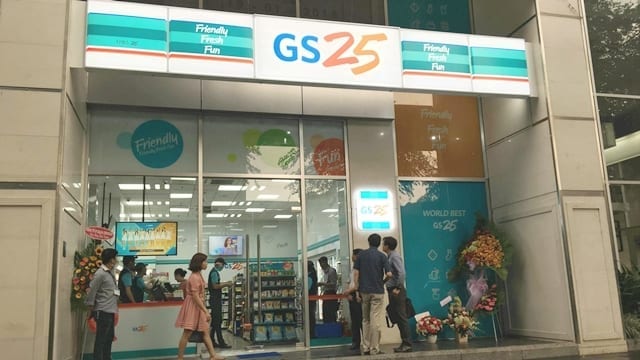
    GS25 Vietnam, a joint venture between South Korea’s GS25 and local retailer Son Kim Group, has opened 200 franchised stores.

    Conglomerate Masan Group has bought another 34% in beverage chain Phuc Long Heritage to increase its ownership to 85%.

    “The two years of the Covid pandemic can be compared to a market research period and this year is the right time to launch expansion plans as well as to make a breakthrough in the retail race,” Trang Do, head of the retail services department at property consultancy Colliers, said.

    Tourism is reviving gradually, and contributing to the growth of retail services.

    The number of foreign arrivals was nearly three million in the first 11 months.

    Securities brokerage SSI said domestic consumption has recovered though not to pre-Covid levels, partly because of inflation.

    Inflation began to accelerate at the end of the second quarter, notably with a 17% increase in housing rents in September and October, and then 2% in November. This has affected domestic consumption.

    Last month headline inflation was 4.4% while core inflation was close to 5% due to a rapid recovery in demand.

    According to HSBC, rising inflation is a matter of concern and would increase in the next few quarters, forcing the central bank to take monetary measures.

    SSI said inflation would gradually rise in the first half of 2023, especially when the government considers adjusting prices of goods and services it manages such as electricity, healthcare and education.

    Do said large retailers are very interested in the Vietnamese retail market after the pandemic. However, the biggest difficulties for foreign investors in the retail sector are to find suitable premises in terms of location and area, and carrying out investment and license procedures.
  • GS25 opens futuristic c-store concept

    GS25 opens futuristic c-store concept

    South Korean convenience-store chain GS25, owned by GS Retail, has opened a futuristic convenience store without a checkout counter in Jung District, Seoul this week.

    The store, which is located in the headquarters building of a local credit card company BC Card, is similar to Amazon Go, checkout-free offline malls in the US.

    One can enter the convenience store by scanning a BC Paybook QR code from BC Card’s mobile payment app at the speed gate.

    When customers enter the store, 34 ‘deep-learning cameras’ will recognise their behaviour. In addition, some 300 weight sensors installed throughout the store detects the number of items that customers choose.

    When a customer chooses their purchases and exit the speed gate, all the items will be automatically paid for through a payment system using artificial intelligence (AI) technology, and a mobile receipt will be issued.

    A video-recognition speaker is also installed, where a pre-set voice will guide the customers through speakers. If customers are standing at some point or do a particular action, the speaker will provide assistance.

    In the future, the company will gradually introduce technologies that guide customers to promotions when they approach a presentation product stand.

  • South Korean convenience store chain launches franchise in Vietnam

    South Korean convenience store chain launches franchise in Vietnam

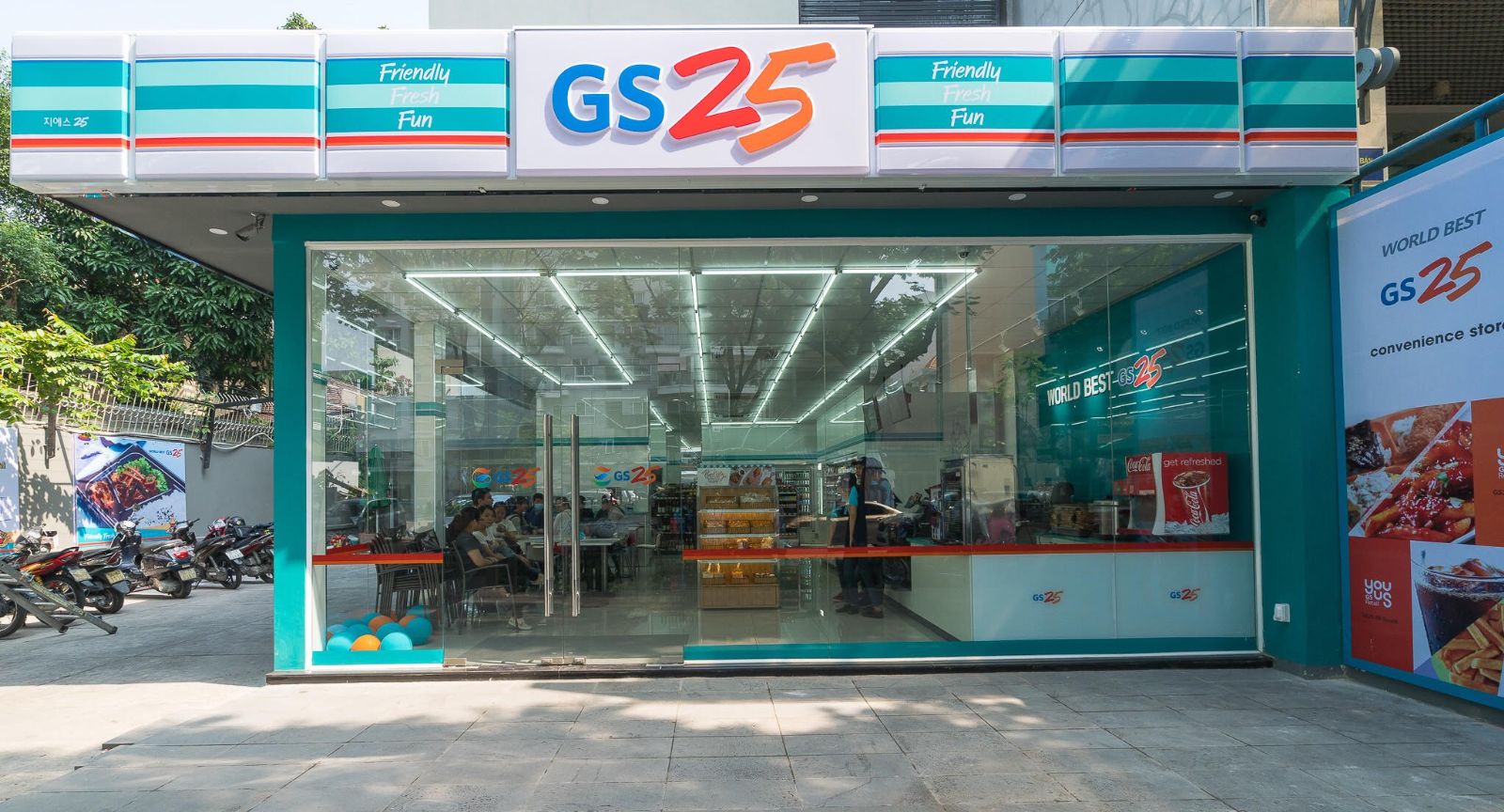
    GS25 Vietnam, a joint venture between South Korea’s GS25 and local retailer Son Kim Group, opened up its brand to franchisees beginning Friday.

    Interested franchisees can choose from one of three models offered by GS25 Vietnam: investing in a standalone store, a chain of convenience stores, or co-investing with GS25 Vietnam to open stores, said a representative of the brand.

    Franchised stores come in three models, with areas of 65-70 square meters, 100-120 square meters, or 150 square meters, respectively.

    Franchisees will have to spend at most VND2 billion ($86,260) to invest in a convenience store, and will be able to source products from major distributors in Vietnam or import South Korean goods, said Nguyen Thi Hong Trang, General Director of GS25 Vietnam.

    South Korean convenience store chain GS25 entered Vietnam in January last year, opening a store in Ho Chi Minh through a joint venture with the Son Kim Group, which operates in retail, real estate and media sectors.

    GS25 Vietnam currently owns 50 stores, and aims to open 2,500 nationwide after 10 years. Opening the business to franchisees is a major step towards realizing this goal, its brand representative said.

    According to the Ministry of Industry and Trade, on average, 1-3 retail stores are needed per 1,000 people. However, only 7,012 stores are considered modern retail stores in Vietnam.

    More than a third of Vietnamese households shop at convenience stores or mini supermarkets, with an average frequency of 10 times per year, data compiled by research firm Kantar Worldpanel shows.

    The UK-based Institute of Grocery Distribution forecasts that convenience stores in Vietnam would grow in double digits over the next four years and account for 37.4 percent of retail revenue by 2021

  • Korean GS25 launches shared-bike charging service

    Korean GS25 launches shared-bike charging service

    Starting June, customers of South Korean GS25 convenience stores will be able to charge shared electric bicycles or kickboards.

    GS25 announced on Wednesday that it will set up an electric bicycle and kickboard charging service facility at its stores in partnership with the shared micro-mobility integrated platform “GoGoSing.”

    Under the terms of the deal, GoGoSing will operate 800 shared electric kickboards and shared electric bikes in Gangnam District in Seoul and Pangyo in Gyeonggi Province, while GS25 will set up charging facilities at stores in nearby areas.

    Customers will be able to use an electric kickboard and return it to a nearby GS25 store, and if they need to charge their device, they will also be able to exchange or charge batteries at the stores.

    GS25 expects that this will help convenience stores to move away from their focus on simply selling products and serve as a hub for charging various shared devices, as well as attracting new customers.

    GS Retail has introduced charging facilities for electric vehicles at 45 locales at present, and will offer delivery services for convenience store products since starting from April, in tandem with the delivery application Yogiyo.

  • South Korean convenience store openings slow down

    South Korean convenience store openings slow down

    South Korean convenience store openings in South Korea fell last year, according to industry data. Thought to be the effect of increasing labour costs and market saturation, the slowdown has manifested amongst several industry operators – including BGF Retail’s CU, which opened 980 fewer stores than the previous year’s total of 1646; and GS25, which opened 1023 fewer stores last year after launching 1701 outlets in 2017.

    A government advisory to chain stores to maintain more of a distance between competing branches signals a likely continuation of the downward trend, as well as new laws mandating higher levels of paid leave to staff and a higher minimum wage. The same pressures have seen 19 per cent of convenience stores closing at night rather than operate 24 hours, compared with 10 per cent in 2017.

    A statement issued by CU said that the firm is prioritising profitability of existing stores over opening new locations.

  • FTC Korea approves convenience stores’ voluntary rules to curb competition

    FTC Korea approves convenience stores’ voluntary rules to curb competition

    South Korean convenience store operators have agreed not to engage in cut-throat competition in the latest move to better protect struggling franchisees. A key centerpiece of the voluntary deal calls for CU, GS25 and 7-Eleven and three other convenience store brands to decide “carefully” over whether to open a new convenience store near an area where a rival convenience store is already located.

    The deal said that convenience stores of rival brands should be at least 50 metres away from each other. Currently, convenience stores of the same brand should be located at least 250 metres away from each other to make sure that they do not compete against each other.

    The latest move came as South Korea has been struggling to protect franchisees in a country where chaebol, or family-controlled conglomerates, have dominated the economy for decades.

    “The voluntary regulation, if implemented in good faith, could help ease saturation and improve management conditions of franchisees of convenience stores,” Kim Sang-jo, chairman of the Fair Trade Commission, said in a signing ceremony of the voluntary deal in Seoul today.

    Last week, President Moon Jae-in instructed the antitrust chief to support a voluntary deal among South Korean convenience store operators so as to address the saturation of the market.

    Convenience stores have sprung up in commercial areas in Seoul and other major cities in recent years, driven by growth of single-member households.

    Last year, the number of convenience stores surpassed 40,000, a dramatic increase from 1989 when the first convenience store opened in eastern Seoul.

    Kim said the voluntary deal could prevent convenience store operators from recklessly opening new outlets in areas where there are already many convenience stores.

  • Ministop South Korea is for sale, rivals compete

    Ministop South Korea is for sale, rivals compete

    South Korean retail operators Lotte and Shinsegae are competing to buy the 21-year-old local subsidiary of Japanese convenience-store operator Ministop.

    Shinsegae and Lotte respectively own rival chains Emart24 and 7-Eleven and are both reportedly seeking to take full ownership of Ministop South Korea. Both companies see the deal as a means to grow their respective businesses in a market where convenience-store penetration has reached saturation point, limiting opportunities for organic network growth.

    7-Eleven currently operates 9535 stores across South Korea and Emart24 3413. The Ministop network numbers just 2535.

    Japan’s Aeon, which owns the Ministop brand, owns a majority 76 per cent of the South Korean business.

    Daesang group owns 20 per cent and Mitsubishi the balance. Aeon has appointed Nomura Securities to find a buyer for the business as it sees little future for the convenience store brand in South Korea, a highly competitive market. Instead, Aeon is looking to Southeast Asian markets for growth, including Vietnam, Thailand and Cambodia.

    Last year, Ministop South Korea sales totalled 1.18 trillion won (US$1 billion), ranking it fourth in revenue terms behind GS25, CU and 7-Eleven.

  • GS25 brings facial recognition to new shop

    GS25 brings facial recognition to new shop

    Convenience store chain GS25 has opened up a cashier-less store in Seoul that uses face-recognizing cameras to handle payments.

    The company’s first Smart GS25 started operation at LG CNS’ headquarters in Gangseo District, western Seoul, on Monday. LG CNS is a long-time provider of electronic systems to GS25 and one of the companies working to add state-of-the-art technology to the convenience store chain.

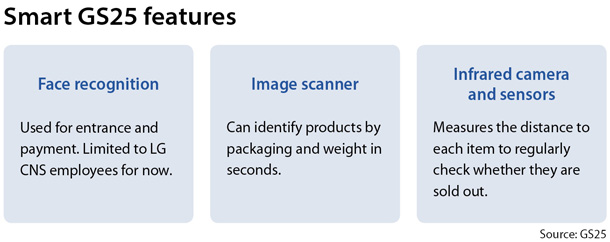
    The unmanned branch is only accessible to LG CNS staff. The store’s front entrance will allow customers to enter through face recognition after they register with a camera in front of the store. Payments can also be made through the face-scanning technology, and the store automatically charges customer’s bank accounts.

    “We aim to introduce and test 13 new smart solutions by the end of this year at the Smart GS25,” the convenience store said in a statement on Monday. “The [long-term] purpose is to apply them to our branches to reduce our franchisees’ labor costs.”

    The experimental GS25 has eight new tech features. Although GS25 is late to the game, as its competitors CU, 7-Eleven and Emart24 have already rolled out their own automated technologies, some of GS25’s features are new to Korean convenience stores.

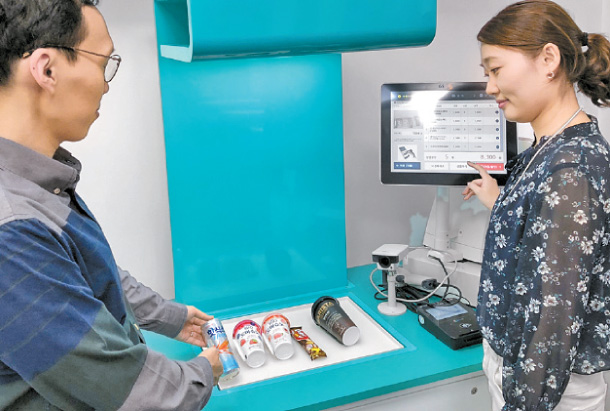
    One is the aforementioned face recognition technology for entrance and payments. Another is the image scanner at the cash register. Most convenience stores without a human cashier use barcodes to identify the products. GS25’s new system instead identifies an item by its packaging and weight.

    This allows customers to simply place items on the table before paying using facial recognition or a credit card. The company says it takes only about a second for the system to recognize five items at once, whereas with the conventional bar code system it would take 15 seconds to scan them one by one.

    An infrared camera and sensors are also installed at the store to regularly check which items need to be restocked.

    This system measures the distance to products to see whether there are any left on the shelf and automatically reports this information to the store supervisor.

    Other features include a smart CCTV that will track where customers spend the most time. This can help the store owner to decide where to place different items.

    “The Smart GS25 is not just an unmanned convenience store packed with tech gadgets,” said Lee Hyun-gyu, a manager of the new shop. “Its main function is to prove technologies that will enhance the convenience of store operation and relieve franchisees of the burden of labor costs. We expect some of the technologies tested here will be shown at our franchises by next year.”

    A GS25 spokesman added, however, that a Smart GS25 open to the public would probably not be autonomous.

  • Convenience store in Korea enjoying revenue boost

    Convenience store in Korea enjoying revenue boost

    South Korean convenience store operators GS25 and CU received a boost from in-house brands in the second quarter.

    GS Retail, which operates the GS25 chain, recorded a net profit jump of 11.1 per cent year on year to 45.8 billion won (US$41 million) in the April-June period, on sales up 5.3 per cent to US$2 billion.

    GS Retail attributed the growth to development of new products at its convenience stores, with 36.7 per cent of GS25’s sales excluding alcohol and cigarettes coming from its private-label products in July.

    South Korean convenience store operators have been developing private-label products to attract more customers.

    GS25’s main rival CU posted a net profit of US$60 million from April to June, an increase of 105 per cent from the first quarter of this year, on sales of $1.3 billion.

  • Cafe 25 opens 10,000th store

    Cafe 25 opens 10,000th store

    Convenience-store brand GS25 says 10,000 of its outlets now serve coffee products distributed under its house brand Cafe 25, just 30 months after the brand was launched.

    The figures show how successful South Korea’s convenience stores have been in challenging coffee-focused chains like Lotte’s Angel-in-Us and even Starbucks, by offering discounted alternatives through vast store networks.

    The GS Retail-owned group says it has already surpassed the 100 million-mark for the total number of coffee products sold, with Cafe 25 selling 40 million cups in the first half of this year alone.

    GS25 is putting significant effort into making the coffee products successful by installing top-notch coffee machines that sell for 13 million won (US$11,440) in each of its stores.To commemorate 10,000 GS25 store milestone, the company will be selling 50,000 promotional coupons online via Gmarket and Auction that allow customers to buy iced Americanos and iced lattes for half the usual price.

    An official at GS25 said the success of Cafe 25 products can be explained by the company’s bid to offer high-quality coffee products at affordable prices, while also leveraging the chain’s vast network of stores.

  • GS Retail set footprint in US e-commerce

    GS Retail set footprint in US e-commerce

    South Korean retailer GS Retail has announced a KRW33 billion (US$29 million) equity investment in a US online retailer.

    The company has purchased stock in Thrive Market, in a move intended to secure a foothold in America’s thriving organic food sector. It is GS Retail’s first overseas investment.

    Thrive’s core business is to sell organic products to its subscriber base, posting annual sales growth of 40 per cent since it launched in 2015.

    A spokesman for GS Retail indicated that the firm expects Thrive to post solid growth in future, with expected sales of over KRW200 billion (US$178 million) for the current financial year.

    GS plans to market Thrive products through its existing GS25- and GS-branded retail chains within a year.

  • South Korean convenience stores to sell more own brand

    South Korean convenience stores to sell more own brand

    More South Korean c-stores are set to launch in-house products as local retailers move to attract more consumers with price competitiveness.

    E-Mart24, the convenience-store arm of South Korean retail giant Shinsegae, said it is planning to unveil its own private-label product within this year. Ministop Korea, operator of Ministop, is set to launch its own branded products in September.

    The moves are part of the companies’ broader efforts to find a breakthrough in the saturated South Korean c-store landscape. The size of South Korean convenience stores private-label product market is estimated at around 3.5 trillion won (US$3.15 billion).

    CU, South Korea’s largest convenience-store chain, operated by BGF Retail, released its own brand, Heyroo, in 2015, and GS25, another major convenience-store chain, joined the move with You Us in 2016.

    BGF Retail said sales of its private-label products rose 35.3 per cent year-on-year in 2016. Last year’s revenue was up 19.1 per cent from 2016.

    GS Retail, operator of GS25, said sales of its private-brand items accounted for 36.6 per cent of its total revenue in the first half of this year, excluding revenue generated from cigarettes and services. The company has around 2000 products under private label.

    Another major convenience store chain, 7-Eleven, said sales of its in-house products accounted for 35.9 per cent of this year’s total revenue as of Sunday. It currently has some 1500 products under its private brand.

    “The companies will be able to survive in this saturated market only if they manage to secure consumers who are highly loyal to their private label products,” an industry source said.

    The market size for convenience stores in South Korea surpassed 20 trillion won in 2016, up 18.6 per cent from the previous year, according to industry data.

  • World Cup boosts South Korean convenience stores revenue

    World Cup boosts South Korean convenience stores revenue

    South Korean convenience stores saw their sales more than double in some categories as tens of thousands of South Koreans took to the streets to cheer on their national football team in the first game of its World Cup campaign.

    BGF Retail Co, which operates the country’s largest convenience store chain, CU, said sales of major products at its stores from 6pm Monday to midnight soared as South Korea faced Sweden in their 2018 FIFA World Cup Group F opener.

    Sales of beer surged 124.8 per cent, with revenue from ice cream and water jumping 121.9 per cent and 120.2 per cent, respectively, from the previous week.

    GS Retail Co, which operates GS25, said sales of beer skyrocketed 274.6 per cent on Monday compared with the same day the previous week.

    Police estimated some 17,000 fans joined the mass street cheering in Seoul’s Gwanghwamun Square. Another 6000 fans are estimated to have gathered at Seoul Plaza in front of City Hall.

    South Korea fell to Sweden 1-0. Its next game, against Mexico, will take place in Rostov-on-Don on Saturday.

  • Net profit slumps 92 per cent for GS Retail, raise questions

    Net profit slumps 92 per cent for GS Retail, raise questions

    GS Retail, which runs South Korea’s GS25 convenience store chain, is facing questions over its profitability after it posted contracted numbers in its earnings last year.

    According to its regulatory filing, GS Retail logged KW30.9 billion (US$28.4 million) in operating profit last year, down 19.3 per cent from 2016. Its net profit also skidded to KW10.7 billion, a  dive of 92.4 per cent.

    It has had slumps in its core business of convenience stores, which account for 70 per cent of its earnings.

    GS Retail last year posted KW1.57 trillion in sales from its convenience stores, up 6 per cent from 2016. The number of GS25 stores also increased from 12,199 to 12,429 last year.

    Despite this growth, the operating profit at its convenient stores declined by 6 per cent to KW37.1 billion during the same period. Per-store sales also shrank by 9 per cent.

    Saturated market

    Analysts say GS25’s weakening profitability is related to the saturation of the domestic convenience store industry.

    There are about 40,000 convenience stores in Korea. Between them, the main players – GS25, CU run by BGF Retail and 7-Eleven run by Lotte affiliate Korea Seven – have more than 30,000 outlets. This means there is one convenience store to every 1250 Koreans.

    Meanwhile, at the start of the year the government hiked the minimum wage rate by 16.4 per cent to KW7530, which is expected to add extra burden on franchise owners.

    Also, GS Retail has seen poor performance for its health and beauty products store chain. It has been the sole operator of Hong Kong-based Watsons in Korea since February last year.

    GS is hoping its earnings deadlock will be broken by its hotel and leasing subsidiary Parnas Hotel. This runs the Grand Intercontinental Seoul Parnas, the Intercontinental Seoul Coex and other hotels and malls in Seoul. It is also in charge of leasing Parnas Tower in Gangnam.

    Parnas Hotel logged KW75.4 billion in sales last year, up 15 per cent. Its operating profit also improved to KW17.1 billion, up 141 per cent as the leasing rate at Parnas Tower rose to 98 per cent.

    As part of its efforts to diversify revenue sources, GS Retail signed a memorandum of understanding with internet company Kakao last month for the development of a chatbot for the retailer.

    The company has also opened its first convenience stores outside Korea – in Vietnam’s commercial capital, Ho Chi Minh City, last month.

  • Vietnam to celebrate its new retail sales highest record US$129 billion

    Vietnam to celebrate its new retail sales highest record US$129 billion

    Spurred by a rising middle class and influx of international retailers, Vietnam retail sales hit a record US$129.6 billion last year.

    This was growth of 10.9 per cent over 2016, according to the Vietnam General Statistics Office (GSO).

    Vietnam’s largest real estate company, Vingroup, starting expanding its Vinmart Plus convenience store chain in 2016 and has already topped 1000 stores – it opened 100 last month alone. It is predicted the store network could reach 3000 this year.

    Meanwhile, Vietnam last year saw the arrival of a slew of foreign retail brands, headed by Japan’s Seven & I Holdings opening its first Vietnamese 7-Eleven convenience store in Ho Chi Minh City in June.

    Swedish fast-fashion brand H&M followed in September with a store in the same city, while Zara, the chain of Spanish rival Inditex, opened its second Vietnam location in Hanoi in November (its first store, covering two levels, launched at Vincom Centre Dong Khoi in Ho Chi Minh City in September 2016).

    Thailand’s Central Group has made several acquisitions in Vietnam, including the Big C supermarket chain and electronics retailer Nguyen Kim Trading. It also launched its first stationery and office supplies store in Vietnam last year.

    South Korea’s GS Retail partnered with Vietnam’s Son Kim Group 12 months ago to open the first of their convenience stores in Ho Chi Minh City this month. They plan to open 2000 locations within 10 years.

    Double-digit growth

    Since joining the World Trade Organisation in 2007 and opening up to foreign goods and businesses, Vietnam has seen continued double-digit growth, led by a 31.5 per cent spike in 2008. With the Association of Southeast Asian Nations Economic Community taking full effect this month, Vietnam has eliminated nearly all tariffs on goods from within the region.

    Meanwhile, supermarkets and convenience stores are selling meat and vegetables at prices that are 20 to 30 per cent higher than at traditional markets, and the number of specialty shops selling organic vegetables is growing.

    Spending on cars, home electronics and other consumer durables is also brisk, with 70 per cent of Vietnam’s GDP coming from personal consumption.

    The GSO says auto sales grew by 14 per cent in value, gemstone and precious metals by 13.2 per cent, food and foodstuffs by 11.1 per cent, cultural and educational products by 10.2 per cent, apparel by 9.6 per cent, and home products by 8.5 per cent.

    Vietnam still has room for growth as modern retail channels like supermarkets and shopping centres account for only a quarter of total retail sales, and most of these businesses are in big cities, reports VIetnamNet. By 2020, the proportion of modern retail channels is forecast to rise to 45 per cent.