Retail News CRM

Tag: Guardian

  • Guardian Unveils Enhanced Flagship Store in Marina Bay Sands: A New Era for Personalized Health & Beauty Shopping

    Guardian Unveils Enhanced Flagship Store in Marina Bay Sands: A New Era for Personalized Health & Beauty Shopping

    Guardian, a prominent health and beauty retailer, has recently unveiled its revamped flagship store situated at The Shoppes at Marina Bay Sands in Singapore.

    Revamp Aims at Personalised Shopping Experience

    The new alterations are aimed at delivering a more personalised shopping experience. This is achieved by amalgamating health, beauty, and personal care products under a single roof.

    Five Wellness-Led Zones

    The renovated store introduces five distinct wellness-led zones: Health and Wellness, Derma Skincare, Men’s, Trial and Travel, and Guardian’s Pick. These zones are strategically designed and curated to cater to a variety of customer’s wellness and beauty needs effectively.

    On-Site Pharmacy Services

    In addition, the store includes on-site pharmacy services, a novel feature that not only provides preventive care but also offers consultations and wellness advice to customers. This service further enhances the customer shopping experience, delivering more than just purchases.

    Future Plans

    Guardian has stated its intention to gradually implement this new store format across numerous locations in the future. As a forward-thinking retailer, Guardian aims to stay ahead of the curve and consistently deliver a personalised, seamless, and comprehensive shopping experience for its customers.

    Questions & Answers

    What is the objective of Guardian’s flagship store revamp?
    The objective is to deliver a more personalised shopping experience by integrating health, beauty, and personal care products in one location.

    What are the five wellness-led zones introduced at Guardian’s flagship store?
    The five distinct wellness-led zones are Health and Wellness, Derma Skincare, Men’s, Trial and Travel, and Guardian’s Pick.

    What services does the on-site pharmacy at Guardian’s flagship store provide?
    The on-site pharmacy at Guardian’s flagship store offers preventive care, consultations, and wellness advice to its customers.

  • Guardian Singapore cuts prices for 500 articles

    Guardian Singapore cuts prices for 500 articles

    The Guardian pharmacy chain said that it is reducing prices on more than 500 health and beauty products for the rest of the year, given that customers are “more value-conscious in the face of increasing financial challenges” of the Covid-19 pandemic.

    Guardian said that the initiative, involving reductions of up to 25 percent, would cost the company S$6 million.

    In a press statement on Thursday (June 3), it said that it is embarking on these longer-term price reductions because it wants to help customers save more and make a meaningful impact by making health and beauty essential accessible to everyone.

    The price reductions apply from Thursday.

    The items that will see their prices reduced include:

    1. All products under the Guardian brand
    2. Listerine mouthwash
    3. Dove body wash
    4. Darlie toothpaste
    5. Pantene shampoo

    The selection of products follows Guardian’s research, which looked at what products customers buy the most, and it showed that they prioritized affordability. Giant invests S$4 million more to extend discounts on products till end-2021

    Mr. James McCoy, director of commercial and operations at Guardian Singapore, said: “We want to support our customers in managing their health and well-being in an affordable way, especially during this time. We are ensuring that our customers can get their daily essentials at low prices that are locked for the rest of the year”.

    This initiative by Guardian came after a similar move by supermarket chain Giant. Both chains are part of conglomerate Dairy Farm International Holdings.

    The supermarket chain announced in March that it would extend its discounts on hundreds of products until the end of the year, which will set it back by an extra S$4 million, and add more than 100 discounted products.

    The move was to help ease the financial hardship faced by customers during the pandemic.

  • Guardian unveils revamped Singapore store

    Guardian unveils revamped Singapore store

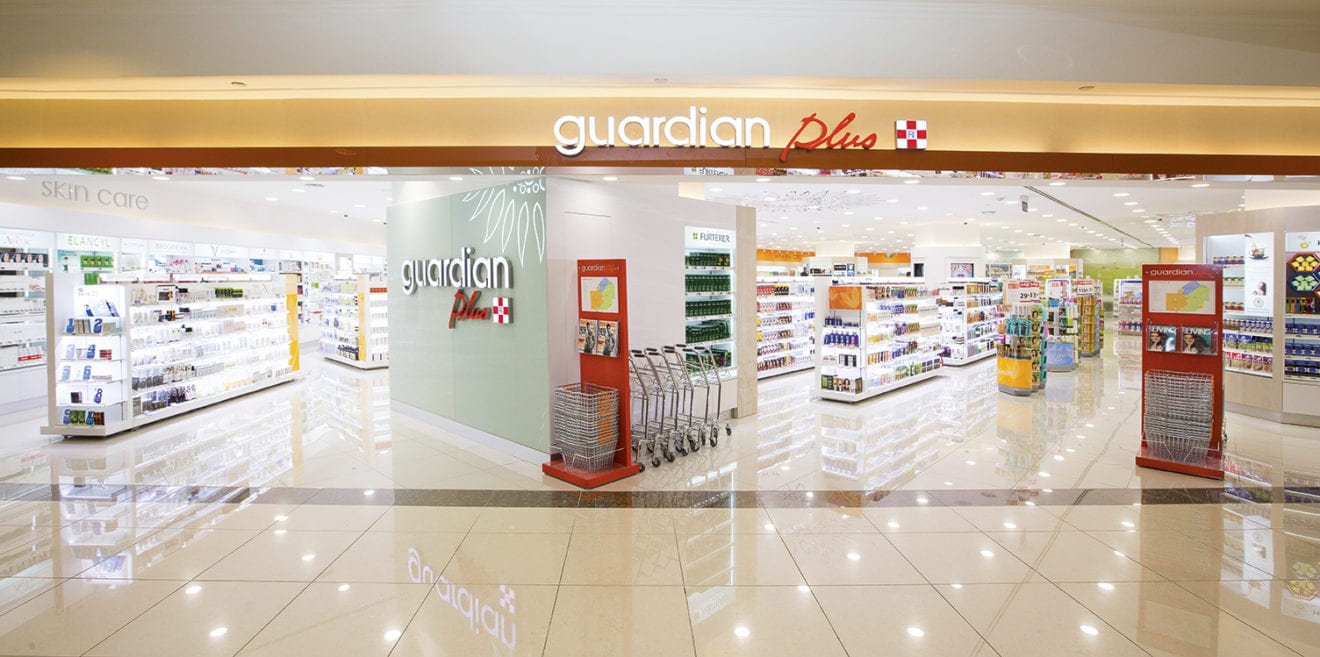
    Beauty Flash: Grooming giant Guardian’s latest and largest store, christened Guardian Plus, had officially opened at Takashimaya Shopping Centre, and boasts a number of firsts sure to make any beauty buff excited.

    For starters, the store at 6,000 square feet is an expansive wonderland of products and cool features, most notable of which is an interactive section outfitted with tablets and touchscreens. With a few swipes of their fingers, shoppers can pinpoint the location of a particular brand or product they’re looking for, as well as research on brands, compare prices and print out their own shopping lists.

    Another nifty touch is a Play, Trial & Test area. Here, you’ll get to test-drive products before you commit, get your skin analyzed by high-tech gadgets, and consult a power team of nutritionists, health, and beauty advisers.

    Choose from over 150 skincare brands and 85 haircare labels, some of which include insider favorites like No7, Mark Hill, Skincode, and Rodial. Guardian says that a mind-boggling 20,000 health and beauty products will be lining the aisles at Guardian Plus, so grab a girlfriend or two and have fun browsing over the weekend!

  • Foodpanda in Singapore starts to deliver Guardian products

    Foodpanda in Singapore starts to deliver Guardian products

    Delivery platform Foodpanda in Singapore is to start delivering health and beauty products from Guardian stores.

    Guardian is the first major health-and-beauty retailer to be listed on Foodpanda’s Shops, offering more than 280 products and on-demand delivery service.

    “This collaboration with Guardian Singapore is timely as we are now able to deliver a greater variety of products to customers in the comfort and safety of their homes,” said Luc Andreani, MD at Foodpanda in Singapore.

    “Giving our customers the best choice of products delivered within the shortest amount of time will continue to be our priority.”

    Customers can now access products, including health supplements, skincare, and beauty products, with promised delivery times of under an hour.

    “Given the new climate and changing shopping behavior, we want to ensure that our customers still have access to their essentials from a trusted brand like us,” said Soren Lauridsen, CEO at Guardian, Southeast Asia.

  • Watsons Vietnam opens first store this month

    Watsons Vietnam opens first store this month

    Hong Kong-headquartered healthcare and beauty retailer Watsons is to launch in Vietnam. The first Watsons Vietnam store will open on January 17, in the lower floors of the high-profile Bitexco tower in downtown Ho Chi Minh City. The store will take up at least one floor of a two-storey space recently vacated by Topshop. Teasing the launch, a huge backdrop with the slogan “Look good, Feel great” has been built outside the space, attracting many Vietnamese youngsters to take selfies and check in on social media.

    On its LinkedIn page, Watsons Vietnam has been recruiting staff for the store and featuring the same artwork as on the Bitexco backdrop.

    Watsons Vietnam will compete with rival Hong Kong healthcare and beauty chain Guardian, owned by Dairy Farm International, which launched in Ho Chi Minh City in 2011 and now claims to have more than 60 stores in four cities.

    Watsons is operated by AS Watson, a subsidiary of retail and telecommunications giant CK Hutchison which is quarter-owned by Singapore sovereign investment fund Temasek Holdings. AS Watson has some 6800 Watsons health and beauty stores in 12 markets in Asia and Europe, including Hong Kong, Mainland China, Taiwan, Macau, Thailand, Singapore, Malaysia, the Philippines and Indonesia. The broader AS Watson group has 14,500 stores, including electrical retailers and grocery stores.

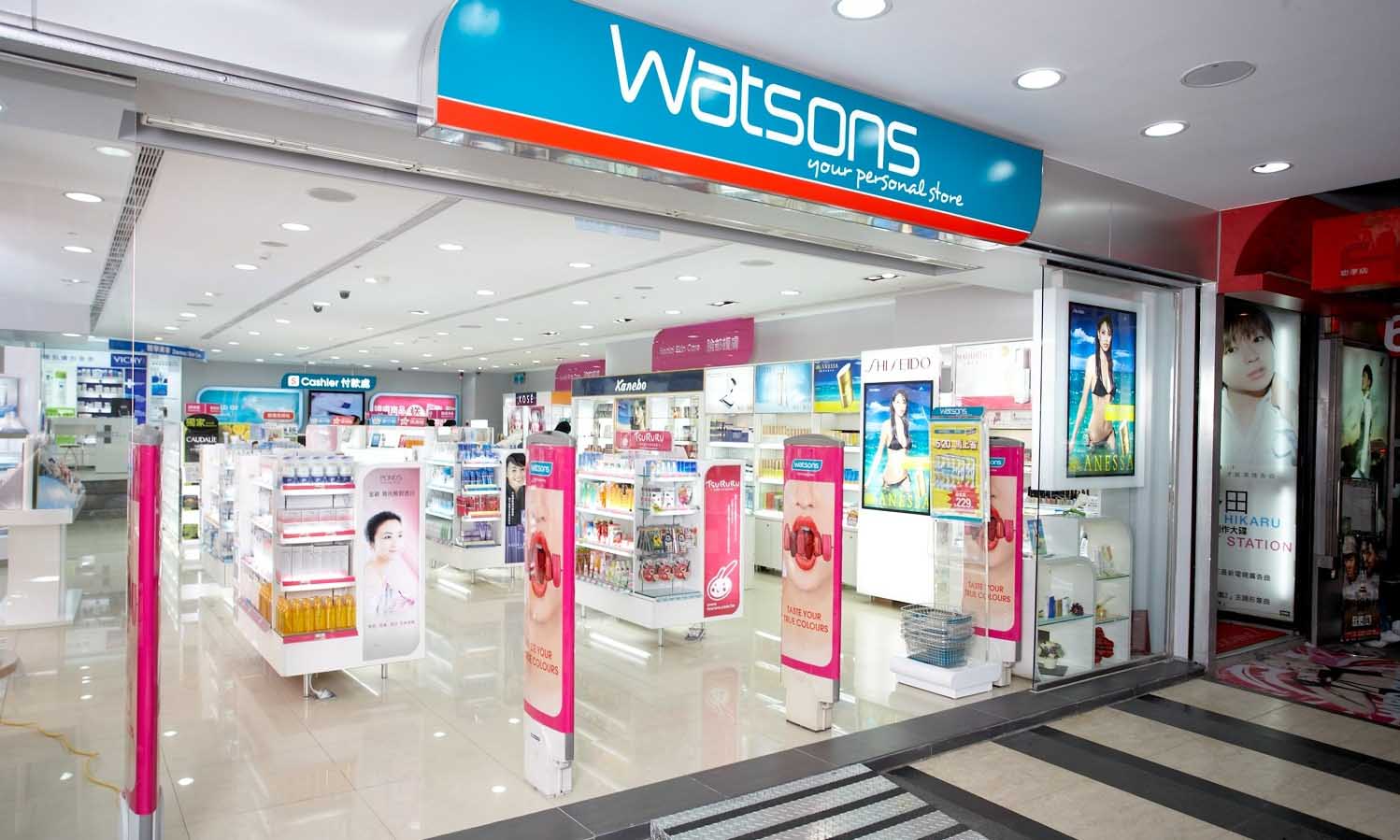
    Watsons has just celebrated the opening of its 500th store in Bangkok, Thailand. The store photo accompanying this story is of Watson’s new-generation store at IconSiam in Bangkok.

  • SEA gives struggle to Dairy Farm International

    SEA gives struggle to Dairy Farm International

    “Significant challenges” across the Southeast Asian supermarket business are continuing to test Hong Kong-listed multi-format retailer Dairy Farm International. In a management statement discussing the company’s third-quarter performance – which did not include any figures – Dairy Farm said its businesses produced “mixed results” with a strong performance in health and beauty and good results from home furnishings and restaurants divisions. However, the performance of the Hong Kong supermarkets business has softened.

    The company said the Southeast Asian grocery store business – Cold Storage and Giant stores in Singapore and Malaysia – is expected to continue for the remainder of the year with the group’s full year results expected to be impacted by increasing costs from ongoing investment in technology, supply chain infrastructure, stores and people in order to improve the long-term performance of the business. Sales and profits fell in its supermarkets in both countries. Falling sales in Indonesia were mitigated by management action which resulted in reduced losses there.

    In North Asia, sales from the food businesses were slightly ahead of the same period last year, but profits were lower as a result of weakening margins and continued cost pressures, particularly from increased rents.

    However, the health and beauty businesses in Hong Kong and Macau (Guardian stores) delivered “strong sales and profit growth”.

    The Philippines food business showed good sales growth, benefitting from the opening of several new stores, but profit was slightly behind the prior year due to increased operating costs. There was continuing good sales and profit improvement in the group’s health and beauty businesses, notably in Malaysia and Indonesia.

    Ikea’s sales and profits were ahead of last year in Taiwan and Indonesia. In Hong Kong, sales were higher, supported by the new store which opened last year; however profits were lower as a result of higher operating costs.

    In Hong Kong, Maxim’s delivered another record-breaking mooncake sales performance during Mid-Autumn Festival, which was earlier than last year, and helped drive sales and profit higher during the period. Supermarket Yonghui reported strong sales growth in the quarter but profit was lower than the prior year due to investment in new formats and the additional costs of the new employee incentive scheme.

    Approval was received from the Philippines Competition Commission in August for the combination of Dairy Farm’s Food business in the Philippines with Robinsons Retail Holdings, with completion expected to take place within weeks.

    In early October Dairy Farm agreed to acquire the remaining 51 per cent interest in Rose Pharmacy in the Philippines, which is now subject to regulatory approvals.

    Dairy Farm, together with its associates and joint ventures, operate more than 7400 outlets, including supermarkets, hypermarkets, convenience stores, health and beauty stores, home furnishings stores and restaurants – employing more than 200,000 people. Total sales last year exceeded US$21 billion.

  • WeChat Pay to be ready in 7-Eleven, Guardian Singapore

    WeChat Pay to be ready in 7-Eleven, Guardian Singapore

    Customers of 7-Eleven, Cold Storage and Guardian stores in Singapore will soon be able to pay for purchases using WeChat Pay. The owner of the two retail chains, Dairy Farm Group, has worked with NETS to enable visitors from China and Chinese nationals based in Singapore to use the service from November 1.

    WeChat Pay is currently being trialled at the 7-Eleven and Guardian stores at Changi International Airport and some stores in key tourist destinations in the Orchard and Chinatown districts.

    According to the Singapore Tourism Board, visitors from China increased by almost 13 per cent, from 2.8 million in 2016 to 3.2 million last year. The partnership between Dairy Farm Singapore and NETS together with WeChat will enable Singapore’s largest multi-format retailer to better cater to the growing number of China visitors, by offering visitors a convenient way to pay when they shop in Singapore.

    Head of merchant services at NETS, Alvin Seck, said working with payment partners like WeChat and retailers like Dairy Farm Group enables NETS to roll out new payment services for consumers quickly while minimising adoption costs for merchants.

    “With this partnership, 7-Eleven and Guardian in Singapore along with Cold Storage and Giant can just make use of its existing NETS uPOS terminals to accept WeChat Pay, in addition to NETS, QR, NETS FlashPay, credit and debit payments.”

    To use WeChat Pay for payments, users simply need to scan the NETS QR code on the NETS uPOS terminal.

    Dairy Farm Singapore’s regional finance director, Tom van der Lee said this latest payment mode service is part of the multi-format retailer’s digital-transformation journey in line with the government’s ‘Smart Nation’ drive.

    “More customers are adopting cashless payments, thanks to easier and faster payment transactions with the uPOS terminal plus the convenience of the wide array of payment options to choose from across our Cold Storage, Giant, 7-Eleven and Guardian stores. Cold Storage alone has seen cashless payment increase by 6 per cent and at Guardian by 3 per cent since Dairy Farm Singapore installed 1800 unified NETS POS terminals last year – the single largest deployment by retailer here.”

  • Dairy Farm restructures after recent result

    Dairy Farm restructures after recent result

    “Underperforming” subsidiaries and rising rent and labour costs are disturbing the chairman of Hong Kong-listed multinational retailer Dairy Farm International – but those factors failed to prevent a solid second-half year performance.

    Dairy Farm’s total sales rose 17 per cent to US$12.215 billion in the six months to June 30 and profit attributable to shareholders was $215 million, up 6 per cent. The increased sales came largely from the Yonghui supermarket operation and Maxim’s which owns food retail channels and the Starbucks business in Hong Kong, Singapore, Vietnam and Cambodia.

    Chairman Ben Keswick said the health and beauty business in Hong Kong and Macau drove strong results in North Asia, but the Southeast Asian food businesses continued to face challenges producing a weaker overall performance.

    “While the outlook for the remainder of the year is expected to remain challenging for the Food businesses, particularly in Southeast Asia, the group’s other businesses should continue to make steady progress. Significant management and structural changes have been made to address the issues the group faces in a number of areas, but time will be needed to deliver sustainable improvement.”

    The company has consolidated its trading operations into a more centralised structure with two main trading divisions: North Asia and Southeast Asia, in addition to the standalone business of Home Furnishings (essentially Ikea) and Maxim’s.

    Keswick says five strategic priorities have been identified: building capability, growing presence in Mainland China, protecting the group’s Hong Kong business, revitalising the Southeast Asia operations and driving digital innovation. “A series of programs are underway to support these priorities across all of the group’s businesses,” he said in the earnings statement.

    In North Asia, overall sales within the food businesses were ahead of prior year, but profits declined, mainly due to higher rent and labour costs in Hong Kong. “The health and beauty business in Hong Kong and Macau delivered very strong sales and profit growth, driven by a significant increase in business from higher numbers of mainland Chinese tourists.”

    Southeast Asia challenges

    However, in Southeast Asia, challenging trading conditions continued for Dairy Farm’s food businesses.

    “The group saw lower sales and profits in Singapore, Malaysia and Indonesia, while in the Philippines, sales were higher but profits lower, due to increased operating costs resulting from more store openings. Generally, these businesses have suffered from a lack of investment in infrastructure, range and competitive pricing for some time, while competition in each market has been increasing.

    “Turning these food businesses around and becoming more relevant to the changing demands of customers will take significant effort. Appropriate plans are now being put in place following the strategic review, but will require time to take effect,” said Keswick.

    He said the improving performance of the majority of the group’s health and beauty businesses in Southeast Asia is encouraging, with Malaysia, Indonesia and Vietnam reporting better underlying results.

    Dairy Farm’s convenience store operations (7-Eleven) performed well, with Hong Kong and Macau trading in line with last year.

    “In Singapore, overall convenience store sales were slightly lower than last year due to the termination of a multi-site agreement, but profitability improved following the closure of some underperforming stores. Like-for-like sales increases and store expansion in Mainland China continued to underpin growth in this sector.

    “In Home Furnishings, Ikea performed ahead of last year in Taiwan and Indonesia, with sales and profits growth. Hong Kong reported higher sales, helped by a contribution from the new store which opened in October last year, but associated higher operating costs resulted in reduced reduction in profits. Progress continues to be made on new store development in both Taiwan and Indonesia, with several sites under development. Meanwhile, e-commerce activities are showing increased results in all markets but from a small base.

    Keswick said Maxim’s delivered another good performance and is continuing to expand its presence across Mainland China and Southeast Asia. In Hong Kong, Maxim’s opened its first Shake Shack in May with “encouraging initial results”.

    Supermarket chain Yonghui reported strong sales growth and underlying profits from the core food business remained strong, but total profits were behind prior year due to the investment in new technology formats and the introduction of an employee incentive scheme announced earlier this year.

    Philippines restructure

    Meanwhile, back in March, the group announced it had agreed to partner with Robinsons Retail Holdings Inc. (‘RRHI’), the third largest retailer in the Philippines, to build a leading food retail business in that market. Dairy Farm will combine its Rustan Supercenters operations with RRHI to build on the combined strengths of both businesses, creating a new platform for growth. Following completion of the transaction, Dairy Farm would own 18.25 per cent of RRHI. The transaction, which is subject to certain regulatory approvals, is expected to be completed in the fourth quarter.

    As at June 30, Dairy Farm, including associates and joint ventures, operated more than 7400 outlets across all formats, compared with 7181 at the end of last year.

  • Dairy Farm International’s plan after hitting bottom line

    Dairy Farm International’s plan after hitting bottom line

    Poor trading by Dairy Farm International’s Southeast Asian grocery business hit the company’s bottom line last year, with underlying profit falling 13 per cent.

    But every other one of the company’s divisions traded strongly throughout the year, according to the results just released.

    Full-year profit was US$403 million, after allowing for $64 million of costs relating to business restructuring. Sales by Dairy Farm’s wholly-owned subsidiaries totalled $11.3 billion, largely unchanged from 2016’s $11.2 billion. But total sales, including 100 per cent of associates and joint ventures, at $21.8 billion were up 7 per cent year on year, reflecting strong growth at both supermarket operator Yonghui and cafe-restaurant operator Maxim’s, which owns the Starbucks business in Hong Kong, Vietnam, Cambodia and now Singapore.

    “After a disappointing year… for our food businesses in Southeast Asia, actions are being taken to improve their long-term performance,” explained chairman Simon Keswick. “All of the group’s other formats and markets are trading well and growth opportunities are being pursued, in Mainland China and elsewhere.”

    In Dairy Farm’s food division, sales were down and profits were “significantly lower” than in 2016, primarily due to poor performances in the supermarket and hypermarket businesses in Malaysia, Singapore and Indonesia.

    “A number of underperforming stores are being closed and prices lowered to clear or write off discontinued and slow moving stock.

    “In Hong Kong, sales were more resilient, although profits were marginally down due to increasing rents and labour costs. Positive sales growth seen in the Philippines reflected the ongoing investments being made to improve the business,” said Keswick.

    Elsewhere in the company there was brighter news.

    The convenience store format (including 7-Eleven in Hong Kong and Singapore) produced increased sales and profit. “In part, this reflected a consumer shift to more convenient retail formats, as well as a positive reception to the service and range enhancements introduced for customers,” said Keswick.

    The convenience stores division reported $2 billion in sales, an increase of 4 per cent over the previous year – but operating profit surged 16 per cent to $85 million.

    In the health and beauty division, (led by Guardian and Mannings), sales and profit were higher, principally due to strong performances in Hong Kong, Macau and Indonesia, together with improvements in Mainland China.

    Keswick said this was led by an increasing focus on the beauty category and the continued development of the division’s house brands.

    The home furnishings division (Ikea in Hong Kong, Taiwan and Indonesia) recorded higher sales and trading profit, but the reported profit declined, mainly due to costs associated with the opening of the fourth Ikea Hong Kong store in October. Sales and profits increased in Taiwan and Indonesia and there was solid growth in the e-commerce business.

    Maxim’s enjoyed good sales growth and profit expansion during the year, in large part due to strong performances from its branded products, particularly mooncakes, and its business in Mainland China. The company also acquired the Starbucks Singapore business last year.

    The group’s 19.99 per cent-owned associate in Mainland China, Yonghui Superstores, opened a net 292 new stores last year, which underpinned a 19 per cent growth in revenue. Ongoing supply chain optimisation and shrinkage improvement resulted in improved margins, which together with better capital use, led to a 45 per cent growth in profit.

    Convenience focus

    Keswick said Dairy Farm International will focus on increasing its convenience store operations in the year ahead through expansion and enhancement of the store network. New smaller-store formats are being piloted in some markets.

    The group will also continue to develop its e-commerce presence, focusing on a number of initiatives in its home furnishings, food, and health and beauty operations introduced last year.

    Dairy Farm International added a net 633 stores last year. At year end, it had 7181 stores in operation in 11 countries and territories, including its interest in 779 Yonghui stores in mainland China and 1210 Maxim’s stores.

    Besides the Starbucks Singapore deal, Maxim’s also acquired the existing businesses and franchises of Genki Sushi in Singapore and Malaysia. It opened its first The Cheesecake Factory in Hong Kong in May, which Keswick said is trading well, and this year will introduce American casual restaurant format Shake Shack in Hong Kong and Macau.

    In the Philippines, Rustan became a wholly-owned subsidiary following the acquisition of the remaining 34 per cent interest from the group’s joint venture partner.

  • Dairy Farm sales stagnate

    Dairy Farm sales stagnate

    Dairy Farm sales were described as “flat” in the third quarter to September 30.

    The Hong Kong-headquartered company said improved performances in health and beauty, Ikea, restaurants and Yonghui were offset by lower sales in the food and grocery division.

    “The lower food division sales, together with new store pre-opening costs in home furnishings, (Ikea) led to underlying profits being marginally below the same period in the prior year,” the company said in a statement issued in London, where it has a secondary listing. “Similar trading conditions are expected to continue for the remainder of the year.”

    Dairy Farm said the weakness seen in food and grocery sales was principally driven by difficult trading for the hypermarket and supermarket operations in Southeast Asia, where it operates Giant hypermarkets and Cold Storage supermarkets. It says reviews of “a number of the businesses” are being undertaken.

    The results from greater China (including its Hong Kong Wellcome supermarkets) showed improvement over the same period last year. Convenience store operations (including 7-Eleven stores in Hong Kong and Singapore) produced improved sales and profitability.

    Yonghui reported a strong 20 per cent  growth in revenue and 131 per cent increase in profit in the quarter.

    Improved sales in the health and beauty division (Manning’s, Guardian and Rose Pharmacy) were driven principally by a strong performance in Hong Kong and Macau. Home Furnishings (Dairy Farm has the Ikea franchises in Hong Kong and Taiwan) traded well, although profitability was reduced due to pre-opening expenses for the new store in Hong Kong.

    Maxim’s (which also includes Starbucks operations in Hong Kong, Vietnam and Cambodia) had a seasonally strong quarter in both sales and profit, benefiting from record mooncake sales during the Mid-Autumn Festival period. In September, Maxim’s acquired the existing business and exclusive rights to operate and develop Starbucks franchise stores in Singapore.

    In August, the group completed the acquisition of the remaining 34 per cent interest in Rustan’s in the Philippines from its joint venture partner.

  • Solid year for revitalised Dairy Farm International

    Solid year for revitalised Dairy Farm International

    Hong Kong-headquartered multi-format retailer Dairy Farm International has celebrated its 130th anniversary with a strong set of results, with food, home furnishings and restaurants delivering higher profits.

    Total sales, including those of associates and joint ventures, rose 14 per cent in US dollar terms and 17 per cent on a constant-currency basis to US$20.4 billion. Sales of wholly-owned subsidiaries rose 1 per cent to $11.2 billion.

    Underlying net profit rose by 7 per cent to $460 million, partly due to a 13 basis point net improvement in operating margins as well as increased contributions from Yonghui and Maxim’s. Operating profit rose 6 per cent.

    Supermarkets & hypermarkets solid

    Total food division sales, which include Wellcome and Giant, were flat in US dollar terms, although up 1 per cent on a constant currency basis.

    “In an environment of severe pressure on pricing, sales growth in Hong Kong supermarkets and in the convenience store businesses in Hong Kong, Mainland China and Singapore helped to offset declines in the group’s supermarkets and hypermarkets in Singapore and Indonesia and largely flat sales elsewhere,” explained CEO Graham Allan.

    “The closure of a number of unprofitable stores in Singapore and Indonesia also weighed on sales performance. However, specific actions, including strategic store closures, prudent management of costs and more targeted promotional activity, delivered improved operating margins.’

    Operating profit from the food division rose 13 per cent to $267 million, with the largest gains coming from Singapore and Indonesia.

    Sales of $6.2 billion from supermarkets and hypermarkets (excluding Yonghui) were in line with last year in constant currency while operating profit increased by 13 per cent to $194 million.

    Wellcome in Hong Kong drove higher sales through strengthening its fresh offer and an enhanced merchandise assortment. Operating profit was lower, principally due to a continued rise in rental costs and competitor promotional activities. In Macau, San Miu achieved sales and operating profit growth in its first full year in the group with range enhancement and increased fresh participation.

    In Taiwan, sales and operating profit were ahead of last year. A new ‘superstore’ concept was introduced for Wellcome with two net new stores opening during the year, while Jason’s continued its store expansion.

    “The retail landscape in Indonesia was challenging with limited recovery in consumer confidence and significant competition from the continued rollout of mini-market stores across the country, which impacted sales growth at supermarkets and hypermarkets,” said Allan.

    “Nevertheless, improved margins, from pricing and promotional activities, the closure of a number of underperforming stores and tighter cost control boosted profitability. Improving the fresh assortment and revitalising the upscale Hero brand remain key focus areas for the business.”

    In Malaysia, sales and operating profit were behind 2015 due to persistent low consumer confidence together with ongoing price controls following the introduction of GST, which continued to weigh on performance.

    The Philippines recorded a strong year with all banners reporting like-for-like sales growth and improved profitability. “A more appealing fresh assortment coupled with tactical pricing and successful marketing activities underpinned an encouraging increase in footfall,” said Allan.

    “Rustan’s benefited from increased sales of its imported and exclusive brands, while measures to improve cost efficiency were also implemented.”

    In Singapore, sales were down year-on-year due to poor consumer sentiment and the impact of store rationalisation. “Cold Storage achieved an encouraging operating profit increase, despite reduced sales following the closure of underperforming stores. Giant saw steady sales and positive profit growth, driven by increased margins and lower operating costs.

    “In the coming year, we aim to invest in the renewal of customer facing and back office technologies to improve our customer experience and internal efficiency whilst optimising ranges and supply chain productivity.”

    In Vietnam, Giant posted sound sales growth, from its single store, with increased customer traffic being the main driver and in Cambodia, the group saw “encouraging increases” in like-for-like sales and operating profit.

    Convenience sales reach $2 billion

    Convenience stores reported $2 billion in sales, an increase of 5 per cent year-on-year in constant-currency terms. Operating profit increased by 15 per cent to $73 million.

    In Hong Kong, 7-Eleven outpaced the competition and grew sales and operating profit despite soft consumer sentiment and difficult market conditions. Like-for-like sales strengthened during the year supported by promotions, range improvements and new products. A slight gross margin improvement led to a higher operating profit despite cost increases from labour and rent. In Macau, sales were flat and operating profit was lower due to slowing tourist numbers and a substantial cigarette tax increase in 2015.

    In Mainland China, 7-Eleven continued its solid growth and passed its 800th store milestone. During the year, sales and operating profit increased, with store network expansion and like- for-like sales growth. This was driven in part by an expanded ready-to-eat (RTE) product range.

    In Singapore, 7-Eleven achieved positive like-for-like sales growth arising from a store re-ranging project with a strong focus on RTE, including the successful introduction of new private label products sourced from 7-Eleven Japan.

    “Operating profit was significantly ahead of 2015 due to these initiatives and the rationalisation of loss-making stores,” said CEO Graham Allan. “The RTE range will be further expanded in 2017 and there will be increased focus on acquiring new profitable sites.”

    Health & beauty sales rise

    Dairy Farm’s health & beauty division achieved $2.6 billion in sales, up 4 per cent on a constant currency basis, however profit declined 5 per cent to $175 million due to margin pressure and higher rents in Hong Kong.

    “Gains in Hong Kong, Mainland China, Singapore, Indonesia and the Philippines, offset disappointing sales in Malaysia,” said Allan.

    In Hong Kong, Mannings’ sales increased in 2016 despite a smaller store network. “As mainland Chinese tourist arrivals continued to decline, promotional campaigns and loyalty programmes were launched throughout the year targeting local consumers,” said Allan. “Sales were flat in Macau as mainland Chinese tourist arrivals remained soft.

    On the mainland, Mannings “showed gradual improvement” with solid sales growth, particularly in baby care, beauty care and personal care, while the contribution from corporate brands increased.

    In Singapore, Guardian reported growth in sales, while operating profit also increased with higher gross margins and greater focus on cost and shrinkage management, partially offset by higher rental costs, but in Malaysia, Guardian experienced “a challenging year” with lower sales and operating profit due to subdued consumer sentiment, increased competition and weakness of the ringgit.

    In Indonesia, Guardian posted double-digit sales growth for the fifth year in a row, despite the net closure of 73 stores. Operating profit was higher than in 2015 with higher gross margins.

    In Vietnam, Guardian recorded another strong year of double-digit sales growth and improvement in gross margin. Corporate brand penetration increased significantly as brands such as Botaneco Garden proved popular with local consumers and in the new market of Cambodia, progress was made through range expansion and increased corporate brand penetration supporting strong like-for-like sales.

    In its second year in the group, Rose Pharmacy in the Philippines delivered performance improvement through sales growth, gross margin enhancement, better cost efficiency and the closure of a number of underperforming stores. Guardian brand products were launched with encouraging early signs of customer acceptance.

    Home furnishings solid

    Home Furnishings, essentially the Ikea business in Hong Kong, Taiwan and Indonesia, recorded a 12 per cent rise in operating profit to $71 million driven by increased sales of $597 million, 6 per cent ahead of 2015.

    “Sales and operating profit were higher than last year in all three markets. Like-for-like sales growth was particularly strong in Taiwan and Indonesia.”

    Hong Kong led the group in introducing new concepts to increase consumer access, launching online shopping in April 2016 and opening two pick-up points in Macau and on Hong Kong Island. Indonesia introduced online shopping in July. Taiwan opened a pick-up point in Hsinchu and launched online shopping in February 2017.

    “We continued to strengthen our low price image through ongoing price investment, and increased our focus on market specific products to enhance our local consumer appeal.

    “In the coming year, Home Furnishings plans both to continue its push in consumer accessibility and to drive forward its expansion plans, having identified a second Indonesia store location and opening a fourth store in Hong Kong in the second half of 2017,” said Allan.

    Solid growth for Starbucks, Maxim’s

    Sales in Dairy Farm International’s restaurants division rose 7 per cent year-on-year to $2 billion and profit rose 4 per cent.

    “The business delivered another year of record earnings in a difficult market environment while continuing to expand outside Hong Kong,” said Allan.

    The division expanded its reach by acquiring Cova, a premium chain of cake shops and restaurants, and by opening its first Treats food hall.

    In China, Maxim’s added 16 new stores across its brands, including the first Cheesecake Factory franchise at Shanghai Disney Town.

    The company now operates 20 Starbucks cafes in Vietnam and Cambodia and describes their performance as “encouraging”. The group launched its first Thai franchise in September – MX Cakes and Bakery, a joint venture with ThaiBev, which has opened three outlets in Bangkok.

    “Looking ahead, the group continues to see various exciting opportunities, including entry into the Beijing market with the opening of Jade Garden, Cafe Landmark and The Cheesecake Factory planned in 2017. Maxim’s will also continue to explore franchise and acquisition opportunities across the region.”

    Dairy Farm will “compete aggressively”

    Chairman Ben Keswick said Dairy Farm International is “transforming itself to compete aggressively in a changing retail landscape”.

    “Central to this are a strong focus on understanding changing consumer behaviour, growing market share, building digital engagement with customers and sharing know-how across the group. Investment is being sustained in supply chain, IT infrastructure and systems, and the skills and expertise of our people to support this transformation. Each business is committed to optimising the shopping experience of its customers and to serving their evolving needs as efficiently as possible.”

    Keswick said increasing convenience through expansion and enhancement of the store network remains a high priority, although when necessary, underperforming stores will be closed. Last year the entire group added a net 114 stores, despite a number of closures across its divisions.

    At December 31, Dairy Farm International had 6548 stores in operation in 11 countries and territories, including its interest in 487 Yonghui stores in Mainland China.

    “Despite the uncertain economic outlook for 2017, the group continues to strengthen its businesses,” said Keswick. “Investments are being made to enhance its competitive position, increase customer convenience and adapt to emerging consumer trends. These investments, coupled with the exposure of its market-leading retail brands to Asia’s growth markets, will support Dairy Farm’s long-term success.”
  • Guardian to open 30 new stores next year

    Guardian to open 30 new stores next year

    Guardian Health and Beauty (Guardian Malaysia) plans to open between 25 and 30 new stores next year as it embarks on an aggressive expansion plan to further strengthen its position in the domestic health and beauty retail market.

    Chief Executive Officer Peter J Dove said besides the new stores opening, the company would also refurbish 70 stores, as well as, close 15 existing stores which are less performing.

    At present, Guardian Malaysia has 430 outlets nationwide and commands a 30 per cent market share in the health and beauty segment.

    “Domestically, the current retail market is tough and demand is soft, so we have conducted a research and come out with a new concept, which is aligning products with shoppers’ demand, and then see the customers’ response,” Dove told Bernama after launching Guardian’s concept store in Kuala Lumpur City Centre Sunday.

    The retailers in the pharmacy and personal care sub-sector are expecting to record an 11.4 per cent growth in the third quarter of 2016.

    Guardian Malaysia also plans to implement the same concept store idea for 10 out of its 40 top stores nationwide.

    “We will also introduce and aggressively go into e-commerce next year to reach more customers,” he said, but declined to disclose the investment allocation to develop the new e-commerce platform and new concept stores.

    Meanwhile, the new concept store incorporates shopper-friendly features including a “Make Me Up” corner, which focuses on addressing the needs of shoppers, highlight the latest cosmetics products and trend, as well as, offer a semi-private area for product trials.

    Guardian Malaysia has also expanded its range of new international and local brands, as well as, spearhead the first modern trade pharmacy initiative with the listing of traditional Chinese herbal health products.

  • Guardian Malaysia plans 30 new stores

    Guardian Malaysia plans 30 new stores

    Guardian Malaysia plans to open 30 stores in 2017 and develop an online business as it bolsters its share of the health and beauty market.

    With 430 stores trading currently, the company has a share of the sector estimated at around 30 per cent.

    “Domestically, the current retail market is tough and demand is soft, so we have conducted a research and come out with a new concept, which is aligning products with shoppers’ demand, and then see the customers’ response,” Guardian’s CEO Peter J Dove said in an interview with Bernama.

    A further 70 stores have been slated for refurbishment and 15 will close altogether.

    Guardian Malaysia

    This week the company celebrated the opening of its new 316 sqm concept store at Suria KLCC in Kuala Lumpur which will be a template for about 10 of its largest stores in the country.

    Highlights of the Suria KLCC store include a ‘Make Me Up corner’, a semi-private area for shoppers to experiment with new products and learn how to apply them.

  • Mixed fortunes for Dairy Farm Indonesia

    Mixed fortunes for Dairy Farm Indonesia

    Dairy Farm International’s Indonesia operation continues to struggle in food – but Ikea trades above expectations.

    The Hong Kong-listed company holds a controlling 83.9 per cent share in PT Hero Supermarket Tbk, which operates Giant hypermarkets and grocery stores, Guardian pharmacies and has the nation’s Ikea franchise, among others.

    Hero has reported a first quarter sales decline of 3 per cent to IDR3,409 billion (US$258 million), a 2 per cent improvement in gross profit, but a net loss of IDR 35 billion ($2.65 million).

    “While there are initial signs of margin improvement, the trading conditions for food are expected to remain challenging,” said president director Stephane Deutsch.  “Various initiatives are underway to improve the profitability of the Food business, and continuing progress is expected in both health and beauty and Ikea.”

    Although still relatively new, Ikea was the star of the quarter with sales up by double digits, exceeding both sales and profitability expectations.

    A total 28 net stores were closed in the first quarter, including one Giant Ekspres, 24 Guardian and five Starmart convenience stores. This was offset by the opening of one Guardian and 1 Giant Ekstra.

    In health and beauty, Guardian’s store rationalisation program is “progressing well”, said Deutsch. Together with the introduction of refreshed branding and increasing private label development, the restructure is leading to improvements in both sales and profitability.

    But profitability in the food operations was reduced due to the lower sales, higher stock provisions and increasing costs resulting from last year’s wage increases.

    “Significant attention continues to be given to driving sales growth, and several initiatives are underway to mitigate the effects of rising costs through energy savings and improved productivity,” said Deutsch.

    In food, the strategic decision to increase the focus on fresh produce is showing promising results with strong like-for-like sales growth.

    “Disappointing grocery and general merchandise sales, however, impacted negatively the overall food [division] performance during the quarter, especially in Giant. Action is also being taken to improve the efficiency of the supply chain, with increased centralisation through the group’s distribution centres,” he said..

    Both Giant Ekstra and Ekspres are taking action to improve their trading and their profitability.

    Dairy Farm Indonesia’s upscale format, Hero Supermarket, had stable like-for-like sales and continues to focus on enhancing its offer across the fresh, imported and exclusive ranges to provide a more distinctive choice for customers.

    At the end of the quarter (March 31), Hero operated 582 stores: 54 Giant Ekstra, 153 Giant Ekspres and Hero Supermarket, 295 Guardian Health and Beauty stores, one Ikea and 79 Starmart convenience stores.

  • Dairy Farm exits Starmart Indonesia

    Dairy Farm exits Starmart Indonesia


    Convenience store and grocery retailer Hero Supermarket is to exit the troubled Starmart Indonesia business.

    Hero, a subsidiary of Hong Kong-headquartered Dairy Farm International, has announced the sale of 80 stores to Fajar Mitra Indah, a subsidiary of Wings Group, an Indonesian food conglomerate which owns the FamilyMart franchise in the country. The networks will be merged by the year’s end under the FamilyMart banner, taking that network to 80.

    The sale follows the closure of 50 poorly performing stores in the network last September after a long-running strategic review. The balance of the stores – the number of which is undisclosed – will be shuttered.

    The Starmart business had effectively been kneecapped by rapidly implemented Indonesian government policies, most significantly a ban on convenience stores selling alcohol which took effect last April. A general economic slowdown has not helped sales of other goods.

    In a statement, Hero said it would withdraw entirely from the convenience stores business in Indonesia. No transactional details were revealed but the company said the closure would have no material impact on its trading figures this year.

    Both Starmart and FamilyMart are relative minnows in the Indonesian convenience store sector – local chains Alfamart and Indomart – each about 10,000 outlets strong – dominate.

    According to a report in the Nikkei Asian Review, Hero’s profit fell 90 per cent in 2014 and slipped into the red in 2015. Its supermarket business is under pressure from discounters and the company has also shuttered a number of unprofitable Guardian drugstores.