Tag: hangzhou

  • Unitree Sees Security Robots as Growth Area Amid Overseas Demand

    Unitree Sees Security Robots as Growth Area Amid Overseas Demand

    Unitree founder and chairman Wang Xingxing told a business conference in Hangzhou on November 6 that intelligent security robots represent a promising commercial opening, citing strong overseas demand while conceding that humanoids are not yet in large-scale use.

    Speaking at the eighth Zhejiang entrepreneurs’ conference, Wang presented demonstration video clips showing robots performing security and emergency tasks, such as restraining a simulated attacker, blocking an intruding vehicle and conducting emergency rescues. However, the address served as an outlook rather than a commercial rollout. Unitree announced no dedicated security models, commercial buyers or field deployments alongside the talk, leaving the robots’ actual performance during genuine emergencies unproven.

    Addressing the state of the technology, Wang noted that humanoid machines worldwide have yet to enter large-scale trials or widespread adoption, remaining less efficient than conventional industrial automation. Unitree has pursued factory applications since 2020, testing units in its own production facility as well as with several automakers and automotive parts suppliers.

    Inside predictable factory halls, robots trained on narrow, repetitive tasks can approach a 100 percent completion rate, Wang noted. Domestic living spaces present the opposite extreme, where unpredictable furniture layouts and varied human behaviour continue to block autonomous consumer deployment. Wang framed the ultimate technical goal as an embodied system capable of operating autonomously across unfamiliar physical environments without site-specific pre-programming.

    Millimetre Disconnects in Embodied AI

    Wang projected that within the next year or two, embodied systems might execute roughly 80 percent of tasks across unfamiliar settings relying solely on direct voice prompts. He identified that inflection threshold as the physical robotics counterpart to the emergence of consumer AI chatbots. Reaching that operational baseline remains blocked by hardware control limits.

    The central technical hurdle lies in execution precision, Wang explained. Discrepancies between digital model instructions and mechanical motor responses routinely create positional errors of several millimetres. In delicate assembly, grasping or physical containment tasks, small deviations cause dropped tools, failed grips or mechanical collisions.

    Compute Hardware Outweighs Algorithm Tweaks

    Core advances across modern robotics now stem from automated cycles of data capture, scoring, model retraining and refinement rather than novel algorithm designs, Wang argued. Computational throughput and semiconductor capacity have therefore emerged as the decisive commercial constraints. Large-scale autonomous self-training workflows will demand massive hardware infrastructure before humanoid hardware can handle continuous real-world interaction.

    Wang compared the current generation of robotics hardware to personal computers more than two decades ago. Early personal computers were widely dismissed as dedicated video gaming appliances because business software ecosystems had not matured, a pattern now mirrored in humanoid robots running staged performance routines instead of functional enterprise labour.

    Factory Experience and Autonomous Targets

    Commercial operators evaluating robotic site security or warehouse monitoring face clear operational trade-offs against conventional fixed surveillance. Automated cameras and basic teleoperated patrol rovers carry fractional hardware costs, proven reliability profiles and minimal liability risks compared with dynamic bipeds or quadrupeds attempting physical interventions. For facility managers, deploying unproven autonomous machines to intercept moving vehicles or restrain intruders risks substantial equipment damage, premises liability and erratic mechanical failures.

    Unitree’s trajectory since its 2020 entry into automotive manufacturing facilities demonstrates that repeatable, enclosed manufacturing delivers actual runtime data, whereas multi-terrain security patrols demand open-world adaptation that current spatial models cannot guarantee. While factory pilot programmes with automotive manufacturers supplied training cycles, expanding into international commercial facilities requires crossing the millimetre gap between digital commands and physical joint responses.

    The benchmark to track remains Wang’s 80 percent autonomous voice-task execution threshold across unmapped facilities over the next two years. Until robotic actuators eliminate minor millimetre positioning errors under real-world conditions, commercial deployments will stay restricted to controlled manufacturing cells rather than open security patrols.
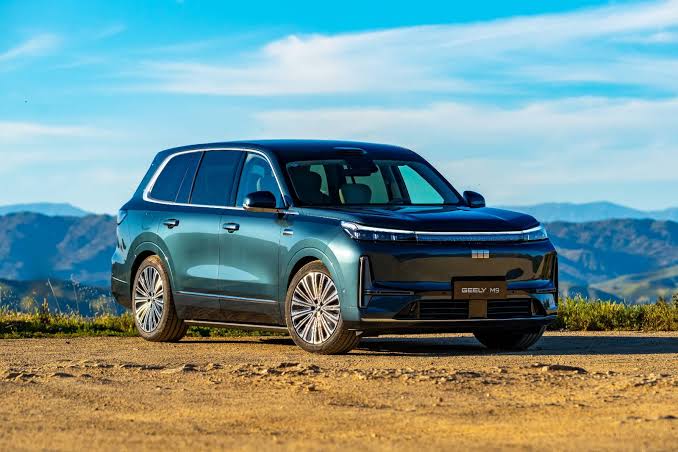

  • Geely Adds Star Editions to Xingyuan EV Lineup Priced at 91,800 Yuan

    Geely Adds Star Editions to Xingyuan EV Lineup Priced at 91,800 Yuan

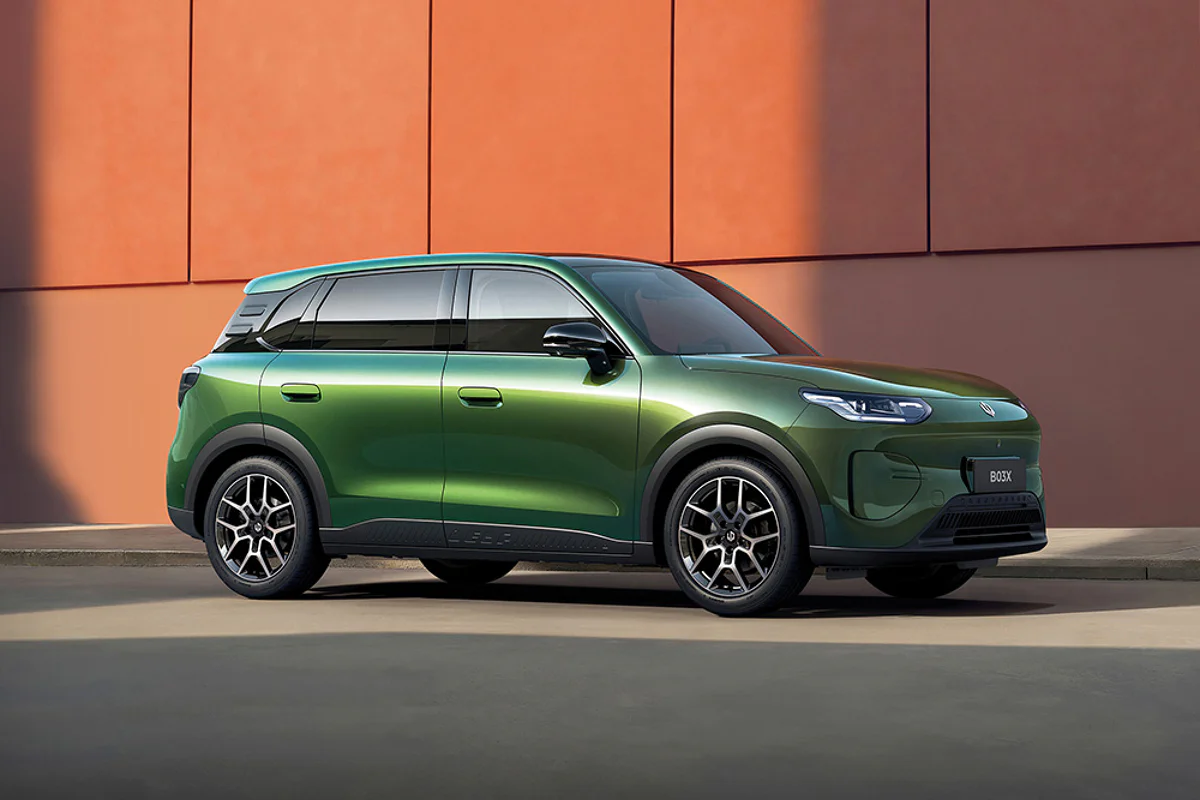
    Geely Galaxy launched two special edition variants of its Xingyuan electric hatchback in China on Friday, pricing both trims at 91,800 yuan ($13,670) to defend its volume share in entry-level passenger vehicles.

    Buyers securing orders through November 30 receive a 3,000-yuan trade-in subsidy that lowers the effective price to 88,800 yuan. The additions expand the Xingyuan lineup beyond its existing six baseline grades, which retail between 64,800 yuan and 94,800 yuan before temporary discounts.

    Hardware and Cabin Specifications

    The two new editions diverge on trim packages while sharing mechanical underpinnings. Geely styled the Star Ace with a sport exterior kit, an obsidian black contrasting cabin and three model-exclusive paint colors. The Star Chill variant uses a milky salt beige exterior paired with light beige interior upholstery.

    Both cars feature a 70-liter powered front trunk that opens via six automated methods, including a physical knock sensor on the bodywork. Inside, Geely installed its Eva animated robot display on the dashboard, designed with 60 degrees of motorized articulation and more than 50 interactive facial expressions.

    Cockpit electronics run on Geely’s Flyme Auto 2.0 operating system, backed by a 7-nanometer StarDragon 1 processor designed by affiliated chipmaker SiEngine. Driver-assist functions run on the Geely Afari Smart Driving H3 architecture, allowing navigation on autopilot across highways and elevated urban routes alongside automated memory parking.

    Chassis Dynamics and Powertrain Layout

    Dimensionally, the hatchback measures 4,135 mm long, 1,805 mm wide and 1,570 mm tall on a 2,650 mm wheelbase. Contemporary Amperex Technology Co. Ltd supplies cells as standard equipment across all configurations.

    Traction comes from a single rear-mounted electric motor delivering either 58 kW or 85 kW depending on the selected grade. Tested under China Light-Duty Vehicle Test Cycle standards, the platform delivers driving ranges of 310 kilometers, 410 kilometers or 480 kilometers between full charges.

    Rivalry in the Mass Market

    Geely is deploying consumer-tech amenities into lower price brackets to isolate rival models from BYD, specifically the Seagull and Dolphin hatchbacks. The segment demands frequent cosmetic updates and digital upgrades because buyer loyalty remains exceptionally price-elastic below 100,000 yuan.

    Squeezing automated parking chips and powered frunks into budget hatchbacks raises unit costs for Geely, leaving thinner room for dealer margins. Yet leaving the car unchanged invites direct cannibalisation in suburban showrooms, where young first-time drivers prioritise interior tech over powertrain pedigree.

    Rapid Assembly Milestones

    The Xingyuan entered the domestic market in October 2024 before expanding overseas under the Geely EX2 nameplate, including local assembly operations in Brazil established in June 2026. Production lines assembled the one-millionth unit on October 20, completing the final 200,000-unit increment in two months.

    October retail deliveries cleared 70,000 vehicles worldwide. Showroom performance now hinges on order conversion rates before the 3,000-yuan subsidy window expires on November 30.

  • Nongfu Spring Brand Value Surges 38% to US$15.3 Billion

    Nongfu Spring Brand Value Surges 38% to US$15.3 Billion

    China’s Nongfu Spring expanded its brand value by 38 per cent to US$15.3bn in 2026, according to the Top 50 Non-Alcoholic Drinks report released this week by Brand Finance.

    The domestic drinks producer added US$4.24bn in value over the past year while US rival Pepsi shed US$5.74bn, falling to US$16.8bn from US$22.5bn in 2025.

    Coca-Cola held onto the top spot at US$46.1bn despite a US$243mn decline from its 2025 valuation. Nongfu Spring climbed from US$11.1bn in 2025, driven by strong demand across bottled water, ready-to-drink tea, and no-sugar drinks.

    Beyond absolute dollar value, the Chinese bottler surpassed Coca-Cola on underlying brand health metrics. Nongfu Spring recorded a Brand Strength Index score of 89.8 out of 100, earning an AAA+ rating. It stands as the only brand among the world’s top ten non-alcoholic beverage makers to retain that top-tier grade. Coca-Cola slipped from AAA+ to AAA, while Pepsi fell from AAA to AAA-.

    Eastroc Enters the Global Top Ten

    China’s presence among global beverage leaders widened further down the table. Eastroc claimed the tenth position globally with a brand value of US$4.99bn and an AAA brand rating.

    The functional drinks specialist lifted its valuation by 62 per cent from US$3.08bn in 2025. That jump followed a deliberate shift away from pure energy drink production into broader hydration categories, backed by export shipments into Southeast Asia, the Middle East, and the United States. Eastroc lifted its Brand Strength Index score to 85.4, up from 82.8 last year.

    Beyond its financial performance, Nongfu Spring has also overtaken Coca-Cola in terms of brand strength to become the strongest non-alcoholic drink brand in 2026, securing an impressive 89.8/100 BSI score.

    Western Incumbents Yield Ground in Asia

    The reordering reflects a structural operational challenge for Western soda giants across Asian retail shelves. For two decades, multinational conglomerates held distribution dominance by trading on universal brand recognition and bottling partnerships. Domestic Asian operators now build distribution routes that are faster and cheaper to run, leaning directly into consumer flight from high-sugar carbonated drinks.

    Retail buyers in primary Asian markets allocate refrigerator shelf space based on inventory turns. Unsweetened ready-to-drink teas and domestic electrolyte waters turn over faster than imported colas in modern trade. That shift pressures margin structures for Coca-Cola and PepsiCo bottlers, who face defensive price discounting to protect volume share against domestic rivals carrying lower production overheads.

    Shifting Consumer Formulations

    The valuation divergence deepens an earlier divide visible in 2025 trading results. While Coca-Cola preserved stability through its Zero Sugar product line, Pepsi absorbed volume contractions across multiple emerging territories as cost-conscious shoppers traded down to local alternatives.

    Nongfu Spring founder Zhong Shanshan countered price wars in mainland China by pairing basic hydration items with higher-margin functional teas. The strategy allowed the producer to absorb retail price deflation while pulling revenue growth out of adjacent categories. Competitor Eastroc mirrored this approach, using electrolyte formulations to establish quick traction in convenience chains across Southeast Asia.

    The test for Asian beverage operators shifts to their overseas balance sheets. Eastroc faces rising marketing costs as it scales shelf distribution in North American and Middle Eastern retail stores, where local listing fees squeeze working capital. Nongfu Spring must protect its mainland operating margins against retail price discounting as competitors prepare their upcoming summer product runs.

  • CATL Wins Exclusive Battery Deal for Blue Vector Skyla V30 Aircraft

    CATL Wins Exclusive Battery Deal for Blue Vector Skyla V30 Aircraft

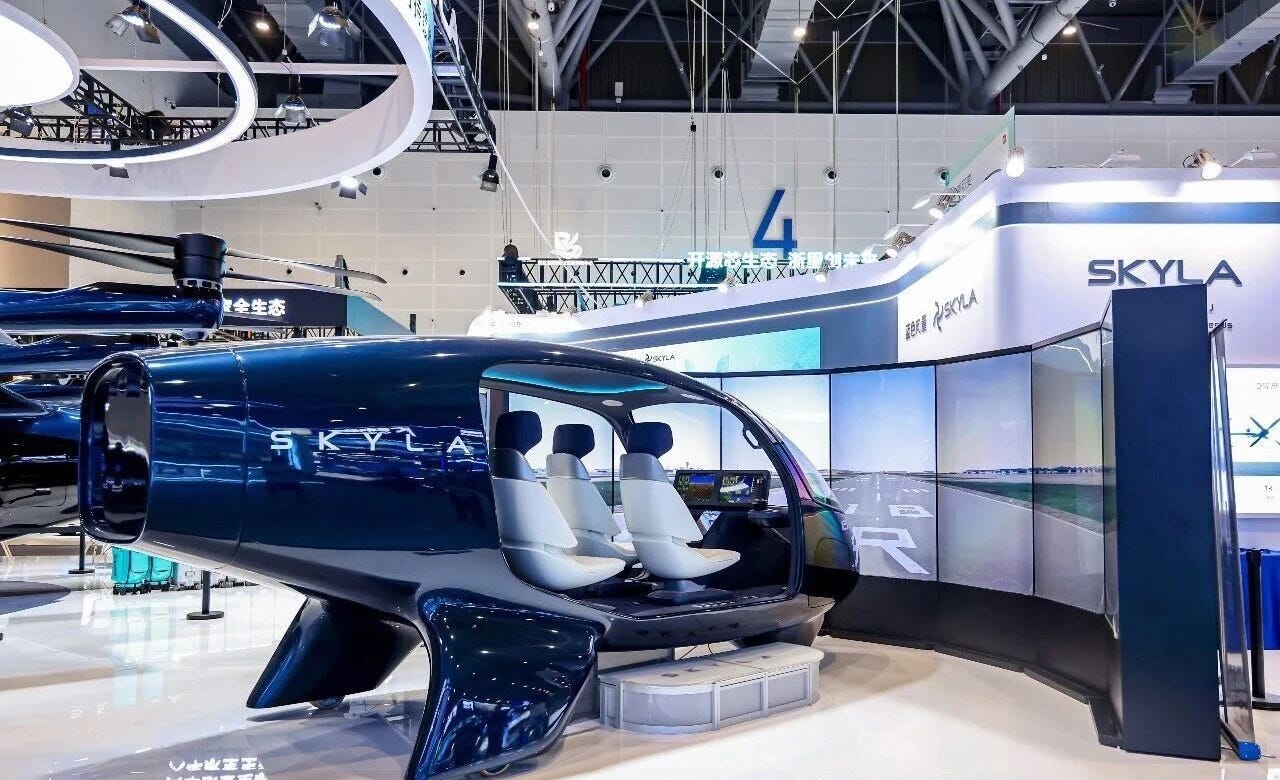
    CATL has signed strategic and product agreements with Hangzhou-based Blue Vector Intelligent Technology to serve as the exclusive battery partner for its commercial passenger aircraft.

    Announced by the battery maker on Monday, the tie-up focuses on the Skyla V30, an all-electric tiltrotor model that has secured more than 100 pre-sales orders since its global debut in July.

    Under the agreement, CATL will develop custom aviation batteries for the six-seat aircraft. The companies did not disclose financial terms, battery specifications or a delivery schedule.

    Validating the Skyla V30 Platform

    Engineering work on the airframe is already moving beyond initial digital design. Blue Vector rolled out its first full-scale technology demonstrator, designated A/C01, on August 31 in Harbin in northeastern China.

    The demonstrator airframe has entered a testing sequence covering systems integration, ground trials and tilt-transition flights. Those trials will test the transition between vertical lift and horizontal forward flight, which forms the core technical challenge for tiltrotor electric craft designed for intercity transit.

    Commercial demand is building ahead of type certification. Blue Vector booked pre-sales commitments for 60 V30 aircraft at the Global Digital Trade Expo in Hangzhou on September 24.

    Singapore-based aviation operator Moon Aero accounted for 30 of those aircraft, representing the platform’s first overseas pre-sales customer. That booking brought total advance orders past 100 units as the company conducts airworthiness validation with Chinese civil aviation regulators.

    Capital Structure and Production Targets

    Development work relies on fresh venture backing secured over the past two quarters. Blue Vector closed a funding round of more than 100 million yuan ($14.9 million) on June 30, led jointly by Shenzhen Capital Group and an unnamed industrial dollar fund.

    That transaction marked the company’s fifth capital injection in roughly six months. Across that period, the startup collected more than 400 million yuan to finance aircraft development, prototype construction and test flights.

    Securing an exclusive battery partnership before airworthiness certification freezes the aircraft’s internal layout. For aircraft manufacturers, battery weight, thermal management and energy density dictate maximum payload and cabin configuration. Swapping pack suppliers later in the certification pipeline resets regulatory approvals, locking airframe designers into their chosen cell platform.

    For CATL, the deal locks in a captive customer across passenger transit routes in eastern China and regional hubs like Singapore. Operating intercity routes between regional cities demands high cycle life and rapid charging turnaround times at terminal pads, creating recurring replacement demand for specialized aviation-grade cells.

    Building Out Electric Aviation Across China

    The Blue Vector contract expands CATL’s ongoing effort to position its battery systems across the electric vertical takeoff and landing sector. In August 2024, the battery maker agreed to invest hundreds of millions of dollars in Shanghai-based aircraft manufacturer Autoflight to co-develop aviation packs.

    That collaboration extended into terminal infrastructure late last year. In November 2025, Autoflight and CATL revealed a floating vertiport vessel that integrates passenger landing pads, battery storage and high-power charging systems onto a marine barge, providing water-based terminal access for coastal cities.

    Blue Vector must now clear tilt-transition flight trials in Harbin and advance formal airworthiness certification for the Skyla V30 before delivering the first production units to Moon Aero and domestic operators.

  • Geely Sells 310,183 Cars in October as Exports Surge 157 per Cent

    Geely Sells 310,183 Cars in October as Exports Surge 157 per Cent

    Geely Auto sold 310,183 vehicles in October, finishing just 245 units shy of its all-time monthly record set in November 2025.

    Strong overseas shipments offset a sharp contraction at home, with export volumes jumping 157.78 per cent year-on-year to 107,153 units.

    Deliveries rose 0.99 per cent compared to October last year and gained 6.17 per cent from September. The performance represented the manufacturer’s second-highest monthly volume on record and its highest total in 2026. However, overall annual sales expansion slowed to roughly 1 per cent because the downturn across mainland China widened.

    Domestic Contraction Deepens in Mainland China

    Home-market demand weakened considerably across Geely’s domestic retail pipeline. The carmaker delivered 203,030 vehicles in China during October, a decline of 23.55 per cent compared to the same month last year. That fall accelerated from a 20.21 per cent decrease recorded in September.

    Sequentially, domestic figures showed modest resilience. Chinese showroom volumes climbed 9.46 per cent from September, logging their best single-month total since January. For the first 10 months of the year, Geely’s cumulative mainland deliveries fell 23.31 per cent to 1,640,841 units.

    Electric Volume Crosses 200,000 Mark

    Electrified drivetrains took a commanding share of total output. Deliveries of new energy vehicles climbed 20.86 per cent year-on-year and 12.64 per cent from September to 214,996 units, crossing the 200,000 mark in a single month for the first time. The category accounted for 69 per cent of all cars sold during the period.

    Battery-electric models drove the segment’s expansion, rising 43 per cent year-on-year to 140,758 units. In contrast, plug-in hybrid electric vehicle shipments declined 6.66 per cent to 74,238 units. The drop broke a flat trend seen in September, when plug-in hybrid volumes held steady against previous-year tallies.

    Brand Performance Shows Divergence

    Brand contributions revealed stark divides across Geely’s corporate umbrella. The core Geely badge, which includes the Galaxy series, delivered 255,742 vehicles in October, rising 4.17 per cent year-on-year and 8.15 per cent from the previous month. Galaxy set a monthly record of 153,385 units, a gain of 20.32 per cent from a year earlier, lifting its year-to-date total to 1,030,569.

    Zeekr registered 32,483 deliveries, up 51.63 per cent from a year ago. That gain ended a nine-month streak where the premium electric badge expanded at or near triple digits. Sequentially, Zeekr dropped 12.72 per cent, suffering its first month-on-month decline since January. Lynk & Co recorded 21,958 deliveries, slumping 45.40 per cent year-on-year for its seventh straight monthly fall, even as volumes climbed 18.74 per cent from September.

    Target Pressures and Export Reliance

    The operational split between local retail weakness and foreign expansion puts structural margin pressure on Geely’s distribution network. Overseas deliveries generated 35 per cent of all volume in October, slightly down from 37 per cent in September but representing an enormous jump from 2025. While foreign distribution commands higher showroom retail prices in developing markets, cross-border freight costs and regional import duties eat into those returns. Chinese dealerships, meanwhile, face persistent price discounting as local buyers pivot away from internal combustion models faster than the core network can adjust.

    Rival domestic manufacturers face similar cross-border dynamics, but Geely has shifted its physical inventory overseas at an accelerated pace. Across the first 10 months of 2026, cumulative exports climbed 167.94 per cent to 904,823 vehicles. That total completed 98 per cent of its full-year foreign shipment goal of 920,000 units, leaving roughly 15,000 cars to ship over November and December. Geely had revised that export target upward on August 17 from an earlier goal of 640,000.

    Total group volume reached 2,545,664 units between January and October, representing an increase of 2.76 per cent from the same period last year. Year-to-date brand tallies show the core Geely line down 1.18 per cent at 2,006,702 units and Lynk & Co down 22.58 per cent to 218,075. Zeekr remains the main volume booster over the 10-month window, rising 94.45 per cent to 320,887 units.

    Meeting management’s overall objective will require unprecedented sales speed. Geely has secured 74 per cent of its full-year target of 3,450,000 vehicles, leaving a deficit of 904,336 units. To clear that benchmark, the company must average roughly 452,000 vehicle deliveries in each of the remaining two months, well above the record 310,428 achieved in November 2025.

  • Alibaba Connects Qoder Desktops Without SSH for 8 Million Users

    Alibaba Connects Qoder Desktops Without SSH for 8 Million Users

    Alibaba added a desktop interconnect feature to its Qoder developer suite on October 30, linking separate computers without requiring SSH or remote desktop configurations.

    The tool lets engineers launch jobs, inspect outputs and monitor workflows on a secondary machine while working entirely inside their local application interface.

    Developers handling code refactoring or validation often distribute workloads across dedicated desktop rigs and portable laptops. The new functionality bypasses terminal networking setups by pairing two instances directly through a temporary pairing code and device address. Users inspect files generated by the remote assistant, including spreadsheets and presentations, directly on their primary display.

    How the Network Link Functions

    Both devices must sign into the identical user account to validate the link. The software restricts access through time-limited codes, allowing engineers to pick specific project directories and assign distinct synchronization rules before starting work.

    Operators can sever active authorizations immediately from the client window. The update builds on earlier mobile features that allowed users to monitor desktop tasks from smartphones.

    Alibaba counts more than 8 million users and over 100,000 corporate clients across the Qoder ecosystem. The lineup includes a desktop workspace, a command-line utility, cloud agents, a JetBrains plugin and the QoderWake digital employee platform.

    Enterprise Workstations and Cloud Margins

    Software development efficiency has become a primary testing ground for Chinese cloud operators trying to sell generative artificial intelligence subscriptions to corporate departments. Tech teams want tools that bypass manual terminal friction without creating security holes in enterprise networks.

    By managing device handshakes inside proprietary client software, Alibaba keeps corporate development workflows bound to its ecosystem rather than external terminal utilities. The commercial risk sits in security governance, where corporate IT administrators often restrict non-standard peer-to-peer device handshakes across internal enterprise subnets.

    Building Out Domestic Hardware Compatibility

    The interconnect rollout follows a series of compatibility releases aimed at expanding Qoder across alternative hardware architectures. Alibaba recently ported the coding software to domestic systems, introducing support for Loongson LoongArch processors alongside China-developed desktop operating systems Kylin and UOS.

    The engineering team also rolled out a fast mode for the client designed to generate first responses within three seconds while cutting developer credit consumption by 20 per cent.

    Alibaba is testing deeper integration between local desktop execution and its remote cloud agent infrastructure, with enterprise adoption figures across Chinese software vendors serving as the performance metric to watch.

  • Proya Opens 450 Square Metre Research Lab in Paris Suburb

    Proya Opens 450 Square Metre Research Lab in Paris Suburb

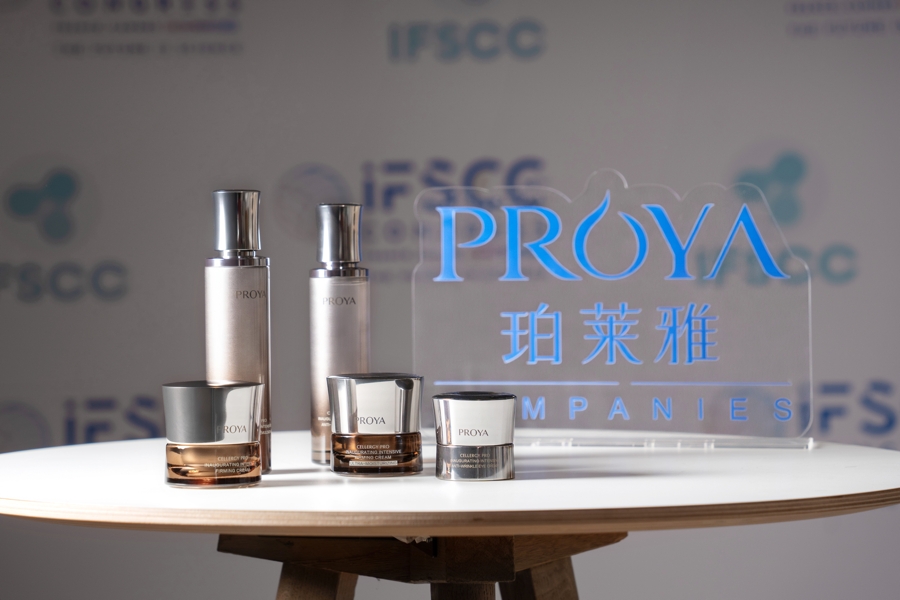
    China’s Proya Cosmetics opened a 450-square-metre research and development laboratory in Suresnes near Paris on October 13, 2026, putting seven researchers and 76 scientific instruments into service outside its domestic manufacturing base.

    The suburban Paris site links directly into formulation work at the Hangzhou-based group’s primary development hub in Longwu, feeding European biochemical research into its mass-market skincare pipelines in Asia.

    Technical operations at the French facility focus on skin biology, longevity mechanisms, biotechnology and sustainable ingredient processes. The scientific staff coordinates testing with Proya’s existing Hangzhou facility, which oversees core chemical formulations and consumer safety data, alongside a dedicated Shanghai site that handles scalp microbiome research and haircare lines.

    Targeting Active Ingredients in France

    European cosmetic science gives Chinese personal-care groups access to specialised ingredient supply chains that remain difficult to replicate domestically. Western groups like L’Oréal and Puig continue to defend their pricing power in Greater China through clinical skincare claims, forcing local brand owners to back their mass products with verifiable dermatological research rather than pure digital marketing spend.

    Setting up shop in Suresnes allows the Hangzhou company to collaborate directly with European biotechnology suppliers and academic testing houses. The facility serves as an operational extension of the broader European Innovation Centre that the group founded in France in 2024, converting regional partner agreements into physical bench testing.

    “This Europe Innovation Center Laboratory connects the European and Chinese ecosystems to draw on combined strengths and create new innovation capabilities through the interaction of scientific, cultural and consumer perspectives,” said Hou Juncheng, Founder and Chairman of Proya Cosmetics.

    Shifting Beyond Fast Digital Marketing

    Chinese beauty brands built their initial scale on quick domestic supply chains and heavy promotion across Douyin and Tmall. That model is hitting its limits as domestic consumer spending tightens and shoppers demand clinical validation before paying higher price tags for anti-ageing creams.

    By establishing physical research assets in France, Proya takes direct aim at premium international rivals that have long used European heritage to defend market share across tier-one Chinese cities. The risk for the Hangzhou group lies in execution. A team of seven researchers is a modest footprint against the thousands employed across multinational technical centres, meaning the lab must produce distinct ingredient discoveries quickly to justify the overseas overhead.

    Building Out Domestic and Foreign Hubs

    The Paris opening follows two years of corporate infrastructure work in Europe. Proya established its European Innovation Centre in France in 2024 to scout partnerships, then showed its initial collaborative work at the Cosmetics 360 trade exhibition in Paris immediately following the Suresnes opening.

    Work completed at the Suresnes laboratory will feed raw materials into clinical verification trials across Proya’s Shanghai and Hangzhou networks.

  • DeepSeek Releases Model V4.1 Flash Update and Opens Serving Framework

    DeepSeek Releases Model V4.1 Flash Update and Opens Serving Framework

    DeepSeek announced an updated V4.1 Flash artificial intelligence model alongside an open-source inference framework, pricing enterprise tasks down to roughly $0.20 each.

    The developer posted a 77 per cent Pass@1 score on the DeepSWE v1.1 coding benchmark, cutting compute demands through shorter operational outputs.

    Its release of V4.1-Flash-1017 on October 17 raised the system’s Terminal-Bench 4.0 score from 31.2 to 42.3, while DeepSWE v1.1 gained almost three points to 77.0. Benchmark evaluations show the system completing tasks for $0.11 to $0.14 when running lower-cost operational settings, scoring between 72 and 73 per cent. Independent tracking on Arena’s Agent Arena leaderboard placed the updated model first among open-weight competitors and 11th overall across 7,498 real-use sessions, with median execution costs between $0.18 and $0.19 per task.

    Open Source Engine for Enterprise Chips

    Three days after the model release, DeepSeek published DeepInfer, the inference engine running its production services, alongside a request-handling library named deepseek-recipe. The framework manages hardware allocation, latency schedules and computing kernels to serve queries at scale. It runs directly on Nvidia SM100 graphics processing units and Huawei Ascend 950 neural processing units, targeting V4.1 Flash deployments.

    The open-source code does not provide an end-to-end service stack out of the box. Production teams still need to supply their own key-value cache infrastructure, load balancing across parallel replicas, and complete disaggregation systems. Developers gain internal scheduling kernels, but enterprise engineering teams will absorb the integration overhead.

    Shifting the Cost of Business Automation

    For online marketplaces, customer support platforms and software houses across Asia, the release attacks the cost ceiling that keeps autonomous agents out of routine commercial workflows. Running thousands of real-time inventory adjustments, code fixes and customer transactions through commercial western models remains too expensive for thin-margin Asian e-commerce. If an open-weight system matches proprietary grade accuracy at 20 cents a task, mid-sized digital retailers will self-host rather than pipe data through expensive closed APIs.

    Hardware exclusivity remains the primary roadblock for regional operators seeking to replicate these results. While support for Huawei’s Ascend 950 gives Chinese domestic firms an alternative to export-controlled American silicon, Southeast Asian developers operating standard cloud setups will face hardware configuration bottlenecks. Running pruned agent frameworks demands deep systems engineering that many consumer brand operators do not maintain in-house.

    Building Out the Infrastructure Layer

    DeepSeek spent the previous quarter trimming resource requirements across its stack. The company cut key-value cache memory to a quarter and solid-state drive storage to an eighth of previous requirements during the September rollout of V4.1 Flash. It introduced off-peak API access at a 50 per cent discount to balance round-the-clock server loads.

    Commercial access expanded in October with Search and Fetch APIs billed at 5 yuan per 1,000 successful queries. The firm is maintaining free API connections for developer platforms including Claude Code and Codex until per-request billing starts on November 1.

  • Alibaba Launches Qwen Glasses N1 for 2,218 Yuan

    Alibaba Launches Qwen Glasses N1 for 2,218 Yuan

    Alibaba Group Holding launched its latest smart glasses series on Tuesday, introducing the Qwen Glasses N1 priced at 2,218 yuan for the standard version.

    An advanced version featuring eye tracking for visual interaction starts at 2,600 yuan, entering a market where 909,000 smart glasses were sold in China in the first half of 2026, according to Luo Tu Technology.

    Hardware prices in China remain lower than foreign alternatives, with Xiaomi AI glasses retailing for about 2,000 yuan (US$298) compared to US$450 for Meta Platforms’ Ray-Ban Gen 3 glasses, according to Mark Natkin of Marbridge Consulting, while Counterpoint reported the global average selling price stood at US$360 in late 2025.

    Tourist Sites Deploy Wearable Audio Guides

    Domestic tourism operators are testing the hardware as automated, hands-free tour guides. Hangzhou Culture, Radio, TV and Tourism Bureau partnered with Alibaba in May to deploy Qwen Glasses for real-time cultural interpretation and navigation. In Shanghai, management at Yuyuan Garden has started running trials using smart glasses to handle multilingual translation and point-of-interest explanations for incoming visitors.

    The devices rely on built-in cameras, microphones and onboard language models to identify landmarks, translate physical street signs and feed spoken itinerary advice into the user’s ears. IDC China data shows the broader smart eyewear category, covering both AI and non-AI models, will reach 18.66 million shipments worldwide by the end of the year.

    Ecosystem Split Limits Cross-Border Utility

    Chinese hardware makers face an immediate structural barrier when marketing these devices to outbound travelers. Domestic models rely on integrations with mainland platforms like Baidu Maps and Alipay. Outside China, those service layers lose accuracy and merchant coverage, leaving travelers with reduced functionality on foreign networks.

    Foreign manufacturers run into the inverse problem. Meta does not officially sell its Ray-Ban hardware in mainland China, and domestic consumers who import the frames cannot easily access the underlying cloud AI servers without virtual private networks. For retail distributors, this division confines each product line largely to its domestic home turf despite the universal appeal of hands-free travel navigation.

    Hardware Constraints Challenge Mass Adoption

    Battery performance and processing limits continue to dictate form factors. Meta states its Ray-Ban Gen 2 and Oakley HSTN frames run for eight hours on an internal charge, relying on bundled charging cases to provide up to 48 hours of total battery life. To achieve deeper mixed-reality computing, Meta built upcoming 1,300-dollar virtual reality glasses by separating the computing unit into a tethered 3.5-ounce module.

    For consumer tech brands, keeping the form factor lightweight means offloading processing to paired smartphones. Analysts point out that until onboard battery density improves and vision processing latency drops, complex tasks such as booking transit tickets and scanning detailed menus will remain anchored to handset screens rather than spectacle frames.

    Alibaba Expands Travel Tech Alliances

    Alibaba has stepped up hardware deployments across municipal cultural programs over the past two quarters to build practical use cases for its proprietary Qwen model. Beyond its Hangzhou municipal project, the group joined a bilateral cultural exchange association with Italy to test cross-border AI translation before rolling out commercial shipments of the N1 frames.

    Supply chain trackers at IDC China project sales momentum to hinge on the holiday travel quarters. Luo Tu Technology will release full-year 2026 smart eyewear sales figures for the China market in January, providing the first comprehensive tally of whether sub-300-dollar price points can turn wearable tour guides into standard consumer gear.

  • Geely Partners with Google to Add In-Car Gemini AI and Maps from Late 2027

    Geely Partners with Google to Add In-Car Gemini AI and Maps from Late 2027

    Geely Holding Group will begin installing Google software across its export passenger car line-up in the second half of 2027. The shift replaces proprietary overseas infotainment systems.

    The agreement covers five volume brands across Asia, Europe and the Americas. It supports the Chinese automotive group’s plan to sell over two million vehicles outside its domestic market annually by 2030.

    Under the global partnership, eligible vehicles sold outside China and the United States will carry factory-installed Google Automotive Services. The bundle integrates Google Maps navigation, the Google Play app store and the Gemini artificial intelligence voice assistant directly into dashboards. Drivers will not need smartphone projection.

    Vehicles from Geely, Lynk & Co, Proton, Riddara and Smart will receive the package in phases. Individual model schedules and target territories will depend on local market certification and regional product roadmaps.

    Splitting domestic and export software

    Chinese automakers have long struggled with digital cockpits abroad. At home, systems run on tech stacks built around Baidu maps, Tencent media apps and domestic large language models. Those tools rarely work overseas. Drivers outside mainland China expect native Google integration instead.

    By licensing Google Automotive Services directly, the group drops the cost of maintaining custom software for international showrooms. Subsidiary Polestar took a similar approach, running Google-powered operating systems on its Polestar 2 fastback since 2020. The change removes friction for export buyers unfamiliar with Chinese interfaces.

    Platform rollout across five brands

    The roll-out gives distinct regional business units a unified software baseline. Malaysia-based Proton gains navigation and voice tools for Southeast Asian markets where driver app usage centers heavily on Android. Smart, a joint venture with Mercedes-Benz, will use the setup to standardise digital cockpits across Europe.

    Riddara, Geely’s electric pickup division, and Lynk & Co will deploy the interface as both brands expand in Europe, Latin America and the Middle East. The first vehicle with integrated Google software will launch internationally in late 2027. The automaker will withhold the model name until closer to production.

    Software localisation has gained pace across other group divisions throughout the year. Premium electric brand Zeekr agreed in April 2026 to build an Android Automotive-based media system with 3 Screen Solutions for European buyers, followed in October by an in-car gaming tie-up with AirConsole. The latest Google deal brings mass-market brands into line with that software approach.

    Export volume targets push software overhaul

    Ambitious overseas sales goals are driving the digital overhaul across business units. Listed subsidiary Geely Auto raised its 2026 export target in August to 920,000 units from an earlier 640,000 goal, setting an internal target of one million export sales. Parent group Geely Holding aims for 6.5 million total annual deliveries by 2030, with international markets accounting for over one-third of that volume.

    Reaching that scale requires retail networks in mature consumer markets that demand Western tech compatibility. On October 9, the core Geely brand announced its expansion into Canada, signing retail and service partners ahead of initial vehicle deliveries in 2027.

    Showrooms will receive the first production models featuring built-in Gemini and Google Play in late 2027, when Geely starts customer deliveries of its next-generation export line-up.

  • Smart Launches Electric #2 City Car in China at 112,999 Yuan

    Smart Launches Electric #2 City Car in China at 112,999 Yuan

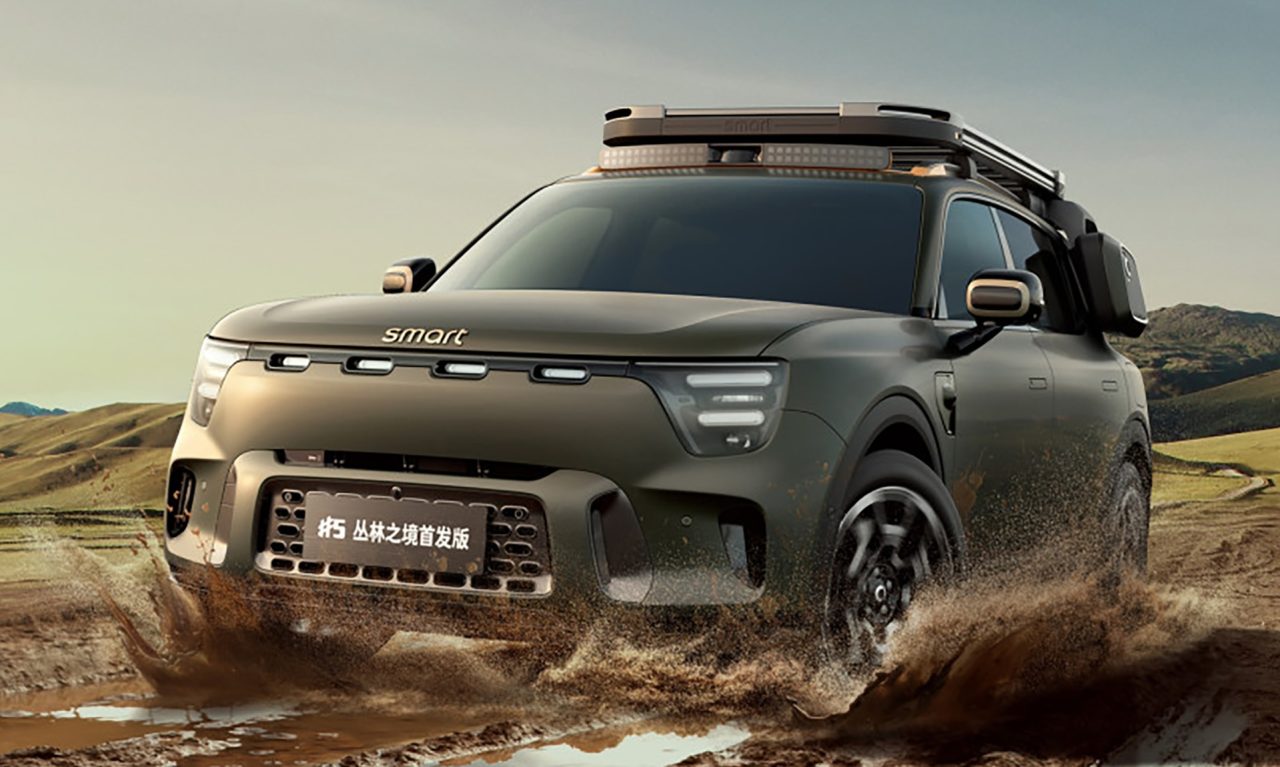
    Smart launched the Smart #2 Couture Edition in China for 112,999 yuan ($16,790). The release revives its signature two-seater city car format as an all-electric model.

    The joint venture between Mercedes-Benz and Geely Auto capped the initial Chinese run at 999 numbered units. That matches a separate 999-unit allocation earmarked for European buyers.

    Deliveries for immediate Chinese orders begin before year-end. Early ordering opens across Europe following the car’s global debut at the Paris Motor Show. European buyers face a pre-order entry price of 19,990 euros ($22,400). Chinese buyers will see pricing for standard Premium variants in November.

    Hardware and Architecture

    Built on Geely’s Electric Compact Architecture, the vehicle uses a platform engineered specifically for ultra-compact urban runabouts. Mercedes-Benz’s global design team handled the styling. They retained the proportions of the original ForTwo while adding LED lighting, flush surfaces and a capsule-patterned grille.

    A 35.8-kilowatt-hour lithium iron phosphate battery pack powers the vehicle, using cells supplied by CATL. It delivers a China Light-Duty Vehicle Test Cycle range of 410 kilometres. European testing targets a combined Worldwide Harmonised Light Vehicles Test Procedure range of 290 kilometres.

    Power comes from a single rear-mounted electric motor driving the rear axle. It produces 60 kilowatts of power and 130 Newton-metres of torque. The chassis pairs MacPherson strut front suspension with a five-link independent rear setup, delivering a tight turning radius of 3.35 metres. European models support 65-kilowatt direct-current fast charging, taking the battery from 10 per cent to 80 per cent in 20 minutes.

    Cabin Layout and Dimensions

    Dimensionally, the vehicle measures between 2,751 and 2,764 millimetres in length, 1,669 millimetres in width and 1,555 millimetres in height, riding on an 1,875-millimetre wheelbase. The exterior pairs matte white paint with a gold roof, gold grille accents and 16-inch alloy wheels. Staggered tyres measure 185/50 at the front and 205/45 at the rear.

    Inside, the cabin features an S-shaped dashboard, bench-style seating, turbine air vents and an infotainment display running the Flyme Link operating system. The car includes Level 2 driver assistance and remote automated parking. At the rear, the split tailgate retains a folding lower section that supports up to 120 kilograms when parked.

    Urban EV Market Strategy

    Smart’s return to the two-seater segment tests whether premium urban minicars can command retail margins in a domestic Chinese market crowded with budget micro-EVs. Geely and Mercedes previously repositioned Smart into mainstream compact crossovers with the #1 and #3 to chase broader sales volume. Bringing back the two-seater at nearly 113,000 yuan requires convincing city drivers to pay a substantial premium over mass-market urban runabouts that sell for half that amount.

    Production handled by Geely’s Zhejiang Haoqing Automobile Manufacturing gives the joint venture a low manufacturing cost base for export shipments to Europe. European urban centres tightly regulate vehicle emissions and parking footprints. That creates clearer commercial demand for micro-footprint electric vehicles than China’s wider highway networks require.

    Production History and Next Steps

    The original petrol-powered Smart ForTwo sold more than two million units globally after its 1998 debut under Daimler ownership. This revival follows an August regulatory filing by China’s Ministry of Industry and Information Technology, which confirmed technical specifications ahead of production clearance.

    Domestic pricing for the mass-volume Smart #2 Premium variant arrives in November, followed by local market rollouts and delivery schedules across European dealer networks.

  • DeepSeek Secures 80 Billion Yuan in Funding Ahead of 2027 IPO

    DeepSeek Secures 80 Billion Yuan in Funding Ahead of 2027 IPO

    Chinese artificial intelligence developer DeepSeek is close to securing at least 80 billion yuan in a new funding round backed by Tencent Holdings and battery maker CATL.

    Strong investor demand for the round pushed commitments past the initial 50-billion-yuan target, with signed term sheets indicating the final total could reach 100 billion yuan ahead of a planned public listing in early 2027.

    Proceeds will fund computing infrastructure and model training. The company had initially sought an equity valuation of roughly 500 billion yuan during negotiations.

    Capital Beyond Initial Targets

    Investor interest accelerated after DeepSeek introduced its V4 Flash large language model, which cut operating expenses relative to proprietary models from US developers OpenAI and Anthropic. Tencent, which previously contributed 10 billion yuan in an earlier funding round, joined Contemporary Amperex Technology Ltd. In providing the largest commitments for the current transaction.

    Founder Liang Wenfeng told investors during 2026 meetings that the company intends to develop open-source systems and pursue artificial general intelligence without prioritising immediate product monetisation. The lab traces its roots to Liang’s quantitative hedge fund High-Flyer, which provided the original seed capital before outside institutions entered.

    Hardware Push in Inner Mongolia

    DeepSeek is allocating a substantial share of the fresh capital to build an artificial intelligence computing facility in Inner Mongolia. The site will house at least 160,000 high-end accelerators supplied by Huawei Technologies, establishing one of the largest single clusters of domestic Chinese silicon.

    To support that infrastructure, DeepSeek released joint software tools developed with Huawei to optimise workload programming on non-Nvidia processors. The project reduces reliance on imported hardware while addressing bandwidth and efficiency constraints across large server arrays.

    Rivalries and Valuation Milestones

    Domestic competition across China’s foundation model sector is accelerating as capital concentrates around a handful of scaled developers. Moonshot AI is similarly working toward an early 2027 initial public offering after completing a private round that valued the startup at 50 billion dollars.

    For enterprise software operators and cloud providers, DeepSeek’s low-cost architecture creates direct pricing pressure on proprietary application programming interfaces. For hardware suppliers like CATL, the funding provides an opening to supply high-density power storage systems and electrical components to hyperscale data centres.

    Restructuring for 2027 Listing

    The transaction experienced brief delays earlier this year after remarks attributed to Liang regarding China’s technological distance from US chipmakers circulated on social media. Negotiations resumed once terms were clarified, following a prior 50-billion-yuan round that valued the business at approximately 350 billion yuan and lifted Liang’s estimated wealth to 36 billion dollars.

    DeepSeek plans to initiate corporate restructuring immediately after the current funding round closes. That formal process will establish the legal shareholding framework required for regulatory filings before the company proceeds to an early 2027 stock market debut.

  • Leapmotor Overtakes Subaru and Mitsubishi Motors in Global Sales

    Leapmotor Overtakes Subaru and Mitsubishi Motors in Global Sales

    Chinese electric vehicle startup Leapmotor surpassed Subaru and Mitsubishi Motors in global quarterly deliveries for the first time between April and June. Strong domestic sales in China drove the shift. An accelerating rollout across European dealerships also lifted volume.

    The Hangzhou-based manufacturer built momentum on budget battery-electric models and extended-range powertrains. Those lower prices unlocked retail demand in mainland tier-three cities. They also found buyers in price-sensitive European export markets.

    Shift in Global Volume

    Overtaking two established Japanese automakers shifts the competitive baseline for entry-level passenger cars. Subaru and Mitsubishi built multi-decade international sales networks through independent franchised dealers. Their slower battery-electric transition left budget segments exposed to cheaper Chinese rivals.

    Leapmotor entered European showrooms by pricing compact electric models against legacy petrol hatchbacks. That approach bypassed the premium segment. European and Japanese marques still hold stronger brand loyalty in that higher tier.

    Pressure on Traditional Dealerships

    Across Europe and Asia, independent auto retailers and multi-brand dealer groups must now adjust inventory allocation. Dealerships facing sluggish demand for internal combustion models are handing floor space to Chinese brands. These vehicles deliver higher unit turnover, though dealer margins are tighter.

    Component vendors and regional distributors tied exclusively to mid-tier Japanese manufacturers face direct exposure. As sales volume drifts toward Chinese electric platforms, legacy suppliers face shrinking factory orders unless they win contracts on dual-fuel and battery architectures.

    Export Trajectory

    Behind the quarterly milestone are two years of factory scaling and targeted export homologation by Leapmotor. The company previously relied almost entirely on mainland China registrations before opening European distribution channels.

    Delivery numbers through the second half of the year will test the expansion as European trade policy and regional import tariffs take effect.

  • Geely Farizon Expands European Van Network with Six Partners

    Geely Farizon Expands European Van Network with Six Partners

    Geely commercial vehicle brand Farizon presented partnerships with AMF-Bruns, Allianz Partners, BNP Paribas, CATL, Bosch, and ZF at the IAA Transportation in Hanover to expand operations across Europe.

    The agreements underpin European sales for the Chinese group’s Farizon SV electric van, priced from 44,900 euros net, and the smaller V7E model starting at 32,600 euros.

    Farizon, officially represented in Germany since May 2026, announced plans to establish dedicated subsidiaries in Germany and France alongside a European headquarters.

    Component supply and vehicle engineering remain anchored by long-running ties with battery manufacturer CATL, chassis specialist ZF and tier-one supplier Bosch. Farizon already operates a central spare parts distribution warehouse in Germany, which works alongside a dedicated European engineering division formed earlier in 2026 to handle local homologation and fleet customization.

    Expanding Direct Operations in Germany and France

    Farizon plans to incorporate wholly owned operational subsidiaries in Germany and France to anchor its European business. The company is currently selecting a site for its regional European headquarters as it expands beyond early distribution channels in Britain, Spain, Serbia and the Benelux region.

    Fleet operators in Germany can order the SV van with either a 67 kilowatt-hour or 83 kilowatt-hour lithium iron phosphate battery pack sourced from CATL. The larger battery pack delivers a driving range of up to 376 kilometers under WLTP testing standards. For inner-city delivery routes, the smaller V7E transporter comes fitted with 50 kilowatt-hour or 67 kilowatt-hour batteries, yielding a maximum driving range of 328 kilometers between charges.

    Platform Applications and Autonomous Production

    The SV platform also serves as the structural base for specialized autonomous transport. Chinese autonomous driving developer WeRide placed an order for 2,000 units of its GXR robotaxi, built directly on the Farizon SV architecture.

    Production for the WeRide GXR run is scheduled to start in the third quarter of 2026. At the Hanover exhibition, Farizon also presented the Homtruck, a heavy-duty battery-electric tractor unit developed for regional freight and long-distance hauling routes.

    Commercial Fleet Pressures and Chinese Expansion

    For European logistics operators, Farizon offers an alternative to legacy European van makers at a lower acquisition cost, but the real test lies in parts availability and residual values. Fleet buyers cannot tolerate stranded vehicles waiting weeks for imported Chinese components. Establishing local financing and insurance through BNP Paribas and Allianz directly addresses fleet credit and residual risk, removing two primary barriers that have slowed Chinese commercial vehicles in the European market.

    European manufacturers such as Stellantis and Renault face intensified price competition in the light commercial sector as Chinese electric platforms scale up. Farizon uses the manufacturing scale and battery supply chains of Zhejiang Geely Holding Group to price its mid-size electric delivery vans well below comparable European rivals. The main operational hurdle remains long-term resale value, where unproven Chinese commercial nameplates still face steeper depreciation curves than established brands.

    Preceding European Entry and Next Steps

    Farizon formally entered the German market in May 2026 after completing initial safety and homologation testing for the SV and V7E. The SV van secured a five-star Euro NCAP commercial safety rating and finished as a runner-up in the International Van of the Year 2026 evaluations, giving the platform regulatory validation before commercial deployment.

    Engineering teams are preparing an updated version of the Farizon SV featuring an all-wheel-drive powertrain, revised electric motors and higher-capacity battery options tailored for winter driving and unpaved terrain. Farizon has not yet disclosed technical specifications or pricing for the four-wheel-drive model, which will roll out as European legal entities in Germany and France complete their formal incorporation.

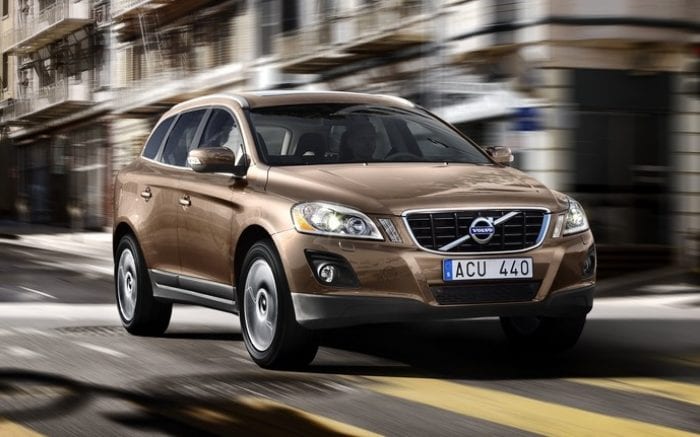
  • Volvo Unveils XC60 Plug-In Hybrid with 200 Km Electric Range

    Volvo Unveils XC60 Plug-In Hybrid with 200 Km Electric Range

    Volvo Cars, a subsidiary of China’s Geely Group, has unveiled its model year 2027 XC60 and XC90 plug-in hybrids offering an electric range of up to 200 km.

    The updated Volvo XC60 Plug-in Hybrid starts at €69,990 and delivers more than two and a half times the electric range of its predecessor. It features a 41.2 kWh battery floor pack, an increase from the previous 18.8 kWh capacity.

    Volvo combined the larger battery with a 130 kW electric motor alongside a petrol combustion engine. Under the same setup, the larger XC90 Plug-in Hybrid achieves up to 163 km of purely electric range per charge.

    Hardware Parity With Pure Electric City Cars

    That 41.2 kWh capacity exceeds the battery size in several dedicated electric city cars entering production. Volkswagen equipped the entry-level ID. Polo with a 37 kWh pack, while Renault fitted the Twingo Electric with 27.5 kWh. Volvo uses full-sized electric car energy reserves solely to cover daily commuting without burning petrol.

    Drivers get pure electric power for city trips alongside combustion backup for highway travel. The Swedish brand already sells all-electric models including the EX30, EX40, and EX90. Customer demand for flexible powertrains prompted this hybrid refresh.

    Now, as long-range plug-in hybrids, they build on those legacies and, together with the all-electric EX60, give us our strongest-ever electrified offering in the mid-size SUV segment.

    Platform Sharing Across the Geely Portfolio

    Under the skin, the configuration mirrors powertrains across parent company Zhejiang Geely Holding Group. Geely’s Lynk & Co brand launched the 08 crossover with a 39.6 kWh battery pack. That model logged 176 kilometres of real-world electric range in testing by German motoring club ADAC. Group-level component sharing lowers cell procurement costs and accelerates engineering for European and Asian assembly lines.

    German rivals trail the benchmark. Volkswagen Group offers up to 143 kilometres of electric range in the VW Golf eHybrid and Audi A3 Sportback TFSI e. Mercedes-Benz and BMW have kept plug-in hybrid battery sizes closer to 20 to 25 kWh in comparable luxury segments.

    Regulatory Pressure on Real-World Emissions

    European regulators are tightening emissions calculations for plug-in hybrids. European Union field data from 320,000 vehicles showed real-world carbon dioxide output was 3.5 times higher than lab approval figures because owners failed to charge regularly. Regulators adjusted the official utility factor downward in 2025 to reflect actual charging habits.

    Another regulatory tightening in 2027 will increase fleet emissions penalties unless hybrid models cover higher electric mileage. Installing larger batteries insulates automakers from sudden compliance penalties as policy shifts across export destinations.

    Production Timeline and Model Rollout

    These long-range powertrains serve as an interim bridge while Volvo prepares its purpose-built EX60 electric architecture. The XC60 remains Volvo’s best-selling model globally. Steady hybrid sales protect cash flow during capital-intensive EV plant conversions.

    Order books opened in Europe for the 2027 model-year XC60 and XC90. Core export markets will receive customer deliveries first, followed by a rollout to American dealerships.