Tag: hardware

  • Taiwan Targets Silicon Photonics to Cut AI Chip Power Use by 50 Percent

    Taiwan Targets Silicon Photonics to Cut AI Chip Power Use by 50 Percent

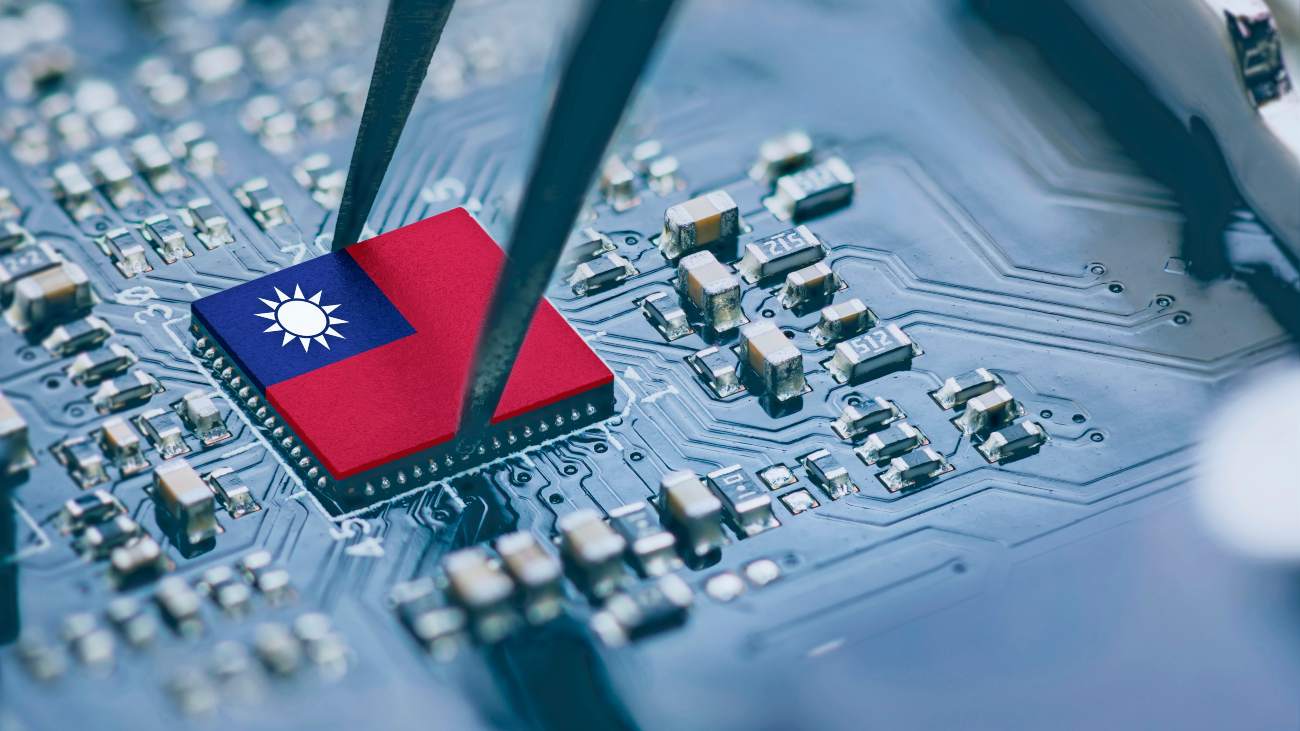
    Taiwan is mobilising its chipmaking sector to commercialise silicon photonics and copackaged optics, with the Ministry of Economic Affairs backing efforts to overcome artificial intelligence computing bottlenecks.

    The island holds over 90 percent of global manufacturing capacity for chips at 7 nanometers or below, while more than 30 firms including Taiwan Semiconductor Manufacturing Co and MediaTek Inc formed an industry alliance in 2024.

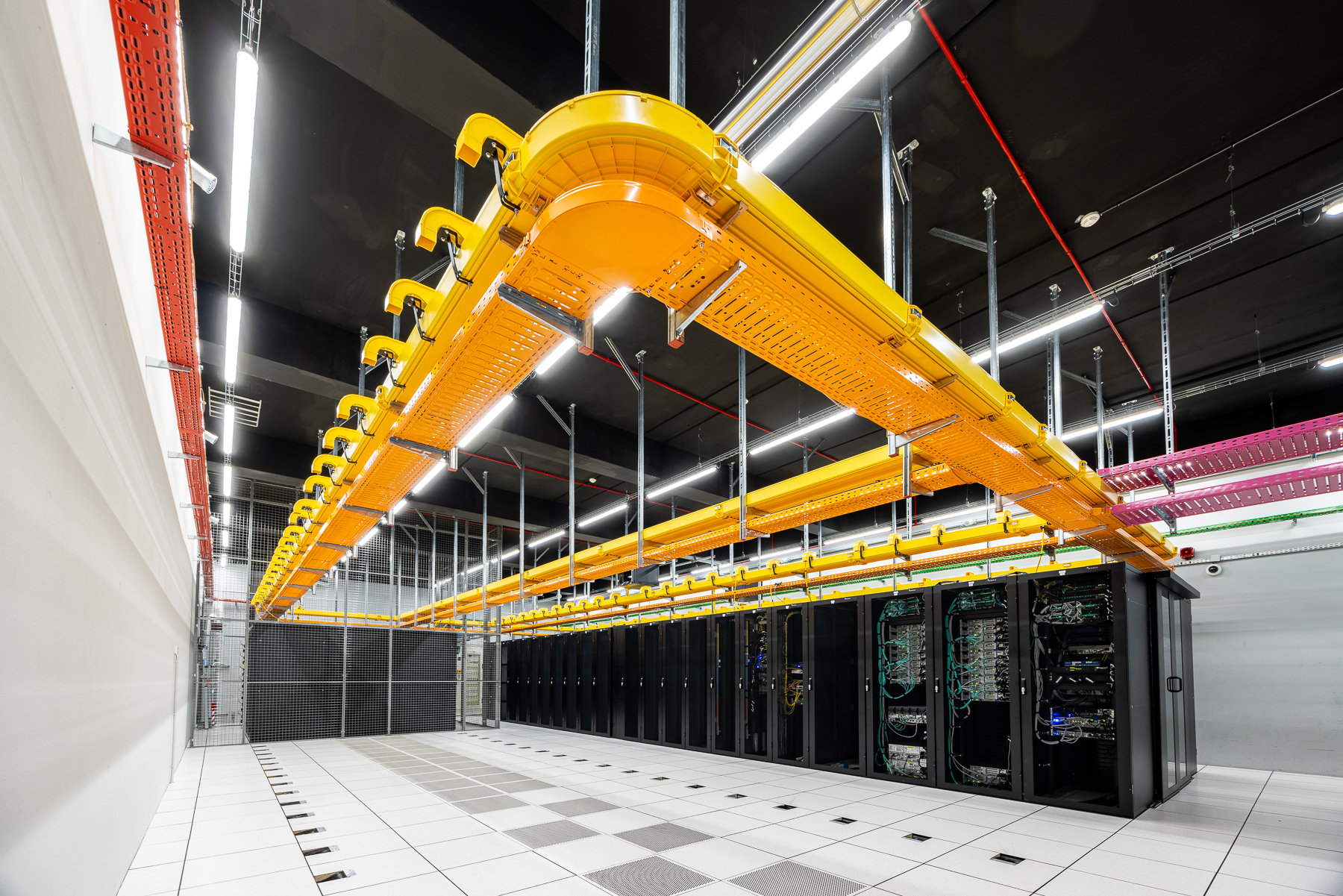
    Silicon photonics replaces conventional copper wiring between chips with optical signals. Because optical transmission generates negligible heat, the technology cuts device power consumption by 30 to 50 percent, according to the Ministry of Economic Affairs. That saving eases cooling limits in high-density AI data centres. It also clears the 1.6-terabit-per-second bandwidth ceiling that hampers electronic links.

    Optics Replace Copper Interconnects

    Heavy capital is pouring across the hardware supply chain. Nvidia invested US$4 billion into silicon photonics development in March. The chipmaker needs architectures that sustain real-time AI workloads and high-definition streaming without overheating server racks.

    Taiwanese authorities have folded the technology into their New 10 Major AI Infrastructure Projects. Funding flows through the government’s A+ Enterprise Innovation research programme. The scheme subsidises domestic research teams and equipment developers building local manufacturing tooling.

    Alliance Mobilises Heavyweights

    Execution on the ground rests on the Silicon Photonics Industry Alliance, a consortium established in 2024 with industry group SEMI. The group brings together more than 30 technology suppliers. Members include Taiwan Semiconductor Manufacturing Co, ASE Technology Holding, MediaTek and Hon Hai Precision Industry.

    Asian hardware vendors and server assemblers face shifting procurement cycles. Traditional printed circuit board layouts will yield to integrated optical packaging. As a result, component suppliers must retool production lines for optical transceivers and precision glass substrates.

    Manufacturing risks centre on packaging yields and costs. Integrating laser sources and optical waveguides directly alongside silicon dies requires packaging tolerances tighter than standard wire bonding. These yield hurdles could delay volume delivery.

    Race for Next-Generation Packaging

    Foundry and packaging operators have spent years researching optics to counter the slowdown of traditional transistor scaling. Physical node shrinking now delivers diminishing returns. Advanced packaging formats like copackaged optics have become the primary path to computing efficiency.

    Prototype lines are now running across alliance members to finalise copackaged optics standards before volume production begins for 2026 data centre hardware cycles.

  • Laifen Adds Curling Iron and Smart Mirror to Challenge Dyson

    Laifen Adds Curling Iron and Smart Mirror to Challenge Dyson

    Personal care device maker Laifen launched three new hardware products on September 1, expanding beyond hair dryers. Its global household footprint now tops 30 million units across 60 countries.

    The lineup includes the Swift 4 high-speed dryer, the AutoCurl curling iron, and the Glowy vanity mirror. The rollout pushes the Shenzhen-founded hardware maker directly into multi-category personal care tech.

    Motor tech and sensor additions

    Positive and negative ion emitters in the Swift 4 dryer generate 470 million ions. A dedicated nozzle infuses bottled hair treatments directly into the airflow. It sells in platinum, titanium, and burgundy finishes through the company’s direct digital storefronts.

    The AutoCurl curling iron uses a micro-servo motor that detects rotational resistance in real time to stop snagging. An automated chamber feeds hair strands in either direction. This eliminates manual switching between left and right barrels.

    Bathroom fixtures mark the next hardware expansion with the Glowy Vanity Mirror, which goes on sale September 4. The 8.5-inch unit embeds a 24 GHz radar sensor. It activates full-spectrum LED illumination when a user steps in front of the glass and saves lighting preferences to internal memory.

    Hardware playbook outside China

    Laifen built its initial commercial success across Asia by undercutting Dyson on price while matching brushless motor speeds. Extending that playbook into curling wands and smart mirrors brings new competition. The brand now faces legacy salon suppliers and beauty gadget makers with entrenched shelf space in Western department stores.

    That shift exposes the business to different replacement cycles. Hair dryers are daily essentials with high purchase frequency. Lit vanity mirrors and curlers face slower replacement rates and tighter specialty demand. Margins will depend on whether direct online buyers buy into the broader three-piece routine.

    From motor engineering to retail shelves

    Founded in 2019, Laifen established its manufacturing base on proprietary brushless motors. It holds over 600 patents. The company broadened its catalog in May 2025 with the Wave Special electric toothbrush, followed by physical distribution expansion into US warehouse chain Costco in July 2026.

    Laifen will show all three devices at its first brand media presentation in New York City on September 17. Retail distribution agreements for brick-and-mortar storefronts are scheduled for presentation at the event.

  • Tencent-Backed Enflame Draws 4,073 Times Retail Demand in Shanghai IPO

    Tencent-Backed Enflame Draws 4,073 Times Retail Demand in Shanghai IPO

    Shanghai Enflame Technology drew 4,073 times retail subscription for its public offering on Shanghai’s STAR Market, raising 6.12 billion yuan ($860 million) to expand production of domestic artificial intelligence chips.

    Individual buyers lodged seven million orders totaling 5.98 trillion yuan, taking up the retail tranche of an issue priced at 142.18 yuan per share. The sale of 43 million shares represents 10 percent of the company’s enlarged equity base.

    Anchor Customer And Rising Shipments

    Founded in 2018, Enflame develops AI accelerator hardware designed for cloud infrastructure and large data centers. Tencent Holdings owns 20 percent of the business and generated 84 percent of Enflame’s total revenue in 2025, up from roughly 38 percent a year earlier.

    The company builds processor cards deployed in chatbots, recommendation systems and generative computing workloads. SWS Research estimates Nvidia commanded 55 percent of China’s AI accelerator market in 2025, while Enflame captured 1.7 percent of local shipments.

    The Final Dragon Reaches Public Capital

    Enflame is the last of China’s four emerging AI chip startups, known locally as the four little dragons, to complete a public listing. Peers Moore Threads, Biren Technology and MetaX Integrated Circuits reached the market earlier, with Moore Threads gaining 425 percent on its trading debut last December.

    While local computing platforms continue to substitute imported silicon, profitability remains unproven across the cohort. Enflame cut its net loss to 1.2 billion yuan in 2025 from 1.5 billion yuan in 2024. For the first half, the company projects a loss of 600 million yuan against anticipated revenue between 10.6 billion and 11.5 billion yuan.

  • Taiwan Pitches Global Chip Alliances as Market Heads for 1.5 Trillion Dollars

    Taiwan Pitches Global Chip Alliances as Market Heads for 1.5 Trillion Dollars

    Taiwan President William Lai told tech executives in Taipei that international chip partnerships will anchor an industry projected to exceed 1.5 trillion dollars this year.

    Foreign semiconductor leaders continue to pour capital into the island, led by Nvidia’s annual procurement and investment topping NT$3 trillion ($94.84 billion). Micron Technology has committed more than NT$1.4 trillion to local operations, while Advanced Micro Devices pushed its research spending in Taiwan past NT$300 billion.

    TSMC’s Overseas Buildout

    Taiwan Semiconductor Manufacturing Co is matching domestic research with heavy spending abroad to insulate buyers against supply shocks. The world’s largest contract chipmaker announced an additional $100 billion commitment to its Arizona facilities in July, while its plant in Kumamoto, Japan, continues on schedule.

    In Europe, TSMC expects its Dresden fabrication facility to begin commercial chip production before the end of next year. That site will supply automotive and industrial customers across the European Union.

    For consumer electronics makers and device brands across Asia, the dual strategy offers reassurance. Taiwan is retaining cutting-edge wafer fabrication and packaging on home soil while duplicating mature and specialized capacity in Western markets to guarantee steady silicon delivery during regional crises.

    State Support for Next-Gen Tech

    Taipei plans to back corporate spending by funding core infrastructure, including power generation, water supplies, land access, and computing capacity. State research backing will focus on silicon photonics, quantum computing, and artificial intelligence robotics.

    US Undersecretary of State for Economic Affairs Jacob Helberg told attendees via video link that concentration without resilience creates systemic vulnerabilities. He pointed to the Pax Silica framework, an alliance designed to secure technology supply lines among trusted trade partners.

    Discussions continue this week as the Semicon Taiwan trade exhibition runs through Friday at the Taipei Nangang Exhibition Center.

  • Google to Roll Out Two AI Chips a Year and Expand Taiwan Hub

    Google to Roll Out Two AI Chips a Year and Expand Taiwan Hub

    Google will accelerate its custom artificial intelligence chip rollout from a two-year cycle to two processors annually while expanding its Taiwan research footprint by 60 per cent.

    The revised schedule shifts the company away from its traditional multi-year hardware cadence as competition for proprietary cloud computing silicon intensifies across the tech sector.

    Faster Silicon Cadence

    Amin Vahdat, Google’s senior vice president and artificial intelligence infrastructure chief, announced the accelerated timeline during a keynote address at Semicon Taiwan in Taipei on Wednesday. The company plans to release two bespoke chips every year and expects to lift that frequency even further over time.

    Backing the faster production tempo requires more engineering capacity on the ground. Google is growing its dedicated research and development floor space across Taiwan by 60 per cent to house expanded design and testing teams.

    Regional Hardware Footprint

    Taiwan sits at the centre of global advanced semiconductor fabrication and packaging. By enlarging its local engineering hubs, Google tightens operational proximity to key foundry partners, contract assemblers and component supply chains that manufacture its custom processing units.

    For cloud platforms and enterprise services operating across Asia-Pacific, in-house silicon helps control operational power costs and workload efficiency in regional data centres. Competing tech operators across the region are running similar programs to secure custom processing capacity.

    The company will now focus on staffing the expanded Taiwan design facilities ahead of its next scheduled processor rollouts.

  • John Ternus to Take over as Apple CEO as Tim Cook Becomes Executive Chairman

    John Ternus to Take over as Apple CEO as Tim Cook Becomes Executive Chairman

    Apple chief executive Tim Cook will step down after 15 years, handing leadership of the US$4.5 trillion tech company to hardware head John Ternus.

    Cook expanded Apple from a US$350 billion business into the world’s most valuable hardware maker before preparing to shift into the executive chairman role in September.

    Hardware leadership and AI priorities

    Ternus takes charge as Apple faces growing pressure across artificial intelligence development and device assembly. Having run Apple’s hardware engineering division, he oversaw major product portfolios across iPhone, Mac, and iPad product cycles.

    Cook built Apple’s post-2011 growth on rigorous manufacturing coordination and deep consumer distribution networks. His operational playbook turned the brand into a retail powerhouse across China, Japan, and newer retail growth corridors such as India and Southeast Asia.

    Production footprint and next steps

    For electronics supply chains in Asia, the executive change lands as hardware brands reshape procurement and expand production footprints beyond mainland China into India and Vietnam. Regional competitors are simultaneously pushing rapid consumer AI deployments to test Apple’s premium smartphone sales.

    Ternus takes the top post this September as Cook moves into the board chairmanship.

  • TSMC Agrees to Produce Three 3Nm Chips for Xiaomi

    TSMC Agrees to Produce Three 3Nm Chips for Xiaomi

    Taiwan Semiconductor Manufacturing agreed to produce three custom chips for Xiaomi, including a next-generation three-nanometre smartphone processor starting in 2026.

    The contract ties the $2.0 trillion Taiwanese foundry directly into the Chinese brand’s hardware expansion across flagship handsets, smart devices and automotive platforms. Xiaomi plans to deploy the primary 3nm design, designated the Xring O3, in its premium smartphones before rolling out two companion processors for consumer artificial intelligence devices and autonomous vehicle controls.

    Expanding beyond data centres

    Adding Xiaomi diversifies TSMC’s advanced-node order book at a time when top-tier 3nm wafer allocation has remained heavily concentrated among Western computing and mobile clients. Handset manufacturers in Asia have spent three years attempting to bring proprietary silicon in-house to reduce their dependence on merchant chipmakers. Xiaomi’s commitment to custom designs manufactured on TSMC’s cutting-edge lithography mirrors earlier silicon strategies from rival hardware makers, though extending those designs into vehicle autonomy widens the operational scope.

    For consumer tech brands in Asia, controlling chip architecture allows tighter software integration across connected ecosystems, from living-room appliances to electric sedans. The arrangement secures advanced fabrication capacity for Xiaomi while providing TSMC with volume demand outside its core server and cloud computing base.

    Wafer volume targets

    Initial commercial success hinges on the manufacturing yield and delivery pace of the Xring O3 line during 2026. Market performance will depend on the speed at which Xiaomi ramps retail shipments of its 3nm handsets and incorporates the subsequent automotive silicon into its production vehicles.

  • Canadian Chip Startups Team up with Taiwan Foundries on Advanced Packaging

    Canadian Chip Startups Team up with Taiwan Foundries on Advanced Packaging

    Canadian semiconductor developers showed design automation and packaging technologies in Taipei, seeking integration with Taiwan’s high-volume manufacturing lines ahead of SEMICON Taiwan.

    The Canada-Taiwan Semiconductor Co-Creation Forum 2026 brought together specialized tech firms offering solutions for bottlenecks in artificial intelligence hardware, hybrid bonding and analog circuit layout.

    Targeting packaging bottlenecks

    Rather than funding domestic wafer fabrication plants, Canadian firms are positioning themselves upstream in research, design tools and specialized metrology. AsterQuanta presented an AI-driven platform that applies reinforcement learning to automate analog circuit design, a discipline that still depends heavily on manual engineering adjustments.

    Digitho introduced programmable photomask software designed to adjust lithography patterns dynamically based on placement offsets of chiplets during heterogeneous integration. The system aims to increase interconnect density by adapting exposure patterns directly on the substrate.

    Metrology and vacuum subsystems

    In quality control, ICSPI presented micro-scale atomic force microscopy systems built onto one-square-millimetre chips. Operating multiple AFM probes in parallel allows high-throughput, nanoscale surface measurement required for hybrid bonding and advanced copper pad inspection.

    Meaglow exhibited hollow-cathode plasma source reactors engineered to reduce oxygen contamination in thin-film nitride layers. Toronto-founded AI processor developer Tenstorrent, which established an operating unit in Taiwan last year, also outlined its RISC-V and neural network processor roadmap.

    For Asian foundries and packaging houses facing skilled engineering shortages and tighter hybrid bonding tolerances, adopting specialised toolsets from overseas research hubs provides immediate productivity gains without rebuilding core manufacturing infrastructure.

    The participating suppliers now face qualification trials to demonstrate throughput and defect-reduction targets on standard 300mm wafer production lines across Taiwanese contract manufacturers.

  • South Korea Smartphone Shipments Slip 0.5% as Premium Devices Take 73% Share

    South Korea Smartphone Shipments Slip 0.5% as Premium Devices Take 73% Share

    South Korea’s smartphone market shipped 3.78 million units in the first quarter of 2026, dipping 0.5 per cent year-on-year, according to data from IDC Korea.

    Handsets priced at $800 and above captured 73.2 per cent of total volume, gaining double digits over the same period last year as buyers gravitated toward top-tier devices.

    Persistent inflation, volatile financial markets and geopolitical tension in the Middle East dampened entry-level purchases. Budget and mid-tier devices lost market share despite fresh product rollouts, weighed down by channel inventory accumulated ahead of the new school term.

    Foldables Surge as 5G Hits 95% Penetration

    Foldable devices led unit expansion during the quarter. Shipments reached 190,000 units, delivering triple-digit percentage growth compared to the opening quarter of 2025.

    Fifth-generation network connectivity became standard across nearly the entire market. 5G-capable devices accounted for 95.5 per cent of all smartphone shipments nationwide, supported by steady flagship purchases and a wider spread of affordable 5G models in secondary price tiers.

    Direct Sales and Price Hikes Drive Margins

    Across East Asia, mature consumer tech markets are splitting along spending lines. Rather than chasing unit volume through discounting, hardware brands in Seoul are steering promotional spend toward high-margin halo models to protect operating profitability against elongated replacement cycles.

    Manufacturers plan to lean heavily on flagship releases to generate demand through the first half of 2026, according to Jihae Kang, a researcher on IDC Korea’s mobile phone market research team.

    Brands will pursue profitability by raising retail prices on high-capacity storage tiers and expanding direct-to-consumer sales channels through the second half of the year.

  • CES Asia Unveiled Expands to Seoul in Partnership with KES

    CES Asia Unveiled Expands to Seoul in Partnership with KES

    CES Asia Unveiled is expanding into Seoul through a formal partnership with the Korea Electronics Show. The tie-up connects the regional preview platform directly with South Korea’s primary trade gathering for consumer electronics, appliance manufacturers and component suppliers.

    Organisers designed the Seoul event to give domestic tech makers, retail buyers and international media an early look at product launches ahead of the main global exhibitions. South Korean conglomerates and hardware startups will gain a dedicated stage to demonstrate consumer hardware, artificial intelligence applications and smart home devices to regional distributors.

    Bringing Preview Formats to South Korea

    The Seoul expansion reflects South Korea’s position as a dominant exporter of consumer electronics and display technologies. By collaborating with the Korea Electronics Show, the platform integrates local exhibition infrastructure with international brand networks that typically anchor large-format consumer technology shows across Asia.

    Participating companies will present products across smart appliances, mobility solutions, gaming hardware and personal devices. The format focuses on direct business matchmaking, pairing device manufacturers with Asian retail operators, ecommerce platform buyers and regional supply chain partners seeking early product inventory.

    Regional Competition in Consumer Electronics

    Trade event organisers across the Asia-Pacific region continue to adjust their calendars to secure hardware debuts from top tier manufacturers. While previous editions of regional technology shows concentrated heavily in Shanghai and Tokyo, trade bodies are increasingly setting up multi-city formats across key consumer markets in Northeast Asia.

    For South Korean electronics suppliers and regional distributors, the joint event provides immediate access to product roadmaps without requiring travel outside the domestic market. Registration timelines and exhibition schedules for the joint Seoul show will open through official trade channels as participating brands finalize their regional product lineups.

  • India Unveils 62500 Crore Rupee Scheme to Lure Apple and Google Hardware

    India Unveils 62500 Crore Rupee Scheme to Lure Apple and Google Hardware

    India has notified a 62,500-crore rupee smartphone manufacturing scheme. The policy aims to push Apple beyond iPhones and shift Google device exports away from China.

    Replacing the earlier production-linked incentive programme, the scheme runs through the 2030-31 financial year to deepen local component sourcing.

    Electronics and IT minister Ashwini Vaishnaw said New Delhi expects Apple to expand into other product categories using its existing iPhone assembly base. Google will also route a major share of export-oriented device production away from Chinese facilities into Indian factories.

    Manufacturers can claim incentives between 2.25 per cent and 5 per cent on eligible sales under the framework. An extra payout of up to 1.5 per cent applies to firms sourcing parts locally, including display modules, camera assemblies, enclosures, batteries and USB cables.

    Incentives for domestic brands and design

    Domestic brands get a dedicated track. Indian smartphone makers qualify for a 5 per cent sales incentive, alongside a 3 per cent reward for local research, development and product design. The government is working with three domestic companies to launch high-volume device designs within 10 to 14 months.

    Official data shows mobile phones delivered 61 per cent of India’s electronics exports last year, up from 4 per cent in the 2014-15 fiscal year, according to Electronics and IT secretary S Krishnan. Mobile device output now accounts for 48 per cent of total domestic electronics production, up from 10 per cent a decade ago. Overall phone exports grew 166-fold between 2014 and 2025 at a compound annual rate of about 59 per cent. India is now the world’s second-largest phone maker by volume.

    Moving from assembly to component integration

    Global electronics brands across Asia face fresh pressure to localise sub-assemblies rather than snap imported kits together in final assembly plants. Competitors in Vietnam and China will face sharper export competition as Indian suppliers scale up module fabrication.

    Attention now shifts to the 10-to-14 month delivery window for the three state-backed Indian phone designs, alongside Apple’s first confirmed hardware assembly lines outside the iPhone family.

  • Chinese Robot Makers Unveil 150 Humanoids for Warehouse and Factory Work

    Chinese Robot Makers Unveil 150 Humanoids for Warehouse and Factory Work

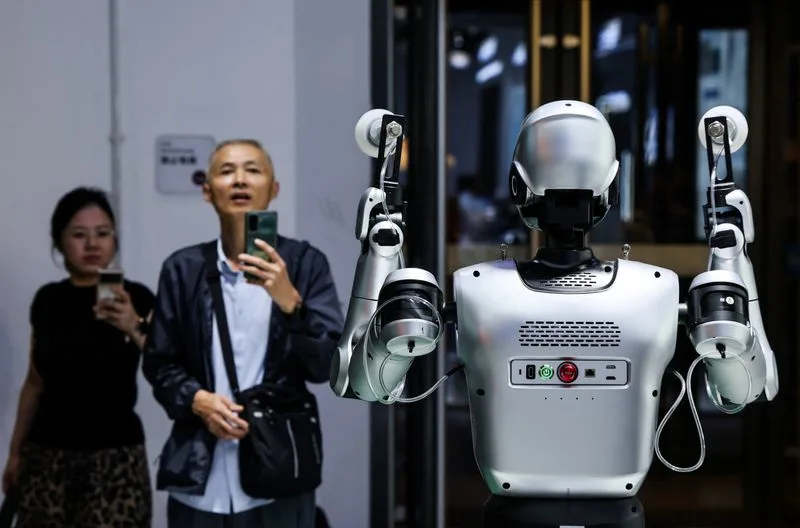
    Chinese robotics developers demonstrated humanoid machines sorting logistics parcels and assembling mobile handsets in Beijing this month, pushing to convert promotional technology into commercial factory installations. More than 300 mostly domestic companies participated in the World Robot Conference, presenting over 2,000 exhibits and launching upwards of 150 products.

    The presentations focused on physical industrial utility rather than scripted stage routines. Machines showed off fine motor tasks that included packing consumer electronics and sorting freight for delivery networks, alongside domestic maintenance functions.

    Deployment targets supply chains

    Warehouse operators and electronics manufacturers across East Asia face tightening labor availability and rising wage floors. Humanoid form factors aim to slot directly into facilities designed for human staff, avoiding the expensive structural retooling required by fixed automation systems.

    Retail supply chains in China handle hundreds of millions of parcels daily. Deploying dexterous bipedal and wheeled units into sorting hubs allows logistics operators to scale throughput during promotional peaks without adding headcount.

    Hardware shifts toward commercial scale

    Investor capital across the region has shifted heavily toward general-purpose robotics ventures. Chinese manufacturers rely on dense domestic component supply chains for actuators, sensors and gearboxes to lower unit production costs below Western competitors.

    Commercial viability now hinges on software reliability and battery runtime during continuous multi-hour warehouse shifts. Factory pilots scheduled across domestic consumer electronics assembly plants through the end of the year will test whether unit economics beat dedicated automated guided vehicles.

  • Google Boosts Global AI Innovation with New Major Hardware Engineering Center in Taiwan

    Google Boosts Global AI Innovation with New Major Hardware Engineering Center in Taiwan

    Google has inaugurated a new engineering center in Taiwan dedicated to artificial intelligence (AI) infrastructure hardware, marking its largest establishment of this kind outside the United States. This move underscores Taiwan’s pivotal role in the global technology landscape.

    Taiwan’s President, Lai Ching-te, lauded the launch event in Taipei, noting that Google’s investment underscores the company’s faith in Taiwan’s tech prowess. According to President Lai, Taiwan is not just a fundamental component of the global technology supply chain, but also a crucial hub for designing secure and trustworthy AI.

    Taiwan continues to be a critical player in advancing global AI owing to its solid semiconductor ecosystem, spearheaded by Taiwan Semiconductor Manufacturing Co. (TSMC). The high-tech chips developed by TSMC power systems from firms such as NVIDIA, which are at the forefront of global AI innovation.

    Raymond Greene, the acting U.S. Ambassador in Taipei, emphasized the importance of this expansion. He noted that this innovative foundation sets the stage for a promising new era, dubbing it a new golden age in the economic relationship between the U.S. and Taiwan.

    Google revealed that the new facility will concentrate on sophisticated AI hardware engineering. This will include the integration of AI chips such as Google’s Tensor Processing Units (TPUs) into motherboards and their attachment to servers.

    Additionally, Google confirmed that its Taiwan infrastructure engineering team, established in 2020, has tripled in size, and that the new center will be staffed by hundreds of employees who will support Google’s global data center operations.

    Google’s presence in Taiwan is not new. The company already runs multiple hardware development sites on the island and has been operating a data center in Changhua County since 2013. Google has also invested in several subsea cable projects connecting Taiwan to global networks.

    Aamer Mahmood, Google’s Vice President of Engineering, stated that the technology developed and tested in Taipei is deployed in Google data centers worldwide, which powers Google devices relied upon by billions globally. He added that this is more than an office investment; it signifies an investment in an ecosystem, further solidifying Taiwan’s position as an essential center for global AI innovation.

    Questions & Answers

    What is the focus of Google’s new engineering center in Taiwan?
    The new engineering center will concentrate on advanced AI hardware engineering, including the integration of AI chips into motherboards and servers.

    How does Taiwan contribute to global AI progress?
    Taiwan has a robust semiconductor ecosystem led by Taiwan Semiconductor Manufacturing Co. (TSMC), making it a critical player in advancing global AI. The chips developed by TSMC power systems for AI innovation worldwide.

    What does the new facility mean for Google’s presence in Taiwan?
    The new facility marks an expansion of Google’s presence in Taiwan. In addition to the new center, Google already operates multiple hardware development sites and a data center in Taiwan, and has invested in numerous subsea cable projects.

  • Lowe’s finally adds support for Apple Pay

    Lowe’s finally adds support for Apple Pay

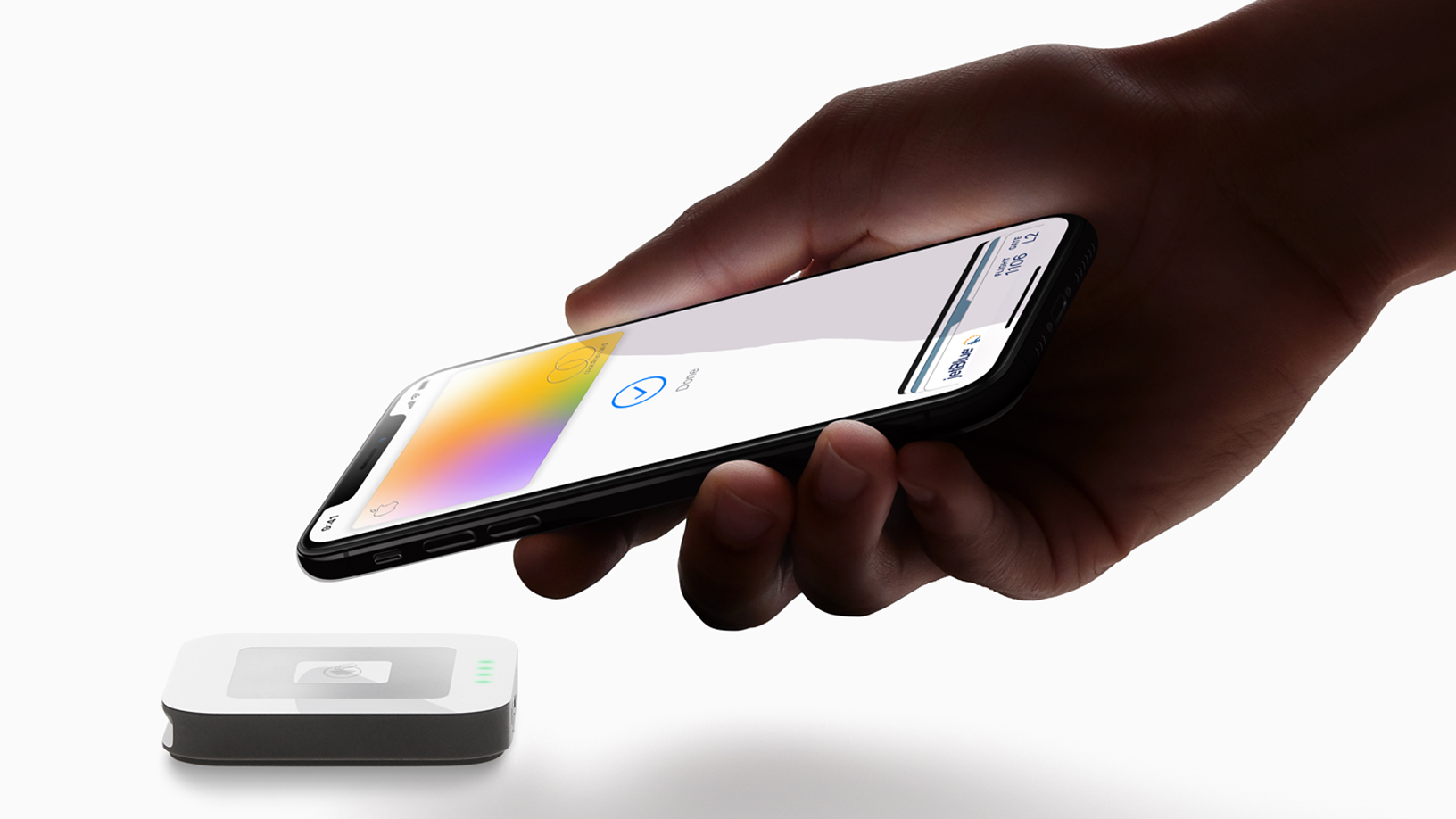
    The second-largest hardware chain in the U.S. has finally decided to support Apple Pay. For those who don’t know what Apple Pay is, it is the mobile payment service that allows an iPhone user to select a credit, debit, or prepaid card from the Wallet app and tap the phone against a POS machine to complete a transaction at a retail store.

    You don’t have to fumble for your wallet to grab your credit card, especially when you’re bundled up to stay warm in the bitter cold, and you don’t have to worry about your card’s information being stolen by a skimmer placed inside a card slot by a criminal. It’s just so darn convenient and it costs you nothing to use it. Apple collects .15% of the value of every transaction rung up with Apple Pay. That means that on a $100 transaction, Apple earns the princely total of 15 cents.

    But this is a volume business after all and with so many people using Apple Pay, the service is expected to generate $4 billion in revenue for Apple this year which is more than double the $1.9 billion that Apple Pay raked in for Apple in 2022. Earlier this year Apple promoted Apple Pay with a series of ads. And now, after a long absence, Lowe’s is adding Apple Pay support to its 2,100 retail locations in the U.S.

    This is a shrewd move by Lowe’s and an attempt to take some business away from the number one hardware chain in the U.S. since Home Depot does not support Apple Pay. Another huge retailer that doesn’t support Apple Pay is Walmart. Eight years ago we told you when the largest discount retailer in the states launched its own mobile payment service imaginatively titled Walmart Pay.

    Using Walmart Pay requires you to install the iOS or Android version of the Walmart app on your phone. Earlier this year Kroger tried to apply some pressure to competitor Walmart by accepting Apple Pay for the first time starting last April.

    It would be quite a big deal for Apple if Walmart were to add support for Apple Pay like Lowe’s did because, eventually, continued growth for Apple Pay will have to come from the addition of more retailers, especially those huge chains that previously held back support for the service.

    If you’re like me, there is that feeling when Face ID verifies you and that “ding” goes off indicating that your payment via Apple Pay has been accepted. And we have no doubt that Apple loves that sound too since it means more money, albeit in nickels and dimes, is being added to its coffers.

  • Apple reportedly considering a monthly subscription program for iPhone and other hardware

    Apple reportedly considering a monthly subscription program for iPhone and other hardware

    Apple is working on a hardware subscription service that would let you use its products in exchange for a monthly fee. It would be different than the iPhone Upgrade program that lets you pay for the iPhone in 24 monthly installments. Under that program, the device is yours once you have paid for it in full.

    The new rumored Apple subscription service will not work like that. It will be similar to paying a monthly subscription fee for paid apps. So, while this would let you use products like the iPhone during the subscription period, the monthly fees wouldn’t be the same as splitting the cost of an iPhone over a 12 months period, for instance, and thus, the phone will technically never be yours. It would be more like a leasing service.

    At the risk of reading too much into this, it could be that the monthly fees will be a lot lower when compared to the installments charged by carriers and Apple at the moment for ownership programs. The report adds that users would be able to swap out phones when a new one comes out.

    This would generate recurring sales for the company and will help further reduce the influence of carriers since Apple will apparently operate this program itself, via the App Store or iCloud.

    At the same time, it would also make Apple products more accessible to consumers who cannot afford to pay for the devices upfront.

    Apple could bundle it with the Apple One services subscription program and AppleCare extended warranty and technical support plans and promote it as a one-stop subscription service.

    Apple’s hardware subscription program has been subject to delays, and we can expect the company to formally announce it by the end of this year or in 2023.