Tag: hardware

  • Google Meet update adds important audio capabilities

    Google Meet update adds important audio capabilities

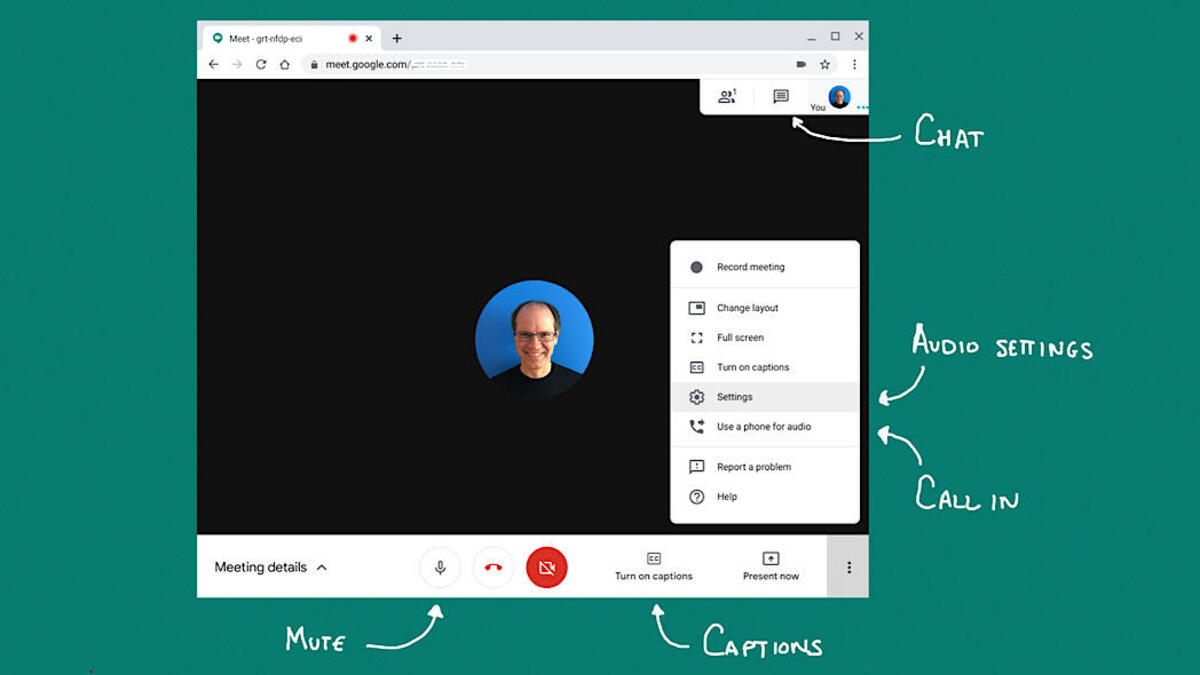
    Google Meet is getting a small yet important update this week, which adds noise cancellation capabilities to the app. The new feature is available to all Google Meet users starting today and there’s no need to make any adjustments to the app’s settings to benefit from noise cancellation.

    Google Meet users can take advantage of noise cancellation if they join a meeting using any Google Meet hardware devices. Also, the feature is available for the meeting organizer’s Google Workspace edition. It’s important to mention that if a user has noise cancellation, the feature will be active in all meetings regardless of whether the meeting organizer has noise cancellation or not.

    Google Workspace accounts that have noise cancellation enabled by default for their organizations in meetings with other people outside, they can also use the feature, but only during that meeting.

    The new feature is enabled by default for Google Workspace Business Standard, Business Plus, Enterprise Essentials, Enterprise Standard, Frontline, Enterprise Plus, and Workspace Individual Subscriber accounts. However, noise cancellation will not be on by default for Education Plus, and Teaching and Learning Upgrade accounts.

  • Robinsons Retail chief to head Ace Hardware international arm

    Robinsons Retail chief to head Ace Hardware international arm

    Ace Hardware Corporation, the world’s largest retailer-owned hardware cooperative, announced today that Jay Heubner, President and General Manager of Ace International will retire March 1, 2021 after 38 years with the company.

    Heubner joined Ace Hardware in 1983 in the IT department and quickly rose up through the organization to become a director. In 2004, he took a position on Ace’s Technology Value Team within Retail Operations and was then tapped in 2007 to help lead a special retail project. In his next role, Heubner lead Operations Development and Retail Training until he was promoted in 2015 to the position of President and General Manager of Ace International, a subsidiary of Ace Hardware.

    “Jay is one of the most effective, highest character, servant-hearted leaders I know,” said John Venhuizen, President and CEO of Ace Hardware. “His wise, encouraging influence has had a significant impact on the business and made Ace a better place. I am grateful for Jay’s contributions and wish him and his family all the best as they embark on this exciting new chapter.”

    Over the coming weeks, Heubner will focus on ensuring a smooth leadership transition for Ace International.

    Effective April 5, David Goh will assume the role of President and General Manager of Ace International. Goh is currently managing director of Philippine-based retail chains Ministop convenience store, Southstar Drug and TGP (The Generics Pharmacy), which are subsidiaries of Robinsons Retail Holdings, Inc.

    Prior to this role, Goh held several leadership positions across various industries including a Vice President position at Singapore Airlines, CEO of 7-Eleven Singapore and CEO of Cold Storage, a grocery chain throughout Singapore.

    “David has a remarkable track record of success in growing businesses and transforming the customer experience,” said Venhuizen.

    Goh and his family will be relocating from the Philippines to Singapore to be closer to Ace International’s highest growth regions.

  • Spotify unveils its first-ever hardware device

    Spotify unveils its first-ever hardware device

    Spotify has been the unrivaled champion of the thriving music streaming industry for a number of years now, but relying entirely on a service under siege by tech giants including Apple and Amazon seems like decidedly risky business. As such, it’s certainly not shocking to see the 2006-founded Swedish company dip its toes into the consumer hardware world with an aptly titled Car Thing device.

    This “thing” does pretty much what you expect, reportedly plugging into your car’s 12-volt power outlet/cigarette lighter to allow Spotify users to control their smartphone playlists and podcasts on the road in complete safety with voice commands only. The Car Thing is essentially a less versatile Anker Roav Bolt powered by an unnamed Google Assistant rival… that’s unlikely to ever see daylight on anything resembling a wide scale.

    That’s right, you can’t actually purchase Spotify’s first-ever piece of hardware, which will instead be offered for free to a “small group” of invited Premium subscribers to help the company “learn more about how people listen to music and podcasts.” While this is all explicitly and repeatedly billed as a test, set to be conducted in the US only in the near future, Spotify is leaving the door open to an eventual expansion of the limited experiment.

    For the time being, the focus is squarely on “becoming the world’s number one audio platform” rather than creating consumer-oriented hardware, but the way future experiences will be developed depends on the “learnings” from this test. In other words, if invited users declare themselves pleased with the Spotify Car Thing, you shouldn’t rule out it becoming a commercial… thing someday.

    Obviously, we don’t have a full spec sheet or list of features for the Car Thing, but we do know it comes with a circular screen, a number of physical buttons, and a “Hey, Spotify” wake word. Intriguingly, Spotify is also teasing upcoming “Voice Thing” and “Home Thing” tests purportedly designed to assess the living room listening habits of the platform’s Premium users.

  • Equinix deploys Facebook-designed optical switches

    Equinix deploys Facebook-designed optical switches

    Equinix is collaborating with Facebook and the Telecom Infra Project (TIP) to deploy and test Voyager, the Facebook-designed packet optical switches, inside two of its IBX data centers.

    As part of the TIP “Open Optical Packet Transport” project group, Equinix is working closely with Facebook to field-test this next-generation packet optical networking technology.

    Voyager is the first step in Facebook and Equinix’s goal of developing the next-generation network ecosystem for hardware and software.

    Equinix said it will continue to work with Facebook and other vendors to include TIP-based hardware and software in their architectures as they deploy inside Equinix and develop the TIP ecosystem.

    By working as part of TIP, Equinix is helping to define the deployment, operational and support models for the new disaggregated and virtual networking infrastructure.

    Initial testing of the Voyager open packet-optical switch took place in Equinix’s SV3 and SV8 IBX data centers in Silicon Valley. Voyager is a combination of compute, switch, router and DWDM transport technologies. Preliminary results showed zero packet loss and significant overall cost savings due to this disaggregated hardware and software networking model.

    “This emerging world of disaggregated optical networking will need a physical aggregation point where all the hardware and software can come together,” Equinix CTO Ihab Tarazi said.

    Facebook director of engineering Hans-Juergen Schmidtkeat added that the Voyager ecosystem will serve as a first ever white box for switching, routing and DWDM in the wide area networks to exemplify a new way of open collaboration and innovation and has been contributed to the TIP community.

  • Xiaomi announces its first VR headset

    Xiaomi announces its first VR headset

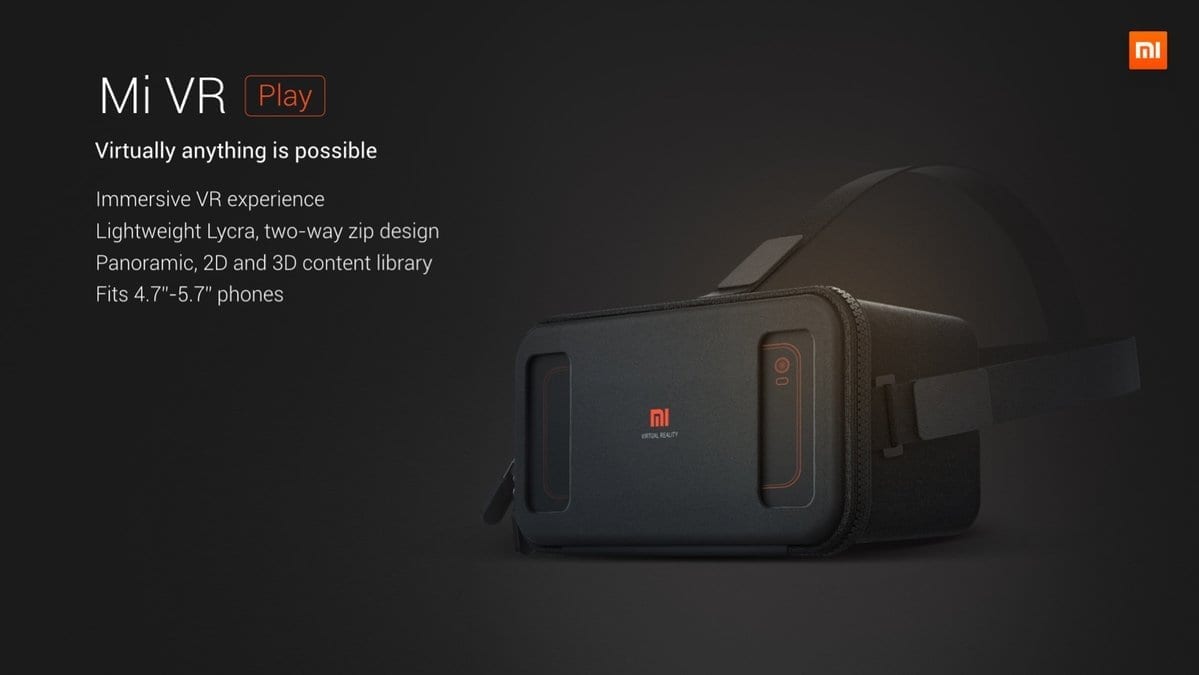
    Xiaomi is broadening its already expansive range of products by venturing into virtual reality for the first time.

    The company today announced the Mi VR Play, an “entry-level” virtual reality headset that it hopes can open this new exciting medium to new audiences because not everyone has thousands of dollars needed to set up an Oculus Rift or HTC Vive. Democratizing technology is the thesis behind most of Xiaomi’s competitively priced products, including the $550/$750 notebook announced last week that will rival Apple’s Macbook in China.

    This new device recalls Google’s super-cheap and super-simple Cardboard VR headset. It is fairly basic in nature; you pop a smartphone into the lycra-built body then open Xiaomi’s Mi VR app, which contains VR content from selected partners that include Conde Nast Traveler and YouKu, “China’s YouTube.” Xiaomi pledged to invest $1 billion in video content, including VR, last year, so that library is sure to get bigger over time.

    Here’s how Xiaomi describes the headset:

    Mi VR Play has significantly improved upon the design typically used in similar VR products — it is wrapped in lightweight, durable Lycra for long-lasting comfort. In the future, Mi VR Play will also be available in a selection of bold prints and colours for even more stylish options. The unique two-way zipper helps to ensure compatibility, providing a secure grip on a wide range of 4.7- to 5.7-inch smartphones. At the same time, the dual openings on the front allow for slight positioning adjustments and ventilation.

    Here’s the catch — you can’t go and buy one, even if you’re in China.

    Xiaomi is making it available to a limited number of beta test users, who signed up on August 1 when Xiaomi put out a call for volunteers. One million users signed up in just eight hours, the company said, but Xiaomi has selected just a fraction of those — likely “tens of thousands,” a representative told us.

    For those lucky ones accepted into the test program, the Mi VR Play will cost just RMB 1 ($0.15).

    Xiaomi told us that it has plans to make the headset more widely available in the future, but there’s no schedule for that right now. Along those lines, it isn’t clear how much the headset will cost once it is on sale to all. We suspect it won’t be RMB 1, sadly.

  • Illegal OTT boxes are the new P2P piracy

    Illegal OTT boxes are the new P2P piracy

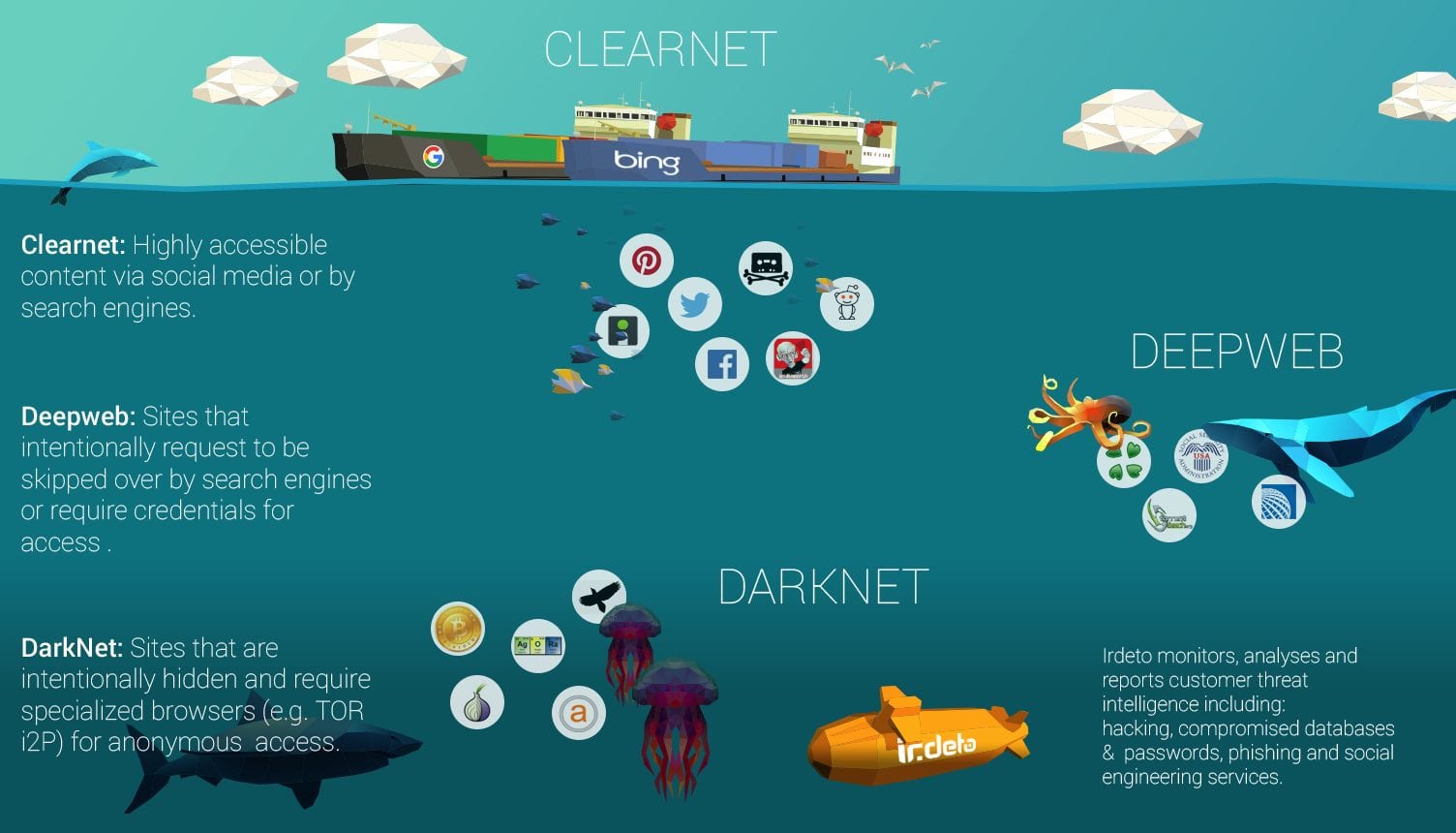
    Online video piracy is alive and well in 2016, but the threat landscape has shifted from straight conditional access (CA) technology and P2P file-sharing to illegal OTT set-top-boxes (STBs) that connect users to sites that look like professional OTT service providers with fancy EPGs, but are in fact hosting stolen content.

    “So these new-age pirates are no longer hacking the CA on the STB, they are selling their own STBs and delivering illegal content through them,” says Bengt Jonsson, VP of Asia-Pacific at Irdeto.

    Combating that involves some tried-and-true techniques like watermarking so stolen content can be identified. But that’s just the start, says Jonsson.

    “You also need a monitoring service to go and find stolen content on these sites and identify it,” he says. “And you need a takedown service where you go to the ISPs and tell them, ‘We represent this customer, this is their content and it’s pirated,’. And you have to monitor for compliance.”

    Irdeto supplies all of these services, and also has agreements with major e-commerce sites like Alibaba and eBay under which they will remove illegal OTT STBs from the site when Irdeto identifies them.

    However, says Jonsson, this kind of piracy is a global problem that requires cooperation from both the pay-TV operators (as well as industry organizations like CASBAA) and regulators who police copyright infringement.

    A challenge to the latter is jurisdictional issues – for example, what do you do when content produced in Australia is being pirated for an OTT box sold in Ukraine?

    “We start by using watermarking and fingerprinting to trace the source of the content, and from there we can locate the subscriber and block them and see where the traffic is going,” says Roger Harvey, Irdeto’s ANZ managing director. “So we can determine both where the pirate site is and where they got the content from.”

    The rest is up to legislation frameworks in each country to not only combat piracy, but keep up with changing delivery models such as the shift from linear pay-TV to multiscreen OTT.

    Interestingly, the ability to track and monitor stolen content also gives Irdeto’s customers valuable data on how popular certain content is and where.

    “We have what’s called a heat map, where our customers can see what content is being consumed in what area, legally or illegally, which shows demand for it,” Jonsson says. “An effective way to combat online piracy is to deliver a legal alternative, so with this, data content owners can see what viewers want so much that they’re willing to pirate it if it’s not available.”

    Last week, Irdeto partnered with Taiwan-based ALi Corp, which will integrate Irdeto’s security solutions on its latest generation chipset offerings for STBs.

  • Challenger’s net profit in 2015 up 22%, plans to open new online store in April

    Challenger’s net profit in 2015 up 22%, plans to open new online store in April

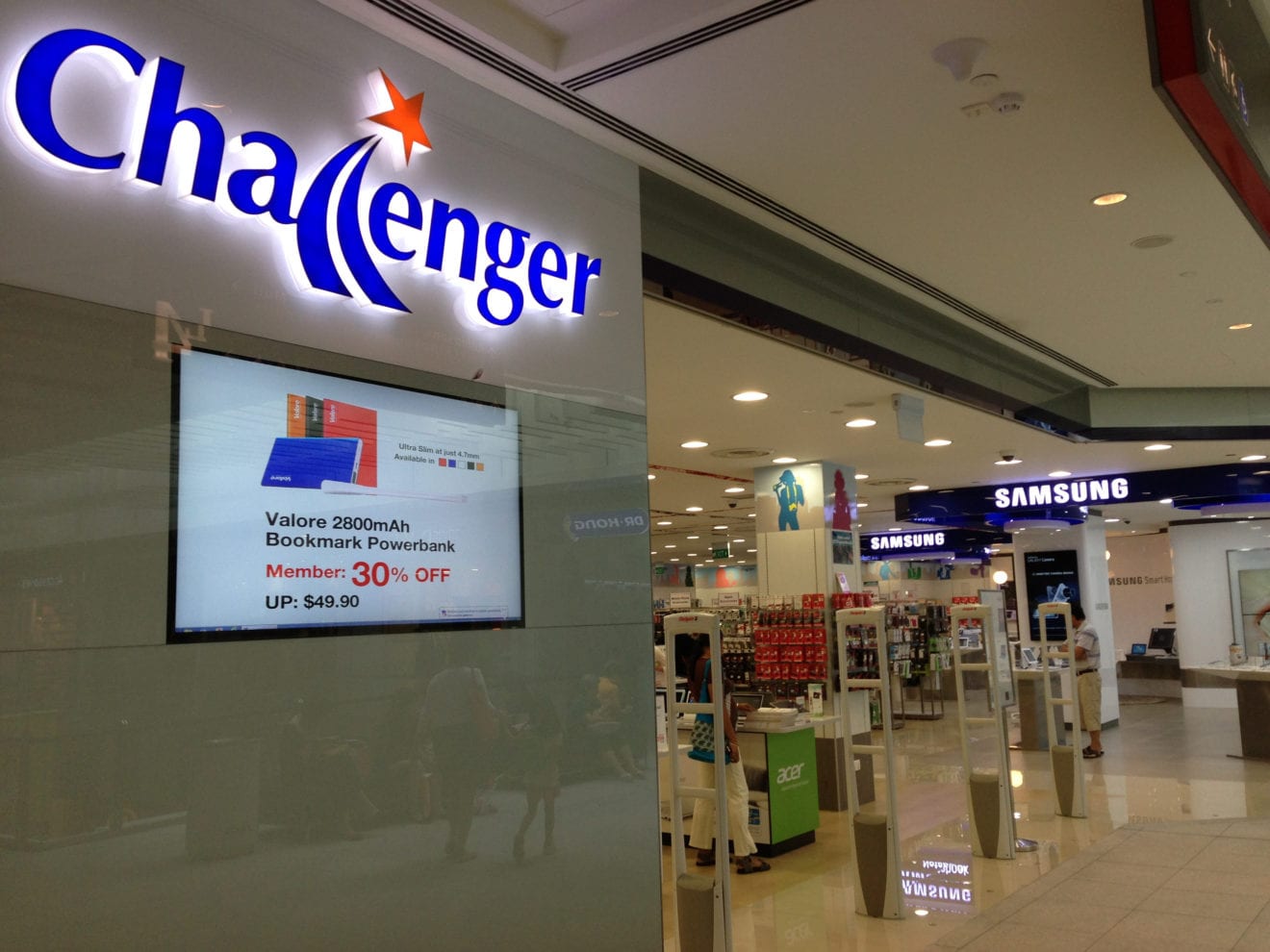
    IT products and services provider Challenger will establish a new online store to maintain its relevance in the retail market.

    Known as Hachi.sg, the portal, which will be unveiled in April 2016, will boast more products, an improved shopper interface and an online sales platform, Challenger said in a statement on Tuesday (Feb 16).

    Chief executive Mr Loo Leong Thye said: “Our strong network of offline stores will complement the online business so our customers can enjoy a true shop-anywhere, offline-to-online and vice versa experience.”

    On Tuesday, the SGX Mainboard-listed technology company also announced net earnings of $18.3 million in 2015, a 22 per cent increase from the $15 million profit recorded the year before.

    The IT retailer attributed the higher net profits to higher government grants received and lower operating expenses from the closure of its Malaysia retail operations.

    In the final quarter of 2015, net profit also increased by 50 per cent, $7.5 million more than the previous year.

    Meanwhile, earnings per share rose by 1.01 cents, from 4.28 cents in 2014 to 5.29 cents in 2015.

    However, it recorded a one per cent dip in revenue over the year from $355.1 million in 2014 to $352.2 million, due to lower contribution from retail revenue in Singapore.

    Looking at the year ahead, Mr Loo observed that 2016 will continue to be a challenging year for the retail industry.

    “Weak market sentiment from last year will spill over into 2016. Hence, retailers like us have to keep innovating to retain existing customers and attract new ones. On top of that, we will continue to focus on other hygiene factors like keeping operating costs low with better cost management and increasing productivity,” he said.

    Mr Loo added that Challenger is looking to build up to a stronger position by investing resources and manpower for the next three to five years towards its online business.

    Currently, Challenger has a total of 48 stores in Singapore. But it revealed last December that it would be closing its flagship megastore in Funan DigitaLife Mall, after it was announced that the mall will shut down this year for redevelopment.