Retail News CRM

Tag: healthy

  • Johnson & Johnson, Apple collaborate for healthcare

    Johnson & Johnson, Apple collaborate for healthcare

    Apple and Johnson & Johnson are teaming up on a study to determine whether the latest Apple Watch, in conjunction with an app from the pharmaceutical company, can accelerate the diagnosis of a leading cause of stroke. Atrial fibrillation, or AFib, is an irregular and often rapid heart rate that causes about 130,000 deaths and 750,000 hospitalizations each year in the U.S., Johnson & Johnson said. Up to 30 percent of cases go undiagnosed until life-threatening complications occur. Worldwide, about 33 million people have the condition.

    The controlled, randomized multi-year Johnson & Johnson study will start later this year and be limited to U.S. adults ages 65 years and older who wear the Apple Watch Series 4. Specific details on how to participate will be released later.

    The Apple Watch Series 4, which costs $399 or more, has an irregular heart rhythm notification feature, as well as an FDA-cleared ECG app, both of which are designed to detect AFib.

    “We are receiving thank you letters daily from Apple Watch wearers who are discovering they have AFib,” said Apple Chief Operating Officer Jeff Williams. “We want a deeper understanding about outcomes and prevention associated with early detection. We are excited to work with Johnson & Johnson, which has a long history and expertise in cardiovascular disease.”

    Paul Stoffels, Johnson & Johnson’s executive vice president and chief scientific officer, said “the goal is to identify early on AFib and prevent stroke by combining the physical know-how from Apple and what we have from the medical and scientific know-how.”

    Cardiologist Paul Burton, Johnson & Johnson’s vice president of medical affairs for internal medicine, added the watch has a good detection rate for the condition, but there can be false positives.

    If an AFib reading appears, patients are directed to seek a formal diagnosis from their medical provider. Johnson & Johnson’s goal is to collect aggregate data from study participants, rather than tracking individual patients.

    “When we do clinical trials, we always respect the privacy of patients,” Stoffels says.

    Burton believes “the study has the potential to show that there is a lot more atrial fibrillation out there in the real world in older people than we ever imagined, and if you use a tool like an Apple Watch to detect and funnel people to care, you can really drive down stroke risk in those patients.”

    Apple CEO Tim Cook recently talked about Apple’s ambitions in the health space. “I think you’ll be able to look back at some point in the future and Apple’s greatest contribution will have been to people’s health. I think it’s that big.”

    In November 2017, Apple teamed up with the Stanford University School of Medicine on an Apple Heart Study app that uses the heart rate sensor inside the Apple Watch to collect data on irregular heart rhythms. That study is ongoing.

    Apple also hopes iPhone owners will store medical records inside the Health app.

    Stoffels says wearable technology will continue to take on increased importance in the health field, from monitoring whether patients take medications to measuring sleep. “Digital and data will become part of everything we do.”

  • GSK plans to split into 2 as part of Pfizer joint venture

    GSK plans to split into 2 as part of Pfizer joint venture

    GlaxoSmithKline (GSK) plans to split into two businesses – one for prescription drugs and vaccines, the other for over-the-counter products – after forming a new joint venture with Pfizer’s consumer health division. The revamp is the boldest move yet by Emma Walmsley, the GSK chief executive who took over last year.

    It will lead to the creation of a consumer health giant with a market share of 7.3 percent, well ahead of its nearest rivals Johnson & Johnson, Bayer and Sanofi, all at around 4 percent.

    Walmsley has previously played down the idea of breaking up the group, something that a number of investors have called for over the years.

    On Wednesday, however, she announced that GSK and Pfizer would combine their consumer health businesses in a joint venture with sales of 9.8 billion pounds ($12.7 billion), 68 percent owned by the British company, in an all-equity transaction.

    GSK said the deal laid the foundation for the creation of two new U.K.-based global companies focused on pharma, vaccines and consumer health care within three years of the transaction closing.

    For Pfizer, the deal resolves the issue of what to do with its consumer health division, which includes Advil painkillers and Centrum vitamins, after an abortive attempt to sell it outright earlier this year.

    GSK – whose consumer products include Sensodyne toothpaste and Panadol painkillers – had withdrawn from that earlier Pfizer auction process, but Walmsley said the opportunity to strike an all-equity deal cleared the way for the new agreement.

    “It’s something we’ve been able to do quickly and quietly,” she said.

    “What this deal is all about is the opportunity to strengthen two businesses – a world-leading consumer health care business, and a new GSK that is focused on pharma and vaccines.”

    Shareholders welcomed the news and the shares jumped 7 percent, with Jefferies analysts saying the future separation could crystallize value.

    The new joint venture with Pfizer is expected to generate total annual cost savings of 500 million pounds by 2022 for expected total cash costs of 900 million and non-cash charges of 300 million. GSK plans divestments of some 1 billion pounds.

  • Vietnam fruits, vegetables struggle to enter overseas market

    Vietnam fruits, vegetables struggle to enter overseas market

    Dragon fruit, which accounts for 40 percent of Vietnam’s fruit and vegetable exports in value, is facing the biggest challenge as China, which used to buy 80-90 percent of Vietnam’s dragon fruit mainly through border gates, has tightened the import through the channel. The importer has also improved standards on quarantine and food safety and origin tracking to Vietnamese fruits, including dragon fruits.

    Facing the difficulties, many traders have recently stopped buying the fruit in some major growing regions.

    As a result, prices of the fruit have plummeted. Recently farmers in Binh Thuan Province told VnExpress that prices are down 90 percent to VND1,500-2,000 ($0.06-0.08) per kilogram.

    Vietnam’s dragon fruit exports might see more pain since China may reduce purchases after expanding its own cultivation, warned by industry insiders. Saigon Giai Phong Online quoted Vietnam’s Plant Protection Department as saying China has planted dragon fruit on 20,000 hectares in places such as Guangxi and Hainan. The department said this area would increase to 30,000 hectares next year. Chili, which accounts for a third of Vietnam’s total vegetable export value, is struggling in the Malaysian market. Malaysia is among the three largest buyers of chili from Vietnam along with South Korea and China.

    But it announced to cease licensing the import of chili from Vietnam from September 14 after detecting excessive residues of plant protection products in chili shipments.

    Together with dragon fruits and chilli, papaya has struggled to enter overseas market.

    The South Korean Ministry of Food and Drug Safety has informed Vietnam’s Plant Protection Department that it discovered genetically modified papaya in shipments from Vietnam.

    South Korea does not allow entry of genetically modified organism (GMO) products.

    A spokesperson for a large papaya exporter in southern Long An Province said that farmers knew about this policy, and some GMO fruits went into the consignments despite their efforts to prevent it.

    It is working with farmers to grow non-GMO fruits, the spokesperson added.

    Nguyen Quoc Vong, a researcher in the GMO fruit industry, said the trend in developed countries is to consume non-GMO products.

    He warned that Vietnam would be shut out of high-end markets if it exports GMO products since food safety standards around the world are rising.

    “Our competitors like Thailand do not grow GMO produce, so they will have an advantage in high-end markets where we cannot compete,” local newspaper Thanh Nien reported him as saying.

    Vietnam earned $3 billion from fruit and vegetable exports in the first nine months of this year, up 15.2 percent over the same period last year, according to the General Statistics Office.

  • Korean sandwich chain Isaac setting up Business in Singapore

    Korean sandwich chain Isaac setting up Business in Singapore

    Korean sandwich chain Isaac will open its first store in Singapore next month.

    Over the last 15 years, Isaac has built a network of more than 700 stores across South Korea and expanded into Taiwan, Macau and – most recently – Malaysia, where it has a store across the causeway in Johor Bahru. Now it is heading further afield, with a takeaway store planned for Plaza Singapura’s basement 2.

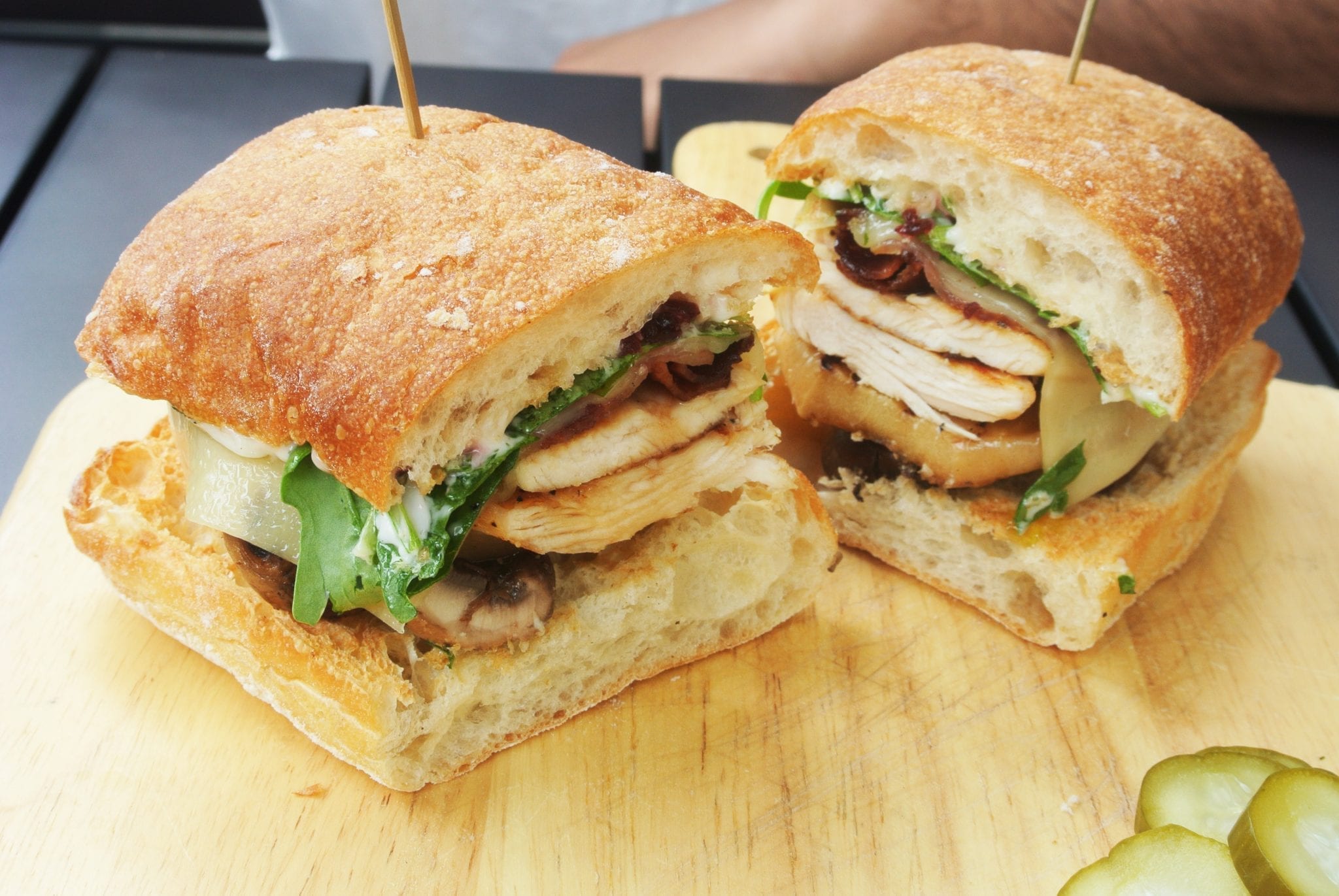
    Isaac serves toasts with variations including the popular Korean dish bulgogi, steak ham, chicken, double cheese potato, shrimp and ham and cheese, with prices starting at S$2.85. It also serves juices and coffees.

  • SaladStop! heading for Korea

    SaladStop! heading for Korea

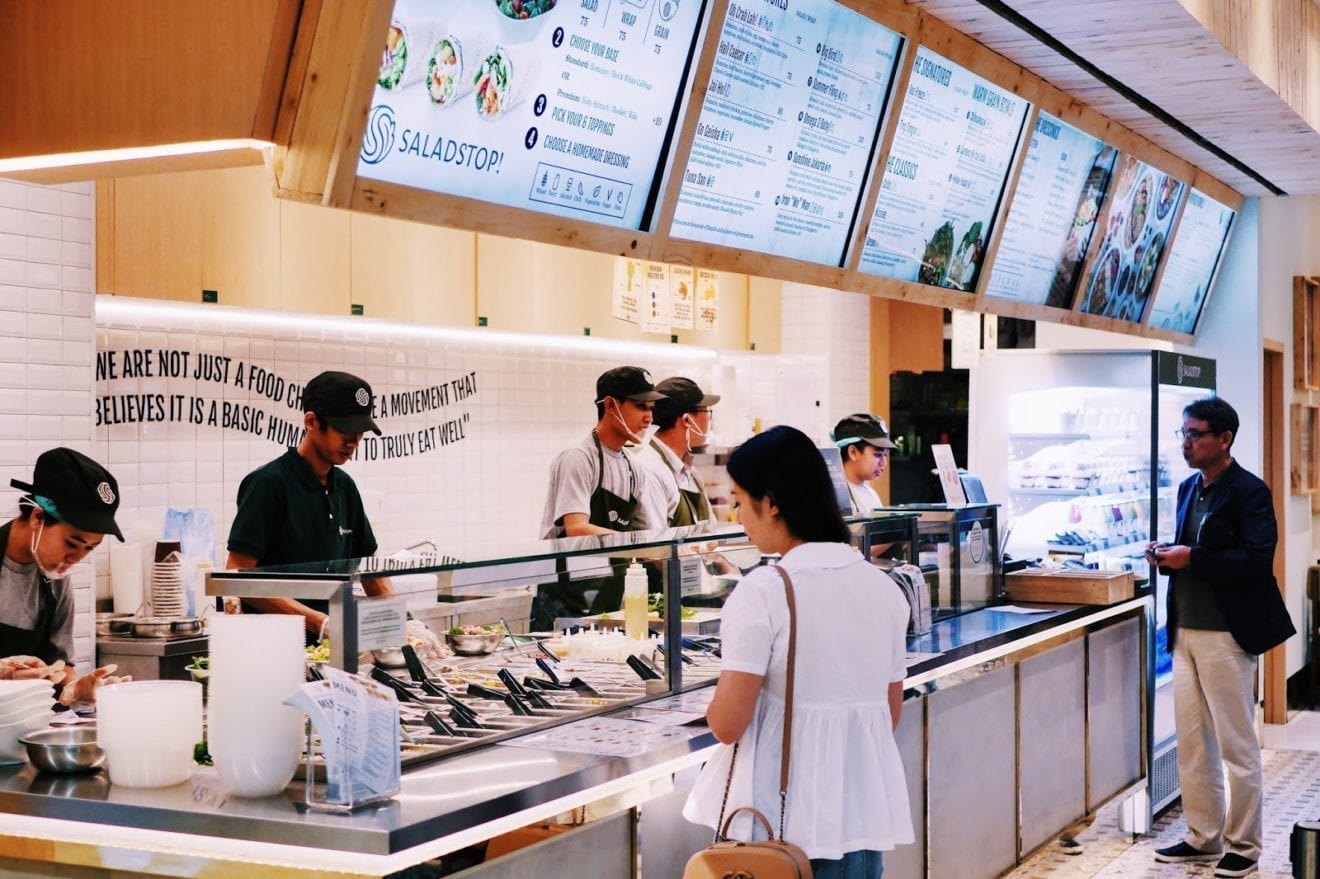
    Established eight years ago, Singapore food brand SaladStop! is about to launch into Korea.

    It opens in Seoul next month, about the same time as its first non-Asia location, in Barcelona. The brand has 19 outlets across Singapore, 12 in the Philippines, three in Jakarta and four in Tokyo.

    Co-founded by Adrien Desbaillets and his father Daniel, SaladStop! Is still a family affair. At 36, Adrienne is president while Daniel, 67, is director and chairman. Daniel’s sister Katherine handles marketing while her Paris-born husband Frantz Braha is business development manager, spearheading overseas franchising.

    The Desbaillets are Swiss citizens who put down roots in Singapore 22 years ago. Daniel was previously a hotel executive. When Adrien returned to Singapore after working in China for a hotel investment company, he planned a chain of nutrition-conscious quick-service restaurants.

    However, the says affordable, wholesome and nutritious were three options rarely found together in one meal, and he guessed that expats like himself were “craving a good salad”.

    Father and son opened their first store in Marina Square, working with corporate chef Tony Tan.

    All overseas locations have more or less the same core combos, but franchise holders modify them to suit local preferences.

    In Singapore, the next stage of growth is a mobile app.

  • Element Fresh has redefined healthy dining in China

    Element Fresh has redefined healthy dining in China

    Now bound for wider Asia, a fresh-food restaurant concept focusing on expats has caught the imagination of more than 1 million mainland Chinese.

    Salads, organic food and superfoods are not usually the first types of cuisine one considers staples in Mainland China, but a young American entrepreneur has hatched a fast-growing chain of quick-service restaurants serving up just that to thousands of Chinese and expat diners every day.

    Now the concept is heading to other Asian cities as its reputation spreads.

    Best known for its salads, sandwiches, juices and smoothies, Element Fresh also offers a variety of Asian dishes and a creative dinner menu, expanding into steaks, fish and pasta. With a positioning statement “Enjoying fresh food!”, the company’s unique selling point is delivering diners “the freshest food in China”.

    Element Fresh was founded by Bostonian Scott Minoie, a self-professed “lifelong foodie and chef”, and his mate Sheldon Habiger, who started a catering service in Shanghai which they morphed into a health-food and juice bar.

    In 2002, a loyal customer who happened to be a leasing executive from the Shanghai Centre, suggested they take some space in the mixed-use development, which as well as a popular shopping mall, houses thousands of office workers during the day. A few other customers pitched in some cash to help the idea come to fruition.

    The store opened on July 12, 2002, and is now part of a 40-strong chain. Within the next three years, another 30 stores are planned on the mainland, all company-owned, and the first in other Asian cities to be run under a franchise system.

    Asiawide franchise specialist VF Franchise Consulting is representing Element Fresh throughout the region.

    “After 15 years of tried, true, tested success in China, it’s a nice time to take it abroad,” Paul Barbone, Element Fresh’s international franchise business director, told Inside Retail on the sidelines of a VF Franchise Consultants business-matching event in Manila.

    “Hong Kong, Singapore and Bangkok – those big centres are very attractive, they’re definitely places we aspire to be. Vietnam is still emerging, so it is not an easy sell. We are here looking at Manila. We would never rule out North America, and Australia has been discussed.”

    Barbone has spent 18 years in the Middle East expanding globally recognised franchise brands there, so that region is on the radar as well, but for now the focus is on Southeast Asia – and Hong Kong, given its proximity to the mainland.

    More than salad

    Timing is often a decisive factor  in new concepts, and it certainly played a big part in the success of Element Fresh.

    When Minoie landed in China on an exploratory journey that has never come to an end, the whole foods, organic and superfoods market was emerging, not just in the US but globally.

    In a country where a lot of food had the goodness fried, steamed or otherwise cooked out of it, the alternative of eating raw vegetables was not attractive. So he began piecing together a viable business opportunity, starting with raw vegetables in a salad format, dressed up to look delicious.

    From there, the concept parlayed into what has today become a very popular destination – initially with westerners and now with local Chinese.

    “I say we are the leaders in casual dining,” says Barbone. “We are definitely a pioneer. People have mimicked what we are doing, so we have to be a step ahead of people copying us, but we’re still the leaders.”

    Barbone has seen some good concepts in China, but not developed to the same scale as Element Fresh.

    “A lot of the players have difficulty competing in Shanghai on many levels. One of those may be just the scalability of their organisation and trying to get locations to expand. That said, we do benefit from that, but it only came from taking a relative risk in the early 2000s and not becoming complacent in those decisions.”

    Resisting bland

    While the core of Element Fresh’s menu started out with salads, the whole concept has expanded into a full dining experience, from breakfasts to smoothies and full-sized entrees.

    “The main thing we sell is gourmet salads, topped with protein options. With marinated, grilled chicken, meats and seafood, we offer a whole plethora of proteins. Grilled foods have taste – you can’t always eat bland food.

    “We are not vegetarian. The health aspect comes in with a lot of these things – like the dressings – being properly portioned. That said, a person could order a salad and ask the waiter for more dressing. That’s OK, but that’s where most of the calorific intake comes from. Yogurt green miso dressing is good in moderation, but it becomes unhealthy if you eat too much of it.”

    Pastas are becoming more and more popular at Element Fresh, but in line with the overall theme whole-grain pasta is served.

    “We serve a great Australian steak. People look at that and say, ‘That’s not healthy’, but red meat in general in moderation is healthy – a 250g cut rather than a huge American-style 330g serving, of course, and complemented with vegetables.

    “We give customers an opportunity to be healthy. I eat a lot of Element Fresh and I like the way I feel after leaving the restaurant: I’m not drained, my body is not focused on dealing with fat.”

    The juices and smoothies are 100 per cent real fruit. “The first time I went to one of the restaurants I was surprised they don’t put ice in the juices. People can ask for ice, but when they buy a 16-ounce juice they want a 16-ounce juice, not 12 ounces of juice and four ounces of ice. We are going to be fully transparent, and when people order a juice, they get a juice.”

    As much as possible in China the company uses organic ingredients. It also uses superfoods, such as kale in a pesto (instead of basil) and, of course, berries.

    With 1 million followers on WeChat, the company invests a lot of time trying to educate people on the benefits of various foods and of healthy eating. “We take that very seriously and we want to engage with them,” says Barbone.

    Behind the scenes

    A significant factor in Element Fresh’s stellar growth is what the business does outside its restaurants.

    “We work with suppliers to help them understand why we need things grown in a certain way. It’s about long-term relationships and making sure all the things we do are taken on board.

    “Then we have the only HACCP-certified central kitchen in Mainland China. We are very particular about how we handle our food. Food safety is top of Chinese consumers’ minds (after recent KFC and other scares). We have our own lab in the central kitchen testing everything we produce.”

    The company also has its own fleet of distribution trucks rather than relying on third parties, thus ensuring temperature control and food-safety standards are met throughout the whole life of the food it sells.

    “It really is A to Z, and people appreciate that. When walking around Shanghai and looking at some of these beef noodle huts where some guy is literally chopping his meat on the sidewalk, I think, ‘OK, I am never eating there’. Many food-court outlets, such as steak places, pick a steak off a tray, grill it and cut it up. They don’t keep their steaks chilled but at ambient temperature, In North America, those places would be shut down in a nano-second.”

    Perhaps that has helped attract Chinese to the brand in growing numbers. What cleary started as an offer targeting expats is now very much a concept embraced by locals.

    Inside Retail asked how the brand managed to convert Chinese to the concept.

    “People want to familiarise themselves with more western-style things, and over time we gained popularity. Those trends take off in China at 10 times the pace of elsewhere. When  there is a shift in the market, it’s counted in thousands rather than tens.

    “You can’t eat beef noodles every day, and people are looking at other foods. We are challenging a lot of cultural norms.”

    Pricewise, Elements Fresh is very mid range. “A lot of people see us as expensive. For those people, I’d love to show them our central kitchen.”

    That said, a salad is priced around US$10 and a juice from $3 to $4. The average check runs at about $14 to $15 a person.

    Deuce for juice

    A key factor in the brand’s growth is a partnership with former international tennis player Li Na, in an ambassadorial role. However, she is involved in much more than just marketing activities. Li Na helps with menu development, “putting her fingerprint” on the brand, which has even stretched to a co-branded restaurant in her home city of Wuhan.

    “She wanted to do something special. The restaurant has Li Na themes and branding that really talks to the relationship we have with her. Scott and her see eye to eye. She wants to be an ambassador not only for Element Fresh, but for a healthy lifestyle, which coincides with our philosophy.”

    China’s second-best-known sports star, Li Na also retains a relationship with Nike, keeping her profile high all over the nation.

    Apart from Wuhan, most of Element Fresh’s growth focus in China has been on Shanghai, where there are now 17 eateries, and Beijing, with 12. But now the company is expanding into tier-two cities, mostly across the south, including Chengdu, Guangzhou, Nanjing and Shenzhen.

    Still privately owned, the company has grown to a payroll of 2500 staff members and serves more than 15,000 guests daily.

    Positioned as “healthy dining, redefined”, Element Fresh is a concept that will offer tailormade food for Asia’s local populations and expatriates.


  • Soul Origin eager to hit “golden century” mark

    Soul Origin eager to hit “golden century” mark

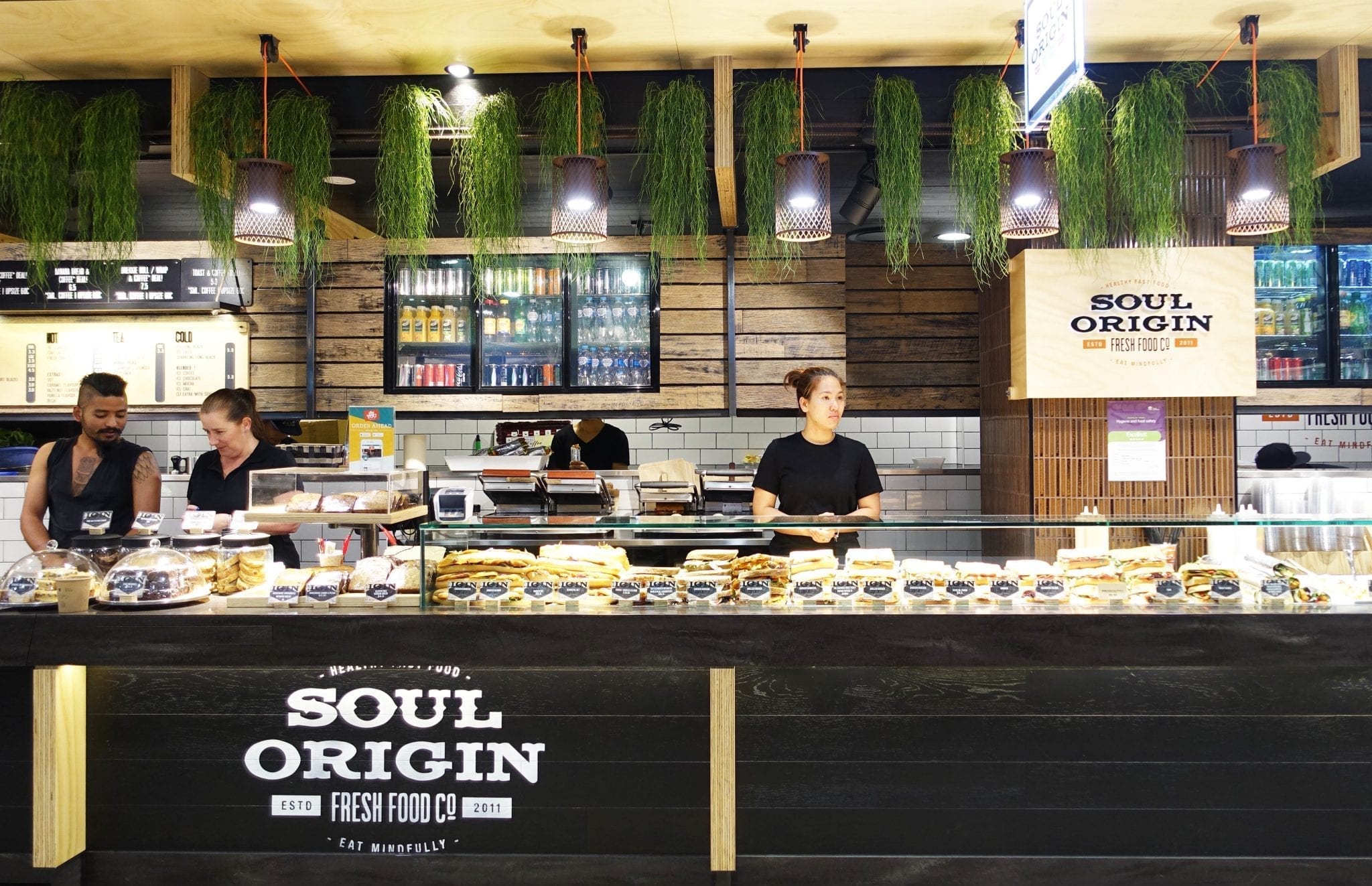
    Health fast food brand and coffee chain, Soul Origin, has recorded 12 per cent same store sales growth and continued to achieved double digital growth in its coffee sales.

    The fastfood chain has also continued its expansion with the opening of its 75th store last week in Melbourne Central, Victoria.

    Chris Mavris, Soul Origin chief operating officer, said Soul Origin plans to reach 100 stores before the end of the 2018 financial year.

    “Soul Origin’s growth plans have stepped up a notch this financial year as we continue to expand in our existing markets of Queensland, News South Wales, Victoria and South Australia,” Mavris said.

    Mavris said they will also open their first store in Western Australia later this financial year.

    In the past 12 months, Soul Origin has opened 30 new stores, expanding from New South Wales into the Australian Capital Territory, Queensland, Victoria and South Australia.

    Mavris said the rapid growth was on the back of strong double digit same store sales growth across the network, highlighting high customer demand for Soul Origin’s offering.

    “In addition, we have strengthened our corporate support team, which has doubled in size in the past six months, to assist with our store expansion and continue to provide our high level of support to our franchisees and their stores,” he said. “We have boosted our capabilities in both store and coffee training, property, recruitment, marketing as well as our store opening teams. We have no plans of slowing down!”

    Mavris said he was eager to hit the golden ‘100 stores’ mark over the coming months.

    “We are building a solid foundation that will help expand the Soul Origin brand into more communities and new territories. It’s very rewarding to see the business continuing to go from strength to strength,” Mavris said.

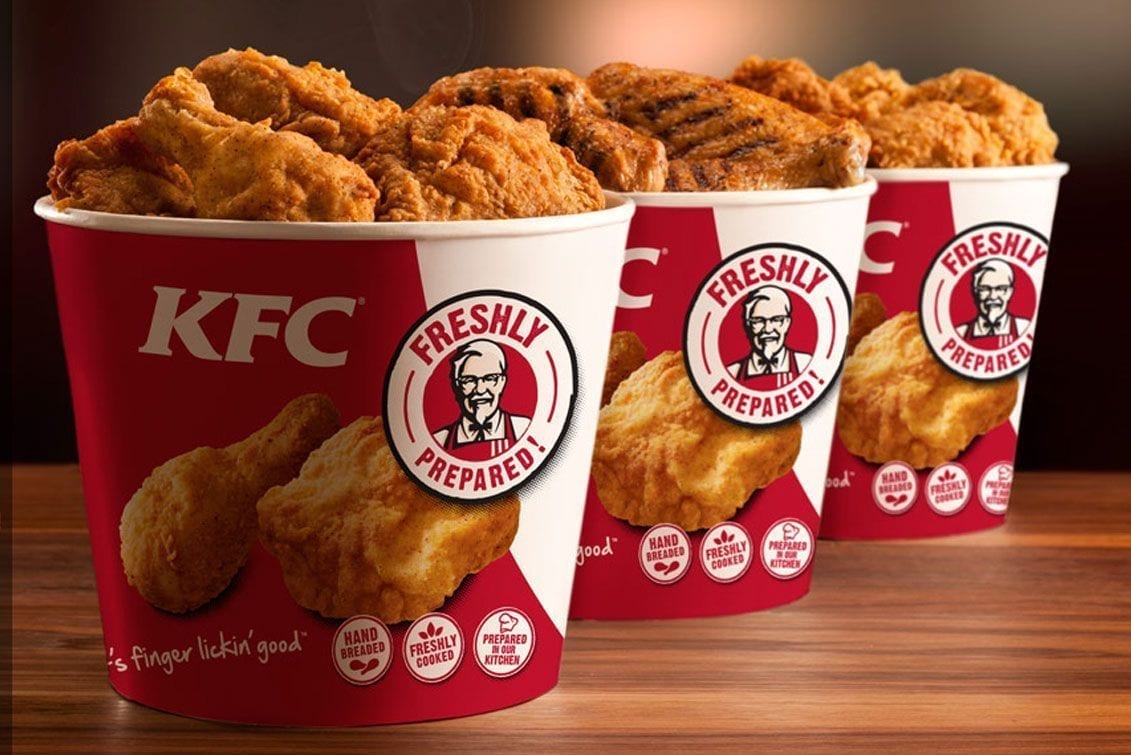
  • KFC Japan to launch new healthy dining retail concept

    KFC Japan to launch new healthy dining retail concept

    KFC Japan is to open a new healthy food retail concept called The Table by KFC in Sendai City on August 5.

    The Table by KFC aims to offer deli-style foods, including salads, along with versions of its traditional favourites – like a full-size KFC chicken – targeting commuters passing through railway stations and shopping precincts.

    The first store will be located in the S-Pal Sendai shopping center in Sendai City, Miyagi Prefecture, which is located in the northern part of Honshu.

    News of the concept was revealed in English on the Sorai News 24 website, which has published a number of photos of the dishes one can expect, following a local announcement by KFC Japan.

    Sorai News 24 says the store is “designed to have a natural look, using plenty of wood-grain material for a ‘home kitchen’ feel”.

    “The foods will be displayed in bowls and dishes of different designs, so that the setup is enjoyable to look at too.”

    New dishes to join the menu include Spanish-style Garlic Chicken Gizzard and Oriental Smoked Chicken Caesar Salad.

  • Vietnam wants a healthy Internet society

    Vietnam wants a healthy Internet society

    The Ministry of Information and Communication urged enterprises to collaborate with the Government in efforts to build a healthy Internet society through advertising only on online channels which comply with established laws.

    Minister Trương Minh Tuấn issued the advice at a meeting on Thursday with major brands, saying that online advertising was an inevitable trend but also implied risks, especially inadequate attention to control the appearance of advertising.

    The call came several days after advertisements by some major brands accidentally appeared in clips containing pornographic, slanderous or anti-government content on YouTube, the world’s largest online video site.

    “It is really worrying, as it badly affects the prestige of brands,” Tuấn said as quoted by online newspaper vnexpress.net.

    Tuấn said that this was not only a problem for the advertising industry of Vietnam, but also for the global industry.

    What was more alarming was that running advertisements on clips with questionable content could help owners of these accounts earn money, which indirectly encouraged them to unload more, a representative from Qnet said.

    Nguyễn Thanh Lâm, Director of the Authority of Broadcasting and Electronic Information, cited statistics that as of Thursday, there were 15 accounts uploading 8,000 clips with immoral content, and attracting nearly 1 million subscribers. Those clips boasted a combined 500 million views.

    Lâm said that the department was working with Google, which owns YouTube, to remove such clips, and to date, only 42 had been removed.

    At Thursday’s meeting, all major brands including Vinamilk, Ford Việt Nam, VinHome, Sungroup and Unilever Việt Nam, said that they had stopped advertising on YouTube after receiving the Ministry of Information and Communication’s request.

    They also said that they would not resume advertising until ad agencies developed comprehensive solutions to ensure compliance with the established laws.

    “Through our advertising agents, we have asked Google and YouTube to ensure a safe advertising environment so as to protect businesses’ brands,” a representative from the dairy giant Vinamilk said.

    Ad agencies said that when signing contracts with Google to run advertisements for their partners on YouTube, they selected the appearance of ads through key words and categories of clips, adding that the cooperation of Google was necessary in filtering and preventing the appearance of ads in toxic clips.

    Online newspaper vneconomy.vn reported that Google had sent an official response late on Thursday, saying that YouTube had clear policies for governmental requests for content removal.

    A YouTube spokesperson also said that the company did not comment on specific cases, but it will continue working with the Government of Việt Nam and was always willing to receive questions or concerns from the Government, according to the newspaper.

    The ministry called for enterprises to participate in an action programme which includes saying no to advertising on immoral clips, only running advertisements on channels which comply with Vietnamese law, building a healthy Internet society and protecting copyright.

  • Indonesia en route to popularize tropical fruit

    Indonesia en route to popularize tropical fruit

    Thousands of farmers under East Kalimantan farmers group Gapoktan find it unfortunate that people outside Indonesia are missing out on their home-grown fresh and juicy mini papayas, bananas and dragon fruits.

    So far, most of their fresh fruit products are only consumed by locals buying from nearby markets due to a lack of infrastructure, making it expensive to deliver fruit across the country, let alone export them.

    Indonesian fruit exporter EK Prima Ekspor Indonesia, a subsidiary of the United Arab Emirates’ retail giant LuLu Group International, knows firsthand how selling prices at the consumer level end up depending more on transportation costs than on production costs.

    “Transportation — from farmers to warehouses to airports and finally to the destination country — is very expensive. If our unique fruit doesn’t appeal to consumers, we could lose out to other countries, especially if they can produce similar fruit for cheaper prices,” said Irawan Santoso, head of the fruit and vegetable division of EK Prima.

    Indonesia also has mangosteens, rambutans, snake fruits, jackfruits, soursops, breadfruits, guavas and starfruits that grow in the tropical country, but they are not frequently consumed globally or even domestically.

    The government aims to boost tropical fruit production by expanding land for fruit plantations while also improving infrastructure and transportation systems to decrease high distribution costs, as part of efforts to be the biggest tropical fruit producer in Southeast Asia by 2025 and in the world by 2045.

    President Joko “Jokowi” Widodo acknowledges that this is no easy task, especially with farmers’ preferences to use land for high-yielding commodities, such as palm oil, rather than fruit, which takes time to return on investment. Poor infrastructure has also driven up logistics costs for years.

    “If we can have 14 million hectares of oil palm plantations, we should also be able to have that much land for fruit,” Jokowi said during the opening ceremony of the four-day Fruit Indonesia Festival 2016 in the Jakarta Convention Center parking lot on Thursday. The President handed out various tropical fruits to children to remind people of the “love local fruit” movement.

    “If you see a lack of supporting infrastructure that could hamper distribution, please let us know,” he told the audience consisting of scientists, fruit planters as well as local and international trade delegates.

    To expand plantations, provincial administrations have been instructed to provide local farmers with 5 to 50 ha of land for fruit planting per business unit, as part of the bigger goal to provide 400,000 ha of land in Java, Kalimantan, Sulawesi and Sumatra.

    The program started with 100,000 ha in cooperation with state-owned companies. State plantation firms under PTPN also asked to start cultivating their under-utilized land for fruit production.

    “The state firms have been very enthusiastic to give sections of land for fruit plantations. They are used to producing palm oil, rubber, tea and other commodities but not fruit. So, a new management specializing in horticulture needs to be formed,” Bogor Agriculture Institute (IPB) rector Herry Suhardiyanto said.

    IPB is now studying a possibility to form another state company to develop horticulture based on the State-Owned Enterprises Ministry’s request.

    The business community is hopeful that the vision of becoming the world’s largest tropical fruit producer will be honored over time.

    “Let us not change the policy and vision every time we change presidents,” said Karen Tambayong, head of horticulture development with the Indonesian Chamber of Commerce and Industry.