Seventeen Hema supermarkets in Shanghai have launched a food-provenance feature that tells customers about an item’s farm-to-shelf journey.
The information includes verifications such as photos of the distributor’s business licenses and food-safety certificates complete with an official government seal.
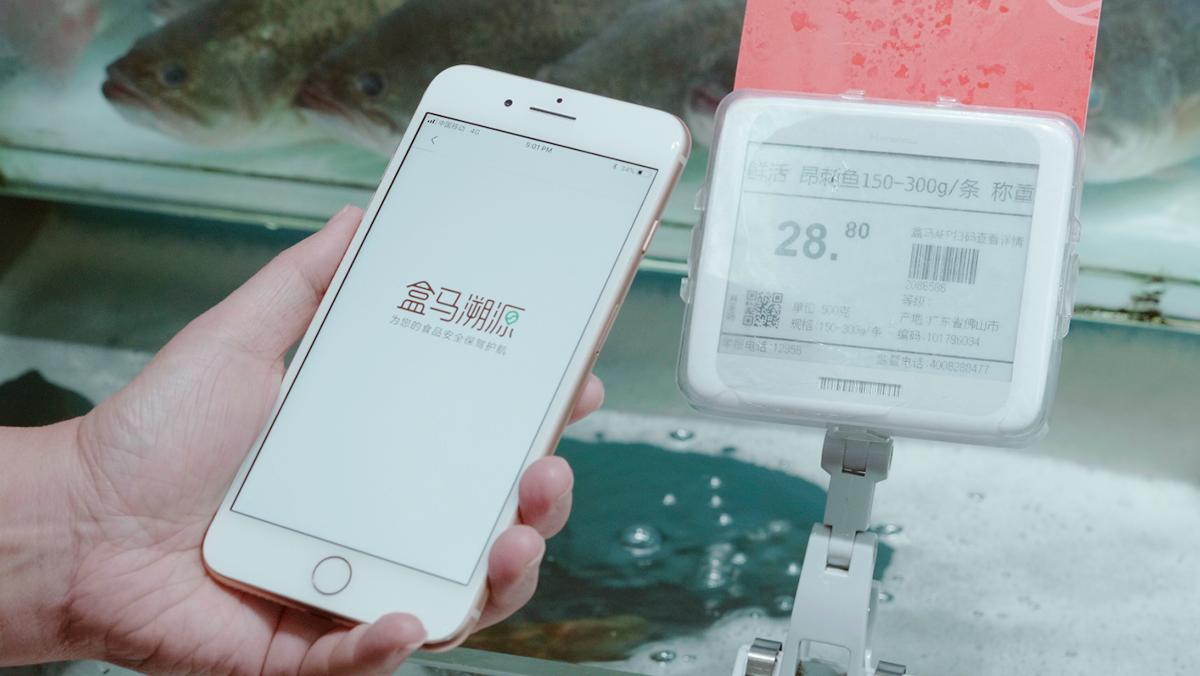
To access the function, in-store customers use the Hema mobile app to scan a food’s QR code, which brings up the provenance details. Because the information lives on the product page of each item, consumers shopping from home via app have access to it as well.
Watch: Hema’s Food-Tracing System
The New Retail-driven supermarket chain’s food-tracking system comes as Chinese consumers grow more sophisticated in their food choices and embrace a healthier lifestyle. Hema is among the first grocery chains in China to offer such service. Since its implementation in January, more than 1700 items in nine categories – including meat, seafood, rice, tofu and soy products, fruits, vegetables, poultry and eggs, dairy and cooking oil – have been included in the system.
That includes watermelon. For Hema customers who want to know more than the place of origin, the system can tell them when a particular batch of watermelons was harvested – and by which farming collective. They can also find out the exact date when the watermelons were delivered to the store to assess freshness.
For products that need to be kept under a certain temperature, such as meat and fish, the system can even tell customers how cold it was inside the delivery truck. Hema said it plans to roll out the system to all of its 64 stores, in 13 cities, in China by year-end.
Established in early 2016, Hema integrates online and offline shopping into one seamless experience for customers, allowing to shop with a few clicks on their phones. With its in-store fulfilment system, orders can be delivered in as little as 30 minutes to those who live within three kilometres of a Hema. The supermarket chain also has opened a “robot restaurant” at one of its stores, in Shanghai, as part of its continued push to create new consumer experiences.
Hema’s food-tracking system is one of several key features Alibaba has introduced to ensure customers are getting high-quality products. In April, Alibaba teamed up with a consortium of four Australian and New Zealand companies to introduce a food-tracking system using blockchain.