Hong Leong Investment Bank (HLIB) Research anticipates slower growth in the technology sector due to downside risks in the macro environment coupled with waning data trends. However, it expects automotive and Internet of Things (IoT) to take the forefront while smartphone takes a backseat. The research house said in a note that for the first 11 months of 2018 (11M18) global semiconductor sales were outstanding after growing 16%, thanks to the explosive growth of memory followed by discrete and optoelectronics.
As for 2019, consensus is projecting 3% growth for that segment.
“However, we see further downside to this projection considering the US-China trade conflict, stagnant smartphone demand, industry-wide inventory adjustment and weaker memory prices,” HLIB said.
The automotive sector is expected to be the major growth driver for global technology industry supported by its development towards full autonomy. The equipment industry remained solid with billings increasing 11% in 11M18, supported by heavy investments in all regions except Taiwan.
“However, year-on-year growth has been on a snail’s pace for the past five months, translating into a significant deceleration from past 20 consecutive months’ double-digit growth rates,” the research house explained.
According to SEMI, this reflected the near-term weakening demand for personal computers, mobile phones and servers as well as pulled back investments in response to recent softening of memory prices.
“This is in line with its expectation of expansion in capital spending not outpacing sales growth on the long run and potentially lead to industry-wide overcapacity,” said HLIB.
The research house also highlighted that local semiconductor players may experience strong demand to support the disrupted global supply chain should the procurement levy and technology transfer restriction from US take effect.
Note that China sources substantial fabrication equipment from US players for its expansionary semiconductor industry towards the “Make in China 2025” vision. Vice versa, US fabless semiconductor players outsource their product fabrication and some are produced in China.
With strong greenback, HLIB expects tech firms to be marginally boosted thanks to their US dollar-denominated sales while partly offset by the US dollar cost items.
It estimates the ringgit to be weaker in FY19 with at full-year average of RM4.20 against US dollar.
Nonetheless, pricier commodities, compounded by stronger US dollar projection, will exert pressures on margins for traditional packaging.
Maintaining a “neutral” call on the sector, HLIB displayed a cautious stance in the absence of near-term catalyst as it expects global sales and capital spending to grow moderately.
As for stock picks, it gave Frontken a “buy” call at a target price of RM1.05 on the back of bullish global semiconductor market outlook, robust fab investment, leading edge technology, oil and gas recovery and strong balance sheet.
A lot of Hong Kong retailers are talking about technology right now, but before they even started, Pricerite founder and chairman Bankee Kwan was already embracing it. Now home to the first Pepper robot on customer service duty in a Hong Kong store and leading-edge online apps allowing shoppers to virtually place furniture in their home, Pricerite’s technology journey started way back in 1999.
The furniture retailer is part of Celestial Asia Securities Holdings (Cash Group) which was the first Hong Kong company to launch an online brokerage in 1999. Nowadays, trading shares online is an indispensable part of any brokerage business. Five years later, Cash Group was the first to introduce mobile trading for brokerages.
The company began developing a broader New Retail Concept back in 2012 and in 2014 became the first home furnishings retailer to launch an omnichannel business model.
“So we have always had the mindset to embrace technology to help the business become more competitive and to serve the customers better,” Kwan said.
“That’s why during the Sars epidemic (2003), Pricerite was the first company to introduce online shopping so that our customers could purchase necessities and have them delivered to them. That was 13 years ago, and now online shopping has become popular and common place for housewives to purchase goods.
“So I can actually say we go back a little bit regarding our group philosophy on technology. We always treat our customers’ concerns and feelings as our number one priority.
“New retail concepts will become much more popular. That’s why were are moving ahead with Pepper, with Augmented Reality (AR) and Virtual Reality (VR) to create an impact.”
Concept store
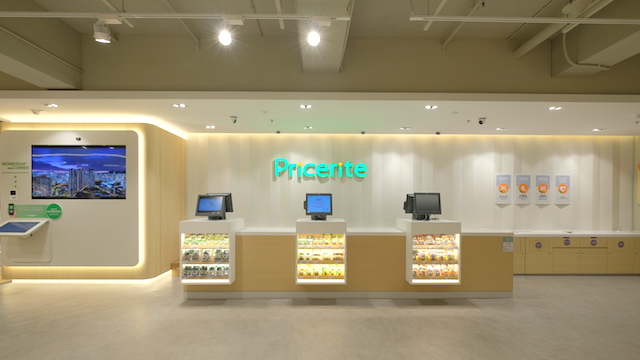
Pricerite’s two-story 20,000sqft New Retail Concept Store in Mong Kok’s Chong Hing Square has been trading for about a year now, a testbed for apps and in-store technology that is constantly being revised, enhanced and added to.
Pepper, the smiling robot with the female Cantonese voice, is probably the most visible execution Pricerite’s customer-centric digital transformation journey. To the delight of children it can dance on request and answer customer questions about the company’s loyalty program from its workspace outside the membership counter.
But it is the less visible execution of Pricerite’s digital strategy that is the most breathtaking: an innovative app which allows you to place furniture items in your own apartment virtually – and order direct from your phone or tablet, from in store or home. It is a great solution for Hongkongers facing shrinking apartment footprints, which make planning a layout that suits one’s lifestyle a challenging task.
The made-to-order zone on the Mong Kok concept store’s level B2 is equipped with a large display screen for app users to preview their selected product from all angles. Using VR technology, the system also provides customised furnishing solutions for medium and small-sized apartments. Guests can take a virtual tour of homes to gain an accurate glimpse of products in situ and see a product’s intelligent functions in action – for example, tables that convert to sleeping spaces and furniture with storage space built in. The AR mode uses cutting-edge mobile 3D Space-Tracking technology, including Apple’s iOS ARKit, which cuts out the hassle of product scanning while generating an “actual” 1:1 preview of an item, allowing simple and easy mix-and-matching for different home styles.
“Technology advances have transformed consumer behaviour and shopping patterns while e-commerce has changed the consumption value chain, creating a complementary retail channel to bricks-and-mortar stores,” observes Kwan.
“Using leading-edge retail technologies to combine online and offline shopping experiences, coupled with a modern supply chain, and big data and artificial intelligence innovations, we have created a pioneering all-round omnichannel retail network for home furnishing.”
The concept store also features multiple digital kiosks and touch-screens around the store augmenting the customer service roles of floor staff by suggesting alternative or complementary products, and providing specifications. AR features in several innovations in store, including creating 3D images of items in the company’s catalogue.
Centres of experience
Kwan says the company’s long-term investment in new technologies has been driven by asking how the company can serve its customers better in terms of information and engagement.
“It’s my experience that the physical store remains the centre of experiences and engagement.” Technology, he says, can make purchasing decisions easier.
“Many traditional retailers are still unsure about whether the innovations will take on, whether they should invest in the technology. But it is essential if we are to remain competitive, especially when we look at millennials and how they shop and interact online.”
Kwan believes that despite the slow uptake of online shopping in Hong Kong, online and mobile shopping will be significant in the future. He cites the Hong Kong government’s Smart City initiative to boost wi-fi connectivity and encourage e-payments as a major driver in years to come.
“With all those facilities established and enabled, fast retailing through mobile is the trend. It is gaining momentum in Hong Kong and we have everything quite well developed, but the market will dictate the change and if you do not accept that [as a retailer], you will fade out and become history.
“So I say, wait another three years and you’ll see the landscape of the retail market will change a lot. I was at a retail summit in Hong Kong recently where we had Facebook and Google and online marketers joining. We were all coming to roughly the same conclusion: technology is a must to keep you competitive.”
Kwan can only guess what percentage of Pricerite’s sales are online versus in-store now – and for good reason. So many transactions begin online and end offline – or the other way around – that it is no longer possible to attribute a sale to either channel. Perhaps retailers who do are missing the whole point of omnichannel. If pushed to nominate a figure he’d say 20 per cent online, 80 per cent offline and he expects that ratio to change to 40/60 within a year or two.
Pricerite’s customers do not make a distinction between online or offline, so it stands to reason the company should not do so either.
“This is whole model is an O2O model, so our customer can shop online, understand we have a promotion, understand the product meets their requirements and then they will come down to the store for the physical experience and to touch the products, then maybe go back home and place an order. So you cannot say this is offline or online,” says Kwan.
“But I believe application of technology to enhance the customer’s experience and engagement, is definitely the road to go and to develop together with more applications and technology, just like Pepper so as to reduce the customer service burden on store staff.”
Kwan stresses Pepper and any other technology implemented at Pricerite must integrate with human staff, not replace them, what he describes as “a balanced fusion of technology and people”.
“Pepper I believe will become popular to provide instant information and master data about product features, etc. That will allow our people to migrate into higher added-value areas.” Kwan says customer response to the AR and VR technology to date has been “really good” and it is driving sales of goods after people look at them either online or instore. “It boosts their confidence buying because they have seen on a screen how a sofa will look in one part of a room and a rug in another.
“The technology is constantly improving and getting much easier to use. I understand our competitors also shop at our stores on and off and they are now also developing the same sort of technology. That, together with efforts by the Hong Kong Government to encourage startups working to develop technology for the service and retail sectors will help drive its adoption in years to come.”
Pricerite’s technology quest is ongoing. The apps will continue to be refined and upgraded with more features and made as user-friendly as possible. Other initiatives are under development but not yet ready to be revealed publicly just yet. And more Peppers are on order, with expanded functions – most of them will speak English, too.
View the gallery below for full images (5 images) :
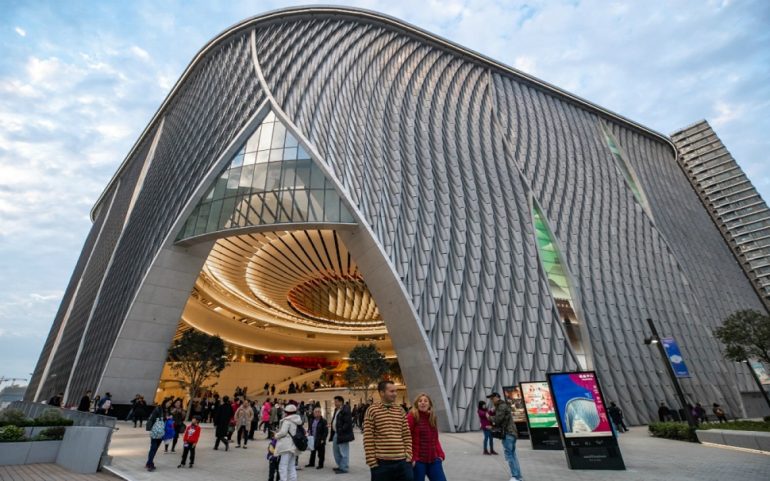
Hong Kong’s new performing arts venue dedicated to Xiqu (Chinese Opera), has just opened. Located on the Eastern edge of the West Kowloon Cultural District, at the junction of Canton Road and Austin Road, the Xiqu Centre is directly accessible from the Hong Kong West Kowloon Station and Austin MTR station, and easy to reach by public transport from all parts of Hong Kong.
The building’s striking design, created by Revery Architecture (formerly Bing Thom Architects) and Ronald Lu & Partners, was inspired by traditional Chinese lanterns and blends traditional and contemporary elements to reflect the evolving nature of the art form.
Stepping through the main entrance, shaped to resemble parted stage curtains, visitors are led directly into a lively atrium with a raised podium and space for presenting the rich and ancient culture of Chinese traditional theatre.
The eight-storey building has a total area of 28,164 sq m and houses a Grand Theatre, accommodating 1,073 seats, a Tea House Theatre, with a capacity of up to 200 seats, eight professional studios and a seminar hall, all specially designed for different types of xiqu-related functions and activities.
The design details of each of the facilities have also been created in response to the practical requirements and aesthetic features of the art form. A unique feature of the venue is the location of the Grand Theatre at the top of the building, which allows for a large open atrium below with space for exhibitions, stalls, and xiqu demonstrations and workshops.
Carrie Lam Cheng Yuet-ngo, the Chief Executive of Hong Kong, gave a speech at the opening ceremony of Xiqu Centre. “The launch of Xiqu Centre is not only a significant international cultural event, but Hong Kong also takes it as a great honor and we all are very proud of it.”
In fact, Chinese opera has been inscribed in the UNESCO Intangible Cultural Heritage Lists for a decade, Carrie Lam hopes the Xiqu Centres would help promote Hong Kong as an international arts hub and consolidate the city’s position in the development of Cantonese opera.
French luxury group LVMH is suing a wine merchant in Hong Kong over an alleged trademark infringement.bThe plaintiffs are suing over a wine range named “XLV”, established in collaboration between Cuvee XLV French Wine and Quentin-Louis, the son of fifth generation family member Xavier-Louis Vuitton.
During a January 16 hearing in the High Court, LVMH claimed that the wine’s label design deliberately mimics the Louis Vuitton logo to mislead consumers. Cuvee XLV’s owner Wong Sau Ying has previously stated that the range has no relationship with the LV business, although the family connection is a factor in the wine sales.
“The family is involved and that is important. In China trust is important – there are many imitations, but this brand can be trusted,” said Wong in a 2012 interview.
Wong is pleading that the font size used on the XLV label differs from that of LV products.
The case has been pending since 2008 when the label became apparent to the LVMH group.
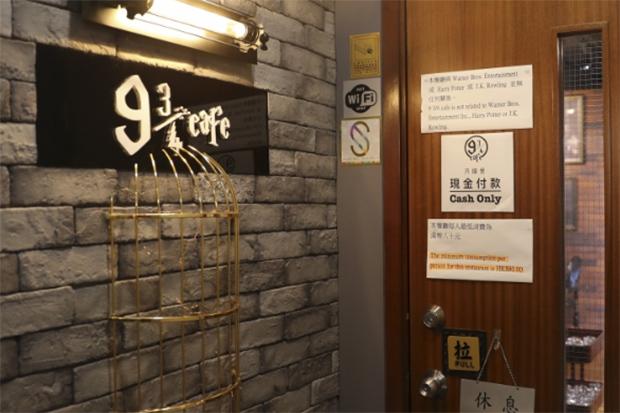
The 9¾ Harry Potter-themed Hong Kong cafe has been sued by Warner Bros for copyright infringement. The cafe, open since 2017, has never claimed to have a formal relationship with the Harry Potter franchise – although it is festooned with art and props made famous in the popular book and movie series. Trademarks registered by the studio within the territory of Hong Kong, including “Harry Potter”, “quidditch”, “muggles”, “Professor McGonagall” and “dementors” are used liberally at the venue. Iconic features and images from the films are used in the cafe’s interior design, including the Gryffindor coat of arms and the Hogwarts Express train ticket for Platform 9¾.
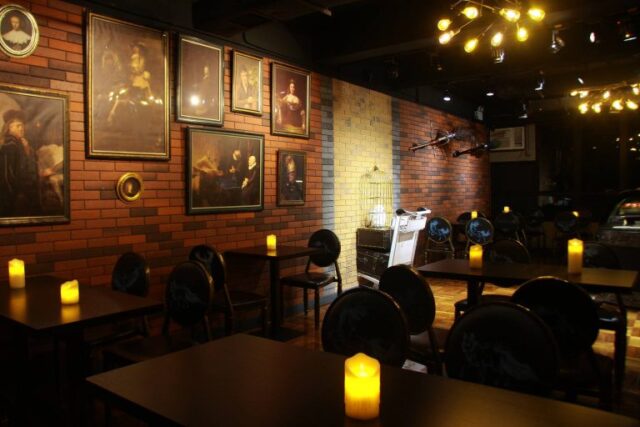
Located on Yin Chong Street in Mong Kok, the cafe features wall-mounted wands and broomsticks, stuffed owls, portraits of witches and wizards, and faux candlelight. There is even a half-disappearing luggage trolley, as featured at King’s Cross Station, complete with Hedwig in a cage.
The drinks menu of the Harry Potter-themed Hong Kong cafe includes some Harry Potter-specific concoctions, such as the Polyjuice Potion, Amortentia love potion, golden Felix Felicis (aka “liquid luck”), and Veritaserum. Visitors 18 years and older can down a pint of Butterbeer.
For food, the cafe serves Western starters and mains named after mythical creatures and charms from the Harry Potter series, such as the soft-shell crab Aragog salad, Romanian longhorn pumpkin pasta (after one of the dragons from Goblet of Fire), and Prior Incantato cream of mushroom soup.
Warner Bros is seeking an unspecified sum of damages, a removal order plus multiple injunctions.
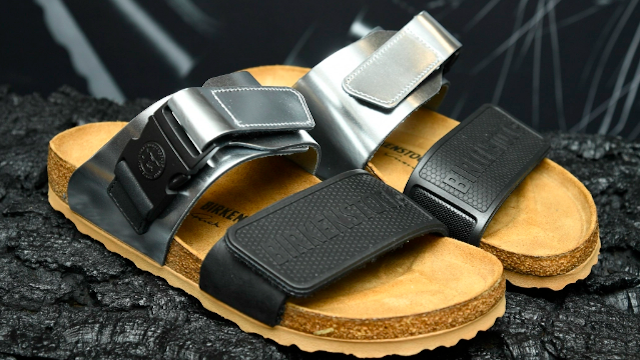
Fashion designer Rick Owens has launched his second collaboration with footwear firm Birkenstock, with pop-ups expected in Hong Kong and Shanghai. The Rick Owens x Birkenstock collection debuted exclusively at Le Bon Marche in Paris, and will not be available online until February 8. The pop-ups in Hong Kong and Shanghai are scheduled for January 23 and 25.
“The brief for the set design was Mayan pyramids”, said Owens.
All the various styles of the collection, including sandals featuring metallic foil and leather, are on display at the pop-up on blocks of raw black cork.
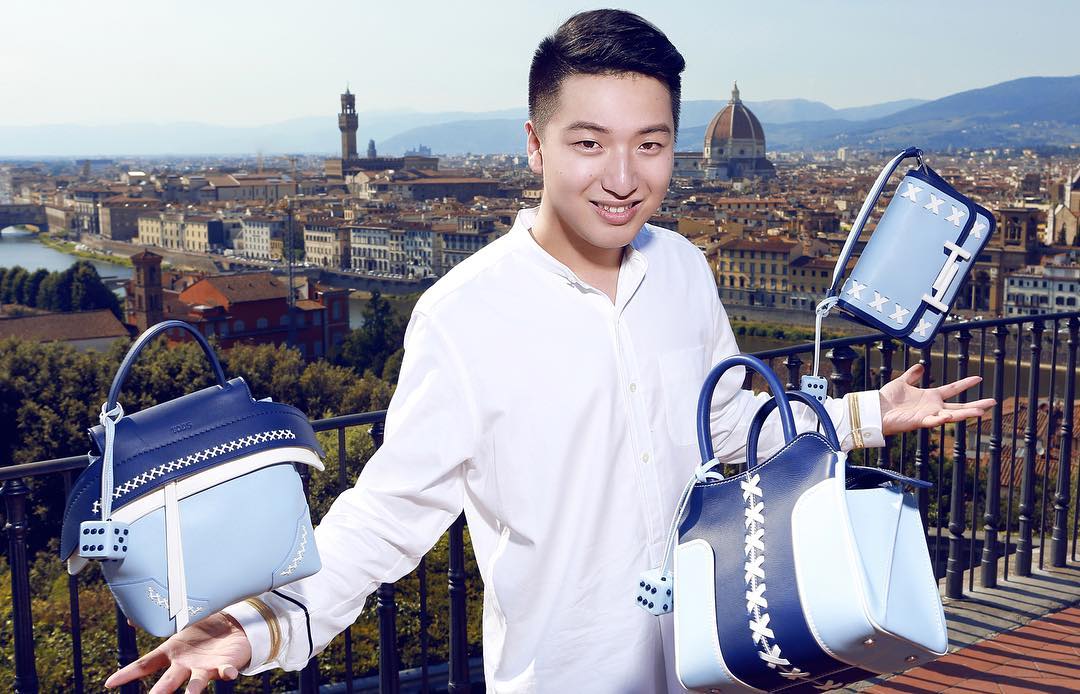
Why luxury brands willing to expand in China seems to never get enough of so-called KOLs (key opinion leaders) Tao Liang, nickname “Mr bags”, is a graduate of the University of Southern California and Columbia University. Although he is only 26-year-old, he has already become one of the most successful digital influencers in China, in terms of the ability to drive sales.
People call him Mr Bags because Liang has an unapologetic love for handbags. So, he has worked on capsule collections with different luxury brands such as Givenchy, Longchamp and Montblanc, boasting a huge following on WeChat and Weibo, which are two of the largest social media networks in China. And he also knows how to sell them to his over 3.5 million readers on China’s biggest social media platform Weibo and more than 850,000 followers on WeChat, a microblogging messaging app.
In just six minutes, Liang helped Tod’s sell 3.24 million RMB worth of handbags on his new Mini Program shop within WeChat, called “Baoshop.” The second collaboration between the Beijing-based fashion blogger and Tod’s, 500 pieces of the limited-edition “Wave” backpacks were created — double the amount from last year’s capsule collection.
But how did Liang become a sort of “bag whisperer”? He says that when he was studying in the universities in Los Angeles and New York, he fell in love with luxury bags and loved going on shopping sprees with his friends. It didn’t take long for him to realize that he could turn his passion for handbags into a full-time job but even after he started getting some traction while still in the US, his parents were not entirely happy with his career choice. “Only after I started working with big brands and celebrities like Fan Bingbing they thought that perhaps this was a real business,” he says.
One issue that often comes up with KOLs is authenticity. When you work with different brands, how do you maintain your integrity without alienating your fans, who trust your opinions to be genuine and unbiased? “This is key for me and I really try our best to maintain that,” says Liang. “One of my advantages is that until not long ago I was based in the US so I wasn’t exposed to all the brand partnerships and advertising that the KOLs were doing in China so my content was 100 per cent pure editorial, but then I started working with brands and get first hand information while also giving my followers the right information and guidance.”
So how does Mr Bags, a young man with an innate fashion sense and an encyclopedic knowledge of handbags, guide his followers and win their trust? He only works with brands that his fans “naturally love” and turns down offers all the time. Liang’s fan base is mostly female, and he feels that being a man is not a hindrance. On the contrary, by virtue of being a guy, he is able to provide useful and unbiased advice.
“My name is Mr Bags and lots of people find this name interesting but also confusing because generally bags are for women,” he says. “Normally when girls shop for a bag they don’t think too much and buy it right away, on impulse, so I help them think more rationally. For example, I categorize all the bags and tell them which ones are the classic pieces and the ones that have more staying power and the most iconic ones so I provide some logic behind their purchases. I think that as a guy I’m more objective and I can give them useful tips. I tell them that if you buy a bag that you can use in your life and enjoy it then you feel that your money is well spent and worth it.”
Liang believes that his editorial work must come first.“Many people think that KOLs just have fancy lives and go everywhere for fun but in China we have so many channels, like WeChat and Weibo, so it’s really a lot,” he says. “I was just updating my channels on the way here. Editorial content is more important for me; 60 per cent of what we do is still editorial.”
Achieving the right balance between authentic content and remunerative ad-driven projects is the key factor for being a successful KOL, something that is not always as easy as it seems but Liang has already mastered so far.
Hong Kong high-street retail rents dropped slightly in the final quarter of last year as weakened market sentiment impacted sales growth. According to a market update from property company CBRE, shop rents for the four core retail areas in the city dipped by 0.4 per cent quarter on quarter in the last three months of last year. However, full-year rents managed to record 0.2 per cent growth, bringing an end to four years of annual declines.
Vacancy rates in tier 1 streets in the four core retail districts edged up by 0.2 percentage points from 3.6 per cent in the third quarter to 3.8 per cent in the last quarter. However, the full-year vacancy rate fell by 0.3 percentage points to 3.8 per cent compared to 4.1 per cent a year earlier.
CBRE said market sentiment weakened in the fourth quarter, impacted by the US-China trade conflict and volatility in the stock market.
While retail sales rose by 6 per cent year on year in October, growth slowed to just 1.4 per cent in November – the slowest monthly increase since June 2017.
“Visitor arrivals remained solid, recording 15.9 per cent growth year on year in October and November combined, the strongest quarterly growth last year,” said CBRE’s report.
“This ensured continued strong leasing demand from health, personal care and cosmetics retailers.”
LVMH Luxury Ventures, an investment arm of the multinational conglomerate, has taken a minority stake in New York-based luxury label Gabriela Hearst. The terms of the deal were not disclosed, although LVMH Luxury Ventures typically invests between €2 and €15 million.
Hearst, who ran contemporary-priced label Candela for more than a decade before launching her upscale luxury offering in 2015, has briskly built a ready-to-wear business based on sharply tailored silhouettes rendered in ultra-expensive fabrics, with a focus on sustainably sourced materials. In 2018, just three years after she launched her label, the collection — which also includes a robust handbag business, mostly sold direct-to-consumer — generated between $15 and $20 million, according to sources familiar with the business.
Launched in 2017, LVMH Luxury Ventures is an investment vehicle within the LVMH group that aims to invest in emerging labels that have already shown an ability to scale.
Investments have included French apothecary brand Officine Universelle Buly and sneaker resale shop Stadium Goods, which was subsequently acquired by Farfetch for $250 million in December 2018.
Hong Kong online beauty pioneer Strawberrynet is celebrating its 20th anniversary. Since its launch in 1998, the e-commerce retailer has expanded to sell to more than 200 markets in 38 languages, with 24-seven pick and pack and customer services. The strawberrynet.com site carries more than 800 established international brands from Europe, the US, Japan and Korea, offering more than 30,000 items across a wide range of categories.
Its 20-year business span makes it one of the longest-running e-commerce firms globally, launching in the same era as Amazon, eBay and PayPal. The site enjoys top rankings for a beauty-focused international platform on Alexa, ComCore and Internet Retailer.
Strawberrynet began accumulating big data-style tracking since the early days of the science, making it an early adopter in using AI to understand not only its shopper behaviour, but also product trends for every category and region it traded in, allowing it to optimise and personalise offers for a better user experience.
According to a statement put out by the firm, “Strawberrynet’s partnership with the world’s major platforms gives more shoppers around the globe access to products that are authentic, and offers that range from classic to chic and newly launched items”.
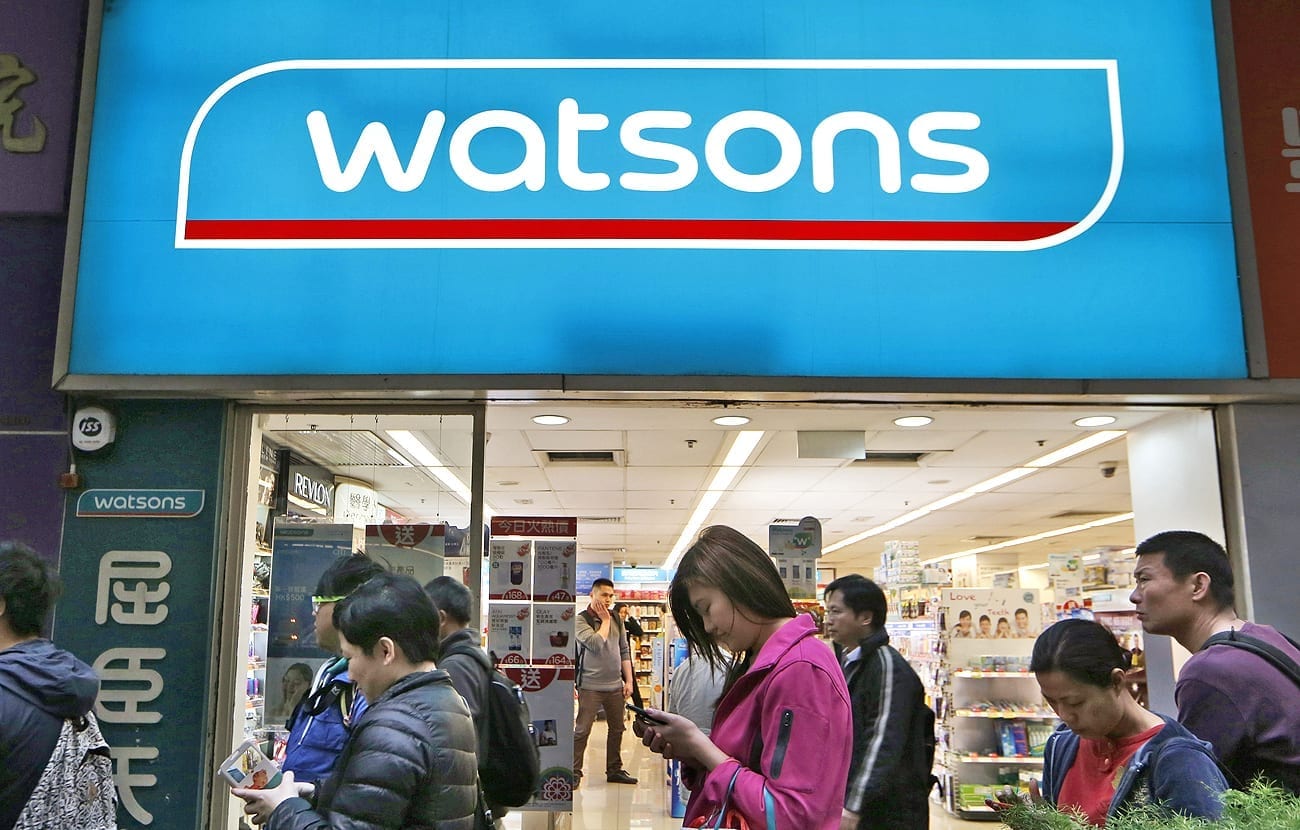
International health and beauty retailer AS Watson Group says its use of predictive modelling technology is delivering successful product launches. The firm has worked in close partnership with brands to help them penetrate specific demographics or enter new markets. Recently this included Jeffree Star Cosmetics launching exclusively at ICI Paris XL in Europe, and in Asia a continuing long-term partnership with Maybelline at Watsons Thailand – both of which achieved targeted results.
“At AS Watson, due to our extensive global knowledge of the beauty industry and CRM data, we are able to help niche brands like Jeffree Star and major brands including Maybelline launch products onto the market,” explains Malina Ngai, AS Watson Group COO.
“Using our integrated online and offline model, this allows us to create these types of brand partnerships to specifically target and engage the right customers.”
L’Oreal and AS Watson Group developed a long-term partnership working together to drive sales, while in 2018, Watsons Thailand partnered with Maybelline on a year-long CRM program.
Supported by the AS Watson DataLab, the group’s customer intelligence team, this campaign was designed to communicate offers to relevant customers through electronic direct mail. Watsons targeted members in three phases in order to recruit new category shoppers, grow each customer’s basket value and engage customers in new product offers.
To ensure the campaign built on data insight to target the right members, Watsons used a three-stage approach to accurately identify customers and ensure they were provided with the most attractive offers.
This three-stage campaign saw more than 3.5 million emails delivered to members, attracting more than 170,000 customers to buy into the brand. This targeted and focused approach saw double-digit percentage of the brand’s sales directly attributable to this campaign. In addition, Maybelline’s sales and the number of members recorded double-digit growth compared to the previous year.
L’Oreal Thailand’s GM consumer products division Geoff Bellingham said two of the biggest challenges a brand faces are acquiring new customers and then having those customers shop again with the brand.
“Our Watsons Thailand CRM program allowed us to successfully achieve both of those goals for Maybelline. All customers and especially beauty shoppers want relevant, more personally curated offers and this partnership was carefully created to ensure the right offers for right people.
“The activity is just one example of the close and successful collaboration between Watsons and L’Oreal”.
ICI Paris XL launched world-renowned beauty influencer Jeffree Star’s cosmetic range in November, exclusively to customers in The Netherlands and Belgium. To launch the brand ICI Paris XL created a digital campaign to target customers whose data and insight profile indicated they would love the new brand, as well as looking to capture new customers. The digital campaign was created to specifically target those under 35, as this is the brand’s core target market.
Predictive modelling technology was used to identify and communicate with members who had a high tendency to shop for new makeup brands and trends, and these people received customised emails announcing the launch, bringing the social media personality to life, as well as highlighting hero elements of the cosmetics range. This targeted approach saw more than 300,000 customers receive personalised emails, leading to an open rate of 25 per cent. Following this, 40 per cent then visited the brand’s page on the ICI Paris XL website with the result that 70 per cent of members under 35 bought into the range during the launch period.
“Following the success of my brand in the the US, I really wanted to extend my brand’s reach into Europe,” said Jeffree Star. “AS Watson has provided me with an efficient distribution platform as well as the tools to be able to target my fans and beauty lovers that like to create bright, fun and innovative beauty looks.”
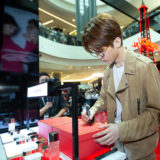
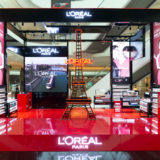
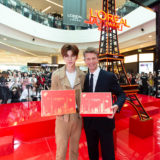
Known for reinventing extraordinary beauty experience, L’Oréal Paris invites all travelers to Haitang Bay Duty Free Shopping Mall for a first-of-its-kind Parisian experience. On January 4, together with friend of L’Oréal Paris Mr. Cai Xukun (Kun), a 5-meter-high, bold red Eiffel Tower was revealed at the L’Oréal Paris pop-up, synonymous with East meets West: made-in-Paris chic and a tribute to the Chinese tradition of prosperous red.
With over 120 million interactions on Chinese Weibo, the special appearance of renowned young icon Kun attracted a large crowd of Chinese travelers coming to Haitang Bay. At the event, Kun and Olivier Tessler, General Manager of L’Oréal Paris Travel Retail Asia Pacific, engraved “Kun ♥ L’Oréal Paris” on the iconic Color Riche Moist Matte lipstick, symbolizing for this powerful collaboration.
Gallery of the event
loreal event scaled
Kun signing on LOreal Paris gift box for fans scaled
loreal scaled
loreal eiffel scaled
The pop-up iinvites holiday travelers to discover L’Oréal Paris’ accessible-luxury products for both men and women, appealing to travelers of all different types of aspirations. The pop-up will open from January 4 until the end of the month, exclusively in Haitang Bay.
“To be able to surprise Chinese travelers by bringing an Eiffel Tower to Haitang Bay is definitely a first for me! L’Oréal Paris is my first choice of beauty brand, and I’m happy to share the brand story with my fans in such a vivid and striking way,” says Cai Xukun.
“I am enthusiastic about sharing an extraordinary Parisian experience with Chinese travelers in Haitang Bay! Together with Cai Xukun and CDFG, we are delighted to invite everyone to a celebration of every element of our brand’s DNA – Paris, beauty, creativity, fashion and diversity. Our goal is to lead the way in making beauty trends for all”, says Olivier Tessler, General Manager of L’Oréal Paris Travel Retail APAC.
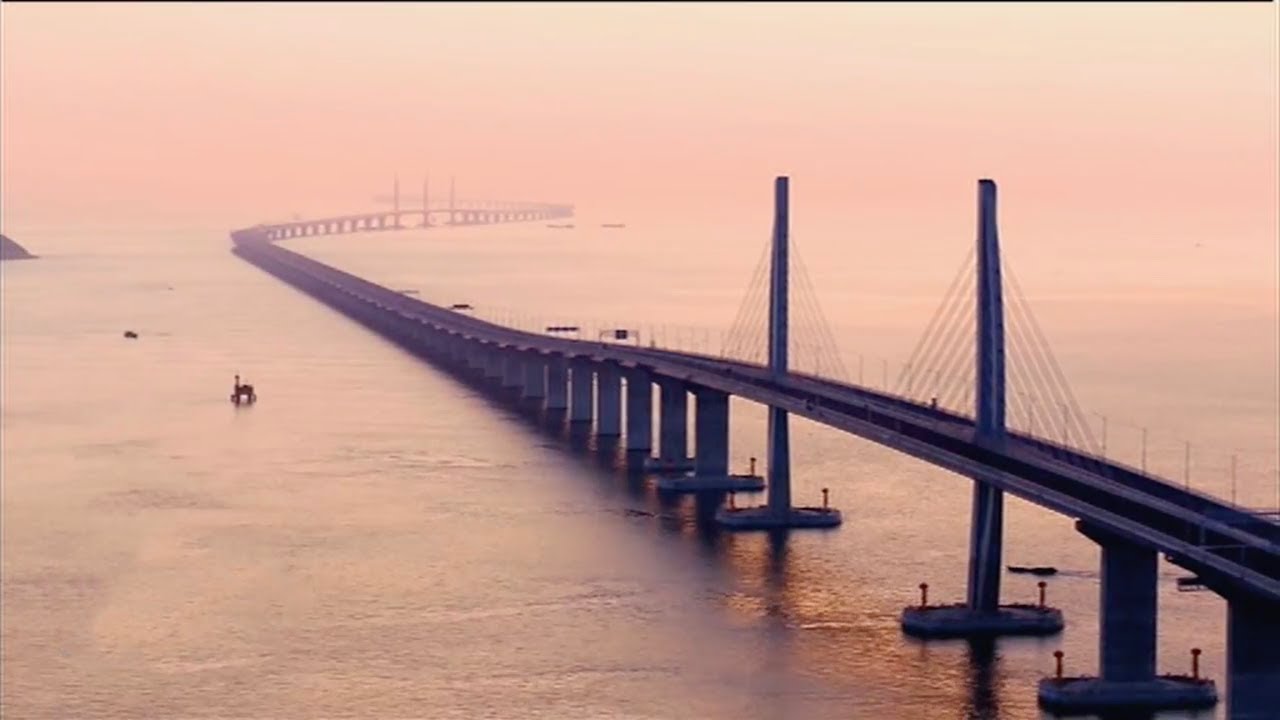
Chinese Vice-Premier Han Zheng, the point man on Hong Kong and Macau affairs, recently gave the green light to the official document on the “Greater Bay Area” following extensive consultations with local governments, a Beijing source said. “No party or agenda, including even environmental protection, will be left behind by this all-inclusive blueprint,” the official said.
More than three years in the making, the Greater Bay Area was first mentioned in a development action plan jointly outlined by China’s top authorities on economic planning, commerce and foreign affairs to create a new economic growth engine by pooling together Hong Kong, Macau and nine neighbouring cities in Guangdong province.
The mega zone covers 56,500 square kilometres, has a combined population of about 67.6 million and accounted for 12.5 per cent of the country’s gross domestic product in 2016.
Hong Kong leader Carrie Lam Cheng Yuet-ngor has taken part in discussions on the scheme since August last year, becoming the city’s first chief executive to join a leading group under China’s cabinet, the State Council.
Authorities were now working on the implementation plan, Zhang said in an interview with state broadcaster CCTV which was aired on Saturday night.
Hong Kong, Macau, Guangzhou and Shenzhen would be the central cities in the bay area, and each had their own unique positioning, he said.
Hong Kong will be the international finance, navigation and trade centre, as well as a transport hub. It will have the role of pushing finance, trade, logistics and professional services towards the high-end market.
Macau will be an international tourism city and a platform for trade with Portuguese-speaking countries. Guangzhou will take a leading role as a national central city while Shenzhen will take a leading role as a special economic region and an innovative city, he said.
The planners hope the advantages these four cities enjoy can complement each other and offset the challenges brought by gaps in the legal and economic systems.
The international network and mature market economy of Hong Kong and Macau could have big potential when combined with the vast hinterland and market Guangzhou enjoyed, he said.
“Under the new circumstances, Hong Kong and Macau still have their unique position and advantages that cannot be replaced,” Zhang said.
He revealed for the first time that there were almost 100,000 Hong Kong residents and nearly 20,000 Macau residents who had applied for a new identity card that would grant them access to a wide range of social and public services on the mainland. The arrangement was introduced on September 1 last year.
There were high expectations that Beijing would reveal the blueprint when Premier Li Keqiang said in March last year there would be an announcement soon. But the central government has since been embroiled in a trade war with its biggest trading partner, the United States.
Sources said that the tussles over political interests and dominance among the Greater Bay Area parties was a reason behind the delay and meant the central government had to step in to coordinate.
“But the most important question here is whose model to follow and whether the tussle is about Hong Kong converting mainland cities or the other way around?” said an academic who has direct knowledge of the blueprint’s planning.
“Mainland cities are hesitant to follow Hong Kong’s model in case they lose official powers.”
An internal study by an official think tank seen by the Post said the crux of the Greater Bay Area integration was about putting “one country, two systems” into practice but differences in economic, tax, customs and legal systems that would ensure Hong Kong and Macau’s high degree autonomy have remained key challenges.
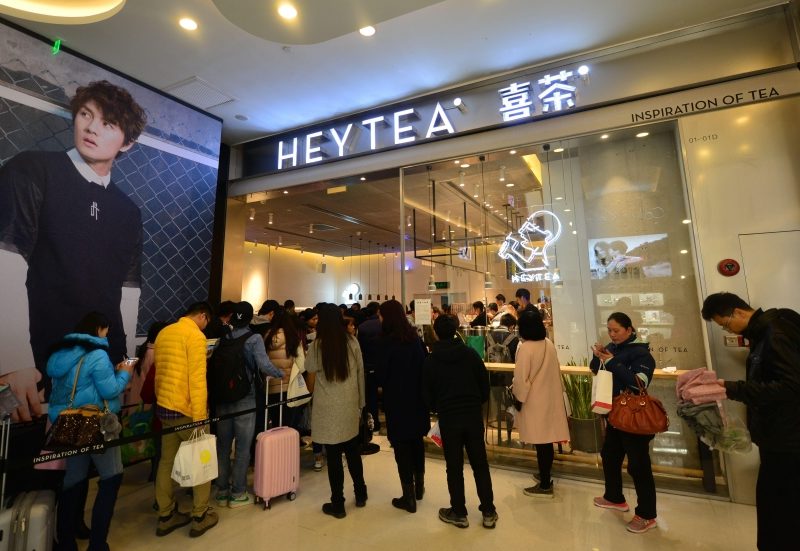
On December, 24 Sha Tin New Town Plaza, in Hong Kong, welcomed Heytea. A huge crowd queuing up for more than 3 hours just to get a cup of Cheese Tea from the Chinese tea-drink brand Heytea was the protagonit that day. Due to the buy-one-get-one free promotion during the Christmas holidays, people started lining up as early as 6:00 am.
Heytea officially announced that it had opened its first Hong Kong store only on january, 3. They chose to expand into Hong Kong’s market due to the city’s international status as well as its vibrant food and beverage scene. It helps to promote Heytea as a popular and innovative tea-drink brand among global consumers, especially younger generations.
The store not only offers its signature cheese tea, but also a great variety of fruit tea and ice cream. The tea is imported from all over the world which aims to renew the traditional tea culture.
Also, it introduces an exclusive product combined with Hong Kong local food culture, namely, the Eggette Roll Sundae, adding new vitality into the brand, according to its founder Nie Yunchen.
He said “geographically, Hong Kong is adjacent to Guangdong Province and Shenzhen. Hong Kong people already know our brand and often buy our tea when they visit Shenzhen or other cities in Guangdong. In order to thank our supporters and cope with an increasing demand of our tea, we think it is the right time to extend our reach to the city.”
Zhenglei, Development Director of Heytea, confirmed that Heytea opened its second Hong Kong store in Causeway Bay on 12 January 2019. “We are quite confident that our tea products will be very welcomed by our customers in Hong Kong.”
In order to avoid a huge crowd like the last opening, Heytea planned to replace the traditional order and payment method by ordering through their mobile app.
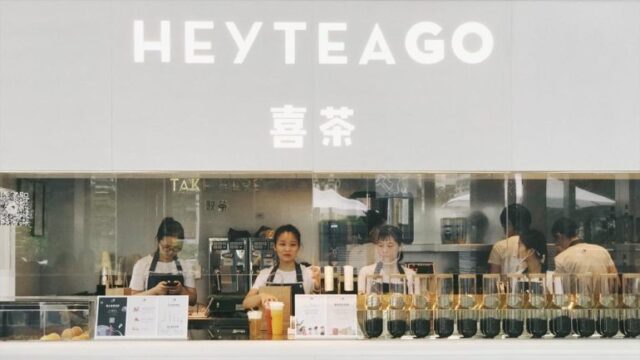
The second shop of Heytea located in Causeway is named as “Heyteago”, their customer can order online in anytime, anywhere for a cup of tea-to-go. Therefore, cheese-tea lovers can save their time and no need to queue up for 3 hours outside Heytea again.
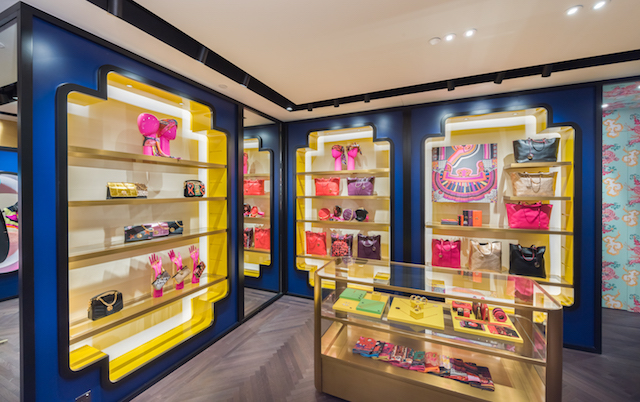
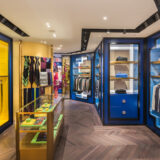
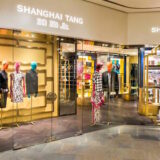
A “plethora of paints and fabrics that radiate warmth” are at the core of the redesigned Shanghai Tang Pacific Place boutique. Design house Stefano Tordiglione Design (ST) oversaw the executive design and project management of the revamped 154sqm space, which opened last November. The project took six months to complete. Shanghai Tang is a privately owned, modern luxury brand which fuses current fashion design concepts with Chinese-inspired elements steeped in history. It is renowned for its use of bold colours, often contrasting, in fashion and homewares.
Taking the lead in fine tuning the selection of materials, fabrics and colours, the design team created what creative designer Carlotta Turini describes as “a multi-sensory shopping experience to mirror the richness and beauty of Chinese culture”.
Shanghai Tang Pacific Place 2
Shanghai Tang Pacific Place 1
Shanghai Tang store
Among the features are the changing rooms and home section, with the use of famed Jim Thomson wallpapers, giving the design an ‘Asiatic flavour’, with alternative wall coverings and racks fine tuned to create a sense of comfort within the shopping centre.
The womenswear area has curved walls and a soothing beige fabric contrasted with bright paint, while the menswear area is elegant, warm and cozy, designed with dark brown wood and clean lines.
These areas are united through a relaxed central seating area featuring art deco furniture.
“To promote fluid movement through the space, the walls have niches features to provide attractions to the eye throughout the corridor as customers move between retail sections,” says Turini.
The team had to interpret the original design drawings, developing a unique concept that is now demonstrated throughout the store.
Efficient project management was vital to the success and on-time completion of the Shanghai Tang Pacific Place redesign.