Tag: house

  • Most citizens cannot afford ‘affordable housing’

    Most citizens cannot afford ‘affordable housing’

    Affordable housing in Hanoi and HCMC is out of reach for most citizens, mainly because of dwindling supply and rising prices. When he moved to Hanoi 13 years ago, Tran Thanh Ha nursed a common enough dream that he would one day own an apartment in the capital city.

    Today, he realizes this is next to impossible. The 33-year old graphic designer with a monthly income of around VND25 million ($1,080) has been able to save about VND700 million since his early twenties but is still 50 percent away from the cheapest apartment in his favorite project, which is in the eastern district of Long Bien.

    “With one child and another on the way, it is unlikely that my wife and I will be able to acquire the apartment for at least another 10 years. By that time the price will have surged to another absurd level.”

    Ha is one of many people in Vietnam’s major cities who are seeing their dream of homeownership slip away as prices increase every year and the supply of affordable housing has almost disappeared from the market. Affordable apartments are those that are priced under VND20 million per square meter, according to the Ministry of Construction.

    A recent report of the ministry says the demand for houses and apartments in the mid and high range only accounts for 20-30 percent, while the remaining 70-80 percent is for affordable housing.

    The ministry report says residential property prices are “bloated, volatile and out of reach of most people” due to the lack of funding for social housing programs. It also says there is no channel for mobilizing long-term investment for these programs.

    Data from real estate consultancy Savills shows that Hanoi apartment prices rose 10 percent year-on-year to $1,500 per square meter in the third quarter as new apartment supply fell to a five-year low.

    Do Thu Hang, director of advisory services at real estate consultancy firm Savills Hanoi, said that the capital city is witnessing high residential pricing that far exceeds the income of most people, especially the young.

    Data from the Ho Chi Minh City Real Estate Association (HoREA) shows that with a mid-priced apartment in Ho Chi Minh City costing around VND2.5 billion, it would take a family that can save VND100 million a year over two decades to acquire the unit.

    Le Hoang Chau, chairman of the association, said that a sharp decline in supply in the 2018-2020 period has made it more challenging for low-income people to afford a house.

    Other industry insiders say that most small apartments of 45-50 square meters are being sold for VND1.5-1.7 billion, 50-70 percent higher than five years ago.

    This means that an apartment under VND1 billion has now become a thing of the past.

    Nguyen Van Dinh, deputy chairman of VNREA, said that in the last two years, very few new apartment projects have been approved in Ho Chi Minh City, this has meant that the affordable segment barely exists in the market despite large demand.

    Obstacles in acquiring permits have been the main roadblock for real estate developers. From 106 housing projects approved in 2016, the figure fell to 16 last year and 12 in the first six months of this year, according to HoREA.

    There is a lack of transparency in the approval of projects that has left hundreds of projects struggling to acquire permits, it added.
    It also said that only 21.81 percent of new supply between 2016 and H1 2020 was in the affordable segment.

    At an October 30 meeting, Deputy Construction Minister Le Quang Hung said his ministry was working on policies to ensure that the majority of the nation’s workforce, in the middle-income group, have the opportunity to buy an apartment.
    The ministry has already proposed several measures to boost the supply of affordable apartments in Hanoi and HCMC. These include a 50 percent discount on land fees and preferential interest rates of 7-8 percent per annum for social housing projects.

    While apartments are currently required to have a minimum area of 45 square meters, the ministry is considering scrapping this requirement so smaller, cheaper apartments can be built.

    The HoREA, meanwhile, has proposed that the government provides credit support to first-time homebuyers as well as incentive tax policies for the development of affordable housing.

    As authorities try to find solutions to the housing problem, Ha and his wife are looking for another rented apartment in Hanoi to welcome a new baby, the only residential option for them in the increasingly crowded city.

    “Without an inheritance from parents, homeownership in Vietnam is near impossible for people like me.”


  • Nike opens House of Innovation in Paris, France

    Nike opens House of Innovation in Paris, France

    Nike has opened the brand’s largest House of Innovation yet, in Paris, focusing on delivering a digital retail experience. Located at number 79 on the famous Avenue des Champs-Elysees, the House of Innovation 002 spans four floors and occupies a 2400sqm area.

    According to the company, Nike Paris will focus on four areas: uniting shoppers to a global sports community, innovative services and products for women, more kids’ experiences and seamless end-to-end consumer experience.

    “When consumers step into Nike Paris, they will experience our largest, most digitally connected and immersive retail concept in the world,” said Heidi O’Neill, president of consumer and marketplace.

    The House of Innovation in Paris features a wall-to-wall installation called Mission Control, connecting customers to the global sports community.

    Female shoppers can receive a fit recommendation using Nike Fit technology for any of its bras and information on their precise shape can be saved for future store visits.

    Nike Paris houses a destination for kids called Kids Pod, featuring interactive gaming and trial station such as a 360 virtual runners experience inspired by Parkour.

    “The strength of our digital portfolio combined with product innovation and amazing physical spaces will connect members to the community of sport and to one-of-a-kind experiences, serving them in an incredibly personal way,” O’Neill said.

    At the House of Innovation Paris, more than 85,000kg of sustainable material is woven into the fabric of the store design and display fixtures. The store is fuelled by a clean-energy wind farm in Spain.

  • A golden cube houses % Arabica Hong Kong’s newest store

    A golden cube houses % Arabica Hong Kong’s newest store

    Dutch architecture studio OMA has installed a golden cube housing a cafe outside K11 Musea mall in Hong Kong.

    The “Kube” kiosk, housing artisan coffee brewer % Arabica Hong Kong’s newest outlet, also features black marble furniture and is designed to resemble a traditional dai pai dong food stall.

    “The Kube is a multifunction installation to connect people visiting K11 Musea and passersby who share a moment to be fully present to experience the city, and possibilities of encounters,” OMA managing partner David Gianotten said.

    The kiosk is coated in an anodized aluminum cladding that appears to change hue in different light conditions.

    “What David Gianotten and Rem Koolhaas’ Kube adds to K11 Musea is … more than an iconic OMA feature,” said K11 Group founder Adrian Cheng, “but a symbolic space that explores Hong Kong’s waterfront culture, coffee culture and a new way to become part of a larger community.”

    OMA is hoping the installation will be used for public events and performances.

  • Amazon’s Alexa Guard Arrived to Guard your Home

    Amazon’s Alexa Guard Arrived to Guard your Home

    Even though music streaming remains the primary use case for Amazon and Google’s insanely popular smart speakers, it goes without saying Alexa and Google Assistant can do many other cool, innovative, and practical things simply by listening to your voice. The Echo lineup arguably maintains its superiority in the living room, hiding plenty of neat smart home tricks up its sleeve, the latest of which is specifically designed to keep an eye on things while you’re away.

    Formally unveiled way back in September and made available by invitation only a couple of months after that, the very ingenious Alexa Guard feature is now rolling out more widely in the US at last. All you have to do to activate this functionality is remember to say “Alexa, I’m leaving” every single time you exit the premises of your house and want your digital assistant to keep its virtual ear to the ground.

    After setting Guard to “away mode” with the aforementioned magic phrase, your Echo device will stay alert and send notifications to your phone if it detects the sound of smoke alarms, carbon monoxide alarms, or glass breaking. Obviously, you shouldn’t panic as soon as you get a “smart alert”, and instead try to determine if the danger detected by Alexa is actual cause for concern by listening to a 10-second audio recording from your house or even “drop in” on your Echo remotely to check exactly what its microphone is picking up.

    By no means a replacement for a real security system, Alexa Guard can enhance the capabilities of popular setups from Ring and ADT, while also working in tandem with connected smart lights to discourage burglary attempts. Most importantly, the feature naturally doesn’t cost a thing. The latest version of the mobile Alexa app lets you enable it from the “Settings” menu, where you’ll find a Guard-dedicated subsection containing simple step-by-step setup instructions.

  • Amore Pacific launches Etude House

    Amore Pacific launches Etude House

    Amorepacific Group, the largest global beauty company headquartered in Korea, has launched Etude House in India.

    Etude House has become the third Amorepacific brand introduced to India after Innisfree and Laneige. The brand made its debut on the Indian market on April 30th exclusively through beauty retailer Nykaa.

    Amorepacific plans to expand e-commerce channels to increase reach with millennial customers in the territory, communicating with Indian consumers through Instagram.

    “The Indian beauty market is growing by nearly 10 per cent every year, and this fast growth is driven by millennial customers with increasing disposable incomes and growing interests in global beauty,” said Amorepacific’s group strategy unit head Lee Chang-kyoo. “We see tremendous potential in India to support our goal of strengthening the experience of Asian beauty in the region.”

    “With the launch of Etude House in India, we seek to offer the best beauty experience to our Indian customers – with products that are backed by over 70 years of studies in natural ingredients and world-class innovative technology. This year, we plan to boost our brand operations through online channels.”

    Nykaa chief business officer Nihir Parikh added: “Over the last two years, Nykaa brought Korean beauty to India, introducing customers to their unique innovations and ingredients. The category has been a great success with our customers, who are keen to experience such global trends.”

  • Ashley Furniture HomeStore Opens Largest Flagship Store in Kuala Lumpur

    Ashley Furniture HomeStore Opens Largest Flagship Store in Kuala Lumpur

    World No.1 selling furniture store brand, Ashley Furniture HomeStore, celebrated the grand opening of its largest flagship HomeStore in Quill City Mall today.

    Owned and operated by HAUSLIFE Furniture Sdn Bhd (HAUSLIFE), the sole licensee and operator of Ashley Furniture in Peninsular Malaysia, Ashley Furniture HomeStore at Quill City Mall marks the company’s fourth store in Malaysia.

    The 1300 square meter HomeStore’s interior architectural design include Ashley Lifestyle collections – ‘Family Spaces’. ‘Vintage Casual’, ‘Urbanology’, ‘New Traditions’ and ‘Contemporary Living’; meandering walkway through the showroom as well as unique and inspiring wall finishes. Product categories include upholstery set, bedroom set, dining room, home office, recliners, mattresses and accessories.

    Yu Kong Ching, Founder and CEO of HAUSLIFE, said, “Clearly, Ashley’s brand of furniture products have struck a chord amongst Malaysian consumers and this is reflected in the tangible growth of the brand’s presence here in Malaysia.”

    “The opening of this flagship store is also a testament to HAUSLIFE’s commitment, dedication and know-how in strengthening Ashley Furniture’s continued success in Malaysia in terms of market share and brand recognition.”

    According to Yu, HAUSLIFE aims to open eight (8) Ashley Furniture HomeStores by 2022. “There is still a lot of room for us to grow in the Malaysian market, more so as we see an ever-growing demand for quality, value, style and excellent service by discerning consumers in the retail furniture market,” Yu added.

    Speaking at the launch of Ashley Furniture HomeStore Quill City Mall today, Mr Robin Lim, VP sales of Asia for Ashley Furniture HomeStore, said, “We are excited to see the Ashley brand expanding aggressively in Malaysia. The ASEAN region, including Malaysia, is essential to Ashley Furniture’s global growth plans.”

    Comprehensive E-commerce platform

    In tandem with the global trend towards embracing the digital lifestyle, Ashley Furniture HomeStore recently launched its e-commerce platform only for the Malaysian market. Developed to be user-friendly yet feature-packed with great deals, this online platform allows Ashley’s customers from all over Peninsular Malaysia to purchase Ashley products from authorized retailer online.

    Exclusive Affiliate Program for Interior Designers

    HAUSLIFE Interior Designer Affiliate (HIDA), an incentive program custom-built by HAUSLIFE for interior designers, was launched in 2015 With over 215 affiliates, HIDA aims to empower interior designers today to have the mean to realise their creative vision and make life better. The program brings lots of benefits including exclusive deals on Ashley and HAUSLIFE products as well as access to new and selected products.

  • Roberto Cavalli US collapses as Expected

    Roberto Cavalli US collapses as Expected

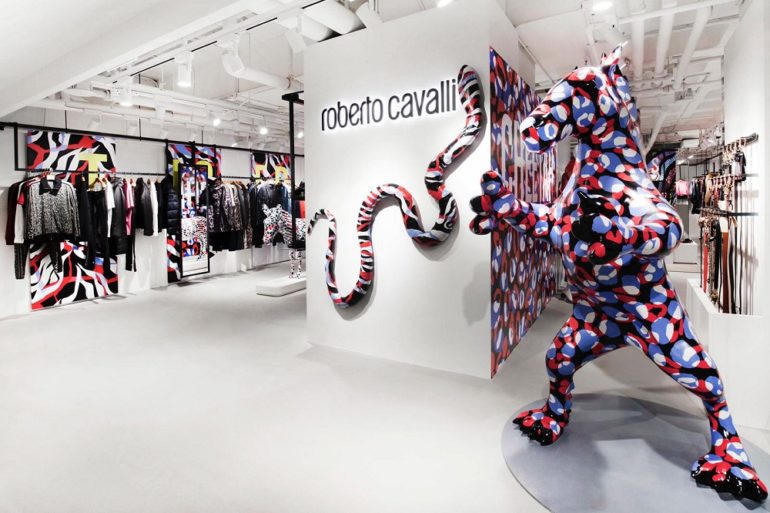
    Italian fashion label Roberto Cavalli has shuttered its stores in the US and will liquidate its entire operations in the territory.

    While the brand had recently sought to negotiate with creditors while buying to time to source new investment, it has now sent all staff home and will close all stores. Several key executives have resigned, and a spokesperson announced on Sunday that the group will file for liquidation bankruptcy.

    The flamboyant fashion house has been inundated with difficulties since former Versace executive Gian Giacomo was appointed CEO in late 2015. The firm has struggled since to gain new investment and experienced a high turnover in its creative team.

    The group’s online operations have been shut down until logistics are re-routed through Europe.

  • Getting The Right Roof for Your House Location

    Getting The Right Roof for Your House Location

    The roof is just about the biggest investment in any residential property. The kind of roof you choose for your home will determine the level of protection from the elements you’re bound to enjoy. It will also determine how much you spend on maintenance through the lifetime of the roof. Today, there are many different kinds of roofs by style, design, and roofing material. Before choosing any option however, it is highly important to consider the geographical location of the home you’re choosing the roof for. In other words, not all roofs are created to withstand the climatic conditions of all locations.

    With this in mind, here are some helpful pointers on getting the right roof for your house based on its location.

    Climate Factors

    According to Mr. Mike LaPointe of Point Roof Restoration, one of the most experienced roofing contractors Boise has to offer, some types of roofs do better than others in certain weather conditions. Needless to mention, different geographic locations have different climates and weather patterns. This means that when choosing a roof for your home, it is important to consider its location as well as the following important climate/weather factors.

    • Heat – Needless to mention, some locations are generally hotter than others throughout the year. If your home is built in such an area, it is always better to go for a roof with the ability to reflect heat and absorb as little as possible. This allows your home to stay cooler, which can reduce the amount of money you spend on cooling and air conditioning. Experts also suggest that flat roofing systems are more ideal for buildings in regions that generally experience hot and dry weather.
    • Wind – Again, some areas are generally windier than others. In the Southern coastal areas, for instance, winds can have an average speed of 17 mph but may also be prone to high winds, tropical storms and hurricanes. In such an area, you need a roof made from thicker material that is tried and tested to withstand high winds. You don’t want to wake up and find your entire roof blown off!
    • Humidity – Airborne moisture is one of the most damaging elements to roofing. If your home is built in a high-humidity area, say near the eastern coasts, you need a quality roof that can withstand just that.
    • Rainfall – This is where your roof’s design will count most. In rainy regions, a sloped roof could work best as it would reduce pooling and increase rainwater drainage. When ponds of water get trapped on various surfaces of the roof, it leads to rotting, leaks, and weaknesses on the entire building. In most cases, sloped roofs are accompanied with gutter systems that help eliminate the possibility of ponding on the roof.
    • Salt – If your home is built near the coastline, it is important to note that some roofs are prone to corrosion by salt from the ocean. This is especially the case with certain metal roofs. If you have to use a metal roof system, in this case, it is important to ensure that it has an alloy coating to extend its lifespan.
    • Fire Risks – Some areas are prone to forest fires. For homes in such areas, it can be an extra precaution to use fireproof roofing.

    Common Types of Roof by Material

    • Metallic roofs – As you can tell from the name, these are roofs made from metal. The most common options include iron, copper, and aluminum roofing. As far as quality goes, copper tends to be more superior than the rest. this is because it is generally heavier and can thus withstand high winds, not forgetting its high ability to withstand corrosion by salt and moisture. Unlike iron, it is less prone to rusting. However, copper roofing tends to be a bit more expensive compared to the other alternatives. Depending on the metal type, metal roofing can last somewhere from 40 to 100 years.
    • Slate roofs – This one is considered the most durable roofing options. With proper installation and maintenance, slate tiles can last up to 100 years of service. They are also excellent at withstanding the elements and can greatly increase the value of your home.
    • Shingles – These are also known as asphalt or composition shingles. Most people prefer them for their enormous versatility and the fact that they come in numerous patterns and colors to choose from. Well maintained, asphalt shingles have an average lifetime of 20-30 years.

    Other common options in the roofing industry today include wood shakes and EPDM (rubber) roofing, which can last from 20 to 40 years with proper installation and maintenance.

    Once you get it right on the elements and choose a suitable roofing material, you just need to figure out which roof design will work out best for you. This is both in terms of functionality and aesthetic appeal. With the above tips, however, choosing the right roof for your home based on its location becomes a breeze.


  • Japanese Brand Muji Will Open First Vietnam Store in 2020

    Japanese Brand Muji Will Open First Vietnam Store in 2020

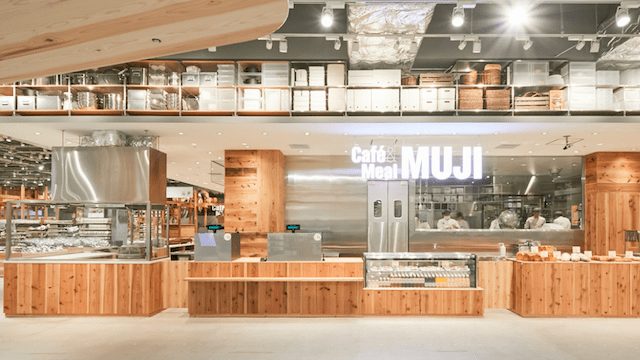
    Japanese household goods and apparel chain Muji plans to open in Vietnam next year. The company will establish its subsidiary Muji Vietnam this August with headquarters in Ho Chi Minh City. The first store is scheduled to open in the second quarter. Muji’s parent Ryohin Keikaku says it chose Vietnam as Muji’s next overseas market because of the country’s fast-paced development. Vietnam has the third-largest population in ASEAN and is undergoing rapid economic growth.

    “From our business’ point of view, it is one of the major markets in ASEAN, with the estimated real GDP growth of 7.1 per cent last year,” the company said in a statement released in Japan.

    “We expect that our experience and knowhow in the global market will help in running stores that serve everyday living and [that will] increase Muji’s fans in the area.”

    Muji products are among the most popular items hand-carried back into Vietnam from travellers visiting countries such as Thailand, Singapore, Hong Kong and the Philippines.

    The opening of first Muji Vietnam store is expected to attract many Vietnamese youngsters, with the minimalist lifestyle reflected in the retailer’s product range currently a trend in the country.

    Muji has more than 450 stores in Japan, and 470 stores in other countries.

  • Ikea to launch ‘intelligent curtain’

    Ikea to launch ‘intelligent curtain’

    Ikea has developed an ‘intelligent curtain’ capable of purifying air. The invention, coated with sunlight-activated minerals that break down airborne pollutants, has been developed in collaboration with several European and Asian universities. “By enabling a curtain to purify the air, we are creating an affordable and space-saving air purifying solution that also makes the home more beautiful,” said Ikea product developer Mauricio Affonso.

    The Gunrid intelligent curtain will be sold in stores next year and is expected to sell well in areas particularly affected by air pollution.

    According to the World Health Organisation, 91 per cent of humanity lives in areas affected by significant air pollution, which kills around 7 million people every year.

    “Gunrid is the first product to use the technology,” said Ikea’s head of sustainability Lena Pripp-Kovac, “but the development will give us opportunities for future applications on other textiles.”

    “We know that there is no single solution to solve air pollution. We work long term for positive change, to enable people to live healthier and more sustainable lives”, she said.

  • Ikea Malaysia opens new store

    Ikea Malaysia opens new store

    Ikea Malaysia will next month open its first store in the northern region of Peninsular Malaysia – in Batu Kawan, Penang. Due to open on March 14, the brand’s fourth outlet in the country spans 43,600sqm of retail space and will feature more than 8000 products.

    “The store will also have 49 showrooms, a market, restaurants and a bakery. We expect it will attract about 50,000 visitors per week,” said Ikea Malaysia store manager Arumugam Pathmalingam.

    In advance of the grand opening, the store has already attracted excitement among Penangites, mainly on social media.

  • Furniture maker in Vietnam to meet younger customer taste

    Furniture maker in Vietnam to meet younger customer taste

    Furniture manufacturers are striving to meet the changing tastes of young people, who have begun to value eco-friendliness and aesthetics. Nguyen Chanh Phuong, vice president and general secretary of the Ho Chi Minh City Fine Arts and Wood Processing Association (HAWA), said the furniture segment for small urban houses is abuzz in Vietnam, with its main customers being young adults born between 1980 and 2000.

    Unlike the previous generation, who preferred simple but durable furniture that could last 100 years, young people prefer to buy comprehensive interior packages based on their own aesthetic views, he explained.

    They see furniture as things that serve their needs and not assets to be passed down, and so products only need to last about 10 years, he said, pointing out this was why furniture makers like IKEA have been so successful.

    “There is a lot of opportunity arising from this group of customers alone. I estimate they only account for 15 percent in terms of number of buyers but account for 30-40 percent of spending.”

    Industry insiders said the market is seeing rapid growth in raw materials production, design and manufacture of furniture, and one can now find all types of international “fashionable” wood varieties from Germany, the U.S., France, Japan, Canada, and New Zealand.

    Vietnam’s furniture market was worth $4 billion in 2018, and is expected to grow to $5-7 billion by 2025, according to the Handicraft And Wood Industry Association of HCMC.

    Nguyen Quoc Khanh, HAWA chairman, said not only is the scale growing but also Vietnamese are increasingly demanding higher quality products.

    “I think ‘strong and durable’ is not the Vietnamese style; it was a need at a difficult time. Life is much better now, so people are allowed to express themselves.

    “The only regret is that the market has not yet created the necessary ecosystem for the business of interior design. That is, furniture manufacturers have not been able to work with designers and real estate companies to completely meet users’ needs.”

    Foreign home interior brands and designers are present in force and dominating the increasingly affluent market.

    According to the Vietnam Chamber of Commerce and Industry (VCCI), some 80 percent of luxury woodwork and interior decoration items is imported from Europe, with local players accounting for the rest.

  • LG profit plunges, missing forecasts by a mile

    LG profit plunges, missing forecasts by a mile

    LG Electronics’ operating profit fell nearly 80 percent in the fourth-quarter of 2018 year-on-year, according to preliminary figures disclosed in a Financial Supervisory Service regulatory filing Tuesday.  The smartphone and household appliances manufacturer estimated 75.3 billion won ($67.0 million) in operating profit for the final quarter of last year compared to 366.8 billion won in the same quarter in 2017.

    The estimate is far below the 398.1 billion won forecast by analysts surveyed by FnGuide, a data provider. The company anticipated 15.8 trillion won in revenue from October to December last year, a 7-percent decline from the same period a year earlier.

    Analysts pointed to the slowing global smartphone market as a factor weighing on the company.

    “With the smartphone market currently in a slump, [the company] is unable to find an opportunity to recover,” said Kim Ji-san, an analyst at Kiwoom Securities in a report Tuesday that predicted disappointing earnings prior to LG’s announcement. “Demand has slowed as smartphone replacement cycles have become longer in high-value markets such as Korea and the United States,” Kim added.

    Meanwhile, the company estimated annual operating profit for 2018 at 2.7 trillion won, a 9.5 percent rise from the previous year.

  • Ikea open new store in Hyderabad, mid July

    Ikea open new store in Hyderabad, mid July

    Ikea India says it will launch its first store in Hyderabad in July.

    This follows the Swedish furniture maker opening a “Hej Home” experience centre in the city in November to familiarize locals with brand.

    Covering 400,000sqft in Hi-tech City, the debut store will have more than 7000 products on display, says Ikea Hyderabad store manager John Achillea.

    It is six years since the company was given permission for single-brand retail, and a month ago it announced the appointment of Peter Betzel as its CEO for India. Betzel came in from Germany, its largest market, to look after what the company describes as “one of its most important growth markets”.

    Previously Ikea has announced plans to open 25 stores by 2025. It has also bought land parcels in Bengaluru, Mumbai and New Delhi to build stores, with more land to be acquired in cities such as Ahmedabad, Chennai, Kolkata, Pune and Surat.

  • Kiehl’s opens world first coffee house in Taipei

    Kiehl’s opens world first coffee house in Taipei

    New York cosmetic brand Kiehl’s will open the world’s first Kiehl’s Coffee House and shop in Taiwan in June.

    Located in Taipei, the premium skincare brand’s first global coffee shop will be “New York” theme, and will take on a shop-in-shop design. Black and white will feature throughout with wooden tones.

    The café shop will provide customers with coffee and snacks, as well as Kiehl’s products and skincare consulting services.

    The L’Oreal-owned brand hopes the new coffee house will increase consumer and brand interaction. According to local reports, the mainland’s first coffee shop is also in preparation.

    Taiwan boasts seven standalone Kiehl’s stores in Taipei, Hualien City and Taichung City.

    Pharmacist John Keihl founded Kiehl’s in 1851. It started as a single pharmacy in Manhattan at Third Avenue and East 13th Street in 1851.

    Nowadays, the American cosmetics retailer is part of L’Oreal Group’s beauty stable and specialises in premium skin, hair, and body care products.