Tag: Huawei

  • Huawei plans main retail rollout

    Huawei plans main retail rollout

    Chinese language cell phone model Huawei is planning a serious Asian regional retail rollout.

    “Our model constructing finances might be doubled for the Southeast Asian markets since there’s a robust risk of progress in market share,” says Huawei Shopper Enterprise Group CEO Richard Yu.

    Huawei will add about 1500 customer support facilities worldwide – and greater than 100 of these will probably be in Thailand, which is Huawei’s regional hub for the Southeast Asian area.

    Yu stated Huawei recognises Southeast Asia as a high-potential market, and the corporate is planning to beef up its funding in model constructing actions on this area.

    “Our merchandise have good high quality, so we’ve little question that we’ll attain our goals,” he stated.

    For instance, Huawei’s market share in Myanmar is 50 per cent “as a result of the merchandise meet the calls for of the shoppers, and the gross sales improve by phrase of mouth”.

    Yu stated Thailand would be the focus of Huawei’s funding within the area. The corporate has chosen Bangkok because the venue for a regional press launch for its new Huawei P8 handset and its wearable units subsequent week, (Might 28).

    “Our income is excellent in Myanmar, India, the Philippines, and Malaysia. Thailand can also be an enormous market with plenty of potential, so we at the moment are specializing in it,” stated Yu. “Thailand is admittedly a sophisticated market, but in addition a gorgeous one, so Huawei is prepared to enter this market. Though it takes time, we’re decided to succeed right here. We’re prepared to take a position all yr spherical.”

    In accordance with an IPSOS International Analysis report masking 32 nations, Huawei’s model consciousness rose from 52 per cent in 2013 to 65 per cent in 2014, representing a year-on yr improve of 25 per cent.

    As an Asian model, Huawei’s model consciousness within the international market simply rivals different Western manufacturers. In Western Europe, Huawei recorded model consciousness of 61 per cent within the Netherlands, 60 per cent in Spain, 57 per cent in Germany and 54 per cent in Italy.

    Huawei has turn out to be the primary Chinese language firm to efficiently enter Interbrand’s Prime 100 International Manufacturers of 2014 record, taking 94th place.

    Huawei began out so small virtually 30 years in the past, and has grown right into a multinational telecommunication big at present. Based in 1987, the China-based firm is now generally known as the world’s third largest smartphone vendor, following Apple and Samsung. However in its China house market it’s already lagging behind quick rising current entrant Xiaomi which is the highest promoting model presently, forward of Apple and Samsung.

  • Huawei Ingenuity to Power ‘Smart Cities’

    Huawei Ingenuity to Power ‘Smart Cities’

    Shenzhen-based telecommunications company Huawei has transformed itself into an information and communication technology giant, and now intends to boost its business in Indonesia’s government sector by helping to build smart cities, with services for industry and finance among a host of others.

    If you still underestimate Chinese technology — which in the United States has often been accused as a cover for spy tools — now is the time to change your mind. There was good reason to be skeptical in the past, but the former telco operator has transformed itself into a gigantic information and technology (ICT) industry with a range of services and competitive prices.

    Some years ago Huawei sold only phones and wireless equipment but since then it has expanded to become an important player in ICT. Not only does it have a wide range of products, but it also concentrates on creating value and providing solutions in the entire range of modern digital life applications.

    In Indonesia, Huawei’s technology is inside the wireless 4-G LTE Bolt which provides seamless internet access.

    Globally, the company booked $46 billion in revenue last year, with the Indonesian market contributing about $1.3 billion, a figure expected to increase to $1.5 billion this year.

    Its new Bandung Smart City project, launched in conjunction with the recent Asia Africa Conference, represents an important step forward. The project is being developed as a “safe city” concept.

    Huawei along with state-owned telecommunications giant Telkom has built a command center monitoring cameras throughout the city.

    This program will be further developed into a “smart city” project that aims to give maximum services to the city in a range of areas.

    At the command center at the mayor’s office, for example, banks of monitors show what is happening across the city, assisting with the direction of traffic, guaranteeing a clean city and helping to stop crime.

    Bilateral momentum

    Sheng Kai, chief executive of Huawei Indonesia Tech Investment, is strongly optimistic about the Indonesian market.

    “Relations between Indonesia and China have reached the best momentum at this moment, which will allow Huawei’s business in Indonesia to make outstanding achievements in the future, through the products and solutions that Huawei can bring in,” Sheng says.

    The Chinese ICT company is cooperating with more than 250 organizations — vendors, suppliers and others — and sees the government sector, the banking industry and energy as its target market. Products will include simple gear like switches and routers through to storage and data-center business, with long-term evolution (LTE) for mobile applications.

    While the technology may be similar to that offered by other vendors, Huawei believes it has competitive advantage the speed of services and response.

    “We are open for cooperation with varied organizations to produce devices or any other joint venture,” Sheng says.

    In the financial sector Huawei has a reputation for helping banks to tackle data management, varied internet and mobile banking services at high speed.

    It recently helped Bank BJB to lower costs and improve delivery speed, an achievement other vendors had not been able to provide.

    For China’s Merchant Bank, the company helped install a big data system.

    “Big data is challenging, so we try with Huawei’s expertise that comes from our big expenditure in research and development to help banks for example build hubs, deliver bank services in omni-channel systems with other banks at low budget,” says Lance Zhao, enterprise business solution manager for Indonesia.

    He adds that reliability of the technology make it possible for banks to service millions of customers with a variety of banking services.

    Consumer trend

    While its carrier business or network service is expanding through cooperation programs with a number of organizations, Huawei also plans to target consumer goods products with low-end smartphones Ascend Mate7 and Ascend P7. The P8 will soon join the range with an initial launch in London.

    “With estimated smartphone sales of 30 million units last year, 60 percent of which were low-end products, I am confident we can take a share of about 10 percent in the  coming years with smartphone devices,” Sheng says.

    Sales of wireless modems with its Bolt product in cooperation with Lippo Group, a Jakarta Globe affiliate, have been outstanding this year, at about 1 million units in the first quarter. With hundreds of retail outlets in big cities, Sheng believes the 10 percent growth target is realistic.

    As consumer sales rely strongly on branding campaigns, Huawei will spend up on media this year and plans to sponsor popular sporting events in Indonesia.

    “We are working hard to evaluate sports as crowd-making events that will help boost our brand in Indonesia,” says Indonesia Huawei brand ambassador, Yunni Christine, adding that some major European football league clubs are also being sponsored by the brand.

    ‘Smart cities’

    The Indonesian government aims to develop more than 200 “smart cities” where technology will be a critical element.

    The Bandung Command Center is the forerunner of what the Huawei hopes will be many more such projects in a continuing partnership with Telkom. In addition to providing technical assistance, the project also provides Huawei with the chance to engage with the government and help it increase public service quality.

    Huawei has spent about $25 billion on research and development across the globe in the past decade. R&D was hot-wired into the company’s DNA from the day it started, Sheng says.

    Human resource development is another strong emphasis and in Indonesia is represented by a program to help build a research center at the Bandung Institute of Technology.

    As cloud computing is also increasingly important, Huawei is engaging with various organizations, including Telkom’s Sigma, to build data centers. The service concentrates on the development of cloud architecture to ensure maximum efficiency in data management for clients.

    The company also emphasizes the trustworthiness of its products, despite being accused of acting as an electronic spy agency by the US government.

    “We are present in more than 170 countries and comply with all local government laws and regulations,” Sheng says.
  • Huawei plans 40,000 new stores in two years

    Huawei plans 40,000 new stores in two years

    Chinese phone maker Huawei plans to more than double its global store network from 30,000 to 70,000 by 2017.

    Huawei sees building its retail network is the key to selling more mid-range and high-end smartphones, taking on Apple and Samsung headon.

    More than half its current retail outlets are in China, which means the brand so far has only a modest presence and brand awareness internationally.

    By definition, Huawei’s stores will range from stand alone outlets to concessions and “display zones” where its phones were demonstrated for sale.

    Glory Zhang, chief marketing officer for Huawei’s consumer business group, says the company plans to launch more ‘high-end’ smartphones in international markets by the end of this year.

    Huawei is in the midst of a rapid growth phase. In 2013 it shipped 52 million smartphones, a figure dwarfed last year by 75 million, which made it the world’s third largest phone manufacturer. It is on track to ship well over 100,000 handsets in 2015.

    Within its own product range, high end units comprised just five per cent of its sales last year, but in the first quarter of 2015, they accounted for 34 per cent of sales.

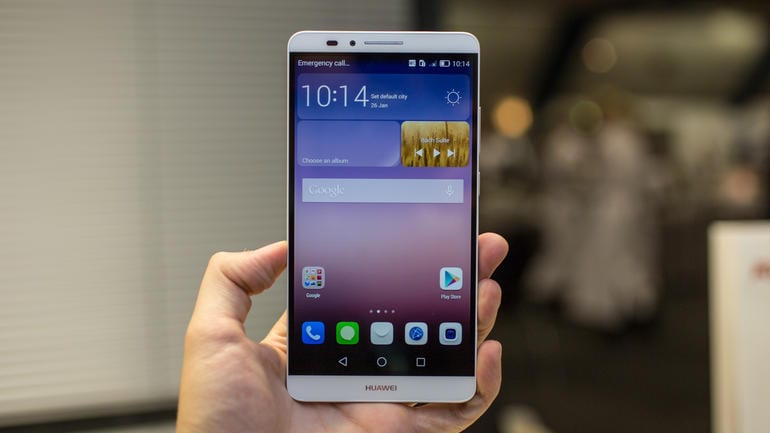
    Its newest showcase model is the P8, with a sleek metal body, (pictured above).

    Besides its retail network ambitions, Huawei has also revealed it plans to create a global service center network with urban customers no more than five kilometres from a repair shop.

    Zhang is confident about the brand’s international ambitions.

    “We’ve done this for a long time. We feel deeply that it’s easy to make a phone, but hard to make a good one.”

  • Huawei plans 40,000 new stores in two years  April 24, 2015

    Huawei plans 40,000 new stores in two years April 24, 2015

    Chinese phone maker Huawei plans to more than double its global store network from 30,000 to 70,000 by 2017.

    Huawei sees building its retail network is the key to selling more mid-range and high-end smartphones, taking on Apple and Samsung headon.

    More than half its current retail outlets are in China, which means the brand so far has only a modest presence and brand awareness internationally.

    By definition, Huawei’s stores will range from stand alone outlets to concessions and “display zones” where its phones were demonstrated for sale.

    Glory Zhang, chief marketing officer for Huawei’s consumer business group, says the company plans to launch more ‘high-end’ smartphones in international markets by the end of this year.

    Huawei is in the midst of a rapid growth phase. In 2013 it shipped 52 million smartphones, a figure dwarfed last year by 75 million, which made it the world’s third largest phone manufacturer. It is on track to ship well over 100,000 handsets in 2015.

    Within its own product range, high end units comprised just five per cent of its sales last year, but in the first quarter of 2015, they accounted for 34 per cent of sales.

    Its newest showcase model is the P8, with a sleek metal body, (pictured above).

    Besides its retail network ambitions, Huawei has also revealed it plans to create a global service center network with urban customers no more than five kilometres from a repair shop.

    Zhang is confident about the brand’s international ambitions.

    “We’ve done this for a long time. We feel deeply that it’s easy to make a phone, but hard to make a good one.”

  • Huawei in retail push

    Huawei in retail push

    Huawei Australia will rollout  ‘Experiential Zones’ at select Sydney Westfield shopping centres, showcasing its consumer product range in one location for the first time.

    Continuing its marketing push in Australia, the Huawei Experiential Zones offer customers the opportunity to explore the latest in mobile and mobile broadband technology.

    The Huawei Experiential Zones are located at Chatswood and Parramatta. An official launch will be held on February 7 and 8 at Westfield Chatswood and Westfield Bondi.

    Bondi Junction will launch on February 7, followed by Sydney City, February 9; and Miranda, March 16.

    To recognise the launch, Huawei ‘keys’ will be given to Westfield customers to access the Huawei Vault containing five Huawei Mate7 devices, with five to be won each day at each location.