Retail News CRM

Tag: Huawei

  • Huawei collected more from patent licensing than it paid out for the second straight year

    Huawei collected more from patent licensing than it paid out for the second straight year

    No matter how hard the U.S. tries to punish Chinese manufacturer Huawei for being a threat to national security, the company keeps fighting back. After losing access to its U.S. supply chain in 2019 and being forced to abandon the Google Mobile Services version of Android, Huawei developed HarmonyOS with version 3.0 of the software running the Mate 50 series. The following year, the U.S. forced chip foundries using American technology to produce chips to stop shipping cutting-edge silicon to Huawei.
    Right now, Huawei can use 4G versions of Qualcomm’s top Snapdragon chips. While China’s largest foundry is unable to match TSMC and Samsung when it comes to producing the most powerful and energy-efficient chipsets, this could eventually change. Huawei has a patent to develop its own Extreme Ultraviolet (EUV) lithography machine. The EUV is used to etch circuitry patterns on wafers and with billions of transistors inside chips these days, these patterns must be a fraction of the width of a human hair.
    The top EUV lithography supplier is a Dutch firm called ASML, and it is not allowed to sell these machines to China. Since the invention of the EUV helped take chips to a 7nm process node and lower, Huawei’s patent could help China’s SMIC eventually compete with TSMC and Samsung Foundry. Right now, SMIC is believed to be able to produce 7nm chips for cryptocurrency mining but is limited to a 14nm process node for smartphone chips.
    Even with Huawei handicapped, the company continues to innovate, and according to Reuters, in 2022 it will generate more patent income from royalties than it pays out to license other firms’ patents. This will be the second consecutive year that Huawei has achieved this. Steven Geiszler, U.S. chief intellectual property counsel, said that Huawei signed or renewed 20 patent licensing deals this year.
    Some of the companies reaching an agreement with Huawei on these deals were non-U.S. automakers seeking to improve the communications capabilities of their cars. These firms include Mercedes-Benz, Audi, Porsche, and BMW. Geiszler pointed out the advantages to Huawei of making these deals when he said, “By getting a return on our R&D investment, it allows us to re-invest and re-invent.”
    This is a cycle that Huawei might be able to ride for some time even with the restrictions placed on it by the U.S. As Geiszler points out, the technology included in the patents that Huawei is licensing isn’t subject to U.S. restrictions. That’s because the technology is publicly disclosed.
    Huawei also agreed to extend its licensing deal with Nokia which collected revenue from Huawei when the deal was first signed in 2017. While Huawei has generated $1.2 billion from patent licensing over the last three years ending in 2021, it still has a long way to go to catch up with a company like Nokia which took in $1.59 billion in patent licensing revenue in 2021 alone. Huawei’s full-year 2022 patent licensing revenue won’t be computed until some time next year.
    The money generated by patent licensing still doesn’t make up for the billions of dollars in sales Huawei lost from the U.S. restrictions. However, the U.S. actions have helped Huawei become more aggressive when licensing its own patents. And with some cross-licensing deals, the company is getting money back from companies on the other side of the deal since Huawei isn’t producing as many devices as it used to.
    Huawei saw plenty of excitement earlier this year when it released the Mate 50 smartphone line using its homegrown Xmage photography system. One of the new features on the Mate 50 Pro is called the Low Battery Emergency Mode. When the phone is down to 1% battery,  it will deliver up to 12 minutes of phone calls or put the phone on standby for up to three hours.
  • FCC bans new telecom gear from Huawei and ZTE

    FCC bans new telecom gear from Huawei and ZTE

    For years, even before 2019 when Huawei was placed on the Entity List banning it from access to its American supply chain (including Google), the company was considered a national security threat along with ZTE. The Chinese phone and telecom equipment makers were often accused of putting backdoors in their handsets and equipment, allowing them to obtain confidential information and send it to servers in Beijing. Both firms denied the allegations multiple times.

    Axios reports that the FCC announced new rules banning U.S. sales and imports of new telecommunications equipment made by both Huawei and ZTE.  In a tweet, FCC Commissioner Brendan Carr wrote, “Today, the FCC takes an unprecedented step to safeguard our networks and strengthen America’s national security. Our unanimous decision represents the first time in FCC history that we have voted to prohibit the authorization of new equipment based on national security concerns.”

    To be clear, the ban affects new equipment only. Gear that has already received FCC approval can still be shipped to the states.
    FCC Chairwoman Jessica Rosenworcel added, “These new rules are an important part of our ongoing actions to protect the American people from national security threats involving telecommunications.” Huawei told Axios that it had no comment and ZTE had yet to respond. Huawei and ZTE are among the largest suppliers of telecom equipment worldwide. Last year, the FCC voted to spend $1.9 billion to rip out Huawei and ZTE equipment already used by rural wireless firms.
    In 2019, a law was passed forcing carriers that receive federal subsidies to purge their networks of equipment supplied by companies considered threats to U.S. national security. Most rural carriers are subsidized by the Universal Service Fund (USF). The USF is funded by fees charged to subscribers of wireless providers and is managed by the FCC.
    The FCC was given one year after the passage of the Secure Equipment Act last November to vote on the order to ban Huawei and ZTE gear. Besides the two familiar names to phone enthusiasts, three lesser-known Chinese firms are affected by the order. These companies include telecom firm Hytera Communications, surveillance equipment producer Dahua Technology, and video surveillance firm Hangzhou Hikvision Digital Technology.
    Hikvision released a statement that says, “This decision by the FCC will do nothing to protect U.S. national security, but will do a great deal to make it more harmful and more expensive for U.S. small businesses, local authorities, school districts, and individual consumers to protect themselves, their homes, businesses and property.” The company will continue to do business with its U.S. customers “in full compliance” of U.S. regulations.
    This year the four bipartisan FCC commissioners have voted unanimously on robocall enforcement and on plans for spectrum-sharing. And now, the four have all voted in favor of banning new Huawei and ZTE telecom gear from entering the U.S.
  • Huawei, Xiaomi lead Vietnam’s smartwatch market

    Huawei, Xiaomi lead Vietnam’s smartwatch market

    Two Chinese manufacturers Huawei and Xiaomi led Vietnam’s smart wearables market in the second quarter with a combined market share of 36.5%.

    Huawei rose to the first place and replaced Samsung with a 18.5% share, followed by Xiaomi, 18%, according to estimates of an industry report which shows the latest data available.

    Samsung came third with its share plunging by half from 37% in the first quarter to 15%.

    Apple ranked fourth with a 6% share.

    Vietnam’s smart wearables market, which comprises mostly of smartwatches, has seen strong changes in recent years.

    Samsung, for example, has been recording market share between 6% and nearly 38% since early 2021.

    Apple claimed 30% market share by the end of last year only to have 6% by the end of June.

    Huawei has seen its share surging from 2% earlier last year to 18.5% thanks to its increased focus on wearable gadgets, with the most best-selling products being Watch GT3 and Band 7.

    It plans to launch a new Watch GT3 SE with a battery of up to two weeks.

    Xiaomi has been drawing attention with its affordable products SmartBand 7 and SmartBand 7 Pro.

    A report by U.S.-based data company IDC shows that 140,000 smart wearables were bought in Vietnam in the second quarter, up 1.5 times from the third quarter last year when Covid-19 was spreading fast.

    Globally smartwatch sales have declined by 6.9% year-on-year to 107.4 million units in the second quarter.

  • Accelerating Digital Upgrades in the Public Sector

    Accelerating Digital Upgrades in the Public Sector

    Huawei has been working with governments across the globe to help them build a national digital foundation based on “one cloud” and “one network”; to promote the construction of national digital infrastructure; to further open key opportunities in various markets such as government, healthcare, education, and emergency response; and to accelerate the digital upgrade of the public sector.

    Huawei leverages its wide-ranging ICT capabilities of cloud-network synergy to deliver basic computing support and high-speed network services for inclusive digital services and converged public governance.

    In an interview with Huawei’s Global Public Sector team, they delved into the latest developments and business scope of Huawei’s Global Public Sector and shared their future strategic direction and vision of promoting the upgrade of national digital infrastructure.

    “One cloud means we are focusing on providing cloud services and cloud infrastructure to the various segments of public sector. We are building government cloud, education cloud, and cloud for all these segments, as well as network, which is also very important. We are building the government’s national backbone. We provide networking for schools, hospitals and various scenarios. And at the same time, we are looking for ecosystem partners across the globe to provide end-to-end solutions for global government and public sector,” said Simon Zou, Huawei’s vice president for global public sector.

    Huawei’s one cloud, one network strategy has so far covered more than 700 cities in more than 100 countries across the globe. Among the major successful projects that serve as a good example is their partnership with the government of Thailand. Huawei sees Thailand as a promising digital hub in Southeast Asia for its policies as well as its constant support of the digital economy.

    Among Huawei’s remarkable projects in Thailand is at Srinakharinwirot University (SWU), which is seen as a global demo site for smart education. This also sets a new standard for the digital transformation of universities and colleges across the globe. Huawei’s Intelligent Multi-Service Network Solution for Higher Education now serves as a complete response to the complex network requirements of SWU by offering campus-wide network connectivity, multi-network convergence and high-speed interconnection. “We provide the connection to millions [of] students across the world so they can have the internet access to the content they should enjoy. By doing this, we provide the students the equal rights to education,” Zou added.

    Aside from education, Huawei has also helped Thailand streamline its government operations by deploying its cloud technology in the country’s Government Data Center and Cloud (GDCC) project to support cloud adoption and transition in government.

    Key Challenges in Different Public Sectors Worldwide

    While Thailand has proven to be at the forefront of digital transformation in the region, not all its regional neighbors are on the same track.

    However, since the pandemic, many governments have updated their digital agendas. Koh Hong Eng, global chief public services industry scientist of Huawei, said, “We’ve been working with many governments around the world on digital transformation, and we could tell very clearly that COVID has actually accelerated their digital agenda. Most governments have realized that digital agenda is no longer an option, it’s mandatory for the survival of a country, not just competitiveness.”

    Koh, however, pointed out that no two governments are the same, especially for a big country. He has identified three key challenges that different governments are facing. First, many countries still lack the basics of connectivity and computing capabilities.

    Koh explained, “Digital transformation should be for the people, but without data, you cannot have digital transformation. And data is the new crude oil…so digital transformation needs to create values from the raw data. And without the pipe, you cannot have the oil. That pipe is always neglected, and that is challenge number one in many countries.”

    The next challenge is that many governments today have existing ICT infrastructures that are mostly silos. Koh stressed that having a single point of service is important. “No government can have a super department or super ministry, having a person as a teacher, a doctor [or] even police at the same time. That’s impossible. So, in any government – whether national level or city level – you need different professionals to provide different services. So, as a result, we tend to build silos infrastructure, and this is not people-centric…Digital transformation to me [is]you start with computerization, then go with digitalization and digital transformation; you should be people-centric. You want to provide people-centric services, whether to the citizens, to the businessmen [or] to the foreigner.”

    And another challenge that many countries still face is literacy and talent. Koh offered these as among the highlights in the digital transformation agendas of many countries, specifically in Thailand’s digital vision.

    Building a Robust Digital Infrastructure

    Vision and leadership, governance and structure, and a good local technology ecosystem — these are the key factors for a successful digital transformation according to Koh.

    He said that the digital agenda of a country covers three areas, namely: digital government, the most important, followed by digital economy and digital society.

    Koh said that for a digital economy to be viable, there needs to be trust. This means everyone – including citizens, businessmen and foreigners – must trust the government when they use the products or services of digital transformation.

    Koh cited Singapore as an example: “We built data centers around the world to run Huawei Cloud. We have five availability zones in Singapore to support Huawei Cloud. We have many Huawei Cloud customers outside Singapore. It means these customers trust Singapore when they use Huawei Cloud based in Singapore. This is why digital agenda must be backed by a strong government, strong governance that people can trust.”

    Furthermore, Huawei suggests the need for three types of cloud depending on the security, sovereignty and privacy of a government’s services and data. And Huawei has the technologies and services to support these three types.

    Koh names the first type as the public services cloud, where all e-government services can be accessed via the Internet. Second is the administration cloud, which is a platform for different ministries and departments to share information so as to offer people-centric services. Some of the customer details and citizen details will be there too. The third type of cloud is the security cloud, which is for very sensitive and very private data such as health records, criminal records and even the annual treasury budget.

    Meanwhile, from the supply perspective, Koh sees the public services cloud being offered by a private company, including Huawei or its partner, so long as it has its data center within the country’s jurisdiction. The administration cloud will likely be undertaken by the ministry that has the overall responsibility for ICT, he said. And finally, for the security cloud, it would be with the respective ministry that is in charge of a particular service, such as the Ministry of Health for health records.

    Since Huawei is creating the core driving force for a country’s digital transformation, it also offers its one-stop full-stack data center. Zou explained, “To construct a data center, first you need to understand the customer requirements; secondly, you need to have a precise engineering on location selection; thirdly, you need to design the data center. And you need to have a full capability to make the data center construction starting from level zero, which is the basic infrastructure – electricity, power supply – to make the data center more efficient. And you need the level one devices which is the data center facility devices like the modular data center to ensure the data center will be running. Then level two devices, which are the computing nodes, and the storage nodes. We are very proud that Huawei offers this full stack of capabilities.”

    And amid the continuing move by many countries to digital transformation, Huawei is committed to becoming a key contributor to their digital economy, particularly in the Asia-Pacific region.

  • Huawei Unveils Upgraded Intelligent Cloud-Network to Drive Digital Innovation

    Huawei Unveils Upgraded Intelligent Cloud-Network to Drive Digital Innovation

    At the summit entitled “Huawei Intelligent Cloud-Network, Leading Digital Innovation,” Huawei unveiled the upgraded capabilities of its Intelligent Cloud-Network Solution. Held during HUAWEI CONNECT 2022 Bangkok, the summit highlighted its capabilities covering three major scenarios — CloudFabric, CloudWAN and CloudCampus — which were created in an effort to meet customers’ changing requirements.

    Huawei also unveiled several new data communication products, such as the industry’s first Wi-Fi 7 AP, AirEngine 8771-X1T; the 400G-ready next-generation campus core switch, CloudEngine S16700; and the 4-in-1 universal-service intelligent router, NetEngine 8000 M4.

    As digital transformation advances, enterprise services pose a set of new requirements on data communication networks. First, massive numbers of IoT connections demand ultra-broadband and ubiquitous connectivity. Second, enterprise branch services are gradually moving to the cloud, requiring networks to provide flexible deployment and fast cloudification capabilities. Third, new services need to be rolled out on a large scale and services need frequent adjustments, requiring networks to be agile, secure, and efficient. Finally, video conferencing is becoming commonplace, meaning that networks have to provide deterministic experience assurance.

    Vice President of Huawei’s Data Communication Product Line, Sun Liang, noted that Huawei Datacom had developed the Intelligent Cloud-Network Solution through continuous innovation to address the preceding challenges. This solution provides key capabilities such as ultimate access experience, ultra-fast cloud access by branches, deterministic experience and efficient and simplified deployment.

    Liu Jianning, president of Huawei’s Global Enterprise Network Marketing & Solutions Sales Department, also released the “Wireless Intelligent Network Architecture White Paper.” Liu noted that one of the most important changes to campus networks is fully wireless.

    The future adoption of Wi-Fi 6 and Wi-Fi 7 poses new requirements on network bandwidth, architecture and O&M. To meet these new requirements, Huawei proposes the next-generation campus network architecture — wireless intelligent network architecture. This apparatus has seven unique features: fully-wireless, hyper-converged, ultra-broadband, simplified, low-carbon, secure and intelligent.

  • Huawei Launches Tech Seminar to Inspire Next-Gen Leaders

    Huawei Launches Tech Seminar to Inspire Next-Gen Leaders

    Leading global ICT provider, Huawei today hosts the 11th edition of the Seeds for the Future Program in Singapore. For the first time in conjunction with the program, Huawei also debuted the Tech to Build Your Career seminar at Singapore University of Technology and Design (SUTD), which participants learn about the future of tech careers and foster entrepreneurship.

    The seminar is a key component of the Seeds for the Future Accelerator camp starting from August 29 to September 2 in Singapore. Seeds for the Future is the global flagship CSR project run by Huawei since 2008. Aiming to inspire the next generation of leaders through technological innovation and cross-cultural exchange, the program has attracted over 12,000 students from 137 countries and regions to attend over the last 14 years. As of 2022, Huawei has trained a total of 203 participants in Singapore under the Seeds for the Future Program.

    Huawei Asia Pacific Seeds for the Future Program 2022 was first kicked off in Bangkok on August 19. During the 9-day digital boot camp, 120 outstanding students from 16 countries across the Asia-Pacific region enjoyed a cross-cultural digital journey in Thailand. 33 out of 120 were selected for the Acceleration Camp. During their stay in Singapore, they will be guided by entrepreneurial leaders from various tech sectors, which will inspire them to consider the practicability and realization of their ideas.

    “As part of Huawei’s Seeds for the Future Program, the Tech to Build Your Career seminar will connect the next-gen leaders from other ASEAN countries with top talents in Singapore and bring together great minds across the ecosystem to discuss, share and inspire ideas of innovation,” said Charles Cheng, managing director of Huawei International, “We believe that our collective effort will contribute to a more sustainable and progressive Singapore, and help the nation build a world-class talent pool in the long-term.”

    The Tech to Build Your Career seminar began with opening remarks from Prof. Low Hong Yee, head of pillar – designate, associate professor & director of the Digital Manufacturing and Design Centre, SUTD. In her speech, she identified potential opportunities and risks that the new era posed, while addressing how the students could prepare for the upcoming challenges and bring their ideas from ideation to realization.

    Culminated by a panel discussion, the session covered an array of topics, from entrepreneurship in the digital future to community creation in the digital era. It brought together a group of distinguished home-grown entrepreneurs including Zack Yang, chief operating officer and co-founder of FOMO Pay, Elroy Cheo, co-founder of ARC Community and Vivian Lim, co-founder and CEO of The Idea Co, lead curator and license holder for TEDx Singapore.

    The panelists shared their personal experiences on finding the right career path for themselves and how technology has played an important role in their self-discovery journey, regardless of future developments and application of blockchain technology or tech-enhanced community building. They also provided future outlooks into what the technology industry would look like and provided industry insights on which fields they predict will be suitable for young talents to pursue.

    The seminar closed with Tech4Good presentations, where participants were invited to present their solutions and ideas. Tech4Good is a competition designed to help young adults learn about the latest trends in digitalization and explore how digital technologies can address common social issues. Upon completion of the presentations, participants were given additional feedback and suggestions on how to strengthen their ideas.

    The winning team of the Huawei Asia Pacific Seeds for the Future Tech4Good Competition will be announced at the Awards Ceremony of its Seeds for the Future Accelerator Camp in September. The winning team, as one of the top 10 finalists, will continue their journey for Huawei Seeds for the Future Tech4Good Global Competition next January.

  • Huawei Joins Sisvel Wi-Fi 6 Patent Pool as Founding Member

    Huawei Joins Sisvel Wi-Fi 6 Patent Pool as Founding Member

    Huawei has joined Sisvel Wi-Fi 6 patent pool as one of its founding members. This new patent pool provides an avenue for Wi-Fi 6 standard essential patents of Huawei and other innovators to be shared. Huawei has also concurrently become a licensee of the pool.

    “Huawei is excited to share our innovative Wi-Fi technologies with the industry,” said Alan Fan, Head of Huawei’s Intellectual Property Rights Department. “Wi-Fi technologies are widely used in fields like consumer electronics, smart homes and industrial enterprises. The patent pool will increase the transparency of patent licensing and reduce licensing disputes. Implementers can obtain a license under all patents in the pool at one time, which increases licensing efficiency and reduces licensing costs.”

    Fan added that Huawei has long advocated for innovations to be properly rewarded. Patent pools can help companies, especially SMEs, license their patents and invest licensing revenue into more innovation activities. Huawei hopes the successful operation of this patent pool will encourage more companies to invest in the next-generation Wi-Fi technologies.

    Mattia Fogliacco, President of Sisvel International, commented, “We are thrilled to welcome Huawei among the patent owners of our new pool. During the past two years of facilitation, we have created a framework that we feel will benefit the markets for technology as a whole, removing friction and aligning interests of innovators and implementers: Huawei accepting to become a founding member and a licensee/licensor offers a strong validation for this approach. We trust that this, together with the quality of the IP contributed by Huawei and the other participating patent owners, will quickly attract additional licensees and possibly additional patent owners.”

    Huawei remains open to entering direct licenses with other companies through bilateral discussions, thus giving implementers the choice of obtaining the license of Huawei’s Wi-Fi 6 patents through either the Sisvel Wi-Fi 6 patent pool or a direct license with Huawei.

  • Huawei plans to launch coffee chain

    Huawei plans to launch coffee chain

    Telecommunication giant Huawei Technologies Co’s recent plan to enter the on-premise coffee market in China has triggered heated discussions on the beverage’s role in rejuvenating established non-food brands among younger consumers.

    Huawei has applied for two trademarks related to coffee. The registered name of one trademark is “One Cup of Coffee Absorbs Cosmic Energy”. The name is classified into the category of convenience food and the application is waiting for acceptance, according to Qichacha, a data bank that tracks business registrations.

    The other trademark is classified into the category of catering and accommodation, covering services including cafes, restaurants and mobile food supply. The application is waiting for review.

    The move is a follow-up to the company’s management interests in the coffee sector.

    In August, Ren Zhengfei, founder of Huawei, said that the company plans to open more than 100 coffee stores in the company’s Qingpu base in Shanghai to attract young people to work for the company.

    Before Huawei, domestic leading sportswear brand Li-Ning recently started its own freshly brewed coffee as it has applied to register its brand as “Ning Coffee”.The sportswear company already operates coffee services in Beijing, Xiamen in Fujian province, and Zhanjiang in Guangdong province. The company runs coffee as an innovation and added value to its in-store shopping experiences, according to Li-Ning, which owns more than 7,000 stores in the country.

    Li-Ning is one of the large-scale retail networks that have banked on the beverage to get closer to younger consumers. Beijing TRT Group, a traditional Chinese medicine pharmacy, China Post, Petro-China, Sinopec Group and even Goubuli-an iconic Tianjin-based bun specialist-have opened their own coffee units. The list of brands entering the coffee sector goes on.

    Zhu Danpeng, a food and beverage analyst, said the recent cross-sector marketing events, which have involved business extension into the coffee sector, have shared one identical aspiration-to get engaged with the younger generation, which has become a dominant consumer group, playing a crucial role in a brand’s future. “To make a brand younger is more or less about how to grow loyalty and frequency with the Gen Z consumers,” said Zhu.

    The capital market and investors have also been drawn to the fast-rising coffee industry, pushing the growth of on-premise coffee niche brands including Manner Coffee, M Stand and Seesaw as well as those internet-based packaged instant coffee brands such as Saturnbird Coffee.

    According to a report by Jiemian, the domestic coffee sector received financing of more than 4 billion yuan ($594 million) in 2021. In March, Canadian coffee group Tim Hortons in China announced it had received an investment of 1.2 billion yuan, propelling the chain to grow from the current 410 stores in the country to 2,750 stores by 2026.

    According to research institute iiMedia Research, in 2021, the coffee market has been valued at 381.7 billion yuan and is estimated to grow to 1 trillion yuan in 2025, with an average annualized growth rate of 27.2 percent.

    By comparison, milk tea, a darling among Chinese youth, has been gradually losing its appeal. According to Nayuki Tea’s annual financial report for 2021, the milk tea maker has seen a loss of 145 million yuan in net profit, which was 16.6 million yuan a year earlier.

  • Huawei reports record-high net profit, solid growth in digital power, cloud and carrier businesses

    Huawei reports record-high net profit, solid growth in digital power, cloud and carrier businesses

    Huawei’s net profit recorded an all-time high in 2021, increasing 75.9% year-on-year to reach 113.7 billion yuan. However, revenue declined by 28.6% from the preceding year, totaling 636.8 billion yuan. The company’s R&D expenditure reached 142.7 billion yuan, accounting for 22.4% of total revenue, and the highest R&D amount the tech giant recorded in the past decade.

    Despite a decline in revenue, Huawei reported an increased cash flow totaling 59.7 billion yuan, while the liability ratio dropped to 57.8%.

    Speaking at Huawei’s 2021 annual report press conference, Meng Wanzhou, Huawei’s chief financial officer noted that Huawei has a sound financial standing, where higher profitability and operating cash flow can be attributed to improved management and product portfolios.

    “The value of a company is not reflected in its financial performance, especially for a high-tech company like Huawei. Future-oriented, long-term investments can better reflect the real value of a company,” said Meng. “The real value of Huawei lies in the capabilities of the teams and platforms built with our long-term R&D investments. They are key to Huawei’s long-term sustainability and competitiveness.”

    In 2021, Huawei’s carrier business generated 281.5 billion yuan in revenue, accounting for 44.2% of total revenue. Of which, more than half of its carrier business took place outside of China. Notable growth in Huawei’s carrier business can be attributed to 5G networks deployed for carriers in 13 countries, including Switzerland, Germany, Finland, the Netherlands, South Korea, and Saudi Arabia.

    In terms of industrial 5G applications, Huawei has signed more than 3,000 commercial contracts, with many large-scale commercial deployments across industries including manufacturing, mining, steel, port, chemical, cement, power grid, and healthcare. Leveraging its simplified site solution, renewable energy, and intelligent technologies, Huawei has helped carriers in more than 100 countries, including the Netherlands, Indonesia, Poland, and the UAE, deploy green sites.

    “Major trends such as digitalization, intelligence and carbon neutrality are the directions that will define our ongoing development,” said Guo Ping, Huawei’s rotating chairman. Citing Huawei’s recent wins for its innovative products and solutions at the MWC Barcelona, Guo added that Huawei’s digital innovations are recognized by carriers and industry peers.

    Owing to accelerated digital and intelligent transformation across industries, Huawei’s enterprise business also witnessed rapid growth. Revenue for enterprise business reached 102.4 billion yuan, accounting for 16.1% of total revenue. Specifically, new businesses including cloud services, digital power, and intelligent automotive components experienced robust growth of more than 30% in 2021.

    According to Gartner’s report on the global IaaS public cloud services market in 2020, Huawei ascended to the second spot in China, and successfully ranked 5 among the top global IaaS vendors ­– therein becoming the fastest-growing of all major vendors in Asia Pacifc and globally.

    At present, Huawei cloud spans 61 availability zones within 27 geographical regions, covering more than 170 countries. A platform used widely by both the public and private sectors, Huawei cloud reaches more than 2.3 million developers, 14,000 consulting partners, and 6,000  technological partners, serving over 4,500 cloud products in the market.

    As one of the most populous and diverse regions in the world, Asia Pacific presents huge prospects for digital transformation and digital economy growth. With more countries embracing digitalization as a national agenda, Jun Zhang, director of Huawei Asia Pacific public relations reiterated Huawei’s ambition to ramp up on delivering connectivity and intelligence, and advancing low carbon and digital inclusion initiatives.

    Addressing Huawei’s commitments to the region, Jun noted that a key priority is expanding network coverage to bridge the region’s digital divide. For instance, Huawei has deployed a new system in the Philippines, leveraging mobile devices and AI to protect rainforests from illegal logging and animal poaching. In the high-altitude and isolated Papua region, Huawei has also successfully delivered 4G connectivity to a million residents.

    In terms of providing low carbon solutions, Huawei Digital Power has helped customers in the region reduce up to 17 million tons of carbon emissions. In Singapore, for instance, Huawei supported Sunseap Group with industry-leading solar inverters to build one of the world’s largest offshore floating farms.

    To address an ICT talent shortage, Huawei will invest $50 million over the next five years to train 500,000 ICT talent in the region. In Malaysia, Huawei will establish the Women’s Leadership Foundation (WLF) to impart skills in business analytics, AI, big data and blockchain to 2,500 women. In the next three years, Huawei will also commit about $100 million to its Spark program to grow the region’s start-up ecosystem.

    Recognizing that innovation is key to maintaining Huawei’s competitiveness, about 10% to 20% of total revenue goes into R&D each year. In the past decade, Huawei has since amassed over 845 billion yuan in R&D investments. To date, Huawei has built three research centers and five labs and innovation centers in the region.

    “We will keep investing heavily in R&D to stimulate innovation and cultivate Asia Pacific talents to continuously provide the most advanced and high-quality products and services for our clients,” Jun said. “We will continue to deliver industry-leading 5G solutions and work with our customers to build high-quality 5G networks.”

    Especially in Southeast Asia, where digital economies have been forecasted in the e-Conomy SDEA 2021 report to reach $1 trillion by 2030, Guo expressed that Huawei will invest heavily in technologies including 5G, AI, cloud, deepening cooperation with more governments and stakeholders to accelerate countries’ digital transformation journeys.

    Elaborating on Huawei’s partnership with Indonesia, the largest economy in ASEAN, Guo said, “In spite of the ongoing pandemic, Indonesia’s Coordinating Minister for Maritime and Investment Affairs Luhut Binsar Pandjaitan took the time to visit Huawei in person at the end of last year. During our meeting, we discussed areas in which Huawei can work with Indonesia, like ICT infrastructure and digital transformation, particularly 5G, cloud infrastructure, and the construction of its new capital city.”

    Elsewhere, Huawei has invested approximately $15 million to develop a 5G ecosystem innovation center in Thailand. More notably, Huawei jointly launched Thailand’s Siriraj World Class 5G Smart Hospital, ASEAN’s first 5G smart hospital. This year, Huawei and Siriraj Hospital will establish a joint innovation lab to incubate over 30 innovative 5G applications.

    Huawei will channel investments in three key areas, namely system architecture, architecture optimization and software performance improvement, and theoretical exploration. Establishing a highly trustworthy and reliable supply chain is also important in today’s challenging climate.

    For its global carriers and enterprise customers, Huawei will work toward building green, simplified, and intelligent ICT infrastructure and facilitate digital transformation in all industries. ICT technologies will be integrated across industry scenarios to meet differentiated customer requirements.

    Moving forward, Guo stressed that “Huawei will advance its journey of digitalization, intelligent transformation, and low carbon.
  • Huawei celebrates decade long Seeds for the Future to cultivate tech talent in Singapore

    Huawei celebrates decade long Seeds for the Future to cultivate tech talent in Singapore

    Global leading ICT provider Huawei today hosted the closing ceremony for Seeds for the Future, its flagship global CSR program which aims to engage and inspire local ICT talents through a study trip to China, and bridge communication between countries and cultures, as well as address the digital talent gap in Singapore.

    With cross-border limitations brought upon by the pandemic, Huawei substituted its China study trip with an eight-day online program. This program is designed as a Virtual Teaching Lane (VTL) between Singapore and China to help students in Singapore overcome travel restrictions brought about by the pandemic and continue their learning.

    The program provides students in Singapore with a deep dive into the latest developments in information and communications technologies (ICT), including cloud computing, Internet of Things (IoT), and 5G, to truly immerse themselves in China’s traditional and modern culture. They also gained first-hand insights into China’s highly competitive digital economy, a pivotal aspect for Singapore’s future success.

    This year marks the 10th anniversary of the program in Singapore. In July 2021, Huawei announced, Seeds for the Future Program 2.0, where the company plans to invest US$150 million in digital talent development over the next five years globally. To date, nearly 200 Singapore students have joined the program and have become Seeds Alumni.

    Mr Foo Fang Yong, CEO of Huawei International, spoke about the importance of grooming talent to shape the digital future. “We are proud to help bridge this divide by supporting local talents through our Seeds of the Future program. This year also marks Huawei’s 20th anniversary in Singapore, I hope that this program will revert to a physical one next year for a wholly immersive experience. In the meantime, we will continue to work with the local government, our partners, and the institutes of higher learning through our dedicated curriculum, training, and leadership programs as well as collaborations to further cultivate and grow local talent as we train them to become the leaders of tomorrow.”

    The Seeds for the Future program is open to all outstanding undergraduates/graduates from universities or polytechnics with a strong interest in ICT industry and China. Students who have recommendations from their university or polytechnics, IMDA SG:D Scholarship Winners or IMDA recommended students will be shortlisted for the program.

    Scaling beyond local boundaries with cross-cultural learning 

    To further boost resources, Huawei also launched a wider range of courses including the latest Huawei Mobile Services (HMS) development, Android APP development, TECH4ALL sessions, and entrepreneurship training this year. Participants also explored various learning opportunities via Huawei exhibition hall live visits, live Chinese cultural sightseeing, pre-recorded visits, and live Q&A sessions with growing companies.

    To continue the learning journey, all Seed Alumni will also be granted access to The Smart Urban Co-Innovation Lab @ East Coast which brings together Grassroots Organisations, schools, and businesses in East Coast to offer better jobs, more opportunities for collaboration and co-creating of solutions for the community and businesses, as well as equip students and working adults with future-ready skills.

    The closing ceremony culminated with a panel discussion joined by industry experts including Mr Pang Yan, Associate Professor from the National University of Singapore, Ms Jessica Tan, MP of East Coast GRC and Seeds Alumni, Mr Yu Peng Fei, Associate Cybersecurity Specialist, GovTech, and Mr Ivan Low, Chief Strategy Officer of Huawei International, discussing the importance of developing local ICT talent, its challenges and Huawei’s role in expanding collaboration, and the exchange of resources, knowledge, and new ideas between Singapore and China.

    Strengthening local partnerships with the National University of Singapore 

    At the closing ceremony, Huawei also announced a Memorandum of Understanding (MOU) with the National University of Singapore Business Analytics Centre (NUS BAC), jointly formed by the NUS School of Computing and NUS Business School, as part of its commitment to nurture talent and upskill students to help Singapore fill the talent gap in the technology sector.

    This collaboration aims to empower NUS students and researchers, giving them the opportunity to tap into Huawei’s expertise and resources in ICT technology, Big Data, Cloud Computing, and software development. The students in the NUS Master of Science in Business Analytics (MSBA) programme can also look forward to capstone internship opportunities with Huawei and its partners.

    In addition, NUS BAC will organize a Huawei-NUS analytics innovation challenge for students and researchers in the developer community to create innovative solutions for problem statements based on realistic business challenges from Huawei and its partners.

  • Huawei announces P50 Pocket foldable flip phone will be unveiled

    Huawei announces P50 Pocket foldable flip phone will be unveiled

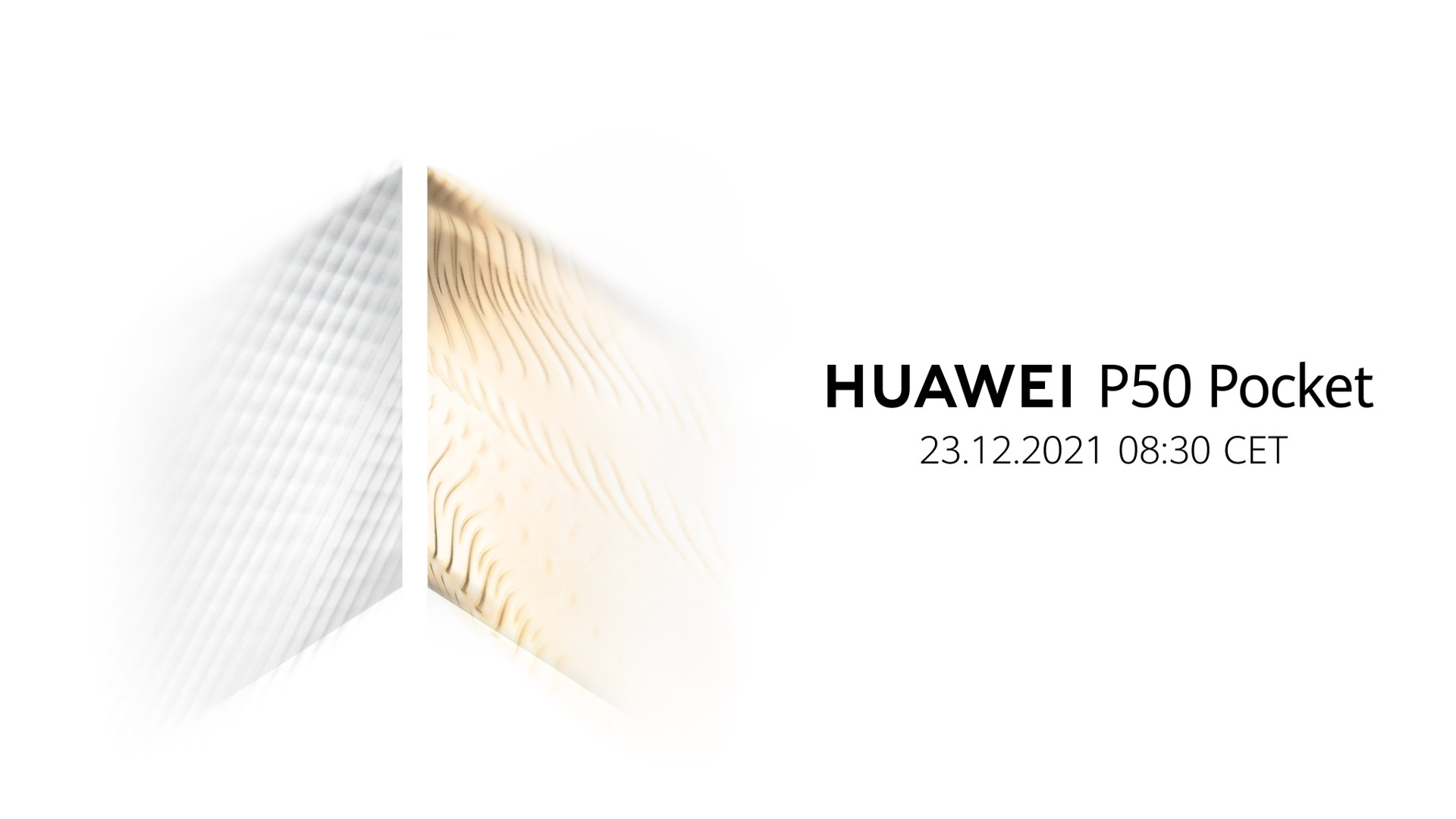
    Huawei announced today on Weibo that its new flagship product launch winter conference will take place on December 23rd. On that date, the company said that it will announce the Huawei P50 Pocket which is believed to be a foldable phone that shuts vertically like the Samsung Galaxy Z Flip 3 and the Motorola Razr.

    The new Huawei foldable flip phone will supposedly sport a next-generation hinge from Zhaoli Technology. It contains fewer parts making it not as expensive and more reliable compared to the hinges used on previous generations of flip phones. Some who have seen the device say that there are no creases on the display, which have become the bane of the modern foldable handset.

    According to images on Huawei’s verified Weibo post, the P50 Pocket will be available in White and Gold. A leaked image of a protective case for the device indicates that the back of the P50 Pocket will have two large camera lenses in the back, similar to the design of the Huawei P50. Volume rockers and the power button are on the right.

    Other products that we expect to see announced a week from Thursday include the Huawei Watch D. As we mentioned just the other day, a leaked image of the device’s box revealed that the timepiece will be able to provide blood pressure readings, and will be powered by HarmonyOS. Also, a possibility to be unveiled at the event could be Huawei’s Bluetooth glasses.

    Huawei has already released three variants of foldable phones. The Mate X and Mate XS both folded outward to reveal their larger tablet-sized display. Because the screen folded outward, the two panels that created the larger display were available for use as smaller “exterior” screens when the device was closed. Earlier this year, the Mate X2 was launched with a design similar to the Galaxy Fold 3.

    The Mate X2 closes like a book and features a 6.5-inch front cover display and an 8-inch tablet-sized screen. As for the P50 Pocket, we could see a 6.5-inch to 6.7-inch 21:9 display when opened. Will it support 5G? Huawei socked enough Kirin 9000 chips away for the foldable Mate X2 to offer 5G support for that model. But if it didn’t keep enough inventory of the chip for the P50 Pocket, it might have to resort once again to a 4G version of the Snapdragon 888 which it used on the P50 series earlier this year.

    As you probably know, the U.S. government’s export rules prevent any foundry using American technology to build chips from shipping any cutting-edge chips to Huawei without a license from the U.S. Commerce Department.

  • Malaysia PM launches Huawei’s Customer Solution Innovation Center

    Malaysia PM launches Huawei’s Customer Solution Innovation Center

    The newly refurbished and upgraded Huawei Customer Solution Innovation Center (CSIC) has been officially launched by prime minister, Dato’ Sri Ismail Sabri Bin Yaakob, as part of celebrations to commemorate Huawei’s 20th anniversary in Malaysia.

    The state-of-the-art technology and solutions displayed in Huawei Technologies (Malaysia) Sdn Bhd’s (Huawei Malaysia) CSIC also aim to assist the nation in becoming the ASEAN Digital Hub.

    Huawei’s CSIC was designed as an Information and Communications Technology (ICT) Hub and Centre of Excellence to drive the industry’s open ecosystem and accelerate digital economy transformation in Malaysia.

    The CSIC, located in Integra Tower at the heart of Kuala Lumpur, aggregates the company’s over 120 reference applications and services globally.

    Huawei’s customers and partners are able to leverage this innovative platform to design and test technology solutions, verify new business models, and nurture innovative applications and services to both the public and private sectors.

    Present during the ceremony was the chief executive officer of Huawei Malaysia, Michael Yuan.

    Delivering the keynote address during the launch, Dato’ Sri Ismail Sabri said the CSIC is a testament to Huawei Malaysia’s commitment to the nation’s digital transformation.

    “Thank you Huawei for accelerating digital transformation and strengthening the development of Malaysia’s innovative platforms since 20 years ago. For that, I would like to wish Huawei a happy 20th anniversary! We will always appreciate and value your contribution towards the nation’s digital talent development.”

    “I was informed that most of Huawei Malaysia’s employees are local. Talents are a crucial part in accelerating digital transformation for the nation,” he said.

    The prime minister added that he believes Malaysia has the capacity and capability to achieve 100% digital inclusivity, especially among the vulnerable communities.

    “I am proud to say, in embracing the concept of Keluarga Malaysia, Huawei has taken an important role in helping the government address this matter. I hope more corporations will come forward to follow in your footsteps,” he said.

    Yuan said that through the CSIC, Huawei Malaysia would continue to bring global experiences to serve the needs of the ICT industry in Malaysia and to assist local stakeholders in succeeding in their businesses.

    “This center will act as a catalyst to accelerate Malaysia’s digital transformation and to capitalize on the potential of advanced technologies and assist in driving investments in the digital economy for the nation at the same time,” added Yuan.

    He further pointed out, “It is our belief that a better-connected Malaysia will have a prosperous future. We are currently in a period where ubiquitous connectivity is no longer a luxury, but a vital requirement for a country to achieve fully developed status. Therefore, we look forward to growing together with Malaysia, to playing an integral part in the nation’s technology-based economy and to building a better future for all Malaysians.”

    Among the business-to-business solutions available and showcased at the CSIC included Huawei’s 5G solutions around the world, including those for smart cities and autonomous vehicles as well as Huawei’s Smart Education system, including hybrid learning, which increases participation and engagement between students and teachers, and allows for some students attending class in-person while others join virtually.

    Cloud computing was another highlight – where Huawei is working with Telekom Malaysia Bhd (TM) on their Alpha Edge, the only Malaysian-owned cloud and AI infrastructure and services to enterprises and government institutions that ensures data sovereignty.

    Also showcased were agro-tech systems with AI technology that could save time, monitor quality, as well as predict yield and output. This included the production of premium caviar in Malaysia using this technology.

    The CSIC also displayed network infrastructure devices that utilize the latest technological advances in 5G and telecommunications as well as Huawei’s RuralStar, which overcomes the technical challenges of connecting remote areas, bringing connectivity to hard-to-reach communities.

    Huawei also presented the Huawei RuralStar solution to Dato’ Sri Ismail Sabri as part of its corporate social responsibility initiative to bridge the digital divide in the prime minister’s constituency of Bera.

    This initiative is part of Huawei’s global vision of bringing digital to every person, home and organization for a fully connected, intelligent world.

  • Huawei, China Mobile to back Haier for 5G-powered smart manufacturing solutions

    Huawei, China Mobile to back Haier for 5G-powered smart manufacturing solutions

    Huawei and China Mobile are supporting Haier, China’s largest consumer electronics and home appliance producer, in successfully applying innovative manufacturing solutions combining 5G and mobile edge computing in its smart factories.

    Developed at the joint-innovation base established in February, the solutions integrate 5G edge computing with artificial intelligence and particularly machine vision in manufacturing environments. They are applicable to various manufacturing scenarios where they can perform a variety of functions. Haier has launched the technologies at seven smart factories in China, and plans to expand the implementation at 20 factories by the end of 2022.

    Huawei is expected to help Haier deploy the 5G solutions and transform about 100 of its manufacturing facilities globally within five years. The three also plan to offer the technologies to other leading manufacturers in China and abroad.

    5G provides manufacturers with a lot of bandwidth —up to 20GBps— and latencies as low as 1 millisecond. Mobile edge computing, one of 5G’s main features, delivers extremely low-latency cloud computing. However, it is still at a nascent stage for manufacturers aspiring to take advantage of 5G’s full capabilities.

    The solutions enable the implementation of high-performance machine vision in a manufacturing environment through low-latency connections between high-definition cameras, the AI modules at the factory site, and the training servers located off-site.

    Deployed on a 5G-enabled production line, machine vision saves manufacturers costs by rapidly performing QC checks with over 99% accuracy, at least 10% more accurate than without the function. Compared with the visual inspection performed by humans, machine vision delivers much fewer false-positive and false-negative results.

    The three partners also developed technologies to boost site and staff safety. Unlike traditional video surveillance systems that only have a recording function, AI surveillance can automatically create alarms in real-time when it detects anomalies on the factory floor. The technology can identify non-authorized individuals, process safety violations, and workers who aren’t where they should be.

    In addition, the new solutions help to efficiently coordinate the large number of people, machines, and materials involved on a complex production line as a whole. The solutions achieve this through high-definition cameras, 5G gateways, and smart industrial terminals that work in unison with the help of artificial intelligence.

    In future, the solutions will be further improved to provide “digital twins” visualization. Digital twin is the reproduction of a real and dynamic production floor into a virtual digital world, a meta-universe. Digital twin makes just-in-time preventive maintenance a reality and enables the simulation of changes to the production process before they are implemented. The three are also experimenting with how 5G environment can support automated guided vehicles to transfer items in warehouses or manufacturing lines more accurately and efficiently.

  • Huawei committed to being preferred partner for digital transformation in APAC

    Huawei committed to being preferred partner for digital transformation in APAC

    Huawei’s first flagship event for Asia-Pacific (APAC) region ICT industry – Huawei Connect 2021 – Asia Pacific launched on Friday, themed “Dive into Digital in Asia-Pacific”, explores how digital technology can better integrate with business scenarios and industry know-how to address critical business challenges, and how stakeholders can work together more effectively to foster an open industry ecosystem and drive shared success.

    This event has featured three keynotes and opening remarks with around 15 CXOs from government and commercial sectors across APAC like Sunseap Group, KBank, University Malaya, Union Bank, Toyota Astra, Bank Central Asia (BCA), UCARS, and government guests to share their vision and experience on digital transformation in APAC.

    In Jeffery Liu, the President of Huawei Asia-Pacific keynote, he spoke that digital transformation is more real and urgent than ever. Huawei will leverage innovative ICT technologies to help customers accelerate digital transformation. In Asia Pacific, Huawei will focus on the 4 areas: Cloud services, Low-carbon development, Innovative digital infrastructure, building partner ecosystem, and training digital talents. Huawei is committed to be the preferred partner for digital transformation in the region”

    Jeffery said, “In Asia Pacific, HUAWEI CLOUD operates in 7 Availability Zones and has local service teams in over 10 countries. Huawei combines digital and electronic technologies to develop innovative digital power services by using energy as efficiently as possible, and minimizing the carbon footprint of ICT infrastructure by leveraging clean power generation, electric transportation, and smart energy storage, supporting our customers to save energy and protect the environment. Every year Huawei invests over 10% of revenue into R&D, delivers value to the industry and society through innovation, and helps our customers go digital with innovative and reliable products and solutions. In the next five years, we will continue to train over 100 thousand ICT professionals in Asia-Pacific to strengthen the talent root for digital transformation.”

    In the sharing session of Digital Leadership, Professor Alex Siow from NUS shared on how emerging digital technologies have changed various industries, and how these technologies will evolve along with the effects of the pandemic. “Digital leadership is the strategic use of a company’s digital assets to achieve business goals and digital leaders shall explore how technology can be used to help their business become much more responsive to the needs of their customers and the ever-changing business requirements. Digital leaders must lead the way in digital transformation and help the customers more digital and more agile for the adoption of rapid acceleration of technological changes,” said Professor Alex Siow.

    The event is honored to invite key companies like PSA Corporation Ltd, Sunway Berhad Malaysia, Integrated Health Information System (IHIS) Singapore, Singapore Press Holdings (SPH) and Prof. Dr. De Crème from NUS to participate in the open panel discussion, shared their thoughts on thriving as a digital enterprise and to help the industry leaders approach business transformation from a different perspective.

    During the panel discussion, Ho Vee Leung, Head of Infocomm Technology & Data from PSA shared the benefits of technology, like how 5G, which is capable of large bandwidth and low latency wireless transmission, enables real-time control of mobile equipment in the open port environment, and how Intelligent IoT technology has enabled energy consumption within the terminals to be better managed and optimized, balancing peak and trough demand and reducing the risk of power-related disruptions.

    Alan Goh, Assistant Chief Executive of IHIS also shared how IHIS utilized technology to create value in the healthcare industry. Alan shared the example of the vaccination program in Singapore and how they integrated technology to enable real-time updates of the vaccination process.

    Kevin Khoo, CIO from Sunway Berhad Malaysia shared his rich experience in managing a large conglomerate in the digital transformation journey and the importance of close partnership with vendor.

    Glen Francis, CTO of SPH mentioned that leadership and stakeholder alignment is important especially when building new technology tool or platforms in the organization and communication is an important part in overcoming the challenges of the digital transformation journey.

    At the discussion, Nicholas Ma, the President Huawei Asia Pacific Enterprise BG pointed out that Digital transformations is not a plug-and play strategy revealing immediate results. Two areas are essentially important for digital transformation, one is the organization and the other is technology. To tackle the skills issue and improve organizational agility, Huawei will continue to invest in digital talents cultivation and work closely with partners to provide more scenario-based solutions in their digital transformation journey.

    “As new technologies like Cloud, and AI continue to be mature, the application of digital technologies is expanding beyond the office and into production systems of the industries, which will change or improve productivity. Together with our partners, we take the time to truly make the best use of our leading technologies and solution, to understand our customers’ businesses, particularly the challenges they are facing, and then develop tailored solutions to support them. To do this, we have built 13 Open Labs around the world to support joint innovation, in Asia Pacific, we have OpenLabs in Singapore and Thailand.” further shared by Nicholas Ma.

    Brandon Wu, CTO of Huawei Asia Pacific Enterprise BG mentioned that Huawei plans to provide enterprises with a consistent experience while using cloud-native applications that are not constrained by geographical, cross-cloud, or traffic limitations. Huawei is also leveraging ICT innovations for energy saving and sustainability, by introducing green sites, improving data center network efficiency, and binging green connectivity by extending more optical connections to home and campus networks, to further reduce power consumption.

    Brandon Wu also elaborated latest innovations that Huawei will bring to the market:

    Huawei OptiXsense Solution and a product model EF3000 which is able to measure the vibration of the laser, to sense the environment changes of the object under monitoring, to significantly reduce the false alarms.

    Digital Offices, powered by intelligent “Office Twins” – Wi-Fi 6e AP and HUAWEI IdeaHub. They will supercharge your meeting room experiences and office productivity with ubiquitous gigabit and seamless collaboration.

    The industry’s first deterministic IP network solution, which supports multi-hop networking of tens of thousands of nodes, so it can deliver deterministic IP network performance, making lights-out digital factories a reality.

    Hybrid Optical transmission network (OTN), by combining both the technology advantages between PON and OTN together, Huawei introduced H-OTN for the first time to the market, the packet loss can now be minimized and the reliability can reach five 9s for mission-critical services.

    OceanStor Pacific, the industry’s first distributed storage for High-Performance Data Analytics (HPDA). This solution breaks the silos of data processing between big data, AI, high-performance computing, and streamlines multiple storage capabilities into one single device, with adaptive data flow for large and small size IOs.

  • Huawei CFO Freed After U.S. Deal

    Huawei CFO Freed After U.S. Deal

    Huawei’s chief financial officer Meng Wanzhou has been released by Canadian courts and flew home to China last week after reaching an agreement with U.S. prosecutors to end their bank fraud case against her.

    Last Friday, Meng, who is also the elder daughter of Huawei founder Ren Zhengfei, and the U.S. Justice Department reached a deferred prosecution agreement.

    Meng has taken responsibility for her principal role in perpetrating a scheme to defraud a global financial institution,» according to a report citing Brooklyn-based acting U.S. attorney Nicole Boeckmann.

    The current agreement only pertains to Meng and the U.S. Justice Department said it is preparing for trial against Huawei.

    For the financial sector, one issue that remains unresolved is the legitimacy of Meng’s claim that HSBC had knowledge of Huawei’s relationship with Skycom – a Hong Kong-registered entity and alleged business partner that violated U.S. trade sanctions – and, in fact, knowingly placed the firm within Washington’s radar before misleading Canadian authorities on the matter.

    China has been accused of engaging in hostage diplomacy as a response to Meng’s 2018 arrest with the over 1,000-day jailing of two Canadians – businessman Michael Spavor and ex-diplomat Michael Kovrig.

    Beijing has repeatedly denied that the detainment of Spavor and Kovrig was retaliation for Meng’s arrest.

    Within hours of the news of Meng’s deal with the U.S., the two were released from Chinese jails and on their way back home to Canada.