Tag: Hyundai department store

  • Offline stores turning crisis into opportunity

    Offline stores turning crisis into opportunity


    Will offline stores disappear?

    When consumers began online shopping in 1994, most of them could hardly imagine that offline stores might disappear. Online shopping was a mere subsidiary to offline stores, selling only a few items then.

    However, the volume of e-commerce has grown explosively over the past 20 years, blurring boundaries between online and offline.

    A sense of crisis in the retail business is different from the past. Mobile platforms dominate more than 40 percent of e-commerce sales, being the key to online-to-offline (O2O) commerce.

    Amazon, the world’s top e-commerce firm, has twice as many customers than offline No. 1 Walmart which has over 6,000 stores worldwide.

    In Korea, the sales of online markets between January and August this year hit 42 trillion won ($37 billion), rising 21 percent year-on-year, according to Statistic Korea (KOSTAT).

    If the current growth rate continues, its sales this year will reach 65 trillion won, about 5 percent of Korea’s gross domestic product (GDP) for the year. This figure surpasses Korea On-Line Shopping Association’s (KOLSA) early estimate of 60 trillion won. In 2001, the same figure was 3.3 trillion won.

    On the other hand, the growth of offline retail, conducted at department stores and discount chains, has been slow since 2013.

    Although saturating offline stores and governmental regulations on retail giants are some of the causes for the slump, a more important reason is the rapid growth of the online market.

    A virtual reality Nike shop located in Hyundai Department Store, Pangyo.
    /Courtesy of Hyundai Department Store

    Retail giants stepping into online

    To survive this trend, retail giants, the main concern of which are offline stores, began to expand their online platforms, as their offline channels have been left behind by fast growing e-commerce firms, such as Gmarket and Coupang.

    Korea’s largest retailers ― Shinsegae, Hyundai and Lotte ― have been focusing on the O2O business platforms which combine online markets with their existing retail networks. They have adopted the latest technology with their O2O businesses.

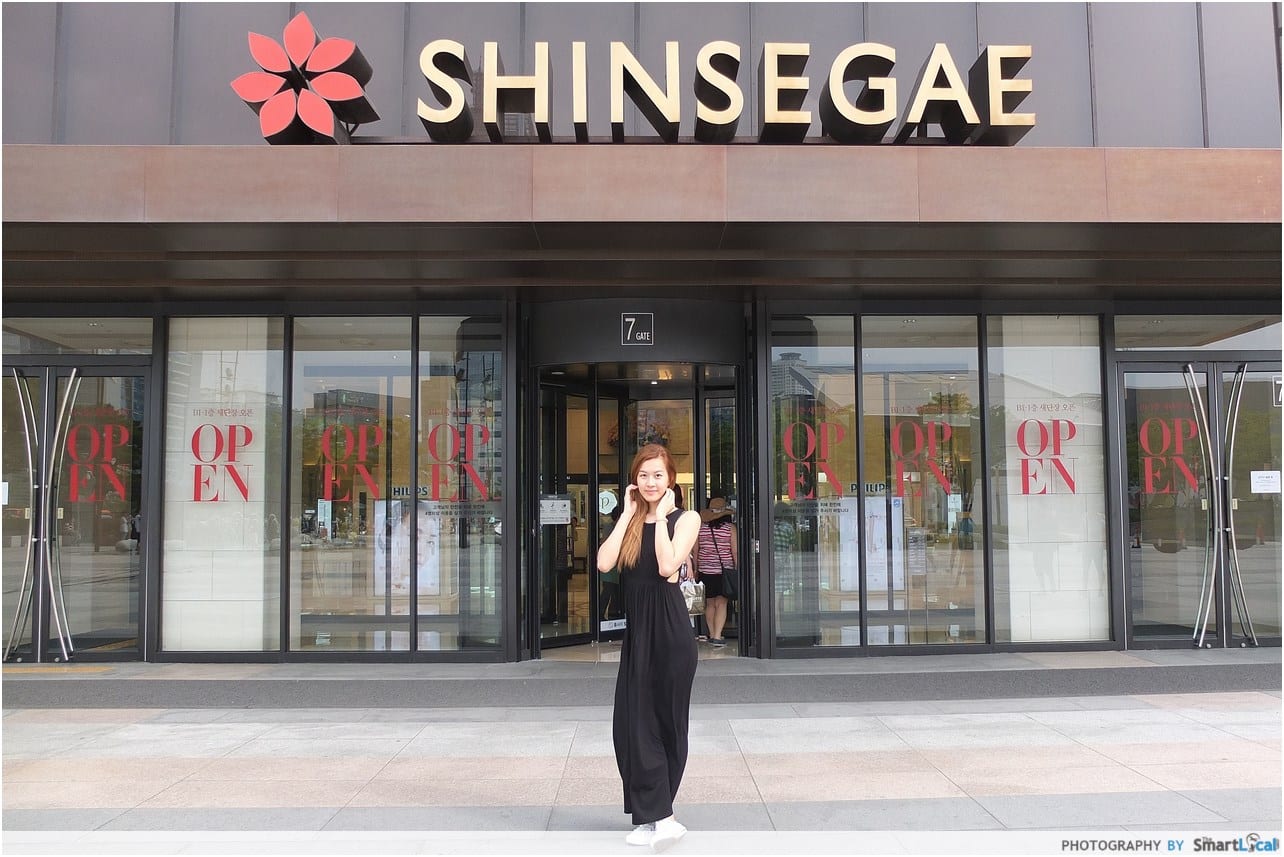
    Shinsegae Department Store released a mobile application “SHOP@” in February, promoting it as a “department store to be enjoyed by the eyes.”

    This application offers a panorama of the department store and shows dressed images of models, as well as photos of products which have been commonly offered by online shopping malls, including its own “SSG.com.”

    Unlike other e-commerce applications, SHOP@ customers can feel like they are in the store, because photos of products are taken as they are displayed at the offline store.

    More than 400 brands at Shinsegae Department Store are displayed by the application, as Shinsegae employees have taken pictures of the products and directly uploaded them to the application.

    Hyundai Department Store opened a virtual reality (VR) men’s wear store at the Jungdong store, Gyeonggi Province, Oct. 9.

    Customers can look around the department store and see mannequins dressed in whole outfits by accessing Hyundai’s online shopping mall “thehyundai.com” and following the arrows on the screen.

    If customers want to visit a certain brand shop, they just need to click the door icon and check details of the products at the VR store.

    Hyundai opened VR stores of Nike and Adidas at its Pangyo store, Gyeonggi Province, on a trial basis in July.

    The stores offered a full 360-degree view of the offline stores providing simple information of products. Hyundai Department Store plans to offer a 360-degree view of each product and to open a full VR department store by 2019.

    A Hyundai Department Store official said, “Our department store will provide different experiences, shifting offline stores to online.”

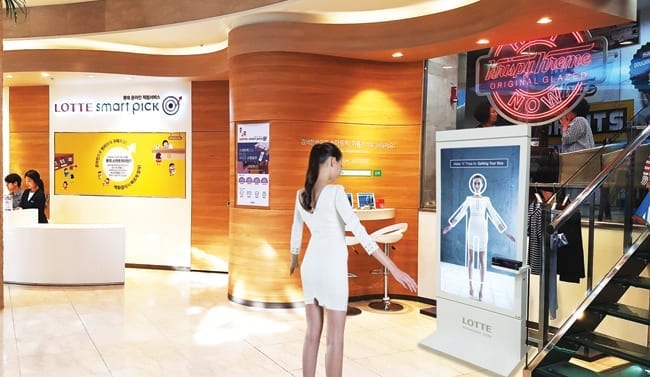
    Lotte Department Store introduced a 3D foot scanner in July. The Swedish-made scanner measures a customer’s foot size and analyzes conditions of the customer’s foot. Shoemakers can recommend and make the most suitable shoes for the customer. More than 1,800 customers had their feet scanned and over 800 ordered shoes as of September.

    Once their feet are scanned, customers can use the data at both online and offline stores.

    “Our department store has a 3D virtual fitting room and foot scanner, as examples of our new omni-channel service which connects online and offline,” a Lotte Department Store official said. “We will develop mobile applications for our customers to buy clothes and shoes with their smart phones.”

    Fighting fire with fire

    Although retail giants are expanding their online platforms, they are also finding ways to attract customers to their offline stores. Those giants are developing offline stores through experience which is hardly achieved in online markets.

    Heads of retail giants have recently stressed the importance of experience, targeting customers who seek to spend their leisure time shopping.

    “Shopping malls with experience are the future of offline stores,” said Hyundai Department Store CEO Kim Young-tae during the press conference at the opening ceremony of Hyundai City Outlet Dongdaemun in March. “Online shopping malls only display the products, but offline stores enable customers to touch and enjoy the products during their shopping.”

    Shinsegae Group Vice Chairman Chung Yong-jin said, “Customers want to gain both products and value, staying longer at a place where they have a reason to visit,” at the opening ceremony of Starfield Hanam in September.

    Lotte Mart CEO Kim Jong-in emphasized last year that discount chains should provide customers with new lifestyle experience. He said Lotte Mart will find an answer from “a space” which online malls lack.

    The latest technologies enable customers to experience offline stores without actually being there.

    Shinsegae Starfield Hanam attracts customers with “VR Fitness” at Sports Monster. Customers can enjoy scientific digitally-based exercises, such as VR fitness and bike-racing, at the recreational space.

    “Sports Monster and Aqua Field are advanced concept entertainment spaces that Starfield Hanam has been preparing for a long time,” a Shinsegae official said. “We expect those spaces to become new attractions, providing our customers with differentiated value through various exercises and experiences which they have never seen.”

    Lotte Department Store introduced the “Smart Shopper” service at its grocery stores at the Bundang store on Oct. 4.

    Customers can go shopping with barcode scanners and they do not have to push their shopping carts. If they scan items with their “Shopper” scanners, products are automatically added to their virtual cart.

    Customers can check added products on “Order Viewer” screens installed at several places in the store and can remove unnecessary items at automatic counters. Purchased items can be delivered to their home.

    Smart Shopper enables customers to check the actual products at offline stores, while resolving inconveniences of carrying them home.

    Duty free shops aim to provide experiences for customers with technology as well.

    HDC Shilla Duty Free plans to make an IT converged duty free shop, if its bid to open a new duty free shop will be successful.

    A state-of-the-art duty free shop with merged reality (MR), artificial intelligence (AI) and machine learning technologies is the company’s goal. The duty free shop plans to show hologram images, installing media walls and digital signage in the lobby.

    Examples in other countries

    Meanwhile, retail giants abroad have already gone through similar changes amid the crisis of offline stores.

    In 2014, British retailer Tesco unveiled its VR store which enables customers to look around the virtual store and purchase goods from there.

    The U.S. retailers Neiman Marcus and Nordstrom introduced smart mirrors for virtual dressing last year.

    The North Face stores in the U.S. have provided extreme VR experiences to attract customers to offline stores. If customers select clothes and wear VR devices, they can virtually wear selected clothes and experience extreme sports, such as jumping off a 128-meter cliff in the Grand Canyon.


  • South Korea August dept store sales rise for 3rd month

    South Korea August dept store sales rise for 3rd month

    South Korea’s department store sales rose for a third straight month in August thanks to widespread discounting ahead of a major public holiday this month, government data showed on Thursday.

    Combined sales at department stores run by Hyundai Department Store, Lotte Shopping and Shinsegae Co rose 4.1 percent on-year, data from the Ministry of Trade, Industry and Energy said.

    This followed a 7.0 percent jump in July.

    Sales of all individual categories at department stores rose in August, with the exception of men’s clothing.

    The same data showed August sales at discount stores fell 1.3 percent from a year ago after rising for two months previously. In August, sales rose 2.1 percent.

    The decline was attributed to a 14.8 percent slump in sports-related goods as the unusually hot summer weather this year discouraged customers from seeking them out, the monthly report said.

    Online open market sales growth at websites owned by eBay Korea Co Ltd and others slowed slightly to 22.4 percent in August from 31.2 percent in July.

    Retail sales overall in August mainly saw demand for household electronics like air conditioners and gifts ahead of the Chuseok holiday season, the data said.

  • Korean department stores trigger restaurant battle

    Korean department stores trigger restaurant battle

    Korean department stores have become the new battleground for Korean restaurant chains.

    Restaurants have long been a lucrative business for department store operators – accommodating hundreds of weary shoppers every day, they have sometimes been referred to as a ‘goose that lays a golden egg’.

    However, until now, opening such a restaurant had been a near-impossible task without deep connections to the store’s higher-ups.

    According to retail industry sources, several new restaurants are set to open next month in the food court section of Lotte’s flagship department store in Myeongdong, which is currently being renovated. Of note, the new owners didn’t have to lobby Lotte management or be a member of a Lotte family to open their establishments.

    Lotte faced significant criticism in June when the media spotlighted Seo Mi-kyung, Lotte founder Shin Kyuk Ho’s third wife, and her company Yuki Co, which operates a bibimbap restaurant (Yukyung),  naengmyeon restaurant (Yuwonjeong) and coffeehouse (Margaret) at the Lotte’s Myeongdong store.

    “We’re in the middle of clearing up our business with Seo’s company,” said the department store official. “We plan to operate our food court based on the popularity of restaurants and their competitive advantage.”

    A high-end sushi restaurant, Sushi Chohi, Chinese restaurant Luii, and European casual restaurant Elbon Grand Cafe operated by chef Choi Hyun-seok are among the new eateries that will open in mid-September.

    Hyundai Department Store, once criticised for giving favors to its subsidiary Hyundai Green Food, is also rearranging the food courts at its stores to accommodate popular restaurants from across Korea. And although it still operates Hyundai Green Food-owned restaurants like Bonga Sushi and Hansol Naengmyeon at its branches, it’s now focusing its efforts on attracting other popular restaurants.

    “Bonga Sushi and Hansol Naengmyeon have made a name for themselves, and their inclusion is not necessarily due to the Hyundai family relationship,” said a Hyundai Department Store official. “We’re concentrating more on attracting well-known restaurants to our food courts, because restaurants with no competitive edge aren’t likely to survive.”

    Italian restaurants Le Jiu and Signature Lab opened their latest locations at the Samseong-dong branch, while Amorino, an Italian gelato franchise, opened a new eatery at Hyundai’s Apgujeong branch.

    Shinsegae Department Store also introduced new restaurants this year. Youth-driven restaurants from Gangnam and Hongdae, including Chinese cuisine franchise Choma, steakhouse restaurant Fukuoka Hambageu, and premium tteokbokki restaurant Villa de Spicy, according to Shinsegae, were met with high acclaim.

    Shinsegae also said that new restaurants tend to attract more customers to its stores.

    “Department stores are no longer solely a place for shopping. They’re transforming into one integrated living space for consumers to spend their free time,” said a retail industry official. “Given the circumstances, the stores will continue with their efforts to accommodate more popular and competitive restaurants.”

  • GIC inks US$197m deal with top Korean retailer to develop mall in Incheon

    GIC inks US$197m deal with top Korean retailer to develop mall in Incheon

    Singapore’s sovereign wealth fund GIC and Korean department store Shinsegae are partnering to develop a prime retail mall in the Incheon Free Economic Zone (IFEZ).

    Working through affiliates, the companies have signed a US$197 million sale-and-purchase agreement for 59,730 sqm of land for the Incheon mall in the international business district of Songdo, close to a subway station, bus terminal and expressways. Scheduled for completion by 2020, the mall will include entertainment as well as leisure attractions.

    Songdo is a new city part of IFEZ, 65km southwest of Seoul, where Shinsegae has its headquarters. The name of Shinsegae literally means “New World”.

    Set up in 1981 to preserve and enhance Singapore’s foreign reserves, GIC is one of the world’s largest global investors with more than US$100 billion of assets in more than 40 countries.

    GIC and Shinsegae are already working together on developing a prime retail mall in Dongdaegu Station, scheduled for completion in the second half of this year.

    GIC last year partnered with the Canada Pension Plan Investment Board (CPPIB) to acquire the Seoul-based D-cube retail mall, rebranding it as the Hyundai Department Store.

  • Retailer simplifies name to The Hyundai

    Retailer simplifies name to The Hyundai

    For the first time since opening 31 years ago, Korean retail giant Hyundai Department Store is renewing its brand identity and simplifying its name to “The Hyundai”.

    Starting with its Apgujeong flagship store this month, the group is changing the exterior of its establishments featuring its new logo and corporate colours. Hyundai has 15 department stores, seven U-Plex stores and three outlets nationwide, all displaying a three-coloured-bar (mint green, black and yellow).

    As The Hyundai, the design changes to dark green and lilac hues with the aim of promoting a luxury image. As well as appearing on the façade of its department stores, the new logo will also be rolled out inside the store, and on shopping bags, membership cards and other collateral.
    The decision for the change is to augment its image as versatile supplier of lifestyle and shopping space and products, says marketing chief Chung Ji-young. The makeover was the idea of chairman Chung Ji-sun, grandson of the late Hyundai founder Chung Ju-yung.

  • South Korea January dept, discount store sales seen rebounding from December

    South Korea January dept, discount store sales seen rebounding from December

    Annual sales at South Korea’s top department and discount stores in January were seen rebounding from the previous month, finance ministry estimates showed on Friday, backing recent policymaker comments that consumption is steadily recovering.

    Combined sales at department stores run by Hyundai Department Store, Lotte Shopping and Shinsegae rose 9.6 percent in January from a year ago, the finance ministry said in a monthly report.

    Sales at major discount stores were seen to jump 13.4 percent over the same period, the data showed.

    Figures from the trade ministry, which will publish confirmed numbers later in the month, had shown department stores’ December sales fell 5.7 percent and discount store sales had been down 5.1 percent on-year.

    The finance ministry data also showed gasoline and diesel sales in volume terms had gained 8.5 percent in January from a year ago, which was the fastest rise in three months and compared to a 4.3 percent rise in December.

    The ministry said in the report that domestic consumption had steadily posted positive growth while production and investment were showing signs of improvement. However, it noted that external risks to the economy were increased by slowing Chinese growth, geopolitical risks sparked by a rocket launch from North Korea on Sunday, falling oil prices, and jitters stemming from the direction of U.S. monetary policy.


  • Korean department stores offer instant tax refunds to tourist

    Korean department stores offer instant tax refunds to tourist

    South Korean department stores will start offering instant tax refund services to foreign customers from this month as part of an effort to boost sales.

    Under the new program, foreigners can buy products without paying the mandatory 10 per cent value-added tax (VAT) if the item costs 30,000-200,000 won (US$25-166), observers said. Each person can be exempt from VAT for up to the first 1 million won in purchases. Products that cost more than 200,000 won require the buyer to pay the VAT and get a refund later on.

    Seoul announced last year that it would implement changes to the way all local tax-free shops operate in 2016 by making it easier for tourists to spend in the country without the need to hold onto purchase receipts that must be shown at departure to get tax refunds.

    Lotte Department Store, South Korea’s No. 1 luxury retailer, said the instant tax refund will be given at its main Sogong-dong flagship store in downtown Seoul.

    Shinsegae Department Store said its main store in Jung-gu will offer the service to customers, while Hyundai Department Store plans to give immediate tax refunds at its main Apgujeong store and its Coex outlet in southern Seoul.

    Department stores said they picked the stores because they are the most frequented by foreign visitors, with more stores to be added later.

    “Foreign shoppers can buy products minus the 10 per cent VAT so there is no need to keep tabs on receipts or show the product they purchased at the airport when they leave the country,” a Lotte official said. “This can greatly reduce the hassle at airports and should fuel sales at our store.”

    In addition, local department stores said they will kick off promotion sales to attract Chinese tourists who are expected to arrive in large numbers during the Chinese Lunar New Year holiday. The traditional holiday runs from February 3 through February 13 this year.

    Lotte said it will give 50,000 won discounts for purchases exceeding 1 million won, with gift cards equal to 5 per cent of the purchase of the total to be given if the total tops 10 million won. Shinsegae said it too will give upwards of 30 per cent discounts and gifts to foreign tourists that buy items at its stores in February. The retailers said that to get the benefits the shopper needs to show his or her passport when making the purchase.

  • South Korea’s discount store sales fall at fastest pace in 4 mths

    South Korea’s discount store sales fall at fastest pace in 4 mths

    Sales at South Korea’s top department stores snapped three months of rises in December and marked their biggest annual fall in four months due to warmer weather compared with the previous year, government figures showed on Wednesday.

    Combined sales at department stores run by Hyundai Department Store, Lotte Shopping and Shinsegae Co fell 5.7 percent on-year, finalised data from the Ministry of Trade, Industry and Energy showed on Tuesday.

    This compared with a rise of 1.0 percent in November and was worse than a 3.8 percent decline estimated by the finance ministry. December’s drop was the biggest since a 6.5 percent fall in August last year.

    Warmer weather resulted in poor apparel sales as customers bought less winter clothes, the trade ministry said. High-end watches, jewellery and household electronics sales capped the decline.

    The average temperature in Seoul was 1.6 degrees Celsius (34.88°F) in December, compared to an average negative 2.9 degrees a year prior. The same data showed annual sales at South Korea’s major discount stores fell 5.1 percent in December in their third straight month of declines and the biggest fall since August.

    It was worse than a 2.1 percent fall estimated previously.

    Discount store sales also suffered from warm weather as well as softened demand for food products, the trade ministry said. On a whole for 2015, sales at department stores and discount stores fell 1.2 percent and 2.1 percent, respectively, mainly due to an outbreak of a deadly virus in the middle of the year and surging online shopping, according to the ministry.

    The trade ministry data came a day after fourth-quarter GDP slowed by more than half from the third quarter of 2015, as growth from private consumption was offset by poor construction investment.


  • South Korea retail sales rise

    South Korea retail sales rise

    Preliminary data from leading department and discount stores in October reveals South Korean retail sales are recovering post-Mers.

    Combined sales last month at department stores run by Hyundai Department Store, Lotte Shopping and Shinsegae Co jumped 17.4 per cent year on year.

    That’s a huge improvement on the 2.8 per cent department stores achieved in September and the seven per cent rise in discount department stores.

    The preliminary data from the Finance Ministry shows clearly a bounce back following the Middle East Respiratory Syndrome (Mers) scare which caused tourists to travel elsewhere and locals to stay at home in fear of catching the viral epidemic.

    Figures released by Statistics Korea last week show South Korea retail sales rose to their highest level in four months in September, up 4.1 per cent on September 2014.

    Department store and discount store sales started to slide in June when the Mers crisis peaked.

  • Pop up stores change Korea retail face

    Pop up stores change Korea retail face

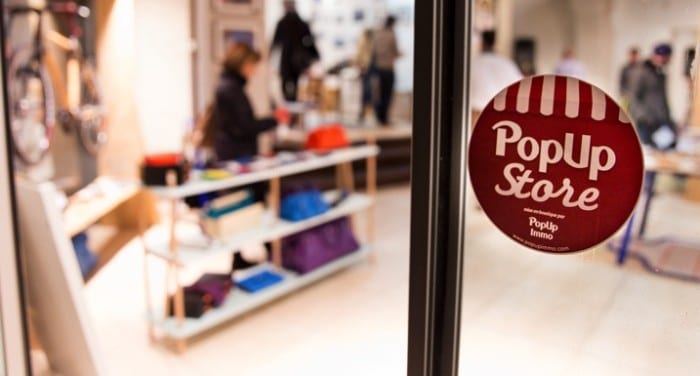
    More and more specialised retailers or service providers – ranging from barbershops to paint stores – are making appearances inside Korean department stores.

    These special shops are appearing as pop up stores rather than taking up permanent residence. The phenomenon is the result of retailers choosing pop up stores to publicise their brands, which allows them to avoid sales pressure that comes with leasing permanent space in a department store.

    Lotte Department store has opened a Club Monaco Men’s shop. The barbershop Herr’ has been added to the already existing select shop, offering consulting services related to style and haircuts. The barbershop is also offering customers a traditional English wet shaving. It is the first time for a barbershop to enter an apparel store, which makes the ‘special store’ extra special.

    A pop up store called Men’s AGIT gathered many popular hobby goods such as cameras, camera accessories, drones, plastic figures and RC cars in one spot.

    Another notable pop up store is the ‘Home and Tones’ shop at Hyundai Department Store. Since the number of people redecorating their homes by themselves has increased, Samhwa Paint has been managing a pop up store since September 7. Eco friendly paints, as well as paint that turns into a blackboard when applied are exhibited, and paint that can be mixed on-site through toning machines, are drawing the attention of consumers.

    The ’99 Avant’ pop up store sells the creations of young artist Han Seung-woo. Hyundai department store officials say that the pop up store is gaining positive reaction from customers as they can communicate with the artist in person.

    Shinsegae department store made space on its sixth floor just for pop up stores. Many brands including whiskey brand Balvenie’s ‘craft lounge’, shoe care brand ‘Resh’, and BMW’s Mini cars and bicycles have all opened pop up stores at the location.

    Shinsegae officials mentioned that the sales of pop up stores are threatening sales at official stores.

    “Now, already existing brands are also using popup stores as a method to introduce their new products. Department stores are also benefitting from the pop up stores because various brands can be presented so customers have no time to be bored.”

  • Korea set to woo back Chinese tourists

    Korea set to woo back Chinese tourists

    South Korea’s retail and tourism industries are preparing a slew of promotional and cultural events to woo back Chinese tourists during a long-haul holiday season, pinning their hopes on making up for a summer slump in the wake of a viral respiratory illness, sources say.

    Since the first outbreak in late May, Middle East Respiratory Syndrome (MERS) made a big dent on domestic spending as foreign tourists canceled their planned trips during the peak summer season, while South Koreans avoided shopping centers and other crowded places in June and July.

    While the viral disease hit the tourism and retail industry hard, Chinese tourists have started to return to the once-empty streets of Myeongdong, one of the capital’s most popular shopping districts, over the past month.

    The number of Chinese travellers has increasingly recovered to the previous year’s level since late August and marked an on-year rise since mid-September, the state-run Korea Tourism Organization (KTO) said.

    About 303,000 tourists with Chinese nationality entered the nation in the first two weeks of September, rising 4.8 per cent compared with the same period a year ago, it said.

    “The number of Chinese travelers has sharply risen this month, and the number is expected to completely recover during the Chinese holiday season,” Han Hwa-joon, who oversees the KTO’s Shanghai branch, said. “The recovery pace is faster than expected.”

    Chinese Thanksgiving falls on September 26-27, and together with the Chinese National Holiday running from October 1-7, the holiday season can be extended up to 12 days.

    As the Chinese holiday season draws near, major shopping centers and duty-free operators are making all-out efforts to draw Chinese tourists to make up for a shortfall in sales amid dormant domestic spending.

    According to the KTO, 164,000 Chinese travelers visited the nation during last year’s autumn holiday season and spent 2.4 million won on average, which amounts to about 400 billion won (US$341.5 million) in total.

    During this year’s Chinese National Holiday, the tourism agency expected some 210,000 Chinese will visit the nation, up 30 per cent from a year ago, considering the pace of growth over the past three years.

    “We will host a variety of events even after the Chinese holiday to make up for the fall in tourists during the peak season from June to August,” said Seo Young-chung, a KTO official in charge of Chinese tourism.

    Lotte Department Store plans to host a variety of promotional events targeting Chinese travelers during the golden weeks, providing discounts on payments made through UnionPay, China’s largest credit card issuer, and Alipay, China’s No. 1 mobile payment application.

    Shinsegae, the nation’s leading department chain, said it will give special discounts to Chinese customers, while Hyundai Department Store also started the regular sale season earlier than usual to attract the deep-pocketed travelers.

    Operators of duty-free shops have also stepped up efforts to bring back Chinese travelers, the largest consumer group, which accounted for about 70 per cent of downtown duty-free spending last year, up from around 15 per cent in 2011.

    Lotte Duty Free, the world’s fourth-largest duty-free operator, held a travel fair in Shanghai on September 9, in which senior company officials reached out to Chinese tourism officials to attract Chinese travelers.

    Hotel Shilla, part of Samsung Group and the world’s No. 6 duty-free operator, also presented various sales promotions and tour packages during the fair along with other Samsung units, with the attendance of senior officials.

    “The Korean tourism industry has mostly recovered after the Mers outbreak came under control, and it will make a full recovery in September,” Hotel Shilla CEO Lee Bu-jin told reporters during her visit to Shanghai.

  • Spyder launches in Korea

    Spyder launches in Korea

    Ski and sportswear brand Spyder has launched in South Korea with an all-new product line available in freestanding stores and shop-in-shops.

    An accelerated retail rollout is planned with 25 stores opening across the country by the end of 2015.

    “We are excited to be working with Global Brands to bring Spyder to South Korea, one of the world’s most fashion-forward and trendsetting markets,” said Jamie Salter, chairman and CEO of Authentic Brands Group and owner of the brand.

    “Spyder is highly regarded and we are confident that the brand will flourish in the country.”

    Designed for the ‘style-seeking South Korean consumer’, both the men’s and women’s collections draw from the core DNA of the brand, fusing elements of performance and fashion.

    “We see tremendous equity in the Spyder brand and its ability to translate across key markets in Asia,” said Bruce Rockowitz, CEO and vice chairman, Global Brands Group.

    “We look forward to replicating the success we have achieved in other markets to South Korea, through the roll out of a number of exciting brand and category extensions.”

    Spyder is featured in shop-in-shops at fashion hot spots including Galleria Department Store, Hyundai Department Store, Lotte Department Store and AK Department Store. The brand also launches with freestanding stores in Seoul, Daegu, Gumi, Incheon and Sokcho. Spyder will be promoted in a 360 degree campaign that includes national Print, Out of Home, Digital, Social, and TV promotion beginning this month.

    Spyder is described as one of the world’s most recognisable and credible outdoor sportswear brands, focused on enhancing the ski experience both on and off the mountain. Originally founded by David Jacobs, coach of the Canadian Ski Team and Bob Beattie, coach of the United States Ski team, Spyder’s roots run deep in the ski community. The brand has been the official sponsor of the US Ski team since 1989. Spyder offers technical ski, fitness, and lifestyle apparel and accessories for men, women, and children. The highly sought after brand is available in department stores, sporting goods stores, and specialty retailers throughout North America, Europe, the Middle East and now South Korea.

  • Chinese couples spend big in Korea

    Chinese couples spend big in Korea

    Korea is becoming a major destination for young Chinese couples looking to splurge on expensive items for their upcoming marriages.

    Chen Yi, 34, and Chai Xuefang, 30, who recently visited Seoul from Shandong province, China, are typical of the growing number of couples who are sparing no expense to make their big day special.

    The two bought two Vacheron Constantin wristwatches worth 100 million won ($84,350) each at the Hyundai Department Store in Apgujeong, southern Seoul. They also bought a two-carat diamond ring for 60 million won.

    “A lots of Koreans are preparing for their weddings at Cheongdam-dong [near Apgujeong in the posh Gangnam District],” said soon-to-be-wed Chai. “We plan to get wedding consulting [here in Seoul] exclusively for Chinese people.”

    Another Chinese couple, Yang Xiaoliang, 30, and his fiance Xu Jingjing, 27, last month bought a 10 million won Thom Browne suit for men and two Rolex wristwatches for the couple worth 150 million won each at the same Hyundai Department Store in Apgujeong. They purchased the items ahead of a wedding photo shoot at a studio in Cheongdam-dong.

    The Korean retail and hotel industry is taking notice of the growing number of Chinese couples who are spending big in Seoul to prepare for their weddings.

    They have become major customers who are spending large on high-end wedding gifts, including jewelry, wristwatches and designer suits and dresses. Majors stores are already catering to the growing demand.

    Hyundai Department Store’s Apgujeong branch plans to provide a wedding consulting program exclusively for Chinese couples, and have already enhanced other services for young Chinese customers. Since last month, they have provided a free delivery service where electronic appliances and furniture purchased by Chinese couples can be dropped off at their front door in China. The service has a limit of 30 kilograms (66 pounds) per person.

    Lotte Duty Free recently started a service where items purchased at its shops can be delivered from the Chinese airport to their homes.

    “We get a lot of inquires from Chinese tourists who come to Gangnam [District] to get wedding consulting,” said Lee Hyun-sook, a foreigner-exclusive concierge at Hyundai Department Store. “They shop after asking every detail, such as which brand Koreans most prefer for their own wedding gifts.”

    China Union Pay credit card purchases made by Chinese on imported brands such as Tiffany’s and Cartier soared 91.3 percent in the first eight months of this year compared to the same period last year at Hyundai Department Store. Purchases on furniture, electronic appliances and household goods saw a huge growth of 134.1
    percent.

    Shinsegae Group is widening its marketing strategy to attract soon-to-wed Chinese couples in its department stores and other major affiliates, including its discount store E-Mart and its hotel business Westin Chosun.

    Shinsegae Group invited two couples from Shenyang and Tianjin to Seoul, where they will get a wedding photo taken at the Cheongnam-dong studio that took wedding pictures for famous Korean actresses Jun Ji-hyun. They will also get the chance to experience a traditional Korean wedding ceremony at the Westin Chosun Hotel and shopping at E-Mart and the retail group’s other outlets. The cost is 15 million won per person.

    “We plan to secure the lead in grabbing Chinese couples visiting Korea to get wedding services during the most popular wedding seasons for the Chinese, which starts this month and leads up to the end of the year,” said Shinsegae CEO Jang Jae-young.

    Wedding gifts, including high-end wristwatches, jewelry and designer bags, accounted for 60 percent of all sales made by Chinese tourists at Shinsegae Department Store during China’s May Day, from April 25 to May 3.

    Hotels are also recognizing the growing trend.

    Plaza Hotel last month introduced a wedding package where a hopeful groom can make a proposal at the hotel’s restaurant.

    The package includes a studio wedding photo shoot that comes with makeup from a company that many Korean female celebrities like Han Ye-seul and Han Hyo-joo frequently use. The price tag on the three-day package is 7 million won including flight tickets.

    Lotte Hotel is offering a package targeted at Chinese customers that includes not only the wedding photo and makeup but also a proposal ceremony and spa. The cost for the three-day program is 11.8 million won.


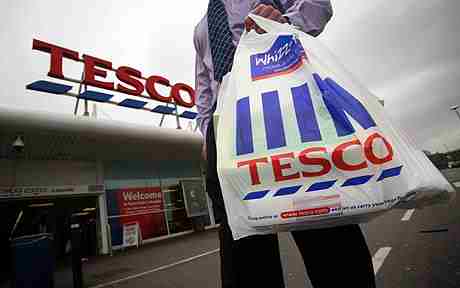
  • Tesco’s South Korea empire draws interest from private equity giants

    Tesco’s South Korea empire draws interest from private equity giants

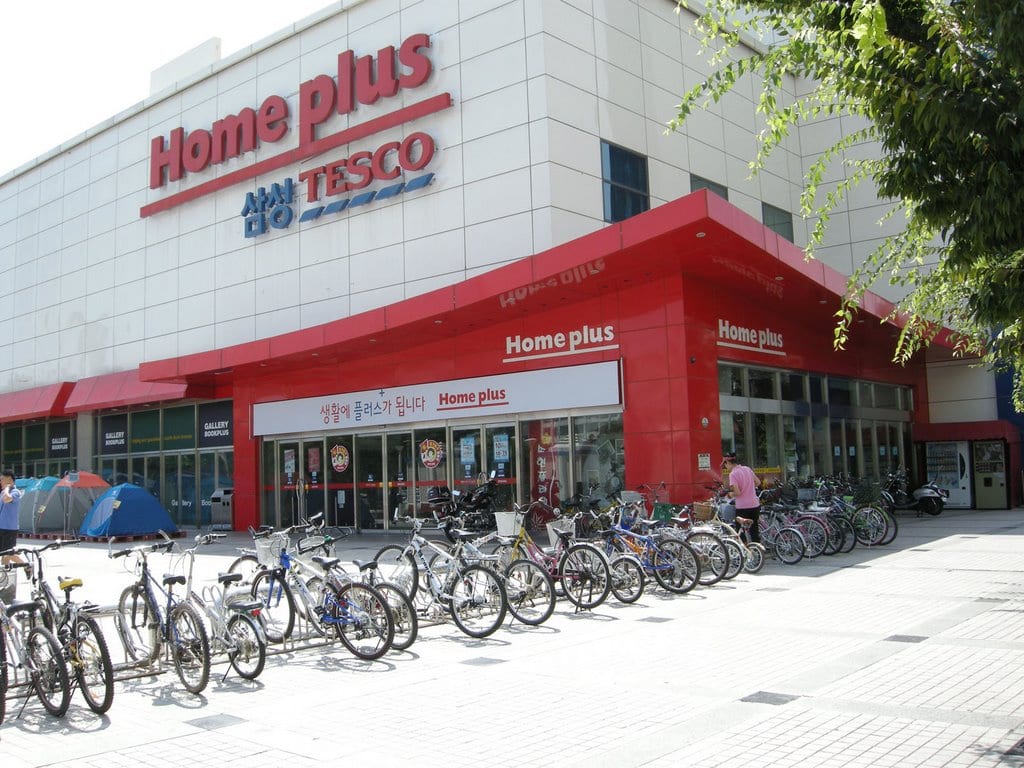
    KKR and Carlyle, the US private equity firms, have been invited to bid for the Asian business, which trades as Homeplus, while London-based CVC Capital Partners has also been asked to bid.

    The decision to sell the South Korean stores comes as the retail giant’s chief executive Dave Lewis looks to streamline the business, to concentrate on its core UK shops and raise cash.

    After two decades of uninterrupted growth, Tesco has been struggling after it became distracted by overseas expansion and failed to spot the threat of discounters like Aldi and Lidl.

    The retailer is now looking to slash capital spending, as well as fund a vicious supermarket price war and put more people on the shop floor.

    Hong Kong-based Affinity Equity Partners and Asia-focused MBK Partners were also invited to bid, and Hyundai Department Store, which is separate from the car maker, said today that it was considering bidding.

    Tesco, advised by HSBC, has asked for indicative bids later this month.

    If the sale is achieved it would be Asia’s biggest private equity deal and the region’s second biggest consumer deal ever. Sovereign wealth funds could be involved in the financing of it, given the size of the sale.

    Homeplus is Tesco’s largest business outside Britain, with more than 400 stores, 500 franchise stores and over six million customers a week.

    But the business has been under some pressure, with falling like-for-like sales for the last two years.

    Tesco is also selling its £1 billion Dunnhumby data business, and has already sold its Blinkbox digital entertainment service and Tesco Broadband to TalkTalk for an undisclosed sum.

  • Tesco Korea technique paying off

    Tesco Korea technique paying off

    Tesco’s obvious technique to attract out bidders for its Korean Homeplus operation is already paying off.

    Whereas personal fairness gamers have been apparently despatched invites to bid, the best way the information of the as but formally unconfirmed sale plan has unfold, has drawn two public declarations of curiosity.

    One is decidedly mischievous – from snack maker Orion, well-known for its “Choco Pie” dessert bought in supermarkets throughout Asia. Simply the place it might discover £6 billion to purchase Tesco Korea is unclear.

    The opposite is from Korea’s Hyundai Division Retailer (no relation to the automotive firm). Hyundai is value about US$three billion, so the probability of it pulling off a reverse takeover in its personal proper is slim. However it might make a worthy companion for a personal fairness investor, comparable to KKR, Carlyle, Affinity Fairness Companions, CVC or MBK, all of whom have been formally invited to bid. Native information, overseas capital and the looks of native possession to a finicky native shopper base would show a strong basis for progress and capital achieve.

    The top results of these two declarations creates the looks that there’s robust curiosity and demand within the Tesco Korea operation which, whereas worthwhile, faces challenges in sustaining market share.

    At the very least one of many events says it has acquired an info memorandum which tends to place past doubt Tesco Plc’s intentions.

    Tesco CEO Dave Lewis has already confirmed at Unilever he was unafraid of robust selections. And he’s dealing with many in his new position – his largest but to place Tesco Korea on the block.

    With a worth of circa £6 billion, it brings an entire new definition to the time period ‘hearth sale’. But when consumers are in search of a reduction given Tesco’s UK operational woes, they’ll be disenchanted.

    The method has been managed by HSBC and an obvious collection of leaks to information media, which, to date, are working properly, presents a protected and risk-free technique of testing the water. If the bids are available and the provides appear affordable, Tesco has a excellent news story of a robust return, a big discount in its debt and a stronger monetary base with which to proceed its residence market reforms and strengthen market share and income. If nobody significantly bites, Tesco can break its silence, deny a sale was ever on – and blame the media and market hypothesis for a misunderstanding.

    Our prediction: Tesco will promote the Korean operation and it’ll get a great worth for it, as a result of one or two or extra of these personal fairness gamers, working with a Korean associate with information of the retail business, will be capable of extract worth out of the enterprise that has hitherto eluded Londoners pulling strings from afar.