Retail News CRM

Tag: index

  • Singapore and Thailand Rank High on Worlds Happiest Economies Index

    Singapore and Thailand Rank High on Worlds Happiest Economies Index

    Singapore and Thailand have been identified as two of the world’s “happiest” economies according to the annual Misery Index by Steve Hanke, a Johns Hopkins University economist. Singapore took the second spot globally, just behind Taiwan, achieving a Misery Index score of 2.6. This index gauges the economic conditions experienced by the average citizen. A lower score suggests stable employment, controlled prices, affordable credit, and rising incomes.

    Singapore’s high ranking is attributed to a robust labor market characterized by a mere 2.0% unemployment rate, a 1.2% inflation rate, and a real GDP per capita growth of 4.3%. Thailand followed closely in third place, with a score of 3.1, buoyed by low inflation and steady employment. Consumer prices dropped by 0.3%, unemployment was at 0.8%, and the real GDP per capita rose by 2.5%.

    Hanke noted that Singapore and Thailand’s stable inflation and reasonably low borrowing costs resulted from prudent management of their money supply. In spite of Thailand’s moderate GDP growth, the falling consumer prices and minimal unemployment imply that the Thai citizens are not experiencing a sluggish economy in their daily lives.

    Southeast Asia’s Economic Health

    Other Southeast Asian economies also surpassed larger competitors, with Malaysia, Cambodia, and Vietnam ranking in the bottom quintile of the index. The Philippines, Laos, and Indonesia also had commendable performances. However, Myanmar, currently experiencing conflict, was the exception, ranking 14th.

    Steve Hanke, who had previously acted as the chief economic advisor to the president of Indonesia, described Southeast Asia as “one of the healthiest economic regions globally.” Nevertheless, he observed that high unemployment and increased bank-lending rates negatively impacted the Philippines’ economic outlook.

    Overall, Hanke attributed the region’s economic resilience to pragmatic central banking, generally open trade regimes, and high savings rates funneled into productive investments. He highlighted the Philippine economy’s rapid growth in recent years, particularly before the pandemic, attributing this to its dynamic monetary policies and financial stability.

    However, he cautioned that disruptive events like the Gulf conflict could lead to inflationary pressures, with countries heavily reliant on energy imports from the Middle East, such as Thailand and the Philippines, being the most vulnerable.

    The Misery Index is calculated using four factors: unemployment, inflation, bank-lending rates (which are added together), and the growth rate of the real gross domestic product (which is subtracted). A total of 178 economies were evaluated, with Venezuela being identified as the most miserable, scoring 556.5 due to the world’s highest inflation rate of 475% and a 35% unemployment rate.

    In contrast, Taiwan emerged as the happiest economy with a score of 2.1 – an achievement driven by a high global demand for semiconductors and artificial intelligence hardware, leading to a 9.2% increase in real GDP growth per capita, while keeping unemployment, inflation, and bank-lending rates low.

    Questions & Answers

    What is the annual Misery Index?
    The annual Misery Index is a measure developed by Steve Hanke, an economist at Johns Hopkins University, to gauge the economic conditions experienced by the average citizen. It factors in elements like stable employment, controlled prices, affordable credit, and rising incomes.

    Which economies ranked as the “happiest” according to the Misery Index?
    Taiwan ranked as the “happiest” economy, followed by Singapore and Thailand in second and third place respectively.

    What factors could potentially impact the economic outlook of Southeast Asian countries?
    Events like the Gulf conflict, which could lead to inflationary pressures, could impact the economic outlook. Countries heavily reliant on energy imports from the Middle East, like Thailand and the Philippines, are considered the most vulnerable.
  • VN-Index Soars to New Record High, Setting Stage for Thriving Market Opportunities!

    VN-Index Soars to New Record High, Setting Stage for Thriving Market Opportunities!

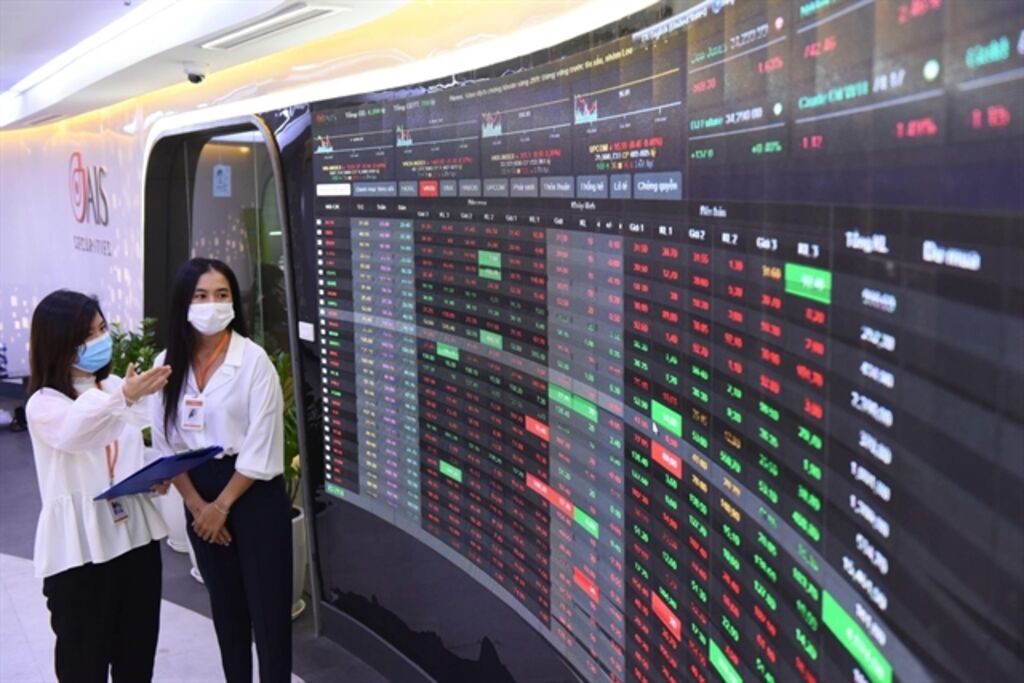
    In a landmark surge, Vietnam’s benchmark VN-Index climbed 1.07% on Monday morning, officially crossing the coveted 1,600 mark for the first time. Just an hour and a half into trading, the index soared to 1,602, marking a gain of around 16 points from the previous close of 1,584.95.

    During this period, the trading volume on the Ho Chi Minh Stock Exchange surged to VND20 trillion (approximately US$762.5 million).

    In the VN30 basket, which includes the 30 largest capitalized stocks, shares of the Masan Group hit their ceiling price, reflecting robust investor interest.

    Notable gains were also seen among prominent players in the consumer goods and retail sectors, as stocks like Vinamilk’s VNM, Mobile World’s MWG, and brewer Sabeco’s SAB appreciated by 1%.

    Conversely, five blue chips faced testing waters, with significant drops of over 1%. Vincom Retail’s VRE, alongside TPBank’s TPB and Sacombank’s STB, experienced declines ranging from 1.3% to 1.8%.

    Market analysts had anticipated that the VN-Index would breach the 1,600 threshold this week, with predictions hinting at a potential rally toward 1,650, provided capital inflows stay robust.

    Questions & Answers

    What milestone did the VN-Index achieve on Monday morning?
    The VN-Index surged past the 1,600 mark, reaching 1,602 for the first time in history.

    How much trading volume was recorded on the Ho Chi Minh Stock Exchange during this surge?
    The trading volume amounted to VND20 trillion, which is roughly US$762.5 million.

    Which sectors saw notable gains in stock prices?
    The consumer goods and retail sectors performed well, with significant stocks like Vinamilk, Mobile World, and Sabeco all rising by 1%.

  • VN-Index Soars to Its Largest Gain in Four Months: Retail Market Celebrates Strong Recovery!

    VN-Index Soars to Its Largest Gain in Four Months: Retail Market Celebrates Strong Recovery!

    The index closed 32.98 points higher, rebounding from a prior drop of 7.31 points. This encouraging shift reflects a resurgence of investor confidence in the Vietnamese stock market.

    Trading volume on the Ho Chi Minh Stock Exchange surged by approximately 9.2%, reaching VND42.6 trillion (US$1.63 billion), a clear sign of renewed activity.

    Most stocks in the VN-30 basket, representing the 30 largest companies, ended the day on a high note. Four notable stocks—VJC from budget airline Vietjet, VIC from conglomerate Vingroup, SHB of Saigon Hanoi Commercial Bank, and TPB from TPBank—hit their ceiling prices, illuminating a robust market sentiment.

    However, not every blue chip could bask in the glow; FPT of tech giant FPT Corporation slid slightly, closing down by 0.4%. It’s almost as if FPT was the lone wolf at a party of jubilant investors.

    Foreign investors took a different stance, emerging as net sellers with VND10.26 trillion in sales, predominantly offloading stocks like VIC and SSI of SSI Securities Corporation.

    Meanwhile, the HNX-Index on the Hanoi Stock Exchange, which tracks mid and small-cap stocks, climbed 1.29%, while the UPCoM-Index for unlisted public companies advanced by 0.66%, demonstrating that the upward momentum was widespread.

    Questions & Answers

    What was the performance of the VN-Index on August 4, 2025?
    On August 4, 2025, the VN-Index saw a significant increase of 2.21%, closing at 1,528.19 points—its most substantial gain in nearly four months.

    Which stocks hit their ceiling prices during this trading session?
    Four stocks achieved ceiling prices: VJC of Vietjet, VIC of Vingroup, SHB of Saigon Hanoi Commercial Bank, and TPB of TPBank, highlighting a thriving market environment.

    How did foreign investors react during this trading session?
    Foreign investors were net sellers, offloading VND10.26 trillion, primarily selling shares of VIC and SSI Securities Corporation, indicating a cautious approach amidst the market’s rising trend.

  • VN-Index Soars to Three-Year High, Signaling Strong Market Optimism

    VN-Index Soars to Three-Year High, Signaling Strong Market Optimism

    Vietnam’s stock market is buzzing with fresh energy as the benchmark VN-Index climbed to a remarkable 1,341.87 points on Wednesday, marking its highest level since May 2022. Investors celebrated the index’s upward trajectory, which reflects a gain of 0.15%, or 2.06 points, and extends its winning streak to four consecutive sessions.

    The VN-Index has soared nearly 250 points since dipping in early April, a downturn largely attributed to U.S. tariffs. While the mood in the market is optimistic, trading volume on the Ho Chi Minh Stock Exchange slipped by 11% to VND22.284 trillion (approximately US$858 million).

    Blue Chips Reign Supreme

    In the VN-30 basket, which features the 30 largest stocks, 10 companies saw their shares rise. Notable performers included VRE, the retail real estate arm of Vincom Retail, up by 5.5%, and VIC, the stock of private conglomerate Vingroup, which increased by 2.6%. Fuel distributor Petrolimex (PLX) also had a solid day, edging up 2.2%. However, the blue-chip landscape wasn’t all rosy—15 stocks fell, with HDBank (HDB) down 1.5%, Sacombank (STB) slipping 1.1%, and Vietnam International Commercial Bank (VIB) mirroring that drop.

    Foreign investors played a different tune, becoming net sellers to the tune of VND200 billion, mainly divesting from VRE and VIC. It seems their cautious approach didn’t dampen local spirits, as the HNX-Index for mid and small caps in Hanoi rose by 0.80%, while the UPCoM-Index for unlisted companies gained 0.46%. It’s a thrilling time for stock enthusiasts, reminding us that the market can be as unpredictable as a game of poker—one moment you’re soaring, and the next, you’re bluffing!

    Questions & Answers

    Why did the VN-Index rise to a three-year high?
    The VN-Index surged due to consistent gains over several sessions, alongside a recovery from lows seen earlier this year amid U.S. tariff concerns.

    How did trading volume change in the Ho Chi Minh Stock Exchange?
    Trading volume decreased by 11%, totaling VND22.284 trillion, which indicates a decline in market activity amidst rising index values.

    What stocks were the main contributors to the index’s gain?
    Noteworthy contributors included Vincom Retail (VRE), Vingroup (VIC), and Petrolimex (PLX), with significant gains that propelled the index upward despite some blue-chip stocks experiencing declines.

  • VN-Index Hits New Heights with Third Consecutive Day of Gains

    Vietnam’s stock market is buzzing, with the VN-Index soaring by 1.26% to an impressive 1,309.73 points on Wednesday, marking the third consecutive session of growth. This robust performance follows a modest dip of 16.3 points, coming off a gain of 10 points the previous day. Interestingly, the index has experienced a surge in seven out of the eight trading days this month alone—quite the streak!

    Trading Activity Hits New Highs

    On the Ho Chi Minh Stock Exchange, trading volume witnessed a 10% increase, reaching VND 27.33 trillion (approximately US$1.05 billion), the highest level seen in three weeks. The VN-30 basket, which tracks the 30 largest listed companies, showcased a strong showing with 22 of its members recording gains. Among the standout performers, VPB, affiliated with private lender VPBank, remarkably hit its ceiling price.

    Tech giant FPT Corporation also made waves, with its stock climbing by 5.69%. The state-owned lender BIDV wasn’t far behind, rising by 4.61%. Yet, not all was rosy, as seven blue-chip stocks faced a decline. Vincom Retail’s VRE dropped by 2.76%, while property heavyweight Vinhomes, represented by VHM, ended 2.58% lower.

    Foreign Investment Takes Center Stage

    In a stroke of positivity, foreign investors emerged as net buyers, purchasing a net amount of VND 2.26 trillion, predominantly focusing on FPT and VPB stocks. Over on the Hanoi Stock Exchange, the HNX-Index, which features mid and small-cap stocks, edged up by 0.23%. Additionally, the UPCoM-Index for unlisted public companies increased by 0.24%.

    As the market continues to make significant gains, one can’t help but wonder: is it dancing with joy or just warming up for a more exhilarating performance?

    Questions & Answers

    What influenced the VN-Index growth recently?
    An increase in trading volume, particularly in large-cap stocks like VPBank and FPT, has significantly boosted the VN-Index.

    How have foreign investors impacted the market?
    Foreign investors have turned net buyers, acquiring a significant amount of shares, especially in top-performing companies like FPT and VPB.

    What trends are emerging in Vietnam’s stock market?
    The trend shows a strong recovery with consistent gains, indicating positive sentiment and increasing investor confidence in the market.

  • VN-Index Achieves Third Consecutive Session of Gains in Retail Sales

    VN-Index Achieves Third Consecutive Session of Gains in Retail Sales

    Vietnam’s benchmark VN-Index experienced a notable increase of 0.68% on Wednesday, reaching 1,250.37 points. This marks a positive trend to kick off the month, as the index continues its three-day upward trajectory.

    Trading Highlights

    The VN-Index closed 8.42 points higher, following a previous gain of 1.9 points. Despite this rise, trading activity on the Ho Chi Minh Stock Exchange saw a decline of 3.4% from the previous session, totaling VND17.2 trillion (approximately USD 662.6 million).

    Key Stock Performances

    Within the VN-30 basket, which includes the 30 largest stocks by market capitalization, 14 companies reported positive gains.

    • Vingroup (VIC) surged by 4.11%, demonstrating strong performance as part of Vietnam’s retail news landscape.
    • Bao Viet Holdings (BVH) rose by 3.16%, reflecting increasing consumer trends in the insurance sector.
    • Vietnam Rubber Group (GVR) climbed 2.26%, signaling positive growth within the commodity market.

    Conversely, several blue-chip stocks stumbled:

    • Masan Group (MSN) fell by 1.77%.
    • HDBank (HDB) slid down by 1.41%.
    • SSI Securities Corporation (SSI) experienced a drop of 1.3%.

    Foreign Investment Insights

    Amidst these fluctuations, foreign investors emerged as net buyers, investing approximately VND900 billion. Top purchases included shares from Dat Xanh Group (DXG) and Nam Long Investment Corp (NLG), indicating strong interest in the real estate market.

    In parallel, the HNX-Index for mid and small-cap stocks on the Hanoi Stock Exchange rose by 0.55%, while the UPCoM-Index dipped slightly by 0.02%.

    Conclusion: Impact on the Retail Sector

    The steady increase in the VN-Index reflects a robust sentiment in the market, which could encourage further investments in various sectors, including retail and real estate. As consumer demand continues to surge, brands are expected to expand their presence while adapting to emerging consumer trends.

    Questions & Answers

    1. What is the current status of the VN-Index? The VN-Index has risen 0.68% to 1,250.37 points, marking its third consecutive gain.

    2. Which stocks contributed to the VN-Index’s rise? Key performers include Vingroup (VIC), Bao Viet Holdings (BVH), and Vietnam Rubber Group (GVR), all showing significant increases.

    3. How are foreign investors participating in the market? Foreign investors were net buyers, investing around VND900 billion, with a focus on stocks from Dat Xanh Group and Nam Long Investment Corp.

  • Retail Stocks Surge to 9-Day High Amid Rising Consumer Demand

    Retail Stocks Surge to 9-Day High Amid Rising Consumer Demand

    The VN-Index has made a notable leap, rising by 1.02% to reach 1,223.35 points on Thursday, marking the highest level since April 15. This upward momentum reflects ongoing positive market sentiment and a mix of investor activity across key sectors.

    Market Overview

    The benchmark index ended the trading day up by 12.35 points, building on a gain of 13.87 points from the prior session. Despite the positive performance, trading volume on the Ho Chi Minh Stock Exchange dipped by 7%, totaling VND17.66 trillion (approximately US$679 million).

    Key Performers in the VN-30

    Among the 30 largest capped stocks in the VN-30 basket, a robust majority of 18 stocks closed with gains. Leading the charge was Vingroup’s VIC, which surged by 7%. Also in the spotlight were Bao Viet Holdings’ BVH, up 5.6%, and real estate giant Vinhomes’ VHM, which rose by 4.6%. HDBank’s HDB rounded out the top performers with a 4.4% increase.

    Conversely, eight blue-chip stocks experienced declines. Asia Commercial Bank (ACB) saw a decrease of 1.8%, while Techcombank (TCB) fell by 1.3%.

    Foreign Investment Trends

    Foreign investors remained active participants in the market, concluding the day as net buyers with a total purchase of VND574 billion, primarily focused on Hòa Phát Group’s HPG and the electronics retailer Mobile World (MWG). This trend signals a growing confidence from foreign stakeholders in the Vietnamese market and its expanding opportunities.

    Regional Indices Movement

    In related exchanges, the HNX-Index of the Hanoi Stock Exchange, which features mid and small-cap stocks, ticked down by 0.18%. Meanwhile, the UPCoM-Index for unlisted public companies experienced a modest rise of 0.40%, showcasing a slight differentiation in performance among various market segments.

    In summary, the upward trajectory of the VN-Index and the impressive gains among key stocks reflect a vibrant and dynamic market landscape. As investor confidence grows, particularly with significant foreign engagement, the future looks promising for Vietnam’s retail and broader economic sectors.

    Questions & Answers:

    1. What recent milestone did the VN-Index achieve? The VN-Index rose by 1.02% to 1,223.35 points, reaching its highest level since April 15.

    2. How did foreign investors engage with the market? Foreign investors concluded as net buyers, investing VND574 billion, with a focus on stocks like HPG and MWG.

    3. What was the performance of blue-chip stocks? Out of the VN-30 stocks, 18 showed gains, with VIC and BVH leading, while eight stocks, including ACB and TCB, saw declines.

  • Retail Stocks Surge as Consumer Demand Drives Week’s Gains

    Retail Stocks Surge as Consumer Demand Drives Week’s Gains

    VN-Index Posts Modest Gains Amid Active Trading

    The VN-Index, Vietnam’s benchmark stock market measure, rallied 0.48% on Friday, closing at 1,229.23 points, as investor activity intensified.

    Market Overview

    In a buoyant trading session, the index climbed 5.88 points, following a notable increase of 12.35 points in the previous day’s trading. The Ho Chi Minh Stock Exchange saw a trading volume surge of 15%, reaching VND20.35 trillion (approximately USD 782.1 million). This uptick signals increased investor optimism and engagement.

    Key Performers

    The VN-30 basket, which includes the 30 largest listed companies, experienced gains among 15 stocks. Notably, Vingroup (VIC) reached its ceiling price, underscoring strong investor interest. Vietjet Air (VJC) soared by 6.2%, while Vinamilk (VNM) rose 3.6%, reflecting positive consumer trends in the airline and dairy markets, respectively.

    Conversely, 13 blue-chip stocks declined. SeABank (SSB) fell by 2.7%, followed closely by Sacombank (STB) slipping 2.6%, and Fortune Vietnam Bank (LPB) closing 2.1% lower. This mixed performance indicates a cautious sentiment among some investors.

    Foreign Investment Trends

    Foreign investors stepped back as net sellers, offloading VND593 billion worth of shares. The primary targets of this selling spree were tech giant FPT Corporation and Vingroup. This trend may reflect broader concerns about market volatility, impacting long-term investment strategies.

    Broader Market Indicators

    The HNX-Index on the Hanoi Stock Exchange, which showcases mid and small-cap stocks, increased by 0.31%, while the UPCoM-Index for unlisted public companies rose 0.47%. These developments highlight a broader recovery across various market segments.

    Implications for the Retail Sector

    The current market momentum, combined with heightened consumer demand in sectors such as travel and dairy, signals potential growth opportunities for the retail sector. With emerging consumer trends indicating increased spending, retailers can expect heightened interactions with a dynamic investing landscape as they strategize for the upcoming quarters.

  • VN-Index Declines as Retail Trading Activity Reaches Two-Week Low

    VN-Index Declines as Retail Trading Activity Reaches Two-Week Low

    On Monday, Vietnam’s benchmark VN-Index saw a modest drop of 0.20%, closing at 1,226.8 points. This decline marks the index’s lowest trading activity in over two weeks, reflecting a period of cautious investor sentiment.

    Highlighted Trends in Trading Volume

    The VN-Index concluded the day down 2.43 points, following a gain of 5.88 points in the previous session. Trading on the Ho Chi Minh Stock Exchange fell significantly, decreasing by 30% to VND 14.153 trillion (approximately USD 544.3 million), the lowest level since April 10. Notably, this dip is attributed to a lack of available sellers amidst eager buyers.

    Excluding this unusually quiet session, current trading levels would represent the lowest in two months, emphasizing a shift in market dynamics.

    Key Movements in Major Stocks

    Within the VN-30 basket, which includes the 30 largest capped stocks, the day reflected mixed fortunes. Thirteen stocks within the basket saw declines, with major players such as Vinhomes Holdings (down 6.1%), FPT Corporation (down 2.6%), and Vietjet Air (down 2.1%) leading losses.

    On a positive note, fifteen blue-chip stocks advanced, with Sabeco (SAB) rising 3.4%, SeABank (SSB) climbing 2.8%, and Fortune Vietnam Bank (LPB) up by 1.5%.

    Foreign Investment Activity

    In a noteworthy trend, foreign investors remained net buyers, accumulating VND 6 billion primarily in shares of Mobile World (MWG), a leading electronics retail chain, and MB Bank (MBB).

    Trends on Other Exchanges

    The Hanoi Stock Exchange’s HNX-Index saw a slight decline of 0.13%. Similarly, the UPCoM-Index for the Unlisted Public Companies Market edged down by 0.03%, reflecting a general trend of subdued trading across the Vietnamese stock market.

    Conclusion: What This Means for Retail and Consumers

    The recent fluctuations in the VN-Index and the accompanying decline in trading volume suggest a cautious atmosphere among investors, potentially impacting broader consumer sentiment and retail growth. As the market adjusts, stakeholders will be keenly observing these trends to gauge their implications for the retail sector and consumer behavior in the coming months.

  • VN-Index starts week with a 0.4% drop

    VN-Index starts week with a 0.4% drop

    Vietnam’s benchmark VN-Index fell 0.40% to 1,274.77 points Monday.

    The index closed 5.14 points lower after dropping 21.60 points in the previous session.

    Trading on the Ho Chi Minh Stock Exchange decreased by 22% to VND22.990 trillion (US$903.2 million).

    The VN-30 basket, comprising the 30 largest capped stocks, saw 20 tickers fell.

    MSN of conglomerate Masan Group saw a 2.3% decline, BID of state-owned bank BIDV fell 2.1%, and VIB of private lender VIB closed 2.0% lower.

    Eight blue chips gained. SSB of lender SeABank went up 1.8%, followed by POW of electricity producer Petrovietnam Power Corporation with a 1.5% growth and HPG of steelmaker Hoa Phat Group, up 1.2%.

    Foreign investors were net seller to the tune of VND790 billion, mainly selling VHM of property giant Vinhomes and HPG of Hoa Phat Group.

    The HNX-Index for stocks on the Hanoi Stock Exchange, home to mid and small caps, fell 0.33%, while the UPCoM-Index for the Unlisted Public Companies Market went down 0.01%.

  • VN-Index tiptoes up after plunge

    VN-Index tiptoes up after plunge

    Vietnam’s benchmark VN-Index rose 0.15% to 1,179.76 points Monday.

    The index closed 1.77 points higher after losing 55.49 points on Friday.

    Trading on the Ho Chi Minh Stock Exchange (HoSE) fell by 38.49% to VND22.17 trillion ($930.73 million).

    CTG of state-owned lender VietinBank led with a 4.2% rise, followed by BID of state-owned lender BIDV, up 3.2%.

    TPB of private TPBank went up 2.2% and BCM of Becamex Investment and Industrial Development closed 2.1% higher.

    SSB of Southeast Asia Commercial Bank (SeABank) lost 3.1%, and GVR of Vietnam Rubber Group was down 2.8%.

    Foreign investors were net buyers to VND82.45 billion, mainly buying VIC of private conglomerate Vingroup and CTG of state-owned lender VietinBank.

    The HNX-Index at the Hanoi Stock Exchange, where mid and small-caps list, was up 0.85% while the UPCoM-Index at the Unlisted Public Companies Market was up by 0.26%.

  • April’s consumer price index down

    April’s consumer price index down

    The consumer price index (CPI) in April decreased by 0.34% month-on-month, but increased by 2.81% year-on-year, according to the General Statistics Office (GSO).

    In the first four months of this year, the index rose by 3.84% y-o-y, mainly due to increases in prices of education, housing and construction materials, culture, entertainment and tourism, food, and electricity.

    In April, seven out of the 11 groups of main consumer goods and services witnessed price decreases, and the remainders saw rises.

    Notably, a 0.38% fall in the price of food and catering services caused a decline of 0.13 percentage point of the CPI.

    Gold prices in April were up 2.04% m-o-m, but down 1.09% y-o-y. In the January-April period, the prices rose by 0.66% y-o-y.

    Meanwhile, the USD price in April fell 0.89% m-o-m, but rose by 2.5% y-o-y, leading to a y-o-y increase of 3.21% in the first four months of this year.

    According to the GSO, this month, core inflation increased by 0.13% over the previous month, and by 4.56% over the same period last year. On average, in the first four months, it increased by 4.9% y-o-y, higher than the overall average CPI (3.84%).

  • Consumer price index up 3.15% in 2022

    Consumer price index up 3.15% in 2022

    Vietnam recorded year-on-year growth of 3.15% in the 2022 consumer price index (CPI) while core inflation increased 2.59%, the General Statistics Office (GSO) said on December 29.

    The Vietnamese economy has recovered in 2022. Surging production demand to serve consumption and export, added with soaring global commodity prices, has fueled prices of goods and essential services, but prices are basically still under control, GSO General Director Nguyen Thi Huong told a press briefing in Hanoi.

    Pointing out some contributors to the CPI growth, the GSO said domestic petrol and oil prices have been adjusted for 34 times, increasing 28.01% from a year earlier, while gas prices were up 11.49%.

    Rice prices have fluctuated in line with export prices and market demand to go up 1.22% from 2021. Foodstuff price also increased 1.62%. Besides, housing and construction material prices climbed up 3.11%.

    Meanwhile, there are also some factors curbing the CPI uptrend, including pork prices down 10.68% thanks to the African swine fever containment and guaranteed supply, house rent down 1.83% due to the Covid-19 pandemic in the first months of 2022, and prices of postal and telecommunications services down 0.37% as a result of lower mobile phone prices.

    This year’s core inflation increased 2.59% from 2021, lower than the CPI growth of 3.15%, showing that changes in consumer prices have been driven mainly by food, petrol, oil, and gas prices, according to the GSO.

    The office added domestic gold prices have seen mixed changes in line with the global market, rising 5.75% this year. Prices of the US dollar also hiked 2.09% from 2021.

    In December alone, CPI dropped slightly, by 0.01% month on month, but still grew 4.55% from December 2021. While two of the 11 categories of main consumer goods and services witnessed month-on-month price declines, nine experienced higher prices.

    The December core inflation inched up 0.33% from November and 4.99% from the same period last year.

    General Director Huong said to actively cope with surging inflationary pressure, the Government has ordered ministries, sectors, and localities to issue many timely policies and implement concerted measures to minimise adverse impacts on socio-economic development.

    Appropriate policies and drastic moves in governance have considerably helped ease pressure on prices and stabilise production and business activities and people’s life, she added.

  • VN-Index bounces back after tumble

    VN-Index bounces back after tumble

    Vietnam’s benchmark VN-Index rose 1.47 percent to 1,166.48 points Thursday but with plunging trade.

    The index closed nearly 17 points higher after losing almost 32 points on Wednesday.

    Trading on the Ho Chi Minh Stock Exchange (HoSE) fell by 27.9 percent to VND9.06 trillion ($388 million).

    The VN-30 basket, comprising the 30 largest capped stocks, saw 24 tickers gain.

    BVH of insurance company Bao Viet Holdings and VRE of retail real estate arm Vincom Retail led with a 3.8 percent gain.

    VCB of state-owned lender Vietcombank rose 3.7 percent.

    Other gainers included PNJ of Phu Nhuan Jewelry and VIC of biggest private conglomerate Vingroup, up 3.6 percent and 3.4 percent respectively.

    Four blue chips fell, with GAS of state-owned Petrovietnam Gas losing 1.8 percent, and FPT of IT giant FPT Corporation falling 0.5 percent. Foreign investors were net buyers to the tune of VND487.46 billion ($20.86 million).

    The HNX-Index at the Hanoi Stock Exchange, where mid and small caps list, was down 0.02 percent while the UPCoM-Index at the Unlisted Public Companies Market was up by 0.19 percent.

  • VN-Index plunges with rising trade

    VN-Index plunges with rising trade

    Vietnam’s benchmark VN-Index dropped 1.56 percent to 1217.30 points Friday with trading value rising double-digit.

    The index closed 19 points lower after gaining nearly 23 points on Thursday. It has lost 67 points this week as global markets plunged due to concerns of inflation and disrupted supply chains.

    Trading on the Ho Chi Minh Stock Exchange (HoSE) increased by 17.5 percent to VND17.33 trillion, highest in four sessions. The VN-30 basket, comprising the 30 largest capped stocks, saw 22 tickers dropped.

    SSI dropped 7 percent to the lowest since March last year in its seventh losing session in a row.

    It was followed by eight banking stocks, losing between 6.4 percent and 3.6 percent, including MBB of lender MB, TPB of private TPBank and CTG of state-owned lender VietinBank.

    Five blue chips rose, with MSN of conglomerate Masan Group rising 5.7 percent and GAS of state-owned Petrovietnam Gas gaining 4.7 percent.

    Foreign investors were net buyers to the tune of VND309.68 billion, mainly picking up HPG of steelmaker Hoa Phat Group and VND of brokerage VNDirect.

    The HNX-Index at the Hanoi Stock Exchange, where mid and small caps list, was down 2.68 percent while the UPCoM-Index at the Unlisted Public Companies Market was down by 2.41 percent.