Retail News CRM

Tag: index

  • Vietnam’s blue chips fall faster than stock market plunge

    Vietnam’s blue chips fall faster than stock market plunge

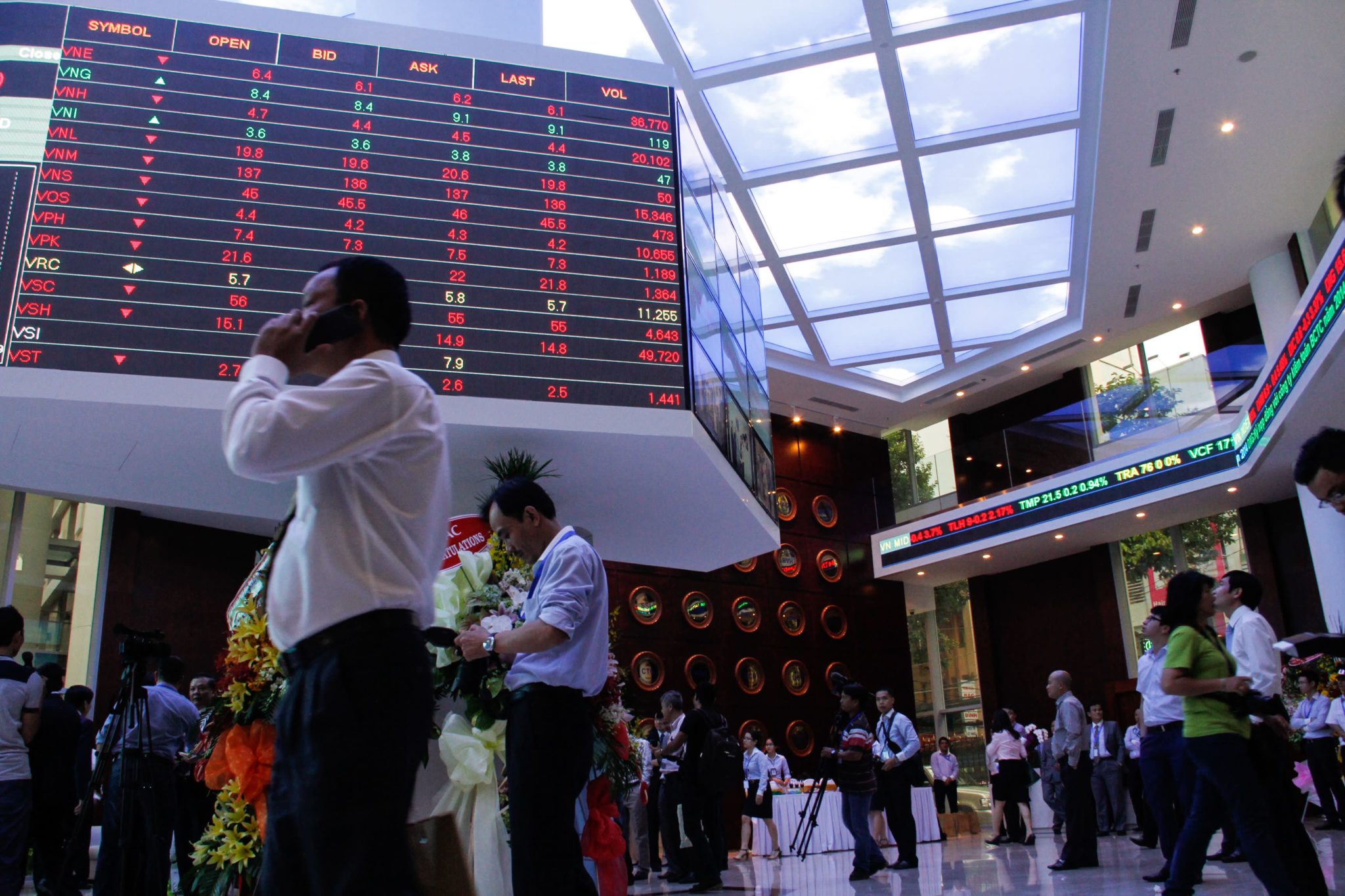
    As business results fall short of targets, Vietnamese blue chips are falling faster than the stock market’s continued plunge. Vietnam’s benchmark VN-Index dropped 23.5 percent to 917.97 points on Friday from its April peak over 1,200 points. In corresponding comparison, the fall in value of blue chips stocks has been more than twice as high. A share of Vietnam’s leading stone manufacturer Vicostone (VCS) on Friday was worth VND75,000 ($3.2), down 47 percent from its peak on April 4 at VND141,600 ($6.06).

    Analysts at that time called the stock a “phenomenon,” as its value surged 50 times from VND3,000 (13 cents) in mid-2014 on the Hanoi Stock Exchange (HNX).

    Vicostone’s profits also rose over 50 percent a year from 2014 to 2017, while its revenue increased from VND2 trillion ($85.64 million) to VND4.35 trillion ($186.27 million) in the same period.

    But this year, maintaining double-digit growth seems to be a challenge for the company as its revenue has stayed the same year-on-year at VND3.2 trillion ($137 million), while net profit fell 7 percent to VND790 billion ($33.82 million) in the first nine months of this year.

    Although the company has reassured shareholders that business is normal and that Vicostone plans to buy its own shares to stop the falling momentum, investors have been selling their holdings at increasing speeds.

    A similar situation can be seen at the Vietnam Prosperity Joint-Stock Commercial Bank (VPBank). Its stocks on Friday morning closed at VND21,950 (94 cents), dropping 48.7 percent from its peak on April 9 at VND42,826 ($1.83).

    Last year, as it focused specifically on consumer finance, the bank’s stocks was one of the most sought-after when it was listed on the Ho Chi Minh City Stock Exchange (HOSE) in August.

    But its stocks value has been dropping this year because business results are not as expected, analysts say.

    The company gained a consolidated net profit of VND4.9 trillion ($209.82 million) in the first nine months, up nearly 9 percent year-on-year, but only 60 percent of the year’s target.

    Securities firm Viet Capital Securities (VCSC) said in its recent report that the bank is not likely to meet targets set earlier this year. It said its own forecast on VPBank’s profit and stock prices for the year could be revised downwards 15-20 percent.

    Major plastic stocks are also falling in value.

    Binh Minh Plastic (BMP) and Tien Phong Plastic (NTP), the country’s two leading plastic producers, had their stock values plunge 50 percent from their peak last year.

    The two companies recorded high growth from 2010-2016. Binh Minh Plastic’s revenues went up from VND1.4 trillion ($59.95 million) to almost VND3.7 trillion ($158.43 million), with gross margin going up to nearly 30 percent.

    In the same period, Tien Phong Plastics also doubled their revenue and had its gross margin rise to almost 36 percent.

    Both companies were able to achieve this growth thanks to cheap materials and continual expansion.

    But as investors started to lose faith in the potential of the plastic industry and the entrance of foreign companies along with higher material costs, the plastic manufacturers had to reduce their profit margins.

    Last year, Binh Minh Plastic’s gross margin dropped to below 23 percent, while that of Tien Phong Plastic fell to 33 percent.

    Other stocks in the country have also fallen. The HNX-Index on the Hanoi Stock Exchange on Friday closed at 104.271 points, down 24.4 percent from its peak in April.

    The UPCoM-Index for unlisted companies on Friday closed at 51.872 points, 16 percent lower from its peak in March.

  • SE Asia Stocks end firmer; Vietnam gains 2.9 percent

    SE Asia Stocks end firmer; Vietnam gains 2.9 percent

    Southeast Asian stock markets ended higher on Wednesday tracking a firm finish on Wall Street, though they posted heavy losses in October.

    Financial markets across the globe faced a raft of negative factors, including Sino-U.S. trade tensions, to worries about global economic growth, higher U.S. interest rates and company earnings in the past few weeks.

    In Southeast Asia, Singaporean shares ended 1.8 percent firmer, but lost 7.3 percent this month.

    Conglomerate Jardine Matheson Holdings Ltd closed up 0.9 percent, while lender DBS Group Holdings Ltd added 2.9 percent to the bourse.

    Vietnam shares snapped nine sessions of declines to close 2.9 percent higher.

    Banking sector stocks accounted for most gains, with Joint Stock Commercial Bank for Investment and Development of Vietnam (BIDV) closing 6.9 percent higher. BIDV, Vietnam’s second-biggest bank by market value, said it intends to sell 15 percent shares to South Korea’s KEB Hana Bank.

    Meanwhile, gains in the real estate sector were led by Vinhomes JSC after the property developer posted a 177 percent surge in third-quarter net profit.

    Malaysian shares closed 1.4 percent firmer as sentiment was balanced on hopes that cost-saving measures will be included in the country’s 2019 budget due later in the week.

    The country’s newly elected government, led by Prime Minister Mahathir Mohamad, is likely to announce broad spending cuts in the budget speech scheduled on Nov 2.

    The Philippines market rebounded from previous session’s declines, underpinned by broad gains in the industrial and real estate stocks.

    Thai shares ended firmer on the back of energy stocks, which gained on higher oil prices. However, the index posted a 5.2 percent drop for the month.

    The biggest gainer on the index, petroleum and gas company PTT Pcl, closed at its highest in more than a week.

    The bourse was further cushioned by data from the Bank of Thailand, which stated September trade surplus of Thailand was at $1.96 billion, after a $0.60 billion surplus in August.

  • SE Asia Stocks: Most lose ground, Vietnam dives to three-month low

    SE Asia Stocks: Most lose ground, Vietnam dives to three-month low

    Most Southeast Asian stock markets slumped on Thursday, following a tech rout on Wall Street that saw the year’s gains being wiped out. Disappointing forecasts from chipmakers beat down the tech sector, sending investors scurrying to the safety of sovereign bonds, pushing Wall Street to its worst single-day fall since 2011.

    A concoction of other negative factors like Saudi Arabia’s diplomatic tensions, fears of slowing global growth and the Brexit stalemate spooked investors, with MSCI’s broadest index of Asia-Pacific shares outside Japan dropping about 2 percent.

    Vietnamese stocks dived as much as 4 percent to an over three-month low and were on track for a sixth straight day in the red.

    Financial and real-estate stocks bore the brunt of the beating, with lender Joint Stock Commercial Bank for Foreign Trade of Vietnam (Vietcombank) losing 2.7 percent and conglomerate Vingroup JSC shedding 2.3 percent.

    Philippine shares fell 2.3 percent, dragged by banking and industrial stocks, pushing the index’s loss this week to 2.6 percent.

    “About 45 minutes into trading, net foreign selling has already reached over 100 million pesos. After last night’s bloody session on Wall Street, as expected foreigners are stepping up selling of Philippine shares, while local investors are staying on the sidelines,” said Fio Dejesus, a research analyst at RCBC Securities.

    Banking giant BDO Unibank Inc shed 3.6 percent and industrial conglomerate SM Investments Corp fell 2.7 percent.

    “It’s a flight to safety, they’re entering into lower risk assets like govt treasuries because the risk-off sentiment has hit emerging markets really hard,” he added.

    Singapore stocks saw the same dismal sentiment, giving up the previous day’s short-lived gains to take weekly losses to over 2 percent.

    Casino and gaming operator Genting Singapore Ltd fell 3.3 percent and investor Yangzijiang Shipbuilding (Holdings) Ltd lost 1.7 percent.

    Malaysian shares followed the same trajectory, shedding 0.8 percent, on track to post their sixth straight session of losses.

    Plantation and industrial heavyweight Sime Darby Berhad lost 5.9 percent and oil and gas services provider Dialog Group Berhad fell 3.9 percent.

    After the previous session’s sharp losses on energy stocks, the Thai index extended losses and were poised for a six-day run of losses.

    All sectors traded in the red, with oil and gas refiner PTT PCL losing 1 percent and lender Siam Commercial Bank PCL lost 2.2 percent.

    Indonesian shares appeared to escape the worst, trading slightly higher as gains in financial stocks offset losses in other sectors.

    Lender PT Bank Central Asia Tbk gained 0.8 percent while sector heavyweight and auto truck manufacturer PT Astra International Tbk lost 0.3 percent.

  • VN-Index claws back to four figures after two months

    VN-Index claws back to four figures after two months

    Vietnam’s benchmark VN-Index closed at 1,004.74 points Thursday, reaching four figures for the first time in two months.

    It gained 9.2 points.

    The HNX-Index on the Hanoi Stock Exchange and the UPCoM-Index for unlisted companies rose by 0.75 percent and 1.01 percent respectively.

    The VN30-Index, representing the 30 largest stocks in terms of capitalization, gained almost 8.5 points to finish the day at 971.

    Twenty one of the 30 stocks rose, including FPT by almost 1 percent. Hoa Phat steel company (HPG) gained VND1,250 (5.4 cents) and food producer Masan (MSN) by VND1,300 (5.6 cents).

    PetroVietnam Gas (GAS), PetroVietnam Oil (OIL) and Binh Son Refinery (BSR) were other prominent gainers.

    Fifteen of 17 bank stocks closed in the green. Techcombank (TCB) stock rose by VND1,400 (6 cents) and VPBank (VPB) VND850 (3.7 cents).

    Nguyen The Minh, director of analysis at Yuanta Brokerage said the market would continue to rise in the short-term despite fluctuations on the international market.

    He expected the VN-Index to touch 1,100 points in the near future.

    It started recovering on September 12 after plunging by 18.19 percent in the second quarter to become the worst-performing market in the world.

  • VN-Index sees highest gain in 2 months

    VN-Index sees highest gain in 2 months

    Vietnam’s benchmark VN-Index closed up 1.52 percent on Tuesday, the highest in two months.

    It ended the day at 985.06, up 14.72 points.

    The HNX-Index on the Hanoi Stock Exchange and the UPCoM-Index for unlisted companies rose by 0.66 percent and 0.81 percent, respectively.

    The VN30-Index, representing the 30 largest stocks in terms of capitalization, also rose, reaching 958.91 points for a 1.65 percent gain.

    Several blue chips rose sharply, dairy giant Vinamilk (VNM) by 3.4 percent, PetroVietnam Gas (GAS) by 2.7 percent, Vietnam’s biggest private conglomerate Vingroup (VIC) by almost 2 percent, and budget carrier Vietjet Air (VJC) by 2.1 percent.

    Bank stocks joined in, with Vietcombank (VCB), BIDV (BID) and Vietinbank (CTG) all rising by 1.6-3.8 percent.

    ACB, HDBank (HDB), VPBank (VPB), and VIB also closed in the green.

    After crossing the 1, 200-point mark on April 9, the VN-Index slumped. In the second quarter it plunged 18.19 percent, making it the worst-performing market in the world.

    Since then, it has not hit four figures again, with the 1, 000 expected to be a major psychological resistance level.

  • Mainland Chinese names drive Hang Seng’s return to 30000

    Mainland Chinese names drive Hang Seng’s return to 30000

    The Hang Seng Index topped 30,000 for the first time in a decade on Nov. 22 amid a market sea change that is bringing mainland Chinese companies to the fore and leaving many big local names behind.

    The Hong Kong benchmark ended the day at 30,003.49, up 0.62%. It has gained 36% year to date, outpacing major indexes in Japan, South Korea, India and Singapore. The gains have been “driven first and foremost by Western investors,” said Sze Tung, asset manager at Victory Securities.

    Alex Wong Kwok-ying of Ample Capital additionally cites an influx of money from the mainland, where “investors have capital to spare.” Funds flow in via stock connect links established with Shanghai three years ago and with Shenzhen last December.

    Much has changed since the Hang Seng last topped 30,000 in November 2007, including an increase in the number of constituents from 40 to 50. Mainland companies now make up half the index, up from 38% a decade ago, and will become a majority in December when a reshuffle will add Sunny Optical Technology (Group) and Country Garden Holdings.

    The main engine powering the Hang Seng’s ascent also hails from the mainland: Tencent Holdings. The Shenzhen-based internet conglomerate listed in Hong Kong in 2004 and joined the benchmark index in June 2008. It tops the Hang Seng’s weighting list at 10.75%, beating such traditional Hong Kong powerhouses as HSBC Holdings and CK Hutchison Holdings.

    Tencent shares have more than doubled this year, buoyed by a number of positive factors, including China’s large internet user base, the release of mobile game “Glorious Mission” and news of the company taking a substantial stake in Snap, the American operator of photo- and video-sharing app Snapchat. Tencent’s market capitalization recently exceeded $500 billion, a first for an Asian enterprise. The milestone saw Tencent briefly surpass Facebook to become the world’s fifth-largest business by market cap.

    Tencent is not the Hang Seng’s only mainland-based standout. Geely Automobile Holdings’ shares have nearly quadrupled this year and those of Apple supplier AAC Technologies Holdings more than doubled.

    DROPPING OFF THE MAP

    Hong Kong-based companies, meanwhile, are fading into the background. Prominent names such as PCCW — the telecommunications company run by Richard Li Tzar-kai, younger son of tycoon Li Ka-shing — and Li & Fung, known for sourcing Chinese products for U.S. retail behemoth Wal-Mart Stores, have dropped off the benchmark index. Cathay Pacific Airways, Hong Kong’s de facto flag carrier, will lose its decades-old blue chip status in December.

    Mainland businesses, including both H-share companies based on the mainland and “red chips” incorporated in Hong Kong, are latecomers to the territory’s bourse. They gained a foothold in the early 1990s as China sought to work around diplomatic sanctions imposed by Western powers after the 1989 Tiananmen Square crackdown and to get its reform and opening-up policy back on track.

    The first H-share listing came in July 1993 with the Hong Kong debut of Tsingtao Brewery. A watershed followed in September 2006 with the inclusion of China Construction Bank (CCB) in the Hang Seng Index — the first H-shares to make it to the big leagues.

    Mainland companies increasingly favor Hong Kong as a listing destination for its better access to global investment capital and more predictable regulatory framework. These enterprises have a growing presence in the Hong Kong market as a whole. A total of 378 mainland Chinese businesses were listed there as of the end of October, including 226 H-share listings, accounting for almost 40% of the bourse’s total market cap.

  • Breaking Down The Technical Indicators For Parkson Retail Asia Limited

    Breaking Down The Technical Indicators For Parkson Retail Asia Limited

    Parkson Retail Asia Limited (O9E.SI)’s moving averages reveal that the Tenkan line of the shares are below the Kijun-Sen line, indicating potential downward momentum building in the bearish chart.  Parkson Retail Asia Limited moved -0.001 in the most recent session and touched 0.078 on a recent tick.

    The Tenkan-Sen is generally used in combination with the Kijun-Sen to create predications of future momentum. A buy signal is created when the Tenkan-sen line moves above the Kijun-Sen, while a sell signal is created when the Tenkan-Sen line moves below the Kijun-Sen line.

    Many technical traders use the Tenkan-Sen as a tool for predicting levels where the price of the asset will find short-term support.

    When reading Ichimoku Kinko Hyo charts, investors should note that the Tenkan-Sen line leads the Kijun-Sen, and tracks price with more sensitivity because it covers a shorter period of time. When the Tenkan-Sen line crosses and moves above the Kijun-Sen line, this is generally considered a bullish signal. Alternatively, when the Tenkan-Sen line crosses below the Kijun-Sen line, it is considered a bearish signal.

    The tenkan sen/kijun sen cross is one of the most traditional trading strategies within the Ichimoku Kinko Hyo system. The signal for this strategy is given when the tenkan sen crosses over the kijun sen. If the tenkan sen crosses above the kijun sen, then it is a bullish signal. Likewise, if the tenkan sen crosses below the kijun sen, then that is a bearish signal. Like all strategies within the Ichimoku system, the tenkan sen/kijun sen cross needs to be viewed in terms of the bigger Ichimoku picture before making any trading decisions, as this will give the strategy the best chances of success. In general, the tenkan sen/kijun sen strategy can be classified into three (3) major classifications: strong, neutral and weak.

    Conducting further technical review, shares of Parkson Retail Asia Limited have a 200-day moving average of 0.10. The 50-day is 0.08, and the 7-day is sitting at 0.08. Using a wider time frame to assess the moving average such as the 200-day, may help block out the noise and chaos that is often caused by daily price fluctuations. In some cases, MA’s may be used as strong reference points for spotting support and resistance levels. Employing the use of the moving average for technical equity analysis is still highly popular among traders and investors. The moving average can be used as a reference point to assist with the discovery of buying and selling opportunities.

    Investors have the ability to approach the stock market from various angles. This may include using technical analysis, fundamental analysis, or a combination or the two. Investors watching the technical levels may be trying to chart patterns and discover trends in stock price movement. Investors tracking the fundamentals may be looking closely at many different factors. They may be focused on industry performance, earnings estimates, dividend payouts, and other factors. They might also be studying how the company is run, and trying to figure out the true value of the firm. Keeping track of all the data may seem overwhelming, but it may help give a needed boost to the portfolio.

    Parkson Retail Asia Limited’s Williams Percent Range or 14 day Williams %R currently sits at -100.00. The Williams %R oscillates in a range from 0 to -100. A reading between 0 and -20 would point to an overbought situation. A reading from -80 to -100 would signal an oversold situation. The Williams %R was developed by Larry Williams. This is a momentum indicator that is the inverse of the Fast Stochastic Oscillator.

    Parkson Retail Asia Limited currently has a 14-day Commodity Channel Index (CCI) of -67.38. Active investors may choose to use this technical indicator as a stock evaluation tool. Used as a coincident indicator, the CCI reading above +100 would reflect strong price action which may signal an uptrend. On the flip side, a reading below -100 may signal a downtrend reflecting weak price action. Using the CCI as a leading indicator, technical analysts may use a +100 reading as an overbought signal and a -100 reading as an oversold indicator, suggesting a trend reversal.

    Currently, the 14-day ADX for Parkson Retail Asia Limited is sitting at 26.66. Generally speaking, an ADX value from 0-25 would indicate an absent or weak trend. A value of 25-50 would support a strong trend. A value of 50-75 would identify a very strong trend, and a value of 75-100 would lead to an extremely strong trend. ADX is used to gauge trend strength but not trend direction. Traders often add the Plus Directional Indicator (+DI) and Minus Directional Indicator (-DI) to identify the direction of a trend.

    The RSI, or Relative Strength Index, is a widely used technical momentum indicator that compares price movement over time. The RSI was created by J. Welles Wilder who was striving to measure whether or not a stock was overbought or oversold. The RSI may be useful for spotting abnormal price activity and volatility. The RSI oscillates on a scale from 0 to 100. The normal reading of a stock will fall in the range of 30 to 70. A reading over 70 would indicate that the stock is overbought, and possibly overvalued. A reading under 30 may indicate that the stock is oversold, and possibly undervalued. After a recent check, the 14-day RSI is currently at 42.31, the 7-day stands at 37.98, and the 3-day is sitting at 26.04.

  • Thailand’s No.1 Home Furnishings Stores Index Living Mall plans to open across Indonesian

    Thailand’s No.1 Home Furnishings Stores Index Living Mall plans to open across Indonesian

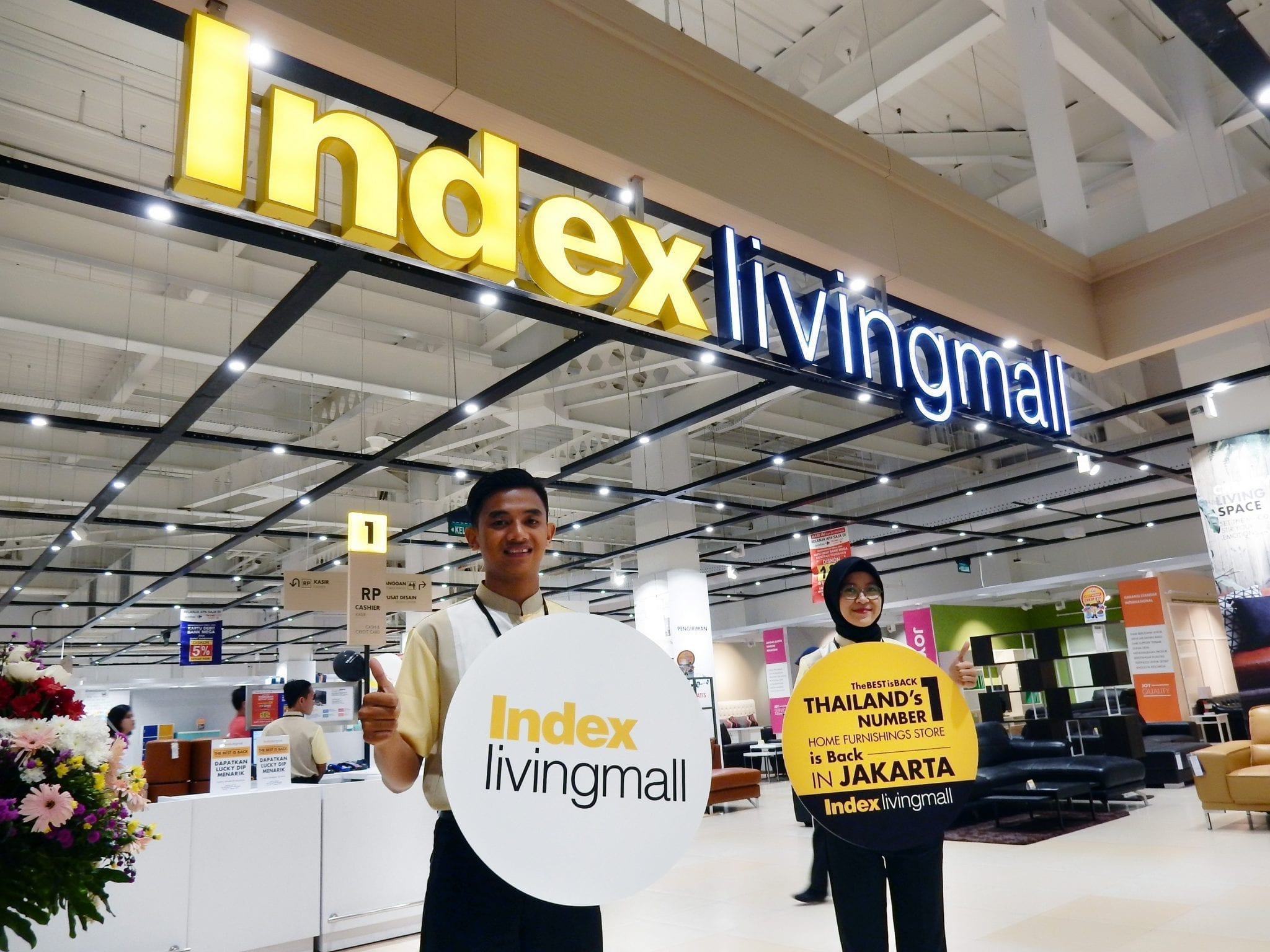
    ‘Index Living Mall’ (ILM), No.1 Home Furnishings Stores and ASEAN retailer with the highest number of branches across the country, self-owned factories, and a world class exporter, has declared the partnership with ‘CT Corp’: Indonesian’s No.1 business group in several business segment, including ‘Mega Group’ finance company, ‘CT Global Resources’, and ‘Trans Corp’ multi-entertainment complex/hotel and Transmart Retail. The first store opened at PT. Retail’s Transmart Carrefour, Cempaka Putih, Jakarta, on 2,500 sq.m. retail space.  The grand opening day was organized on  11th August 2017, under the concept of ‘The Best is Back’. Special sales promotion were offered to customers to celebrate the new branch launch. A further 4 stores shall open between September to December this year, followed by another 5-10 stores each year until 2020 with the goal to become the Top of Mind Home Furnishings Stores in Indonesia. The event has also been honored with H.E. Mr.Pitchayaphant Charnbhumidol, Ambassador of Thailand to Indonesia.

    Mr.Pisith Patamasatayasonthi, President and CEO of Index Living Mall Co.,Ltd revealed that “The trend of home furnishings products market in ASEAN region is expanding well. With key factors such as expansion of markets, income, and customer behavior. We are truly enthusiastic to study the possibility of investment opportunities as well as business strategies in each country, in order to lead us to becoming one of the largest home furnishings and accessories retail chains in ASEAN by 2020.  Recently, we have been able to partner up Index Living Mall with CT Corp which is the largest capital group in Indonesia. This move demonstrates that we are more than ready to expand our business internationally and set to become the leader in home furnishings business. So, right now we have been working hard to open the first Index Living Mall branch in Indonesia under the concept of ‘The Best is Back’ which represents our 6 key strategies and a special sales promotion offered to our new customers.  Moreover, the company plans to expand its additional 4 stores ranging in size from 1,000 sq.m. to 2,000 sq.m. by the end of 2017 and within Transmart Carrefour locations. We can expect to see as many as 5-10 stores next year and annually through 2020.  This clearly demonstrates our confidence in the strength of Index Living Mall in tens terms of brand and product under the 4 Joys concept.

    Mr.Ekaridhi Patamasatayasonthi, Director International Business Development of Index Living Mall Co.,Ltd said “We believe that the home furnishings business in Indonesia has a high potential to go far particularly through our partnership with Transmart Retail. Apart from the slowdown in fashion and IT gadgets, the home furnishings markets has growth potential. The expansion of our new regional market in Indonesia will help increase revenue share from International up to 14% this year from our current level of 8% and will shape Index Living Mall to become a successful regional player.”

    Besides, the potential of CT Corp under the supervision of Mr.Chairul Tanjung, Indonesian tycoon and Transmart Carrefour retail business owners, is one of the key factors that supports Index Living Mall in penetrating into the right market locations, approaching to the right target groups, as well as expanding customer bases. “We strongly hope that our franchise expansion in Indonesian market will build trust of Index Living Mall among our customers here in terms of its high quality, international standard, cutting-edge design and product which has been specially selected of the market in Indonesia” he said.

    Mr.Shafie Shamsuddin, President Director and CEO of PT. Trans Retail Indonesia highlighted that “This strategic partnership is expected to provide added value for Indonesian consumers with more and more sophisticated choices of furniture products at Index Living Mall that are integrated in one area with Transmart Carrefour. Surely this will provide a trend of positive and complementary consumer spending needs between Transmart Carrefour and Index Living Mall as well as we help to provide place and space for local products to partner with us”

    “We have successfully expanded our International Retail Business across Malaysia, Vietnam, Singapore, Cambodia, Laos, Myanmar, Nepal, Maldives, Pakistan, Russia and now Indonesia as well as having strategic partners in place for the export of our products into Japan, Korea, The America, Europe. The International Retail Business represented 8% of total retail sales against Thailand in 2016.” according to Mr.Gerard McGurk, Head of International Business Development of Index Living Mall Co.,Ltd.

    The concept of ‘The Best is Back’ which would represent the 6 Best key strategies. First, The Best Furniture Lifestyle Store, Index Living Mall sells all home furnishings products in best style and best material. Second, The Best Value, the products are worth every sen of the price. There is no need to wait for the sales promotion because Index Living Mall has own factory. Third, The Best Design, the designs are being created by famous designers from all over the world such as Italy, Sweden, Denmark and Germany. Fourth, The Best Quality, every single piece of the products is being well made from the best selection of materials to ensure the best quality for the customers. Fifth, The Best Impression, Index Living Mall customer service is beyond expectation, not just the fast shipping service but also quick installing from our professionals. With 3D designer specialist service through 360 degree perspective within 30 minutes via 3D-Rooms-to-show program. Finally, Sixth, The Best Offers, Index Living Mall offers numerous special deals, promotions and privileges during the grand opening celebration.


  • BI launches food price information center

    BI launches food price information center

    The central bank of Indonesia, Bank Indonesia (BI), has launched a Strategic Food Price Center website (PIHPS) application which will serve as a reference of pricing information to help those in charge of making policy on inflation management.

    BIs Governor Agus Martowardojo said, at the PIHPS launch here on Monday, that data collection was one of important factor in controlling price to manage inflation.

    “The success of inflation policy application requires not only information but also supporting data. We follow the presidents directive, stated on April 11, 2016, to develop food information system center,” Agus stated.

    He explained that at an early stage, PIHPS will focus on 10 food commodities that contribute more than 50 percent to inflation of the volatile foods category.

    Referring to PIHPSs website at www.hargapangan.id site, the 10 strategic food commodities are rice, beef, chicken, chicken egg, red chili, cayenne pepper, onion, garlic, cooking oil, and sugar.

    Controlling the prices of these 10 food commodities has become the foundation of BI and the government to control inflation of volatile foods.

    Data presented by PIHPS is compiled from 164 traditional markets from 34 provinces. The data collected from 9.00 to 11.00 Jakarta time will be validated by BI at 10.00 to 12.00 and then published at 13.00 Jakarta time.

    PIHPS can be accessed at www.hargapangan.id or by downloading PIHPS National at android and Apple iOS operating system for free.

    In future, the Central Bank will develop the application by extending data coverage that includes modern markets, wholesalers, and producers, Agus remarked.

    “In 2018, we will collect data at the producer level for the 10 commodities, and we will also develop the site, hoping that wider access to food information will gradually lower the price fluctuations,” Agus revealed.

    Through PIHPS, the Central Bank wants to keep the inflation at 3-5 percent this year by paying particular attention to volatile foods, considering that its pressure from administered prices will be high following the energy subsidy adjustment policy that is applied this year.

    BI and the government want to keep volatile foods inflation in the range of 4-5 percent year on year from this year.

    The government has listed an overall inflation assumption of 4 percent in the 2017 State Budget.

  • New APAC Forwarding Index

    New APAC Forwarding Index

    Air and ocean volumes on Asia-Europe trade lanes eastbound and westbound are expected to surge in the coming months, according to the latest survey results for The New APAC Forwarding Index being developed by Mike King & Associates and Logistics Trends & Insights LLC.

    Higher air freight volumes are expected on key lanes to and from APAC, and the outlook for intra-Asia trade is also optimistic. The survey results, compiled by consultants Mike King and Cathy Roberson, are the first step towards the creation of a new Index for Asia forwarding markets which will be published in the coming months. The second survey is open to anyone with insight or business linked to key trade lanes to and from APAC used by forwarders and third parties.

    APAC Ocean Forwarding Markets
    Sixty per cent of survey respondents said ocean freight volumes to and from APAC in April were higher than March, while 54 per cent predicted they would handle higher volumes three months from now.

    “Demand has been higher than we’d anticipated from Europe to Asia, and there has also been some disruption to liner services following blank sailings around Chinese New Year and changes to alliances,” said one respondent. “We expect capacity to be tight well into Q2.”

    Seventy per cent of respondents expect APAC to Europe ocean freight volumes to increase three months from now, while 66.7 per cent forecast that volumes will rise from APAC to North America. However, optimism for the North America – APAC trade was hard to discern. Only 28.6% of respondents saw higher volumes on the lane in April compared to March, while only 43 per cent expect volumes to increase three months from now.

    “Despite uncertainty surrounding liner Alliances leading up to April 1 and the various bedding issues we have seen including terminal congestion in China and a lack of capacity in Europe, optimism is high for the APAC ocean freight market,” said Roberson. “The Europe to APAC trade lane had the highest percentage rate of month-to-month volume gains according to respondents to our first survey. The next most dynamic lanes were APAC to Europe and APAC to North America.

    “The North America to APAC liner trade reported the lowest percentage of respondents recording volume increases in April compared to March which could be the strength of the Greenback catching up with exporters. On most lanes the majority of respondents expect to see higher volumes over the next three months than at present, which bodes well for forwarders and lines.”

    APAC Air Markets
    Fifty-four per cent of survey respondents predicted APAC volumes across all lanes will be higher in three months than at present, with 37 per cent expecting them to remain the same and just 9 per cent lower. Fifty-two per cent of respondents reported that volumes in April compared to March were higher while only 11 per cent said they were lower. As with ocean trades, the most dynamic air cargo lanes in April compared to March were APAC to Europe (73 per cent experienced higher volumes month-on-month), Europe to APAC (55 per centhigher m-o-m) and APAC to North America (63 per cent higher m-o-m).

    “Concerns of a possible protectionist import tax on goods entering the US may be holding some shippers back in the North America region,” said Roberson. “Still, a respectable showing for North America as the economy remains healthy as the first half of the year progresses. Emerging markets volume appears strongest to APAC for air freight with more than half of respondents anticipating higher volumes on the lane three months from now. This is likely due to food imports from such locations as Africa, Chile, Argentina and elsewhere.”

  • Sompo Japan to Release in Indonesia Weather Index Insurance for Farmers

    Sompo Japan to Release in Indonesia Weather Index Insurance for Farmers

    Sompo Japan Nipponkoa Insurance will start selling insurance products that compensate farmers hit by drought in Indonesia as early as this autumn.

    Earlier this month, Sompo Japan signed a memorandum to partner with BMKG, Indonesia’s meteorological bureau, to gather weather data. The Japanese insurer will provide weather index products that pay a certain amount to contract farmers when rainfalls drop below the forecast amount of the past three months.

    Such technologies and services provided by companies in disaster-prone Japan are likely to become promising exports to Southeast Asia. With an insurance premium of 50,000 rupiah ($3.76), contract farmers will be entitled to recuperate up to 500,000 rupiah if a drought occurs.

    Sompo Japan is narrowing down potential insurance agencies to partner with, such as local financial institutions. The company plans to test-run products in some areas as early as this autumn and go full swing in 2018.

    Sompo Japan started selling weather index insurance products for banana producers in Thailand in 2010 and in the Philippines in 2014. The company plans to release policies in Myanmar as soon as it gets government approvals.

    The company plans to boost its lineups of countries of sale and products to increase contracts fivefold to 30,000 in Southeast Asia by 2025.

    In the wake of increasing damage due to drought caused by unusual weather patterns, governments in Southeast Asia are taking measures to improve infrastructure, such as building irrigation facilities and providing financial coverage for damage claims.

    There are two major strategies for dealing with climate change. One is climate change mitigation, which is any action taken to reduce greenhouse gases such as carbon dioxide. The other is adaptation, which is the ability of a system to adjust to climate change to moderate any potential damage.

    The Paris Agreement, an international framework implemented to slow global warming, requires countries to set a goal of cutting greenhouse gases and taking adaptation measures. Emerging and developing countries — which are often hit by drought and heavy rains — are showing interest in the adaptation route.

    The United Nations Environment Programme, or UNEP, estimates the costs of adaptation could range from $140 billion to $300 billion a year by 2030, and between $280 billion and $500 billion a year by 2050.

    The market for adaptation solutions is expected to spread globally with the help of multinational funds and local governments. Some companies have started offering products and services catering to these demands.

    Japanese companies are well-positioned to help developing countries adapt to climate change, such as by contributing to better infrastructure, developing cultivation technologies so crops can withstand warmer temperatures, and increasing preparedness for power outages.

    However, Mari Yoshitaka, chief consultant of Mitsubishi UFJ Morgan Stanley Securities, said many Japanese companies have not shown much interest in the global adaptation business. But focusing on environmental measures needed to cope with the situation presents business opportunities.

  • Retail sales in Japan rise by 1.7 percent

    As per industrial data released on Wednesday, Japan has witnessed economical growth after months of stagnation. The country’s industrial output increased 1.5 percent on month, and inventories fell 1.5 percent on month and 4.8 percent on-year.

    Japan’s retail sales also rose by 1.7 percent on-year in November, however, sales of large retailers were down by 0.3 percent on year. The manufacturing industry is meanwhile expected to grow 2 percent in December and 2.2 percent in January.

    The country released revised figures earlier this month, showcasing that its gross domestic product (GDP) for the July-to-September quarter grew 1.3 percent on-year.

    Izumi Devalier, Head of Japan economics at Bank of America-Merrill Lynch said, “We’re now down to levels we saw pretty much at the time of the VAT value-added tax hike. So, inventories are very lean, which means that we should some pretty strong production numbers in the months ahead.”

    “While domestic demand still lacks strength, a pick-up in exports is driving up production. Output will likely continue recovering moderately ahead,” said Takeshi Minami, Chief Economist at Norinchukin Research Institute.

    Growth in exports and factory outputs is offering the country’s economy a boost, while also encouraging policymakers to pull the country’s economy from stagnation.

    Further, the data released showed that Japan’s core consumer price index including oil products dropped 0.4 percent on-year.

    Such a drop has been recorded for the ninth straight month in November.

  • BEI launches online investment-based simulation game

    BEI launches online investment-based simulation game

    The Indonesia Stock Exchange (BEI) launched an online investment-based simulation game “Nabung Saham Go” (Saving Stocks Go) as one of the measures to introduce the capital market industry to the public, especially to university students.

    “The game was one of the steps to introduce the capital market to the public. The Nabung Saham Go game can be played by anyone although it is aimed at university students as it is easier for them to play. The game is similar to Pokemon Go,” Development Director of BEI Nicky Hogan stated here on Tuesday.

    Hogan emphasized that the game falls under the education category and offers a fusion of the virtual and real worlds. Players will encounter small adventures bearing different themes and will get a series of interesting information.

    “The application encourages players to become more familiar with the capital market,” he remarked.

    Hogan elaborated that the “Nabung Saham Go” game invites players to collect points gained after answering the questions posed by the gaming application.

    “Players can visit certain places, such as the Financial Services Authority Building and Indonesia Stock Exchange Building to get information on how to gain points in the game. In each of the places visited, the player will have to answer a few questions on the stock market. Each correct answer will be given points,” he explained.

    In addition to “Nabung Saham Go,” Hogan said the users can play an analog game called “Stocklab,” which is associated with investment instruments, such as stocks and mutual funds.

    “The game Stocklab uses media cards and as an outline, the players will be guided on the strategy of investing and are invited to find out how the company made its initial public offering,” he added.

  • Korea to Develop Quick-time Consumption Index

    Korea to Develop Quick-time Consumption Index

    Statistics Korea revealed Tuesday that it’s developing what it calls a ‘quick-time consumption index’ based on civilian credit card approval information provided by the Credit Finance Association (CFA).

    The new index will use big data related to credit card approval information from eight domestic credit card companies, and is expected to launch in October.

    The CFA-provided information consists of approved credit card transactions categorized by date, 17 cities and provinces, and 178 business categories. To further broaden the index, Statistics Korea will also use additional credit card approval information from more specific types of businesses such as department stores and supermarkets.

    Statistics Korea expects the new index to allow for quicker observation of the ‘production index for the service industry’ and ‘retail sales index’, with an improvement of approximately three weeks, which in turn will permit quicker responses to economic changes.

    “The total approved credit card transactions take up 76 percent of all consumption and sales, which will make this new index quite reliable,” said an official from Statistics Korea.

  • Korea to release online price index

    Korea to release online price index

    South Korea plans to unveil a new index tracing online retail prices this year by using big data from private sector to reflect actual economic sentiment, according to Statistics Korea on Tuesday.

    The state-run agency plans to release an online price index that will complement the consumer price index by the end of this year, the agency reported in its 2016 plan to President Park Geun-hye.

    To develop the new indicator, Statistics Korea is currently collecting price data from six major online shopping malls and discount store chains — E-Mart, Homeplus, Lotte Mart, Lotte Supermarket, 11st and Interpark.

    “The online price index will be calculated based on the prices of a sample of representative items being sold online,” an official at the agency said.

    He added that the index will show the average price change on a daily basis unlike the consumer price index which shows monthly data.