Retail News CRM

Tag: inflation

  • Singapore inflation rises 0.2% in December

    Singapore inflation rises 0.2% in December

    In a sign of a tepid increase in inflation, the Monetary Authority of Singapore reports that consumer price inflation rose to 0.2% in December from 0.0% in November, due to a larger increase in private road transport cost, which rose 1.7% over the month because of higher petrol prices and parking fees. In comparison, MAS Core Inflation eased to 1.2% from 1.3% in the previous month, because of lower retail goods inflation.

    Services inflation edged up to 1.6% from 1.5% in the preceding month, mainly on account of a faster pace of increase in holiday expenses, which more than offset the larger contraction in telecommunication services fees. Food inflation was 2.0% in December, unchanged from the previous month.

    Price increases for both non-cooked food items and prepared meals were broadly stable. Accommodation cost fell by 3.8% in December, like the previous month, reflecting continued softness in the housing rental market.

    Overall retail goods inflation eased to 0.0% in December from 0.2% in November, largely because a fall in the prices of personal care products following the rise in November. For the whole of 2016, CPI-All Items inflation came in at -0.5% for the second consecutive year.

    CPI less imputed rentals on owner-occupied accommodation (CPI-ex OOA) rose by 1.2% in December Inflation as measured by CPI less imputed rentals on owner-occupied accommodation (OOA) picked up to 1.2% in December from 1.0% in the preceding month, reflecting the stronger pickup in the cost of private road transport.

    For 2016 CPI less imputed rentals on OOA rose by 0.3%, higher than the 0.1% increase in 2015. MAS Core Inflation was slightly lower at 1.2% in December MAS Core Inflation was 1.2% in December, slightly lower than the 1.3% in November, as the decline in retail goods inflation more than offset the increase in services inflation. For the whole of 2016, MAS Core Inflation rose to 0.9%, from 0.5% the year before.

    On the external front, MAS says it expects imported inflation is likely to rise modestly on the back of a turnaround in global commodity markets. Global oil prices are expected to average higher in 2017 compared to last year, “although upward pressures would be capped by existing inventories as well as an anticipated increase in US crude oil output. Domestically, overall cost pressures should be muted,” says the market regulator.

    MAS also reports a pullback in hiring, as conditions in the labour market have slackened. “This will cap underlying wage growth, even as non-labour business costs have eased. The subdued growth environment will also constrain the extent of cost pass-through to consumer prices.

    For the whole of 2017, MAS Core Inflation is expected to average 1–2%, compared with 0.9% in 2016. Energy-related components are projected to contribute positively to inflation in 2017, while the temporary disinflationary effects from budgetary measures will fade.3

    However, the increase in core inflation will be gradual, given the absence of more generalised demand-induced price pressures. CPI-All Items inflation is projected to pick up to 0.5–1.5% this year, from -0.5% in 2016, largely reflecting the rise in private road transport cost,” it concludes.
  • Indonesia seen holding rates on rupiah, inflation concerns

    Indonesia seen holding rates on rupiah, inflation concerns

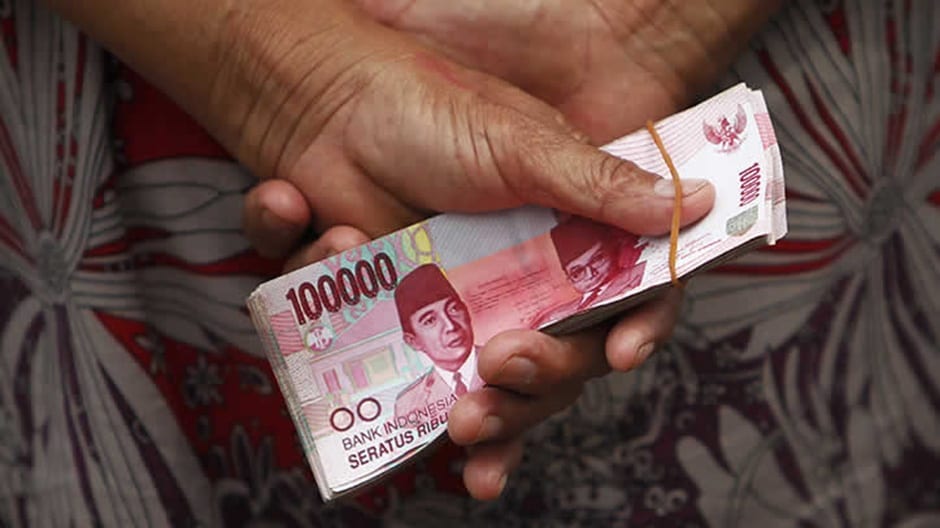
    Indonesia’s central bank is widely expected to keep its benchmark policy rate unchanged on Thursday as it monitors the rupiah’s movement at a time of global uncertainty and price pressures at home.

    Bank Indonesia (BI) cut its benchmark six times last year, by 150 basis points, to 4.75% to aid economic growth. During 2016, the inflation rate was low, current account deficit comfortable and the rupiah relatively stable.

    All 22 analysts in a Reuters poll predicted the central bank will leave the main rate unchanged on Thursday.

    “BI’s monetary policy easing cycle may have come to an end,” the World Bank said in a report published on Tuesday.

    It said the space for easing is more constrained than in October – when BI made its last trim – “given US interest rate normalisation and downward pressure on the rupiah”.

    Capital Economics said BI is also likely to consider risks of higher inflation due to government plans to hike some liquefied petroleum gas prices and electricity tariffs.

    “BI expects this to push inflation towards the top of its target range, weakening the case for further monetary loosening,” the consultancy wrote on Monday.

    Higher Inflation Seen

    Earlier this month, BI deputy governor Perry Warjiyo said that although the central bank has room for more easing, it needs to “calibrate” an expected acceleration in inflation when deciding its main rate.

    He said inflation may rise to 4.6% in 2017 due to adjustments in administered prices, from 3.02% in December.

    Warjiyo, hinting at a hold on Thursday, said BI may prefer to use liquidity management tools to support economic growth, while its main policy rate will be used to maintain financial market stability.

    Some analysts said South-East Asia’s largest economy still needs loosening to lift sluggish growth, which slowed to 5.02% in the third quarter and may slow again to 4.97%, according to BI’s forecast.

    Out of seven analysts who gave views for the benchmark at the end of March, three saw BI making a 25-basis-point cut to 4.50% while the other four projected no change.

    Taimur Baig, Deutsche Bank’s chief Asia economist, said “Indonesia’s economic turnaround, which seemed apparent in the first half of last year, appears to have stalled” and that might prompt BI to cut before April.

    DBS economist Gundy Cahyadi also sees a cut, but not until 2017’s second half.

  • Indonesia’s inflation rate at seven-year low

    Indonesia’s inflation rate at seven-year low

    Indonesia’s inflation slowed to the weakest in almost seven years and fell below the central bank’s target, bolstering the case for further interest rate cuts by Bank Indonesia (BI).

    Consumer price gains eased to 2.79 per cent last month from a year earlier, compared with economists’ 3.02 per cent estimate.

    Prices fell 0.02 per cent in August from the previous month, the National Statistics Office said yesterday, adding that the annual rate was the lowest since December 2009.

    “If you ask me now whether there is room for (monetary) easing, the room is more open. But whether it would be used or not, it is up to BI,” Coordinating Minister for Economics Darmin Nasution said after the lower-than-expected data was announced.

    Mr Nasution said BI had wanted to cut the benchmark rate “since last month” but then decided to delay to better introduce its new policy rate, the seven-day reverse repo rate, which stands at 5.25 per cent.

    The authorities have set their 2016 inflation target at 3 per cent to 5 per cent and expect consumer price gains to end the year at around 3.5 per cent.

    “Easing inflation – along with stability in both the current account deficit and exchange rate – has created policy space for rate cuts,” said economist Ng Weiwen at Australia & New Zealand Banking Group (ANZ).

    “The degree of easing will be dependent on the size of tax amnesty inflows.”

    ANZ expects the Indonesian central bank to lower its new benchmark rate by another 25 basis points to 5 per cent as soon as its September meeting, Mr Ng said.

    Indonesia’s 10-year bond yield slid four basis points to 7.07 per cent yesterday afternoon in Jakarta, set for the biggest daily gain in three weeks. Shares fell, with the Jakarta Composite Index extending its drop to 0.9 per cent and set for the lowest close since Aug 15.

    Falling airfares, inter-city transport costs and cheaper food were the biggest factors driving the monthly drop in prices, said National Statistics Office deputy Sasmito Hadi Wibowo.

  • Inflation erodes Vietnam retail sales rise

    Inflation erodes Vietnam retail sales rise

    Purchasing power is declining despite Vietnam retail sales and services revenue rising 9.1 per cent to VND1430 trillion (US$63.4 billion) in the first five months of this year.

    If inflation is excluded, the amount marks an increase of 7.8 per cent, according to the General Statistics Office (GSO). However, GSO expert Vu Manh Ha says the growth, with inflation excluded, was lower than the 8.2 per cent growth in the same period last year, showing weaker purchasing power.

    Growth was impacted by incidents affecting accommodation, catering and tourism services, as well as the mass fish deaths along Vietnam’s central coast. With the cancellation of beach tours, the spending power of tourism companies in the coastal provinces fell strongly.

    Meanwhile, there was a strong 9.5 per cent growth in the purchasing power of goods retailers in the first five months, amounting to VND1920 trillion and accounting for two-thirds of total retail sales and services revenue.

    Retailers of rice and foodstuffs saw growth of 13.6 per cent; garment retailers, 10.9 per cent; and home appliance retailers, 9.6 per cent.

    Ha says the total retail sales and services revenue next month will increase further because of a high demand for house construction and repairs, and recovering demand for beach tours.

    GSO director Nguyen Bich Lam says purchasing power this year is expected to have a lower growth rate than last year because of stability in prices, high supply and stable demand for most essential goods.

    Because of consumer fears about environmental pollution and food safety, spending is expected to erode for such services as accommodation, catering, tourism and entertainment, says Lam.

  • Inflation May Accelerate to 4.38% in January

    Inflation May Accelerate to 4.38% in January

    Supplies of shallots and chili, staple ingredients in Indonesian meals, are often low during the rainy season, propping up the prices index, said Sasmito Hadi Wibowo, the deputy of goods and services distribution at the Central Statistics Agency (BPS).

    Beef prices are also on the rise, increasing by 1 percent alone this month after the government slapped a 10 percent value added tax on beef trade and import in the beginning of this year. Officials reversed the policy on Friday.

    Bank Indonesia has targeted an inflation rate of between 3 percent and 5 percent this year.

    The central bank just cut its benchmark interest rate to 7.25 percent last week as it seeks to stimulate bank lending and boost growth, but an accelerating inflation would undermine its ability to trim the interest rate further.

    The government aims to expand Southeast Asia’s largest economy by 5.3 percent this year, rebounding from an estimated 4.7 percent last year, its slowest pace since 2009.

  • Indonesian retailers prepare for inflation shock

    Indonesian retailers have warned consumers of prices rises ranging from five to 12 per cent.

    Roy N. Mandey, chairman of the Indonesia Retailers Association (Aprindo), says the nation’s retailers plan to increase prices to consumers by an average of six to seven per cent as they battle with the weakening value of the rupiah.

    “Price increases for food and beverage products would be around five per cent, while electronics would see a hike of between 10 and 12 percent,” Mandey said in an interview with the Jakarta Globe.

    The Indonesian currency has lost 15 per cent of its value this calendar year, and the government has disrupted the economy further by introducing new import tariffs on many consumer goods and restricting alcohol sales in convenience stores.

    Mandey said in an interview he expected retailers to increase prices in October, a typically high month for stock replenishment.

    Members of Aprindo, which include hypermarket operator Matahari Putra Prima and convenience store network Sumber Alfaria Trijaya, have been struggling to respond to stagnating retail demand as the purchasing power of consumers has slipped.

    In July, Indonesian retail sales growth fell to its lowest level since last December, rising just 4.8 per cent.

    In 2014, Indonesian retail sales topped Rp 168 trillion, but the last estimate for 2015 stood at just 152 trillion. Aprindo is hoping for Rp 175 trillion but says for that level to be reached the government would have to remove some regulatory barriers.

  • Japan’s households begin opening their wallets

    Japan’s households begin opening their wallets

    Japan’s households opened their wallets a bit wider than anticipated in Might, with family expenditures leaping for the primary time in additional than a yr.

    Family expenditures rose four.eight % on yr in Might, topping a Reuters ballot forecast for three.four % and marking the primary on-year improve because the nation elevated its consumption tax in April of 2014.

    Some took the leap as a transparent constructive.

    “Most individuals have been extraordinarily skeptical on the entire Japanese package deal. 90 % of out of doors observers stated there was no means a rustic in a state of decline for 20 years might flip itself round,” Mark Matthews, head of analysis for Asia at Julius Baer, stated in a telephone interview. “These good numbers present there’s some momentum within the financial system.”

    Japan’s policymakers have struggled to kick begin the financial system after many years of deflation, with the Financial institution of Japan launching an enormous easing program in 2013 as a part of “Abenomics,” Japanese Prime Minister Shinzo Abe’s plan to return the nation to progress.

    However after a consumption tax hike to eight % from 5 % in April of 2014, the financial system acquired clobbered when shoppers stopped spending, forcing the federal government to postpone a second gross sales tax initially due this October.

    Different knowledge launched concurrently the family expenditures have been extra muted. Japan’s core shopper worth index (CPI) rose zero.1 % on-year in Might, only a tad above a Reuters ballot forecast for a flat studying and down from a zero.three % rise in April. The unemployment fee was regular at three.three % in Might, as anticipated.

    A few of Japan’s financial knowledge has supported the restoration expectations, with gross home product (GDP) progress for the primary quarter revised greater to an annualized three.9 %, up from 1.5 % within the October-to-December quarter, amid better-than-expected capital spending.

    To make certain, not everyone seems to be shopping for into the restoration story.

    “The large image stays that there’s nonetheless substantial spare capability within the financial system which is dragging down costs,” Marcel Thieliant, a Japan economist at Capital Economics, stated in a word Friday. “There are scant indicators that the tighter labor market has resulted in stronger worth strain,” he added, noting that the determine was barely above expectations on account of an increase in risky recent meals costs. He expects costs will fall within the third quarter.

    Thieliant additionally does not see a lot to get enthusiastic about from the family spending knowledge.

    The rise adopted a pointy drop in April, he famous.

    “Even when spending continued to rise by one other 2 % month-on-month in June, personal consumption might subsequently have stagnated final quarter,” he stated.” The upshot is that GDP progress ought to have slowed sharply within the second quarter.”

    The Japanese yen held flat at round 123.59 towards the U.S. greenback after the info.

  • Might retail inflation at Three-month excessive of 5.01%

    Might retail inflation at Three-month excessive of 5.01%

    Shopper Worth Index-based inflation rose to a three-month excessive of 5.01 per cent in Might, even because the meals phase noticed a decline within the fee of worth rise, official knowledge confirmed on Friday.

    The inflation had stood at four.87 per cent in April 2015 and eight.33 per cent in Might 2014. Whereas it justifies the Reserve Financial institution of India (RBI)’s cautious stance in slicing the coverage fee earlier this week, RBI was extra nervous about meals inflation, which declined.

    Meals inflation was right down to four.80 per cent from 5.11 per cent in April 2015. Within the year-ago interval, it had stood at eight.89 per cent.

    Whereas the meals inflation was greater within the city areas at four.84 per cent towards four.74 per cent within the rural elements, the state of affairs was fairly reverse in case of mixed inflation. General inflation stood at 5.52 per cent in villages and four.41 per cent within the city areas.

    Whilst meals inflation was down, the costs of pulses rose on the elevated fee. Inflation in pulses elevated to 16.62 per cent in Might from 12.52 per cent. This was the one phase amongst meals gadgets that noticed double-digit inflation. Earlier this month, the Cupboard had determined to import pulses to tame costs.

    Sugar costs noticed a decline, although. In April, costs dropped 5.99 per cent, whereas in Might these turned cheaper by 7.Three per cent.

    The sugar sector has been battling a state of affairs of glut. Earlier this week, the Cupboard gave the sector a tender mortgage of Rs 6,000 crore to pay a part of its Rs 21,000-crore dues to farmers.

    Nevertheless, corporations weren’t glad as a result of it didn’t remedy the issue of over-supply and depressed costs.

    Elsewhere, home lease, an city phenomenon, inched down barely from four.65 per cent to four.64 per cent.

    Nevertheless, gasoline and lightweight noticed inflation rise to five.96 per cent