Retail News CRM

Tag: Inmarsat

  • Inmarsat successfully launched new commercial communications satellite

    Inmarsat successfully launched new commercial communications satellite

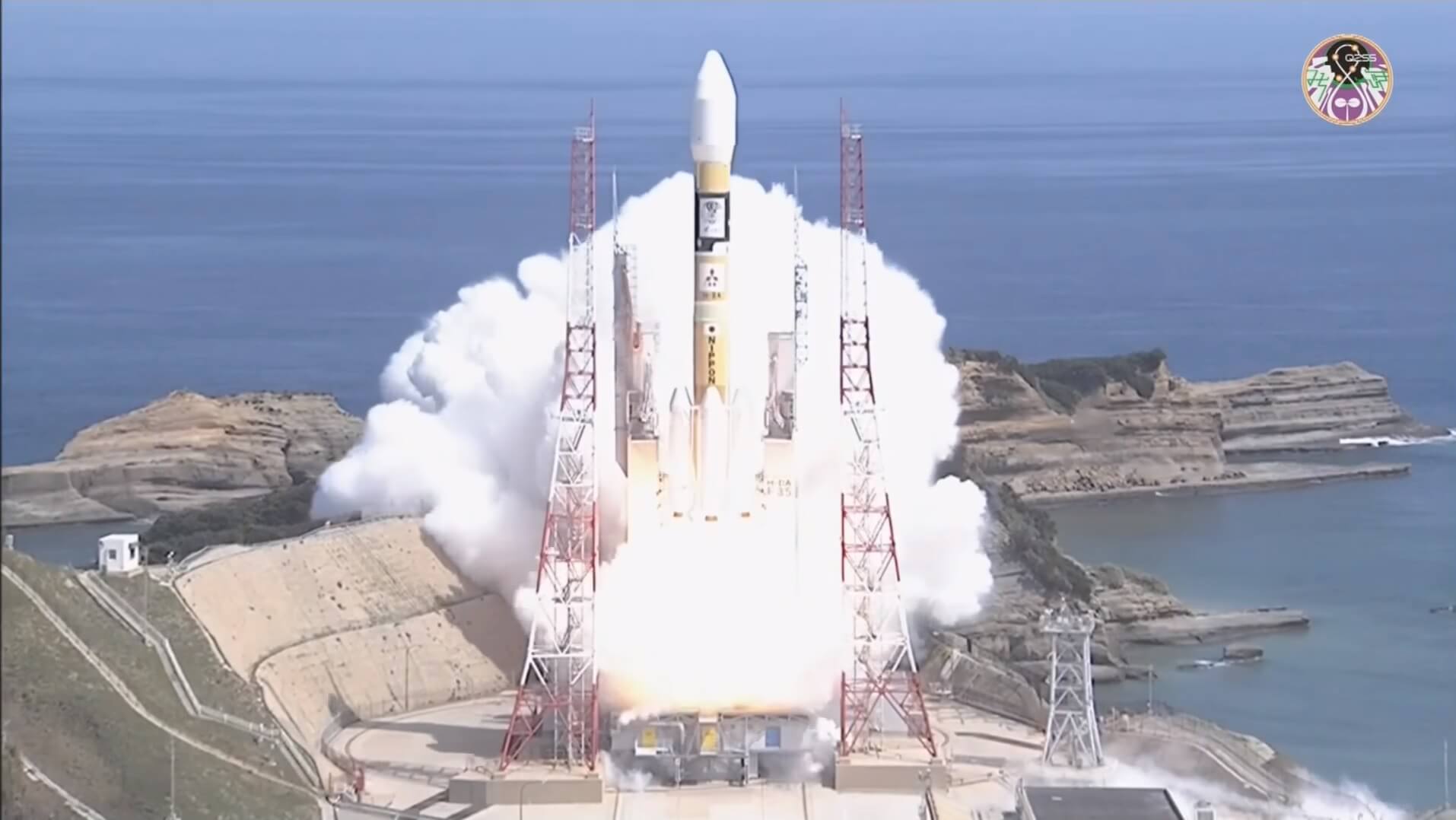
    Inmarsat has successfully launched its first Inmarsat-6 satellite, I-6 F1, by Mitsubishi Heavy Industries (MHI) from the JAXA Tanegashima Space Center in Japan.

    The Inmarsat-6s (I-6) are Inmarsat’s first-ever hybrid L- and Ka-band satellites, incorporating increased capacity and new technological advances for ELERA’s transformational L-band services alongside additional Global Xpress (GX) high-speed broadband capacity. Adding to an existing global fleet of 14 geostationary satellites they extend Inmarsat’s commitment to mission-critical services while enabling a new generation of pioneering technologies to connect and sustain the world.

    This launch is the first of seven planned for Inmarsat by 2024 in the company’s fully-funded technology roadmap. Launch success was confirmed by MHI at 15:59 UK time on 22 December following satellite separation from the H-IIA launch vehicle, with successful signal acquisition soon afterward.

    The most sophisticated commercial communications satellite ever launched, I-6 F1 is comparable in size to a London double-decker bus, with a deployed solar arrays ‘wingspan’ similar to a Boeing 767 and a 9 meter wide L-band reflector that will be deployed over the coming days. The satellite will then be raised to geostationary orbit (GEO) approximately 36,000km (~22,500 miles) above the Earth via its all-electric propulsion system and then undergo a thorough and extensive testing program. I-6 F1 will enter service in 2023. Ground stations in Western Australia will support I-6 F1.

    Rajeev Suri, CEO of Inmarsat, said, “This launch marks Inmarsat’s newest technological leap forward as we maintain our strong commercial momentum and sector leadership. It gives me great pleasure and pride to confirm the successful launch of I-6 F1. This satellite extends our world-leading mobile satellite communications services for our customers and partners, especially in the Indo Pacific region. My warmest thanks and congratulations go to the Inmarsat team that delivered flawlessly on this project as well as our launch provider Mitsubishi Heavy Industries and our satellite manufacturing partner Airbus Defence and Space.”

    The I-6 satellites demonstrate Inmarsat’s ongoing investment and commitment to its global leadership in L-band satellite services to 2040 and beyond for the benefit of mobility customers worldwide. They deliver an enhanced platform for those looking to embrace the next wave of world-changing technologies that ELERA enables, including the rapidly growing Industrial Internet of Things (Industrial IoT) satellite connectivity market segment, by providing dramatically increased network capacity and resilience.

    These new capabilities from the I-6s mean greater capacity and coverage, greater speeds and a greater portfolio of innovative connectivity solutions for ELERA and Global Xpress (GX) networks. The I-6 satellites, like all Inmarsat ELERA and GX spacecraft, are backward-compatible with existing terminals, ensuring that current and future customers will continue to benefit from new advances.

    The I-6s also substantially increase the effective capacity of the network available to ELERA customers with double the beams, 50% more spectrum per beam and double the power of the I-4s, matching customer demand as and where it is needed. They also add further depth in Inmarsat’s global coverage for even greater assurance to customers of the redundancy and resilience of Inmarsat’s L-band network.

  • Viasat buys Inmarsat for $7.3 million to create a global communications innovator

    Viasat buys Inmarsat for $7.3 million to create a global communications innovator

    Viasat has entered into a definitive agreement under which Viasat will acquire Inmarsat in a transaction valued at $7.3 billion, comprised of $850.0 million in cash, approximately 46.36 million shares of Viasat common stock valued at $3.1 billion based on the closing price on Friday November 5, 2021, and the assumption of $3.4 billion of net debt.

    The combination will create a leading global communications innovator with enhanced scale and scope to affordably, securely and reliably connect the world. The complementary assets and resources of the new organization will enable the availability of advanced new services in mobile and fixed segments, driving greater customer choice in broadband communications and narrowband services, including IoT.

    The combined company intends to integrate the spectrum, satellite and terrestrial assets of both companies into a global high-capacity hybrid space and terrestrial network, capable of delivering superior services in fast-growing commercial and government sectors. This advanced architecture will create a framework incorporating the most favorable characteristics of multi-band, multi-orbit satellites and terrestrial air-to-ground systems that can deliver higher speeds, more bandwidth, greater density of bandwidth at high demand locations like airport and shipping hubs and lower latency at lower cost than either company could provide alone.

    Both companies have proven track records of product and service innovation. Viasat has advanced North American residential and aviation connectivity and defense communications with technology and business models embraced by customers. Viasat is also recognized for driving change through its pioneering ultra-high-capacity satellite technology, which has delivered superior value at attractive, affordable economics.

    Inmarsat has an exceptional presence in the growing global mobility segment and is at the forefront of network design with its recently announced multi-dimensional mesh network. It is preparing to expand its global network later this year with its most powerful and advanced software-defined commercial communications satellites ever, offering both Ka- and L-band capabilities. Inmarsat has a global presence, a robust distribution channel spanning the rapidly growing mobility, government, IoT and enterprise sectors and currently provides safety and connectivity services to more than one million mobility and defense platforms.

    “This is a transformative combination that advances our common ambitions to connect the world. The unique fusion of teams, technologies and resources provides the ingredients and scale needed for profitable growth through the creation and delivery of innovative broadband and IoT services in new and existing fast-growing segments and geographies,” said Viasat’s Executive Chairman Mark Dankberg. “Inmarsat’s dual-band global mobile network, unique L-band resources, skills and capabilities in the U.K. and excellent technical and operational talent worldwide, are powerful complements to Viasat’s business. Together, we can advance broadband communications and create new hybrid space and terrestrial networks that drive greater performance, coverage, speed, reliability and value for customers. We look forward to welcoming the Inmarsat team into the Viasat family.”

    “Joining with Viasat is the right combination for Inmarsat at the right time,” said Rajeev Suri, CEO of Inmarsat. “Viasat is a terrific innovator and Inmarsat brings some powerful additions: global reach, a broad distribution channel, robust business momentum and a presence in highly attractive global mobility segments. Together, the two companies will create a new global player with the scale and scope to help shape the future of a dynamic and growing industry. The combination will create a strong future for Inmarsat and be well-positioned to offer greater choice for customers around the world, enhanced scope for partners and new opportunities for employees. The industrial logic is compelling and ensures that the U.K. has a strong and sustainable presence in the critical space sector for the long term.”

    Viasat plans to build on Inmarsat’s presence in the U.K. and is committed to preserving and growing the investment of the combined company in U.K. space communications, as well as supporting the recently published National Space Strategy. The combined company will cooperatively engage with the U.K. government with a view to operating in the U.K. consistent with the commitments previously made by Inmarsat/Connect BidCo, and expects continued constructive engagement across the U.K.’s thriving innovation ecosystem. It further intends to work closely with the U.K. government to bring additional space capabilities and other advanced technologies to the country as well as long-term, highly skilled engineering and related jobs for U.K.-based employees. Viasat plans to preserve and grow Inmarsat’s London headquarters, as well as its footprint in Australia and Canada and across Europe, the Middle East, Africa and Asia Pacific.

  • Inmarsat launches new customer experience platform for airlines to monetise inflight connectivity

    Inmarsat launches new customer experience platform for airlines to monetise inflight connectivity

    Inmarsat announced the launch of its innovative new OneFi customer experience platform (CXP) for airlines. The first-of-its-kind solution will serve as a catalyst to monetise inflight connectivity by bringing a host of onboard services together within a single portal interface, which passengers can easily access using their own personal devices.

    OneFi delivers a rich airline-branded digital platform to enhance the passenger experience onboard flights. It allows passengers to order food and beverages, purchase seat upgrades, receive the latest flight and destination information, and sign-up to the airline’s frequent flyer programmes, all in real-time from the comfort of their seat. In addition, passengers can browse the internet, stream videos and audio, shop online and enjoy other ecommerce offerings, using high-speed inflight broadband that airlines could choose to offer free-of-charge, funded through OneFi’s sponsorship and advertising features.

    The launch of OneFi comes at a critical time for airlines, with the global pandemic having accelerated passenger demand for digital inflight experiences. Inmarsat’s recent 2021 Passenger Confidence Tracker, the largest and most comprehensive global survey of its kind since the pandemic began, found that digital solutions that keep passengers connected and minimise their contact with cabin crew and fellow passengers can go a long way in boosting confidence. In addition, out of the 10,000 respondents worldwide, 41% believed inflight Wi-Fi had increased in importance after the pandemic.

    Philip Balaam, President of Inmarsat Aviation, said: “For many years, Inmarsat has advocated the vast commercial opportunities of inflight connectivity. However, until now, airlines have struggled to realise the full potential of the business model. OneFi is a step change for those looking to monetise their Wi-Fi services and ensure they keep pace with evolving passenger needs. It will empower a digital transformation in the cabin, which is especially important at this critical time for the aviation industry.

    “OneFi allows airlines to improve their brand experience and secure passenger loyalty, with the flexibility to incorporate their own services and use existing and new partners, such as content providers, advertisers and retailers. We are in advanced discussions with leading airlines about adopting this innovative new platform and expect to see a rollout with our first OneFi customer by the end of this year.”

    In recent years, airlines have continued to increase their focus on unlocking new revenue streams through broadband-enabled ancillary services. The market for digital inflight advertising alone is forecast to grow from $266 million today to $3.3 billion by 2030, representing a 10-year compound annual growth rate (CAGR) of 42.9% between 2020 and 2030, according to Valour Consulting.

    The launch of OneFi is a significant step in turning that untapped commercial opportunity into a reality. OneFi promises industry grade targeting features, media inventory and calls-to-action that are made available to the airline and its partners. These ensure that content is contextual and relevant to the individual passenger. It also enables partners to engage in more meaningful ways with passengers and boost sales lead generation rates. The platform’s intuitive, user-friendly interface will enable airlines to boost passenger take-up rates and create a frictionless funnel to purchase.

    In addition, OneFi is network agnostic and uses open architecture, meaning it can integrate with any technology infrastructure and Internet Service Providers (ISPs) used by airlines, ensuring a uniform experience across mixed aircraft fleets. The platform is also scalable, giving airline customers the flexibility to add new third-party services over time and helping to future proof their onboard offering.

    Inmarsat is transforming global aviation by bringing complete connectivity to aircraft and flight paths across the world. It recently unveiled plans for ORCHESTRA to bring existing geosynchronous (GEO) satellites together with low earth orbit satellites (LEO) and terrestrial 5G to form an integrated, high-performance solution, unmatched by any existing or planned competitor offering. ORCHESTRA allows capacity to be boosted in high-density areas such as at airports, eliminating congested network ‘hot spots’ and ensuring the connectivity needs of aviation customers are met well into the future, with capacity scaled directly to match their requirements.

  • Inmarsat launches Velaris for unmanned aviation industry

    Inmarsat launches Velaris for unmanned aviation industry

    Inmarsat announced the launch of its advanced new Velaris connectivity solution, which is uniquely positioned to serve as a catalyst for the safe and rapid growth of the unmanned aerial vehicles (UAVs) industry.

    Powered by the Inmarsat ELERA global satellite network, Velaris will provide secure communications for commercial UAVs – commonly known as drones – to fly beyond visual line of sight (BVLOS) and seamlessly integrate with aircraft in commercial airspace. Backed by military-grade cybersecurity, it allows operators to send their UAVs on long distance flights and access various applications, such as real-time monitoring, to ensure safe integration with other air traffic. In addition, Velaris allows a single pilot to remotely operate multiple UAVs at scale, making operations more commercially viable.

    Over the next seven years, the commercial UAV market is projected to increase from $2.32 billion in 2021 to $11.29 billion in 2028, marking a compound annual growth rate (CAGR) of 25.39% during this period. This will have a far-reaching impact on various aspects of business and society, ranging from cargo delivery, urban transport and surveillance to emergency services and disaster relief, including the supply of critical items such as medicine, test kits and food for remote communities.

    To support this fast-paced growth, Velaris will unlock unprecedented new digital automation capabilities within the UAV industry, leading to significant advances in safety, productivity, customer service, location access and accuracy, while also reducing the overall cost of operations. Importantly, it will also support the transport of people and goods in an environmentally friendly manner.

    Anthony Spouncer, Inmarsat’s Senior Director of UAVs and Unmanned Traffic Management, said: “Commercial UAVs have the potential to revolutionise a vast array of different industries throughout the world. However, to truly unlock their potential on a commercial scale, it is imperative that autonomous vehicles and unmanned aviation are safely and securely integrated into managed commercial airspace. That’s exactly what Velaris, as Inmarsat’s first global UAV connectivity solution, will deliver.

    “Inmarsat’s unparalleled experience in air traffic management and aviation safety, combined with our established track record in civil and military UAV communications, ensures that we can support global regulators, air navigation service providers and UAV operators with seamless airspace integration. In addition, thanks to our ambitious and fully-funded technology roadmap, including our brand new ORCHESTRA communications network of the future, Velaris will continue to develop and evolve alongside the UAV industry, remaining its gold standard connectivity solution for decades to come.”

    Inmarsat was recently crowned winner at the prestigious Air Traffic Management (ATM) Magazine Awards for its Pop-Up Unmanned Traffic Management (UTM) Platform, developed with Altitude Angel. Furthermore, Inmarsat is well-integrated in the air traffic management industry as a consortium member of Cranfield University’s recently opened Digital Aviation Research and Technology Centre (DARTeC). The company participates in several projects that aim to revolutionise the future of flight, including the UK Government funded Project HEART (Hydrogen Electric and Automated Regional Transportation) – which is developing the country’s first automated, zero carbon regional air transportation network – and Airspace of the Future (AoF) – which focuses on integrating UAV services with the wider UK transport ecosystem.

    “We work with our global partner ecosystem to develop UAV terminals that deliver smaller, more cost effective multi datalink solutions,” added Spouncer. “These are optimised for a wide range of use cases so that our customers can always have the highest possible standard of connectivity. I’m pleased to launch Velaris today. Coming soon after the launch of Inmarsat ORCHESTRA and ELERA, this truly emphasises Inmarsat’s long-term commitment to the commercial UAV market.”

  • Inmarsat launches ELERA to power IoT and critical connectivity

    Inmarsat launches ELERA to power IoT and critical connectivity

    Inmarsat has unveiled Inmarsat ELERA; a global narrowband network that is ideally suited to the rapidly evolving world of the Internet of Things (IoT) and for global mobility customers, including aviation, maritime, governments and select enterprises.

    “ELERA is perfectly suited to the needs of the connected IoT world,” said Rajeev Suri, CEO, Inmarsat. “Global reach, extraordinary resilience, faster speeds, smaller and lower cost terminals are all part of ensuring that we remain ahead of others in meeting the needs of our customers.”

    “ELERA is a further sign of a company with true momentum and one that is delivering new innovations and strong performance,” continued Suri. “I expect that Inmarsat will grow strongly in 2021 compared to the previous year, and that growth will span most of our business units. Our progress was evident in the first half, where we saw strong growth in revenue and EBITDA and robust cash flow. We have sharpened our strategy to focus on driving growth, accelerate decision making, launch new innovations, and are creating a more commercially focused, customer-centric culture.”

    ELERA builds on Inmarsat’s #1 position in Mobile Satellite Services (MSS) and will be a springboard for innovation, unlocking, accelerating and scaling pioneering use cases on land, at sea and in the air. Its foundation is Inmarsat’s world-class L-band network and incorporates new innovations ranging from higher speeds to smaller, low-cost terminals and [the previously announced] Inmarsat-6 satellites, the first of which (I-6 F1) is scheduled to launch before the end of the year.

    Coming just 14 days after Inmarsat announced ORCHESTRA, the world’s first network to combine GEO, LEO and 5G into one harmonious global communications solution, ELERA underlines Inmarsat’s strategic focus on the global mobility segment of satellite communications. It is also a signal of a company with momentum, delivering major technological innovations and growth.

    The unique capabilities of ELERA, combined with Inmarsat’s superior spectrum and the ideally suited orbital position of its satellite networks, will make it the essential catalyst for new IoT use cases, across everything from autonomous transport and unmanned aerial vehicles (UAV) to industrial and agricultural IoT applications.

    ELERA is built on Inmarsat’s market-leading L-band network, which already delivers the world’s most reliable and flexible global connectivity service with unique resilience in all conditions and full global redundancy. It supports everything from worldwide maritime and aviation safety services and humanitarian missions to IoT applications across agritech, transportation and utilities, among many others.

    The new innovations that the company is investing in to bring to market in the near future include spectrum management technology to deliver L-band speeds up to 1.7Mbps, the smallest footprint, low cost L-band terminal and two new L-band satellites, which are the largest and most sophisticated commercial communication satellites ever created.

    The new spectrum management capabilities (known as Carrier Aggregation) being incorporated into the ELERA network will deliver the fastest speeds globally available to L-band customers, far outstripping the capabilities of any other worldwide L-band network.

    Live customer trials in commercial aviation are scheduled to start during the course of 2022 and this technology will be rolled out across a range of sector specific applications for Inmarsat’s mobility, government and IoT customers over the coming few years.

    ELERA will also see the creation of the smallest footprint, low cost terminal for L-band users, delivering the ideal framework for satcom IoT at scale, with supporting cloud-based management, for vertical sectors such as infrastructure, rail, logistics, mining, agriculture, government, maritime and aviation.

    Inmarsat is launching two new satellites to enhance the ELERA network. The I-6 satellites, the first of which is scheduled to launch at the end of 2021, are the largest and most sophisticated commercial communications satellites ever built.

    The L-band capacity on each I-6 satellite will be substantially greater than Inmarsat’s 4th generation spacecraft and, among other enhancements, they will deliver 50% more capacity per beam; meaning that much more data can be carried over the same geographical area, in addition to unlimited beam routing flexibility.

    ELERA will also deliver a major extension to Inmarsat’s portfolio of voice-enabled devices, bringing new capabilities and innovations to hundreds of thousands of customers. This initiative represents our commitment to voice service innovation and underlines the company’s long-term commitment to the handheld voice services over satellite market.

    “ELERA is the exciting vision of how Inmarsat is planning to transform the capabilities offered to IoT and mobility customers for years to come and confirms our long-term commitment to L-band services. We will be sharing further detail on these innovations with our partner community in the coming months and continue our programme of announcements as we achieve major milestones.” said Rajeev Suri, CEO, Inmarsat.

  • Inmarsat and Skylo collaborate on world’s first commercial narrowband IoT over satellite solution

    Inmarsat and Skylo collaborate on world’s first commercial narrowband IoT over satellite solution

    Inmarsat will provide Skylo, a satellite-based narrow-band (NB) IoT solution company the satellite capacity backbone to deliver its IoT solutions for connecting machines and sensors.

    The agreement pairs Inmarsat’s exceptionally reliable global satellite network with a complete, easy-to-use IoT solution that provides even the most remotely located application users with real-time, actionable insights; helping improve efficiencies, increase profits, improve sustainability, and save lives.

    The solution is available now in India through a partnership with in-country partner BSNL and expansion plans will be announced later this year.

    “The most effective IoT solutions require a truly resilient and flexible network that can scale as demand grows,” said Rajeev Suri, Inmarsat Chief Executive Officer.

    “Inmarsat’s industry-leading L-band network provides a unique capability for enabling the billions of connected IoT devices in India and across the world that are being deployed at an extraordinary speed.  We are delighted to work with Skylo to provide the IoT fabric that matches their ambition.”

    “Skylo makes simple, reliable IoT connectivity available to everyone at disruptively affordable rates,” commented Skylo CEO and co-founder Parth Trivedi.

    “Even more attractive than a sharp increase in adoption due to low barrier-to-entry is deploying critical new business capabilities as machine data becomes readily available and accessible. Our global IoT connectivity fabric makes way for thousands of life-changing applications — from managing vaccine efficacy during delivery to advancing precision farming, to provide early warnings in the event of natural disasters. We look forward to expanding globally and making our platform available to small and large enterprises, companies deploying new sensors, systems integrators, distributors, Governments and OEMs.”

  • Inmarsat joins effort for telecommunications and navigation systems for lunar missions

    Inmarsat joins effort for telecommunications and navigation systems for lunar missions

    Inmarsat, the world leader in global, mobile satellite communications, will be a key member of a new consortium led by Telespazio to study the development of a satellite navigation and communications network that supports future missions to the Moon. Funded by the European Space Agency (ESA), this project will explore creating a single system that would serve all lunar missions, drastically reducing the cost of each trip that would no longer need its own infrastructure to be developed. The system would provide connectivity and navigation to both crewed and uncrewed missions.

    Project Moonlight is ESA’s program to explore, with industry, how to develop telecommunications and navigation systems to support future planned lunar missions. An industry consortium will study how a future Lunar Communications and Navigation Satellite (LCNS) constellation could work. This study will research demand from potential users and build a business case for future development of the system. The study will also provide a technical concept for the LCNS that fits within this overall business case.

    Within the consortium, Inmarsat will be responsible for researching and collating the requirements from potential users of the system, in both the public and private sectors, who have lunar ambitions. In addition, Inmarsat will design the LCNS ground segment.

    “Providing communication and navigation capabilities around the Moon is a major challenge, both technically and commercially,” said Yasrine Ibnyahya, Senior Director, Advanced Concepts and Technologies at Inmarsat. “But I strongly believe that the expertise and assets from Inmarsat and our partners can solve this challenge in the most efficient and cost-effective way. Communications and navigation are both core capabilities of Inmarsat’s Earth operations in orbit and on the ground, so it is only natural that we expand our reach and leverage our know-how beyond our planet to the Moon.

    “This lunar project is only the first step to unlock future opportunities. It can become the hub to facilitate human space exploration, further technology developments and perhaps access to new resources.”

    Because missions could rely on this dedicated telecommunications and navigation service, they would also be lighter. This would create space to allow more scientific instruments or other cargo to be carried.

    Science Minister Amanda Solloway said: “People all over the world will be hugely excited by the upcoming missions to the Moon – and I’m proud that it is UK space companies who are leading the way in making these become a reality. Britain’s expertise in navigation and telecommunications is second to none and this first of its kind commercial service – spearheaded by some of the UK’s most innovative businesses – demonstrates our ambition for the UK to become a world- leading space nation.”

    An accurate and reliable telecommunications and navigation service would also enable missions to land anywhere on the Moon. Rovers and other lunar installations could be operated from Earth. Radio astronomers could set up observatories on the far side of the Moon.

    Nick Shave, Vice President of Strategic Programmes for Inmarsat Global Government, said: “Project Moonlight opens up multiple possibilities to accelerate and diversify lunar exploration. It’s not inconceivable that, alongside vital operational uses, this satellite network could also provide a critical welfare service, such as allowing astronauts to relax by sending WhatsApp messages home from the Moon or even catching up on Netflix in orbit. The Inmarsat team is very excited to get to work engaging with potential users of the system, to use their insights and our expertise to deliver a strong recommendation to ESA so that this once in a lifetime opportunity can be delivered for all humankind.”

    ESA has awarded funding to the consortium to cover the next stage of project development over 17 months and industry has also contributed to the project.

    Large mission integrator Telespazio is the prime for this project with TAS the nominated satellite manufacturer.

    Inmarsat participated in the initial phase 0 of this project in 2018 and 2019, performing a preliminary feasibility analysis of a Lunar Communication and Navigation System with ESA and partners. The company is now involved in the deeper analysis as part of the Moonlight initiative.

    Upon completion of this 17 month study phase, ESA will then review the study to inform how to implement the next stage, including satellite and ground segment procurement, in late 2022.

  • Inmarsat, Bourbon partnership leads the way towards maritime digitisation

    Inmarsat, Bourbon partnership leads the way towards maritime digitisation

    The deal represents a breakthrough offshore contract for Fleet Xpress, which is already installed on some 7,000 vessels – mainly seagoing merchant ships.

     “This contract is substantial in its own right and underlines that Inmarsat’s Fleet Xpress solution offers the same compelling business case on vessel efficiency and crew welfare for the energy sector as it does in the merchant shipping arena,” says Eric Griffin, VP Offshore Energy, Inmarsat Maritime. “Commercial shipping is using Fleet Xpress as its pathway to maritime digitalization; now, the value of joining that journey is being acknowledged by one of the leading marine offshore Service Providers in the world.”

    Well-known for high-performance vessels and operational excellence of its services, Bourbon’s response to prolonged lower oil prices has emerged as the action plan ‘#BOURBONINMOTION’. The plan includes the Smart Shipping Programme, structured around a new vessel operational model, onshore support and a remote support center, which seeks to leverage digital and connectivity tools to reduce fleet operating costs. Set for completion by 2021, the program envisages deployment on 133 ‘smart’ vessels.

    According to Bourbon Corporation Chief Executive Officer Gaël Bodénès“The time has come for operational intelligence: connected vessels, use of predictive maintenance, shore-based control centers, rationalization of tasks, etc. Automation of onboard systems is already a reality for our seafarers and we must all innovate at speed to invent our business model and our professions of tomorrow.”

    Eric Griffin of Inmarsat also stresses that flexibility had been an essential ingredient in securing the Bourbon deal. “The service provider could raise or lower bandwidth usage as necessary, or even suspend it on a planned basis without penalty,” he says.

    “An important aspect of Fleet Xpress is that third-party charterers could run their own Fleet Xpress services via a dedicated ‘pipe’ without interrupting the primary bandwidth being provided to an OSV. Customers chartering OSVs can, therefore, manage their own ‘smart’ vessel performance with full flexibility, using existing terminals and hardware onboard.”

    All vessels covered in the agreement will feature advanced 3-axis stabilized antennas from Cobham, specifically developed for and approved by Inmarsat for the Global Xpress satellite network.

    Among the first of Bourbon’s fleet to migrate to Fleet Xpress will be a group of high-end subsea vessels whose data consumption and management needs are ready for IoT-based solutions. These vessels also feature dual satellite terminals with high-powered amplifiers for additional redundancy. The Bourbon vessels will take advantage of bandwidth, stability and reliability, in the first instance to step up the use of video conferencing. Real-time video feeds are also expected to feature in ROV operations, with digitalization ultimately expected to touch every aspect of vessel management.

  • Inmarsat receives $3.3b buyout bid

    Inmarsat receives $3.3b buyout bid

    Satellite operator Inmarsat is in talks to be acquired by a consortium of private equity investors in a deal worth $3.3 billion.

    UK-based Inmarsat is still negotiating with the consortium members over the possible takeover and a binding offer has not yet been received. But the preliminary offer involves cash payment of $7.21 per share.

    The consortium, which includes Apax Partners, Canada Pension Plan Investment Board, Ontario Teachers’ Pension Plan Board and Warburg Pincus International, has until April 16 to submit a binding offer or decline to make one.

    The $3.3 billion offer price is only marginally higher than the price offered by US-based satellite provider EchoStar during its takeover bid for Inmarsat in July last year, which was then worth $3.25 billion.

    At the time, Inmarsat’s board rejected the offer on the ground that it “very significantly undervalued Inmarsat and its standalone prospects.”

    But Bloomberg notes that Inmarsat’s share price has been barely changed over the intervening time – until the price was lifted by takeover speculation – and UK-based stocks have been struggling recently due to public investors’ concerns over Brexit. The publication attributes these factors to Inmarsat’s decision to come to the negotiating table this time.

    The deal values Inmarsat at around $6 billion, and represents a 34% premium on the company’s average share price over the past three months.

  • AirAsia to install broadband on more than 120 planes

    AirAsia to install broadband on more than 120 planes

    The Malaysian conglomerate has signed a contract to hook up much of its vast fleet with high-speed broadband. It announced the move last week as the ink dried on a contract with Inmarsat, a British satellite telecommunication company.

    From the first half of next year, the airline will set up its inaugural connected plane with GX Aviation, Inmarsat’s in-flight broadband tech.

    The contract covers all existing and future Airbus 320 and A330 across the AirAsia Group as a whole, including its long-haul operator AirAsia X. There is also a possibility for the agreement to cover planes joining the fleet in the future, such as the Airbus 350.

    Inmarsat Aviation President Philip Balaam said, “AirAsia Group is one of the aviation industry’s leading innovators and we are delighted that GX Aviation will play a key role in their future service offering. The fact that we have signed this contract within months of announcing a Memorandum of Understanding is testament to AirAsia’s confidence in GX Aviation and builds on its successful track record as a leading customer of our SwiftBroadband service.

    “The scale of this contract, covering more than 120 existing aircraft and one of the industry’s largest order books for additional aircraft, showcases our status as a global market leader in advanced in-flight broadband. Inmarsat has the fastest growing service uptake in our market, with, following this agreement, more than 1,300 aircraft, expected under signed contracts, both installed and under backlog, for our next generation GX Aviation and European Aviation Network (EAN) solutions.”

    AirAsia Group Chief Executive Officer Tony Fernandes said, “GX Aviation will form the backbone of AirAsia’s digital cabin offering. By delivering inflight connectivity that’s indistinguishable from what you get on-ground, our guests will be able to stay connected in ways that matter to them, whether it’s streaming movies or music, checking social media, messaging friends or catching up with work emails. Coupled with our ROKKI entertainment and e-commerce platform featuring free movies, music, articles and games as well as shopping, AirAsia guests will soon be able to enjoy one of the richest digital inflight experiences in Asia, while also enhancing our knowledge of our guests with very rich data.”

    This contract supports Inmarsat’s strategy of providing airlines with tailored scalable capacity by designing, owning and operating a global network of High-Throughput Satellites (HTS).

    AirAsia Group will connect to the GX network using new JetWave terminals produced by Honeywell Aerospace. The terminals are designed, according to Inmarsat, for ease of installation and maintenance to assure the lowest downtime for any cabin connectivity solution in the market, allowing installation with minimal labour and using standard tools available in maintenance hangars.

  • Inmarsat to supply broadband to AirAsia planes

    Inmarsat to supply broadband to AirAsia planes

    Communications services provider Inmarsat said on Wednesday that it would supply AirAsia Group with its next-generation GX Aviation in-flight broadband to more than 120 Airbus aircraft.

    The contract covers Airbus A320 and A330 aircraft across the AirAsia Group and the first onboard installations of GX Aviation are scheduled to commence in the first half of 2018. The deal also covers aircraft operated by the carrier’s long-haul arm AirAsia X.

    Inmarsat added that installations could also include additional aircraft types due for delivery in the coming years, such as the Airbus A350.

    Inmarsat Aviation President Philip Balaam said the contract meant that more than 1,300 aircraft had been fitted with, or were waiting for the installation of, Inmarsat’s GX Aviation and European Aviation Network service.

  • Inmarsat launches fleet security managed service

    Inmarsat launches fleet security managed service

    Inmarsat has announced a new managed service for ships designed to detect vulnerabilities, respond to threats and protect ships from widespread cyberattack.

    The new Fleet Secure service will be commercially launched as a standard option on Inmarsat’s award-winning Fleet Xpress service.

    Fleet Secure is a Unified Threat Management (UTM) and monitoring service that detects external attacks via high-speed satellite broadband connectivity, while also protecting vessel networks from intrusion via infected USB sticks and crew devices connected to the onboard LAN.

    Fleet Secure will integrate with Inmarsat’s Fleet Xpress maritime satellite broadband service for no additional outlay on hardware and no impact on the customer’s contracted bandwidth.

    “Cybercrime is an inevitable downside of the digital economy, on land or at sea. Other maritime cybersecurity offerings we have seen address only part of the threat or some of the management issues,”  Inmarsat Maritime SVP of safety and security Peter Broadhurst said.

    “Inmarsat’s new Fleet Secure service provides an all-inclusive, real-time managed monitoring service, giving ship operators and managers the cybersecurity tools they need to protect their fleets continuously from malicious attack or malware, detect vulnerabilities, and respond to threats.”

    The UTM is powered by Singtel’s information security subsidiary Trustwave, and is available in a choice of three service levels – gold, silver and bronze.

  • Inmarsat’s Fleet Xpress honoured in Digital Technology Award win

    Inmarsat’s Fleet Xpress honoured in Digital Technology Award win

    The Fleet Xpress service from Inmarsat has secured the prestigious Seatrade Award 2017 for Digital Technology, one of the maritime industry’s leading honours, which recognises technical innovation.

    Given to acknowledge the most significant contribution to “moving the maritime industry along the digital technology track”, the Seatrade 2017 Digital Technology Award winner is selected by a special panel of judges, appointed by Seatrade for their knowledge of “Intelligent Shipping”.

    Inmarsat Maritime senior vice president market strategy, Drew Brandy, accepted the Award on June 30th. He said: “This is a reward for our entire Inmarsat team, recognising the extraordinary work behind the development, launch and delivery to market of Fleet Xpress. Setting a new standard in maritime communications, Fleet Xpress constitutes shipping’s real-world digital revolution, bringing unrivalled vessel efficiency and communication benefits to crew, and reinforcing our firm commitment to the future of connectivity at sea. With more than 10,000 ships now committed to Fleet Xpress, this award underpins the success of the service.”

    Fleet Xpress is the ‘first and only’ globally-available, high-speed satellite network owned and managed by a single operator. It is an innovative service platform that is delivering the benefits of continuous connectivity, big data and ‘digital disruption’ to shipping.

    Brandy said that the rapid uptake of Inmarsat Maritime’s Fleet Xpress since its launch in March 2016 demonstrated that shipping can participate fully in the digital revolution, at a time when the term ‘innovation’ is often overused in the maritime industry. The service delivers game-changing maritime connectivity, enabling a powerful combination of vessel efficiency gains and improved business intelligence analytics that changes the way shipping does business, he said.

  • Inmarsat launches fourth Global Xpress satellite

    Inmarsat launches fourth Global Xpress satellite

    Inmarsat has launched the fourth high speed broadband satellite in its Global Xpress constellation, the Inmarsat-5 F4 (I-5 F4).

    The new satellite was launched by SpaceX on the Falcon 9 Rocket from NASA’s Kennedy Space Center in Florida in the US. It was manufactured by Boeing Network & Space Systems.

    Inmarsat’s Global Xpress worldwide broadband connectivity service has been operational since December 2015. The fourth satellite will allow the company to add further capacity to the network as well as in-orbit redundancy.

    “For Inmarsat, reliability and resilience are paramount. Delivering global commercial services over the GX network, which we achieved at the end of 2015, was only the start of our Global Xpress project,” Inmarsat CEO Rupert Pearce said.

    “I-5 F4 augments the capabilities of GX and, alongside our existing L-band constellations, enables Inmarsat to provide guaranteed global connectivity to industries and governments worldwide.”

    He said the Global Xpress service has established a strong footprint in established very small aperture terminal (VSAT) markets such as maritime and government, and is gaining ground in new market areas such as the in-flight broadband connectivity sector.

  • AirAsia steps up broadband co-operation with Inmarsat

    AirAsia steps up broadband co-operation with Inmarsat

    AirAsia has signed a tentative deal with Inmarsat to provide broadband access on Airbus A320s and A330s through the satellite communications specialist’s GX Aviation service.

    The airline currently uses Inmarsat’s SwiftBroadband service. It says the new service will provide improved broadband access with “reliable, seamless high-speed global coverage”.

    Passengers will be able to stream films, music and games through AirAsia‘s Rokki in-flight entertainment and connectivity platform, the carrier says. Installations are scheduled to begin in late 2017, with the service set to become available in 2018.

    At a media briefing during the Aircraft Interiors Expo in Hamburg today, AirAsia X chief executive Benyamin Ismail indicated that the system would initially be installed on the group’s A330s, with supplemental type certification for the widebody targeted for November. He adds that the new service will be rolled out “over time” across the entire fleet.

    Inmarsat Aviation president Leo Mondale says the partnership is of strategic importance and describes AirAsia as a “leading digital airline in Asia” as well as “one of the most important airlines in the world”.