Tag: Inmarsat

  • In-flight connectivity wants to be free

    In-flight connectivity wants to be free

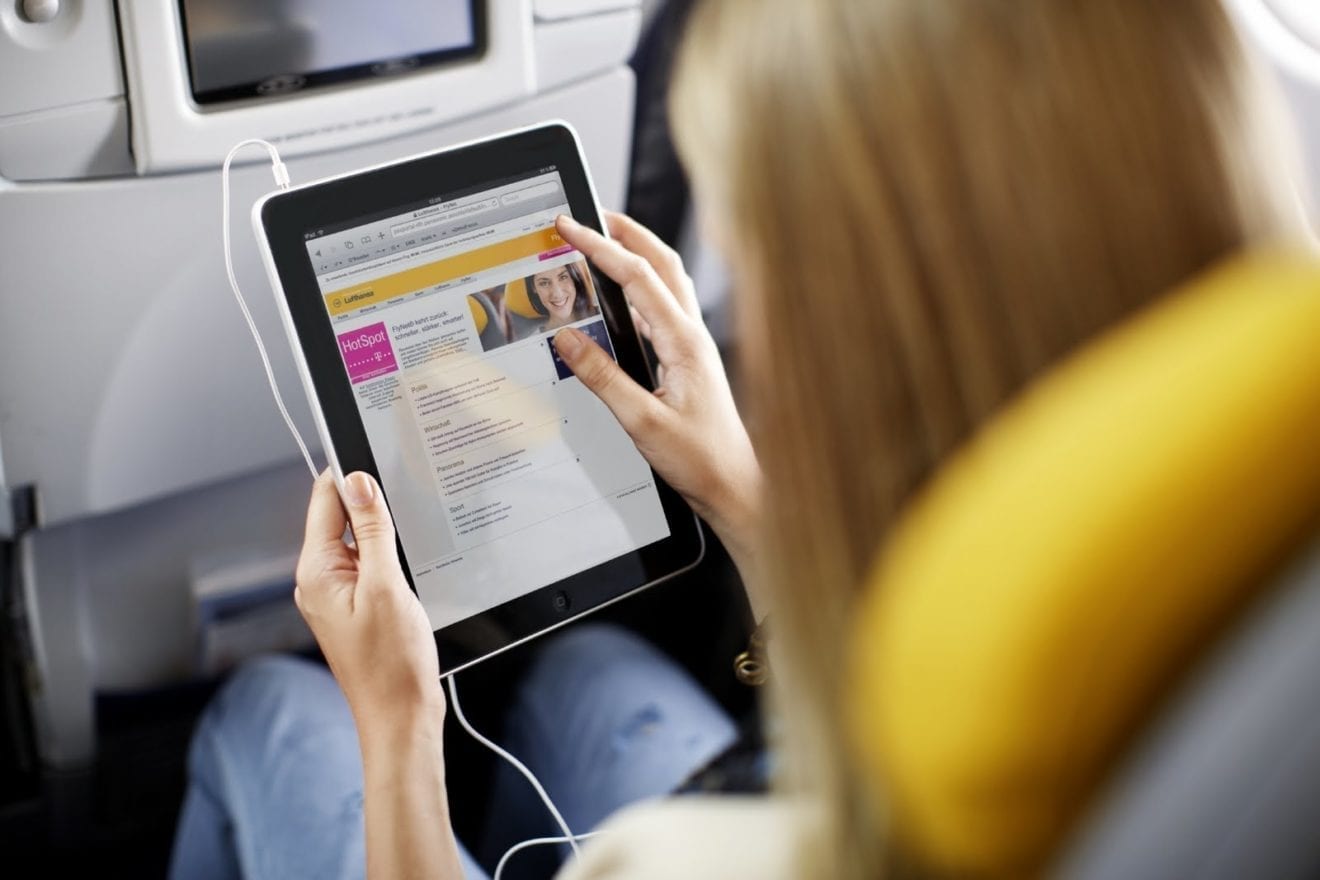
    In-flight connectivity (IFC) is in high demand from consumers, but depending on where you are in the value chain, it won’t be easy to monetize that demand, especially when many passengers expect it to be free.

    “Right now the satellite operators are the ones making the profit on in-flight connectivity,” says Todd Hill, senior director of GCS Satellite Services at Panasonic.

    Part of the problem has to do with the cost of aircraft antennas, which are hard to install, “although the technology is improving.” Hill says.

    The other issue is the cost of the actually connectivity itself. While HTS satellites and Ka-band are touted for their ability to bring the cost per megabit down, the problem is that Ka-band isn’t an all-purpose solution that will be available everywhere.

    “We’re building a global network, so one size is not going to fit all,” Hill says. “Ka-band doesn’t fit every need. HTS can bring the cost down, but you also get these spikes in supply whenever a new gigabit satellite goes up that affects pricing.”

    Erwin Hudson, VP/GM at ViaSat, says that everyone in the IFC value chain – satellite players, the service providers and the airlines – can make money, but that for the airlines, it’s as much about value creation as literally earning money from in-flight broadband. “For example, enhancing customer satisfaction – there’s great value there for the airlines.”

    Which is as well, because if airlines have learned anything about IFC, it’s that customers generally aren’t willing to pay for it, especially as they become accustomed to Wi-Fi as a complimentary service in hotels, airports and coffee shops.

    “Customers do expect this for free, which is to say they expect it to be included in the ticket price, and that’s the way we’d rather see it go,” Hudson says. “There are different business models out there, such as pay-as-you-go, freemium or free, and we’ll see all three in play. But when you charge money for it, your take-up rate is around 10% to 15%, whereas when it’s free the take-up rate is as high as 100% or even 105%, because we count devices, not people, and many people have more than one device. So we think free is where it’s ultimately going to go.”

    Hudson adds that IFC is a segmented market – commercial airlines, private jets, military/government, etc – with different requirements and business models for each, “so there’s a substantial opportunity there.”
  • Singtel, Inmarsat join forces on maritime cyber security

    Singtel, Inmarsat join forces on maritime cyber security

    SingTel has forged a strategic alliance with Inmarsat to jointly offer cyber security tools for the global maritime industry.

    Under the partnership, Trustwave, the cyber security arm of Singtel, will provide its Unified Threat Management (UTM) managed solution, to be integrated with Inmarsat hardware onboard ships, to protect data reduce cyber risk for maritime companies.

    Singtel said the UTM service offers a suite of cyber security defenses, such as advance firewall, anti-virus, intrusion prevention and web-filtering.

    Singtel and Inmarsat plan to launch the new maritime cyber security service in the second half of 2016, the companies said a joint statement.

    The new service will be delivered through FleetXpress, the highly anticipated high-speed broadband communication service Inmarsat launched in March for maritime and offshore operators.

    Andrew Lim, managing director of business group at SingTel’s Enterprise Group, said the partnership with Inmarsat is important for the company as it marks the first phase in rolling out Singtel cyber security services for Inmarsat.

    “As maritime systems become more digital, it is imperative for the industry to protect data onboard ships against all forms of cyber attacks. Our partnership with Inmarsat will provide maritime companies with a cyber security solution to meet rapidly evolving cyber threats, globally,” the executive said.

    Gary Gagnon, Inmarsat’s senior vice president of global cyber security, said the partnership with Singtel supports the company’s commitment to the market and elevates the benchmark for maritime cyber security.

    “The landscape of shipping is changing. As we move from traditional shipping into the ship intelligence era, the threat of cyber attacks have never been more real,” commented Ronald Spithout, president of Inmarsat Maritime.

    “Risks from malicious attacks and unlawful access to a ship’s intelligence, its system infrastructure and networks cannot be ignored, and the shipping industry needs to take action.”

    The Singtel-Inmarsat collaboration comes a day after Inmarsat announced it will use its new Global Xpress satellite fleet to provide in-flight connectivity services for the airline industry.

  • Inmarsat to debut GX Aviation this year

    Inmarsat to debut GX Aviation this year

    Inmarsat has announced it will use its new Global Xpress (GX) satellite fleet to provide in-flight connectivity services for the airline industry.

    The company will launch its Global Xpress Aviation offering this year, and has already arranged to serve initial customers including Lufthansa, Singapore Airlines and Jazeera Airways.

    Inmarsat’s GX network entered commercial service in December. It currently includes three Ka-band satellites with sufficient capacity to meet existing and near-term demand for Airlines.

    A fourth GX satellite has already been commissioned, and is completing construction and testing by Boeing. Inmarsat said it will build on this capacity to meet more long-term demand.

    Inmarsat has also contracted Airbus Defence and Space to build the first two satellites for its sixth-generation fleet, the first of which is due for delivery by 2020.

    The new sixth-generation satellites will support both the Ka-band and L-band. Inmarsat expects to use the Ka-band payload to augment the capacity of the GX network in busy regions, and use the L-band capacity for a new generation of aviation safety services.

    Inmarsat is also building the European Aviation Network, which will integrate a satellite network with an LTE-based ground network provided by Deutsche Telekom. Aircraft will automatically switch between satellite and terrestrial connectivity.