Tag: instagram

  • Instagram’s standalone Direct app is Obsolete

    Instagram’s standalone Direct app is Obsolete

    Facebook has a habit of frequently testing changes (both big and small) for its extensive library of crazy popular social networking services, but while most new features added to Instagram tend to stick, enriching the app’s functionality or expanding its reach, others never get to see daylight or move past the public testing phase.

    Instagram Direct is part of the latter category, reportedly “going away” some time “in the coming month” after making a limited global debut way back in December 2017. This was actually a standalone app rather than something built directly into the main Instagram interface, but technically, the thing never got a proper, wide-scale release. Instagram (or rather Facebook) also didn’t do much to promote the service, which essentially cloned one of the core features of arch-rival Snapchat.

    Namely, Instagram Direct was largely focused on enabling message exchanges between users, with Instagram friends instantly added to one’s list upon signing up and, of course, support for fun face filters to spice up your photos and videos. If that sounds useful in any way, fret not, as Instagram Direct conversations will automatically move to the main Instagram app, where you’ll be able to continue enjoying the same messaging features as before. After all, private messaging has been supported by Instagram since 2013.

    As the company was quick to highlight in a short statement after the imminent death of the standalone Direct experience ironically started making the Twitter rounds, Instagram Direct will remain the “best place for fun conversations with your friends.” Just not in a separate app, whose tests are being “rolled back” after merely exceeding a million Android installs in Google Play and receiving largely mediocre iOS user reviews.
  • Spotify introduces Instagram-like Stories

    Spotify introduces Instagram-like Stories

    Back in 2016, Spotify teamed up with song lyrics database Genius to bring “Behind the lyrics” annotations to the Spotify app. They appeared as cards and displayed interesting tidbits about various songs, sourced from the Genius platform. Now, Spotify has decided to outright launch a dedicated “Storylines” feature that allows the artists themselves to share behind-the-scenes insights on their songs.

    Similar to Instagram Stories, Spotify’s implementation gives artists complete freedom to share interesting facts about the process of making songs. Storyline cards will appear peeking from the bottom of the Now Playing screen, allowing you to pull up on the card and read it while listening to the song. The card will disappear after some time, though you can stop it from going away by pressing and holding on the screen. Spotify Storylines may be made up of numerous cards containing text, lyrics highlights, and images. Tapping the right side of a card will move to the next part of the story while tapping the left will go back.

    Storylines are going live in the latest update for the Spotify app (version v8.5.5.853, to be exact). Seeing as how the feature is still in its infancy, not many artists seem to be using it. Give it a couple of weeks, though, and you’re sure to see those cards start popping up in songs all over the place.

  • Instagram test designed to make users more trusting of content

    Instagram test designed to make users more trusting of content

    When Instagram first launched, it was known for the filters that users could apply to their photos, which would then be shared among members. The company was acquired by Facebook in 2012 for a reported $1 billion. Instagram is not as well known as Facebook is for inflaming the passions of subscribers by spreading fake news and political propaganda. Still, a report published says that steps are being taken to prevent the dissemination of false posts over the platform. Instagram is currently running tests with fact checkers.

    Facebook currently employs 52 firms that it has partnered with to conduct fact checks. If content found on a particular Facebook post is proven to be false by one of the fact checkers, the post’s distribution through users’ news feed is reduced. And not surprisingly, Instagram’s policy is basically the same. Stephanie Otway, a spokesperson for the app says, “Our approach to misinformation is the same as Facebook’s — when we find misinfo, rather than remove it, we’ll reduce its distribution.” That means flagged posts will be removed from the Explore tab and the hashtag result page, but it will stay up on the author’s page. That limits the readership of these polarizing posts to those who have made a decision to subscribe to authors who disseminate such information.

    But there is a big difference between the two sites. The content on Instagram is not nearly as news-oriented as it is on Facebook, especially since the platform doesn’t have hyperlinks inside captions or member comments. Thus, the hysteria is more subdued than on Facebook where a single lie could turn millions of members into a foaming at the mouth crazy. So unlike Facebook, photos that are fake won’t be labeled and there will be no warning shown to Instagram members who want to share these images.

    “We all know any kind of images and pictures are a main driver of misinformation in any platform. Alerting those who share (false posts) like they do on Facebook would be best. But perhaps it is only the beginning of their actions there, I suppose. Even though there are plenty of problems regarding misinformation inside Facebook’s many platforms, they are still the ones who are taking the combat of misinformation more seriously.”-Tai Nalon, Director Aos Fatos

    Lees ook:

  • Instagram just Added Three New Features

    Instagram just Added Three New Features

    Over 500 million Instagram users now use Stories on a daily basis to freely express themselves and check in on the lives of friends, family, and influencers. Today, with the goal of keeping these users hooked, some additional features have been announced.

    Unless you select the dedicated ‘Type’ mode in Stories, currently the only way of sharing something to Instagram Stories is by taking a picture or filming a short video. But pretty soon this is about to change.

    As part of a new UI, Stories will soon be divided into three separate modes dubbed ‘Live,’ ‘Camera,’ and ‘Create.’ The first, as its name indicates, will offer Instagram’s current live streaming option while the new ‘Camera’ mode will encompass all other features that are available at the moment. This means that Boomerang, Superzoom, Focus, Rewind, and all other quirky options can be found here.

    As for ‘Create,’ this will encourage sharing without taking photos or videos. It’ll offer colorful backgrounds and include features such as Type and Archive, interactive stickers like Polls and Questions, and much more.

    Instagram has confirmed that the new Stories UI and Create mode will be rolling out globally to users in the near future. Joining the revamped Stories are new Donation Stickers. Starting today in the US, Instagram users can raise money for nonprofit organizations by simply adding a sticker to their posts.

    Users will be given a list of nonprofit organizations which displays the ones they currently follow along with a bunch of other organizations that are popular at the moment. If you can’t find the one you’re looking for, a search bar will also be available.

    Once posted, users will be able to swipe up on the Story to view how much money has been donated. According to Instagram, the amount displayed will be donated in full to the chosen nonprofit.

    On an unrelated note, Instagram is also introducing a new feature called Shopping from Creators. As the name suggests, it’ll allow users to purchase products from influencers such as Kim Kardashian, Kylie Jenner, and Gigi Hadid directly. In order to do so, Instagram users simply need to tap on a post and click one of the tagged items. Then it’s as simple as using the built-in checkout process to buy it.

    This new feature will begin rolling out to users next week but will initially be limited to a small group of creators. In addition to the three mentioned above, Kris Jenner, Chiara Ferragni, Camila Coelho, and Katie Sturino will all have access to the tools. Publishers Elle, GQ, HypeBeast, and Refinery29 will also be able to tag products.

    Tagged items can only be from the brands that are participating in the Instagram checkout beta. These include Adidas, Nike, Burberry, Prada, Michael Kors, Mac, Kylie Cosmetics, H&M, and Zara at the moment

  • Facebook expects to be hit hard by the FTC

    Facebook expects to be hit hard by the FTC

    After word got out last year that 87 million Facebook members had their profiles sold to political consultant Cambridge Analytica without permission, the Federal Trade Commission started an investigation. After all, this action violated an FTC consent decree that Facebook signed off on back in 2011, promising not to use subscribers’ personal data without consent.

    Facebook announced its first-quarter results today and took a charge of $3 billion to cover an anticipated fine from the Federal Trade Commission (FTC). Neither side has reached an agreement, but clearly, Facebook expects to be spanked pretty hard by the FTC. The company noted in its report that it faces a fine as high as $5 billion from the FTC. The 87 million profiles received by Cambridge Analytica were reportedly used to created profiles of voters used by the 2016 Trump campaign to determine the areas of the country where more money needed to be spent for advertising.

    Facebook also announced today that 2.1 billion people use Facebook, WhatsApp, Messenger or Instagram on a daily basis, and 2.7 billion use one of these members of the Facebook family at least once a month. At the end of the three months that included January through March of this year, Facebook had $45.42 billion in the vault. That’s after the company spent $3.96 billion on capital expenditures during the quarter.

    For the first quarter of 2019, Facebook had $15.1 billion in revenue. That was up 26% from the $12 billion it raked in during the same quarter a year earlier. Net came to $2.4 billion (or 85 cents a share) against $5 billion earned during the first quarter of 2018. But those results include the $3 billion charge. Without the charge, Facebook would have earned $1.89 per share vs. the $1.69 it reported for the first three months last year.

  • Instagram test hides an important Feature

    Instagram test hides an important Feature

    Some Twitter and Instagram users read a lot into the number of Likes a certain tweet or post receives. For example, subscribers to both social media apps might decide to skip certain tweets or posts that don’t amass many Likes, considering them to be recommendations. Twitter CEO Jack Dorsey said last year that he is not a fan of the Like button, and Twitter says that users trying to write posts that generate a large number of Likes could be trying to gain approval from their fellow posters. This would be a form of social-media addiction. As a result, we could see Twitter eventually remove the heart-shaped icon that readers of a tweet tap to show that they Like a message.

    While neither Twitter nor Instagram is removing Likes just yet, Instagram is testing a new look that will prevent readers from seeing the number of Likes received by a post. The only one who will be able to get that number will be the person who actually wrote the message. This was discovered by the tireless Jane Manchun Wong (@wongmjane), who sent out a tweet with this information. Wong, who loves to “reverse engineer apps,” notes that Instagram writes, “We want your followers to focus on what you share, not how many likes your posts get.”

    Based on the comments that Wong’s tweet received, apparently many are upset about this, especially since they believe that Instagram is removing Likes completely. Again, users will still have the ability to Like a post, but the author of the post will be the only one who sees how many each message has received. And again, this is only a test and we have no idea when or if Instagram will eventually roll out this update to all of its users.

  • Change your Instagram password Immidiatly

    Change your Instagram password Immidiatly

    An updated entry made yesterday to a post on the Facebook blog reveals that the company left millions of Instagram passwords in a “readable format.” Originally, Facebook said that “tens of thousands” of Instagram customers were involved. Facebook says that normally its login systems are designed to “mask passwords using techniques that make them unreadable.”

    The good news is, if you believe Facebook, its investigation has shown that no one from inside or outside the company accessed these passwords. Of course, since Facebook updated its original blog post after one month increasing the number of passwords affected, who knows what they might say in another month?

    “In line with security best practices, Facebook masks people’s passwords when they create an account so that no one at the company can see them. In security terms, we ‘hash’ and ‘salt’ the passwords, including using a function called “scrypt” as well as a cryptographic key that lets us irreversibly replace your actual password with a random set of characters. With this technique, we can validate that a person is logging in with the correct password without actually having to store the password in plain text.”-Facebook

    Last month, Facebook admitted that it stored hundreds of millions of passwords in plain text dating back to 2012. At the time, it was estimated that 200 million to 600 million accounts had their passwords exposed to as many as 20,000 Facebook employees.

    Facebook purchased Instagram for approximately $1 billion back in 2012. The company suggests that subscribers to Facebook, Instagram or WhatsApp use two-factor authentication when signing in. Besides entering a password, a code is sent to the subscriber’s smartphone that is also required for a successful login. To set this up, go to the settings menu from your Facebook app and click on “Security and Login.”

  • Subscribers to Facebook, Instagram and WhatsApp faced over 2 hours Downtime

    Subscribers to Facebook, Instagram and WhatsApp faced over 2 hours Downtime

    If you mosey on over to DownDetector.com you’ll notice something interesting. The graphs that measure the number of complaints received by Facebook, Instagram, and WhatsApp users all look the same. That’s because the trio was down world-wide for over two hours today. And of course, all three apps are owned by Facebook.

    Starting at about 6:30 am EST, complaints about all three started to roll in, peaking about 90 minutes later. Some Facebook users could not access the app at all, and others could not refresh their news feeds. Instagram users had the same issues, and WhatsApp members could not send or receive messages. Almost a month ago to the day, all three were down in North America, Europe, and Latin America for as long as 24 hours. Facebook blamed the problem on a “server configuration change.”

    After the issue was resolved today, Facebook released a statement apologizing for the inconvenience. So far though, the company has not revealed the reason for Sunday’s outages.

    “Earlier today, some people may have experienced trouble connecting to the family of apps. The issue has since been resolved; we’re sorry for any inconvenience.”-Facebook

    Facebook purchased Instagram for $1 billion back in April 2012. It closed on the purchase of WhatsApp in October 2014. The final purchase price amounted to more than $21 billion.

  • Lush UK to closing down most social media accounts

    Lush UK to closing down most social media accounts

    Beauty and well-being retailer Lush UK will close its social media accounts this week, citing disillusionment with the algorithms and pay-to-display policies determining how they appear in their customers’ feeds.

    The firm will shut down Lush UK, Lush Kitchen, Lush Times, Lush Life, Soapbox and Gorilla across Facebook, Twitter and Instagram. US accounts will remain active for the time being.

    Lush will instead attempt to connect with followers via its website chat feature or through more traditional means of communication, although it may still work with social media opinion leaders to provide “an opportunity for our customers to connect one-on-one with people within Lush”.

    The shutdown will silence Twitter, Facebook and Instagram channels followed by hundreds of thousands of fans.

    “We don’t want to limit ourselves to holding conversations in one place, we want social to be placed back in the hands of our communities – from our founders to our friends,” the firm announced.

  • Instagram is preparing to implement a new feature

    Instagram is preparing to implement a new feature

    Instagram is an already hugely popular photo and video-sharing social networking service, with over 1 billion monthly active users as of last year, but believe it or not, there’s still plenty of room for growth, mostly due to the many security and privacy scandals surrounding its parent company’s core platform. At the same time, it’s pretty crazy to think Instagram has reached this insane level of mainstream success without ever offering some basic features.

    Case in point, a fast-forward option for those 15-second clips you can add to your stories or the up to 60-second videos allowed to be uploaded to one’s Instagram profile. Incredibly enough, that’s not yet a thing, even though the video social component has enriched Instagram’s focus and functionality years ago. But according to a Twitter userknown for her very reliable work discovering unreleased features for apps like Facebook and Instagram, the long-awaited video seek bar is currently being tested internally.

    Jane Manchun Wong has the GIF to prove that claim, and indeed, the feature works as expected, with no unnecessary bells and whistles. Unfortunately, we can’t be sure this will roll out to the masses anytime soon, although given its simplicity and potential popularity, we don’t see what could possibly hold off its wide-scale rollout. Once that happens, you’ll presumably be able to both go forward and back in time in any given Instagram video instead of waiting for the whole thing to unfold, then play it back from the beginning if only a small part of it caught your attention.

    Interestingly, this seems to be only one of several Instagram add-ons in the pipeline, alongside a delay and warning for posting comments identified as potentially offensive, a new “Trusted Devices” section in the app’s two-factor authentication settings, and a couple of changes targeting Creator Accounts, aka high-profile influencers. It remains to be seen how many of these features will go public and when.

  • Why you need to change your Facebook and Instagram password

    Why you need to change your Facebook and Instagram password

    If you didn’t think that Facebook could go lower than sharing personal information from 87 million users with third party sites, violating a signed FTC consent decree in the process, maybe you’re not giving the social media company enough credit. Hundreds of millions of Facebook users could have had their passwords discovered by Facebook employees. These passwords were stored by the company in plain text dating back as far as 2012. Facebook engineers noticed the mistake when reviewing new code back in January of this year.

    While 2018 was not a great year for Facebook, 2019 has started just as poorly for the company. Earlier this month, the company was accused of using data provided by subscribers for two-factor authentication, like phone numbers, for advertising and marketing purposes. And The New York Times revealed last week that Facebook is the subject of an investigation for deals it made with other tech firms for data.

    We don’t know if this is going to make you feel better, but an internal investigation by Facebook reveals that there is no sign that employees took advantage of this oversight. Still, if you are a Facebook or Instagram user, or even if you were a Facebook or Instagram user and still have an active account, it might be a good idea to change your password now.  Facebook does not feel that such a move is required and company engineer Scott Renfro said, “We’ve not found any cases so far in our investigations where someone was looking intentionally for passwords, nor have we found signs of misuse of this data.” Still, the number of accounts that are involved could number somewhere between 200 million and 600 million, and the number of Facebook employees with access to them was approximately 20,000. We’d suggest that you ignore Facebook’s recommendation and change your password.

    “We’ve not found any cases so far in our investigations where someone was looking intentionally for passwords, nor have we found signs of misuse of this data,” Renfro said. “In this situation what we’ve found is these passwords were inadvertently logged but that there was no actual risk that’s come from this. We want to make sure we’re reserving those steps and only force a password change in cases where there’s definitely been signs of abuse.”-Scott Renfro, engineer, Facebook

    A statement made by Facebook says that it plans on notifying “hundreds of millions of Facebook Lite users, tens of millions of other Facebook users, and tens of thousands of Instagram users.” But when it comes to Facebook and its associated apps and sites, your best bet is to get out in front of whatever privacy issue the next shoe to drop will expose.

  • Instagram users can now buy items from ads inside the App

    Instagram users can now buy items from ads inside the App

    Instagram is taking its Shopping ads one step further by making it possible for people to buy the products in the ads without leaving the app.

    The feature, called Checkout on Instagram, is currently being tested in a closed beta program by nearly two dozen businesses and is only available to users in the US.

    Retail News has asked for details about if and when the feature will be available outside the US but had not received a reply at the time of this writing.

    Adidas, Burberry, Dior, H&M, Michael Kors, Nike, Outdoor Voices, Uniqlo and Zara are among the 23 fashion, beauty and accessories brands now rolling out the feature. Others will be added in future, according to Instagram, which is owned by Facebook.

    When users tap on a product in a Shopping ad from one of these businesses, they now see a “Checkout on Instagram” button. By tapping the button, they can select the size and colour of the item they want and enter their payment and shipping details to purchase.

    Users receive notifications about shipment and delivery within the Instagram app, and the platform saves all their information for future purchases.

    In the past, if users wanted to purchase a product linked to a Shopping ad, they were redirected to the brand’s website. The new feature removes this step and – crucially for Instagram – keeps consumers in the app.

    “Social selling is really taking shape both in Australia and globally and it’s great to see Instagram leading the way through the next stage of the social selling journey. Giving consumers the option to complete a purchase right then and there in the app will simplify the shopping process and allow brands to connect more easily with shoppers,” said Jordan Sim, group product manager at BigCommerce, an e-commerce platform that has been active in offering integrations with Shopping on Instagram to its users.

    “We’ve seen our merchants both globally and locally in Australia have a great deal of success using BigCommerce’s integration with Shopping on Instagram and are looking forward to unlocking the power of this new integration for our Aussie retailers in the near future. We know the value of simplifying the checkout process to drive sales and this new function on Instagram will facilitate just that.”

    Many brands have said that Shopping ads drive sales, but there’s a trade-off: visibility and control over their customer data. As Instagram continues to make the purchasing process more seamless – that is, takes control of the process – some businesses will undoubtedly question whether the trade-off is worth it.

    It is unclear whether the Checkout feature applies to Shopping posts in Instagram Stories, or only to posts in the feed. Last June, Instagram revealed that of the 500 million people using Instagram every day, 300 million use Stories every day.

  • H&M names first Philippine ambassador

    H&M names first Philippine ambassador

    H&M has named Nadine Lustre as its first Philippine ambassador.

    The endorsement deal comes with a special swimwear collection to be launched in the Philippines next week.

    Nadine Lustre has more than 5.9 million followers on Instagram, and is considered to have a highly visible presence among today’s youth.

    “It was a whole new experience working on the campaign. It didn’t feel like we were working at all. I felt creative the whole time, and that, for me, is one of the best feelings ever,” Lustre told.

    H&M has previously worked with some of the biggest names in pop culture including Beyonce, David Beckham, Diane Kruger and Namie Amuro.

  • Instagram famous Baby Chanco is now a testimonial for Pantene

    Instagram famous Baby Chanco is now a testimonial for Pantene

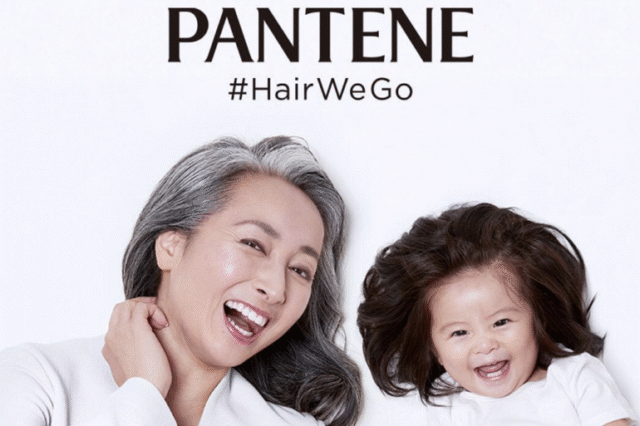
    A one-year-old baby with an incredible mane of hair has been signed by Pantene as one of the faces of the brand in Japan. Instagram starlett Baby Chanco has stunned social media users over the last six months as her mother uploads images of her incredible, thick hair. Baby Chanco, who lives in Japan, was born with a full head of hair in December 2017 and it has continued to sprout as she has grown.

    Chanco’s mother updates her 300,000 followers on the platform with weekly photos of the little girl’s full bouffant. Every photo shared receives around 10,000 likes from her adoring fans.

    In one of the images from the campaign, Baby Chanco, whose Instagram account is managed by her mother, Mani Kano, poses alongside Japanese TV presenter Sato Kondo, known for her grey tresses.

    Fast forward to 2019 and Baby Chanco is following in the footsteps of celebrities such as Selena Gomez as a Pantene spokesperson.

  • Era when eggs taking over Instagram

    Era when eggs taking over Instagram

    Eleven days ago, the anonymous Instagram account world_record_egg posted its first image, what appears to be a simple stock photo of a brown egg. “Let’s set a world record together and get the most liked post on Instagram,” the caption read. The photo has now reached that goal, with over 42 million likes as of Tuesday afternoon. It blew past the previous record holder over the weekend, the first photo Kylie Jenner shared of her daughter Stormi, which garnered only around 18.5 million likes after it was posted last year.

    It is easy to root for the Instagram egg and its other nihilistic siblings, like the halved white onion that only wants more Twitter followers than President Donald Trump.

    These accounts are not inherently interesting or important—many of them post barely any content at all—but they are made so because the internet decides they should win the attention lottery. In an era of rampant spam, thirst traps, and stolen memes, the egg became popular by straightforwardly asking for likes and nothing else. It is absurd. It is delightful. It feels righteous, charitable even, to help these accounts amass larger online followings than those of world leaders or members of the Kardashian family.

    Anything can be mapped onto the canvas of a blank brown egg, and so thousands of remixes have predictably been created that riff on the original. Ellen DeGeneres, for her part, put Kylie Jenner’s face on the egg on Monday, in the hopes that by putting them together, she can attract more engagement than the two most popular Instagram posts combined.

    Why did this egg take off where others have failed, that’s not clear. But the creator is clearly familiar with some of the engines of online fame. They tagged a number of people and publications that regularly cover viral memes like LADBible, Mashable, BuzzFeed, the Daily Mail, and YouTube star PewDiePie in the egg photo itself. Once the account took off, they began to sell “official” merchandise, including T-shirts that say “I LIKED THE EGG,” which go for $19.50. A request for comment sent to the email listed on the egg’s Instagram page went unanswered.

    The account behind the egg, which has nearly 6 million followers, is also an incredibly valuable marketing vehicle. Brands could spend thousands of dollars to advertise with it, according to sources in the influencer marketing industry who spoke with Recode. When the egg goes out of style, its creator could also sell the account or pivot to sharing another type of content with the massive audience they’ve already attracted.

    The egg’s creator may instead simply continue to try to profit off the popular meme, as other viral food sensations have before them. In 2014, after Zack Brown went viral for raising more than $55,000 on Kickstarter to make potato salad, he threw a potato-themed party and two years later released a potato salad cookbook. Carter Wilkerson—the teen who became famous in 2017 after Wendy’s promised a year of free chicken nuggets if he achieved 18 million retweets—went on to sell nugget-themed apparel for charity. Max Miller, the guy behind the half onion, also sells merchandise and claims a portion of sales are donated to charity too.