Tag: Investments

  • Debenhams warns shareholders could lose investments

    Debenhams warns shareholders could lose investments

    Struggling department store chain Debenhams said shareholders could lose their entire investment as a result of some of the restructuring options it is considering. The 200-year-old retailer said it is trying to refinance its debt, restructure its estate after a series of profit warnings and seek a cash injection of up to £200 million (A$373.1 million) from existing lenders at it tries to fend off a bid by Sports Direct’s Mike Ashley. Ashley had offered a £150 million loan to Debenhams, but as part of the deal, he would have to be in charge of the chain.

    The department store retailer said certain restructuring options “would result in no equity value for the company’s current shareholders”. Lenders have until this Thursday to approve Debenhams’ cash call, which it says will allow it to restructure. The company had warned its shareholders that some of their restructuring options could see their investment wiped out.

    Last Friday, Debenhams posted an announcement on the London Stock Exchange, confirming that it has received a proposal from Sports Direct International in connection with a proposed acquisition of Magasin du Nord, conditional upon Mike Ashley being appointed as the CEO of Debenhams.

    “This proposal comes without any commitment to participate in the wider financing solution,” Debenhams said.

    The department store chain said the board has responded to Sports Direct directly, that, as with all other proposals received to date from Sports Direct, it does not address the company’s funding and restructuring requirement, while balancing the interests of all stakeholders.

    “Magasin is a key part of the Debenhams group, is cash flow generative and a meaningful contributor to group profits,” Debenhams said. “As such, Magasin is an important part of any lending proposition and therefore any broader solution that protects value for the group.”

    “Further, there are obvious concerns with the proposal that Mike Ashley becomes CEO of Debenhams given that Sports Direct owns our direct competitor House of Fraser.”

    Debenhams said the board has remained open to engagement with Sports Direct throughout its refinancing process and has provided clear guidance on what would represent workable solutions that would allow Sports Direct to participate while also protecting the interests of other stakeholders.

    But, according to Debenhams, this guidance has been repeatedly ignored by Sports Direct.

    Debenhams said it continues to make progress with its refinancing and restructuring discussions with existing lenders, noteholders and other stakeholders.

    “The board remains open to constructive involvement from Sports Direct and other stakeholders in this process.”

    Magasin du Nord has been put up for sale by Debenhams last year and Sports Direct offered to purchase the business . Under the proposal, Debenhams would have a 12-month option to buy it back at the price it was sold.

    Debenhams would also have the right to continue to market the business, gaining the benefit from any uplift above the initial sale consideration were it sold to a third party in that 12 month period.

    In connection with the above, it is proposed that Ashley would become a director and the CEO of Debenhams to assist Debenhams through its restructuring process.
  • Vietnam borrows $188 million to boost connectivity in the north

    Vietnam borrows $188 million to boost connectivity in the north

    The Asian Development Bank will lend Vietnam $188 million to upgrade roads towards improving connectivity in northwestern provinces. Under an agreement signed by ADB and the Ministry of Finance Tuesday, the loan will be used to upgrade of 198 kilometers of roads that connect several towns and districts in northwestern provinces of Lai Chau, Lao Cai and Yen Bai with the Noi Bai – Lao Cai Expressway.

    The 265-kilometer expressway is part of the Greater Mekong Subregion (GMS) Kunming-Hai Phong Transport Corridor that connects Hanoi with northern localities in Vietnam and Yunnan Province in China.

    Some of the road upgrades will create economic opportunities for some of the poorest people in the project area, the bank said.

    “The project aims to expand the benefits of the GMS corridors to the northwestern provinces,” said Eric Sidgwick, ADB country director for Vietnam.

    “The improved connectivity will not only boost border trade, private investment and job creation in the region, but also provide better access to basic social services, such as education, health care, job training and emergency disaster relief for the people of the northwestern provinces, especially the poor ethnic minorities,” he added.

  • Is Watsons ripe for a spin-off?

    Is Watsons ripe for a spin-off?

    Hong Kong billionaire Li Ka-shing’s business empire Cheung Kong has been able to get the best price when offloading some assets. For instance, the Centre, its Grade A office building, was sold for over HK$40 billion early this month on the back of soaring land prices. Some buyers offered about HK$30 billion late last year.

    When Cheung Kong planned to spin off its retail outlets including Watsons and Parknshop in 2013, the deal was shelved as the company was unhappy with the price. The wind has shifted in recent years, and leading brick-and-mortar retailers are becoming desirable again. Cheung Kong owns more than 14,000 outlets worldwide.

    On Monday, Alibaba said it would invest 22.4 billion yuan for a 36.16 percent stake in the top Chinese hypermarket operator Sun Art.

    Sun Art operates 446 hypermarkets across China. The deal marks the internet giant’s move into offline retail. Omnichannel is essential in offering the new retail experience. The transaction values Sun Art at 62 billion yuan, which roughly puts each hypermarket at above 100 million yuan.

    It’s worth noting how Alibaba will transform classic retail by integrating technology in order to provide a seamless online and offline experience to customers. In fact, the deal marks Alibaba’s latest acquisition of a traditional retailer after Suning Commerce, Intime Retail Group and Lianhua Supermarket.

    Nonetheless, we have yet to see any major reform in these newly joined partners, although customers can make payment with Alipay or collect online orders.

    It’s obvious that the retail experiment has to connect online and offline realms. Market players are still trying out the system. Amazon spent US$13.7 billion to acquire Whole Foods in August, but it has yet to start an overhaul of the latter’s 500 outlets. Currently, Amazon has designated one shelve in each Whole Foods store to sell Echo or Kindle, and move some of the goods in-store to the online platform.

    The deep-pocketed e-commerce giants are aggressively acquiring offline retailers. But it remains unclear who will be able to integrate online and offline realms successfully.

    Certainly, the traditional retailer with massive outlet network will become sought-after. Walmart, the world’s largest retailer, has shown that it can hold on its own in a challenging retail environment. Its share price has soared nearly 80 percent over the past 12 months, and the retailer’s market value tops US$300 billion.

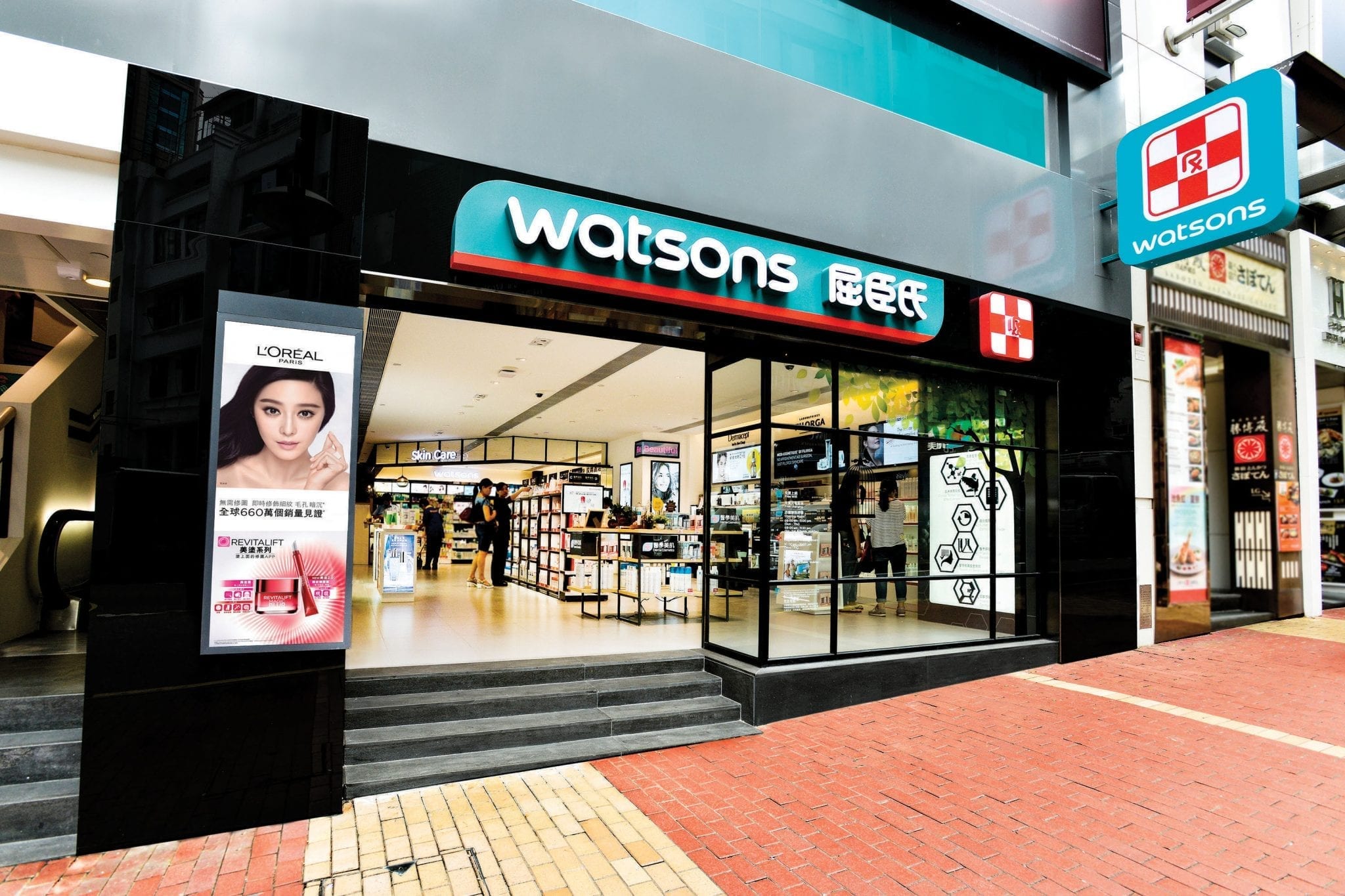
    In fact, Watsons Group is the world’s largest retailer in terms of the number of outlets. It operates more than 14,000 shops worldwide, including supermarkets and drug stores. Over 3,000 shops are in mainland China, and most of the rest are in Europe.

    Cheung Kong has put on hold a plan to spin off or sell the retail group after failing to fetch a good price in 2013. Back then, global offline retailers were struggling.

    The scale of Watsons is more than 10 times that of Whole Foods or Sun Art. And Cheung Kong would definitely try its best to get the best price. Therefore, it’s more likely that the conglomerate might cooperate with internet giants to leverage its massive network of offline stores.

    In September, CK Hutchison Holdings, Li’s flagship conglomerate, formed a joint venture with Ant Financial Services Group, an affiliate of Alibaba Group, to integrate online and offline Hong Kong dollar payments under the AlipayHK brand.

  • China will continue to relax foreign investment rules for auto industry

    China will continue to relax foreign investment rules for auto industry

    China will continue to relax foreign investment rules for the country’s auto sector and other high end manufacturing, lifting restrictions in an orderly fashion, the commerce ministry said on Thursday.

    The government is preparing to further open up the new energy vehicle battery market to foreign investment, Ministry spokesman Sun Jiwen told a regular briefing in Beijing.

  • SM Investments Corporation announces key organizational changes

    SM Investments Corporation announces key organizational changes

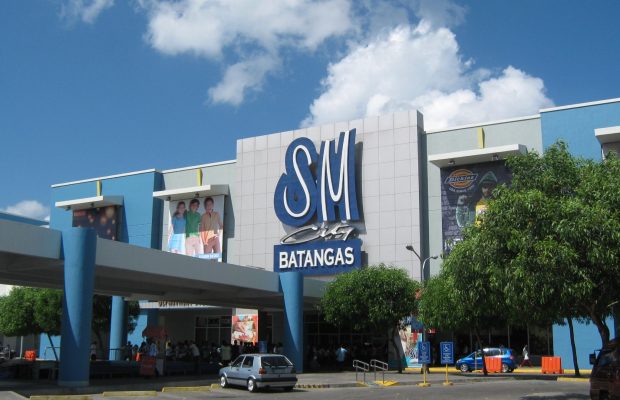
    The Board has already conferred upon Mr. Henry Sy, Sr. the role of Chairman Emeritus, in recognition of his role as the founder of SM and all of its core businesses. Mr. Sy, who is a multiawarded entrepreneur and philanthropist, opened the first ShoeMart store in 1958, a business now simply known as SM, and fostered it to become one of the largest holding companies in the country.

    SM has likewise evolved into a dynamic and highly synergistic group of businesses with market leading positions in retail, banking and property development as well as a growing portfolio of other investments that can capture the high growth opportunities in the emerging Philippine economy.

    Board Changes

    Mr. Jose T. Sio was appointed to succeed Mr. Sy as the Chairman of the Board. Mr. Sio, as SM’s Chief Financial Officer for 26 years, was highly instrumental in supporting the phenomenal growth of SM and its subsidiaries. He instilled strict financial discipline across all businesses that later helped the company achieve optimal results even as the whole group maintained a sound and stable financial position. Mr. Sio was a senior partner at Sycip Gorres Velayo & Co prior to joining SM on November 1990.

    New members of the board include Mr. Frederic C. DyBuncio as Director and Mr. Alfredo Pascual as Independent Director replacing Mr. Ah Doo Lim who joined the Board in 2008 and has served the full term as an independent director.

    Mr. DyBuncio brings with him a wealth of experience in banking where he spent over 20 years with JP Morgan Chase and its predecessor companies. He was assigned to various places apart from the Philippines such as New York, Seoul, Bangkok, and Hong Kong and held various executive positions where he gained substantial professional experience in the areas of credit, relationship management and origination, investment banking, capital markets, and general management.

    Mr. Alfredo Pascual just completed his six-year term as President of the University of the Philippines (UP). Prior to his involvement in the academe, he worked at the Asian Development Bank (ADB) for 19 years in such positions as Director for Private Sector Operations, Director for Infrastructure Finance, and Advisor for Public-Private Partnership.

    Mr. Pascual was also among the pioneers in investment banking in the Philippines having held executive positions in State Investment House, Inc., First Metro Investment Corporation, Philippine Pacific Capital Corporation now known as RCBC Capital, and Bancom Development Corporation which eventually merged with Union Bank.

    Management Appointment

    Mr. DyBuncio will assume the role of President of SM Investments in place of Mr. Harley T. Sy who will remain as Executive Director of the Board. Mr. DyBuncio joined SM in 2011 as Senior Vice President and eventually as Executive Vice President handling the company’s portfolio investments. This portfolio has since grown to include Belle Corp., Atlas Mining, the Net Buildings, CityMalls, MyTown, and most recently, 2Go.

    These changes affirm the continuing role of professionals in executing the larger vision of SM while further strengthening the group’s good governance and sustainability practices.

  • Indonesia expects more investment from Japan

    Indonesia expects more investment from Japan

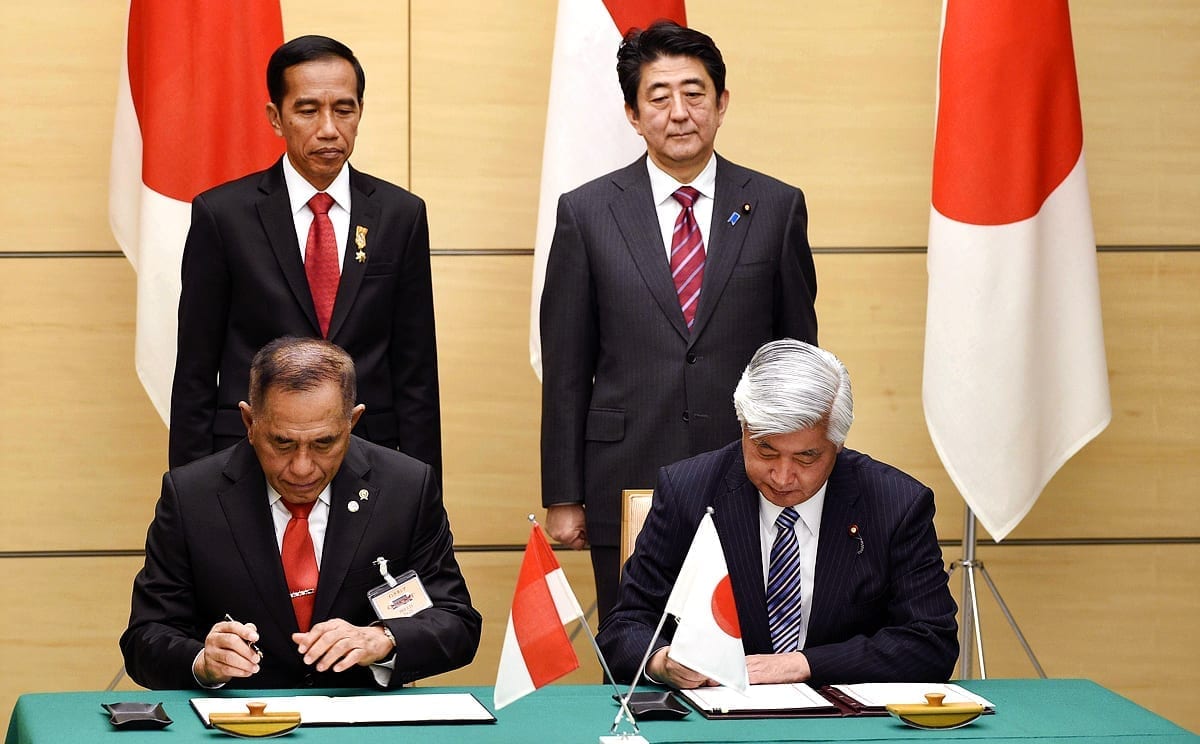
    Indonesia is hoping for more investment from Japan after the scheduled meeting between President Joko Widodo and Japans Prime Minister Shinzo Abe.

    This was said by Thomas Lembong, the chief of the Indonesian Investment Coordinating Board (BKPM), here on Friday.

    Shinzo Abe is scheduled to arrive in Indonesia for a two-day state visit on Sunday and Monday.

    The BKPM chief said Japan has so far been the countrys second biggest investor, focusing mainly on the infrastructure sector.

    “Projects such as power plants and Jakartas mass rapid transport system are funded by Japanese investment. In terms of investment, Japan is indeed one of our important clients,” he said in a press statement.

    Thomas Lembong said investment relations between the two countries have so far been going very well.

    “I think the Japanese premiers visit will be good for us. I also visited Japan five weeks ago and met with Japanese representatives from their chamber of commerce as well as many investors. Both countries have close relations. Japan has been an investor in Indonesia for decades now, and has been the second or the third biggest investor in the country,” he added.

    He stressed that Japanese investors have been involved in many infrastructure projects in 2016, such as power plants and the Surabaya-Sorong sea toll road project, both operational now.

    In 2017, Japanese investors plan to also invest in the real estate and property sectors.

    “Discussions have been also on about starting a medium-express train service from Jakarta to Surabaya in East Java and Japan seems interested in it. A Patimban port development project located towards the east of Jakarta and close to the automotive industrial cluster is also on the anvil. All Japanese automotive industries are there. If a big port is available there, it will make our automotive exports more efficient. The Patimban project will also be funded by the Japanese investment,” he revealed.

    Saribua Siahaan, the BKPM Japan investment promotion official, explained that a Japanese company operating in the property sector is cooperating with a local partner to realize its plan to develop housing projects across Indonesia.

    The low-cost residential development program will cater to low-income people and will match the governments one-million houses development program.

    He pointed out that Japanese investors entering the real estate and property sectors will have different market targets.

    “Some plan to carry out property development particularly catering to expatriates and middle-class and higher strata, while others target workers in industrial zones. Right now, we are still coordinating with the BKPM office in Jakarta to facilitate a big Japanese group that has signed an agreement with a housing company in Indonesia,” he informed.

    Besides discussing investment in the manufacturing sector, Japanese Prime Minister Abe would also discuss investment in the Indonesian governments other prioritized sectors.

    PM Abe plans to bring along a number of executives from companies wishing to invest in Indonesia.

    Based on BKPM data, Japan had invested US$1.6 billion in 425 projects until the third quarter in 2016 to make it the second biggest investor in Indonesia.

    This was a significant increase from US$917.27 million in 399 projects in the same period in 2015.

    Cumulatively, from January to September 2016, Japans total investment realization had reached US$4.4 billion.

  • Toyota to invest $10 billion over the next five years

    Toyota to invest $10 billion over the next five years

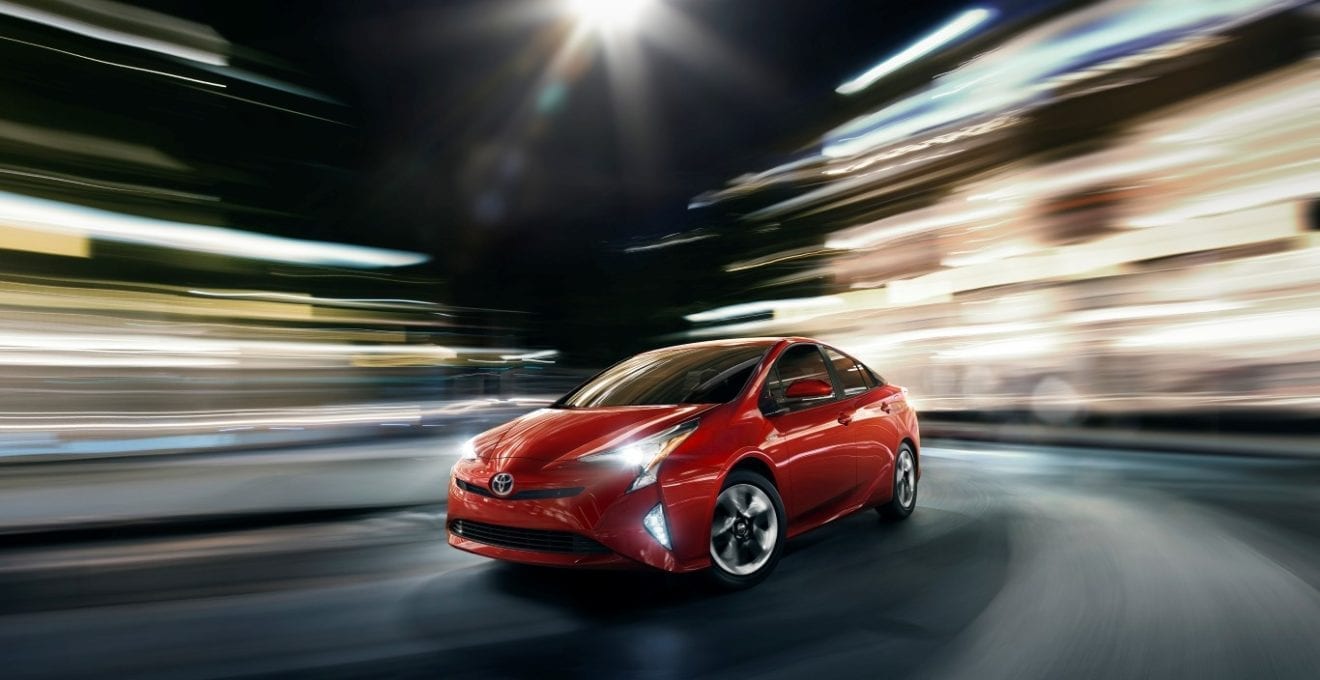
    Toyota Motor will invest $10 billion in the United States over the next five years, the same as in the previous five years, North America Chief Executive Jim Lentz said on Monday, to meet demand and upgrade plants to build more fuel-efficient models.

    The Japanese automaker has come under fire by President-elect Donald Trump for its plans, announced in 2015, to shift production of its Corolla to Mexico from Canada.

    Lentz said in an interview at the Detroit auto show the decision was not in response to Trump’s remarks made in a recent tweet, but was part of Toyota’s business strategy to invest in the United States, where it has 10 plants in eight states.

    Planning for the new Mexico plant began about two years before it was announced in 2015, said Lentz, describing such decisions as long-term ones.

    Lentz said he had not spoken with Trump.

    The $10 billion includes Toyota’s new North American headquarters in Texas that is under construction and major improvements to its plants.

    Toyota plans to expand some of its U.S. plants over the next five years, said Lentz, declining to say if that effort would boost jobs. Toyota, which employs 40,000 in the United States, added more than 5,000 U.S. jobs over the last five years, he said.

    Toyota President Akio Toyoda appeared at the show later on Monday to tout the company’s investment plans and its updated flagship Toyota Camry that is built in Kentucky.

    “We are deeply grateful to the millions of customers who have made Camry the number one selling car in America for the last 15 years,” Toyoda said.

    Lentz said “everyone” agrees with Trump’s goals of boosting manufacturing and U.S. employment, in part because “it helps us sell more cars.”

    “We have to run our business as a global business,” he said. “I have to make sure that we are competitive.”

    The company is focused on reminding policymakers in Washington about its extensive U.S. manufacturing operations, Lentz said.

    Lentz said Vice President-elect Mike Pence, who was Indiana governor, knew Toyota well because of its manufacturing operations in the state.

    He warned that a “border adjustability tax,” like the one proposed by Trump if the carmaker builds the Corolla in Mexico instead of the United States, could hike the price of cars and hurt auto employment.

    Such a tax could add $1,000 to cost of a Kentucky-built Camry because of some foreign-made parts.

    After the critical tweet from Trump, “you have to respectfully state your position and then move on,” he said.

  • Singapore eyes increased investments, more flights to Manila

    The government of Singapore has expressed interest in further increasing its investments in the Philippines, as well as adding more flights to Manila in anticipation of increased demand in air travel between the two countries.

    In a recent meeting with Finance Secretary Carlos Dominguez III, Singaporean Ambassador to Manila Kok Li Peng said Singapore’s private sector would like to explore new growth opportunities in the Philippines, particularly in the retail, transportation, infrastructure and tourism sectors.

    Ambassador Kok said Singaporean businessmen were planning to schedule the next meeting of the Philippines-Singapore Business Council (PSBC) in Davao City and, if possible, meet with President Rodrigo Duterte to discuss new business and investment activities in the Philippines.

    “We’re trying to get a mixed meeting of the PSBC here. They want to bring the members to Davao to meet with the President,” Kok said, to which Dominguez responded that a possible date for such a dialogue could be in February.

    Singapore’s investments in the Philippines–valued at P16.8 billion in 2015–are mostly in real estate activities, electricity, gas, steam and air conditioning supply, and manufacturing.

    Singapore was the Philippines’ fourth largest trading partner in 2015. The country’s total exports reached $3.8 billion in 2015, mainly comprising electronic products, petroleum products, and electronic equipment and parts.

    The Philippines, in turn, imported a total of $5 billion worth of goods from Singapore in 2015, mostly mineral fuels, lubricants, food and live animals, and industrial machinery and equipment.

    Kok also said that Singapore was looking at the Philippines in exploring more markets for its airline industry.

    “More competition is good for the consumer,” Kok said in explaining Singapore’s plan for its airline companies—Singapore Airlines, SilkAir and Tiger Airways—to add more flights to the Philippines.

    In response, Dominguez, a former chairman of the Philippine Airlines, agreed that opening the Philippines’ air travel industry to competition and even partnerships with other airlines would benefit the economy and boost the growth of the tourism sector.

    Dominguez said the Duterte administration was “engaging more with ASEAN and countries around Asia” as a way to “move forward” and achieve a balance in strengthening the Philippines’ diplomatic ties with other nations across the globe.

    In Beijing last October, Dominguez and Socioeconomic Planning Secretary Ernesto Pernia, who were part of President Duterte’s delegation on his state visit to China, jointly announced that while the Philippines would maintain its good relations with Western economies, it pushed for “stronger integration” with its neighbors in the region.

    The move, they said, would open for the Philippines countless opportunities for trade and investment in a market of 1.8 billion people across the region, especially now that other ASEAN economies had also committed to greater integration and China had pledged to open its capital markets.

    ASEAN groups the Philippines, Malaysia, Singapore, Brunei, Thailand, Indonesia, Laos, Cambodia, Myanmar and Vietnam.

    Both Dominguez and Kok agreed that technology and innovation are indispensable to sustaining growth under the current knowledge-based global economy.

    “We’re now [living under] a knowledge-based economy. We think innovation is the way to go in the future,”Kok said.

    Dominguez said the rapid growth of online-based businesses and investments was among the reasons the Duterte administration considered it a priority to improve “interconnectivity and internet speeds” in the country.

    “The structure of the industry in the Philippines right now is really holding us back. And it’s becoming quite obvious that the system now we have, where we basically have two service providers, is not really working,” Dominguez told Kok.

    In the meeting, Kok also informed Dominguez of Singapore’s request to review and update the terms of its 40-year old double taxation agreement with the Philippines.

    Dominguez assured Kok that he would discuss Singapore’s concerns regarding the double taxation agreement with the Bureau of Internal Revenue.

  • Indonesia explores opportunities in brownfield investments

    Indonesia explores opportunities in brownfield investments

    Indonesia is planning to open up state-owned run infrastructure, such as toll roads, to private investors in an effort to generate fresh funding for new projects.

    President Joko “Jokowi” Widodo said on Wednesday that he would ask some state-owned enterprises (SOEs) to sell their concessions in major toll roads, such as the Jagorawi toll road in East Jakarta, to private investors.

    Jagorawi, which connects Jakarta to Bogor and Ciawi in West Java, is the country’s oldest toll road and is currently managed by state-owned toll road operator Jasa Marga.

    “For Jasa Marga and [state construction firm] Waskita Karya, which own many toll roads, your job is to build a toll road, not to own it,” the President said on Wednesday in Jakarta, during the 2016 Indonesia Infrastructure Week.

    Not many investors, he added, wanted to invest in greenfield infrastructure projects, which refers to fresh projects, and instead preferred to put their money in brownfield projects, which refers to projects that are already operating and generating cash flow.

    National Development Planning Board (Bappenas) head Bambang Brodjonegoro, meanwhile, said it was possible for SOEs to offer a concession-sharing scheme to private investors. The SOEs, for example, could sell shares of their subsidiaries that are in charge of toll-road management.

    “They can sell some [portion of shares], like 30 to 40 percent. The SOEs will still own the main concession [for the toll road],” he said.

  • Healthy spread sought in tourism investment

    Healthy spread sought in tourism investment

    The government will likely need to review its strategy in promoting its priority tourist destinations, as data shows that recent tourism investment mainly headed to just two popular regions.

    During the first six months of this year, the country has seen investment worth US$858.7 million coming into the tourist sector. The tourism Ministry’s deputy for destination and tourism industry development Dadang Rizki Ratman, however, said most of the investment only went to Jakarta and Bali, the country’s two main international gateways.

    “This is our challenge — to encourage investors to invest outside those two places,” he said recently.

    Dadang highlighted the importance of infrastructure development and upgrades in many other tourist destinations as it would become a key factor to attract investors to put their money to the industry.

    The government is targeting the arrival of 20 million foreign tourists in 2019. This year, 12 million foreign tourist arrivals has been targeted, with almost half achieved in the first semester.

    To level out the popularity of other places with that of Bali, the country’s most popular resort island, the government has selected 10 destinations to develop to 2019.

    They include Lake Toba in North Sumatra, Mount Bromo in East Java, Mandalika resort area in West Nusa Tenggara, Labuan Bajo in East Nusa Tenggara, Wakatobi in Southeast Sulawesi, Cape Kelayang in Bangka Belitung, Cape Lesung in Banten and Morotai in Maluku.

    Dadang said infrastructure, such as roads, airports and power plants were in the works to support tourism activities and attract more investors. The Kualanamu-Tebing Tinggi toll road, for example, was in progress and scheduled for completion next year. The road would give more access to Lake Toba, the world’s largest volcanic lake.

    Besides accessibility, intensive promotion was also necessary, said Babar Suharso, the head of regional Investment Coordinating Board (BKPMD) of Banten province.

    “People can access Cape Lesung wthin only three hours but we still haven’t got any investors so we’ve asked Kadin [Indonesia Chamber of Commerce and Industry] to introduce us to their network,” he said.

    BKPMD Banten said a number of South Korean investors had expressed their interests to invest in the location, but none have further approached the regional administration. Investors from Kuwait will visit the cape in November for a potential deal, Babar said.

    Meanwhile, Indonesian Tour and Travel Agencies Association (Asita) chairman Asnawi Bahar emphasized accessibility as an important point to attract more investors.

    “It is understandable that investment is still concentrated in Bali and Jakarta because the two have international airports with many international routes. One thing for sure to attract more investors is accessibility,” Asnawi told The Jakarta Post over the phone.

    Recently, the government announced a $300 million loan from the World Bank to expedite infrastructure development in and around Borobudur Temple, Mandalika and Lake Toba.

    Nevertheless, the natural beauty of sites in Indonesia has inevitably swayed a group of businesspeople in Perth, Australia to invest in Manado, North Sulawesi, whose Bunaken island is famous for its diving spots.

    “[The investment plan in] Manado is a very large ambition. It is a big tourism area so this group of companies running different businesses plan to turn it into a new destination,” said Debnath Guharoy, president of Australian Indonesian Business Council (AIBC) said via phone.

    The group will present its detailed plan to North Sulawesi administration in the next few weeks. They are planning to build hotels, power plants and a waste management system, as well as a conservation area for Bunaken underwater park.

    Indonesia boasts 17,000 islands blessed with beautiful coastline and inland potential, plus a big market of more than 259 million people. To propel its tourism industry, the country has also offered free visas to 169 countries and simplified yacht and cruise arrival rules.

  • Toyota to Continue to Invest Big in Indonesia

    Toyota to Continue to Invest Big in Indonesia

    Toyota will continue its major investment plan in Indonesia, particularly in manufacturing, up to Rp20 trillion by 2020.

    PT Toyota Motors Manufacturing Indonesia (TMMIN) deputy president director Warih Andang Tjahjono in Tokyo, Japan, said Sunday, August 28, 2016, that Toyota has made Rp10 trillion investment of its planned investment in Indonesia, as promised by Toyota Motor Corp (TMC) president director Akio Toyota.

    “Major projects have been realized, the third plant has been completed,” he said.

    Since 2013, he went on, Toyota’s production capacity in Indonesia continues to increase, from 110,000 units to currently 25,000 units per day.

    According to Warih, the total TMC investment in the past few years have reached roughly Rp10 trillion, in which the biggest investment had been made to develop the production capacity of Kijang Innova and Fortuner at approximately Rp5 trillion, followed by the production of Sienta at around Rp2.5 trillion, and NR engine production with an investment value of roughly Rp2.3 trillion.

    “Investment will continue, although it would not be as big as the current investment,” Warih said.

  • VimpelCom to invest $1b in Pakisan over five years

    VimpelCom to invest $1b in Pakisan over five years

    Global telecoms group VimpelCom has announced plans to invest $1 billion in its Pakistani operations over the next five years.

    The company plans to roll out what it says will be one of the largest and most ambitious IT infrastructures in the industry for its Mobilink and Warid operations.

    With the new systems the company aims to ensure faster rollout of new products and services, particularly in areas including mobile entertainment, communications, the IoT and mobile financial services.

    Mobilink recently completed a merger with Warid to create Pakistan’s largest mobile operator with over 50 million customers.

    The merger was announced  in November last year, won regulatory approval in May and closed at the start of this month.

    At a press conference announcing the investment plans Mobilink CEO Jean-Yves Charlier said with the merger 38 million Mobilink customers will be provided with 4G while 12 million Warid customers will be provided with 3G.

    He also said around 1,500 joint Mobilink-Warid franchise shops will be opened nationwide. The operator has also made a commitment to the government to roll out services to remote areas.

  • Taiwan Mobile eyes investments in India, Indonesia

    Taiwan Mobile eyes investments in India, Indonesia

    Taiwan Mobile is considering investing in the telecoms markets of India and Indonesia due to their strong growth potential.

    At the operator’s annual general meeting, chairman Richard Tsai said the company is evaluating opportunities to enter the markets.

    While Tsai acknowledged that India’s overcrowded market has resulted in heavy price competition, he said that the large population is creating opportunities in segments including data transmission.

    The operator is evaluating the possibility of teaming up with operators in India to carve out a slice of the nascent 4G market in the nation.

    According to Tsai, the company has also been eyeing an entry into the e-commerce sector in Southeast Asia, with subsidiary momo.com preparing to explore the markets of the Philippines and Vietnam.

    Domestically Taiwan Mobile is focused on developing its third party payment business while kicking off an OTT content business. Taiwan Mobile has meanwhile set a target of lifting its 4G subscriber base to 5 million in 2017 from 3 million at the end of 2015.

  • New Zealand Eyes More Investment in Indonesia

    New Zealand Eyes More Investment in Indonesia

    Franky Sibarani, Chairman of the Indonesia Investment Coordinating Board (BKPM) met with Indonesian Ambassador to New Zealand Joze Tavares in Auckland last Wednesday, May 4, 2016. The meeting was held to coordinate New Zealand’s plan to increase its investment in Indonesia.

    “To attract more investment, the BKPM will [cooperate] with the Indonesian honorary consul in Auckland, which is also the President of the ASEAN Business Consul,” Franky said after the meeting.

    Franky added that the BKPM will continue to coordinate with Indonesian representative in New Zealand to follow up potential investments.

    Jose Tavarez welcomed the Indonesian government initiative to market possible investments in New Zealand.

    “New Zealand has large potential related to the development of renewable energy, specifically geothermal [energy],” Tavares said.

  • Myanmar rushes through masses of investments

    Myanmar rushes through masses of investments

    The Myanmar Investment Commission (MIC) has approved an unusually large number of projects in its final meeting before the new government takes office, including luxury resorts, office towers, port developments, factories and roads.

    The commission, which answers directly to the President’s Office, meets several times a month to approve foreign, joint-venture and local investments.

    According to MIC information dating back to January 2015, the average number of investments approved at each meeting is just under 10. No more than 20 projects have been approved at any previous meeting.

    Bucking the trend, the MIC approved 48 new investments on March 25, according to a document published on the Directorate of Investment and Company Administration website.

    Asked about the unusually high number of approvals, a spokesperson directed requests to secretary Aung Naing Oo, who was not available for comment on Tuesday.

    Notably, the MIC has approved a number of major projects at Yangon’s ports.

    Kaung Myanmar Aung Shipping Co, owned by well-known tycoon Khin Maung Aye, received consent to build a wharf and supporting facilities in Seikkan township after winning a government tender just over a week ago.

    New Downtown Development Public Co has approval to build a shopping mall and office complex in the Myanma Port Authority-owned Nanthida compound and New Strand Development Co has permission to build commercial, office and retail space, hotels and serviced apartments at Ahlone international port in Ahlone township.

    Several port-related investments have also been approved at Thilawa. Khaing Oo Co has been given the green light to build a jetty and buildings, and Myanmar Edible Oil Industrial Public Co is allowed to build and operate a multi-purpose international wharf in the Thilawa port area.

    The MIC also approved a number of hotels and resorts in its most recent meeting, including H&Co Platinum Pathein Co’s 15-acre project in Ayeyarwady region comprising a hotel, shopping mall and villas.

    Pongpipat Development, known for operating the Heinda tin mine in Tanintharyi region, has been given permission to build a resort in Htee Khee village in Myitta, Dawei township, while a company called K Future secured approval to build a hotel on Bo Net Kyaw island in Kawthoung district.

    In Yangon, KT Development Co has approval to build a hotel, office space, retail, serviced apartments and other commercial businesses and long-term leasehold units on an 11.753-acre site in Yankin township.

    New City Development Public, which also has links to tycoon Khin Maung Aye, has approval to build a light industrial park in Yangon region’s East Dagon township. Another of his companies, Kaytumadi Development Public, has approval to build two further industrial parks in Bago region’s Taungoo.

    Also in Bago, Hantharwady Development Public has approval to build an improbably large eco-resort and high-end housing project on 2455.77 acres, and Thiri Multi Agricultural Co has permission to build a hotel in Taungoo.

    A number of roads were also approved, and more than a dozen manufacturing ventures. Three companies – Mya Kan Engineering, Htoo Naing Lin and Linn Shwe Sin – received a green light to produce and distribute crushed stones.

    Sembcorp Myingyan Power Co has received the go-ahead to build a 225-megawatt gas-fired plant near Mandalay, which will eventually transmit more power to the national grid than any other independent gas-fired plant in the country.

    Malaysian firm OCK Yangon has been approved to build telecoms infrastructure and Asian Blue Aviation to run an international air transport service. The company is a tie-up between Japan’s ANA Holdings and Shwe Than Lwin-owned Golden Sky World, and plans to offer services between Yangon and Tokyo.

    The MIC approval does not necessarily guarantee a project will go ahead, as Hong Kong-based developer Marga Landmark and a number of local companies discovered when their real estate projects beside Shwedagon Pagoda were cancelled by the President’s Office early last year.

    Many of these projects will also require approvals from other government departments. Nevertheless, once approval has been granted it is difficult to undo.

    Han Thar Myint, who chaired the National League for Democracy’s (NLD) economic committee until it was dissolved last week, said the incoming government had not been warned that such a large number of investments would be approved.

    “Since respective ministerial offices do not have to inform us of their decisions, we had no knowledge of this. We cannot criticise or object to the outgoing government permitting a lot of new investments, or whatever the case is,” he said.

    “Only after the new ministers have taken office can these things possibly be done.”

    Last month the NLD called for an investigation into a wave of lucrative business deals that had seemingly been fast-tracked by officials in the outgoing government during the period between the election and the power transfer.

    Military MPs reacted to the motion with disapproval, standing up in unison to demonstrate their objection. The debate infuriated the outgoing government and prompted presidential spokesperson Ye Htut to suggest that it does not need to be accountable to parliament.

    “Whether the incumbent Union government should be accountable to the second parliament or not is an issue to be reviewed according to the constitution,” he said, adding that the government had decided to “suspend” its cooperation with parliament on responding to questions and proposals.