Retail News CRM

Tag: Investments

  • Vietnam remains magnet for EU investment despite Covid

    Vietnam remains magnet for EU investment despite Covid

    EU investments in Vietnam rose by $483 million year-on-year in the first nine months of this year to $22 billion despite the Covid-19 pandemic.

    In a recent report to the National Assembly, the Government said trade with European countries too increased sharply since the EU- Vietnam Free Trade Agreement (EVFTA) took effect in August last year.

    Investment by 26 out of 27 EU member countries increased in the year-to-date, and includes major names such as Shell Group (the Netherlands), Total Elf Fina (France – Belgium), Daimler Chrysler (Germany), Siemens, and Alcatel Comvik (Sweden).

    The Netherlands is the largest investor with nearly $10.4 billion in 382 projects. It is followed by France with $3.62 billion and Germany with $2.25 billion.

    European investment is forecast to keep increasing in the medium and long terms, mainly in high-tech industries.

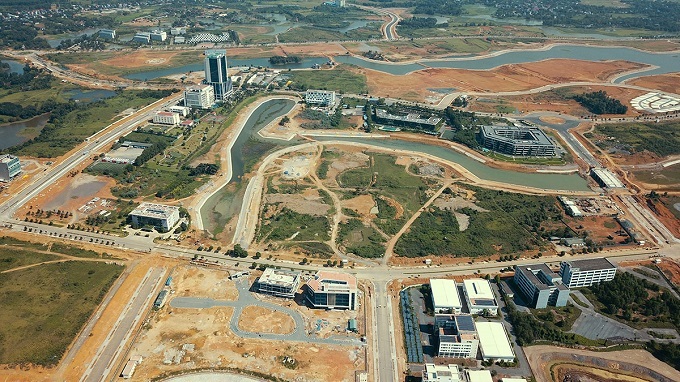
    To attract EU investment, many provinces and cities are acquiring lands around industrial zones, building infrastructure and creating a skilled workforce in agriculture, manufacturing and logistics and simplifying administrative procedures.

    Trade between the EU and Vietnam has also prospered in the year since EVFTA took effect despite the hurdles caused by Covid.

    This year, it has risen by nearly 12 percent year-on-year to $54.6 billion, with Vietnam’s exports being worth $38.5 billion.

    Vietnam’s main exports have been phones and components, computers, other electronic products and components, shoes, textiles, garments, machinery, equipment and appliances, tools and spare parts, and iron and steel products.

    Vietnam is still struggling to comply with the stringent sustainability and other technical standards of the EU market. Besides, protectionism and use of trade remedies and non-tariff barriers is increasing in the bloc.
  • DBS says Tsunami of Money is Flowing to ESG Investments

    DBS says Tsunami of Money is Flowing to ESG Investments

    Companies that focus on environmental, social, and governance (ESG) tend to be high-performing companies, therefore investing in a basket of ESG stock will you cannot do too badly with a portfolio ESG stock, DBS chief executive Piyush Gupta said.

    The truth is that there is a tsunami of money being directed at ESG investments, and therefore, even if the fundamentals don’t bear out, the supply-demand equation will Gupta said at the virtual CNBC Evolve Global Summit on Thursday.

    ESG assets are expected to bring in $1 trillion in investments, Gupta noted. If nothing else, that’s going to take prices up, he said, responding to a question of whether ESG is a passing fad or long-term strategy.

    DBS recently announced a revised sustainable financing target of S$50 billion ($37.53 billion) by 2024, up from its initial target of S$20 billion.

    The bank said there has been renewed focus on sustainability as a result of the Covid-19 pandemic, and as more companies seek to advance their corporate sustainability agenda through sustainable financing,

  • HSBC Investment Strategists Named to Expanded Roles

    HSBC Investment Strategists Named to Expanded Roles

    HSBC makes three new appointments to oversee the overall investment strategy across the newly merged wealth unit.

    The bank appoints Fan Cheuk Wan as Asia chief investment officer (CIO) for private banking and wealth management, according to a statement. In her expanded role, she will oversee investment strategies and themes across all asset classes for the bank’s affluent and super affluent segment, Premier and Jade, respectively, in addition to the private banking segment.

    Fan is a wealth industry veteran and joined HSBC’s private banking arm in 2016. She previously worked with Credit Suisse, ABN AMRO, Cazenove, BNP Paribas and Standard Chartered.

    In addition, the bank has also appointed Patrick Ho as the North Asia CIO and James Cheo as the Southeast Asia CIO for the unit. This is also an expanded role for Ho and Cheo who previously solely served the private bank.

    Ho joined HSBC Private Banking in 2017 and previously worked with Credit Suisse, UBS, Bear Sterns and BNP Paribas. Cheo rejoined in 2019 and previously worked with Barclays.

    The wealth and personal banking division was created in early last year by merging retail banking and wealth management, asset management, insurance and private banking to create a unit with $1.5 trillion in assets as of the third quarter of 2020.

  • Fresh infusion takes LG Display’s Vietnam investment to $3.25 bln

    Fresh infusion takes LG Display’s Vietnam investment to $3.25 bln

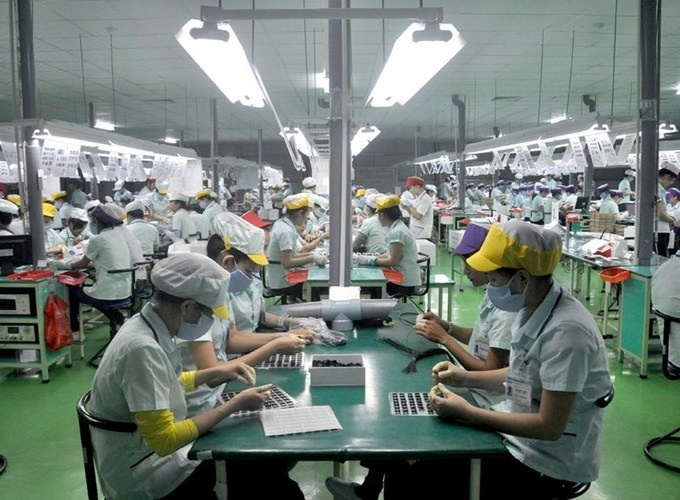
    LG Display will invest an additional $725 million in its manufacturing facility in the northern port city of Hai Phong to take its total investment to $3.25 billion.

    The money will be used to expand the factory starting in March. Manufacturing will begin in May.

    It will create 5,000 new jobs, and contribute around $5 million annually to the government’s coffers.

    LG Display first invested in Hai Phong in April 2016, and currently employs over 13,900 people.

  • Indian investment in Vietnam yet to match potential

    Indian investment in Vietnam yet to match potential

    Indian foreign direct investment in Vietnam is relatively modest because of the lack of trade promotion activities, says a deputy minister of planning and investment.

    “Bilateral trade and investment relationship has seen many positive results in recent times but is still not commensurate with the potentials of both countries,” said Tran Duy Dong said at a recent forum.

    India ranked 26th in foreign direct investment in Vietnam with 296 projects and a combined registered capital of around $900 million last year, compared to Thailand (9th) and Malaysia (8th), according to official figures.

    One of the reasons for this is the lack of information sharing via trade promotion activities between the two countries, Dong said, adding that more offline and online trade activities should be organized.

    Pranay Verma, Indian Ambassador to Vietnam, said his country, with a population of 1.4 billion, is a large and potential market for Vietnamese companies to invest in.

    In recent years, direct flights between the largest cities of the two countries have been opened and this will serve to boost trade, he said.

    Don Lam, deputy head of Vietnam’s Private Economic Development Research Board, said that the two countries are seeing positive figures in trade relations with Vietnam’s imports from India rising 65 percent between 2017 and 2020 to reach $4.5 billion.

    Vietnam’s exports to India in the period surged nearly three times to $6.7 billion, he said.

    Many Indian companies are looking at Vietnam as an attractive investment destination and a hub for transferring goods to Southeast Asian countries, he added.

  • Grab Moves Into Wealth Management With Acquisition

    Grab Moves Into Wealth Management With Acquisition

    Grab on Tuesday announced the acquisition of Bento Invest, a Singapore-based Robo-advisory start-up for an undisclosed sum. It allows Grab to kickstart the offering of retail wealth management solutions to users, driver-partners, and merchant-partners via its app.

    With the acquisition, Bento will be rebranded as GrabInvest with products launched on the Grab app in the first half of the year in Singapore. GrabInvest will be a new core business vertical under Grab’s financial services arm, Grab Financial Group, led by Chandrima Das, founder, and chief executive of Bento.

    «In Southeast Asia, there is a lack of access to affordable wealth management products and retirement planning solutions for most people. As we face an increasingly volatile and uncertain economic environment, it is imperative for Southeast Asians to acquire the tools and knowledge to protect their future by sustainably building wealth for themselves and their families,» said Reuben Lai, Senior Managing Director of Grab Financial Group in a media statement.

    Bento’s proprietary digital wealth platform includes client onboarding, and portfolio construction and rebalancing supported by robust risk management capabilities. The platform is built and backed by a team of seasoned asset management and banking professionals who will join the GrabInvest team. Bento’s founder, Chandrima Das, has over two decades of leadership experience in banks and asset managers across Asia and the U.K. She was formerly Managing Director at Bank of Singapore and prior to that, CEO of ING Investment Management.

    GrabInvest will operate under a retail wealth management capital markets services license in Singapore, namely the MAS Retail Licensed Fund Management Company (LFMC) license. It hopes to offer cash management and portfolio-based financial solutions to its users, driver-partners, and merchant-partners, with Singapore as the first market to roll-out.

    GrabInvest said its aim is to democratize access to retail wealth management products, by providing people in Southeast Asia with the opportunity to save and invest in financial products traditionally limited to affluent individuals and institutional investors. GrabInvest aims to make wealth management services accessible by adopting a low-cost model, easy to understand by allowing users to transact on a platform they are familiar with, transparent by having full disclosures on fees with zero hidden elements, and trusted by adhering to consumer protection standards outlined by the regulators.

    Grab Financial Group currently offers financial services across Southeast Asia in payments (GrabPay), rewards (GrabRewards), lending (GrabFinance), and insurance (GrabInsure) to micro-entrepreneurs, small business owners, driver-partners and users across Southeast Asia.

  • Women Take the Lead in Impact Investing

    Women Take the Lead in Impact Investing

    Banks and wealth managers tend to appoint women to spearhead their sustainability programs. we wanted to find out whether this was pure coincidence or sign of a trend.

    Ecological and sustainable investing has become very popular in wealth management and among investors. Almost every bank has invested in a high-powered division that devotes its resources on finding assets that are making the world a better place.

    It is striking that women hold a great many top positions in ESG and impact investing at banks and asset managers – in an industry, where women still aren’t equally represented in top management.

    Sallie Krawcheck, the American co-founder of Ellevest wealth manager, who used to work for Citigroup and Bank of America, doesn’t mince her words: women are better investors than men.

    Sounds pretty placative of course, even if some studies seem to back up her theory. And yet, her conclusion may not be too far from the truth, at least in respect to impact investing.

  • Pomelo secures US$52 million investment for expansion

    Pomelo secures US$52 million investment for expansion

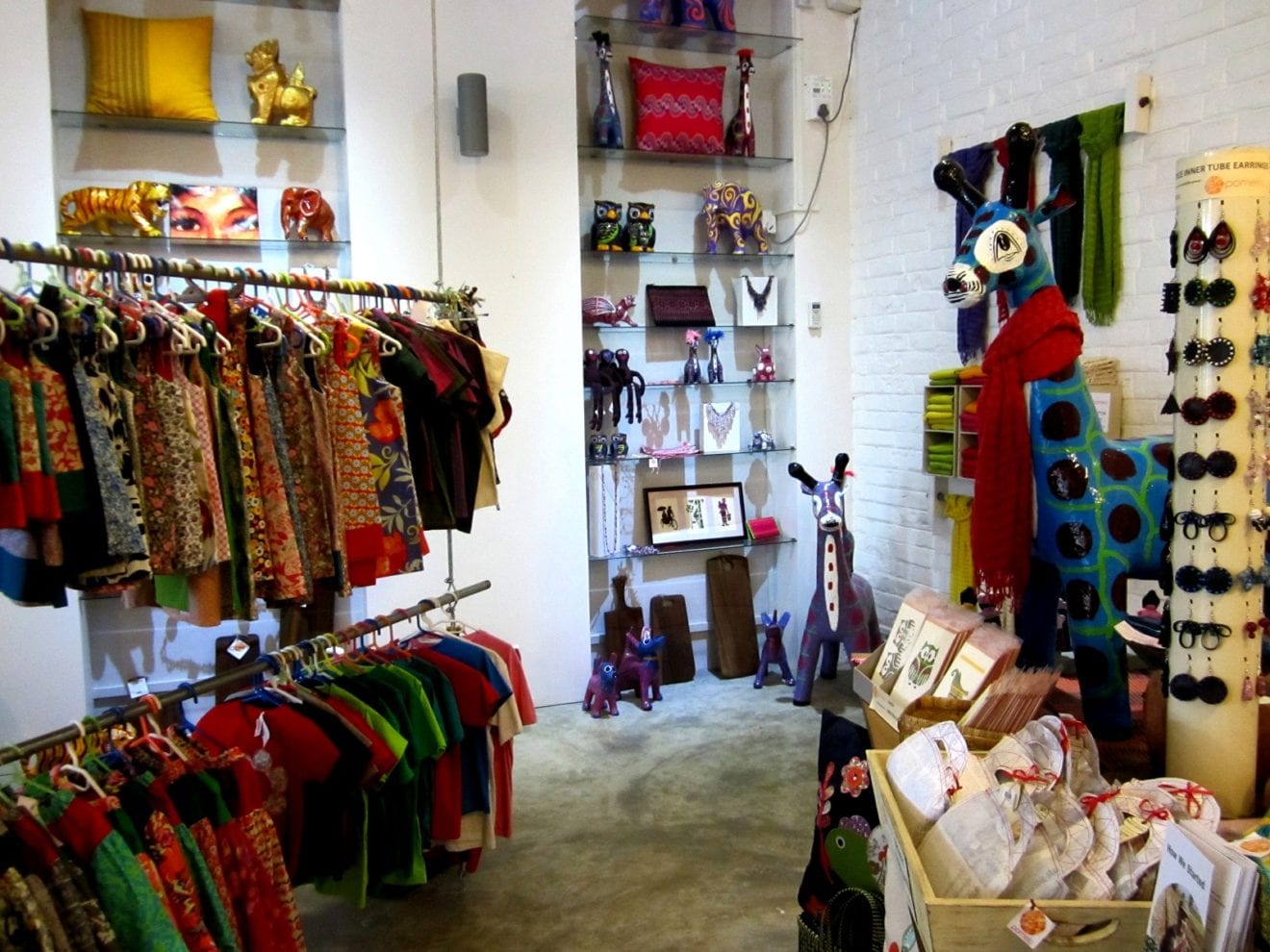
    Leading omnichannel fashion company Pomelo has secured US$52 million in funding, making it the first Thai startup to raise a Series C funding round.

    Investors include Central Group, Provident Growth Fund, InterVest Star SEA Growth Fund, Andre Hoffman, Toivo Annus, Lombard Private Equity, Ambient Sound Investments OU and The Luxembourg Company Deverel.

    After raising US$19 million in its Series B round in November 2017, Pomelo has expanded into Hong Kong and Malaysia, grown gross merchandise volume seven-fold, launched eight physical stores in Thailand and opened a flagship store in the heart of Orchard Road. The brand has expanded its product offering further, launching categories like Purpose, an eco-friendly collection, Beet cosmetics and Pomelo Man, its menswear label.

    “This is a disruptive time for omnichannel in Asia,” said Provident Growth Fund founding partner Michael Aw. “Pomelo is in a unique position because of its vertically integrated model and innovative technical abilities. We are confident they will lead the way in fashion across Southeast Asia and beyond.”

    Using direct-to-consumer technology, Pomelo has been involved in omnichannel fashion since its launch in 2013.About 30 per cent of orders are delivered through its Pomelo Pick-up channel, which allows customers to try before they buy.

    “Pomelo is much more than an online fashion brand,” said Pomelo CEO David Jou. “As a fashion-tech company, we are developing a proprietary catalogue of innovative technologies that will allow us to unlock significant hidden value that exists in the branded fashion business today. Everywhere we look, we see opportunities for innovation to reinvent how things are done to create better products, better serve customers, and maximise omnichannel productivity and efficiency.

    “Fashion is as relevant today as ever and we are excited to chart a unique path forward in an effort to reinvent what it means to be a fashion brand.”

    Co-founder Casey Liang said technology has always been a big focus for the company, which will be looking at big data and AI for pricing and design, as well as e-commerce personalisation in the future.

    “We want to integrate the omnichannel experience even deeper by connecting the Pomelo universe with the customer through a proprietary tech stack. Additionally, we would like to further expand our supply chain automation platform, Henry.”

  • Retail grows 10 per cent for the Philippines’ SM Investments

    Retail grows 10 per cent for the Philippines’ SM Investments

    The Philippines’ SM Investments has achieved 14-per-cent sales growth in the first half-year, its retail division up by 10 percent.

    Profit for the half-year rose 27 percent, with banking and property divisions driving most of the growth.

    The company said SM Retail  – which at the end of June had 2600 stores – earned P5.7 billion (US$109.2 million). Excluding the adjustments due to the adoption of a new accounting standard for leases, (IFRS 16), which changes the way leases are treated in financials, its retail division’s net income grew 10 percent to P6.3 billion.

    Net group income rose to P23 billion ($440.7 million) in the first half, P4.9 billion up on the same period last year.

    “We delivered a strong first half, underpinned by remarkable bank earnings and robust residential take-up,” said SMIC president and CEO Frederic DyBuncio.

    “Our retail business continues to do well and we are pleased with the rapid expansion of our minimart footprint through Alfamart,”

    The company’s property and banking business account for the vast majority of its income – 41 percent and 40 percent respectively. SM Retail accounts for 19 percent.

    The property business SM Prime, which owns 72 shopping malls in the Philippines and seven in China, increased its income by 16 percent to P19.3 billion in the first half. Mall revenues, including retail rents, cinema and event ticket sales and amusement facilities, accounted for 55 percent of SM Prime’s total sales.

    As at the end of June, the Philippines’ SM Investments assets totaled P1.1 trillion, 5 percent more than at the same time a year earlier.

  • Elon Musk’s Boring Co. Raises $120 Million In First Outside Investment

    Elon Musk’s Boring Co. Raises $120 Million In First Outside Investment

    Elon Musk’s Boring Co. has raised its first outside investment to fund the development of tunnel-based transportation systems. The company authorized the sale of $120 million in stock, according to a securities filing that was obtained by the Prime Unicorn Index, a company that tracks the performance of private U.S. companies, and reviewed by Bloomberg News. The investment is in addition to the $113 million the company raised last year.

    “We are delighted to be an investor in Boring,” said Steve Jurvetson, a venture capitalist with Future Ventures and a director on the boards of Musk’s Tesla Inc. and Space Exploration Technologies Corp. “Boring is a great example of the disruptive playbook we look for.”

    The investment values the company at about $920 million after the new cash injection, according to a Boring Co. spokesman. The chief investors in the round were 8VC, Vy Capital, Craft Ventures, Valor Capital and DFJ.

    Boring’s best-known funding efforts involve less traditional methods including the sale of hats and flamethrowers, which raised $1 million and $10 million, respectively, for the business.

    In May, Boring won its first commercial transportation contract, a $48.7 million mile-long project to shuttle visitors around the Las Vegas Convention Center. The project will provide an important test of whether it can really dig more cheaply than competitors and navigate the government bureaucracy involved in municipal projects.

    Boring Co. has also built a test tunnel near its headquarters in Hawthorne, California. A hoped-for tunnel in Los Angeles was scuttled after opposition from neighborhood groups. In Chicago, a proposed tunnel’s future is in doubt due to the departure of its biggest supporter, former Mayor Rahm Emanuel. A potential project connecting Washington D.C. and Baltimore is in the environmental review process.

    Jurvetson said Boring latest investment was its first big fundraising effort beyond tapping into money from Musk and company insiders.

    Jurvetson, 52, is a long-time friend of Musk’s who has invested early in his companies, including Tesla and SpaceX. Formerly a venture capitalist at DFJ, he resigned from the firm in November 2017 amid allegations of harassment that he has denied. He returned to Tesla’s board from a leave of absence in April.

    “The four-largest tunnel companies in the U.S. were founded in the 1800s,” Jurvetson said. “Like the automotive and aerospace sectors, they haven’t faced a disruptive new entrant in their management’s collective life-time.”

  • India’s Quikr Acquires Zefo marketplace

    India’s Quikr Acquires Zefo marketplace

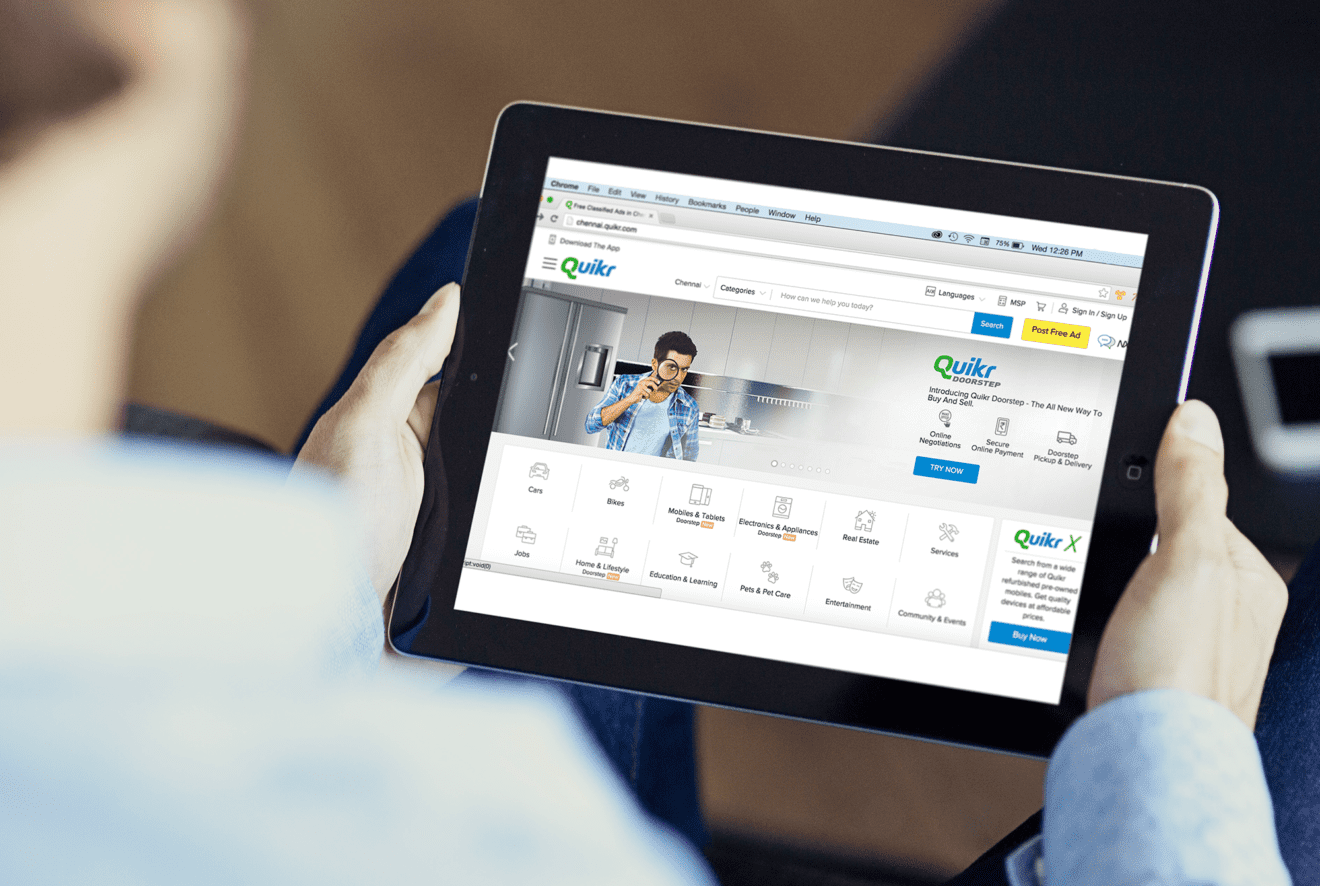
    Indian online classifieds site Quikr has bought refurbished goods marketplace Zefo, headquartered in Bangalore.

    The acquisition allows an exit strategy for Zefo’s current investors, including Sequoia Capital, and gives Quikr a pathway to expand and strengthen its pre-owned product range.

    Zefo, has a portfolio of more than 10,000 products in four cities, including Bengaluru, Mysore, Delhi NCR and Mumbai.

    “With Quikr and Zefo as a combined entity, we will be able to offer a broader selection of products at even more competitive prices along with as strong a focus on quality,” said Quikr founder and CEO Pranay Chulet.

    “With this transaction, the capabilities we have built and the offerings we have honed can now be offered to Quikr’s large customer base,” said Zefo CEO Rohit Ramasubramanian.

  • Debenhams warns shareholders could lose investments

    Debenhams warns shareholders could lose investments

    Struggling department store chain Debenhams said shareholders could lose their entire investment as a result of some of the restructuring options it is considering. The 200-year-old retailer said it is trying to refinance its debt, restructure its estate after a series of profit warnings and seek a cash injection of up to £200 million (A$373.1 million) from existing lenders at it tries to fend off a bid by Sports Direct’s Mike Ashley. Ashley had offered a £150 million loan to Debenhams, but as part of the deal, he would have to be in charge of the chain.

    The department store retailer said certain restructuring options “would result in no equity value for the company’s current shareholders”. Lenders have until this Thursday to approve Debenhams’ cash call, which it says will allow it to restructure. The company had warned its shareholders that some of their restructuring options could see their investment wiped out.

    Last Friday, Debenhams posted an announcement on the London Stock Exchange, confirming that it has received a proposal from Sports Direct International in connection with a proposed acquisition of Magasin du Nord, conditional upon Mike Ashley being appointed as the CEO of Debenhams.

    “This proposal comes without any commitment to participate in the wider financing solution,” Debenhams said.

    The department store chain said the board has responded to Sports Direct directly, that, as with all other proposals received to date from Sports Direct, it does not address the company’s funding and restructuring requirement, while balancing the interests of all stakeholders.

    “Magasin is a key part of the Debenhams group, is cash flow generative and a meaningful contributor to group profits,” Debenhams said. “As such, Magasin is an important part of any lending proposition and therefore any broader solution that protects value for the group.”

    “Further, there are obvious concerns with the proposal that Mike Ashley becomes CEO of Debenhams given that Sports Direct owns our direct competitor House of Fraser.”

    Debenhams said the board has remained open to engagement with Sports Direct throughout its refinancing process and has provided clear guidance on what would represent workable solutions that would allow Sports Direct to participate while also protecting the interests of other stakeholders.

    But, according to Debenhams, this guidance has been repeatedly ignored by Sports Direct.

    Debenhams said it continues to make progress with its refinancing and restructuring discussions with existing lenders, noteholders and other stakeholders.

    “The board remains open to constructive involvement from Sports Direct and other stakeholders in this process.”

    Magasin du Nord has been put up for sale by Debenhams last year and Sports Direct offered to purchase the business . Under the proposal, Debenhams would have a 12-month option to buy it back at the price it was sold.

    Debenhams would also have the right to continue to market the business, gaining the benefit from any uplift above the initial sale consideration were it sold to a third party in that 12 month period.

    In connection with the above, it is proposed that Ashley would become a director and the CEO of Debenhams to assist Debenhams through its restructuring process.

  • Vietnam borrows $188 million to boost connectivity in the north

    Vietnam borrows $188 million to boost connectivity in the north

    The Asian Development Bank will lend Vietnam $188 million to upgrade roads towards improving connectivity in northwestern provinces. Under an agreement signed by ADB and the Ministry of Finance Tuesday, the loan will be used to upgrade of 198 kilometers of roads that connect several towns and districts in northwestern provinces of Lai Chau, Lao Cai and Yen Bai with the Noi Bai – Lao Cai Expressway.

    The 265-kilometer expressway is part of the Greater Mekong Subregion (GMS) Kunming-Hai Phong Transport Corridor that connects Hanoi with northern localities in Vietnam and Yunnan Province in China.

    Some of the road upgrades will create economic opportunities for some of the poorest people in the project area, the bank said.

    “The project aims to expand the benefits of the GMS corridors to the northwestern provinces,” said Eric Sidgwick, ADB country director for Vietnam.

    “The improved connectivity will not only boost border trade, private investment and job creation in the region, but also provide better access to basic social services, such as education, health care, job training and emergency disaster relief for the people of the northwestern provinces, especially the poor ethnic minorities,” he added.

  • Is Watsons ripe for a spin-off?

    Is Watsons ripe for a spin-off?

    Hong Kong billionaire Li Ka-shing’s business empire Cheung Kong has been able to get the best price when offloading some assets. For instance, the Centre, its Grade A office building, was sold for over HK$40 billion early this month on the back of soaring land prices. Some buyers offered about HK$30 billion late last year.

    When Cheung Kong planned to spin off its retail outlets including Watsons and Parknshop in 2013, the deal was shelved as the company was unhappy with the price. The wind has shifted in recent years, and leading brick-and-mortar retailers are becoming desirable again. Cheung Kong owns more than 14,000 outlets worldwide.

    On Monday, Alibaba said it would invest 22.4 billion yuan for a 36.16 percent stake in the top Chinese hypermarket operator Sun Art.

    Sun Art operates 446 hypermarkets across China. The deal marks the internet giant’s move into offline retail. Omnichannel is essential in offering the new retail experience. The transaction values Sun Art at 62 billion yuan, which roughly puts each hypermarket at above 100 million yuan.

    It’s worth noting how Alibaba will transform classic retail by integrating technology in order to provide a seamless online and offline experience to customers. In fact, the deal marks Alibaba’s latest acquisition of a traditional retailer after Suning Commerce, Intime Retail Group and Lianhua Supermarket.

    Nonetheless, we have yet to see any major reform in these newly joined partners, although customers can make payment with Alipay or collect online orders.

    It’s obvious that the retail experiment has to connect online and offline realms. Market players are still trying out the system. Amazon spent US$13.7 billion to acquire Whole Foods in August, but it has yet to start an overhaul of the latter’s 500 outlets. Currently, Amazon has designated one shelve in each Whole Foods store to sell Echo or Kindle, and move some of the goods in-store to the online platform.

    The deep-pocketed e-commerce giants are aggressively acquiring offline retailers. But it remains unclear who will be able to integrate online and offline realms successfully.

    Certainly, the traditional retailer with massive outlet network will become sought-after. Walmart, the world’s largest retailer, has shown that it can hold on its own in a challenging retail environment. Its share price has soared nearly 80 percent over the past 12 months, and the retailer’s market value tops US$300 billion.

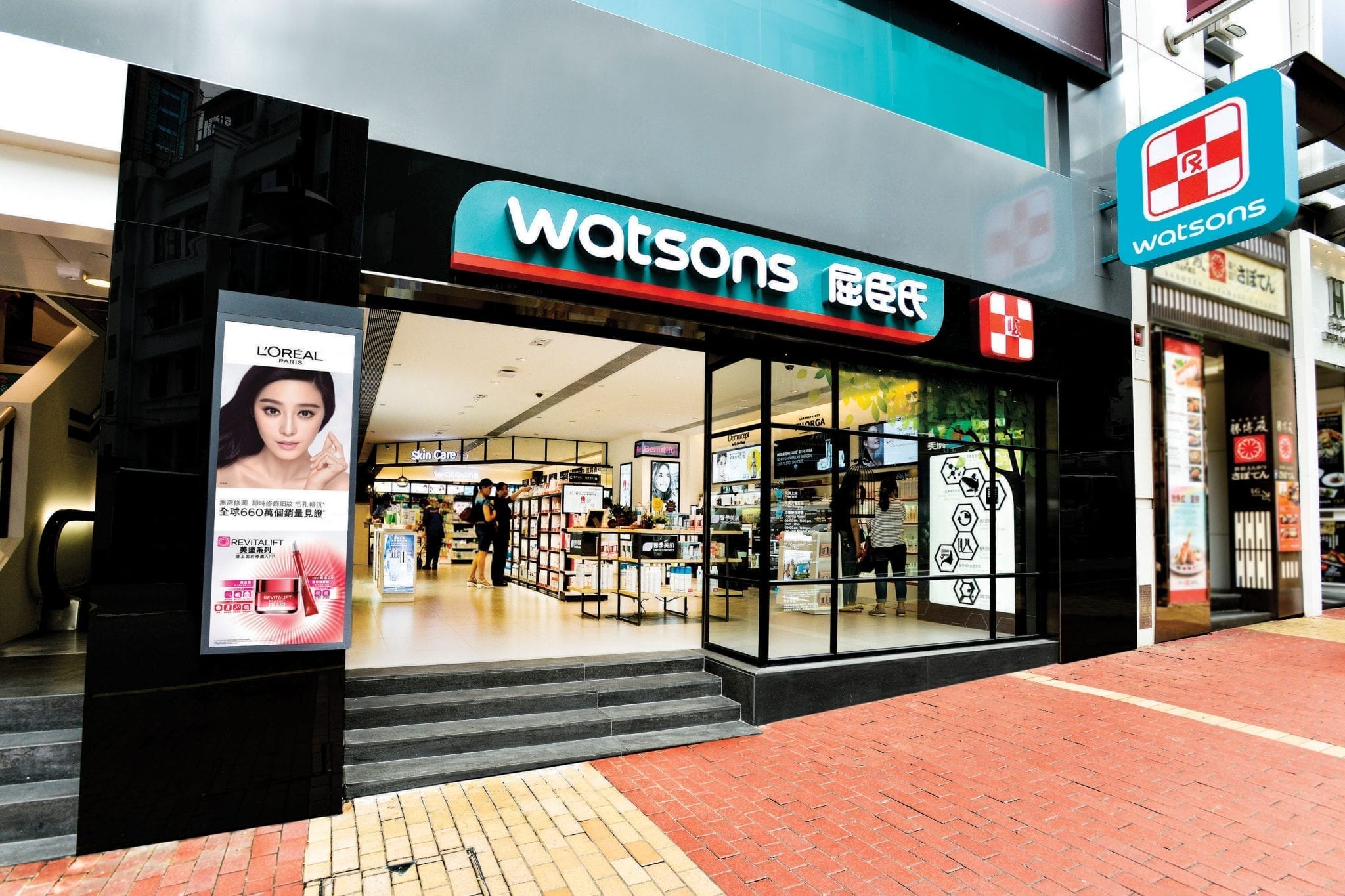
    In fact, Watsons Group is the world’s largest retailer in terms of the number of outlets. It operates more than 14,000 shops worldwide, including supermarkets and drug stores. Over 3,000 shops are in mainland China, and most of the rest are in Europe.

    Cheung Kong has put on hold a plan to spin off or sell the retail group after failing to fetch a good price in 2013. Back then, global offline retailers were struggling.

    The scale of Watsons is more than 10 times that of Whole Foods or Sun Art. And Cheung Kong would definitely try its best to get the best price. Therefore, it’s more likely that the conglomerate might cooperate with internet giants to leverage its massive network of offline stores.

    In September, CK Hutchison Holdings, Li’s flagship conglomerate, formed a joint venture with Ant Financial Services Group, an affiliate of Alibaba Group, to integrate online and offline Hong Kong dollar payments under the AlipayHK brand.

  • China will continue to relax foreign investment rules for auto industry

    China will continue to relax foreign investment rules for auto industry

    China will continue to relax foreign investment rules for the country’s auto sector and other high end manufacturing, lifting restrictions in an orderly fashion, the commerce ministry said on Thursday.

    The government is preparing to further open up the new energy vehicle battery market to foreign investment, Ministry spokesman Sun Jiwen told a regular briefing in Beijing.