Tag: Investors

  • DBS Warns Investors: Traditional Stock Strategies May Falter Amid Ongoing Mideast Conflict

    DBS Warns Investors: Traditional Stock Strategies May Falter Amid Ongoing Mideast Conflict

    Historically, US equities have demonstrated strong performance following significant conflicts. However, DBS asserts that the current Middle East conflict may not follow this trend, warning investors against complacency in this situation.

    The Ongoing Conflict in Iran

    The war in Iran, now in its third week, has resulted in thousands of casualties with no definitive end in sight. DBS advises investors to exercise caution and avoid putting too much stock in historical trends concerning American equities.

    DBS states, “While history may suggest that US equities often yield positive returns after major conflicts, complacency is not advisable given the current Middle East conflict.”

    As the conflict continues to unfold, DBS encourages investors to implement risk management strategies in their portfolio construction. This could involve increasing their exposure to gold and partially substituting US equity exposure with the S&P 500 Low Volatility Index.

    Predicted Themes for Q2 2026

    DBS has identified three themes they believe will heavily influence narratives in the second quarter of 2026.

    Firstly, oil continues to be a significant factor due to the ongoing military crisis in the Middle East, especially considering Iran’s role as the fourth largest OPEC producer. Rising energy prices could pose problems for risk assets.

    Secondly, the policy stance of Kevin Warsh, the nominee for Fed chair, indicates a potential reset with an increased likelihood for “renewed quantitative tightening,” which could lead to a steepening of the yield curve.

    Finally, diversification beyond crowded trades is encouraged, with recent profit-taking seen as “transitory.” A “return to fundamentals” is expected, with a focus on pre-crisis themes like precious metals and technology. These are driven by “dollar debasement” and “AI supremacy”, respectively.

    Emerging Markets and Japanese Equities

    In terms of diversification, DBS suggests investors consider increasing their exposure to emerging markets (EM) and Japanese equities. EM equities are likely to benefit from Fed rate cuts, dollar weakness, robust earnings growth, and light positioning. Conversely, Japanese equities are set to gain from fiscal stimulus, governance reforms, and an attractive yield gap.

    DBS concludes, “Global markets are currently navigating through an unusual convergence of geopolitical challenges and technological opportunities. The paradoxical nature of this situation reflects the complex yet potentially rewarding market conditions investors are currently navigating—an era where traditional strategies may no longer apply.”

    Questions & Answers

    What is the advice from DBS regarding the current Middle East conflict?
    DBS advises investors not to rely excessively on the historical trends of stock market performances following major conflicts, warning that complacency is unwarranted in this instance.

    What are the three themes DBS identified for Q2 2026?
    The three themes are the role of oil in the military crisis in the Middle East, the potential policy reset implied by Fed Chair nominee Kevin Warsh, and the need for diversification beyond crowded trades.

    What are DBS’s recommendations for diversification?
    DBS suggests investors consider increasing their exposure to emerging markets and Japanese equities, which are set to benefit from several factors including Fed rate cuts, dollar weakness, robust earnings growth, light positioning, fiscal stimulus, and governance reforms.

  • Doji Dives into Silver Bar Trade: New Online and In-store Opportunities for Vietnamese Investors

    Doji Dives into Silver Bar Trade: New Online and In-store Opportunities for Vietnamese Investors

    DOJI, a renowned jewelry retail chain, recently joined the ranks of the nation’s silver bar distributors, making it the fourth such establishment in the country. The company initiated the sale of one- and five-tael silver bars in the cities of Hanoi and HCMC on Tuesday, with plans for expansion into Da Nang City and Hai Phong City. It’s notable to mention that a tael is a unit of measurement equivalent to 37.5 grams or 1.2 ounces.

    Customers are given the option to either purchase from DOJI’s physical stores or use the company’s eGold app to shop online. The company expressed that there has been a rapid increase in demand for physical silver as a store of wealth. However, the market is experiencing a shortage of standardized products, particularly regarding weight and quality.

    The Current Silver Bar Market

    As it stands, the silver bar market is serviced by three other distributors, Phu Quy Silver, Sacombank, and Ancarat. Despite the growing popularity of silver bars, market analysts have issued warnings regarding the volatility of silver prices. They noted that price fluctuations for silver tend to be more drastic compared to gold, which may make it less suitable for novice short-term traders and those employing leverage.

    Recent Silver Market Trends

    Following the Lunar New Year holidays, silver has been trading at VND3.4 million (US$126.21) per tael, which is 25% below the record high it reached at the end of January. The average price forecast for the metal this year is $81 per ounce, as per the prediction of a major banking institution. This is more than double the 2025 figure.

    Another financial institution provided a more optimistic short-term forecast at the close of January, suggesting that silver could potentially reach $150 within three months. This prediction was attributed to technical factors and developments in supply and demand.

    Questions & Answers

    What is the latest addition to DOJI’s offerings?
    DOJI has recently started selling one- and five-tael silver bars, becoming the country’s fourth distributor of this product.

    What has led to the increased demand for physical silver?
    The surge in demand for physical silver is largely due to its appeal as a store of wealth. However, the market currently lacks standardized products in terms of weight and quality.

    What are the current predictions for silver prices?
    A major banking institution projects an average price of $81 per ounce this year, more than double the 2025 figure. Another financial institution anticipates that silver could reach $150 within three months due to technical factors and supply-demand developments.

  • US Investors Seek Govt. Probe into South Korea over Alleged Unfair Treatment Post Coupang’s Data Breach

    US Investors Seek Govt. Probe into South Korea over Alleged Unfair Treatment Post Coupang’s Data Breach

    Two prominent American investors in South Korean e-commerce giant, Coupang Inc., have lodged formal complaints with the US government. They are seeking an investigation into what they perceive as prejudiced actions by the South Korean government against the company.

    Investors Call for Investigation

    Greenoaks and Altimeter, the two tech investment firms, have also initiated arbitration proceedings against South Korea. They cite the US–Korea Free Trade Agreement (KORUS) and accuse Seoul of leading an aggressive campaign against Coupang in the wake of a significant consumer data breach. This breach, they claim, has led to billions of dollars in investor losses.

    The petition follows Coupang’s disclosure in November that the personal data of approximately 33 million South Korean customers had been compromised. The breach led to substantial public and political backlash, resulting in comprehensive investigations and multiple lawsuits from both investors and consumers.

    The investors have petitioned the US Trade Representative (USTR) to scrutinize South Korea’s actions and impose “appropriate trade remedies.” These could potentially include sanctions and tariffs, as they assert that the response to the data incident exceeds standard regulatory enforcement measures.

    Potential Implications

    The situation could escalate this corporate dispute into a potential intergovernmental trade conflict, leveraging US trade law and international treaties to challenge the actions of South Korean authorities. However, there has been no comment thus far from the USTR.

    South Korean President Lee Jae Myung has previously advocated for stringent penalties following the Coupang data incident. He reiterated at a recent press conference that South Korea will address this issue impartially, adhering strictly to the country’s legal framework and principles.

    South Korea’s Trade Minister, Yeo Han-koo, earlier dismissed accusations of discrimination against Coupang. He argued that significant data leaks, coupled with Coupang’s inadequate response, should be viewed separately from trade and diplomatic issues. He stated that in a similar situation, US authorities would naturally retaliate in the same manner against a Korean business operating in the US.

    Investor Accusations

    The investors accuse the South Korean government of initiating an extensive government response to undermine Coupang’s operations, including labor, financial, and customs investigations seemingly unrelated to the data breach.

    Marney Chee, a partner at Covington representing Greenoaks, expressed concerns over both the magnitude and speed of the government’s response. He stated that such actions have led to substantial damages and pose a threat to their Coupang investment’s value.

    Since the company disclosed the data breach at the end of November, Coupang’s shares listed on the New York Stock Exchange have fallen by around 27%. The investors aim to halt what they deem as prejudiced conduct and seek to reinstate fair and predictable business conditions for US companies operating in South Korea.

    Future Implications

    The formal notice sent via KORUS initiates a 90-day ‘cooling-off’ period for consultation before the commencement of full arbitration proceedings. Separately, the USTR has up to 45 days to determine whether to initiate a formal investigation. This step could pave the way for public comments, hearings, and possible US countermeasures, including tariffs on South Korean goods and services.

    Greenoaks, one of the alleging parties, was founded by Coupang board member Neil Mehta. Greenoaks and related entities hold more than $1.4 billion worth of Coupang shares. In 2023, Coupang also partnered with Greenoaks to acquire luxury fashion platform Farfetch in a deal worth $500 million.

    Questions & Answers

    What are the investors accusing the South Korean government of?
    The investors, Greenoaks and Altimeter, accuse the South Korean government of discriminatory treatment of Coupang following a significant consumer data breach.

    What is the potential impact of this dispute?
    This disagreement could escalate from a corporate dispute to a government-to-government trade issue, potentially resulting in US sanctions and tariffs against South Korea.

    What is the investors’ ultimate goal?
    The investors are seeking an end to what they perceive as prejudiced conduct by the South Korean government and are calling for the reinstatement of fair and predictable business conditions for US companies operating in South Korea.

  • Billionaires’ Playground: Sports Teams Emerge as Top Asset Class Among Ultra-Rich, J.P. Morgan Reveals

    Billionaires’ Playground: Sports Teams Emerge as Top Asset Class Among Ultra-Rich, J.P. Morgan Reveals

    Sports have emerged as a significant investment focus for billionaires, being viewed not only as an interest but also as a viable asset class, as highlighted by a report from J.P. Morgan.

    Billionaires Investing in Sports

    Approximately 20% of billionaire principals globally now hold a majority share in sports teams, as revealed in a research study named “2025 Principal Discussions Report” commissioned by J.P. Morgan’s 23 Wall Team, a specialized unit providing institutional coverage to top-tier families served by the bank. This figure is a significant leap from the mere 6% recorded in 2022. Furthermore, 34% have investments in stadiums and sports teams.

    In a ranking of key sectors for investments, sports came in fourth place, trailing behind real estate, technology, and energy.

    The Intersection of Interests and Investments

    Given the strong focus on sports, it is not surprising to find that the hobbies and interests of billionaires are closely connected. Out of the top 10 activities that billionaires are most passionate about, six are sports-related, encompassing tennis, winter sports, golf, gym workouts, fishing, and cycling.

    The report pointed out the enormity of sports investment, stating, “With the combined estimated value of US and European franchises standing at approximately $400 billion, and the total worth of sports Mergers and Acquisitions and investment having increased eight times over the past five years, this asset class has gone beyond just fandom. For many principals, ownership is both a strategic and emotional pursuit – a means to unite family unity, institutional capital, and generational legacy around a shared passion and enduring value.”

    Understanding Success: More than Financial Gain

    While a good return on investment is important, the surveyed billionaires indicated that other aspects hold higher value for them. Over 90% believe that time, health, and relationships – rather than money – are the true markers of a fulfilling life. Nearly 85% define success as their ability to “help others progress”, laying emphasis on creative thinking and values-based leadership.

    As Andrew L. Cohen, the executive chairman of the global private bank at J.P. Morgan, commented, “Principals remind us that prosperity is about much more than financial capital. Their viewpoints challenge us to reassess what building enduring wealth entails, placing importance on purpose, connections, and stewardship at the core of their journey.”

    The findings of the report were derived from comprehensive discussions conducted between March and August 2025 with 111 families spanning 28 countries, boasting a combined net worth exceeding $500 billion.

    Questions & Answers

    What percentage of billionaire principals now own a controlling stake in sports teams?
    Approximately 20% of billionaire principals globally now hold a majority share in sports teams.

    What are the top sectors for billionaire investments?
    The top sectors for investments are real estate, technology, energy, and sports.

    What do billionaires consider more valuable than money?
    More than 90% of billionaires believe that time, health, and relationships are more valuable than money. Nearly 85% define success as their capacity to “help others progress”.

  • Ubs Fined $1m By Hong Kong SFC For Misclassification Of Professional Investors

    Ubs Fined $1m By Hong Kong SFC For Misclassification Of Professional Investors

    UBS, a major global bank, has recently found itself facing penalties from Hong Kong’s Securities and Futures Commission (SFC). The bank has been fined HK$8 million ($1 million) due to misclassification of its clients under the professional investor regime, according to the SFC.

    The Misclassification Issue

    Professional investors, as defined by local regulations, are clients with a minimum asset value of HK$8 million. It appears UBS failed to accurately classify these investors in accordance with these guidelines for an extended period of more than 12 years.

    This misclassification led to clients gaining access to securities pooled lending and investment products that were specifically designed for professional investors. Such developments raise significant concerns about the bank’s adherence to regulatory standards and risk management practices.

    The Scope of the Misclassification

    A self-review conducted by UBS over the course of four years, from July 2018 to July 2022, found notable discrepancies. As per their findings, there were about 560 joint accounts that were booked or managed in Hong Kong which were inaccurately categorized as professional investor accounts.

    This extensive issue points to systemic flaws in the bank’s internal oversight mechanisms, which need to be addressed to prevent such oversights from recurring in the future.

    Questions & Answers

    What is the professional investor regime?
    Professional investors are defined by local regulations as clients with a minimum asset value of HK$8 million.

    What consequences did UBS face for its misclassification of clients?
    UBS was fined HK$8 million ($1 million) by Hong Kong’s Securities and Futures Commission (SFC) due to the misclassification.

    What was the scale of the misclassification by UBS?
    A self-review by UBS indicated that approximately 560 joint accounts booked or managed in Hong Kong were incorrectly classified as professional investor accounts.

  • Singapore Emerges as Asia’s Premier Offshore Hub for Wealthy Investors

    Singapore Emerges as Asia’s Premier Offshore Hub for Wealthy Investors

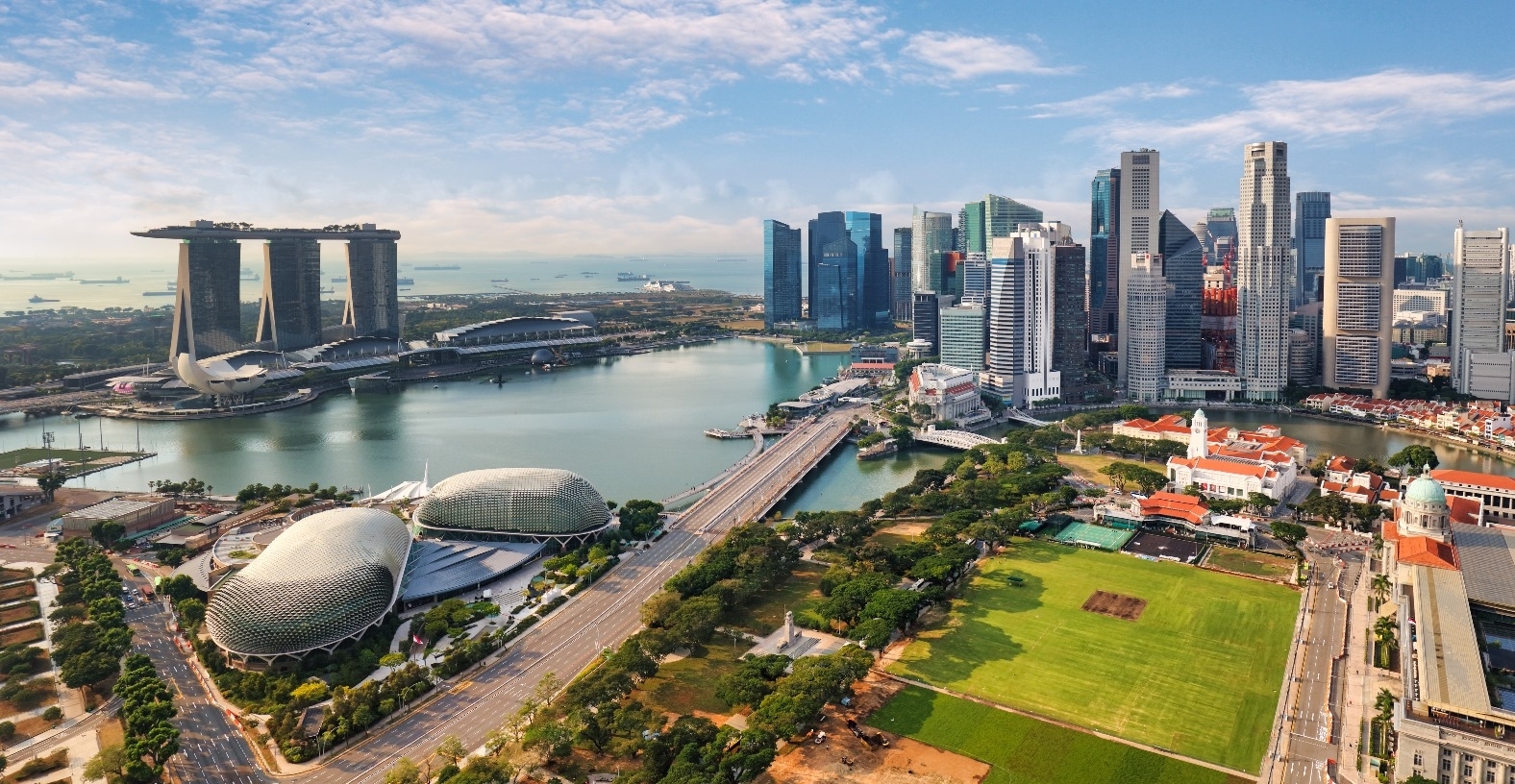
    Saving for that dream vacation has officially eclipsed financial security as the leading aspiration for wealth among investors. In a revealing study by HSBC, Singapore is crowned as Asia’s premier offshore wealth destination.

    Singapore’s Winning Streak in Wealth Management

    The study, featured in HSBC’s 2025 Affluent Investor Snapshot, surveyed 10,797 individual investors from 12 different markets, highlighting Singapore as the top location in Asia for opening overseas investment accounts. This further cements the city-state’s reputation as a trusted and stable hub for international wealth management.

    Affluence and Confidence Among Investors

    Notably, Singapore also ranks alongside the USA and Hong Kong as one of the three premier destinations for wealthy investors worldwide. Confidence among Singaporean respondents is striking; two-thirds believe they can achieve their long-term financial objectives. Gen Z and Millennials especially shine in this regard, with nearly 70% expressing assurance about reaching their goals. Older generations, including Gen X and Baby Boomers, remain optimistic as well, with 60% conveying similar sentiments.

    Shifting Financial Priorities

    Interestingly, the pursuit of leisure now takes center stage. A noteworthy 47% of Singaporean investors prioritize saving for vacations and leisure ahead of traditional concerns like financial security. Despite this shift, affluent investors continue to prioritize wealth building (46%) and retirement planning (47%).

    Preferred Avenues for Wealth Guidance

    When it comes to wealth management services, Singaporeans have clear preferences. A significant 65% of investors turn to relationship managers and wealth specialists for guidance. In a surprising twist, stockbrokers are the second most favored option, chosen by 28% of respondents, diverging from the global trend where friends and colleagues hold that position with 29%.

    Questions & Answers

    What financial goal is currently prioritized by Singaporean investors?
    Investors in Singapore are now prioritizing saving for vacations and leisure, which has surpassed financial security as their top objective. About 47% of respondents report this as their main focus.

    How does Singapore rank among global wealth destinations?
    Singapore stands alongside the USA and Hong Kong as one of the top three destinations worldwide for investors seeking offshore wealth management options.

    Who do Singaporean investors prefer for wealth management guidance?
    A clear majority of 65% of Singaporean investors prefer to consult with relationship managers and wealth specialists for their wealth management needs, contrasting with global investors who lean more towards friends and colleagues.

  • Korean Retail Giant E-mart Invests $150m For Philippine Expansion: Aims To Enhance Local Shopping Experience

    Korean Retail Giant E-mart Invests $150m For Philippine Expansion: Aims To Enhance Local Shopping Experience

    In a bold move to capture a growing market, Korean discount department store chain E-Mart has announced its ambitious expansion into the Philippines. With a combined investment of approximately $150 million, E-Mart is set to open five new stores across the archipelago over the next few years, targeting the burgeoning middle class and their increasing appetite for affordable yet quality retail experiences.

    Targeting the Filipino Market with Strategic Stores

    Initially, E-Mart plans to establish its presence in major urban centers such as Metro Manila and Cebu, locations brimming with potential customers eager for diverse shopping options. Local market analysis suggests that Filipino consumers are increasingly drawn to retail environments that offer both value and variety — a niche that E-Mart aims to fill with its unique blend of products, from groceries to electronics.

    The decision to invest in the Philippines is not just a stroke of luck; it’s rooted in the company’s successful South Korean model. This version of a “hypermarket” approach has won hearts back home, where E-Mart has over 150 locations. The Philippine economy has shown resilience, making it ripe for the chain’s budget-friendly offerings and expansive range of home goods.

    Creating a Dazzling Retail Experience

    But expanding into a vibrant market like the Philippines involves more than just placing stores. E-Mart has committed to tailoring its shopping experience for Filipino customers, incorporating local products alongside its beloved Korean offerings. This strategy not only caters to local tastes but also fosters a sense of community, turning shopping into a delightful cultural exchange rather than a mere transaction. Imagine snatching up your favorite local snack right next to an imported Korean delicacy—talk about a shopping thrill!

    To bolster its brand awareness, E-Mart is launching an engaging marketing campaign that traverses traditional advertising to digital platforms, ensuring maximum reach among potential customers. Employing social media strategies and local influencers will further elevate its profile, especially among younger, tech-savvy shoppers who dominate the market.

    Facing Challenges with Optimism

    While the Philippines offers a promising landscape for retail growth, E-Mart’s entry will not be without challenges. Navigating bureaucratic hurdles and building a reliable supply chain in a new environment will require deft planning and local insights. However, the chain’s leadership remains undeterred, viewing these obstacles as mere stepping stones toward establishing a lasting legacy in the Filipino retail space. “We are excited to connect with Filipino consumers and be part of their daily lives,” the company stated in a recent press release.

    Looking Ahead: What’s Next for E-Mart?

    The anticipated openings are expected to create a buzz in the local markets, potentially leading to not just retail growth but also new job opportunities for the local workforce. As E-Mart lays the groundwork for its future, the attention will be on how well it integrates into the Filipino retail landscape and meets the expectations of its new customer base. For now, all eyes will be on the first store launch, which promises to deliver both value and innovation, as well as a much-needed upgrade to the local shopping scene.

    Questions & Answers

    What is E-Mart’s investment plan in the Philippines?
    E-Mart plans to invest approximately $150 million to establish five new stores in the Philippines over the next few years.

    Which locations are targeted for E-Mart’s new stores?
    The first E-Mart stores are set to open in major urban centers, particularly in Metro Manila and Cebu, to attract a large customer base.

    How does E-Mart plan to engage with the local market?
    E-Mart aims to tailor its offerings by incorporating local products alongside Korean goods and is launching a comprehensive marketing campaign that includes social media outreach.

  • Bank Tabungan Negara’s Capital Soars, Yet Asset Risk Persists: What It Means for Retail Investors

    Bank Tabungan Negara’s Capital Soars, Yet Asset Risk Persists: What It Means for Retail Investors

    Profitability at Bank Tabungan Negara (BTN) is projected to dip to between 0.55% and 0.65% by 2025, largely due to increased credit costs even as net interest margin (NIM) shows signs of improvement. The Indonesia-based bank, while boasting a strong capital ratio of 15.3%, faces potential solvency risks that may not be immediately apparent in its financial figures, according to Moody’s Ratings.

    Sustained Asset Risks Despite Clean-Up Efforts

    Moody’s highlighted that BTN’s reported leverage at 6.6% might give an inflated sense of the bank’s financial stability. The ongoing burden of nonperforming loans (NPLs) still looms large, despite the bank’s significant strides in rectifying its historical loan issues via substantial NPL sales and write-offs. “We expect BTN’s asset risk to remain high,” Moody’s remarked, noting that 16% of BTN’s gross loans are still tied up in restructured loans due to significant mortgage exposure with longer tenors.

    Provisioning Challenges Reveal Underlying Stress

    The ratings agency pointed out that BTN holds a minimal level of provisioning compared to its heightened asset risks. This is evident in its substantial portfolio of restructured loans and accrued interest. “Although the bank’s risk-weight density was low at 43%, this figure isn’t entirely indicative of the bank’s reality,” Moody’s stated, emphasizing that restructured loans receive risk-weighting according to their collectability classification dictated by the central bank, regardless of their restructuring history. Hence, BTN’s reported earnings and capital do not entirely reflect the pressures on its financial profile.

    Government Support as a Silver Lining

    On a brighter note, BTN is expected to receive a generous cushion of support from the Indonesian government in challenging times. This backing is crucial as the bank navigates its financial landscape, especially under the cloud of projected declining profitability.

    As BTN explores its capability to lower funding costs through ongoing digital initiatives aimed at boosting access to low-cost deposits, its profitability journey will depend heavily on these strategic endeavors and new government support schemes to enhance lending yields.

    Questions & Answers

    What is the anticipated profitability range for BTN by 2025?
    BTN’s profitability is expected to decline to between 0.55% and 0.65% due to rising credit costs.

    What challenges does BTN face regarding its loan portfolio?
    The bank is grappling with a high level of restructured loans, which constitute around 16% of its gross loans, amidst ongoing asset risk.

    How does government support influence BTN’s outlook?
    BTN is projected to benefit from substantial government support during critical periods, which could help mitigate financial strains and bolster its lending capabilities.

  • Gold Prices Hold Steady as Global Rates Dip – What It Means for Retail Investors

    Gold Prices Hold Steady as Global Rates Dip – What It Means for Retail Investors

    Vietnamese gold prices remained stable on Wednesday afternoon, even as global bullion rates slipped slightly. In the heart of Ho Chi Minh City, the price of gold bars offered by the Saigon Jewelry Company was consistent at VND119.6 million (approximately US$4,583.78) per tael, while gold rings were priced at VND116.2 million. For context, a tael equals about 37.5 grams, or 1.2 ounces.

    Since January, gold bar prices have surged by an impressive 42%.

    On the international scene, gold prices dipped slightly amid volatile trading as investors exercised caution ahead of the U.S. Federal Reserve’s upcoming policy decision. An ongoing military conflict between Iran and Israel also loomed large over market sentiment.

    As for the numbers, spot gold fell by 0.2%, landing at $3,381.10 an ounce, while U.S. gold futures also lost 0.2%, settling at $3,399.30.

    As tensions escalated, both Iran and Israel exchanged missile strikes on Wednesday, extending their conflict into a sixth day, despite U.S. President Donald Trump’s call for Iran’s unconditional surrender, which is about as popular as asking someone to leave the party early.

    In the U.S., retail sales figures released on Tuesday showed a steeper drop than anticipated for May, primarily due to reduced vehicle purchases as consumers rushed to beat anticipated tariff hikes.

    Meanwhile, the consensus expectation is that the U.S. central bank will leave interest rates unchanged following its policy meeting later today.

    Goldman Sachs remains bullish, predicting that strong central bank buying and increasing ETF holdings from prospective Fed cuts could push gold prices to $3,700 an ounce by the end of 2025, with a possible rise to $4,000 by mid-2026.

    Questions & Answers

    What are the current gold prices in Vietnam?
    The current prices are VND119.6 million for gold bars and VND116.2 million for gold rings, with one tael equaling approximately 37.5 grams.

    What is influencing the global gold market right now?
    Global gold prices are being influenced by investor caution ahead of the U.S. Federal Reserve’s policy announcement and ongoing conflicts, particularly between Iran and Israel.

    What does Goldman Sachs predict for gold prices in the near future?
    Goldman Sachs forecasts that gold could rise to $3,700 an ounce by the end of 2025 and potentially reach $4,000 by mid-2026, fueled by strong central bank demand and ETF investments.

  • ASIC Revokes License of Financial Services Group Australia: What It Means for Retail Investors

    ASIC Revokes License of Financial Services Group Australia: What It Means for Retail Investors

    The Australian Securities and Investments Commission (ASIC) has made a significant move by canceling the license of Financial Services Group Australia Pty Ltd (FSGA), raising eyebrows across the financial sector. In a bold statement on its website, the regulator also announced the permanent ban of FSGA’s responsible manager, Graham Holmes, from any role in the financial services industry.

    Serious Allegations Against FSGA

    ASIC alleges that FSGA fell short in its duty to ensure that its representatives provided financial product advice suited to the needs of their clients. Failings in this area have led the commission to question FSGA’s commitment to acting in the best interests of its clientele. Additionally, the firm allegedly lacked adequate financial and human resources to deliver the services as mandated by its license.

    Failure to Comply

    FSGA has reportedly failed to submit crucial financial statements and auditor’s reports on time, neglected to lodge necessary breach reports with ASIC, and did not meet a key condition of its license concerning its total asset-liability ratio for the financial years 2022 and 2023. These serious oversights illustrate a troubling pattern of non-compliance.

    Holmes’ Troubling Tenure

    Holmes, who served as FSGA’s responsible manager, is accused of taking on the role “on paper” only, while still collecting RM fees without fulfilling his responsibilities. ASIC concluded that Holmes is unfit to participate in any financial services business, marking a severe blow to his professional reputation.

    In an industry where trust is the currency of success, these findings leave many wondering about the integrity of financial advising. As they say, when it rains, it pours — and in this case, it’s a torrential downpour for both FSGA and its former manager.

    Questions & Answers

    What led to ASIC’s decision to cancel FSGA’s license?
    ASIC concluded that FSGA failed to meet its regulatory obligations, including ensuring that financial advice was suitable for clients.

    What does the ban on Graham Holmes entail?
    Graham Holmes is permanently banned from providing any financial services and from holding any position that may influence a financial services business.

    How significant is this action for the financial services industry in Australia?
    This action underscores the stringent oversight by ASIC and serves as a warning to other firms about the importance of compliance and ethical standards in financial advising.

  • Gold Prices Surge to Two-Week High: What This Means for Retail Investors

    Gold Prices Surge to Two-Week High: What This Means for Retail Investors

    Gold jewelry shines brightly in a Hanoi shop as Vietnam’s gold market experiences a notable surge this Thursday morning. Prices have climbed to their highest levels in over two weeks, driven by rising global rates.

    Gold Prices Rebound

    The Saigon Jewelry Company reported a 0.76% increase in the price of gold bars, now valued at VND119.7 million (approximately US$4,598.99) per tael, where a tael is equivalent to 37.5 grams (1.2 ounces). Similarly, gold rings saw a boost of 0.87%, reaching VND115.8 million per tael.

    Global Trends Impact Local Market

    On a global scale, gold prices saw a boost as geopolitical tensions in the Middle East added pressure and a weakening dollar rendered the precious metal more appealing to international buyers. Spot gold jumped 0.7% to reach $3,375.06 per ounce, while U.S. gold futures enjoyed a 1.5% increase to $3,395.

    The U.S. dollar index, recently falling to a near two-month low, has created conditions conducive to gold investment. “The weakness in the dollar index serves as a strong catalyst,” noted Kelvin Wong, a senior market analyst at OANDA in Asia Pacific. He highlighted that the bullish breakout of the $3,346 resistance level has triggered technical buying among investors.

    While gold’s allure often shines brightest in uncertain times, it appears that the market remains a vibrant space for both seasoned investors and curious newcomers alike.

    Questions & Answers

    What caused the rise in gold prices in Vietnam?
    The rise in gold prices is attributed to increased global prices due to geopolitical tensions in the Middle East and a weakening dollar.

    How did gold perform in the international market?
    Globally, spot gold increased by 0.7% to $3,375.06 per ounce, with U.S. gold futures rising 1.5% to $3,395.

    What is the significance of the U.S. dollar’s performance?
    The U.S. dollar index’s decline makes gold more attractive to international buyers, boosting demand and values in the market.

  • Thai Investors Reap $1.3 Billion in Dividends from Leading Vietnamese Firms

    Thai Investors Reap $1.3 Billion in Dividends from Leading Vietnamese Firms

    Data compiled reveals that Thai investors have been thriving on their stakes in a variety of Vietnamese companies, particularly in the dairy, beverage, plastics, and retail sectors. The spotlight is on Vinamilk, a dominant player in the dairy market, which has showered its Thai shareholders with a staggering VND16.1 trillion in dividends since 2013.

    Vinamilk and Its Sweet Returns

    Vinamilk, which boasts the largest share of the dairy market, has garnered significant attention, especially from Fraser & Neave, a beverage giant that holds a 20.4% stake in the company. In a strategic move, Sirivadhanabhakdi’s TCC Holdings acquired Singapore-based Fraser & Neave back in 2013. Last year alone, Vinamilk dished out VND1.85 trillion in dividends to Fraser & Neave. Despite several attempts in recent years to increase their stake further through the stock market, those plans have been thwarted by challenging market conditions.

    Sabeco: A ‘Crown Jewel’

    Sirivadhanabhakdi’s investment strategy doesn’t stop at Vinamilk. He maintains a controlling interest in Sabeco, one of Vietnam’s leading breweries. In 2017, ThaiBev, operating under Sirivadhanabhakdi, splurged $4.8 billion to acquire 53.6% of Sabeco from the Vietnamese Ministry of Industry and Trade. Over eight years, ThaiBev has raked in over VND14 trillion in dividends from Sabeco, with 2024 marking a record payout of VND3.44 trillion. At a press conference in September 2022, Thapana Sirivadhanabhakdi, CEO of ThaiBev, characterized Sabeco as a “crown jewel,” highlighting its unique value in the crowded regional beer market.

    Diverse Investments Across Sectors

    Beyond the dairy and beverage arenas, TCC Holdings also made headlines with its $704 million acquisition of the Metro supermarket chain, repackaging it as Mega Market. This reflects the breadth of Thai investment in Vietnam, with the acquisition of Binh Minh Plastics standing out as particularly lucrative. Nawaplastic, a subsidiary of Thailand’s SCG Group, took control of Binh Minh in 2018, purchasing 24.2 million shares from the State Capital Investment Corporation and reportedly benefiting from VND2.5 trillion in dividends since 2012.

    SCG’s interests extend further into Vietnam, controlling companies such as Tan Bien Packaging and Duy Tan Plastics while also operating a major petrochemical complex in Ba Ria – Vung Tau Province. This facility, costing over $5 billion, has a remarkable annual capacity of 1.4 million tons of products. As the Thai footprint deepens, they are also eyeing sectors like finance and retail. The Siam Commercial Bank is involved with Home Credit Vietnam, and Central Retail Group boasts brands like GO! (formerly Big C) and Nguyen Kim, solidifying Thailand’s formidable presence in the Vietnamese retail landscape.

    Trust in Vietnam’s Economic Prospects

    Thai investment continues to flourish, with a 2024 HSBC survey revealing that 66% of Thai businesses are keen on investing in Vietnam. The confidence level among Thai investors stands at a robust 93%, just behind Vietnam (98%) and Singapore (94%). Data from the Foreign Investment Agency highlights that Thailand has been Vietnam’s 13th largest investor since 1988, with total investments exceeding $14.7 billion, primarily fueling the manufacturing sector, which receives 74% of their financial commitment.

    Could this surge of investments make Vietnam the Silicon Valley of Southeast Asia? Only time will tell!

    Questions & Answers

    How much have Thai shareholders made from Vinamilk since 2013?
    Thai shareholders have benefitted from a remarkable VND16.1 trillion in dividends from Vinamilk since 2013.

    What characterizes ThaiBev’s investment strategy in Vietnam?
    ThaiBev’s strategy is focused on long-term growth, with plans to dominate the beer market and expand across Southeast Asia, as evidenced by their significant stake in Sabeco.

    What sectors do Thai investors primarily focus on in Vietnam?
    Thai investors predominantly invest in the manufacturing sector, with 74% of their capital directed towards this area, reflecting their strong interest in production capabilities within Vietnam.

  • Market Is Down: Riding Out Stock Market Volatility

    Market Is Down: Riding Out Stock Market Volatility

    Investors should buy low and sell high in an ideal world. But instead, investors frequently do the opposite—they purchase high and sell low. While volatility can be unpleasant, it is an inherent element of the investment process.

    Many investors become concerned during turbulent periods and reconsider their long-term investing ideas. Of course, nobody wants to see their account worth fall, but you can ride it out if you have a long-term plan to stay invested.

    Uncertainty is encoded in the human brain. While this may have been useful in the past, it is now a dangerous inclination. Read below to learn how to ride out the uncertain and volatile stock market with your ongoing and future investment plans.

    What Does A Volatile Market Look Like?

    The degree to which the stock market’s value goes up and down is measured by its volatility. Individual stocks can become more erratic around important events like earnings reporting.

    Some equities are more erratic than others. Dread is frequently linked to volatility, and fear increases during weak markets and collapses.

    Volatility, on the other hand, does not measure direction; it merely measures the magnitude of price changes. The CBOE Volatility Index forecasts stock market volatility over the following 30 days.

    The VIX is often regarded as the market’s “fear indicator.” This is because volatility and risk are inextricably linked for traders who want to buy cheap and sell high every trading day. However, long-term investors’ daily in individual equities is insignificant.

    Riding Out The Volatile Phase

    Portfolio diversification and downside protection techniques will assist you in meeting your long-term objectives while remaining unaffected by short-term market changes.

    Here we have discussed these techniques for maintaining your financial stability in an unstable stock market in further detail—

    Diversify

    The idea behind diversification is that diverse asset classes or types of investments will respond to market events differently. However, diversifying your portfolio does not promise profitable future outcomes or provide loss protection.

    However, diversity might make the process of achieving long-term market growth potential more comfortable. Therefore, a significant step in achieving your financial objectives is diversification.

    Each sort of investment bank is impacted by market fluctuations differently. Investing a tiny portion of your bond portfolio may be beneficial, even if you are saving for a goal that will take several decades to reach. For an illustration of how an investor with 25 years before retirement may divide up assets, see “Spread Your Assets” below.

    Fight Your Obsessive Nature

    Staying the course has yielded greater returns than exiting the market entirely. However, if you are still concerned about a market slump, adopt a more cautious investment approach.

    Bonds and mutual funds are less volatile than stocks, so speak with your financial advisor about investing in these asset types. However, your investments may still provide a good return in the long term.

    Before making a choice, several financial experts recommend checking with a financial counselor. Also, consider investing in assets that are more likely to keep their value in the short term if you are nearing retirement age.

    Plan Your Investments For Long Term

    If you are an individual investor, you should have sufficient safety reserves to cover unforeseen short-term expenses and only make long-term investments with money you won’t need for at least three years.

    The number of an institution’s assets that it intends to spend annually must be planned for, and the portfolio must be structured to include shorter-term assets like cash or bonds to cover those yearly demands.

    Make sure that your investing strategy includes frequent protection against behavioral biases. An investing process is a set of internal procedures that you will use to put your investment philosophy into action.

    You should be aware that there isn’t a procedure that works for everyone and that you shouldn’t try to copy it. Instead, you should consider your skills and shortcomings and develop an investing strategy designed to emphasize your strong points and minimize your deficiencies.

    Reevaluate Your Risk Tolerance Before New Investments

    Risk capacity is your financial ability to accept a loss, whereas risk tolerance is your capacity to tolerate significant price changes emotionally.

    Market declines may remind you to reevaluate your risk tolerance, but we advise delaying until you are calm. However, risk tolerance can—and ought to—be considered at any moment.

    Do you have enough money to accomplish short-term objectives? The ideal place to put money that you’ll need soon or that you can’t afford to lose in reasonably stable assets like money market funds, certificates of deposit (CDs), or Treasury bills.

    When the stock markets are volatile, having your next year’s worth of living costs in a bank account or money market fund, together with a few more years worth of bonds that mature when you need the money, can help retirees maintain their composure.

    Include Defensive Assets In Your Strategy

    Defensive investing techniques are intended to provide first, followed by moderate growth. These tactics are designed to shield investors from big losses brought on by significant market declines.

    In contrast, an offensive or aggressive investing strategy looks to profit from an upturn by buying assets that outperform for a specific degree of risk and volatility. Both offensive and defensive investment methods need active management, which might result in greater investment costs and tax obligations.

    Additionally, a defensive portfolio manager can keep a moat of cash and cash equivalents like Treasury bills and commercial paper.

    The goals in both situations are to safeguard current assets and maintain inflation-beating growth. Therefore, a defensive portfolio manager will only choose equities from well-established, well-known companies.

    Be Steady And Wait It Out!

    Your financial objectives, time horizon, and risk tolerance should be all factor into how much risk you are willing to face. Your adviser should assist you in filling up an investor profile with many hypothetical questions.

    Keep your attention on your long-term financial security strategy while keeping an eye on the larger picture (what is happening in the market).

    With a strong plan that covers your future rather than the present and the presence of mind, you can easily maintain financial stability in any volatile market situation. All you need to be is a little more patient and optimistic in such cases.

  • Costco to invest $150m in three new Victoria stores

    Costco to invest $150m in three new Victoria stores

    Costco plans to open three new stores in Melbourne and Geelong within the next two years, investing up to $150 million.

    CEO Patrick Noone told The Australian in an interview that potential sites were identified near Melbourne’s CBD, and at Officer and Geelong. Each store will be allocated $50 million, with the projects now depending on zoning and council approvals.

    “We are growing quite nicely, and Melbourne is a big city. For us, business isn’t slowing down in Melbourne,” said Noone.

    “Melbourne is a growth area and we’d like build there as soon as we get the approvals.”

    During the Covid lockdowns, Costco remained a ‘destination shop’ for Melbournians as members travelled long distances to shop at the store, buying in bulk when regulations allowed.

    Costco currently boasts 200,000 members and sells a mix of goods from fresh food, groceries, meat, consumer electronics, clothing, diamonds and even coffins.

    According to The Australian, Costco Australia’s sales in the year to August rose from $2.6 billion in 2020 to $2.8 billion last year. Strong online growth helped the company double its profit to $46.39 million.

  • Thai AirAsia X looking for new investors

    Thai AirAsia X looking for new investors

    Thai AirAsia X needs a major restructuring and new investors to prep the airline to resume international routes next year, after Thai AirAsia (TAA) already secured additional funding for the carrier last week.

    Thai AirAsia X, a long-haul, low-cost carrier under the AirAsia group, has been grounded for almost two years since the pandemic emerged in 2020. The 11-aircraft fleet was reduced to seven earlier this year, said Tassapon Bijleveld, executive chairman of SET-listed Asia Aviation (AAV), the majority shareholder in TAA.

    Mr Tassapon, also a shareholder in Thai AirAsia X, said the airline had to switch its wide-body Airbus A330 jets to cargo service to stem financial losses. Thai AirAsia X requires additional liquidity to prepare for passenger flights, which are expected to resume next year, he said.

    Tourists have started asking when international flights will resume and the airline responded by launching ticket sales for the Bangkok-Incheon (South Korea) route from April 2022 in the hope that borders will reopen by then, said Mr Tassapon.

    “Border closures should not be an option to prevent the spread of the Omicron variant as the national economy and cash-strapped tourism sector in particular cannot afford to survive another lockdown,” he said.

    Mr Tassapon said it has been over two years since the pandemic broke out and the government should learn to live with it by sourcing sufficient immunity, by using vaccines and medicines, for local communities in order to let economic activities run as usual.

    He said Thai AirAsia X, which is not yet listed on the stock market, is in negotiations with a few potential investors and will enter the restructuring process by next year.

    TAA was given approval by shareholders at a meeting on Nov 26 to commence the restructuring plan, enabling the airline to raise an additional 14 billion baht.

    Under the new structure, Mr Tassapon will hold 18% of the shares, down from 40.52% at present, while AirAsia Aviation, the investing company under AirAsia Group Berhad, will hold 40.7%, followed by commercial banks at 5.3% and new individual Thai investors at 5.2%.

    However, even though TAA is expected to receive the first allotment of fresh capital by mid-December, the cost-cutting measures have to remain until air travel fully recovers.

    On announcing massive layoffs last month, Mr Tassapon said TAA would have to bid farewell to more than 400 employees from its total workforce of 5,000. Some employees decided to join the early retirement program offered by the firm, he said.