Retail News CRM

Tag: Investors

  • Over 130,000 investors enter stock market

    Over 130,000 investors enter stock market

    More than 130,000 new investors opened stock trading accounts in October, including 129,750 local investors, according to the Vietnam Securities Depository.

    129,200 of the local investors were retail ones.

    At the end of October there were over 3.86 million accounts. The number increased for a third straight month amid news of government economic stimulus of around VND800 trillion ($34.78 billion).

    The benchmark VN-Index rose to a new peak of 1,456.51 points on Friday, led by energy stocks, though trading on the Ho Chi Minh Stock Exchange dipped slightly to VND26.14 trillion.

    The government targets having 3 percent of the population participating in equity markets by the end of this year and 5 percent by 2025 under its Scheme for Restructuring Securities and Insurance Markets, which it finalized in early 2019.

  • Elon Musk’s tweets send Vietnamese crypto investors into spiral of anxiety

    Elon Musk’s tweets send Vietnamese crypto investors into spiral of anxiety

    Elon Musk’s recent tweets have partly contributed to sending Bitcoin and other cryptocurrencies tumbling, and Vietnamese investors into losses and diminishing their hope in the future of digital currencies.

    Thien Tuan from the northern town of Mong Cai has seen his VND30 million ($1,300) investment in several cryptocurrencies depreciate by nearly 40 percent in the last few days.

    The 28-year-old had entered the crypto market in early April with no prior investment experience. Half of his savings is now in XRP, which has fallen 36 percent since mid-April, and Dogecoin, which has lost half its value in two weeks.

    He says: “Some of my friends have advised me to exit the market and look for other reliable assets like gold. I’m worried my losses will rise to 80-90 percent in the coming weeks.”

    On several Facebook groups of which he is a member, hundreds of people are expressing similar concerns about Bitcoin, Dogecoin and other cryptocurrencies after their prices plunged due to the remarks made by Musk and other reasons.

    In March Mush had announced that customers could buy Tesla cars using bitcoin, but on May 13 he said in a tweet the company had suspended the plan. Bitcoin lost 12 percent almost immediately.

    In another Twitter comment on May 17 Musk seemed to imply Tesla could sell its Bitcoin holdings, which sent the cryptocurrency down another 8 percent.

    The world’s most popular coin has lost 47 percent from its peak in mid-April, while other cryptocurrencies too are down by double digits.

    Other factors that contributed to the falls are China further cracking down on digital currencies and Binance Holdings, the largest cryptocurrency exchange, being investigated by U.S. authorities for money laundering and tax offenses.

    Tran Cuong, 22, of Hanoi invested $700 in Bitcoin and Dogecoin, and says “I have lost nearly $500 due to Elon Musk’s tweets.”

    The sharp falls have raised concerns among coin miners in Vietnam.

    Viet Hung of the southern province of Dong Nai only started mining a month ago and was expecting to recoup his investment by the end of the year.

    “Now that the market has plunged, I don’t know whether to continue mining or sell the equipment and cut my losses,” he says.

    Minh Huy, a seller of mining rigs in HCMC, says many prospective buyers have suspended purchase plans to watch how the market moves before making a final decision.

    Some of these deals are potentially worth billions of dong (VND1 billion = $43,500).

    “The plunging market not only hurts investors but also hardware suppliers,” Huy says.

    Hoang Bao of Hanoi, who has years of experience in coin mining, says he has yet to see people sell off equipment, but feared that if prices keep falling the market could soon turn “chaotic.”

    “The worst-case scenario is that rigs will be left to gather dust like last time, but this time it will be on a much bigger scale,” he says, referring to the 2018 Bitcoin selloff.

    Bitcoin and other cryptocurrencies are not recognized as a legitimate means of payment in Vietnam. The State Bank of Vietnam has warned that owning, trading and using cryptocurrencies are risky and not protected by law.

  • Investment Banker Bonuses Cut in Asia

    Investment Banker Bonuses Cut in Asia

    Investment bankers at global banks in Asia will see lower bonuses this year due to a slump in dealmaking in the region.

    The bonus pool at UBS’ investment banking unit is 14 percent lower than 2019 for Asia ex-Japan, and 9 percent lower at Morgan Stanley.

    At Citi the decline was lower, at 6 percent, while Goldman Sachs kept overall bonuses flat, the report, which cited unnamed sources, said.-

    According to the publication, slowing economic growth in China, which reached a 30-year low in 2019, was partly behind the slump in dealmaking, with the value of mergers falling 9 percent. Fee compression was also cited as a factor behind the lower bonuses.

    UBS, which is undergoing a global revamp of its business, took a hit as it was suspended from sponsoring IPOs in Hong Kong. The ban was lifted two months early in January.

    Following a record year in 2018, Morgan Stanley’s overall investment banking revenue declined about 12 percent, and its Asia bonus pool was cut after lower merger and acquisition fees, a source said.

  • Myanmar Opens Doors to Foreign Insurers

    Myanmar Opens Doors to Foreign Insurers

    In a significant move towards financial liberalization, the country issued its first-ever licenses to five foreign fully owned life insurers. It also awarded licenses to six joint ventures to operate in the country.

    Myanmar’s Financial Regulatory Department has issued full licenses to Prudential, Dai-ichi Life, AIA, Chubb and Manulife to issue life insurance policies through fully-owned subsidiaries in the country, «The Myanmar Times» reported on Thursday.

    The five firms were granted provisional licenses in April.

    With a fast-growing middle class and an urbanized and tech-savvy population, the domestic insurance market is a lucrative one. The country currently has one of the lowest insurance rates globally with only 4 percent of the population having any cover, but could be worth some $2.66 billion in 10 years, the report said, citing data by local insurer IKBZ Insurance.

    A total of six licenses were also awarded to joint ventures between foreign and local firms.

    Licenses were granted to three life insurance JVs: Capital Life Insurance and Taiyo Life Insurance; Citizen Business Insurance and Thai Life Insurance; and Grand Guardian Life Insurance and Nippon Life Insurance.

    Licenses were granted to three non-life insurance JVs: AYA Myanmar General Insurance and Sompo Japan Nipponkoa Insurance; Grand Guardian General Insurance and Tokio Marine & Nichido Fire Insurance; and IKBZ Insurance and Mitsui Sumitomo Insurance.


  • WeWork to open 2 coworking offices in HCMC

    WeWork to open 2 coworking offices in HCMC

    Coworking startup WeWork plans to open two more offices in Ho Chi Minh City’s District 1 this month. One of them will be at Lim Tower 3, and rents will start at VND6.9 million ($297) per month for a single-seat, according to the company’s website. Another will be on Sonatus Building, with prices starting at VND7.8 million ($336).

    The New York-based startup opened its first working space in the city in District 4 in March. WeWork’s move comes in a market that has some serious players with a lot of locations.

    Vietnam’s Toong, backed by private-equity firm Indochina Capital, has 12 locations besides one each in Laos and Cambodia.

    Hanoi company UPGen, with funding from Singapore PE firm Northstar Group last year, has 13 offices in Hanoi and HCMC.

    Coworking spaces are becoming popular in HCMC’s central districts since the limited traditional office space there is unable to meet the burgeoning demand.

    As of the end of September, coworking companies had rented 52 percent of all office space in the central area, including in under-construction buildings, according to a report by real estate firm Savills Vietnam.

    HCMC has been ranked the 41st fastest-growing coworking markets in the world this year by consultancy Co-working Resources, which said a new coworking space opens in the city every 47.5 days.

    WeWork has added 114 new sites in the past four months, according to its website, and is planning to open another 208 in the next few months, bringing its total number to 850.

    The announcement came in the backdrop of the company’s failed IPO amid investor concerns that its valuation was inflated.

    WeWork owed $18 billion in a long-term lease at the end of June and is expected to lay off 4,000 of its more than 12,500 employees

  • Singapore Investors Upbeat About Local Economy

    Singapore Investors Upbeat About Local Economy

    Asian investors (60 percent) are among the world’s most optimistic about the economic outlook, ranking behind only Latin America (77 percent). Despite ongoing concerns about a global trade war, six in 10 Singaporean high net worth investors remain optimistic about the outlook for the local market, while Asia ranks second globally (60 percent) in terms of economic optimism, according to the latest quarterly UBS Investor Sentiment survey, released today.

    A large majority (67 percent) of Asian respondents said a diversified approach to investing was how they expected to manage ongoing risks. According to the bank, Singapore respondents were particularly interested in opportunities in sustainable investing (53 percent), yield or income generation (56 percent) and thematic investing such as medtech, fintech (49 percent).

    Global sentiment improved in the last quarter, with the share of investors planning to invest more growing to 46 percent, up from 42 percent, while the share of investors optimistic about the global economy remaining unchanged at 51 percent.

    The survey, which polled more than 3,800 wealthy investors and entrepreneurs in 17 countries between June 3–July 6, shows Singapore investors cited the global trade war, cybersecurity and market volatility (all 53 percent) as their top concerns.

    Among Asian investors, the top concerns were the global trade war (47 percent), the country’s long term competitiveness (43 percent) and cybersecurity (43 percent).

  • Vietnamese real estate market attracts Japanese firms

    Vietnamese real estate market attracts Japanese firms

    In an interview with correspondents from the Vietnam News Agency on the sidelines of the TMS Group’s investment promotion workshop in Osaka on April 9, Nakata said that it is not just Vietnam’s real estate market, but those in some Asian countries like Cambodia, Indonesia also have good prospects.

    However, he believed that Vietnam is the most attractive due to its safe and stable investment environment. According to Nakata, the real estate industry in Vietnam has been developing to become the number one investment channel.

    Kako Sasai, head of the business information division of the Japan External Trade Organisation (JETRO), said foreign investment in Vietnam’s real estate could increase in the time ahead.

    She noted that Japan’s investment in Vietnam went up rapidly from 2016 to 2018. The number of Japanese firms investing in the Southeast Asian country has surged, resulting in the increasing demand for offices and houses.

    Most Japanese investors in Vietnam evaluated that the country has lots of potentials and brings stable profits, she said.

    The Vietnamese Government and enterprises have been focusing on attracting more overseas firms to invest in Vietnam beyond the field of real estate, she added.

    According to the latest survey of JETRO, Japan’s direct investment in Vietnam has increased in terms of the number of businesses and the amount of capital. As many as 70 percents of Japanese businesses plan to expand operations in Vietnam, while 88 percent expect their revenues in the market will increase in the future.

    Toru Tomita, director general at the Osaka-based O.M.NET cooperative business association, described Vietnam as a young nation with abundant labor supplies.

    In the future, more Japanese businesses will come to invest in Vietnam, he said.

    The investment promotion workshop in Osaka is part of activities of the TMS Group to introduce the investment environment in Vietnam and seek potential partners in real estate projects that the group is implementing in Vietnam.

    Vietnamese Consul General in Osaka Vu Tuan Hai affirmed that the Vietnamese Government will create an open and equal business environment for Japanese investors.

    The Vietnamese Consulate General will continue supporting and accompanying Japanese businesses in studying, preparing and implementing business investment plans in Vietnam, he said.

    TMS Group has been cooperating with Japanese partners over the past 15 years and it has been serving as a bridge to connect Vietnamese businesses with Japanese partners in the fields of their strengths such as real estate, human resources supply, education-training, trade, services, healthcare, and high-tech agriculture.

  • Bubble tea, the next gold mine

    Bubble tea, the next gold mine

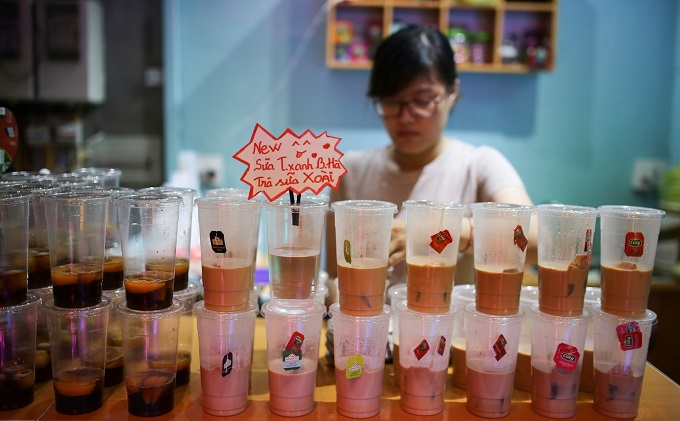
    Investors are flocking into the bubble tea market since demand is booming across the country. Market researchers have found the market is growing at 20 per cent a year and reached US$300 million two years ago. There are over 100 brands already and many more famous names are flocking in.

    In large cities like HCM City and Hà Nội, it is easy to find bubble tea stores belonging to major brands like Alley, Gongcha, Phúc Long, Ten Ren, and Royaltea.

    There are also smaller stores with cheaper prices run by small business people.

    Seeing the demand, many coffee chains like Highlands and The Coffee House and restaurants have added bubble tea to their menu.

    Besides bubble tea simply being a popular drink for various age groups, the shops selling it have become a haunt for youngsters because of their facilities and decor.

    A spokesperson for a famous brand name, Gong Cha, said: “Competition in bubble tea market in Việt Nam is a marathon.

    “Bubble tea has established itself on the Vietnamese food and drink scene. Bubble tea shops are no longer just places selling beverages. They are places featuring a speciality totally different from traditional places like coffee stores and restaurants.”

    Brand expert Võ Văn Quang was quoted as saying by Người Lao Động (The Labourer) newspaper that the popular drink in Hong Kong and Taiwan has undergone many changes in the Vietnamese market with many toppings to match Vietnamese tastes.

    “Milk tea is now a popular drink among Vietnamese youth.”

    Most of the milk tea brands have come to Việt Nam as franchises, he said.

    “At prices of VNĐ30,000 to over VNĐ80,000, bubble tea is brining huge profits. That is why foreign brands are keen on franchising in Việt Nam.”

    A bubble tea shop is much cheaper to set up than a coffee shop while the profits are huge, he said.

    Dr Đào Duy Khương, a retail expert, said milk tea, unlike coffee and tea, targets youths in big cities, and this demographic’s consumption behaviour is trendy meaning investors should change their offerings frequently.

    It is not surprising several brands closed in recent times, he added.

  • BEI launches online investment-based simulation game

    BEI launches online investment-based simulation game

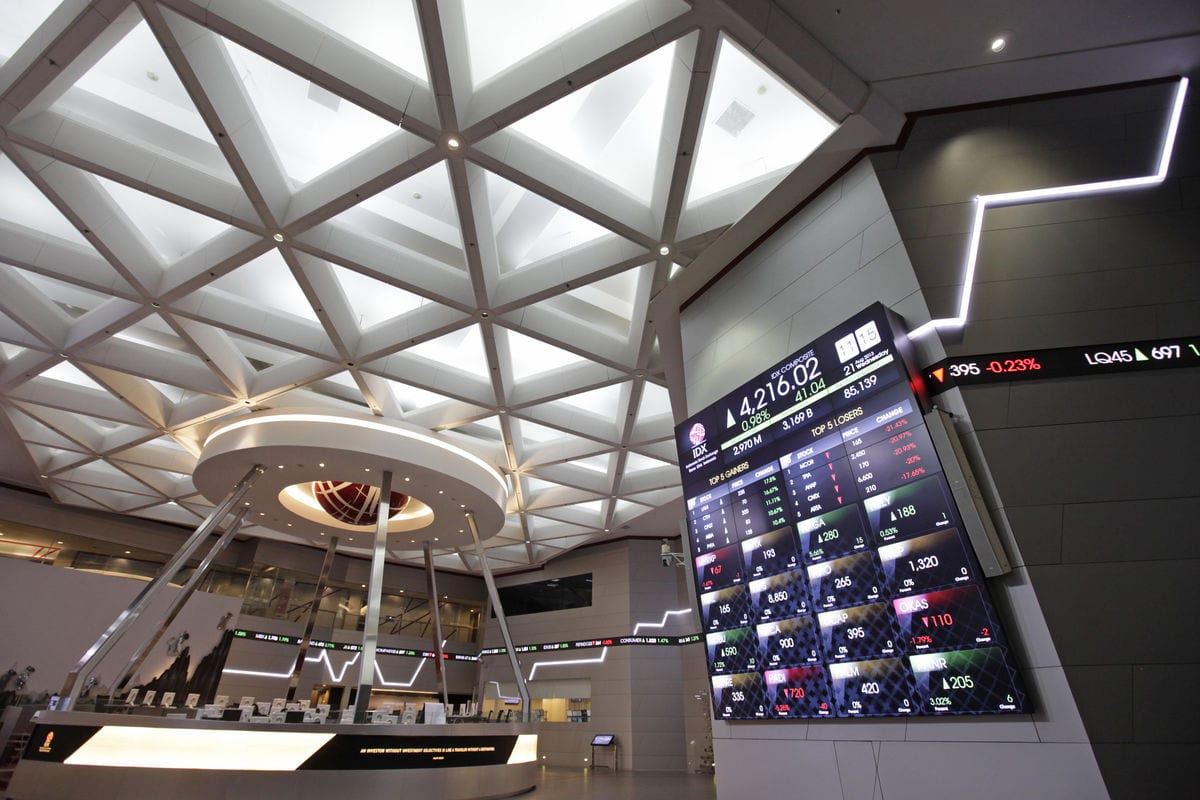
    The Indonesia Stock Exchange (BEI) launched an online investment-based simulation game “Nabung Saham Go” (Saving Stocks Go) as one of the measures to introduce the capital market industry to the public, especially to university students.

    “The game was one of the steps to introduce the capital market to the public. The Nabung Saham Go game can be played by anyone although it is aimed at university students as it is easier for them to play. The game is similar to Pokemon Go,” Development Director of BEI Nicky Hogan stated here on Tuesday.

    Hogan emphasized that the game falls under the education category and offers a fusion of the virtual and real worlds. Players will encounter small adventures bearing different themes and will get a series of interesting information.

    “The application encourages players to become more familiar with the capital market,” he remarked.

    Hogan elaborated that the “Nabung Saham Go” game invites players to collect points gained after answering the questions posed by the gaming application.

    “Players can visit certain places, such as the Financial Services Authority Building and Indonesia Stock Exchange Building to get information on how to gain points in the game. In each of the places visited, the player will have to answer a few questions on the stock market. Each correct answer will be given points,” he explained.

    In addition to “Nabung Saham Go,” Hogan said the users can play an analog game called “Stocklab,” which is associated with investment instruments, such as stocks and mutual funds.

    “The game Stocklab uses media cards and as an outline, the players will be guided on the strategy of investing and are invited to find out how the company made its initial public offering,” he added.

  • Apkasi to prepare online app system to ease investors

    Apkasi to prepare online app system to ease investors

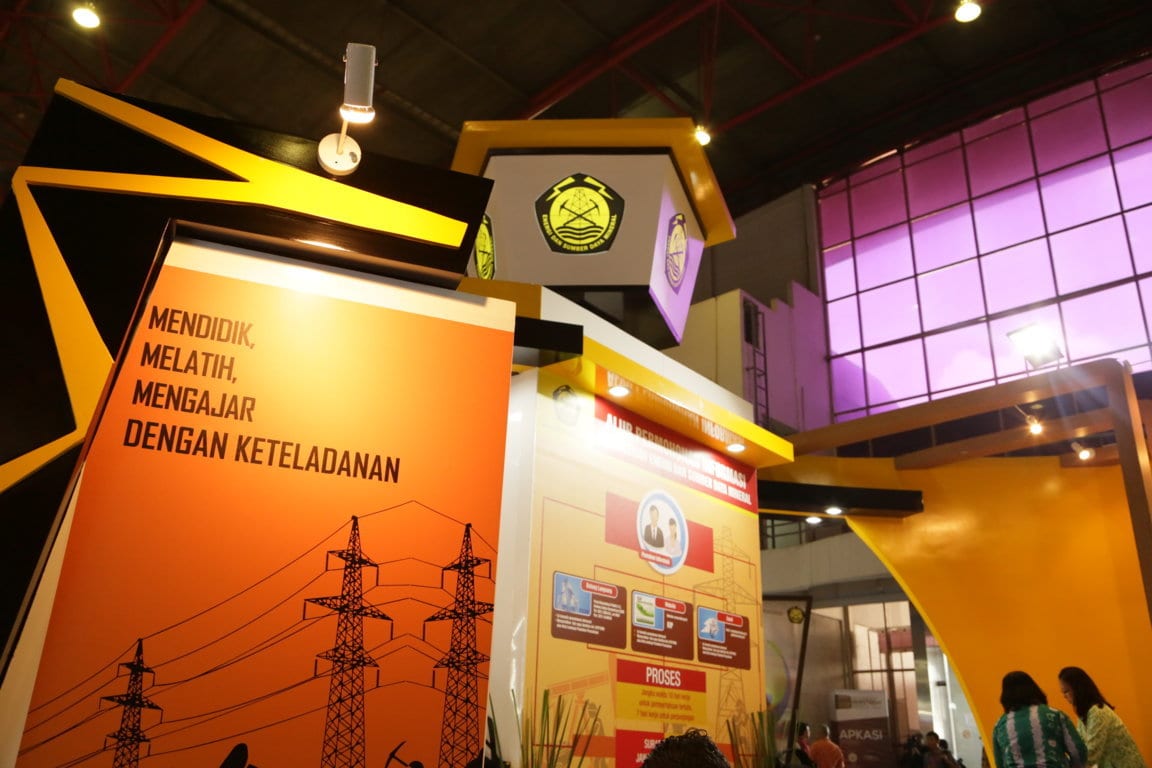
    The All Indonesia District Administrations Association (Apkasi) will set up an online application system to make it easier for those seeking to invest in the countrys regions, its chairman Mardani H Maming said here on Saturday.

    “The online application system will help investors wishing to know about potential of any region,” he said, adding the system is planned to be launched in 2017.

    Mardani, who is also the district head of Tanah Bumbu, South Kalimantan province, stated that he hoped the new system would make importers able to buy commodities directly from producers.

    Also, the same system could be used as a mechanism for distributing subsidy to regions in need, he explained.

    Citing an example, he said a region that did not produce rice could obtain the produce from other regions to ensure it remained well stocked.

    Apkasi organized Investment and Trade International Summit 2016 at JIExpo Kemayoran in Central Jakarta from May 5-7 in an effort to attract investment.

    Mardani informed that a number of investment and trade related transactions were made during the event, including in plantation, animal husbandry, infrastructure and tourism sectors.

    “Memorandums of understanding have also been signed with foreign parties, including those from Japan and China,” he said.

    In the speech marking the events conclusion on Saturday, President Joko Widodo urged the regional governments in the country to develop their respective regions potential.

    He called on them to focus on a certain area for efficiency and to also ease control.

    He cited the example of a region that only provided golfing facilities and grew as a result.

    “It is not impossible for regions here to develop only sugar or fish. If they do so, these will become known as sugar or fish regions,” he said.

    He also asked the regional governments to speed up the licensing process.

    “If BKPM (capital investment coordinating board) could finish the process of giving eight licenses within an hour, the regional governments must also be able to do the same,” he stated.

    The government is continuing to make efforts to improve ease of doing business in the country, he said.

    “Several years ago, we were ranked 120th in ease of doing business index. Last year, we were at 109th out of 189 countries, far below the list topper Singapore, or Malaysia at 18th and Thailand at 49th,” he elaborated.

    He said he has ordered the Coordinating Minister for Economic Affairs to ensure that the country achieves the 40th rank this year, he said.

    “Breakthroughs must be made to achieve it. This is our common task. It is not impossible to achieve it, but we need to work hard. We must not be at ranks lower than 100 or so forever,” he urged.

    The president again reminded that Indonesia has now entered a competitive era, and said, “If we are unable to change ourselves, we will be run over. We must win the competition if we wish to become a victorious nation.”

  • Korean, Singaporean investors also want to buy Big C Vietnam

    Korean, Singaporean investors also want to buy Big C Vietnam

    The analysts said that the auction is a unique opportunity for foreign corporations to pour capital into the two retail markets of the highest profit in Southeast Asia.

    Both the two new potential investors are appreciated for financial strength. Dairy Farm Group is the 2nd largest retailer in Singapore and Hong Kong, which owns a series brands like 7-Eleven, Cold Storage, Guardian, Wellcome Giant, Hero … Its revenue in 2014 is about $13 billion.

    Meanwhile, Lotte Shopping is Korea’s largest mall chain with turnover of $23 billion and $509 million of profit in 2014.

    Another source said that Japanese retail group Aeon Co Ltd is also considering to join the race.

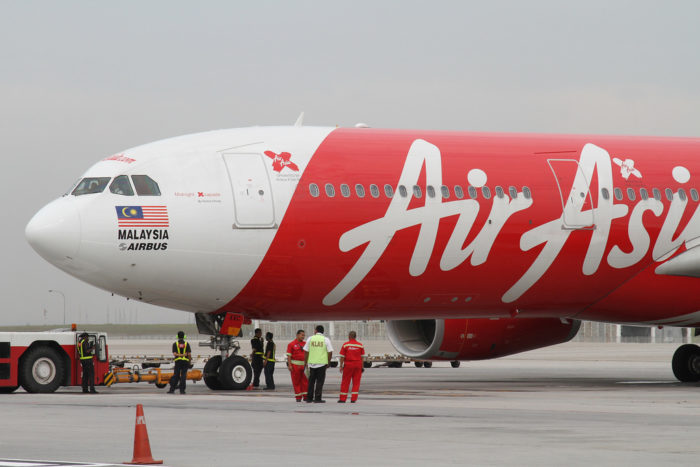
    Earlier, the two retail giants of Thailand – Berli Jucker and Central Group – said they wanted to buy the property.

    Central Group, the largest retailer of Thailand, owned by billionaire Tos Chirathivat is said to have upper advantage because it holds a 25% stake of Big C Thailand.

    This group wants to buy an additional 58.6% of shares, equivalent to $3.1 billion. In addition, Central Group also expects to pay from $800 million to $1 billion to own the whole Big C Vietnam system.

  • Thailand among top 10 investors in Vietnam

    Thailand among top 10 investors in Vietnam

    The new face from Thailand on the Vietnam stock market is Ton Poh Thai Fund – an investment fund that purchases shares through transactions on the bourse.

    As of October 31, Ton Poh Thai Fund had net assets of about $135 million. Last year, the profitability ratio of this fund reached 25% and 20% on average during the past 10 years.

    Ton Poh currently owns 2.5 million shares of Cotec Construction JSC (5.79%); 1.2 million shares of Kien Giang – Superdong Speedboat JSC (5.02%) and 11.37 million shares of Hoang Huy Services Investment JSC (4.88% of capital).

    The number of shares held by Ton Poh is not large, but the fund has potential and is expected to continue disbursing capital on Vietnam’s stock market in the coming time.

    Thai businessman Chatikavanij established this fund in 2005, expecting to capture investment opportunities following the 1997-1998 financial crisis in Thailand. The fund with over $130 million has invested in 10 to 15 types of shares for the medium- and long-term.

    If Ton Poh is getting “acquainted” with investment in Vietnam, many Thai corporations have targeted Vietnamese businesses through direct and indirect investment forms.

    In the retail sector, Berli Jucker of Thaibev, which is owned by the second richest man in Thailand, billionaire Charoen Sirivadhanabhakdi, now takes a controlling share in Vietnamese firm Thai An, thereby controlling 99% stake in Phu Thai Group.

    BJC Thailand has bought Metro Vietnam while Central Group through Power Buy bought 49% shares of NTK, the owner of Nguyen Kim Trading Company, a big name in electronic product distribution in Vietnam.

    In the food industry, Thaibev has obtained ownership of Fraser & Neave (F & N) – the largest drink group in Singapore, which currently holds 11% stake in Vinamilk, Vietnam’s largest dairy product producer. CP Group has set a firm foothold in the Vietnamese livestock market.

    In the industrial sector, Thailand’s SCG has acquired Prime Corporation, through The Nawaplastic Industries. SCG also owns more than 20.4% of the shares in Binh Minh Plastics JSC and 23.84% stake in Tien Phong Plastic JSC.

    PTT, Thailand’s oil and gas corporation, has recently expressed its intention to invest in Nhon Hoi petrochemical project in Binh Dinh province.

    In the field of logistics, Kan Air of Thailand is now part of a joint venture with Vietjet Air of Vietnam that will establish ThaiVietjet Airlines with 51% of capital from Air Kan and 49% from Vietjet Air.

    This joint venture was licensed in late 2014 and began operating on March 29, 2015. Thai Vietjet will operate domestic flights in Thailand as well as international routes from Thailand to destinations in the region like Myanmar, Laos and Cambodia, to expand the flight network from Vietnam exploited by Vietjet Air.

    Later this year, the ASEAN Economic Community (AEC) will be formally established. AEC will become a single market. Accordingly, goods, services, investment, capital and skilled labor will flow freely between countries in the bloc. Thai capital flow into Vietnam will skyrocket.

  • Berlin Jucker’s Metro deal stalls

    Berlin Jucker’s Metro deal stalls

    An attempt by Berli Jucker Plc (BJC) to buy Metro Group’s cash-and-carry unit in Vietnam was aborted on Thursday after its shareholders voted unanimously to reject the EUR655-million (USD775.7 million) deal.