Tag: iot

  • Huawei to launch NB-IoT solution in early 2017

    Huawei to launch NB-IoT solution in early 2017

    Huawei has revealed plans to commercialize its end-to-end narrowband IoT solution early next year, to help operators expand their IoT services into new markets.

    The vendor plans to release the world’s first 3GPP standards-based NB-IoT commercial system-on-a-chip, Boudica, that can be deployed with the Huawei LightOS operating system.

    Huawei has meanwhile unveiled SoftRadio, a software suite to help developers access NB-IoT open labs via the internet.

    The solution will also involve eNodeB base stations, an IoT packet core supporting flexible deployment of Core in a Box and NFV, as well as a cloud-based IoT connection management platform with big data capabilities.

    The converged NB-IoT offering will be tested in a large commercial trial this quarter before being released to the market in early 2017.

    “NB-IoT has unique advantages in supporting IoT applications. Huawei will help carriers accelerate the commercial adoption of NB-IoT and the maturing of the industry chain,” Huawei VP of marketing and solutions Jiang Wangcheng said.

    “The IoT project and the success achieved so far fully demonstrate this commitment of ours.”

    Huawei’s launch plans were announced at the Huawei eco-CONNECT Europe 2016 conference held in Paris last week.


  • Orange Business launches IoT and analytics suite globally

    Orange Business launches IoT and analytics suite globally

    Orange Business Services has announced the worldwide launch of Datavenue, its IoT and data analytics modular suite.

    Datavenue will help multinational and large national corporations seize the endless opportunities offered by the IoT revolution, the operator said.

    Already 56% of decision makers consider IoT as strategic. Use cases include improving safety and user experience within smart cities by connecting street lights or parking meters, as well as improving quality of life by connecting medical devices to monitor a person’s health remotely.

    Datavenue is supported by Orange Business Services’ 700 IoT and analytics experts worldwide, as well as data scientists, developers, consultants, statisticians and IoT security experts.

    Datavenue includes four modules:

    1. Select relevant objects and sources of data. Orange offers a range of certified and tested connected objects, such as sensors, cameras or modules to connect existing assets. Datavenue has a catalog of data that includes population movement analytics using anonymized data from mobile networks.
    2. Connect objects reliably with the most suitable and secured networks. A truck travelling cross borders or an agricultural sensor in a field would require different networks. To address the wide diversity of needs, Orange provides a range of connectivity options. These include future-proof global cellular networks and innovative capabilities, such as eUiCC, worldwide fixed and satellite networks, as well as low-power solutions, such as LoRa.
    3. Manage data to improve efficiencies and create enhanced services. For example, a construction company can monitor cranes worldwide to prevent problems and reduce maintenance costs. Managing data in real-time enables technicians to solve issues remotely or to arrive on site with the right material, reducing service interruptions. Orange offers both cloud-based and on-premises software solutions, encompassing remote device management, processing and visualization.
    4. Control key elements of enterprise transformation projects. Orange experts aim to provide end-to-end security and data protection, integration with information systems and service scalability. Throughout the entire project and beyond, customers can rely on Orange to ensure the solutions are future-proof and adapted to market evolutions.

    “We have developed extensive vertical expertise around IoT and data analytics in several sectors, including automotive, industry, smart cities, healthcare and smart homes,” Orange Business Services VP of IoT and analytics Olivier Ondet said.

    “Our solutions have already improved performance and employee safety through industrial machinery monitoring, enhanced patient care with remote assistance, and enriched citizen well-being with smart city services. This is now all being brought together to support the international launch of Orange Datavenue.”

    Datavenue was first launched in France in 2015. Orange today operates more than 10 million active B2B objects and processes 65 million items of technical data per minute – all fully compliant with data protection regulations.

  • Vodafone plans to launch world’s first NB-IoT networks

    Vodafone plans to launch world’s first NB-IoT networks

    Vodafone has revealed plans to launch what it expects will be the world’s first live commercial narrowband IoT (NB-IoT) networks in early 2017.

    The operator will launch LPWA NB-IoT networks in Germany, Ireland, the Netherlands and Spain during the first three months of the year.

    Vodafone said it will be able to implement the NB-IoT rollout by way of a software upgrade to its existing 4G base stations, allowing the company to deliver nationwide coverage almost immediately in the four markets.

    The operator plans to roll out the technology to additional markets later in the year, and provide full coverage of the operator’s global network by 2020.

    In preparation for the launch Vodafone has been conducting testing of the technology. Last week Vodafone Spain completed the first test of an NB-IoT connected product on a commercial network, by burying a parking sensor in a space within Madrid’s Vodafone Plaza. A smartphone app was able to display that the space was occupied when a car was parked in it.

    “The questions of battery life and deep in-building penetration have now been answered by NB-IoT,” Vodafone’s director of IoT Ivo Rook said.

    “The low cost of the modules means we can expect a new wave of connected devices and soaring market demand. Vodafone’s world leading expertise and experience in IoT will prove invaluable in shaping this exciting market.”

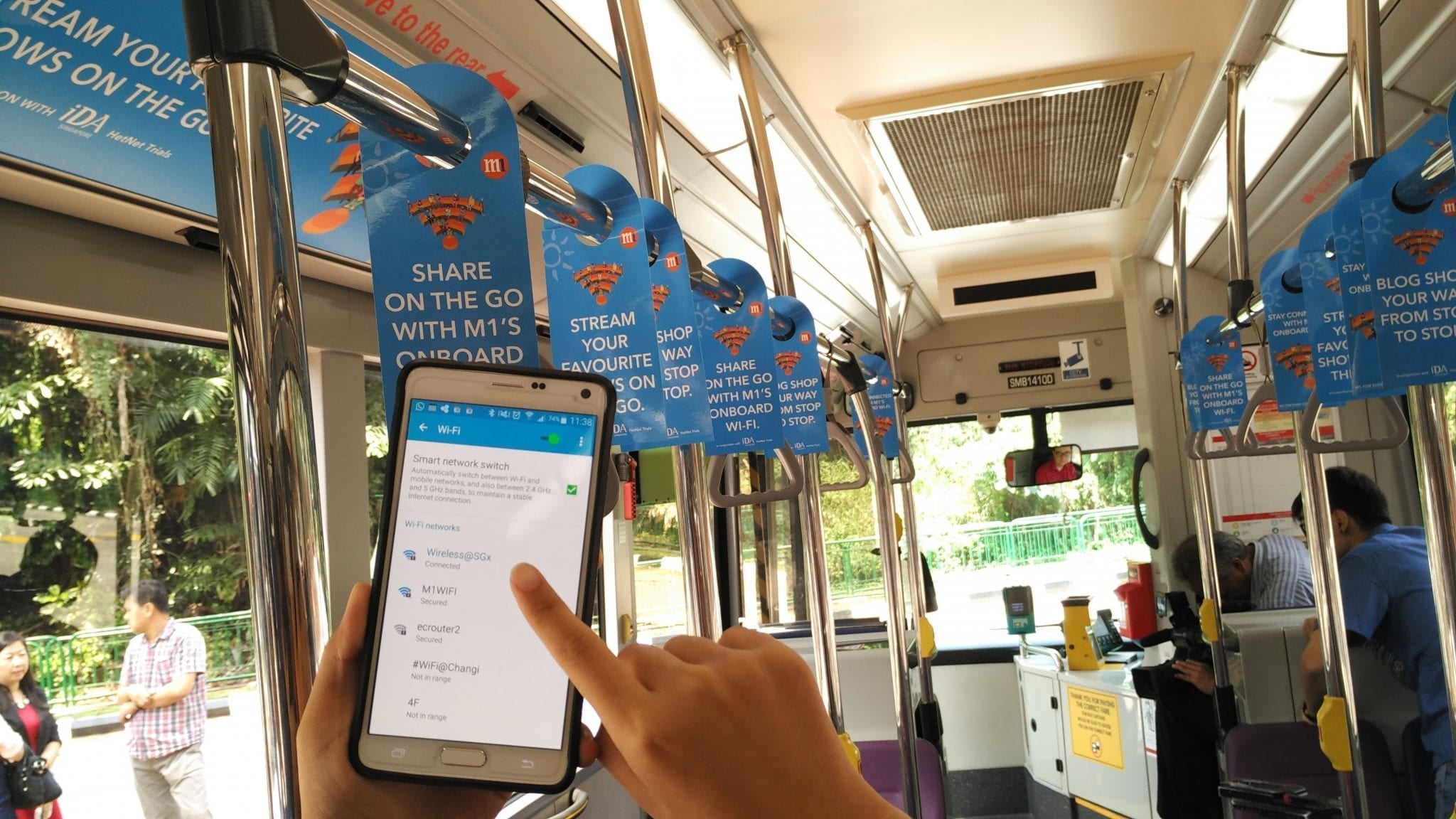
    Singapore’s M1 has also announced plans to deploy a commercial NB-IoT network in 2017, but did not specify the time during the year that the company plans to launch.

  • Community IoT network goes live in Australia

    Community IoT network goes live in Australia

    Australia’s Federal Minister for Communications and the Arts and Senator Mitch Fifield recently inaugurated a new IoT network intended to help the local community explore the potential of the technology.

    Jointly developed by the IoT Alliance Australia (IoTAA) and KPMG, the Barangaroo Community Network will allow up to 1,000 IoT devices within a three- to five-kilometer range to connect to the internet for free for prototyping, testing, solution development and learning.

    The gateway, operating in the Industrial and Scientific Spectrum at 915-MHz, will support up to 1000 IoT devices.

    Research undertaken for IoTAA projects shows that the IoT if harnessed, has the potential to add up to A$120 billion ($90.5 billion) to the Australian economy by 2025.

    “This represents an uplift of up to 2% in Australia’s GDP across a range of environments including factories, retail outlets smart cities and homes, motor vehicles, other transport modes and even human health and fitness – IoT is a pervasive disruptor,” said Communications Alliance CEO and Chair of the IoTAA Executive Council, John Stanton.

    The inaugural IoT “State-of-the-Nation” workshop and networking event held in Sydney was attended by more than 200 stakeholders from industry, government, the start-up community, academia and the consumer sector.

    It showcased the diverse range of initiatives underway within the IoTAA, the peak body representing a diverse group of more than 125 organizations, dedicated to empowering industry to grow Australia’s competitive advantage through IoT.

    IoTAA is hosted and supported by the University of Technology, Sydney (UTS) at its Broadway Campus in Sydney.

    “IoTAA’s mission is not only about grabbing opportunities – it is also about managing the risks to network integrity and personal privacy that could occur if we are not vigilant and well prepared,” Stanton said.

  • M1 to deploy NB-IoT network by 2017

    M1 to deploy NB-IoT network by 2017

    M1 and Nokia have teamed up to roll out the first nationwide commercial narrowband Internet of Things (NB-IoT) network in Singapore by 2017.

    When completed, the deployment – Nokia’s first large-scale deployment with an operator partner in Asia – is expected to be among the world’s first commercial NB-IoT deployments.

    NB-IoT networks and devices are designed to deliver improved network performance for M2M (machine-to-machine) communications – low-bandwidth, robust indoor penetration, and low power consumption, while delivering the benefits of licensed spectrum such as network reliability and security.

    The NB-IoT standards were finalized by the GSMA Standards body 3GPP in June 2016. Commercial NB-IoT devices are expected to be available by mid-2017.

    According to Bell Labs Consulting, there will be up to five billion IoT devices connected through mobile networks by 2020. In Singapore, NB-IoT deployment will support the nation’s journey to become a Smart Nation underpinned by data to deliver anticipatory services to its people.

    “NB-IoT is emerging to be a potentially promising technology for smart city’s machine-to-machine type of applications and services. We look forward to working with NB-IoT partners to explore the use of NB-IoT in developing innovative Smart Nation services that improve our citizens’ lives and make our businesses more productive,” said Jacqueline Poh, Chief Executive-designate, Government Technology Agency (GovTech).

    Sandeep Girotra, Nokia’s Senior Vice President of Asia-Pacific and Japan, said Nokia’s joint collaboration of NB-IoT deployment with M1 lays an important groundwork for further application of LTE-based IoT services.

    M1 also recently announced it is working with Nokia on Singapore’s first commercial HetNet deployment.

  • Maxis to offer Vodafone IoT services

    Maxis to offer Vodafone IoT services

    Malaysia’s largest operator Maxis has arranged to offer Vodafone’s IoT services for its business customers.

    The operator will offer a service combining its high speed data network with Vodafone’s IoT platform to help assist business customers looking to implement IoT services in their operations.

    The IoT offerings have been designed with multiple layers of security between IoT devices and applications, and to be scalable to support the constantly increasing number of connected devices.

    At a recent media event, Maxis showcased potential applications for the IoT in key sectors including automotive, retail, logistics, banking and financial, smart cities and manufacturing.

    “The exponential growth of data and how people use them has had a huge impact on how businesses operate,” Maxis head of marketing and products Shanti Jusnita Johari said.

    “Through our agreement with Vodafone, which brings with it a global standard of service, unrivalled IoT experience and highly ranked by analysts, we are equipping businesses in Malaysia with more than just connectivity through our advanced data network, but a suite of IoT solutions to digitalize and transform their operations.”

  • Philippines to develop national broadband plan

    Philippines to develop national broadband plan

    Philippine president Rodrigo Duterte announced in his first State of the Nation Address (SONA) on Monday that he wants the newly created Department of Information and Communications Technology (DICT) to develop a national broadband plan to accelerate the deployment of fiber and wireless technologies to improve internet speed.

    He also announced that Wi-Fi access shall be provided at no charge in selected public places, including parks, places, public libraries, schools, government hospitals, train stations, airports, and seaports.

    A previous government initiative to establish a National Broadband Network (NBN) was scrapped in 2007 after the $329-million contract awarded to Chinese telecommunications firm ZTE for the project had been investigated in the Senate.

    In 2011, the then Commission on Information Communications Technologies (CICT) had also released a five-year digital roadmap that aimed to craft a vision for ICT use in governance, including the creation of a national broadband policy that would enable the environment for broadband development and use.

    Duterte’s call for a new national broadband plan came on the heels of a wide public clamor for fast and affordable internet. The Philippines had ranked poorly in many global indices for digital readiness.

    The country trails behind its Southeast Asian neighbors, for example, in the latest Network Readiness Index published by the World Economic Forum, which measures how economies use the opportunities offered by ICT for increased competitiveness. At 77th place in a 139-country study, the Philippines was behind Singapore (1st), Malaysia (31st), Thailand (62nd), Indonesia (73rd).

    Duterte’s assumption into office on June 30 came at a favorable time as the law mandating the creation of the DICT as the primary body that would create policies and drive the national ICT agenda was signed by former President Benigno Simeon Aquino III last May.

    The country’s first appointed DICT Secretary Rodolfo A. Salalima affirmed in his first media interview that the government cannot expect the commercial service providers to be in all parts of the country and there would be a need for the government to establish an ‘infostructure’ in the countryside and provide service.

    Shortly before Duterte’s inauguration as the country’s 16th president last June, Globe Telecom had called on the government to help develop broadband access in the Philippines by investing in internet infrastructure in rural and far-flung areas.Globe President and CEO Ernest Cu said in a media statement that telecommunication operators in the country are unable to deploy infrastructure in rural areas due to business viability issues.

    “There are a lot of localities in the country that cannot be reached economically. What we propose is for the government to build the infrastructure, such as submarine cables, and then rent these facilities out to telco operators,” he said, citing the case of Sulu and Basilan provinces in the Autonomous Region for Muslim Mindanao.

  • SoftBank arranges to buy ARM for $31b

    SoftBank arranges to buy ARM for $31b

    SoftBank has entered a deal to buy chipmaker ARM for a whopping $31 billion to help cement the company’s future in the burgeoning IoT sector.

    The boards of both SoftBank and ARM have unanimously recommended the proposed deal to buy out 100% of ARM and turn the company into a wholly-owned SoftBank subsidiary.

    The proposed buyout of UK-based ARM is the third largest proposed corporate merger of the year, and the first major deal in the UK since the Brexit vote, which has pushed down the value of the British pound to make the prospect more enticing for SoftBank.

    ARM’s core business of designing chips for mobile devices alone does not justify the high purchase price, which is more than 70 times the company’s net earnings for 2015. The company generated a mere $1.5 billion in revenue last year.

    But to counter slowing smartphone sales, ARM has been seeking to diversify into other sectors by designing chips for IoT devices, and this is where SoftBank’s interest in the company lies.

    Speaking at a press conference announcing the proposed merger, SoftBank CEO Masayoshi Son said the IoT is expected to be the “biggest paradigm shift in human history,” and that the investment marks a move to enter at the ground floor of this shift.

    Presentation materials prepared for the deal indicate that 14.8 billion ARM-powered SoCs shipped in 2015. The company is particularly targeting the consumer electronics, enterprise infrastructure, automotive and embedded intelligence segments.

    The deal still requires approval from ARM shareholders and English courts, but subject to these approvals is expected to close in the current calendar quarter.

  • Alibaba introduces IP collaboration platform

    Alibaba introduces IP collaboration platform

    Alibaba Group has launched an online platform designed to streamline IP-related communications between brands and Alibaba.

    The new IP Joint-Force System aims to build greater and more collaborative working relationships with global brands as the company strengthens its efforts against counterfeits and IP infringement.

    “E-commerce has become a way of life for consumers both in China and around the world. As the internet sector continues to evolve, brands and online marketplaces alike face new IP enforcement challenges,” said Jessie Zheng, chief platform governance officer at Alibaba Group.

    With over a billion products listed across Alibaba Group’s marketplaces at any given time, its data analytics and processing technologies enabled the company to proactively remove more than 120 million infringing product listings from its marketplaces in 2015, which it said is eight times the number of counterfeit products removed based on takedown requests from brands.

    Under the new IP Joint-Force System, each participating brand will be assigned a dedicated online portal and Alibaba account manager to enhance collaboration, heighten transparency around IP enforcement efforts, and reinforce mutual understanding and trust.

    The system will also enable Alibaba to directly and efficiently seek information from rights holders regarding suspected counterfeit product listings, which Alibaba, as a third-party marketplace, is unable to authenticate on its own with full certainty.

    Alibaba will then initiate the Good Faith Takedown process and immediately remove the listing without required subsequent correspondence with the brand.

    Alibaba recently held the inaugural Rights Holders Collaboration Summit to engage international brands and the intellectual property enforcement community to enhance collaboration in the collective fight against IP infringement.

    More than 100 domestic Chinese and international brands and trade associations attended the event, including Louis Vuitton, Burberry, Apple, Mars, Hewlett-Packard, the Chinese-British Business Council (CBBC) and the Quality Brand Protection Committee (QBPC), among others.

    “The Rights Holders Collaboration Summit and new IP Joint-Force System are some of the many ways Alibaba is working closely with rights holders in our efforts to eradicate counterfeits both online and offline,” Zheng said.

  • KDDI taps Gemalto for connected cars and IoT

    KDDI taps Gemalto for connected cars and IoT

    Japan’s KDDI has selected Gemalto to provide the platform to enable secure connectivity for connected cars and IoT applications worldwide.

    Gemalto will provide its LinqUs On-Demand Connectivity (ODC) subscription management solution and embedded SIMs (eSIMs) to the operator.

    As a result, KDDI can expect to provision any requested operator’s profile on connected cars equipped with pre-embedded eSIM.

    Motorists can access optimized real-time information about traffic and nearby amenities, navigation, vehicle diagnostics, and emergency services, anytime, anywhere.

    Gartner forecasts that by 2020, there will be around 250 million vehicles on the road with some form of wireless connectivity, making connected cars a major element of the Internet of Things. The lack of flexible and interoperable remote subscription management is a major challenge in deploying IoT.

    Gemalto’s solution, based on global GSMA specifications, is designed to simplify logistics for OEMs.

    “Gemalto’s solution is based on interoperable GSMA standards, and will provide a common and consistent way to connect devices in the future,” said Keiichi Mori, executive officer and general manager of KDDI’s IoT business development division.

    “With long-lasting relationships with over 500 mobile operators worldwide and a strong local presence, they can help us expand our services to other IoT applications, to obtain rapid growth in the connected world.”

    Michael Au, Gemalto president for South Asia and Japan, said IoT is increasingly turning connected cars into powerful hubs for value-added services such as infotainment, real-time vehicle telematics, and usage-based insurance, offering plenty of opportunities to OEMs and service providers.

  • NEC sets up open-source software center

    NEC sets up open-source software center

    NEC in Japan and NEC Technologies India have established the “OSS Technology Center,” an organization specializing in technical support related to the use of open source software (OSS).

    The new organization began operations July 1, with approximately 50 staff based out of NTI, consisting of experienced OSS engineers who are well-versed in OSS solution architecture, as well as essential software development and support capabilities.

    The OSS Technology Center aims to strengthen the organizational structure for supporting global enterprises in building systems based on OSS, to reinforce collaboration with international OSS vendors and to provide rapid technical support to users who construct systems operated globally using OSS.

    Moreover, the new organization will actively carry out development of new network functions related to Software-Defined Networking (SDN), Network Functions Virtualization (NFV) and application platform functions, such as container and Platform as a Service (PaaS).

    All of these are part of the OSS Technology Centre’s OpenStack-based development activities, in addition to its contributions to making source codes openly available by providing them to the OSS community.

    In recent years, the need for enterprises to capitalize on OSS, particularly OpenStack, in cloud computing, big data computing and SDN/NFV, has become increasingly pronounced.

    Also, in terms of next-generation ICT technologies, there are heightened expectations towards OSS applications in areas related to Systems of Engagement (SoE) and Internet of Things (IoT).

  • IP traffic set to nearly triple over next five years

    IP traffic set to nearly triple over next five years

    Global IP traffic is on track to nearly triple over the next five years as more than a billion new internet users come online, according to Cisco’s latest Visual Networking Index.

    IP traffic is forecast to grow at a CAGR of 22% over the period of 2015 to 2020 to reach 194.4 exabytes per month, Cisco said

    APAC will account for more than a third of global IP traffic in 2020, the study predicts. Total traffic in the region is expected to grow at a 22% CAGR to 67.8 exabytes per month.

    By 2020, the company predicts that there will be around 4.1 billion internet users worldwide, up from 3 billion in 2015. Smartphone traffic accounted for 47% of total global IP traffic in 2015, and is expected to grow to account for a wide majority (71%) by 2020.

    Due in part to the rapid growth of the IoT, global IP networks are expected to support up to 10 billion new devices and connections over the five-year forecast period, bringing the total up to 26.3 billion, or 3.4 devices and connections per capita.

    Internet video will continue to dominate traffic, accounting for 79% of global internet traffic by 2020, up from 63% in 2015. Global networks will relay the equivalent of one million video minutes per second, Cisco predicts. HD and ultra HD video will make up 82% of internet video traffic.

  • Dell launches IoT solutions partner program

    Dell launches IoT solutions partner program

    Dell is building an ecosystem of partners to help customers navigate the fragmented IoT landscape and identify the right technologies to develop IoT solutions.

    The Dell IoT Solutions Partner Program will provide participating partners with access to Dell’s  product portfolio and support.

    The program will combine a global network of experienced independent software vendors with the portfolio of Dell’s IoT assets. These include purpose-built, intelligent gateways and embedded PCs, security and manageability tools, data center and cloud infrastructure, and data integration and analytics software like Boomi and Statistica.

    The IoT partner program launched with more than 25 partners including GE, SAP, Software AG, Microsoft, OSIsoft and others, many of which are using the Dell Edge Gateway 5000 Series to power their own IoT solutions. Dell also continues to build relationships with systems integrators with vertical expertise and deployment scale.

    The Dell Edge gateway runs on Windows 10 for secure, reliable, and streamlined support and is Microsoft Azure Certified for IoT. Customers can depend on the Edge Gateway for seamless and security-enhanced data with the Azure IoT Suite, so they can get their projects running quickly.

    Dell, Kepware, and Software AG are collaborating to develop IoT-enabled predictive maintenance models using distributed analytics to address the industry’s biggest operational challenges, such as unplanned downtime, overall equipment effectiveness, maintenance cost and return on assets.

    With Microsoft and Blue Pillar, Dell is delivering Automated Demand Response solutions which help utilities maintain grid reliability and enable customers to realize significant value through dispatch of onsite power generation or reduction in consumption.

    Dell and SAP are also collaborating to bring business to the edge with models designed to help address the industry’s biggest operational challenges, such as business continuity, overall equipment effectiveness, maintenance cost and return on assets.

    Additional partners include Azeti, Blue Pillar, Datawatch, Eigen Innovations, Flowthings, Flutura, GE, Kepware, Lynx Software, Microsoft Azure, OSIsoft, Relayr, SAP, Software AG, and Thingworx.

  • Alibaba Cloud launches IoT platform

    Alibaba Cloud launches IoT platform

    Alibaba Cloud has unveiled a series of new products aimed at expanding its IoT, hybrid cloud, storage and security capabilities.

    At its Shenzhen Summit last week, Alibaba Cloud launched version 1.0 of IoT, its one-stop platform for IoT and cloud computing. The service will provide infrastructure for IoT deployments in areas including medical, energy, smart home and intelligent campus networks.

    IoT Version 1.0 combines an IoT foundation kit, an intelligence dissemination platform and smart device and ecosystem functionality. It is compatible with a range of protocols to allow devices to connect quickly to the cloud and other devices.

    At the event, Alibaba Cloud also launched Apsara Stack, a dedicated cloud platform for hybrid clouds. Apsara Stack can be used to obtain public cloud capabilities in a fully-isolated environment within an enterprise data center.

    For enterprise level database and storage needs, the company unveiled a number of services including data migration, storage engines, access protocols and usage models.

    The company also introduced a concept it calls “light computing”, involving providing a cloud storage application interface that allows users to create “instant-on”data processing applications or modules.

    Finally, Alibaba Cloud revealed it has upgraded its AliCloud CDN to support HTTPS encrypted communication, certificate authority services and other enterprise-class security services.

  • The future of cross-border eCommerce

    The future of cross-border eCommerce

    Unrestricted by geographic borders, today’s consumers are buying from international merchants more than ever before.

    While B2C eCommerce sales in Asia Pacific are projected to increase at moderate double-digit rates through to 2019, consumers are increasingly expecting brands to maintain service levels with prompt delivery and regular updates on their order status.

    Nevertheless, retailers serving eCommerce customers in other countries often face challenges  with customs procedures, regulatory requirements and taxation issues. These complications can lead to delays in shipping, as well as making it hard to predict delivery times.

    With the final part of the delivery journey (the “last mile”) being the most important touchpoint between a brand and a consumer, having the right fulfilment strategy is vital.

    Technology helps determine the efficiency of cross-border eCommerce. For example, Flexible Order Management Systems and Warehouse Management Systems are software packages designed to support eRetailers with multi-channel sales and distribution. They help to improve order accuracy as well as drive efficiency in processing orders.

    Moreover, data analytics offer businesses insights into buying behaviour, sales cycles and trends, as well as help with troubleshooting.

    Internet of Things (IoT) technologies also play a significant role in last-mile fulfilment by connecting parcels, machineries, logistical equipment and transport vehicles, thus driving dynamic new business models.

    One interesting aspect in IoT-enabled last-mile fulfilment is the flexible delivery address. This offers recipients greater accuracy about expected delivery times, enabling them to specify a change in address if necessary (such as having their parcel delivered to their workplace instead of their home).

    It is crucial for retailers to work with the right fulfilment partners, especially with consumers demanding greater flexibility in shipping options. Partners that offer both domestic and international delivery options at affordable rates will allow businesses to meet customers’ wishes regarding deliveries.

    Another key consideration is a fulfilment partner’s ability to overcome the legal limitations of each country. Duties and taxes, import and export laws, packaging and returns, and varied consumer privacy and protection laws hinder prompt door-to-door delivery. A fulfilment centre in the right location is an asset to online and offline merchants, who will be seen as reliable while slashing costs commonly associated with cross-border logistics.

    eCommerce consumers have zero tolerance for delivery delays or problems. Retailers, logistic service providers and fulfilment centres all play an integral role in ensuring the “last mile” is a success. The entire eCommerce chain needs to collaborate to ensure delivery times are prompt, costs are kept low and customer experiences stay positive.