Tag: iot

  • Hong Kong’s IoT ecosystem taking shape

    Hong Kong’s IoT ecosystem taking shape

    The explosion of internet of things (IoT) has led to the growing need for connecting devices like sensors and actuators. As many IoT devices require relatively low speed and small amounts of data transmission, low power wide area networking (LPWAN) technologies have come onto the scene.

    Like many other countries, LPWAN technologies are getting lots of attention among service providers, hardware manufacturers and enterprises in Hong Kong. The building of LPWAN networks, the manufacture of IoT devices and testing are underway in the city.

    LPWAN technologies

    Compared to cellular or traditional wireless connectivity technologies, LPWAN has lower power requirements and offers a longer range of connectivity and battery life at lower costs.

    They are suited to applications such as city lighting, energy grid and meter management and parking space monitoring. These applications transmit small messages like temperature, movement, battery status and many more in just a few bytes.

    Generally speaking, LPWAN technologies can be separated into two discrete groups—technologies operating in a license spectrum like NB-IoT (narrow band IoT) and those using unlicensed spectrum like LoRaWAN and Sigfox.

    Proposed by 3GPP, NB-IoT leverages existing GSM or LTE cellular networks with software upgrades to existing base stations. More carriers are already moving ahead with NB-IoT functionality in their mobile networks.

    LoRaWAN is driven by semiconductor company Semtech and is supported by the LoRa Alliance. The alliance members include carriers and technology vendors.

    Sigfox is a network owned by the company of the same name, which has teamed up with third-party operators to deploy the network globally. Sigfox uses ultra narrowband, which means lower throughput. LoRaWAN is not as low power as Sigfox but can support higher bandwidth applications.

  • The rise of the IoT marketplace is under way

    The rise of the IoT marketplace is under way

    As companies seek to transform themselves with IoT technologies, they are confronted by an incredibly complex and diverse supplier market from which to build IoT solutions, according to ABI Research.

    To address this challenge, suppliers are leveraging ecosystem partnerships to provide end-users with a one-stop-shop portfolio of hardware, software, and services.

    These emerging IoT Marketplaces not only simplify IoT solution creation and adoption, but they also facilitate supplier and buyer interactions ultimately creating open networks that encourage innovation.

    “The IoT supplier landscape is scattered right now with a diverse array of companies offering a myriad of complex components and solutions,” ABI research analyst Ryan Harbison said.

    “IoT Marketplaces, are a response to this complexity designed to reduce the friction buyers face when adopting and implementing IoT solutions.”

    ABI Research finds that to reduce the friction that enterprise developers encounter when developing IoT solutions, IoT Marketplaces need to effectively address all components of the IoT value chain.

    While some IoT Marketplaces currently offer all solution components, many do not have comprehensive offerings. Suppliers are currently working to formalize and expand marketplace offerings and in some cases, integrate them with resources and programs already in place to fully leverage existing relationships.

    “IoT Marketplaces allow suppliers to build an IoT offering centered around their core offerings,” continued Harbison. “These marketplaces are particularly effective when they are built around a single connection point, such as a platform or gateway, because that simplifies the work enterprise developers need to do on both the front and back end.”

    ThingWorx successfully leveraged its platform alongside its partners’ expertise to offer a comprehensive supplier exchange. Aeris’ Neo Marketplace provides enterprises not only end-to-end IoT solutions, but also access to support services, APIs, and network services tools.

    Dell, likewise, worked with its partner program to center its end-to-end marketplace offerings on its IoT edge gateways. Companies like Libelium, Sierra Wireless, and Telus offer solutions in the form of vertical-specific application development and solution kits aimed at enterprise developers.

    Other companies like Amazon Web Services and Microsoft currently limit their IoT Marketplace offerings to software solutions, but both are looking to integrate their existing program into a cohesive end-to-end IoT offering.

  • China Telecom, Huawei hold NB-IoT symposium

    China Telecom, Huawei hold NB-IoT symposium

    China Telecom and Huawei co-hosted a symposium in Shenzhen yesterday aimed at exploring the potential of narrowband IoT (NB-IoT) technology in smart city applications.

    The symposium attracted participants from the China Academy of Information and Communications Technology (CAICT) as well as representatives from industries including water, gas, smart meters and other fields.

    Attendees were told that the wide coverage and massive simultaneous connection capabilities of NB-IoT meke it ideally suited for deployment in smart city areas including water and gas management, street lighting and car parking.

    “NB-IoT-based Smart Water and Smart Gas are the main components in Smart City, fully exhibiting the informatization level in the public service provisioning sector of a city,” China Telecom GM of government and enterprise Sun Jian commented.

    “China Telecom and Huawei have initiated together pilot NB-IoT applications on Smart Water and Smart Gas with industry partners, including Shenzhen Water and Shenzhen Gas. Through comprehensive cooperation on standards formulation, technological research, network construction, service development, business model exploration, and associated aspects, all parties wish to jointly promote informatization construction for water and gas industries.”

    Huawei president of marketing and solutions Zhang Shunmao added that Huawei is currently shipping 200,000 NB-IoT capable chips per month, and expects to increase this to 1 million per month in the future.

    This year the company is also scheduled to deploy more than 30 NB-IoT networks for Smart City applications – particularly for public service provisioning – in over 20 countries this year.

    Separately, IoT provider Thinxtra has announced a partnership with Hong Kong wireless technology company Victory Concept to develop IoT devices for Asia-Pacific enterprises to implement using the low-power-wide area (LPWA) Sigfox network.

    Thinxtra recently announced plans to deploy a Sigfox network throughout Hong Kong by June. The devices will also be compatible with Sigfox networks in 32 countries worldwide.

    “The Thinxtra network will offer companies and researchers in Hong Kong the chance to create new products and services based on IoT. We believe that Hong Kong has the potential to be a world-leading IoT design and manufacturing hub,” Thinxtra Asia MD Murray Hankinson said.

    “With the skills and facilities to provide a reliable supply of high-quality, low-cost devices in Hong Kong, Victory Concept is helping us create the right conditions for IoT innovation to flourish here and spread around Asia Pacific and to the world.”

  • APAC to have nearly 1b IoT connections by 2025

    APAC to have nearly 1b IoT connections by 2025

    Asia Pacific will remain the single largest region for IoT cellular connections through to 2025, with the market accounting for nearly 1 billion connections by this time, Strategy Analytics predicts.

    The automotive, utility and security vertical markets will drive growth in connections over the forecast period, the research firm said.

    Strategy Analytics expects IoT cellular connections to grow to more than 2.4 billion in 2025, with automotive, utilities and security together accounting for over 46% of global connections.

    Across the forecast period, the automotive vertical market will not only remain the single largest global consumer of IoT cellular connections, but increase its market share position by 2025.

    ”With the industry focusing on the path to 5G and low power 3GPP offerings, such as LTE Cat M1 and NB IoT, coupled with a variety of established connectivity platforms, there are lots of choices for cellular connectivity in IoT and the outlook has never been brighter,” Strategy Analytics executive director of enterprise and IoT research Andrew Brown said.

    “However, the bewildering array of choices also runs the risk of creating confusion for customers with regard to which technologies should be employed in which use cases.”

    Matt Wilkins, Senior Analyst IoT Research at Strategy Analytics added that “the growth in cellular connections underlines the importance of cellular networks in IoT, with networks not just being used to facilitate simple connections, but increasingly supporting rich data that will enable new and compelling use cases.”

  • IoT adoption in retail set to take off

    IoT adoption in retail set to take off

    Retailers will connect 12.5 billion business assets such as products, digital signs and Bluetooth beacons to IoT platforms by 2021, up from 2.7 billion in 2016, Juniper Research has predicted.

    The company has argued ‘next-gen’ processes, such as personalized retail, could be achieved by integrating enterprise software and emerging technologies, with data from connected IoT assets.

    Juniper forecasts that software spend for enterprise resource planning (ERP) systems to integrate this data would reach $11.3 billion annually in 2021, from $1.5 billion in 2017.

    The research firm also predicted that radio-frequency identification (RFID) will re-emerge as the industry’s ‘killer app’ becoming the key factor in the IoT retail ecosystem.

    RFID tags, used to identify and locate retail assets in real-time, are now at a low enough price point for mass deployment and integrate well with new IoT systems and analytics. New services, such as dynamic pricing or enabling promotional offers via in-store digital signs are also poised for growth.

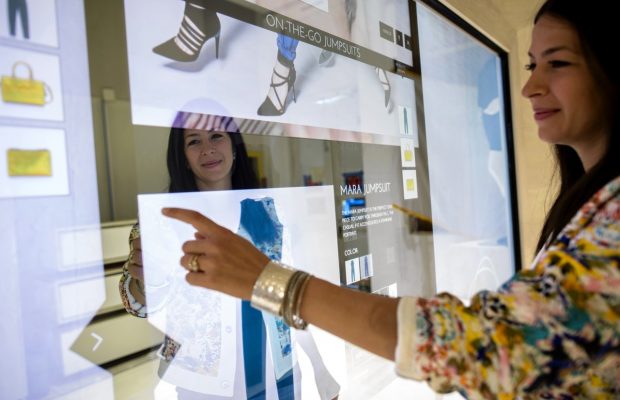
    “Innovative retailers such as Rebecca Minkoff have combined RFID with smart mirrors,” said research author Steffen Sorrell. “Integrating these systems allows real-time information to improve the store experience and bridge physical and virtual worlds – in this case, the concept drove a 200% increase in sales.”

    Juniper believes that physical retail spaces still have many benefits, not least in terms of being able to avoid the sterility of online shopping. It predicts online retailers’ focus would be on technologies such as machine learning to provide digital assistance, or digital performance management.

  • Retail IoT connections to more than treble by 2021

    Retail IoT connections to more than treble by 2021

    Retail IoT connections will rise 350 per cent by 2021 according to new data from Juniper Research.

    The UK-based company predicts retailers will connect 12.5 billion business assets to IoT platforms by then, ranging from products to digital signs and Bluetooth beacons.

    That compares with an estimated 2.7 billion connections in 2016.

    Juniper also predicts that RFID (radio-frequency identification), will re-emerge as the industry’s ‘killer app’ becoming the key factor in the IoT retail ecosystem.

    “RFID tags, used to identify and locate retail assets in real-time, are now at a low enough price point for mass deployment and integrate well with new IoT systems and analytics,” Junpier said in its research paper IoT in Retail: Strategies for Customer Experience, Engagement & Optimisation 2017-2021.

    “New services, such as dynamic pricing or enabling promotional offers via in-store digital signs are also poised for growth.”

    The company says ‘next-gen’ processes, such as personalised retail, could be achieved by integrating enterprise software and emerging technologies, with data from connected IoT assets. Juniper forecast that software spend for enterprise resource planning systems to integrate this data would reach US$11.3 billion annually in 2021, from $1.5 billion in 2017.

    “Innovative retailers such as Rebecca Minkoff have combined RFID with smart mirrors,” said research author Steffen Sorrell. “Integrating these systems allows real-time information to improve the store experience and bridge physical and virtual worlds – in this case, the concept drove a 200 per cent increase in sales.”

    Aiming for the Endgame

    Juniper predicts that each retailer’s approach to the IoT should differ depending on their main channel focus. It argues that physical retail spaces still have many benefits, not least in terms of being able to avoid the sterility of online shopping.

    “Therefore, Juniper predicts that online retailers’ focus would be on technologies such as machine learning to provide digital assistance, or digital performance management. In this latter instance, measurements such as user experience, IT performance and business outcome are analysed holistically to determine necessary improvements.”

  • Arrow holds IoT innovation showcase in Shenzhen

    Arrow holds IoT innovation showcase in Shenzhen

    Arrow Electronics has held an internet of things (IoT) innovation showcase in Shenzhen aimed at connecting innovative Hong Kong startups with technology companies in China.

    The event attracted 500 attendees from all sections of the IoT ecosystem in Hong Kong and China, providing a platform for IoT businesses in China and Hong Kong to collaborate.

    As well as startups and entrepreneurs, international technology manufacturers, IoT solution providers and system integrators attended.

    Notable attendees included Analog Devices, Cypress, Honeywell, Infineon, Intel, Nexperia, NXP, ON Semiconductor, Qualcomm, and STMicroelectronics.

    Arrow Electronics components president for APAC Simon Yu said that recent research from the Chinese University of Hong Kong and Hong Kong Baptist University found that entrepreneurship in Hong Kong and Shenzhen has grown 206% and 284% respectively between 2009 and 2016. But innovation in some major areas including the IoT is being held back due to limited engineering expertise and production resources.

    “Arrow has long supported technology innovation in Hong Kong and China,” he said.

    “Our engineering expertise and IoT industry reputation, especially in the greater China area, can definitely assist IoT startups in removing key barriers and connecting them with the ecosystem players on their road to innovation entrepreneurship and social impact.”

    Arrow Electronics last year opened the Arrow Open Lab at Science Park to help support entrepreneurship and innovation in Hong Kong. This week’s event built on that initiative.

  • Cloud-based online charging system debuts through Netcracker

    Cloud-based online charging system debuts through Netcracker

    Netcracker Technology has unveiled its Cloud-Based Online Charging System (OCS), a next-generation offering that has been optimized to meet the requirements of the digital world.

    As the industry’s first always-active OCS platform, Netcracker’s Cloud-Based OCS addresses all of the key pain points associated with legacy, hardware-based charging systems.

    The platform enables always-on availability at a lower cost as well as cloud elasticity and scalability in order to keep up with the demands of digitalization.

    The platform also enables converged revenue management scenarios; support for VoLTE, virtualized, 5G and IoT services; deployment flexibility across any physical and virtual environment; and embedded analytics.

    “Netcracker’s Cloud-Based OCS underscores the right approach for service providers that are looking to monetize cloud and virtualized services in today’s digital world,” said Karl Whitelock, global director of operations, orchestration, data analytics and monetization (ODAM) at Stratecast.

    “As a software-centric solution that relies on configurable parameters and not complex customized code, Netcracker’s scalable OCS can help to address any level of transaction processing need, which is essential for delivering future-proof operations in the journey to becoming true digital services providers,” said Whitelock.

    Sanjay Mewada, chief strategy officer at Netcracker, said traditional revenue management platforms have not been able to keep pace with the needs of communications service providers as they transform into digital service providers.

    “Netcracker has evolved its OCS to address these precise needs,” said Mewada. “Our Cloud OCS, with its unparalleled elasticity, always-on availability and embedded analytics, removes the barriers to digitalization and allows our customers to rapidly monetize digital offerings, such as VoLTE, 5G, virtualized and IoT services.”

  • APAC governments ramping up IoT investments

    APAC governments ramping up IoT investments

    Asia-Pacific governments are investing more in IoT technologies. A poll conducted by IDC indicates that 40% of government organizations in the region will be implementing IoT solutions in the next 12 months. Another 50% will be rolling out solutions in the next 12-24 months.

    “Improving productivity, improving time to market for products/services and improving energy efficiency reducing costs are the top benefits of an IoT solution,” said Shreyashi Pal, Market Analyst, IDC Asia-Pacific Government and Education Insights.

    “IoT enables access to new and granular data sources, empowered by swift connectivity and quick data gathering capability giving access to a wider range of information that enhances the quality of government services at a scale, which previously has been thought to be unattainable.”

    IDC’s 2016 Global IoT Decision Maker Survey, which was conducted in July and August 2016 and includes over 4,500 respondents from more than 25 countries, also reveals that Asia is expected to have 21 out of 37 safe megacities of the world. As a result 50% of government organizations plan to deploy security systems in the region while 48% plan to deploy people tracking devices.

    About 62% of the APAC companies are also considering IoT to create a strategic impact to their organizations while 25% considers IoT to create a transformational impact in their organizations. About 28% of the organizations consider security concern as the major hindrance to deploying IoT solution.

    Gerald Wang, Head, IDC Asia-Pacific Government and Education Insights, said that 2016 has seen a significant change in terms of vendors leading the IoT market.

    “The prominent IT vendors prevalent in hardware, software and network solutions equipped with an integrated cloud and analytics solution are most likely to lead the Internet of Things market. IT hardware vendors as the top players,” he said.

    “We also note that for many enterprises in the region, networking equipment vendors and systems integrators feature prominently as potential leaders while traditional IT hardware vendors are becoming the leading network equipment vendors in the IoT market.”

  • 21b IoT devices to ship with embedded RTOS by 2022

    21b IoT devices to ship with embedded RTOS by 2022

    IoT faces new computing challenges, notably with deployment and scaling, and its future will rely in part on using embedded real-time operating systems (RTOS), according to ABI Research.

    The research firm has forecast that 21 billion IoT devices will ship with embedded RTOS by 2022.

    RTOS support many IoT application features, such as small size, constrained processing resources, low power consumption, limited maintenance, and real-time computing.

    “The tremendous expansion of the IoT revived the embedded RTOS market, with open source platforms springing up rapidly to jostle long-established proprietary players,” ABI Research research director Michela Menting said.

    “While industrial demand for RTOS has a decade-long history, the development of new IoT applications in other segments – such as consumer, digital home, connected car, and smart cities – jolted demand for embedded RTOS.”

    Supported by greater MCU capabilities and lowering price points, the embedded RTOS market is expanding rapidly.

    Some of the most high-profile and innovative RTOS on the market include µC/OS, FreeRTOS, Integrity RTOS, mbed OS, MEOS, MQX RTOS, Nucleus RTOS, PikeOS, QNX, RIOT OS, ThreadX, VxWorks, and Zephyr.

    Many open source operating systems popular with the IoT are increasingly adding real-time capabilities to compete in this lucrative market. Currently, the embedded RTOS market is highly fragmented, with hundreds of different platforms available.

    “RTOS shows immense promise in terms of flexibility and application for all kinds of new IoT markets,” concludes Menting. “Although, developers will need to tackle issues of interoperability and standardization to realize its full potential.”

  • 86% of APAC organizations to adopt IoT by 2019

    86% of APAC organizations to adopt IoT by 2019

    Nearly nine in 10 (86%) organizations in In Asia-Pacific will have some form of IoT in place by 2019, according to results of a survey from Hewlett Packard Enterprise’s Aruba.

    Organizations across the enterprise, industrial, healthcare, retail and municipality sectors globally are adopting IoT to leverage the business benefits of enhanced efficiency and innovation, the research shows.

    But Aruba’s study warns that connecting thousands of things to existing business networks will open up new security challenges.

    The research also found that although 97% of the 1,150 respondents from Asia-Pacific (Australia, China, India, Japan, Singapore, and South Korea) have an understanding of IoT, many are still unclear of the exact definition of IoT and what value it brings to their organizations.

    In his new eBook, ‘Making Sense of IoT’, commissioned by Aruba, technology visionary Kevin Ashton—who coined the term ‘Internet of Things’— presents the following definition: “The ‘Internet of Things’ means sensors connected to the internet and behaving in an internet-like way by making open, ad hoc connections, sharing data freely and allowing unexpected applications, so computers can understand the world around them and become humanity’s nervous system.”

    When examining the business benefits of IoT, Ashton discovered that actual gains from IoT exceeded initial expectations on all fronts. In Asia Pacific, this ‘expectations dividend’ is most evident in two key performance areas: profitability and business efficiency.

    For instance, 35% of business leaders cited significant profit increases after deploying IoT, a 20% increase from those who projected a large profit gain from their IoT investment (15%).

    Similarly, while 39% of executives expected their IoT strategies to yield huge business efficiency improvements, actual results show that more than half of those who implemented IoT (51%) has experienced great business efficiency gains.

    “With the business benefits of IoT surpassing expectations, it’s no surprise that the business world will move towards mass adoption by 2019,” said Chris Kozup, VP of marketing at Aruba. “But with many executives unsure of how to apply IoT to their business, those who succeed in implementing IoT are well positioned to gain a competitive advantage.”

  • Singtel working with Ericsson to build shared IoT ecosystem

    Singtel working with Ericsson to build shared IoT ecosystem

    Singtel and Ericsson are using Mobile World Congress 2017 in Barcelona to conduct a joint demonstration of their Assured+ integrated IoT platform.

    The companies are working to co-create a shared IoT ecosystem for operators, networks and devices.

    The jointly-developed Assured+ will support IoT applications including elder care, connected cars and other IoT applications focused on providing connected life management for consumers.

    It aims to address industry challenges associated with a fragmented IoT market, whereby most devices developed today are place-centric and closed.

    “In order to realise the full potential of IoT and offer our customers the best user experience, we need to ensure collaboration between people, devices and networks,” SingTel CEO consumer Singapore Yuen Kuan Moon said.

    “Singtel believes an open ecosystem and the Assured+ solution will enable us to achieve these aims. By integrating standalone applications into one solution, Assured+ will bring convenience to our customers and also pave the way for more IoT solutions, such as smart home, to be launched in a seamless manner.”

    Ericsson has projected in its latest Mobility Report that there will be 18 billion IoT related devices by 2022.

    US operator AT&T has separately forged a long term agreement with members of the Bridge Alliance mobile operator group aimed at extending connected car initiatives into new territories.

    The two organizations will work to grow the number of connected cars on the road in territories covered by Bridge Alliance members, which spans the Asia-Pacific and MEA regions.

    The agreement sets forth a framework to extend the geographic coverage AT&T will be able to provide to automotive manufacturers for their infotainment and other offerings.

    Bridge Alliance members will meanwhile be able to access solutions like Wi-Fi hotspots, internet radio and live traffic for car makers to implement.

    “Our collaboration with AT&T is based on the alignment and integration of processes,

    platforms and propositions. This presents exciting possibilities for the automotive industry,

    helping to accelerate the delivery of cutting-edge connected car solutions in our markets,” Bridge Alliance CEO Eileen Tan said.

  • China Mobile, Ericsson demo IoT-powered factory

    China Mobile, Ericsson demo IoT-powered factory

    China Mobile and Ericsson have completed a trial involving what the companies say is the world’s first cellular IoT-based connected factory.

    The companies are presenting the outcomes of the trial at Mobile World Congress 2017 in Barcelona.

    The factory is implementing multiple applications for low-power wide area (LPWA) networks and devices, including production line monitoring, warehouse monitoring and package and materials tracking.

    Ericsson’s demonstration in Barcelona highlights a connected high-precision screwdriver, with motion sensors attached to NB-IoT modules that transmit real-time data from the tools to the cellular IoT network.

    The factory has around 1000 high-precision screwdrivers that each require routine calibrations and lubrications based on usage.

    The solution being developed for the factory covers terminals, networks to the platform and analytics.

    It is powered by Ericsson radio equipment and NB-IoT software, as well as Intel’s pre-commercial NB-IoT software, an Intel modem embedded in a Fibocom module and China Mobile’s OneNet IoT platform.

    “The combination of cellular IoT and Industry 4.0 has so far been fairly unexplored,” Ericsson head of north east Asia Chris Houghton said.

    “Enabling IoT network technology such as Cellular LPWA, together with cloud-based solutions, give manufacturing firms access to more information than ever before. The opportunity to use data to increase productivity is not only beneficial to a firm, but the whole of society as well.”

    China Mobile has been helping to lead the development of cellular IoT technology, having completed the world’s first lab testing on NB-IoT and moving towards large-scale field trials.

  • AT&T, China Mobile team on IoT

    AT&T, China Mobile team on IoT

    AT&T and China Mobile have joined forces to further enable the IoT. Announcing the partnership ahead of Mobile World Congress 2017, AT&T said the deal will help the US telco’s global business customers connect and deploy their assets and offerings in the Chinese market.

    The pair is developing a new technology platform which AT&T say will seamlessly move its business customer’s IoT subscriptions over to China Mobile’s local service.

    The behind-the-scenes switch will help simplify the supply chain for AT&T’s customers looking to expand to China. This will help customers accelerate time to market and achieve greater efficiency in driving new revenue streams, said Chris Penrose, president of IoT solutions at AT&T.

    Penrose said AT&T is one of the first global operators to establish a relationship with China Mobile, which has the world’s largest 4G mobile network covering more than 1.3 billion subscribers.

    “China is one of the fastest growing markets. It holds incredible opportunity for our global business customers. Working with China Mobile means we can further develop that opportunity. This makes it an even more exciting time to be in the IoT,” the executive said.

    AT&T serves nearly 3.5 million business customers, helping them connect their devices around the world.

    “We look forward to helping AT&T business customers bring their connected solutions to our market,” said Dr. Li Feng, chairman & CEO, China Mobile International. “We believe this will help unlock new options and experiences for our customers while achieving one of our core goals – increasing the number of connected devices on our network.”

  • Nokia makes big moves in 5G, IoT

    Nokia makes big moves in 5G, IoT

    Nokia is stepping up its efforts in 5G competition with the launch of 5G First, its debut 5G product.

    The 5G First, which will be available in the second half of 2017, helps mobile carriers prepare for 5G-ready architectures and gives them “first to market advantage”, Nokia said, adding that the 5G product is underpinned by technical specifications outlined by the Verizon 5G Technology Forum ecosystem.

    Announcing the launch at a news conference ahead of Mobile World Congress in Barcelona on Sunday, Nokia president and CEO Rajeev Suri said “the 5G launch is not hype but soon to become reality.”

    He said Nokia is working with Verizon and Intel to supply equipment for pre-commercial 5G services to homes in select Verizon markets such as Dallas. The companies will also deploy 5G-enabled “next-generation video and entertainment services”, which are set to launch in Dallas later this year and expand to other US markets by the end of 2017.

    In addition, Suri predicted that investments in 4G, particularly advanced 4G technology, will pick back up this year in key markets, like Japan.

    “Even with 5G coming, the need for more capacity grows everyday with no sign of slowing,” the executive said.

    Suri also revealed that Nokia has won a three-year contract from Telefonica to boost the performance of its 4G networks in London as data demand grows. The deal includes Nokia 4.5G Pro technology, he added.

    Earlier this month, Nokia reported its profits for the fourth quarter of 2016 fell less than expected, helped by cost cuts and the acquisition of Alcatel-Lucent.

    The Finnish telecoms equipment vendor is also looking to broaden its footprint in faster-growing areas including software and the utilities and transport markets with IoT and cloud, in a bid to offset the weakening revenues from the telecoms sector.

    For example, Nokia has recently launched WING, its IoT network grid, which is aimed at providing a full-service model offering IoT connectivity across different technologies to manage a client’s IoT connectivity needs and assets.