
Tag: iot

  • Caution over IoT payments, Worldpay research shows

    Caution over IoT payments, Worldpay research shows

    Smart home appliances that order and pay for items on behalf of their owners have yet to win over support, according to research by payments company Worldpay.

    While Asia Pacific is set to become a frontline for the Internet of Things (IoT), driven by government initiatives and infrastructure investments, consumer confidence has yet to catch up in Australia, China and Singapore.

    Worldpay’s Connected Consumer research shows that Chinese consumers are the most comfortable with IoT, with only 18 per cent not easy about a device ordering a product on their behalf without asking. Australians (39 per cent) were the least comfortable. Across markets, privacy and hacking are the top consumer concerns.

    Covering more than 20,000 consumers across 10 markets, the research focussed on comfort levels when it comes to IoT technology making payments independently. Some smart devices use services from other devices, involving a payment.

    China leads the IoT charge, with 61 per cent of consumers saying they would be comfortable with a device shopping on their behalf without asking permission.

    Singapore, however, is on a tipping point. While the technology is ready and government support is in place, consumers still have concerns around IoT purchases made without their knowledge, and 55 per cent would want to approve purchases.

    Privacy and hacking are the main concerns across the three markets. More than 70 per cent of respondents fear manufacturers would share their personal data, with a similar percentage worried about connected devices being hacked.

    Meanwhile, to help businesses overcome the perceived security barrier, Worldpay is trialling an open-source software development kit (SDK) to handle IoT payments. Worldpay Within is an embeddable payments agent that allows smart devices to make and take payments.

    With the number of connected devices is estimated to reach 20 billion by the end of this year.

    “No matter if done by a human or machine, it is vital for consumers to stay in control when delegating payment tasks,” says Worldpay Asia Pacific GM Phil Pomford. “Our research has found there should always be a conscious ‘act of consent’, be that via a device notification, button press or a pre-set rule like a spending limit.”

  • Hitachi forms IoT alliance with Thailand’s EEC

    Hitachi forms IoT alliance with Thailand’s EEC

    Hitachi has teamed up with Thailand’s Eastern Economic Corridor (EEC) Office to apply digital technologies including IoT to establish an innovative environment to promote development of the corridor.

    Under the agreement, the EEC Office and Hitachi will be working collectively using advanced digital technologies, including IoT related technologies, within the Eastern Economic Corridor region to establish a ‘cutting-edge’ IoT center.

    The EEC Office and Hitachi will collaborate on EEC development in various areas, such as implementing necessary study, introducing advanced science and technology.

    EEC Office will also provide relevant information and possible support in creating bases for the use of advanced digital technologies. With the EEC Office’s cooperation, Hitachi will promote the use of IoT technologies – for example, through undertaking data analytics using AI based on big data obtained from plants, office buildings, and other sources.

    It will also utilize the solution core and customer cases for Lumada, Hitachi’s IoT platform, and roll out digital solutions that contribute to the resolution of various issues in Thailand and the ASEAN region as a whole.
    Thailand is currently promoting measures aimed at establishing an advanced economic base and achieving further economic development.  In 2015, Thailand 4.0 was presented as a long-term vision of an ideal economic society, and the EEC development plan was laid out as one key measure in realizing this vision.

    Based on the EEC development plan, total investments on a scale of 1.5 trillion baht ($45.34 billion) are expected in the public and private sectors combined, and in addition to expanding airports and high-speed railways, the country will aim to attract and foster growth in 10 targeted industries, including robotics, digital technologies, and next-generation automotive.

    Meanwhile, as part of its 2018 Mid-term Management Plan, Hitachi will be promoting growth in the global market through the rollout of the Social Innovation Business, which creates new value through collaborative creation with customers by combining operational technology, IT, and products.

    Hitachi’s largest scale of business in the ASEAN market is in Thailand, where it is rolling out business in a broad range of fields, including the railways, elevators/escalators, industrial products, and information and telecommunications systems businesses.

  • IoT to be a $1.8tr revenue opportunity for cellcos

    IoT to be a $1.8tr revenue opportunity for cellcos

    The Internet of Things will represent a $1.8 trillion revenue opportunity for mobile operators by 2026, thanks in part by the early deployment of commercial low power wide area (LPWA) networks in licensed spectrum, according to the GSMA.

    Research conducted for the industry association by Machina Research found that new mobile IoT applications and services represent huge growth opportunities for mobile operators.

    To date 12 operators have launched 15 commercial mobile IoT services. These include China Mobile, China Telecom and China Unicom, South Korea’s KT and LG Uplus as well as Singapore’s M1.

    Operators are enhancing their  their licensed cellular networks with narrowband IoT (NB-IoT) and LTE machine-to-machine (LTE-M) technologies utilising global 3GPP standards.

    Mobile IoT networks are expected to have 862 million active connections by 2022, representing 56% of all LPWA connections.

    The largest revenue opportunities for the IoT include consumer demand for connected home ($441 billion), consumer electronics ($376 billion) and connected car ($273 billion) technologies.

    The connected energy market is meanwhile expected to reach $128 billion by 2026 as local governments and consumers seek smarter ways to manage utilities, and revenues from connected cities are on track to reach $78 billion by this time.

    “There is a real sense of momentum behind Mobile IoT networks in licensed spectrum, with multiple commercial launches around the world, as well as the availability of hundreds of different applications and solutions, but there is still much to be done,” GSMA CTO Alex Sinclair said.

    “Many operators are already reaping the benefits of deploying Mobile IoT and we encourage others to act now to capitalise on this clear market opportunity and further accelerate the development of the Internet of Things.”

  • IoT and transformation driving ITOM investment

    IoT and transformation driving ITOM investment

    The growth of digital business and the IoT will drive large investment in IT operations management (ITOM) through 2020, Gartner has predicted.

    Organizations are moving towards ITOM open-source software (OSS), and a primary driver of this transition is the promise of a lower total cost of ownership, the research firm said.

    “While acceptance of OSS ITOM is increasing, traditional closed-source ITOM software still has the biggest budget allocation today. Moreover, complexity and governance issues that face users of OSS ITOM tools cannot be ignored. In fact, these issues open up opportunities for ITOM vendors. Even vendors that are late to market with ITOM functionality can compete in this area,” Gartner research director Laurie Wurster said.

    Gartner believes many enterprises will turn to managed ITOM or ITOM as a service (ITOMaaS) enabled by open-source technologies and provided by a third party. With OSS, vendors can provide more cost-effective and readily available ITOM functions in a scaled manner through the cloud.

    Through 2020, public cloud and managed services are expected to be leveraged more often forITOM tools, which will drive growth of the subscription business model for both cloud and on-premises ITOM.

    However, on-premises deployments will still be the most common delivery method. This imposes multiple challenges to incumbent ITOM vendors. First, those vendors that do not offer a cloud delivery model will face continuous cannibalization from ITOM vendors that can deliver ITOM through both cloud and on-premises.

    Second, platform vendors, such as Microsoft Azure and Amazon Web Services (AWS), are providing some native ITOM functionalities on their public clouds. Customers that are running workloads solely on these platforms may prefer these native features. There are also “hybrid” requirements for ITOM tools that can seamlessly manage both cloud and on-premises environments.

  • Telkom enters IoT alliance with Fujitsu

    Telkom enters IoT alliance with Fujitsu

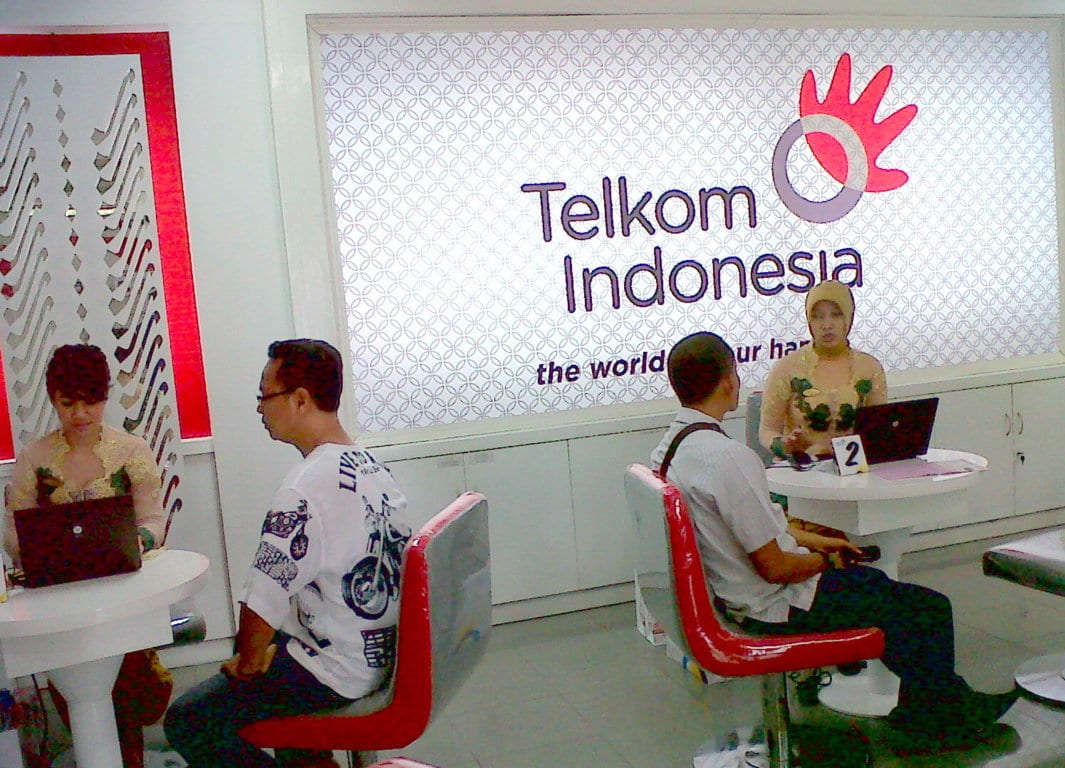
    Indonesia’s PT Telkom has entered a two-year strategic partnership with Japan’s Fujitsu to pursue the co-creation of businesses utilizing the IoT and other digital technologies and leveraging Telkom’s network infrastructure.

    Under the collaboration, the companies will seek to apply IoT and other advanced technologies to sectors including smart cities, healthcare, manufacturing and logistics.

    The companies will initially conduct market research and verification of technical specifications, systems and service performance, before moving on to concept verification and then service co-creation.

    The collaboration is aimed at Indonesia’s large population of over 250 million and catering to the rapid expansion in internet usage in recent years. The companies said they aim to develop a digital society in Indonesia, and support Telkom’s goal of building a digital economy in the nation.

    Telkom operates a 106,000km broadband backbone across the country as well as a satellite system capable of serving Indonesia’s islands. The company is Indonesia’s largest operator, and is majority-owned by the government.

  • ZTE unveils NB-IoT based intelligent energy management system

    ZTE unveils NB-IoT based intelligent energy management system

    ZTE has released an intelligent energy management system designed to operate over Narrowband IoT (NB-IoT) network, which has been installed as a pilot project in Zhangjiang Intelligent Park.

    The system leverages IoT technologies for energy-saving and emission reduction management.

    For technology enterprises, laboratory equipment accounts for a high percentage of electricity consumption to ensure efficient operations. However, equipment often remains idle outside of office hours.

    With ZTE’s NB-IoT Intelligent Energy Management System, enterprises can leverage its energy-saving control function to effectively reduce energy consumption during research and production.

    With the use of NB-IoT technologies, this system comes with lower investment costs and higher rate of returns, featuring wider coverage, shorter construction lead time and ease of operations, ZTE said.

    A built-in chip module developed by ZTE also makes remote control and strategy customization feasible, enabling users and enterprise management to easily implement personalized management for each device, and minimize energy consumption.

  • Cisco Jasper launches multi-tier IoT platform

    Cisco Jasper launches multi-tier IoT platform

    Cisco Jasper has unveiled “Control Center,” a new expanded model to bring the benefits of its IoT connectivity platform to a broader audience.

    Control Center 7.0 addresses business’ needs for greater flexibility with a new multi-tiered IoT platform that gives companies various options to meet their specific needs, regardless of their stage of IoT implementation.

    This new platform is also paired with a new set of premium services that address previously unmet needs in the industry related to IoT monetization and security.

    “What we’ve learned from enabling IoT success for our 11,000 customers is that companies have different needs at different stages of their IoT journey,” said Jahangir Mohammed, general manager of IoT at Cisco.

    “We’re introducing the biggest evolution of our Control Center IoT platform ever, providing a flexible model and new premium services that help meet the needs of customers at any phase,” said Mohammed.

    With Control Center 7.0, Cisco Jasper is introducing a unique approach to IoT solutions unmatched in the industry, giving customers and service provider partners the flexibility to select and customize the capabilities and services that are right for their deployment, while also providing an easy path for growth as their IoT businesses scale.

    AT&T, a Cisco Jasper service provider, is integrating these additional capabilities to meet IoT needs for a broad range of industries. The platform will be called AT&T Control Center-Advanced, and will be paired with additional premium services.

  • South Korea leads APeJ by IoT readiness

    South Korea leads APeJ by IoT readiness

    South Korea, Singapore, New Zealand and Australia are the most IoT prepared countries for the IoT, according to IDC.

    The research firm’s Asia Pacific (excluding Japan) IoT Readiness Index  ranked 13 APeJ nations (mix of developed and developing) across 13 critical parameters such as economic stability, technology spends, innovation potential, etc. as articulated in the global G20 study.

    While globally United States, South Korea and United Kingdom led this model, in the region the top three countries are South Korea, Singapore and New Zealand respectively. These have the most efficiencies for nationwide IoT adoption across all criteria.

    APeJ comprises a significant portion of spend in the IDC IoT Spending guide. The regional economies provide a rich diversity and quality of overall economic stature, business readiness, and technological preparedness along with different levels of efficiencies that loT solutions can create.

    “Countries are keen to demonstrate their relative digital competitiveness, and as such are looking to The Internet of Things as one of those initiatives,” IDC associate vice president for the IoT in APeJ Hugh Ujhazy said.

    “Knowing where a country stands in the IoT index will help global and local IT vendors know what opportunities lie ahead of them as they line up their strategies at federal, local, and enterprise levels.”

  • Vodafone New Zealand, Spark step up IoT push

    Vodafone New Zealand, Spark step up IoT push

    New Zealand telecoms operators are entering the race for IoT, with Vodafone and Spark both announcing they will soon roll out IoT networks in the country using low-power, wide-area networking (LPWAN) technologies.

    Following initial tests with technology partner Nokia last September, Vodafone NZ said it will deploy a narrowband-IoT (NB-IoT) network early next year to support an expected surge in IoT applications over the coming years.

    Vodafone NZ will pilot the technology with a select group of business customers – including transport technology services company EROAD – during late 2017, before a rollout in early 2018.

    NB-IoT uses dedicated bandwidth and licensed spectrum to deliver secure coverage across vast geographical areas. The 3GPP standard is designed to support a new wave of IoT devices – such as field and waterway sensors – that transmit small amounts of data but have a long, flexible life cycle, up to 15 years in some cases.

    “There are many IoT networks available now but we think NB-IoT is a premium technology choice that is worth waiting for,” said Vodafone technology director Tony Baird. “It is supported by over 40 of the world’s largest mobile operators plus many more suppliers and innovators that serve the majority of the global IoT market.”

    Vodafone NZ currently has more than 1.4 million connected devices operating across its 2G network in the country. The NB-IoT deployment is an evolution of this network, so it can support tens of millions more devices in future, Baird noted.

    On a similar move, incumbent carrier Spark (formerly known as Telecom New Zealand) said it has partnered with Actility and Kordia on designing and building a separate IoT network based on the LoRa (Low Range) standard.

    “A significant proportion” of the network is expected to be operational by June 2018, enabling sensors and devices to be connected over the LoRa network nationwide, with broad coverage at an affordable price point, Spark said in a statement.

    Michael Stribling, Spark’s general manager for IoT, said the company is also advancing plans to deploy mobile network-based IoT networks (LTE-M1 and Narrow-Band LTE).

    “We believe that there are different use cases emerging for different IoT networks, depending on the level and type of data that needs to be transmitted by IoT devices. In making an investment in LoRa, in addition to its LTE investments, Spark believes it will be in position to provide the broadest set of IoT solutions to its customers,” the executive said.

    Spark has already involved in the “Connected Farms” trial with Farmlands, NIWA and Ballance Agri-Nutrients, as well as device partners to roll-out pilot IoT capabilities on farm in the Waikato. The trial, which launched in April, is a new concept for farm digital services which aimed to demonstrate new levels of connectivity for farmers enabled by smart sensor technologies.

    Both Vodafone NZ’s and Spark’s IoT announcements come in the wake of a New Zealand IoT Alliance report predicting that New Zealand could reap NZ$2.2 billion ($1.6 billion) of economic benefits over ten years from the application of the IoT across key sectors of the economy.

    That report aligns with IDC predictions that New Zealand will be APAC’s third most mature market in terms of IoT units per capita by 2020 – naming the agricultural sector as a key growth driver.

    “IoT is approaching a tipping point and it’s starting to transform the way we live our lives and run our businesses,” Baird said.

  • UnaBiz secures IoT license in Taiwan

    UnaBiz secures IoT license in Taiwan

    IoT-dedicated network operator UnaBiz has secured a license to operate an IoT network in Taiwan from the National Communication Commission (NCC).

    As the first of its kind to receive an IoT network operator license from the NCC since Taiwan’s announcement of the use of the unlicensed spectrum, UnaBiz is on track to become a nationwide network operator in Taiwan.

    As a provider of a dedicated communications service for the IotT, the Sigfox low power wide-area network (LPWAN) is currently present in 32 countries worldwide and target to reach 60 countries by 2018. The roll out of the commercial grade global network is in line with Taiwan’s “Asian Silicon Valley” initiative, a vision to transform Taiwan from an ICT specialist to an IoT specialist.

    UnaBiz’s vision is to empower massive IoT in Asia. The network operator will actively engage and collaborate with industry partners, academic institutions and government agencies to help Taiwan address the global IoT market potential.

    “This is a milestone for UnaBiz but also for Taiwan industry which henceforth can boldly step into the Sigfox global IoT market and ecosystem,” UnaBiz MD and co-founder Philippe Chiu said.

    In 2017, UnaBiz will focus on deploying the IoT network in the six main municipalities – Taipei, New Taipei, Taoyuan, Taichung, Tainan and Kaohsiung – effectively bringing Sigfox service coverage to more than 80% of the population in Taiwan.

    The deployment will cover both urban and rural areas, and the LPWAN network will be extended to cover 95% of the population in Taiwan in 2018.

    Along with the fast-paced deployment of the network across Taiwan, the local IoT ecosystem and stakeholders can already evaluate and start developing products and solutions using the royalties-free Sigfox technology. This happens at an excellent timing for Taiwan’s industry looking for transformation and new business opportunities, especially at a global scale.

    The global IoT sensors market is expected to reach $17.81 billion by 2020, and although Taiwan is big in semiconductor manufacturing (60% of global market), it only accounts for 15% of the global sensor manufacturing. Given the predominant impact of Taiwan in the conception, production and integration of smart sensors into electronic hardware in the global IoT market, Taiwan joining the Sigfox ecosystem represents a significant milestone.

    Chiu notes, “To significantly build up the IoT industry, we need a sound ecosystem of highly-engaged players from semiconductors to device manufacturers and all the way up to cloud platforms. That is why, on top of providing Sigfox communication service, UnaBiz is also acting to catalyze IoT opportunities by establishing partnerships and providing keys to address the Sigfox global IoT market.”

    “According to studies, the explosion of the global IoT market will create the largest device market in the world,” UnaBiz CEO and co-founder Henri Bong said.

    “The number will double of that of the current market of personal PC, tablets and wearable technology combined. The growth of this ecosystem not only creates more jobs in Taiwan’s manufacturing industry but will eventually spur a paradigm shift in Taiwan’s entire workforce to that of a more innovative and creative economy, one that engages higher skilled and hence higher-paying workers.”

  • IoT spend on pace to $800b in 2017

    IoT spend on pace to $800b in 2017

    Worldwide spending on the Internet of Things (IoT) to grow 17% year over year in 2017, and to be near $1.4 trillion by 2021, according to IDC.

    “The discussion about IoT has shifted away from the number of devices connected,” said Carrie MacGillivray, VP for Internet of Things and mobility at IDC. “The true value of IoT is being realized when the software and services come together to enable the capture, interpretation, and action on data produced by IoT endpoints.”

    The IoT use cases that are expected to attract the largest investments in 2017 include manufacturing operations ($105 billion), freight monitoring ($50 billion), and production asset management ($45 billion).

    Smart grid technologies for electricity, gas and water and smart building technologies are also forecast to see significant investments this year ($56 billion and $40 billion, respectively).

    While these use cases will remain the largest areas of IoT spending in 2021, smart home technologies are forecast to experience strong growth (20% CAGR) over the five-year forecast. The use cases that will see the fastest spending growth are airport facilities automation (33% CAGR), electric vehicle charging (21% CAGR), and in-store contextual marketing (20% CAGR).

    The industries making the largest IoT investments in 2017 are manufacturing ($183 billion), transportation ($85 billion), and utilities ($66 billion).

    From a technology perspective, hardware will be the largest spending category until the last year of the forecast when it will be overtaken by the faster growing services category. Hardware spending will be dominated by modules and sensors that connect end points to networks, while software spending will be similarly dominated by applications software. Services spending will be about evenly split between ongoing and content services and IT and installation services.

  • IoT standardization picks up pace in Taiwan

    IoT standardization picks up pace in Taiwan

    IoT interoperability and standardization has moved forward in Taiwan after oneM2M, the global standards initiative for M2M and the IoT, held its fourth interoperability testing event in Taipei.

    Interop 4 gave organizations implementing oneM2M standards the opportunity to check end-to-end functionality via oneM2M interfaces and validate interoperability, with a total of 13 companies taking part.

    A conference held the day before the event featured presentations from leading companies and members of oneM2M’s leadership team to promote oneM2M to Taiwanese businesses in the IoT sector.

    The event was held as the Asian Silicon Valley Development Agency (ASVDA) works to transform and upgrade Taiwan’s industrial infrastructure with IoT technology. The agency aims to have a 5% stake in the global IoT market by 2025.

    “Taiwan is looking to become a major player in the IoT and Interop 4 helped drive this goal by giving organisations in the country and the wider Asia region the opportunity to test and improve their deployments,” said JaeSeung Song, Associate Professor at Sejong University and Test Working Group Chair at oneM2M.

    “Interop 4 was our second interoperability event of the year and its success highlights the continuous growth of oneM2M’s standards.”

    Hosted by TTA and ETSI – two of oneM2M’s founding partners – along with the Taiwan-based Institute for Information Industry (III), Interop 4 allowed participants to take part in interoperability scenarios from TS-0013 – oneM2M’s testing specification.

    Testing at the event was based on oneM2M’s set of standards, Release 1 and Release 2 and covered functional architecture, service layer core protocol and Constrained Application Protocol (CoAP), HTTP, Message Queue Telemetry Transport (MQTT) and WebSocket protocol binding.

    The event allowed companies to check interoperability levels of their implementations and ensure they had interpreted oneM2M’s standards correctly. Conformance Testing to help debug products was also available.

    Organisations which participated in this event include: Spirent Technologies, Institute For Information Industry, NTT, TTA, Sporton, DEKRA, KETI, C-DOT, ETRI, Sejong University, Easy Global Market, nTels and Sensinov.

  • GateHouse talks supply chain nirvana at IoT Slam Conference

    GateHouse talks supply chain nirvana at IoT Slam Conference

    Logistics data unifier GateHouse Logistics A/S announces that it has been invited to present its vision of the future direction of data used in the logistics industry at the upcoming IoT Slam Conference being staged at Raleigh in North Carolina on June 21 and 22. The annual Conference brings together the The Internet of Things Community (IoT Community), the world’s largest group of CxOs and IoT professionals.

    The function of the community is to focus on the adoption and application of IoT in commercial environments such as the transport industry, seeking to understand and contribute to applying the technology or overcoming the wide variety of barriers, inhibitors, and technical and operational issues involved.

    “The logistics industry is moving into the smart connected era and an industry-wide and truly system agnostic mobility platform is needed now by all parties involved in the supply chain to control, make visual and rationalize the mountains of data involved in order to reach the next level of business efficiency,” says Jesper Bennike, CEO, GateHouse Logistics.

    He adds: “Data about connected trucks and Just-in-Sequence supplies to smart factories are just the tip of tomorrow’s supply chain issues and the IoT Slam Conference is the perfect platform for GateHouse to discuss its IoT solution with leaders responsible for shaping the use of data in the future IoT logistics industry.”

    As a leading independent logistics data unifier and aggregator, GateHouse Logistics believes that it is within its remit to propose a cross-system data mobility platform to the transport industry that can not only collect and unify all data from all telematics systems, but also distribute it to authorised enterprises as one datastream.

    The mobility platform provides LSP’s with a mixed fleet a unified and consolidated data stream from their whole fleet. The data stream can be easily integrated with any TMS system and it can also securely be shared with third parties.

  • Tech advancements in SEA driving demand for IoT

    Tech advancements in SEA driving demand for IoT

    The rapid technological developments in Southeast Asia have led to great demands for Internet of Things (IoT) technologies, according to a recent survey from Asia IoT Business Platform.

    The survey indicates that more than 70% of local enterprises and organizations are currently in the process of exploring or finding possible IoT solutions to be deployed or implemented. However, only 7% of them report benefitting from any IoT implementation.

    Enterprises and organizations cite cost, legacy systems, and complexity as the top three concerns in adopting IoT.

    Following the great interest in IoT technologies but low benefits from implementation, Irza Suprapto, director at Asia IoT Business Platform, noted that it is now important to understand the challenges that enterprises face in trying to deploy IoT in their businesses.

    “The challenges that enterprises face in implementing IoT will determine how they view the benefits of IoT implementation and in turn, affects the demand for IoT technologies. Therefore, this year, we are inviting IT leaders of local enterprises and organizations to share more about their IoT projects or their digital transformation vision, as well as the challenges that they face in deploying IoT. This is to ensure that their concerns and challenges will be addressed and IoT adoption rates in the region will continue to grow, instead of being stunted,” Irza added.

    The Asia IoT Business Platform series will be returning to Southeast Asia for the fourth consecutive year. The programs, which are organized by Industry Platform Pte. Ltd, will take place in major cities across the region, including in Bangkok, Kuala Lumpur, Manila, and Jakarta, in July and August.

    The programs will continue to facilitate the digital transformation of enterprises and organizations in Southeast Asia. It will also have an additional focus on addressing challenges and issues that organizations face in adopting and implementing IoT technologies.

    The prestigious programs will involve government officials, senior business leaders in the IoT and Machine-to-Machine (M2M) sectors, as well as local enterprises that are looking to explore business growth and improved business efficiency with IoT.

    “We are excited to return to major cities in ASEAN this year, after many successful editions in the past couple of years. Since 2014, we have seen business partnerships among stakeholders being forged to drive the IoT adoption growth in the region. IoT developments are also apparent, especially in the different smart city initiatives, and the different IoT projects implemented by local enterprises. We are glad to witness these promising developments,” said Suprapto.

    The Asia IoT Business Platform series across ASEAN will feature a line-up of esteemed speakers comprising IT leaders from local enterprises such as Sampoerna Strategic (Indonesia), Garuda Indonesia, Bank of Thailand , Charoen Pokphand (Thailand), Petronas (Malaysia), Tenaga Nasional Berhad (Malaysia), Philippine Ports Authority, Metro Cebu Development and Coordinating Board

  • 60% of IoT attacks originated from Asia in 2016

    60% of IoT attacks originated from Asia in 2016

    The number of DoS or DDoS cyberattacks doubled from 3% to 6% in 2016, due to the lack of sufficient security controls of IoT devices, according to Dimension Data and NTT Security.

    Of all IoT-based attacks, 60% originated from Asia, 21% from EMEA and another 19% from the Americas.

    Dimension Data’s executive’s guide to the NTT Security 2017 Global Threat Intelligence Report,  published earlier this month, finds that the most likely reason for the high volume of attacks from Asia is that technology sourced from the region has historically been susceptible, and compromised infrastructure tends to be reused to perpetrate additional nefarious activities.

    The report was compiled from data collected by NTT Security and other NTT operating companies including Dimension Data, from the networks of 10,000 clients across five continents, 3.5 trillion security logs, 6.2 billion attempted attacks, and global honeypots and sandboxes located in over 100 different countries.

    Global honeypot sensors monitored IoT cyberattacks and their targets over a six-month period. Based on the credentials used by threat actors, it was determined that 66% of attacks targeted specific IoT devices such as a particular model of video camera.

    These attacks appeared to be from compromised IoT devices attempting to find and compromise even more such devices. This would be consistent with an attacker acquiring a large number of devices to use in DDoS and other forms of attack.

    DDoS attacks using IoT devices can impact an organization in multiple ways can prevent customers, partners, and other stakeholders from accessing their organizations’ internet-facing resources, thereby impacting sales and other daily operations.

    They can also prevent employees and internal systems from accessing the internet, disrupting many facets of operations, and affect organizations providing services from the internet, which can cause supply chains to be broken.

    “There’s nothing about a DDoS attack which requires use of IoT devices only, so attackers may look for as many devices as possible regardless of type,” explained Mark Thomas, Dimension Data’s Cybersecurity strategist. He points out that while DDoS attacks are the most recognized threat, they’re not the only potential outcome of an organization’s IoT and operational technology (OT) devices being compromised.

    According to a February 2017 press release by research firm, Gartner Inc, 8.4 billion connected things will be in use worldwide in 2017- up 31% on 2016. This number will reach 20.4 billion by 2020. And total spend on endpoints and services will reach almost $2 trillion in 2017.