Tag: iot

  • Bosch to launch IoT software services in China

    Bosch to launch IoT software services in China

    Bosch and Huawei have struck a partnership to accelerate the development of the Internet of Things (IoT) in China. The collaboration will see the pair makes Bosch’s IoT Suite software services available in China on Huawei Cloud. The software platform of Bosch connects web-enabled objects to facilitate data sharing across a multitude of digital services and business models. The first service made available to Chinese consumers via Huawei Cloud will be the Bosch IoT Remote Manager – a service for managing and controlling gateways, sensors, and devices. Additional services from the Bosch IoT Suite will follow in 2019.

    The pair also said a Chinese automotive manufacturer has chosen to deploy the Bosch IoT Suite on Huawei Cloud for updating its vehicles’ firmware over the air (FOTA). The service is expected to be rolled out to millions of connected cars in China over the coming years.

    “The demand for IoT solutions in China is rising. The partnership between Bosch and Huawei Cloud marks a decisive step for Bosch in one of the fastest growing IoT markets in Asia,” said Dr. Stefan Ferber, CEO of Bosch Software Innovations, a wholly-owned subsidiary of Bosch.

    Bosch Software Innovations has been active in China since 2012 and has implemented IoT projects ranging from Industry 4.0 to connected transportation. The company expects China’s market for IoT platforms to grow by close to 70% over the coming years, Ferber said.

    Bosch and Huawei also intend to develop an integrated end-to-end IoT offering as a result of the partnership.

    Huawei is developing IoT hardware gateways that will be pre-configured with Bosch IoT Gateway Software and managed through the Bosch IoT Remote Manager to run on Huawei Cloud.

    This close integration will provide customers with a more complete IoT solution that is easier to deploy and manage, the companies said.
  • SK Telecom launches IoT-based cattle healthcare service

    SK Telecom launches IoT-based cattle healthcare service

    SK Telecom has developed a new IoT-based solution which allows farmers to monitor the health of their cattle in real-time using Semtech’s LoRa devices and wireless radio frequency technology (LoRa Technology). Dubbed “LiveCare”, the product is a LoRa-equipped biocapsule which is implanted into a cow’s gastrointestinal tract to monitor a variety of health indicators. The new service will see biocapsules packed with a communication module connected to the operator’s LoRA-based IoT network. The smart biocapsule is then injected into the stomach of a cow, monitoring body temperature and potential hydrogen levels, with data recorded and then sent to a central server as well as cattle farm owners via a smartphone or computer.

    Thus, ranchers can monitor the data transmitted from the devices for anomalies in a cow’s body temperature and other vitals to detect the onset of disease, estrus and to forecast delivery of calves.

    The LiveCare device is shielded from being tampered with by outside conditions due to its strategic position inside the cow itself. This solution is expected to drastically improve the quality of life for the cow and by extension the cattle as a whole on the dairy farm.

    “Our unique solution lets farmers know immediately when a cow’s health is compromised. It takes the guesswork out of farming and lets the rancher focus on preventing cattle disease,” said Taehee Moon, project leader for the small farm project group of SK Telecom. “Healthier cows mean more milk can be produced and dairy farms can focus more on growing their business.”

    According to SK Telecom, a trial run on a South Korean farm using the technology showed an increase in annual milk harvest of 1,200 liters per cow, an increase of $1,100 in income per cow for the farmer and an additional $400 in savings for each estrus successfully planned using the LiveCare solution.

    SK Telecom plans on extending its services to provide automatic notification to ranchers of contagious disease as well as location tracking in the near future.

  • Most IT security teams believe their IoT devices are not secure

    Most IT security teams believe their IoT devices are not secure

    The majority of IT security teams believe that a key gap in their company’s overall security strategy is their inability to identify attacks that use IoT devices as the point of entry, according to a global study conducted by the Ponemon Institute on behalf of HPE’s Aruba.

    In fact, more than three-quarters of respondents believe their IoT devices are not secure, with 75% stating that even simple IoT devices pose a threat. Two-thirds of respondents admitted they have little or no ability to protect their “things” from attacks.

    The Ponemon Institute study, entitled “Closing the IT Security Gap with Automation & AI in the Era of IoT,” surveyed 4,000 security and IT professionals across the Americas, Europe and Asia to understand what makes security deficiencies so hard to fix, and what types of technologies and processes are needed to stay a step ahead of bad actors within the new threat landscape.

    “Despite massive investments in cybersecurity programs, our research found most businesses are still unable to stop advanced, targeted attacks — with 59% believing they are not realizing the full value of their defense arsenal, which ranges from 10 to 75 security solutions,” Ponemon Institute chairman Larry Ponemon said.

    “The situation has become a ‘perfect storm,’ with nearly half of respondents saying it’s very difficult to protect complex and dynamically changing attack surfaces, especially given the current lack of security staff with the necessary skills and expertise to battle today’s persistent, sophisticated, highly trained, and well-financed attackers”

    The research revealed that in the quest to protect data and other high-value assets, security systems incorporating machine learning and other AI-based technologies are essential for detecting and stopping attacks that target users and IoT devices.

    The majority of APAC respondents polled for the report agree that security products with AI functionality will help to reduce false alerts (66%), increase their team’s effectiveness (62%), provide greater investigation efficiencies (57%) and advance their ability to more quickly discover and respond to stealthy attacks (53%).

  • Global cellular IoT connections to cross 5b mark by 2025

    Global cellular IoT connections to cross 5b mark by 2025

    Global IoT cellular connections are expected to hit the 5 billion mark by 2025 and China will continue to lead by contributing nearly two-thirds of such connections, says Counterpoint Research.

    According to the latest research from Counterpoint’s IoT (Internet of Things) service, global IoT cellular connection grew 72% in the first half of 2018, which the research firm described as “a considerable increase” as compared to the same period last year.

    China at present is the world’s largest cellular IoT market, with the country’s three telcos – China Mobile, China Unicom and China Telecom – accounting for a combined 70% of the global IoT connections. In 2025, an estimated 66% of global IoT connections are expected coming from the trio’s IoT networks.

    “Emerging markets like India, Brazil and Africa can offer tremendous scale but will likely be late followers compared to China in this path to connected everything,” Counterpoint research analyst Satyajit Sinha said.

    “However, the massive growth opportunity remains in terms of cellular-IoT connections in emerging markets which will be possibly catalyzed by operators such as Reliance Jio in India but more specifically from multi-market players such as Telefonica or MTN or Vodafone,” Sinha noted.

    According to Sinha, smart manufacturing, smart utilities and smart mobility applications – such as automotive and asset tracking – will be the key growth drivers for IoT adoption over the next five to seven years.

    NB-IoT to be the dominant connectivity technology

    On the technology side, the report predicts that narrowband IoT (NB-IoT) will dominate the market with 45% of global IoT cellular connections by 2025, due to the wide variety of application opportunities and faster adoption rates in the overall ecosystem.

    2G IoT connections will occupy less than 1% of global IoT cellular connections by this time, as they are increasingly replaced by NB-IoT.

    3G IoT connections face the same fate as 2G. However, 3G will go extinct much faster than 2G.

    4G LTE IoT connections (high bandwidth & low latency) will grow at a much faster rate till 2022, due to global adoption of LTE Advanced and Advanced Pro.

    At the same time, the increased popularity of NB-IoT and unlicensed LPWA will also take away the opportunity and share of LTE-M, which will have a presence until 2022 and contribute around 6% of global IoT cellular connections in 2025.

    “Most of the IoT connections are still on 2G/2.5G networks,” Counterpoint research director Peter Richardson said. “However, the shift to 4G LTE and cellular-LPWAN is already in motion and we expect an ongoing shift to these newer technologies in 2H 2018 and 2019.”

    While cellular-LPWAN brings a number of advantages over unlicensed LPWA solutions, Richardson added that there are a number of use cases where unlicensed technologies offer a superior mix of cost and functionality.

    “Over the short to medium term, we expect co-existence and even the combined use of both licensed and unlicensed LPWA technologies,” he said.

    As the industry is expected to smoothly transition from 4G LTE to 5G from 2020 onwards, 4G LTE IoT connections will hold slightly more than a third of global IoT cellular connections in 2025, Counterpoint said.

    “5G will be crucial for some sectors, for example automotive, especially for V2V and V2X. The adoption of 5G cellular will depend on the availability, cost of modems from companies like Qualcomm and Huawei as well as coverage area. We expect 5G to account for around 10% of global IoT cellular connections in 2025,” Richardson concluded.

  • IoT malware grew threefold in H1

    IoT malware grew threefold in H1

    In the first half of 2018, IoT devices were attacked with more than 120,000 modifications of malware, according to the Kaspersky Lab IoT report. That’s more than triple the amount of IoT malware seen in the whole of 2017.

    Kaspersky Lab warns that the snowballing growth of malware families for smart devices is a continuation of a dangerous trend: 2017 also saw the number of smart device malware modifications rise to 10 times the amount seen in 2016.

    The market for IoT devices and their role in everyday life, is growing exponentially. But cybercriminals are seeing the financial opportunities too, and are multiplying and differentiating their attacks as a result.

    The danger for consumers who love their IoT gadgets, is that threats can strike unexpectedly, turning seemingly harmless devices into powerful machines for illegal activity. This can include malicious cryptocurrency mining, DDoS attacks, or the discreet inclusion of devices in botnet activities.

    Aware of these dangers, Kaspersky Lab experts regularly review the data collected from various sources including our honeypots – decoy devices used to attract the attention of cybercriminals and analyze their activities. The latest updates are striking: during the first half of 2018, the number of malware modifications aimed at IoT devices registered by researchers was more than three times higher than the number registered in the whole of 2017.

    The statistics show that the most popular method of IoT malware propagation is still the brute forcing of passwords – repetitive attempts at various password combinations. Brute forcing was used in 93% of detected attacks. In most of the remaining cases, access to an IoT device was gained using well-known exploits.

    The devices most often attacking Kaspersky Lab honeypots were routers (by a large margin). 60% of the registered attempts to attack our virtual devices were coming from them. The remaining share of compromised IoT gadgets included a variety of different technologies, such as DVR-devices and printers. The honeypots even registered an attack coming from 33 washing machines.

    Different cybercriminals may have different reasons to exploit IoT, but the most popular goal is to facilitate DDoS-attacks by creating botnets. Some malware modifications are also tailored to turn off competing malware, fix its own vulnerabilities and shutdown vulnerable services on the device.

    “Compared to personal computers and smartphones, IoT devices might not seem powerful enough to attract cybercriminals and be used in their illegal activity,” notes Mikhail Kuzin, security researcher at Kaspersky Lab. “However, their lack of performance is more than outweighed by their number, and the fact that some smart gadget manufacturers are still not paying enough attention to the security of their products.”

    Kuzin adds that even if vendors begin to provide their devices with better security now, it will be a while before old vulnerable devices have been phased out of our homes.

    “In addition, IoT malware families are customizing and developing very fast, and while previously exploited breaches have not been fixed, criminals are constantly discovering new ones. IoT products have therefore become an easy target for cybercriminals who can turn simple machines into a powerful device for illegal activity, such as spying, stealing and blackmailing.”

  • PLDT taps Amdocs for IT infrastructure automation

    PLDT taps Amdocs for IT infrastructure automation

    The Philippines’ PLDT has contracted Amdocs to transform its IT infrastructure under an expanded six-year service agreement.

    The new contract builds on a seven year master transformation agreement that will see Amdocs modernize PLDT’s IT applications and help introduce new digital technologies.

    Under the new deal, Amdocs will consolidate, modernize and manage the IT infrastructure of both PLDT and wireless subsidiary Smart.

    Amdocs plans to provide the operators with automation capabilities enabling the self-healing of errors and systems. PLDT and Smart plan to use operation automation to prepare for a journey to the cloud while reducing their operational costs.

    “Our successful collaboration with Amdocs gets stronger as we continue our digital journey,” PLDT president and CEO Manuel V. Pangilinan said.

    “This agreement will further boost our efforts to enhance customer experience and engagement. With Amdocs running and automating our IT operations, we will be better equipped to quickly launch innovative products and services to deliver a compelling digital experience to our customers.”

  • Softbank tests NIDD technology for IoT services

    Softbank tests NIDD technology for IoT services

    SoftBank said it has been using NIDD (non-IP data delivery) technology to allow its IoT services to bypass the internet.

    The Japanese operator announced recently that it has succeeded in completing what it claims is the world’s first connection test in a commercial environment for NIDD, which has been newly defined in the 3GPP for NB-IoT.

    Softbank said NIDD enables users to transmit data to IoT devices without allocating an IP address, which reduces the risk of a malicious attack targeting an IoT device, making it possible to build a highly secure IoT network.

    By eliminating such data as header information additionally required in conventional data communications, the company added, the electric power needed for communication is reduced and a broader area can be covered.

    Also, by enabling connection on a closed network with IoT platforms provided by service providers and with external application servers, Softbank said it will enable operator to build a highly secure network from end to end.

    Currently Softbank is providing IoT services using NB-IoT and LTE Cat-M1 technologies, for which an IP address is allocated.

    The company said it aims to introduce and commercialize NIDD technology for devices tailored to various businesses and fields, such as crime prevention, social infrastructure and agriculture, making full use of its distinctive features of high security, low power consumption, and high area coverage.

    A handful of companies – including Microsoft, Amazon Web Services (AWS), Qualcomm, DK Corporation, Affirmed Networks and SB Cloud – are supporting the company’s NIDD experiment in Japan and will work together with Softbank toward further development of the IoT market.

    “We expect that NIDD technology to reduce communication load for IoT devices and enables to accelerate utilization in IoT field especially for those who had difficulty in conventional conditions,” said Akira Sakakibara, CTO at Microsoft Japan.

    “As NIDD technology corresponds to open standards, it can easily connect to Microsoft Azure IoT platform and enable to implement data management, view and AI features. SoftBank and Microsoft Japan will continuously contribute to accelerate IoT technology utilization in every industry.”

    Tadashi Okazaki, head of solution architect at Amazon Web Services Japan, said security for IoT devices is strongly in demand as IoT popularity is growing.

    “With the implementation of NIDD technology which securely connects AWS IoT platform and peripheral device, we expect to accelerate the popularization of IoT technology,” he said.

    “Low power consumption is one of the characteristic of NIDD technology. Therefore, we hope to solve the long discussed controversy of IoT devices’ high power consumption.”

  • Link Net and Japan’s Softbank Join Hands to Launch IoT in Indonesia

    Link Net and Japan’s Softbank Join Hands to Launch IoT in Indonesia

    Link Net, an internet service provider operating under Lippo Group subsidiary First Media, and Japanese telecommunications provider SoftBank Corp have signed a partnership agreement to develop and deploy the internet of things, or IoT, in Link Net’s businesses in real estate, health care and mobile ecosystems in Indonesia.

    Link Net chief executive Marlo Budiman and Hidebumi Kitahara, vice president for global business strategy at SoftBank, signed the agreement during a ceremony at Aryaduta Hotel in Central Jakarta on June 29.

    “We are pleased to collaborate with SoftBank in the initial phase of the initiative involving the deployment of IoT devices, along with video analytics for homes, commercial buildings, malls, offices, streets and other areas at our various property developments,” Marlo said in a statement on Thursday (05/07).

    The collaboration will see the deployment of an IoT system in the Lippo Group’s shopping malls and Siloam hospitals, as well as at Meikarta, the company’s $21 billion megaproject in Cikarang, West Java.

    Lippo has billed Meikarta as the Shenzhen of Indonesia, a tech and manufacturing city located in the southern part of mainland China, near Hong Kong.

    Marlo said the development of IoT in Indonesia is in line with the country’s vision of becoming the largest digital economy in Southeast Asia.

    “The global mobile industry is now entering the era of 5G, with IoT becoming the central focal point of innovation. This partnership with Link Net shows our strong commitment to further boost technological innovation in the global market and further advance the development of information and communications technology in Indonesia,” Kitahara said.

    The partnership was initiated during a meeting between Lippo Group deputy chairman James Riady, Lippo Group director John Riady and directors of the SoftBank Group in Tokyo during May this year.

    SoftBank is a subsidiary of the SoftBank Group, a multinational Japanese conglomerate that focuses on information technology, which includes investments in numerous startups and tech conglomerates, such as China’s Alibaba and Malaysian ride-hailing service Grab.

    In addition to internet connectivity and fixed-line communication services, SoftBank is also expanding its business into robotics, financial technology and cloud security systems.

  • Samsung’s IoT home comes with Jedi curtains

    Samsung’s IoT home comes with Jedi curtains

    Samsung C&T, the construction arm under the electronics giant, plans to make homes that are so smart they can recognize residents’ needs even before they call out for help.

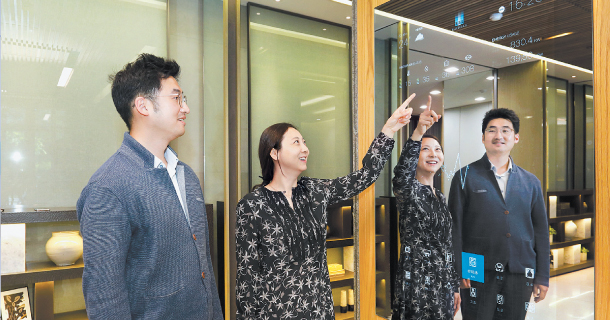
    When this guests stepped into the 54-pyeong (1,921 square-feet) model house of Samsung C&T’s Raemian apartment brand in Munjeong-dong, southern Seoul, on Monday, the house welcomed the guest with a cool “air shower” to blow away fine dust.

    “There is a sensor in the ceiling of the entrance that can detect the fine dust level,” a spokesperson from Samsung C&T said. “If people coming in from outside increases the fine dust level in the house, the air shower [air blown from the ceiling] will be activated.”

    The air shower was just the beginning of the high-tech features that the “Raemian IoT Homelab,” the model house to be opened to the public from June, had to show off.

    The demonstration went from strength to strength as an employee entered the next room and waved his hand to automatically open the curtains. This “Star Wars” style magic trick was actually achieved as the internet-connected curtains communicated with the smart watches the demonstrators were wearing. The movement picked up by the gyro sensor in the watch triggered the curtains.

    Lazy home owners – or those who don’t like to wear watches – need not fear, as the smart curtains and other features in the house can also be controlled by voice command and a smartphone app.

    According to Baek Jong-taek, a senior vice president at Samsung C&T, most of the concepts will become reality by the end of this year and could be included in actual homes from next year. As the company is scheduled to begin presales of nine apartment complexes next year, they are the main targets for the latest Internet of Things (IoT) systems.

    “Whether all apartment units will be equipped with the system will depend on discussions with stakeholders such as apartment owners,” said Kim Myung-suk, vice president of the product design group at Samsung C&T. “The IoT system could be offered as a premium option only for residents that want extra smart home features.”

    To make the home – which includes 19 different IoT services and products – work, the company partnered with 12 other companies including speaker maker Harman International, electronic curtain provider Somfy, massage chair maker Bodyfriend, air quality management company Haatz and SK C&C, SK’s IT service unit with expertise in artificial intelligence.

    The constructor said it welcomes many more partners who would like to open up part of their software to make a richer smart home environment including Samsung rival LG Electronics.

    Monday’s event came as a surprise not only because top-notch IoT tech was introduced, but also because there have been rumors that Samsung plans to ditch its Raemian brand due to the low profitability of the reconstruction business. Last time it won a reconstruction order to build a Raemian apartment complex was in September 2015.

    Kim, however, made clear that Samsung has never said it would “not participate in reconstruction project bids” and added that the company “has been reviewing quality business opportunities.”

    Industry insiders said the event may be a sign that Samsung is back in the game with the upgraded Raemian brand.

  • Following Amazon’s Footsteps, China’s JD.com Launches In-Car Delivery

    Following Amazon’s Footsteps, China’s JD.com Launches In-Car Delivery

    JD is launching a service in China where online shoppers can have their purchases delivered to anywhere they can park their cars.

    The Chinese e-commerce giant has launched an ‘in-car delivery service’ in partnership with electric vehicle maker NIO, a similar concept to that unveiled by Amazon in the US in April.

    The JD In-Car Delivery Service will use connected car technology that automatically locates customers’ cars, then enables JD’s delivery personnel to pop the trunk of  the car using a Personal Digital Assistant to the car, deposit the consumer’s order, and lock the trunk again.

    To maximise security, the device is programmed so only the specifically authorised JD delivery person will be able to open the car trunk, while the entire delivery process can be monitored using in-car cameras.

    JD, which boasts 90 per cent of its orders can be delivered same- or next-day, will deliver to vehicles parked at home, at the office, or in a range of other approved areas.

    “The offering adds a new, convenient option for consumers with cars who may not be available to accept deliveries in person, such as office workers who park their cars in the company lot during the day, or commuters who leave their cars in their driveways while they are out,” said Bing Fu, head of planning and development, with JD Logistics.

    “Imagine the convenience of finishing work for the day and knowing that your orders are already waiting in your car for you, ready to drive home. You can have the peace of mind that, even when you’re not at home, your JD orders have been stored securely in your trunk. JD In-Car Delivery makes that possible.”

    The company plans to partner with other leading automakers in China to expand the service across connected car models in coming months.

    To use in-car delivery, JD consumers who own compatible car models can link their JD account with their account on the automakers’ connected car platforms.

  • New form of Hide and Seek IoT malware discovered

    New form of Hide and Seek IoT malware discovered

    Security researchers from BitDefender have discovered a new form of the ‘Hide and Seek’ IoT malware, which targets several generic devices.

    The most worrying aspect of this new strain is its ability to persist despite a reboot. With previous versions, equipment owners could always remove IoT malware from their smart devices, modems, and routers by resetting the device.

    Hide and Seek’s original version, discovered in January 2018, was notable for using a proprietary peer-to-peer network for both C&C and new infection communication. With persistence now added to the feature mix, the botnet has become a more pressing concern for owners of the 90,000+ IoT devices already infected and other equipment that are vulnerable and still unprotected.

    “The botnet seems to undergo massive development as new samples compiled for a variety of architectures have been added as payloads,” said Bogdan Botezatu, senior e-threat analyst at Bitdefender, in a blog post concerning the new variant of the malware.

    According to the Bitdefender researchers, there are at least 10 different versions of executables that can run on 10 different system variants.

    Botezatu said that new binaries now include code to leverage two new vulnerabilities to compromise more IPTV camera models. “In addition to the vulnerabilities, the bot can also identify two new types of devices and pass their default username and passwords,” he said.

    The malware targets several generic devices. Once infected, the device scan for neighboring peers for the presence of the telnet service. As soon as the telnet service is found, the infected device attempts brute-force access.

    “New variations of the Hide and Seek malware continue to exploit common issues with system/software hardening in deployed IoT devices,” Irdeto global head of software protection John O’Connor said.

    “The current generation of the Hide and Seek botnet could effectively be stopped in its tracks if diligent system hardening was applied during development, including proper management of applications, permissions, ports and user IDs/passwords. As a result, hardening should be a baseline requirement of a system in the development phase.”

  • CMHK signs NB-IoT agreement with Sino Group

    CMHK signs NB-IoT agreement with Sino Group

    China Mobile Hong Kong (CMHK) and property developer Sino Group have signed an agreement to deploy a narrowband IoT network across Sino Group’s residential and commercial properties.

    The partnership aims to develop pre-5G infrastructure initially focused on the provision of smart home, smart shopping mall and smart property management solutions.

    The deployment will support Hong Kong’s transformation into a smart city and help accelerate social development, the companies said.

    Under the partnership, IoT and big data technologies will be applied to enhance the agreement of Sino Group’s commercial tenants, improve the group’s property management efficiency and facilitate environmental protection.

    “The 5G evolution is crucial to shaping Hong Kong into a smart city, and CMHK is imperative to proactively develop 5G mobile service applications towards advancing the development of Hong Kong’s 5G mobile communication network,” CMHK director and CEO Sean Lee said.

    “With plans to upgrade our existing base station equipment, we are well poised for the arrival of 5G and the future Internet of Things. We are extremely excited about our partnership with Sino Group to further its property network coverage, and support its future development.”

    CMHK was awarded the first trial permit for 5G tests among Hong Kong operators by the Office of the Communications Authority in March. The operator plans to commence lab tests with 5G commercial equipment using the assigned 5G trial spectrum later this quarter.

  • Nokia buys SpaceTime to bloster IoT offerings

    Nokia buys SpaceTime to bloster IoT offerings

    Nokia has acquired US-based software supplier SpaceTime Insight in its latest push to expand its Internet of Things (IoT) portfolio and IoT analytics capabilities beyond the telecoms sector.

    The company did not reveal the financial terms of the deal.

    Based in San Mateo, California, SpaceTime Insight provides machine learning-powered analytics and IoT applications for asset-intensive industries like transportation, energy and utilities. Its clients include Entergy, FedEx, NextEra Energy, Singapore Power and Union Pacific Railroad.

    Nokia said SpaceTime Insight’s machine learning models and other advanced analytics predict asset health with a high degree of accuracy and optimize related operations, helping customers reduce cost and risk, increase operational efficiencies, reduce service outages and more.

    SpaceTime Insight and its CEO Rob Schilling will join the IoT product unit within the Nokia Software business group. The company has offices in US, Canada, UK, India and Japan.

    The acquisition will strengthen Nokia’s IoT software portfolio and IoT analytics capabilities as well as speed up the development of Nokia’s IoT offerings to deliver IoT solutions and services to new and existing customers.

    It will also broaden the company’s ability to deliver new, advanced applications for key vertical markets, including energy, logistics, transportation and utilities, Nokia added.

    Commenting on the acquisition, Bhaskar Gorti, president of Nokia Software, said “the addition of SpaceTime to Nokia Software is a strong step forward in our strategy, and will help us deliver a new class of intelligent solutions to meet the demands of an increasingly interconnected world.”

  • Singapore among top five destinations for IoT attacks

    Singapore among top five destinations for IoT attacks

    Singapore is in the top five destinations globally for IoT attacks, the latest installment of F5 Networks’ The Hunt for IoT series shows.

    The report, The Growth and Evolution of Thingbots Ensures Chaos, suggests the island nation has a sizable and vulnerable IoT deployment.

    The other destinations in the top five are United States, Spain, Italy, and Hungary. However, the top 5 destinations collectively only received 27% of China’s attacks; the other 73% were globally dispersed to countries that didn’t even account for more than 1% of the total attack volume.

    With 8.4 billion devices currently in use, and over 30 billion devices projected to be deployed by 2020, unprotected devices are a goldmine for hackers, as they find new ways to exploit numerous protocols beyond telnet (an underlying TCP/IP protocol for accessing remote computers) to ensure they capture as many vulnerable IoT devices as possible.

    Thingbots are botnets compromising of infected IoT devices which are typically unmanaged, providing a low likelihood of being discovered by their owner and remediated.

    Thingbots are capable of globally destructive attacks, and the worrying fact is that the security industry has only started discovering them with increasing frequency. Massive, well known thingbots such as Mirai and Persirai have been wreaking havoc around the world, and show no signs of slowing down.

    A new variant of the notorious Mirai malware is exploiting kit with ARC processors. Dubbed the Okiru, is the first capable of infecting devices powered by ARC CPUs which is responsible for running a variety of internet-connected products including cars, mobiles, TVs, cameras and more.

    In fact, despite broad awareness of their existence and threat, it is reported that Persirai infected IP cameras still exist all across Asia with the heaviest concentrations in Thailand, China, South Korea, Japan, Taiwan and Malaysia. There is even a website that collects the streaming footage from over 73,000 hacked IP cameras worldwide. These live feeds range from parking lots and store surveillance to the bedrooms of unknown individuals.

    While China, the US and Russia are clearly the top three attacking countries, the report suggests that because vulnerable IoT devices are deployed globally without bias, there is no standout IoT attack destination.

  • Gigya Solutions from SAP Help Companies Protect Customer Data and Build Trust

    Gigya Solutions from SAP Help Companies Protect Customer Data and Build Trust

    SAP SE  introduced three new solutions supporting organizations that have a need to collect customer data in compliance with the EU General Data Protection Regulation (GDPR) while delivering personalized experiences. The three new products are available now and can be deployed separately or as a package.

    Many brands today are struggling to initiate and build trusted relationships with their online customers. Lack of transparency and control of personal information by brands has eroded trust in digital customer experiences. In fact, a recent survey shows that data being used without their knowledge is the chief reason consumers leave brands.

    Overcoming the Compliance Challenge

    GDPR, which is effective May 25, gives extensive new rights to EU residents and visitors and applies to organizations anywhere in the world that collect personal information from within the EU.

    With the integration of its recent acquisition of Gigya, SAP now provides customers with solutions to support them in gaining transparency and control over their data, helping them overcome the compliance challenge with robust registration, consent preference and profile management. The solutions can quickly and securely scale to manage billions of identities and thousands of digital properties across hundreds of brands to help companies meet the requirements of evolving privacy and data protection regulations.

    “With GDPR around the corner, the timing of these solutions couldn’t be better,” SAP Hybris President Alex Atzberger said. “At a time when SAP is doubling down on its strategy to provide the leading front-office suite, the combination of SAP Hybris and Gigya solutions is a tremendous benefit for customers. Importantly, it turns a compliance need into a strategic business advantage and creates more trusted customer relationships.”

    Three New SAP® Hybris® Solutions from Gigya

    SAP is bringing three new solutions to market to help organizations adopt a digital approach to drive more effective marketing, sales and service through data, while keeping the customer in control of how much data is shared:

    SAP® Hybris® Identity establishes secure customer registration and login across websites, mobile applications and Internet of Things devices using flexible user authentication options, federation standards and single sign-on functionality. It captures and stores customer identity data for trusted and personalized digital experiences. Optimized registration flows increase conversion, while the platform helps protect consumers against identity fraud and data theft.

    SAP Hybris Consent presents and captures customer consent for terms of service and privacy agreements, including cookie consent and marketing communications. For auditing purposes, consent agreements and consent history are tracked across the customer lifecycle. This information can be synchronized with marketing, sales and service applications. Customers are in control of their personal information with features for consent revocation, data export and account deletion. Consent records are stored in a secure data vault.

    SAP Hybris Profile transforms customer identity information, profile attributes and other system data into a single customer view, which can be orchestrated in real time or in batch to virtually any application, service or data warehouse. Organizations can govern all the information in these single customer views throughout the customer’s lifecycle. With the platform — and providing consumer consent and transparency has been granted — SAP customers can analyze data within these single customer views to plan, predict and optimize digital experiences to support sales and services.

    “If data is the new oil, then trust is the ultimate currency that drives this new data economy,” Gigya CEO Patrick Salyer said. “To create trust, consumers demand transparency and control over how their customer data is managed. GDPR goes further by legally requiring it. With these new SAP Hybris offerings from Gigya, we can provide one of the only solutions on the market that create trusted customer relationships — just four months after SAP announced its intent to acquire Gigya.”