Tag: iot

  • APAC companies reaping the benefits of IoT

    APAC companies reaping the benefits of IoT

    Companies across Asia-Pacific are already seeing the benefits of IoT, according to a new report conducted by Forbes Insights.

    Sponsored by Hitachi Vantara, the report found that 76% of APAC companies are operating IoT programs that generate revenue while 60% agree that IoT programs are generating data that is very useful to their business. As a result, 88% expect to see increases in their IoT budgets over the coming fiscal year.

    “Across the Asia Pacific region, it is clear that executives see the value in IoT initiatives,” Forbes Media chief insights officer Bruce Rogers said.

    “With 70% stating that they see IoT as either important or very important to their business, it is fast becoming a competitive differentiator that will affect almost every industry.”

    The report also reveals that 70% of companies in the region believe IoT is important or very important to their current business, and 87% believe IoT will be important to the future of their business. Of all emerging technologies, executives in Asia Pacific believe IoT, artificial intelligence (AI) and robotics will be the most important.

    Nearly three quarters (72%) of respondents say their company has significant or pilot IoT programs in operation, and 11% say that IoT programs are already a major contributor to their business.

    When building out IoT capabilities, companies say their greatest challenges are keeping the IoT secure (31%), ensuring cross-department cooperation (31%) and availability of skilled staff (31%). The inability to present a compelling return on investment (30%) and integration of disparate data (28%) are other significant challenges.

  • Open standards key to tapping IoT value chain

    Open standards key to tapping IoT value chain

    Operators must adopt an open standards approach if they are to make the most of the revenue opportunities presented by IoT applications that use low power wide area (LPWA) networks.

    A common IoT service layer will result in increased cost-effectiveness, improved scalability and greater confidence that today’s IoT deployments will be future-proof.
    This is the key finding of a new white paper published today by oneM2M, the global IoT standards initiative. This most recent white paper is part of oneM2M’s ongoing work to accelerate mass deployment of the IoT which will bring value to both operators and end-users.

    “While the latest figures from Analysys Mason suggest there could be 3.4 billion LPWA connections by 2025, the forecasted revenue per connected device is relatively low unless CSP strategies to tap into the larger revenue opportunity provided through application enablement become mainstream,” oneM2M’s Technical Plenary Chair Dr Omar Elloumi said.

    “With the recent ramp-up of LPWA deployments worldwide, we have seen an increasing number of CSPs adhering to the oneM2M value proposition, but they will need to expedite their strategies to improve the value they are seeing from the IoT. oneM2M provides a great opportunity to monetize LPWA, effectively making it application developer-centric.”

    Open standards for the IoT were developed after enterprises that deployed the early wave of IoT connections found themselves restricted by a vertical approach to platform management. Working in this way restricted the applications’ scalability, limited cost-effectiveness and stifled interest from device manufacturers and app developers, who found themselves repeating efforts to integrate different connections and device management protocols.

    “The need for interoperability is what drives oneM2M’s architecture, which allows CSPs to break down the silos that inhibit growth and creates a single, horizontal platform for data sharing between applications,” said oneM2M’s Regional Marcom Vice Chair Chris Meering, of Hewlett Packard Enterprise (HPE). “This not only delivers OpEx savings from not having to manage multiple horizontal silos, but also opens up new service innovation opportunities. LPWA provides the means to deliver the IoT and a standards-based, horizontal approach makes it a stronger business case.”

    The white paper discusses the importance of normalizing data from different devices within a single platform – a common IoT service layer – that is agnostic of hardware and connectivity type. This gives app developers the confidence to create new and innovative services through easy-to-use application programming interfaces, knowing that they will work with all service provider networks and IoT deployments. By forming partnerships with these developers and device manufacturers through the use of oneM2M, operators can create value in the app space and ultimately via data analytics.

    “Using oneM2M makes it possible for app developers to build once and reuse often,” said Andreas Neubacher, Technology Innovation at Deutsche Telekom. “This creates a win-win situation – developers can create tailor-made apps that can easily be scaled, while CSPs and platform providers have a larger pool of resources as the developers reuse code and avoid duplication of efforts.”

    HPE’s Universal IoT Platform and InterDigital’s one TRANSPORT concept – an open service that enables public and private sector organizations to take advantage of shared data for use in intelligent transportation – or demonstrations like Orange and Deutsche Telekom’s smart home application portability are cited as examples of where oneM2M has encouraged IoT growth through a horizontal approach. The use of an open standards approach based on oneM2M by the South Korean government as the underlying principle for smart city deployments is also explored.

    The white paper concludes that oneM2M offers CSPs the ideal way to boost LPWA connectivity volumes by attracting device and application providers onto their networks. Examples of LPWA networks referred to by the white paper include NB-IoT, LTE Cat-M, and LoRa.

  • Singtel to develop IoT smart meter infrastructure

    Singtel to develop IoT smart meter infrastructure

    Singtel has entered an agreement with global smart metering vendor EDMI Limited to develop a smart electric metering infrastructure for Singapore.

    The partners have been testing the use of smart electric meters over Singtel’s nationwide LTE Cat-M1 cellular IoT network to enable the wireless transmission of real-time meter readings to the power grid.

    The companies plan to offer their IoT-powered smart metering solutions for residential, commercial and industrial areas as part of the Energy Market Authority’s plan to roll out smart meters in the city in the second half of 2018.

    Singtel is already providing M2M connectivity for EDMI’s digital electric meters in Singapore.

    “Giving electricity suppliers real-time data on electricity consumption allows them to optimize the distribution of electricity to certain areas and times of the day especially when demand is peaking,” commented Andrew Lim, business group managing director at Singtel’s Group Enterprise.

    “The pairing of smart meters with our IoT network will give consumers more accurate meter readings and ultimately bring cost savings.”

    Singtel launched its Cat-M1 IoT network in September and has been conducting trials with over 20 potential partners at its joint IoT innovation lab with Ericsson, which was established earlier in the year.

  • All about blockchain in 2018

    All about blockchain in 2018

    The potential for blockchain technology to bring about widespread change has been predicted since 2011 and the emergence of Bitcoin. But in 2017 when the concept really started to capture people’s attention.

    Blockchain-focused financial services startups raised $240 million in venture funding during the first half of the year. However, its potential was beginning to be recognized across other sectors and industries.

    2018 is likely to see a continuation of this trend of innovation and disruption. Here, are the five key ways this is likely to happen.

    1.More use outside of finance

    While it’s implications for the financial sector might seem most apparent, any industry or organization in which recording and oversight of transactions is necessary could benefit. Healthcare, HR, and legal work have already piloted few applications.

    Meanwhile in manufacturing and industry, the Blockchain Research Institute, the founders of which include IBM, Pepsi Co and FedEx, say it expects blockchain to become the “second generation” of the digital revolution following the development of the internet. It has highlighted work by electronics manufacturer Foxconn to use blockchain to track transactions in its supply chain.

    2. Blockchain meets the Internet of Things

    Security is one reason they are a good fit – blockchain’s encrypted and trustless nature makes it a viable option when it comes to keeping the ever-growing number of connected devices in our homes and offices safe. Research envisages that blockchain compute power that is used to “mine” Bitcoin could be put to use safeguarding our smart homes from a new generation of cyber-burglars looking to break in and steal our data.

    Another proposed use is that the cryptocurrencies built on blockchains would prove ideal for automated micro-transactions made between machines. As well as recording machine activity on the ledger for record-keeping and analytical purposes, machines could effectively “pay” each other when smart machines operated by one organization interact and transact with those owned by others. This is likely to be further down the road, but it is likely we will see research and breakthroughs in this area in 2018.

    3. Smart contracts will come into their own

    “Smart contracts” are another possibility brought about by blockchain – the idea is that contracts will execute automatically when conditions are filled, meaning payments will be made, or deliveries dispatched, or anything else in business which is typically defined by a contract.

    Blockchains make smart contracts possible because of their consensus-driven nature. Once agreed-on conditions are met, then the contract is filled. This could mean paying bonuses when targets are hit, or despatching an order once a payment has hit your account.

    4. State-Sanctioned Crypto Currencies?

    Putin was the first – with the recent announcement of the “Crypto Rouble” – but it was inevitable that politicians would at some point start to consider the advantages of blockchain-derived currencies. In the wake of Bitcoin, it has often seemed that nation states have been lacking in their enthusiasm for this particular application – and probably with good cause. Bitcoin was after all envisaged as a way of creating a tradeable currency which couldn’t be manipulated by governments.

    Some such as China have been outright hostile – refusing to allow exchanges to operate in their borders and issuing warnings about the high risk of investing in cryptocurrencies. 2018 however could be the year that governments finally get on board the blockchain bandwagon – as its potential for creating efficiencies in both financial and public services become more apparent.

    5. A large number of blockchain initiatives will fail.

    Blockchain undoubtedly has the potential to be revolutionary. But like anything revolutionary it can be dangerous – in this case, mainly because rushing in without clear expectations of what you want to achieve is likely to be a costly waste of time.

  • DHL turns to IoT to avoid truck-worker collisions

    DHL turns to IoT to avoid truck-worker collisions

    Logistics giant DHL has found substantial safety benefits from its initial trials of internet of things (IoT) technologies, and is planning to extend its use of IoT within its Asia-Pacific operations.

    DHL has been testing IoT technologies across its global business – particularly concentrated in Germany, the Netherlands and Poland with the help of Cisco and Conduce – since last year.

    The trials have involved sensors being attached to scanners and materials handling equipment and integrated with DHL’s warehouse management system to allow the company to monitor operational activities in real time.

    Resulting heat maps give DHL a visualisation of its operations and the ability to identify improvements to operational processes and employee safety.

    The company is also working with Huawei in China on an IoT pilot at its Liuzhou automotive plant that makes use of Narrowband IoT low power wide area (LWPA) technology to transmit data to and from detectors on vehicles, DHL’s yard management system, and a truck driver’s mobile app.

    The aim is to halve truck waiting times from the current average of 40 minutes by automating the process by which trucks are sent to docks.

    Closer to home, DHL’s APAC IoT trials have been more focused on improving worker safety.

    DHL supply chain CIO for APAC Steve Walker said the organisation had started with a “straightforward use case” of equipping forklifts and picking staff with sensors to detect when the two came close to each other to avoid collisions.

    “As soon as a truck came within two meters of a picker, the driver’s sensor would send an alert by both sounding and vibrating, allowing for an immediate reaction,” Walker wrote.

    DHL conducted the trial in its advanced regional centre warehouse in Singapore to ensure a controlled environment without the variables of a road or other outdoor-based test.

    Walker said IoT sensors had the ability to “maintain a level of vigilance and consistency that human operators can’t”.

    “IoT sensors and alerts can compensate for workers’ inevitable lapses in concentration, directly addressing some of the most common causes of safety incidents in the warehouse or plant floor,” he said.

    IoT solutions also don’t require workers to make major changes to their behaviour, Walker said – his Singapore trial only asked workers to pin a tag to their uniform.

    Tracking the number and location of alerts generated by the system allowed DHL to create heat maps of where the most forklift-employee collisions occured.

    This insight gave DHL the ability to reduce the likelihood of collisions and rework its warehouse layout for “faster and more efficient goods handling”.

    The forklift drivers who participated in the trial were also equipped with heart rate monitors so DHL could identify links between the number of close proximity alerts and the driver’s tiredness levels.

    The system alerted the driver’s manager when their heart rate fell during periods of fatigue so they could be given a break, Walker said.

    His team is now exploring whether this approach could also work with truck drivers.

    Walker said he expected the investment into IoT for safety and productivity purposes to pay for itself “sooner rather than later”.

    “The more we explore IoT’s practical uses, the more we find safety to be an inextricable part of its implementation,” he said.

  • IoT, other connected technologies will accelerate security threats

    IoT, other connected technologies will accelerate security threats

    Life sciences and healthcare companies will follow the lead of other industries and integrate connected technologies including Internet of Things (IoT) and intelligent scanners across their ecosystems as a means to improve operational efficiencies, enhance supply chain visibility and deliver better patient care – but the increasing use of such technologies will accelerate security risks, according to a new set of predictions from experts at Unisys Corporation.

    “Market forces that to this point have primarily affected other industries are now demonstrating the potential to transform the way life sciences and healthcare companies operate,” said Jeff R Livingstone, PhD, vice president and global head, Life Sciences and Healthcare, Unisys. “For example, if the pharmaceutical industry looks at the processes and best practices being used in other types of manufacturing, they can apply and adapt those technological advancements in how they manufacture, provision and supply therapeutics. Ultimately, there is a lot of interconnectivity between industries that can be taken advantage of.”

    Consequently, Dr Livingstone predicts a fundamental consumer-driven shift based on the “retailisation” of industries such as healthcare, which incorporates expanded roles for security, and which in turn facilitates a shift from on-premise data management to the cloud.

    Prediction: The “retailisation” of healthcare – based on the IoT – will fundamentally alter how life sciences and healthcare organisations conduct business

    As industries such as retail have already started using connected technology like intelligent scanners and e-readers to track and ship their products, so too has this technology demonstrated potential for life sciences and healthcare.

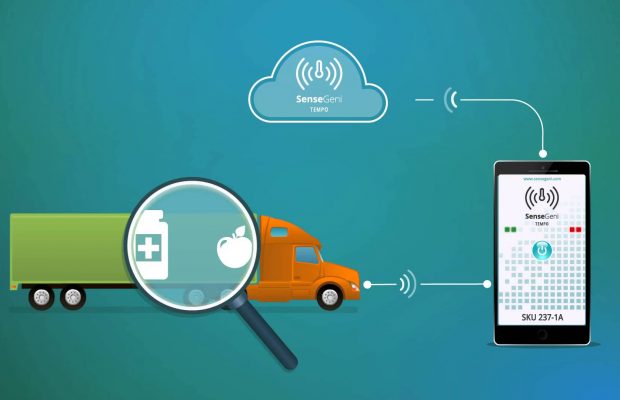
    Unisys predicts that in the coming year, connected technology will take a more prominent role within the supply chain, as sensor-based track-and-trace technology will allow companies to verify product shipping information, monitor temperature issues and adjust routes based on environmental factors affecting drug viability, as well as using cross-platform analytics based on tracking data to help improve route efficiencies and deliver critical medications to people who need them, when they need them.

    Prediction: Continued rise in cyberattacks and shift in how patient data is accessed will require a multi-tiered approach to cybersecurity

    According to a recent report, in the second quarter of 2017 life sciences and healthcare organisations suffered more security incidents than any other industry, surpassing the public sector. Simultaneously, as more providers use personal or hand-held devices to access data, it means extremely valuable patient data is more vulnerable to cyber threats. In the coming years, the industry will see a rapid rise in ransomware and DDoS attacks that threaten patient data, as well as the business reputations of the organisations trusted to protect it.

    These security risks are not lost on consumers; the recent Unisys Security Index found that a large majority of US respondents registered concern about the possibility of hackers or malicious intruders gaining access to internet-connected medical devices such as defibrillators, pacemakers or insulin pumps belonging to them or someone they know.

    As a result, Unisys predicts companies will shift toward a multi-tiered, holistic approach to security. To ensure proper security, all devices will require equally strong protection, including personal devices that interact with multiple networks. While it will require more than one type of protection, those that are best poised to adapt will start with a thorough security assessment to analyse network and devices, which in turn can determine how different aspects of security can work together best for the business.

    Prediction: Compliance and certification move to the cloud

    Historically, legacy hardware and a lack of centralised mandates for certification have hindered migration to the cloud in life sciences and healthcare. This has largely been based upon a general distrust of allowing critical IP and patient information “outside the gates”.

    Unisys predicts that advancements in cloud-based software and security, coupled with proper guidance, will help providers more quickly adapt to ensure up-to-date compliance based regulatory needs and help bridge the gap between compliance, security and privacy.

    “To prepare for what’s to come, first you have to take a step back,” Livingstone said. “Completing a thorough review and assessment of one’s technological and security needs, as well as data and compliance management as it relates to IP, patent and regulatory issues, life sciences and healthcare companies will make one well-positioned to succeed in the digital future.”

  • Fortinet extends security fabric to IIoT

    Fortinet extends security fabric to IIoT

    Fortinet has extended its FortiGuard threat intelligence service to the industrial IoT (IIoT).

    The new FortiGuard Industrial Security Service (ISS) builds on the threat intelligence services of FortiGuard Labs by providing application control and defensive signatures specific to critical infrastructure and industrial sector organizations.

    The company is particularly targeting the utility, oil and gas, transportation, and manufacturing sectors.

    FortiGuard ISS protects the most widely-used industrial control system (ICS) and supervisory control and data acquisition (SCADA) devices and applications. The service provides vulnerability protection, visibility and granular control over ICS and SCADA systems and is backed by real-time threat intelligence updates.

    Enterprise and consumer demand has created an explosion in the number of IoT devices connecting to global networks. McKinsey estimates that 20 to 30 billion IoT devices could be connected globally by 2020, up from 10 billion to 15 billion devices in 2015. However, as devices proliferate, security risks also increase.

    Traditionally, commercial and industrial networks and their IoT devices have operated in isolation, but the mainstreaming of things like smart cities and connected homes have begun to merge these devices within local, national and global infrastructures.

    This is requiring organizations to rethink how they secure increasingly converged IT, OT and IoT networks and devices. Integrating distinct security tools into a unified Security Fabric enables organizations to collect and correlate threat intelligence in real time, identify abnormal behavior and automatically orchestrate a response anywhere across this complex IoT attack surface.

  • IoT healthcare market to hit $10b by 2024

    IoT healthcare market to hit $10b by 2024

    The global IoT healthcare market is will grow to exceed $10 billion by 2024, Global Market Insights predicts.

    Market growth is primarily driven by the implementation of advanced digital solutions across the sector. The integration of such technology in the healthcare infrastructure is expected to streamline the operations, improvise the patient interactions and enhance the efficiency of processes.

    Increasing penetration of smartphones coupled with the improved internet connectivity worldwide is expected to fuel the growth. IoT has potential to reshape the industry due to the benefits such as remote monitoring of patients and management of facility assets.

    Increasing aging populations in Japan and several other European countries such as Italy and Germany, coupled with the rising number of chronic diseases, will drive the IoT healthcare market growth over the forecast timeline.

    Technological advancements in the sector to provide accessible and inexpensive patient care solutions widens the scope for adoption of such solutions. It is gradually transforming the sector by focusing on the way devices, application as well as people interact with each other.

    However, the lack of interoperability may hamper the IoT healthcare market growth. Interoperable systems enable share and retention of data automatically, eliminating the possibility of re-entering data each time.

    Issues such as difficulty in integration of devices made by different manufacturers, their inability to operate on other operating systems, poses challenge to mass consumerization of IoT solutions.

    In order to reach mass adoption, overcoming such risks restricting boundless connections of a connected world is a primary concern to the technology providers. Other factors such as high cost of infrastructure development followed by data privacy and security issues are predicted to curb the demand.

    Rising deployment of smart sensor technology in various systems enhances the capability of IoT healthcare market devices to collect more data associated with patient’s health. The gathered data is used to enhance the patient monitoring process and analyze it to discover new treatments for various other diseases. These technological solutions therefore help bridge the gap between the physical and the digital world.

  • China Telecom signs IoT deal with Bridge Alliance

    China Telecom signs IoT deal with Bridge Alliance

    China Telecom has forged an IoT business partnership agreement with APAC and MEA mobile industry group Bridge Alliance.

    Under the agreement, China Telecom will be able to provide IoT and M2M services to multinational enterprise customers across Bridge Alliance’s footprint of 34 markets.

    Bridge Alliance members will likewise be able to take advantage of the partnership by extending their own IoT services into China.

    The partnership will leverage Bridge Alliance’s technical and commercial capabilities to provide homogeneous solutions across its footprint, taking advantage of the simplicity of a single point of integration with China Telecom.

    Both China Telecom and Bridge Alliance members have deployed common connectivity platforms to provide customers with a unified experience when deploying their solutions across multiple markets.

    The Asia-Pacific excluding Japan IoT market is predicted to surge to $455 billion in 2021, making it the top region for IoT investments in the world, according to IDC.

    “We are excited to join Bridge Alliance as a business partner. China Telecom has a strong portfolio of multinational enterprise customers who are looking to deploy their products and services across the Asia Pacific, Middle East and Africa regions. Bridge Alliance is the ideal partner to fulfil such requirements,” Chian Telecom managing director of global business Deng Xiao Feng.

    “Likewise, China Telecom is also ready to support any inbound opportunities from the member operators into China. With the supporting common platform and the business opportunities across these different regions, we are confident this partnership will be a mutually beneficial and win-win business collaboration.”

  • New IoT botnet discovered in the wild

    New IoT botnet discovered in the wild

    Check Point researchers have discovered a brand new botnet – dubbed ‘IoTroop’ – that is evolving and recruiting IoT devices at a far greater pace and with more potential damage than the Mirai botnet of 2016.

    IoT botnets are internet connected smart devices which have been infected by the same malware and are controlled by a threat actor from a remote location. They have been behind some of the most damaging cyberattacks against organizations worldwide, including hospitals, national transport links, communication companies and political movements.

    While some technical aspects lead Check Point to suspect a possible connection to Mirai, this is an entirely new and far more sophisticated campaign that is rapidly spreading worldwide.

    It is too early to guess the intentions of the threat actors behind it, but with previous Botnet DDoS attacks essentially taking down the internet, it is vital that organizations make proper preparations and defense mechanisms are put in place before an attack strikes, the company said.

    Ominous signs were first picked up via Check Point’s Intrusion Prevention System (IPS) in the last few days of September. An escalating number of attempts were being made by hackers to exploit a combination of vulnerabilities found in various IoT devices.

    With each passing day the malware was evolving to exploit a growing number of vulnerabilities in Wireless IP Camera devices such as GoAhead, D-Link, TP-Link, AVTECH, NETGEAR, MikroTik, Linksys, Synology and others. It soon became apparent that the attempted attacks were coming from a variety of different sourcesand IoT devices, meaning the attack was being spread by the IoT devices themselves.

    “So far we estimate over a million organizations have already been affected worldwide, including the US, Australia and everywhere in between, and the number is only increasing. Our research suggests we are now experiencing the calm before an even more powerful storm. The next cyber hurricane is about to come,” Check Point said.

  • Cisco launches IoT lab in Hong Kong

    Cisco launches IoT lab in Hong Kong

    Cisco has launched its first smart city pilot program in Hong Kong, the Digital Living Lab.

    The Digital Living Lab is supported by Cisco’s new IoT operations platform Cisco Kinetic, which is designed to help extract, compute and move data from connected things to IoT applications to deliver better outcomes and services.

    Cisco and its partners have established a low-power RAN gateway (LoRaWAN) at Hong Kong Science Park to kick start the IoT program. The gateway will be used to provide demonstrations of IoT-enabled applications that are new to Hong Kong and helpful to the wider community.

    The company is also providing 80 IoT explorer kits to schools, startups and other organizations in Hong Kong to support their teaching and learning in IoT based technologies and facilitate data analytics and R&D development for IoT applications.

    “The ‘Smart Region’ initiative led by HKSTP and The Chinese University of Hong Kong (CUHK) is to make Hong Kong Science Park a testbed and wondrous showcase of the Smart City vision. We are glad that Cisco, as a worldwide leader in smart city technology, is launching ‘Digital Living Lab’ that aligns with our agenda in developing into a smart city,” HKSTP CTO George Lee commented.

    As well as HKSTP, Cisco’s partners in the program include Avnet, Pixel Networks, the Smart City Consortium (SCC) and the Technology Incubation Network (TIN).

  • China Telecom, Huawei complete 400GE tests

    China Telecom, Huawei complete 400GE tests

    China Telecom Guangzhou’s Research Institute and Huawei have completed the first 400 Gigabit Ethernet (400GE) test, confirming that the technology possesses the qualities required for commercial deployment.

    The tests over China Telecom Guangzhou’s network and terminal key laboratory verified 400GE port functions including line-speed forwarding, multi-service stacking, and fault reporting.

    China Telecom Guangzhou Research Institute was responsible for determining network requirements and test case design and overseeing the test. Huawei supplied backbone routers supporting 400GE port forwarding.

    Huawei said that under real-world network traffic conditions at full bandwidth 400GE ports experienced zero packet loss in line-speed forwarding.

    Multi-service stack tests also indicated that bundled 400GE and 100GE ports could implement precise load balancing, that the transmission distance was as far as 10 km and that protocol-based forwarding, loopback and fault reporting functions were all normal.

    The trial was conducted as part of the two companies’ 400GE R&D partnership, which they announced in 2016. This partnership is aimed at developing live-network service requirements, application scenarios, standards formulation, and technology R&D.

    “In the final release of the 400GE technology standard, China Telecom Guangzhou Research Institute and Huawei performed the world’s first 400GE port tests based on requirements of the live network, realizing a combination of network requirements and technical R&D,” China Telecom Guangzhou Research Institute IP technology research owner Zhu Yongqing said.

    “The test results reached expectations. In the future, we will cooperate with Huawei and other partners to promote development of the 400GE industry and maturation of the supply chain, ultimately driving the development of China Telecom’s network and the national broadband infrastructure.”

    The standardization process for 400GE is expected to be complete by the end of the year.

  • DHL continues IoT drive with latest Huawei pilot

    DHL continues IoT drive with latest Huawei pilot

    When a business operates across hundreds of sites globally, the little things add up. And so German logistics company DHL has kick started a series of internet of things (IoT) pilots across its sites around the world – the latest being an automotive plant in Liuzhou, China, with the help of Chinese technology company Huawei.

    The proof of concept, delivered jointly with China Mobile and Huawei, will make use of Narrowband IoT and run with 100 DHL drivers. Narrowband IoT (NB-IoT) is a low power wide area (LPWA) technology that is designed to allow IoT devices to transmit data to and from one another across a network, and was standardised by the 3GPP group in June last year.

    Inbound truck drivers check a mobile app and are directed to a free dock as soon as it becomes available, and the results so far have seen the average waiting time halve from 40 to 20 minutes.

    Trucks can be prioritised according to the site’s needs, and incoming shipments can be sent to the dock most appropriate for them. DHL expects the pilot to run until the end of September.

    DHL has previously partnered with Cisco and IoT startup Conduce to introduce IoT ‘cockpits’ into its warehouses in Germany, the Netherlands and Poland. These systems took data from equipment and visualised it for real-time operation management.

    “We are working with everyone in the industry who offered us solutions that are interesting to us,” says Dr Markus Voss, CIO for DHL, speaking with Computerworld UK at Huawei Connect in Shanghai, China. “This is early stage in terms of the technology and we are open to partnerships, not just with tech giants but also startups, as well as research institutes. It really is an ecosystem of partners.”

    That ecosystem could also include smart cities or governments that have a certain need DHL could provide through its expertise in the field, and the company has run pilots for smarter city logistics.

    But Huawei, the Chinese business that went from providing switching equipment in the domestic market to becoming a worldwide player in networking and cloud, has long had a partnership with DHL.

    “We have been working with Huawei for decades, they have been a provider for us, and we have been a provider for them, so this is a long-term relationship,” says Voss.

    “The trial has already proved its readiness: we have reduced waiting time, which is awesome for productivity, as well as error rates quite dramatically. That, I would consider a success, so we can roll this out to other parts of our operations.”

    These pilot programmes, Voss says, quite clearly demonstrate both the results and the future possibilities that come with integrating newer technologies into the supply chain, and so buy-in at the board level has not been a particularly hard sell.

    “There has never been a better time to sit at the board level and have a very important seat at the table,” says Voss. “So when I talk to my colleagues about digitisation they are very, very open minded, see the possibilities themselves, and are excited. We work very closely together so it was an easy sell-in, essentially.”

    DHL Supply Chain, a Bonn-based division of Deutsche Post DHL, has run other pilots to demonstrate how it can apply new technologies to the supply chain.

    Last year, the company tested an augmented reality (AR) glasses programme across warehouses in the US and the UK. The smart glasses could be used to quickly locate where an item needs to be placed on a trolley, with the aim of reducing error rates while freeing up workers’ hands to pick items faster.

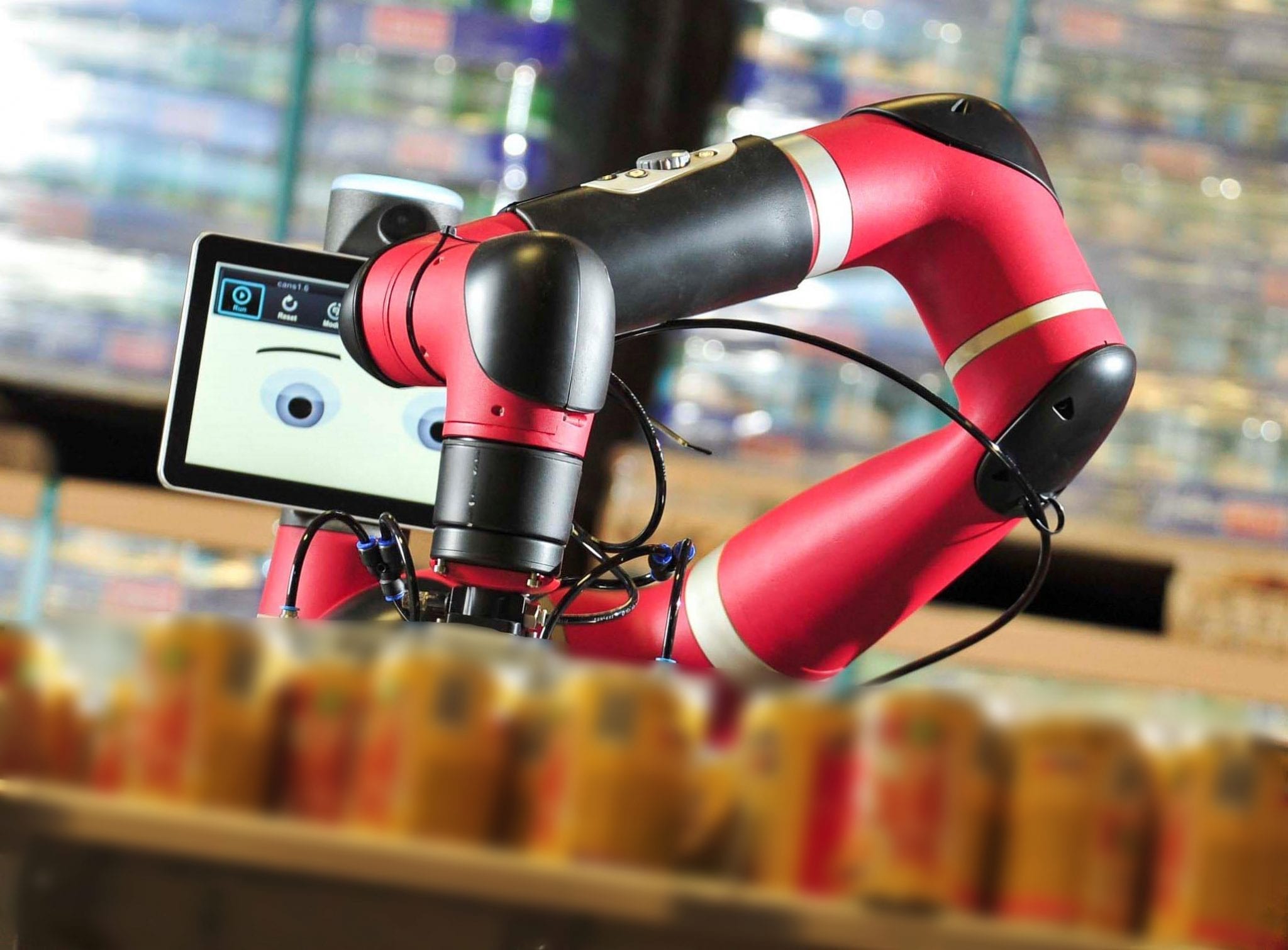
    It also ran a trial at a site in Unna, Germany for the use of ‘EffiBot’, a robotic trolley that follows pickers through warehouses and is designed to lighten the physical load of pushing heavy carts around. The company is also testing the Baxter and Sawyer robots (pictured above) in some warehouses.

    While AR glasses have been a consumer flop to date, Voss says the company saw “huge potential” in using the technology to create efficiencies in the workplace. While DHL keeps an eye on emerging trends in social, business and consumer technology, Voss stresses that IoT has the potential to generate as much as 1.77 trillion in additional value for the logistics market worldwide, and this could forge new paths for the business to build revenue.

    “There are still a lot of inefficiencies in today’s supply chains, there are trucks that are empty on one route,” Voss says. “There is a lot we can bring in, more algorithms, more knowledge, more data and information about what happens, so I think there’s huge potential for us to drive better efficiencies out of the supply chain.

    “What I’m sometimes more excited about are the completely new business models – how can we think of something that is out of the traditional offers a logistics provider would bring to the table?”
  • Orange Business, Microsoft sign IoT partnership

    Orange Business, Microsoft sign IoT partnership

    Orange Business Services and Microsoft have teamed up to deliver large-scale, end-to-end Internet of Things (IoT) solutions for the manufacturing sector.

    The Orange modular IoT solution, Datavenue, accompanied by Microsoft Azure IoT Suite, aims to help enterprises transition to Industry 4.0 and optimize the entire manufacturing value chain.

    Through this collaboration, companies can take advantage of the combined expertise of Orange and Microsoft regarding data protection, as well as device and data management.

    This includes the opportunity to leverage Orange Business Services’ many IoT connectivity options, in particular LoRa. Use cases range from supply chain and smart inventory management to digital operations, such as predictive maintenance, employee safety and facility and equipment management.

    For its long-term customer e.l.m. leblanc, Orange delivered a customized IoT platform on Microsoft Azure, which provides a tailored solution for remote monitoring, along with curative and predictive maintenance.

    A subsidiary of the Bosch Group, e.l.m. leblanc manufactures gas boilers and water-heaters since 1932. The company is a major player in the French housing and industrial markets for heating and cooling systems and hot water for sanitary use.

    “Using the Azure Cloud allows for high-level scalability and efficient machine learning solutions with reasonable costs,” of e.l.m. leblanc CEO Philippe Laforge said.

    The remote monitoring solution collects the boiler’s data and alerts technicians of any malfunction. This allows for more efficient maintenance intervention, with fine-tuned predictions on the probable causes of failure based on real-time data analytics.

    Preemptive alerts can also be raised by the platform through predictive maintenance algorithms. Benefits include optimization of intervention processes, and increased end-customer satisfaction, thanks to innovative and responsive customer support.

    In order to accelerate the roll out of industrial projects, Azure IoT Suite provides pre-packaged solutions and allows companies to swiftly get familiar with the set-up and explore the most common IoT project scenarios, including remote monitoring, predictive maintenance and connected factories.

    The software environment provided by Microsoft will allow for the use of advanced solutions such as Cortana Intelligence Suite (advanced analytics and AI), Power BI (data visualization) and Mobile Apps (Xamarin) to ensure a flawless mobile user experience.

  • Legacy networks to hamper hybrid cloud adoption

    Legacy networks to hamper hybrid cloud adoption

    Nearly all APAC IT decision makers (99%) agree that legacy network infrastructure will struggle to  keep pace with the changing demands of the cloud and hybrid networks, according to a survey by Riverbed Technology.

    The global survey, which includes responses from 1,000 IT decision makers across nine countries – including Japan, China, India and Australia — revealed a very high level of agreement that legacy infrastructures are holding back their cloud and digital strategies.

    In addition, 93% of respondents say their organization’s cloud strategy will only reach its full potential with a next generation network, and 98% agree that a next-gen network is critical to keep up with the needs of their business and end users.

    The survey also found there is a current gap in the adoption of next generation technology such as SD-WAN that will accelerate the cloud and digital transformation, however a tipping point is near.

    Of the APAC IT decision makers surveyed, 92% plan to migrate to SD-WAN within the next four years, up from just 6% today.

    Currently, performance pains experienced by businesses in APAC are glaring, as nearly half (48%) report that they experience cloud-related network issues specifically caused by their legacy infrastructure a few times a month or more; and 90% said it impacts their business at least monthly.

    But 85% of these same decision makers say they are still several years away from reaching the full potential of digital transformation, in part due to their legacy infrastructure. This number jumps to 90% for respondents in China and 94% in Japan.

    This gap between realization and actual deployment is consistent from companies across verticals such as financial, manufacturing, retail, energy and utilities, communications and media, and IT services, and could threaten their competitive positions in their respective markets.

    While a current gap exists in the adoption of next-gen technology to support cloud and digital transformation in the enterprise, this is changing quickly. Of those surveyed, 97% agree that within two years SD-WAN technology will be critical in next generation networks to manage cloud and hybrid.

    While only 6% of those surveyed are currently benefiting from SD-WAN today (slightly higher than the global average of 4%), more than half (57%) plan to migrate to SD-WAN within two years, and 92% within four years.