Tag: JD

  • JD rumored to invest in Indonesian e-commerce company

    JD rumored to invest in Indonesian e-commerce company

    China’s JD is reportedly currently negotiating with PT Tokopedia, an e-commerce company in Indonesia, for a potential investment deal.

    If an agreement can be reached, it will help JD accelerate its expansion in Indonesia, one of the largest markets in Southeast Asia.

    JD has implemented initial negotiation and the Chinese e-commerce giant may invest hundreds of millions of dollars into Tokopedia. The deal may value Tokopedia at over USD1 billion.

    Once the investment is successful, JD will be able to compete with Alibaba in this marketplace. As China’s two leading e-commerce providers, Alibaba and JD are both exploring the Southeast Asia market. In 2016, Alibaba acquired the controlling stake in the Southeast Asia e-commerce company Lazada. In addition, with this move, JD is expected to realize deployment in this region before Amazon.

    Tokopedia was established in 2009 and its business model is similar as Alibaba, which focuses on connecting consumers and vendors, instead of selling owned products. In 2014, the company gained USD100 million investments from SoftBank and Sequoia Capital, setting a record at that time.

  • JD.com swings to profit first, revenues surge 41%

    JD.com swings to profit first, revenues surge 41%

    E-commerce giant JD.com said on Monday first-quarter revenues lifted 41% for fiscal 2017, as the second-biggest online retailer in China recorded its first profit as a publicly listed company.

    JD.com reported net income of 239 million yuan ($35 million) for the three months ended March — its first time in the black since listing in 2014. Sales rose 41 percent to 76.2 billion yuan, also topping the 73.6 billion yuan projected.

    JD, which bought Walmart’s Yihaodian local shopping platform in 2016, saw a rapid expansion into household supplies and food, as well as fashion and homewares during the last quarter, which increased users.

    JD also dipped into data, cloud and artificial intelligence services – moves that saw it swing to a profit from a loss in the previous quarter.

    “Margins benefited from our rapidly growing scale across all of our product categories,” JD’s chief financial officer, Sidney Huang, said in a statement.

    In November, JD.com said that it would seek to split off JD Finance, its financial unit, making it a fully Chinese-owned entity. The move allows JD to apply for licenses that Chinese laws forbid foreign-listed firms from holding, including mutual funds and securities. Under the restructuring, CEO Richard Liu will be one of the buyers and JD.com will receive 40% of any pre-tax profit.

    In the financial statement, JD forecast second-quarter revenues to lie between 86.6-89.1 million yuan excluding JD Finance, representing a growth rate of 33-37%, in line with analyst predictions of 36%.

    However, Huang cautioned future investments, such as the construction of warehouses, would “significantly increase” capital expenditure resulting in falling free cash flow.

    “Our quarterly earnings will likely be lower in one or more of the next few quarters,” he said. “The Chinese e-commerce market remains highly competitive and we remain committed to returning a meaningful portion of our incremental gains from scaled economies onto our customers.”

  • Samsonite Asia heightens focus on China

    Samsonite Asia heightens focus on China

    Branded luggage-maker Samsonite Asia aims to make China its biggest market within five years, pinning its hopes on eCommerce and social media to fuel growth.

    While sales in China now account for more than 10 per cent of its total revenue, Samsonite CEO Ramesh Tainwala says they are likely to double by 2022, thanks to the explosion in online shopping and a wealthier population keen to travel.

    “Now that 20 per cent of our Chinese businesses come from online, we expect the number to grow by about a third in a couple of years,” he says.

    Global net sales in 2015 reached US$2.43 billion for the Indian company.

    Virtual stores on B2C sites JD and Tmall have claimed 60 per cent of Samsonite’s online business in China. Its luggage is also sold through the digital outlets of shopping malls and department stores.

    Samsonite will open its own direct online shopping portal this year aimed at more sophisticated buyers who want bigger-ticket items via the brand rather than a third party.

    First-half sales last year remained flat for Samsonite, according to its interim report, partly because of sluggish performance in China as consumers forsake department stores for online retail.

    Samsonite president for China and the Philippines Frank Ma says the company spares no effort in using social media campaigns to guide traffic to brick-and-mortar stores. For example, followers of Samsonite’s official WeChat account are given a discount coupon when they sign up for promotional events in shopping centres.

    Ma says content marketing helps attracts customers and adds to another 5 per cent to its offline sales.

    Seven of Samsonite’s nine brands have been introduced to China, ranging from the entry-level American Tourister to the newly acquired Tumi, which targets high-end business travellers.

  • Four strategies of China’s top 10 e-commerce apps

    Four strategies of China’s top 10 e-commerce apps

    Pushing advertisement online and offline has been the typical strategy of China’s e-commerce giants to bring in customers, explaining why e-commerce sector is one of the toughest battlegrounds for freshly born startups since they have little money to spend on advertising. However, the trend is changing.

    As startups like Bolome, combining live streaming into cross-border e-commerce, and Yitiao, a WeChat public account-based e-commerce platform with high-quality content and storytelling around their handmade products, even the e-commerce behemoths are following the trend of live streaming and content marketing. Of course, Chinese e-commerce giants were not lazy on their investment and M&A to consolidate the market.

    Seeing the ranking, Alibaba stayed competitive in its forte, e-commerce sector. Alibaba’s C2C e-commerce platform Taobao ranked first, its B2C e-commerce platform Tmall ranked second, its second-hand retailer ranked seventh, and its electronics retailer Suning ranked the eighth. The report was jointly published by Cheetah Global Lab, Cheetah’s big data platform libra and 36kr.

    China’s e-commerce market will get even bigger, with a boost from the Chinese government. Online retail sales could reach 10 trillion yuan in 2020 as the country’s online population will pass 1 billion, growing by 7.8 percent a year from 2015, according to the 2016-2020 e-commerce development plan released by the Ministry of Commerce and other government departments. The e-commerce market will employ over 50 million people by the end of 2020, according to the plan.

    Screen Shot 2017-01-26 at 10.01.45 AM

     1. Live Streaming

    Taobao, JD and Mogujie added live streaming to their platform. Online celebrities live stream and recommend products on the video, and shoppers can click on the link while watching the video to buy the featured product.

    Online celebrities, mainly female broadcasters in their 20s and 30s, try on brand cosmetics and clothing at home. Online celebrities in overseas countries visit the local supermarket and explain each product while putting them in the cart and visit the local cosmetic shop to get further explanation of the cosmetic product from the clerk.

    2. Content is king

    Some e-commerce platforms added content-reading features to their apps, such as Taobao Headlines (淘宝头条) and JD Findings. Since Alibaba’s content cannot go on WeChat public accounts, Alibaba had no option but to come up with a content service on its e-commerce platform to encourage their customers to get to know more about their products.

    Vipshop is a Guangzhou-based online discount retailer for brands in China. After listing on New York Stock Exchange, the company reported its revenue up 38.4% YoY to 12 billion RMB (1.8 billion USD) in the third quarter of 2016.

    3. Consolidating the market using M&A and investment

    Some e-commerce companies showed consolidation. Hangzhou-based Mogujie now takes control of its previous rival Meilishuo (ranking 20th in the list) through a stock swap in January last year. Ranking 5th in the list, Mogujie was founded in 2011 by a former Alibaba engineer.

    Suning is an electronic product focused retailer in China. The company invested in Eight Days, an e-commerce startup targeting university students to get a grip of post-95 consumers in April 2016.

    4. Focusing on the second-hand market

    Xian Yu (meaning Idle Fish), a second-hand e-commerce has risen from no.10 to no.7. Alibaba spent 15 million USD to acquire Xianyu in March 2016. The customers can use their smartphones to run their stores, and add promotional voice recordings to sell their products, which makes the app more like a social app.

    Other e-commerce companies include Zhe800 and Juanpi. Pinduoduo is an e-commerce company invested by James Mi, the co-founder and managing director of Lightspeed China Partners.

  • Walmart Invests $50M In JD.Com’s O2O Logistics Services App New Dada

    Walmart Invests $50M In JD.Com’s O2O Logistics Services App New Dada

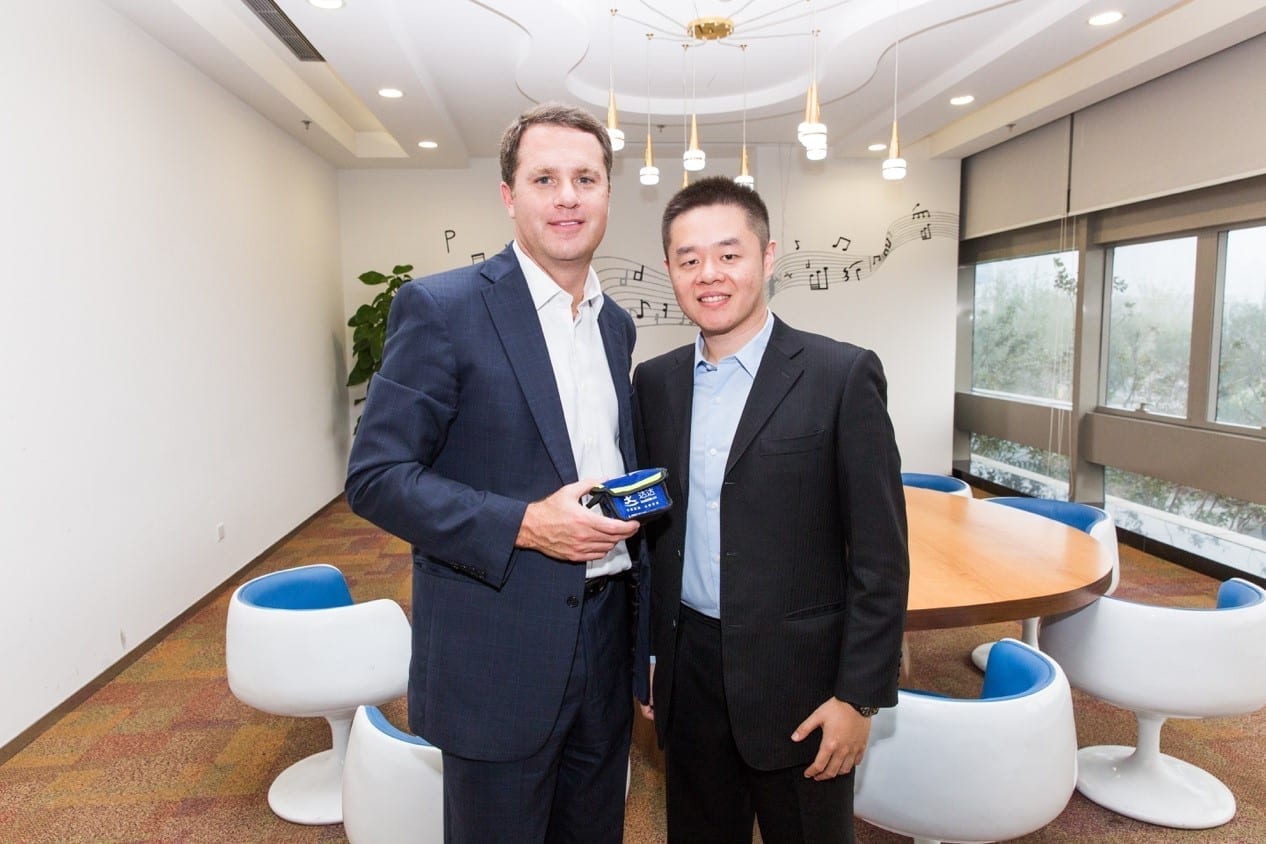
    Walmart has made a US$50 million strategic investment in New Dada, formerly known as Dada and controlled by JD.com Inc., in another step deepening an existing partnership between the global retail giant and China’s second largest e-commerce firm.

    New Dada was created in April from a merger between JD.com’s O2O (online-to-offline) unit and Dada Nexus Ltd., a venture-backed Uber-like mobile app that focuses on providing last mile logistics services.

    “Our alliance with JD and cooperation with New Dada will enable seamless shopping to millions of customers across China,” says Walmart CEO, Doug McMillon.

    The O2O logistics services provider New Dada currently has more than 25 million registered users, and provides local on-demand delivery capabilities with 2.5 million crowd-sourced deliverers across more than 300 cities in China.

    New Dada currently offers customers two-hour delivery on groceries ordered from Walmart stores to customers within a 3-kilometer radius of more than 20 Walmart stores in China. The number of Walmart stores offering two-hour delivery is expected to double by the end of the year.

    Officially launched in 2014, Dada operates through Imdada.cn and last completed a US$300 million series D round of financing from DST Global, Sequoia Capital and others in January.

    It previously raised three rounds of venture funding from DST Global, Sequoia Capital, Greenwoods Investment Management and other undisclosed investors.

    In April, JD.com paid US$200 million in cash and injected JD Daojia assets into Dada in exchange for a 47.4% stake in the newly merged Dada.

  • China Jo-Jo finds gold online

    China Jo-Jo finds gold online

    While its physical stores and wholesale revenues slipped, pharmacy retailer China Jo-Jo Drugstores recorded an increase of about 96.7 per cent in its online revenues during the third quarter ended December 31.

    Through its own retail stores (59 in Zhejiang Province), wholesale distribution and online pharmacy, the New York-listed company is a leading provider of pharmaceutical and healthcare products in China.

    Overall, its revenues of about $24.7 million for the period were up 15.9 per cent. Its retail drugstores brought in $12.9 million, down 2.7 per cent, while its wholesale businesses netted about $3.1 million, a decrease of of 13.8 per cent. However, its online pharmacy revenue rose 96.7 per cent to total about $8.6 million.

    This gave the company a gross profit of about $4.8 million for the quarter, up 52.3 per cent on the previous year. The online profit soared 194.1 per cent to about $1.8 million, while its stores had a 20.3 per cent increase to about $2.8 million.

    Over the nine months of the financial year, revenue totalled $68.6 million, up 22 per cent, with gross profit up 56.1 per cent to about $13.2 million.

    Sales and marketing expenses grew by $1.1 million, or 50.5 per cent, mainly because of higher labour costs and service fees for its eCommerce platforms.

    “We are seeing improvements in gross margin from increased volume in our online business as our revenue mix continues to shift to our fast-growing online business,” says chairman/CEO Lei Liu, who predicts a strong quarter to end the fiscal year.

    “Investments and efforts in building critical mass to service China’s consumer needs in the pharmacy space is taking shape, creating new opportunities to diversify our revenue base.”

    Closer collaborations with large local pharmaceutical vendors are also providing cost advantages. Co-operation with business-to-consumer online vendors have expanded, with the company’s products listed on such platforms as Taobao, JD and www.yhd.com and customers being directed back to China Jo-Jo’s website.

    Meanwhile, the company continues to benefit from working with large insurance companies such as The People’s Insurance Company of China. Commercial health insurance in China continues to expand to supplement the nation’s social health insurance.

    Lei Liu says there is a “relentless call” for healthcare reform in China, including an end to hospitals dominating prescription sales. Meanwhile, China Jo-Jo has also seen its loyalty program expand to embrace more than 2 million customers.

  • Alibaba Beats, Changyou Beats on Earnings

    Alibaba Beats, Changyou Beats on Earnings

    Markets experienced another volatile week, gaining and losing on alternate days ahead of the Lunar New Year holidays next week. The Shanghai Composite Index declined on Monday after the official purchasing managers index suffered its sixth consecutive monthly fall. The benchmark index increased on Tuesday, moving up 2.3% after the People’s Bank of China moved to raise liquidity in the financial system.

    The Shanghai Composite Index moved lower on Wednesday as investors turned cautious and oil prices declined heavily. The benchmark index increased 1.5% on Thursday closing at its highest level since Jan 25.

    Alibaba Group Holding Ltd. reported third-quarter fiscal 2016 (ended Dec 30, 2015) earnings of 73 cents per share, which exceeded the Zacks Consensus Estimate of 70 cents. Changyou.com Ltd. reported adjusted fourth-quarter 2015 earnings of 73 cents per share, which exceeded the Zacks Consensus Estimate of 54 cents.

    Last Week’s Developments

    Last Friday, the Shanghai Composite Index surged 3.1%, reducing its monthly loss to 23%. Despite the day’s gains, the decline for the month was the worst since Oct 2008. Stocks moved up for the first time in four days following speculation that the worst selloff in over a month was excessive in nature. Industrial and financial stocks led gains.

    Additionally, China’s central bank announced it will undertake open market operations on every working day around the Lunar New Year holiday. The number of these operations will be increased from their normal biweekly pace to increase liquidity in the banking system ahead of the holiday. This statement also boosted stocks.

    The CSI 300 added 3.2%. A gauge of brokerages and banks increased 3.2%. A measure of industrial shares increased 3.6%, the highest among the 10 industrial sectors. The Hang Seng increased for a third day, moving up 2.5%. The Hang Seng China Enterprises Index increased 2.7%. The H-share index increased after the Bank of Japan lowered interest rates into the negative zone in order to stimulate its flagging economy.

    Markets and the Economy This Week

    The Shanghai Composite Index declined 1.8% on Monday, increasing January’s selloff. The official purchasing managers index declined to 49.4, the sixth consecutive monthly fall. This is the lowest level experienced in three years. Additionally, the country’s most established companies issued warnings about a fall in earnings.

    Among other economic reports, official non-manufacturing PMI fell from 54.4 in December to 53.5 in January. In contrast, Caixin China Manufacturing PMI increased from 48.2 to 48.4 in January.

    The CSI 300 declined 1.5%. A sub index of energy stocks declined 2.8%, emerging as the largest decliner among the 10 industry groups. PetroChina Co. lktglost 2.8% after stating that falling crude and gas prices would hurt full year earnings.  The Hang Seng declined for the first time in four days, falling 0.5%. The Hang Seng China Enterprises Index moved down 1.2%.

    The benchmark index increased on Tuesday, moving up 2.3% after the People’s Bank of China moved to raise liquidity in the financial system. The central bank injected 100 billion yuan ($15 billion) into the country’s banks via reverse repurchase agreements ahead of the new year holidays.

    Tech and industrial stocks led gains. A measure of tech stocks rose to its highest level in seven days. The CSI 300 advanced 2.1%. All of its sub-indexes increased while measures of tech and industrial stocks increased by a minimum of 2.7%.  The Hang Seng declined 0.8% The Hang Seng China Enterprises Index moved down 1.1%.

    The Shanghai Composite Index lost 0.4% on Wednesday as investors turned cautious and oil prices declined heavily. A measure of energy stocks declined 1.6% as oil prices moved to around $30 a barrel following the steepest two day decline in seven years. PetroChina declined by 1.4% in Shanghai and lost 4.2% in Hong Kong.

    Positive economic data provided little comfort to investors. The Caixin China Services PMI increased to 52.4 in January from 50.2 in December. This was the highest level witnessed since July. A measure of energy stocks declined 1.6% due to the drop in oil prices.

    A sub-index of property stocks increased 0.4% on the Shanghai exchange. This was primarily due to the central bank’s decision to reduce down payments on mortgages for first time home buyers. The CSI 300 declined 0.4%. The Hang Seng fell for a third successive day, declining 2.3%. The Hang Seng China Enterprises Index sank, losing 2.5 percent, to its lowest point in more than a year.

    The benchmark index increased 1.5% on Thursday closing at its highest level since Jan 25. Commodity stocks surged and the People’s Bank of China intensified its efforts to reduce shortage of cash before markets close for the new year holidays. A gauge of energy stocks moved up from record low levels following the longest rally in crude futures in nearly two weeks.

    The central bank pumped 80 billion yuan ($12 billion) into the monetary system utilizing reverse repurchase agreements lasting 14 days. This open market operation is part of the monetary authority’s efforts to control rising borrowing costs even as capital outflows and demand for funds rise.  Meanwhile the People’s Bank of China increased yuan fixing by the highest extent in two months.

    The CSI 300 added 1.2%. A sub-index of material stocks within the CSI 300 gained 2.8%, the highest among its industry groups. PetroChina gained 0.6% during the session. The Hang Seng China Enterprises Index rebounded, moving up 1.5%.

    Stocks in the News

    Alibaba Group Holding Limited reported third-quarter fiscal 2016 (ended Dec 30, 2015) earnings of 73 cents per share, which exceeded the Zacks Consensus Estimate of 70 cents. The adjusted figure excludes one-time items but includes stock-based compensation expense.

    Alibaba reported revenues of RMB34.54 billion (US$5.3 billion), up 55.8% sequentially and 31.9% year over year, driven by strong mobile revenues. Also, revenues surpassed the Zacks Consensus Estimate of $5.08 billion.

    Total China retail marketplaces GMV came in at RMB964.0 billion (US$149.0 billion), up 23% year over year. China retail marketplaces had 407 million annual active buyers in the 12-month period ended Dec 31, 2015, representing a 22% year-over-year growth.

    Mobile GMV was RMB651.0 billion (US$101.0 billion), a 99% year-over-year surge. Mobile GMV accounted for 68% of total China retail marketplaces GMV as against 62% last quarter and 42% in the previous year. Mobile MAUs grew to 393 million, improving 48% year over year, driven by increased promotion of mobile apps.

    Changyou.com Ltd. reported adjusted fourth-quarter 2015 earnings of 73 cents per share, which exceeded the Zacks Consensus Estimate of 54 cents. This was also a significant improvement over earnings of 21 cents per share reported in the same period last year. However, this was lower than the adjusted earnings of $1.55 cents reported in the third quarter of 2015.

    Changyou.com reported revenues of $162 million, down 14% from third quarter 2015. Additionally, revenues declined 25% compared to the same period last year. Revenues from online games came in at $127 million, falling 31% on a year-over-year basis.

    For fiscal year 2015, Changyou.com reported revenues of $762 million, an improvement over 2014’s figure of $755 million. Revenues from online games came in at $637 million, declining from $652 million reported in 2014. .

    TAL Education Group reported adjusted third-quarter 2015 earnings of 12 cents per share, in line with the Zacks Consensus Estimate. This is marginally lower than the 13 cents reported in the year-ago period. However, this is significantly lower than the adjusted earnings of 72 cents reported in the second quarter of 2015.

    TAL Education Group reported revenues of $142.2 million, representing a 43.1% increase over the same period last year. However, revenues declined significantly from the $173 million reported in second quarter 2015.

    For the nine months ended Nov 2015, TAL Education reported revenues of $ 444.9 million, which represents a 43.2% improvement on a yearly basis. During this period, total student enrollments increased by 53.4% on a yearly basis.

    JD.com, Inc. has inked an agreement with DHL per which they will collaborate across a number of cross border supply chain activities. These initiatives will utilize each company’s unique capabilities, of ecommerce and logistics and widen their existing relationship.

    Earlier, in July last year the two companies had revealed that DHL was becoming the preferred logistics service provider for delivery of certain orders made on the Chinese ecommerce giant’s U.S. Mall. The agreement related to deliveries would pertain to those products delivered to China as well as across that country.

    DHL will be the preferred logistics provider for JD.com’s International Business Group per the terms of the new agreement. This unit concentrates on consumers placing orders from outside China. Further, JD.com will now be a strategic customer per the Fast Growing Enterprises initiative of DHL. This will provide the ecommerce company access to a number of logistics solutions from all of DHL’s business units.

    CNOOC Ltd. said it has started production at two offshore projects. These are the Weizhou 12-2 oilfield joint development project and the Weizhou 11-4 North oilfield Phase II project. Both of these projects are located in South China Sea’s Beibu Gulf Basin.

    With an average water depth of around 36 meters, the Weizhou 12-2 project has three oilfields. Production facilities include three wellhead platforms, including 18 wells on all of which production has started. Total production has touched a daily rate of 16,000 barrels, achieving the peak production of its overall developing plan.

    The Weizhou 11-4 North Project’s average water depth is around 40 meters. It has two wellhead platforms and 15 producing wells. At present, one well is producing oil at a daily rate of 500 barrels and is projected to touch peak production of 8,000 bpd by end 2016.

    Performance of Most Actively Traded US-Listed Chinese Stocks                              

    The table given below shows the price movements of 10 Chinese companies with the highest three-month average trading volume on U.S. exchanges. Price movements over the last five days and during the last six months have been included.

    Ticker Last 5 Day’s Performance 6-Month Performance
    BABA -9.2% -19.6%
    JD -7.2% -30%
    VIPS -6.4% -41.3%
    CTRP -5% +1.6%
    SFUN -5.3% -19.2%
    BIDU -5.5% -10.1%
    YOKU -0.1% +41.3%
    JMEI -8% -67.9%
    QIHU -0.8% +12.4%
    TSL +1.2% +4.6%


  • Chinese retailing giant JD.com tests drone in rural areas

    Chinese retailing giant JD.com tests drone in rural areas

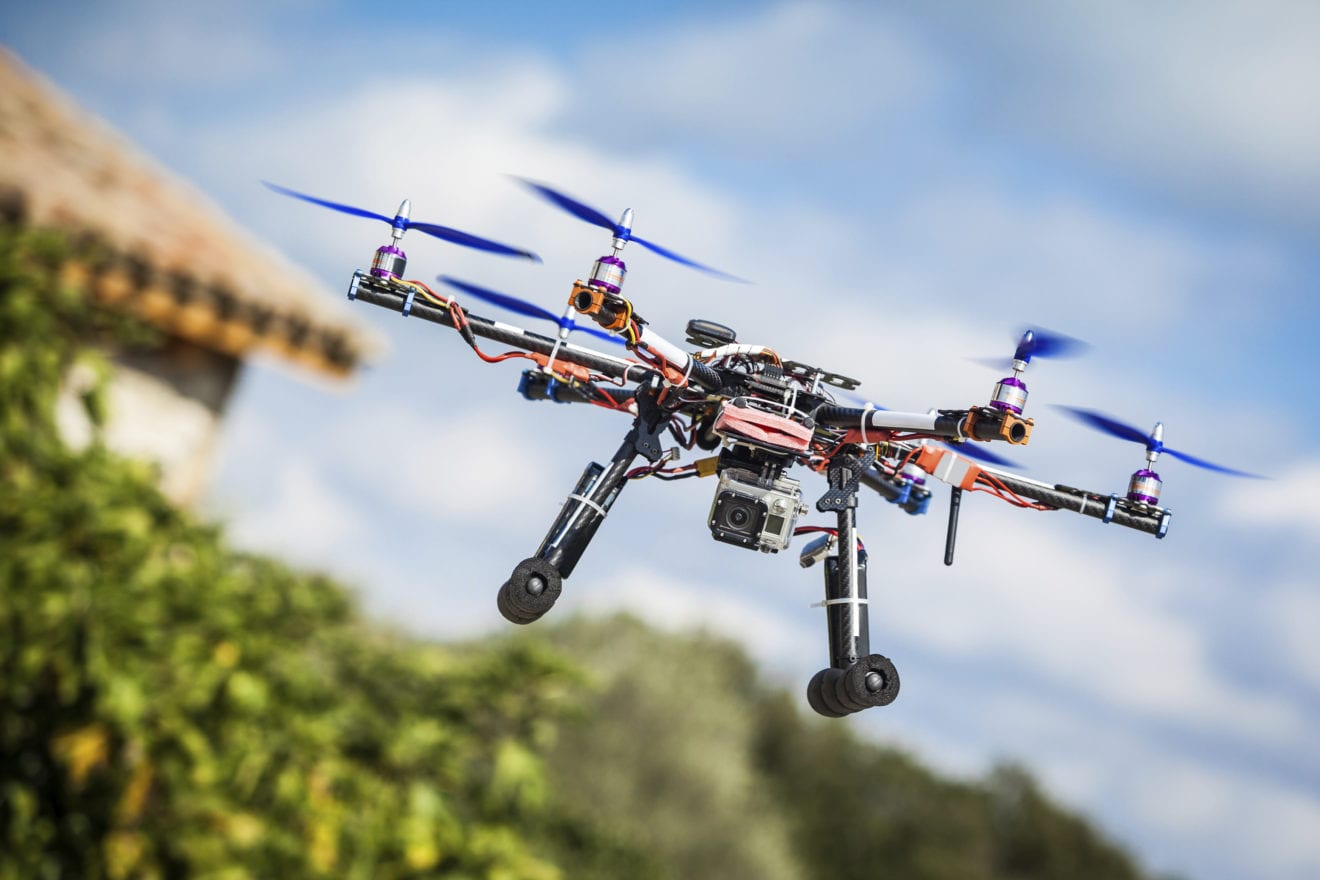
    China’s online retailing giant JD.com has started conducting trial deliveries using drones, and plan to roll it out for delivery in rural China, the state media reported today.

    The company said the unmanned aerial vehicles or drones will not deliver packages directly to shoppers but will instead help transport bundles of items from its distribution stations to 150,000 representatives mobilised across rural China who will then get them to shoppers.

    The distance between distribution stations to rural representatives, usually less than 10 km according to JD, are more fixed for engineers to design drone itineraries and landing points. Representatives will be notified in advance to wait for drones to land with packages, Xinhua news agency reported.

    JD.com’s CEO Richard Liu Qiangdong had said last year that the company is developing drone delivery to meet the rising retail demand in China’s rural areas, where complex terrain and underdeveloped infrastructure have compromised timely human courier delivery.

    Both JD.com and its arch rival Alibaba have been working to unleash consumption demand from China’s 618 million rural residents, whose income growth has been outpacing their urban peers in recent years despite a slowing economy, the report said.

  • Luxottica groups with JD.com

    Luxottica groups with JD.com

    JD.com says it is going to associate with eyewear producer Luxottica to retail a variety of sun shades bearing a few of the best-known international luxurious manufacturers.

    Clients of the Chinese language web site will be capable of buy sun shades from manufacturers together with Ray-Ban, Oakley and Vogue. A lot of the merchandise might be out there by means of JD.com’s direct gross sales channel, enabling Luxottica to leverage JD.com’s nationwide logistics community that includes commonplace same- and next-day supply.

    “Chinese language shoppers more and more depend on JD.com for handy and dependable entry to high-quality luxurious items throughout a variety of merchandise, from clothes and niknaks, to cosmetics,” stated Lijun Xin, VP.

    “We’re delighted to be partnering with Luxottica, the clear international chief in luxurious eyewear, to broaden our providing on this market that’s quickly rising amongst Chinese language shoppers.

    “Partnerships with main luxurious producers resembling Luxottica underline the belief that our international companions have in JD.com, not solely to drive gross sales, but in addition to offer shoppers assured genuine merchandise and the absolute best model expertise.”

    JD.com operates seven achievement facilities and 143 warehouses in 43 cities throughout China, with 3539 supply stations and pickup stations in 1961 counties and districts.

  • JD.com opens world to Chinese shoppers

    JD.com opens world to Chinese shoppers

    JD.com, China’s online direct sales company, has unveiled JD Worldwide, its new cross-border eCommerce platform.

    JD Worldwide provides Chinese consumers with the most convenient way to purchase authentic imported products, including many not previously available in China, and enables international producers and suppliers to sell directly to Chinese consumers without requiring an established presence in China.

    Through the JD Worldwide platform, Chinese shoppers can order goods from hundreds of brands and sellers in overseas markets including Australia, France, Germany, Japan, South Korea, New Zealand, the UK and the US, among others, while enjoying JD.com’s industry-leading user experience.

    Fully integrated with the existing JD.com platform, JD Worldwide features both direct sales and marketplace channels. It currently hosts about 450 online shops, which offer over 150,000 SKUs of high-demand imported products from more than 1200 brands. Customers can place orders seamlessly through JD’s website and mobile applications and have purchases delivered directly to their homes or offices in China, without the typical inconveniences associated with international shipping, customs and language issues.

    The platform also enables international producers and sellers to sell directly to Chinese consumers without needing to establish a legal presence in China, significantly lowering the barriers to entering the China market for global brands. JD Worldwide will offer a range of support to retailers to enable them to take full advantage of the JD Worldwide platform, including support on marketing toJD.com’s nearly 100 million active users and access to JD.com’s extensive nationwide logistics network.

    As part of the JD Worldwide launch, the company also announced the launch of “Best of eBay Deals,” a pilot program on the new platform in partnership with eBay. Responding to growing demand from Chinese consumers seeking items from eBay’s global inventory, eBay’s channel on JD Worldwide will showcase a variety of top categories and popular brands at attractive prices from select, trusted eBay sellers from the US.

    “JD.com has once again raised the standard for integrated e-commerce solutions in China with the launch of JD Worldwide, the most convenient way for Chinese consumers to purchase imported products,” said Richard Liu, JD.com founder and CEO.

    “This new cross-border sales platform marks a major step forward in connecting Chinese consumers with international brands. By combining the advantages of China’s cross-border free trade zones, JD’s warehouses and unparalleled last-mile logistics network, and our experience developing winning marketing campaigns for our partners, JD Worldwide gives international sellers and brands the most comprehensive and effective solution available for reaching Chinese consumers.”

    Liu said that consistent with the company’s overall strategy, it is committed to growing JD Worldwide at a manageable pace to ensure the highest quality products and merchants, the best shopping experience for our customers, and strong sales results for its partners.

    When making purchases through JD Worldwide, consumers will enjoy the same guaranteed product authenticity, prices and reliable customer service they expect from JD.com. Supported by favorable trade policies in China’s e-commerce free trade zones, JD Worldwide employs bonded warehouses to ensure the fastest times for customs clearance and delivery to consumers.

    JD.com has established an exclusive customer service hotline and after-sales customer support team specifically dedicated to JD Worldwide, with live online support provided to international marketplace merchants. As across all of JD’s sales platforms, stringent controls have been implemented to ensure that only high-quality marketplace merchants and authentic products are permitted on JD Worldwide.

  • Ex-Yahoo exec joins JD.com

    Ex-Yahoo exec joins JD.com

    JD.com, China’s largest online direct sales company, has appointed former Yahoo! executive Chen Zhang as senior VP.

    Zhang will head research & development for JD Mall, reporting to Haoyu Shen, JD Mall’s CEO.

    Zhang has been recruited to oversee JD Mall’s R&D staff, focusing on research that will enhance the company’s mobile applications, cloud computing and big data infrastructure. Daxue Li, who heads JD.com’s R&D team, will leave the company to pursue personal interests after a transitionary period but continue as an advisor to JD.com.

    At Yahoo, Zhang established and led the company’s Beijing Global Research & Development Center. In this role, he specialised in research related to personalisation, advertising, mobile and cloud computing technologies. During his 18 years at Yahoo, he held a number of other senior roles, and led the development of the hugely successful Yahoo Messenger product.

    “Chen is one of the most experienced executives in his field, not just in China, but globally,” said CEO Shen.

    “His breadth of experience has relevance right across our business, and we are confident he will have an immediate and lasting impact on our growth.”

    Zhang said he believes JD.com is one of the most innovative companies in the industry, led by a team that truly understands how technology can drive strategic success.

    JD.com, Inc. is a leading online direct sales company in China, with seven fulfillment centers and 123 warehouses in 40 cities and 3210 delivery and pick-up stations across China.

  • JD.com crowdfunding concept launched

    JD.com crowdfunding concept launched

    Chinese eCommerce company JD.com, has unveiled a series of initiatives to help finance, develop and promote the creation of start-ups in China.

    The new JD Equity Crowdfunding platform, which builds upon JD.com’s success in internet finance, is expected to be China’s largest equity crowdfunding platform upon its launch this week.

    “JD Equity Crowdfunding, which expands the range of offerings from JD Crowdfunding, will leverage JD.com’s nationwide brand and reputation for authenticity in the eCommerce space to give China’s entrepreneurs access to a broad set of potential early-stage investors,” the company said in a release.

    “The new platform will provide a unique range of training and support options for companies throughout the entire start-up lifecycle, giving entrepreneurs a greater chance at success.”

    JD.com says the initiatives, anchored by JD Equity Crowdfunding, will help to create an ecosystem supporting start-ups from the funding through the online sales stages of development. In addition to capital through crowdfunding, companies will have access new training courses provided by JD.com and seasoned investors and entrepreneurs, as well as to the company’s broader Internet financing tools. I

    And they will be able to sell their products through the company’s eCommerce platform, leveraging JD.com’s last-mile delivery network and reputation for trust and reliability.

    The first 11 companies to raise funds on the JD Equity Crowdfunding platform include Thunderobot, Fastwheel and WeBuzz, which respectively focus on the areas of gaming laptops, personal transportation devices and social media.

    “I know from personal experience how important it is for entrepreneurs to have access to knowledge and early funding,” said Richard Liu, founder and CEO of JD.com. “As the leader in Chinese e-commerce, JD.com is ideally positioned to create a premium platform to give China’s early-stage companies access to resources and seed capital from a broad range of investors. We look forward to creating innovation and value for investors, consumers and start-ups.”

    Under the JD Equity Crowdfunding model, each investment project will be led by a professional investment manager, from either a venture capital (VC) firm or from a company with similar experience, who will be responsible for working directly with the investee companies and ensuring clear and transparent communications with investors. Participating VCs who will help develop JD.com’s ecosystem for start-up companies include Capital Today, ZhenFund and Sequoia Capital. As part of the program, JD.com will take a small equity stake in the projects that successfully raise funding through JD Equity Crowdfunding.

  • JD’s new delivery app to boost online-to-offline business

    JD’s new delivery app to boost online-to-offline business

    JD Inc, one of China’s biggest e-commerce companies, has introduced a new delivery app for urban Chinese. Paidaojia allows users to place online orders for delivery from nearby merchants, whether convenience stores or restaurants, according to China Daily. JD guarantees delivery within 2 hours on orders from stores within 3 kilometers. JD CEO Liu Qiangdong said in a statement that the app is a strategic move to capture more of the online-to-offline market. Along with the company’s logistics and delivery system, JD plans to build Paidaojia into a “local life and service platform.

    ” The company has already tested the app with a pilot program in Beijing and Shanghai. By the end of March, Paidaojia is expected to serve communities within Beijing from the city center to the fourth ring road. From there, the service area will expand to other large Chinese cities, including Shanghai, Shenzhen, and Guangzhou.