Tag: JD

  • JD.com Announced Its Chic New Paris Office

    JD.com Announced Its Chic New Paris Office

    JD.com announced yesterday that it has opened a Paris office. The move follows an agreement with France’s official trade promotion agency, Business France, to sell €2 billion (US$2.4 billion) in French products to Chinese consumers over the next two years.

    It’s a strategic move, putting JD.com in close proximity to many of the world’s top luxury brands at a time when China’s leading e-commerce platforms are battling for a bigger share of the luxury market.

    JD.com France’s Managing Director, Florent Courau

    JD.com first made public its intentions to woo French retailers earlier this month when French President Emmanuel Macron made a state visit to China. This visit also coincided with another landmark announcement that French luxury fashion house Saint Laurent would be officially partnering with JD.com to sell its collections on the e-commerce site’s luxury platform, Toplife, joining the ranks of La Perla, Tod’s, Emporio Armani, and more recently, Derek Lam.

    Company representatives called the collaboration with France a “milestone” for the e-commerce giant. The newly appointed Managing Director for JD.com in France is Florent Courau, who worked as COO of Sephora in North Asia and, before that, at LVMH for 12 years, six of them in China.

    JD.com intends to leverage stronger relations with the country to broaden its luxury portfolio in Europe, giving its customers access to a wider range and a better quality selection of not only fashion brands, but categories like cosmetics, food, and wine and spirits.

    “Our customers value the quality of French products, making this a critical market for us to further expand our brand relationships,” Courau said in a statement. “Our Paris office will be committed to providing tailor-made support to our French partners who want to seize the immense opportunity that JD offers.”

    A new report released by Bain last week revealed that many luxury consumers were still wary about making purchases online and preferred shopping either at brick and mortar stores, on the brand’s official website, or on its WeChat platform. Luxury aggregators like JD.com’s Toplife and Alibaba’s Tmall Luxury Pavilion were the third most-preferred resource for these consumers.

    But both JD.com and Alibaba have been ramping up their efforts to secure the trust of both consumers and brands in the luxury sector with the launch of these ‘pure play’ platforms—JD.com launched Toplife last fall—that keep luxury goods separate from their other mass market offerings and even counterfeit goods.

    These platforms also let JD.com cater to the specific demands of luxury consumers through offering better customer service, guaranteed authenticity, and a “white glove” delivery service. JD.com has also spent much of the past year forging stronger networks in the luxury industry beginning with $397 million deal with UK luxury platform Farfetch.

    “Since we launched Toplife the goal has been to provide the convenience of online with the personalized feel of making a luxury purchase online,” VP for International Corporate Affairs at JD.com Josh Gartner said. “Our physical presence in France brings us closer to the world’s leading luxury brands and helps us understand them better so we can ensure the integrity of their offline brand identity when they come online with us in China.”

    To smooth the process of entering China’s world of online retail, JD.com also plans to offer a new training program for senior executives on reaching China’s online shoppers, as well as build a logistics center to smooth out the overseas shipping process.

    “Now, we want to bring the best of France, not only in terms of world-class brands, but also in terms of a world-class shopping experience, right to the doorsteps of our luxury consumers,” Gartner said.

  • Saint Laurent joins Toplife

    Saint Laurent joins Toplife

    French fashion label Saint Laurent, part of Kering, will start selling online in China through a JD.com portal, joining shopping players like Alibaba in trying to tap strong luxury goods demand from Chinese consumers.

    The French brand created in 1961 by its late founder Yves Saint Laurent, said  it was partnering with Toplife, a platform launched last October by JD.com, which aims to woo luxury buyers with same-day deliveries and premium services.

    “Thanks to the sophisticated logistics network and personalised platform provided by our partnership with Toplife, Saint Laurent will be able to implement its omnichannel development in China, securing a top-level luxury journey to our clients,” said Francesca Bellettini, president and chief executive of Saint Laurent, in a statement.

    Brands on the platform will have access to “JD.com’s upper middle class user base” and “an online luxury experience that can match the in-store experience,” said Xia Ding, president of JD.com’s fashion division.

    Toplife rivals Luxury Pavilion, a similar portal launched in August, which is backed by Alibaba’s Tmall platform and features products from fashion groups such as Burberry.

    Chinese shoppers made up 32 percent of the worldwide luxury market in 2017, more than any other nationality, consultancy Bain & Co said, making it a crucial market for fashion brands.

    KPMG has projected, meanwhile, that half of China’s domestic luxury consumption could come from web sales by 2020.

    Online shopping has proved a potent earnings driver for fashion brands even if many were initially reluctant to distribute their wares too widely.

    Top labels such as Kering’s Gucci or LVMH’s Louis Vuitton recently started marketing directly to Chinese buyers with their own websites in the country.

    High-end fashion houses are still wary of alliances with mass-market platforms such as Amazon, however, fearful they will lose control of their image.

    JD.com and Alibaba’s specialist luxury platforms have already lured several other brands, touting themselves as more exclusive, selective sites.

  • Yamato teams up with JD.com to send goods across China

    Yamato teams up with JD.com to send goods across China

    Yamato Holdings will partner with Chinese e-commerce giant JD.com to ship products from Japanese retailers throughout China starting in 2018, likely boosting Japanese online sales there.

    JD.com is China’s second-largest internet retailer, after Alibaba Group Holding, and operates a nationwide delivery network.

    Yamato will handle international shipping from Japan to China and use JD.com’s network for home delivery under an agreement concluded Monday. Responsibility for clearing customs will be decided later.

    The alliance will enable Chinese consumers buying items on Japanese websites to have purchases delivered to where they live. With cosmetics and food products from Japan popular in China, sales of Japanese companies are growing as they offer goods on internet marketplaces there. Yamato’s service will offer a way into China for small and midsize Japanese business that have yet to enter the country’s online retail market.

    JD.com will receive shipping service support from Yamato as well. The parcel courier is already consulting JD.com on its cold-chain network and other delivery methods to maintain product quality in transit. This will help JD.com better handle fresh Japanese foods and other perishables, expanding its online retail business.

    China-bound online sales from Japan grew some 30% in 2016 to 1.03 trillion yen ($9.08 billion), according to the Ministry of Economy, Trade and Industry. The market is estimated to nearly double to 1.9 trillion yen in 2020.

    New strategy

    The profitability of home delivery services in Japan has been squeezed amid a personnel shortage that has pushed up labor costs. Yamato sees international delivery, which carries high rates, as a growth field.

    Yamato had been able to offer home deliveries from Japan to only those areas where it has a transport network, such as Shanghai and Hong Kong in China. But it is abandoning this model and partnering with other companies to accelerate expansion abroad. Yamato launched a home delivery service in Thailand with Siam Cement in January.

    But the competition is intense. Japan Post already has Japan-China transport infrastructure and holds a large share of such shipments. It partnered with China’s STO Express to launch a low-cost delivery service in October. Nippon Express is also cooperating with Alibaba in China-bound shipping, handling international transport of goods and customs.

  • Danone links with JD to grow west China business

    Danone links with JD to grow west China business

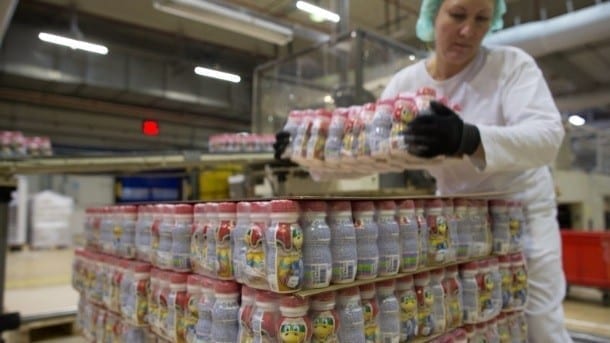
    Danone Waters China, a subsidiary of Danone Group, is tapping into the distribution network of China’s largest retailer and e-commerce giant JD.com as the French company expands its coverage of Southwest China.

    A shared warehouse will be built in Chengdu, the capital of China’s southwestern Sichuan province, that will store and manage inventory, merging Danone’s online and offline operations.

    “China is a market with both huge opportunities and major challenges when it comes to managing distribution across our many sales channels,” said Hanbin Lyu, vice president of Danone Waters China. The company has seven factories in China across six regions.

    Lyu said JD.com’s in-house logistics network and supply chain management technology would help Danone improve demand planning, inventory placement, warehouse and transportation management to increase efficiency across different sales channels.

    The Danone tie-up furthers JD Group’s push into the logistics business following the creation of JD Logistics earlier this year as a stand-alone business unit. JD operates China’s largest in-house fulfillment and last-mile delivery network with 405 warehouses.

    As part of the joint effort, JD will leverage its big data capabilities through the analyzing of billions of data points. The technology enables JD to help suppliers more accurately predict the ebb and flow of demand, and more efficiently manage stock. JD’s expertise in the area can help limit stock outs, waste, and higher logistics costs for last-minute replenishment that have traditionally plagued retail as a result of multiple layers of handling by a mix of third-party providers.

    “We believe our infrastructure and technology will benefit shippers and industries, including those that don’t sell directly on our platform,” said Wei Tang, vice president of logistics at JD. “Online retailers like JD can lead the way to more efficiency, transparency and reliability in commerce, benefitting both customers and suppliers.”

    A rapidly developing trend in China is the fast-growing demand for fresh products. During its Single’s Day promotion, JD.com sold over 20,000 tons of fresh products that included highly perishable items such as 500,000 tiger shrimp from Thailand and 2 million hairy crabs. There was also huge demand for Australian sirloin, Chilean frozen salmon, and Vietnamese base fish.

    The efforts in logistics are part of JD’s broader “retail as a service” strategy. As changing consumer demands force changes throughout global retail models, large-scale e-commerce companies are working on the development of an efficient and advanced supply chain.

    The need for efficiency is crucial to facilitate the growing cross-border e-commerce sales in China that are expected to reach $100.17 billion by the end of 2017, with the average spend per cross-border digital buyer at $882, according to eMarketer research. Average spend per buyer has increased because of growing awareness of overseas brands in China, as well as better logistics and the perception that foreign goods are of better quality.

    “The factors fueling the trend toward greater cross-border shopping are nothing new, as the average Chinese consumer is now more tech savvy, more exposed to foreign brands through overseas travel and the internet and, crucially, more willing to spend,” said Shelleen Shum, senior forecasting analyst at eMarketer.

    “With shopping sites such as TMall Global, JD Worldwide, and Kaola adding more brands to their offerings and improving cross-border logistics and processing times, there is an opportunity for foreign brands to tap into the demand for high-quality products, especially in categories like baby, maternity, health, and beauty.”

  • China’s JD.com is keen to link with Saudis

    China’s JD.com is keen to link with Saudis

    With the Middle East in its sights, China’s JD.com is keen to team up with the Saudi government.

    “We want to have a partnership with the Saudi government,” says the e-commerce company’s international business president Winston Cheng.

    He describes Vision 2030, Saudi Arabia’s economic reform plan aimed at boosting private-sector growth and developing non-oil industries, as an incredible opportunity.

    “This region is the next new frontier,” says Cheng. “We’re looking to move very fast.”

  • Lidl Stiftung enters China via JD Worldwide

    Lidl Stiftung enters China via JD Worldwide

    European supermarket chain Lidl Stiftung has opened a flagship store on JD Worldwide, introducing the Lidl brand to China through cross-border e-commerce.

    The German group’s flagship store sells snacks, healthcare products, personal and beauty care products, and food and drinks, such as biscuits, nuts and milk. It also plans to introduce home brands.

    Lidl has more than 10,000 stores across 30 countries, and 150 distribution centres in 28 countries.

  • E-commerce wars: fashion exodus from JD.com

    E-commerce wars are in the news again in China, with reports of a mass exodus of fashion brands from the JD.com platform.

    44 fashion brands closed their flagship stores on JD last month while launching or keeping their shops on Alibaba’s Tmall. The main brands involved included millennial niche brand JNBY, billion-yuan brand Peacebird, menswear brand GXG and fast-fashion label Heilan Home.

    Following up, state-run Xinhua News Agency has published a more detailed breakdown of the brands that left: 27 womenswear brands, seven menswear brands, seven childrenswear brands and three lingerie labels.

    JD has confirmed the exodus with a statement containing a thinly veiled reference to Alibaba as “another industry player”.

    “We believe strongly in open, fair and legal competition, but not everyone in the industry agrees,” says the JD statement. “Numerous brands have told us that another industry player is inappropriately using threats to attempt to force them to sell on only one site in China.

    “We believe brands and consumers should be able to sell and shop where they want without interference, and will continue to support the ability of brands to choose to sell on however many sites they want.”

    Alibaba denies it is pressuring brands to leave any other e-commerce platform. “Brands have full autonomy to maximise their ROI in choosing their distribution platforms,” it says in a statement.

    Meanwhile, the two e-commerce giants are going head to head in preparation for Singles’ Day, the November shopping festival introduced by Alibaba. JD has its own shopping festival in June, but both platforms offer discounts during the promotions.

  • China’s JD.com Eyes Indonesia with Investment of Go-Jek

    China’s JD.com Eyes Indonesia with Investment of Go-Jek

    The move by China-based tech firms into Southeast Asia continues apace. But the ranks of Alibaba and Tencent, so far the most aggressive to expand into the region, are now being joined by Alibaba’s largest ecommerce rival in China, JD.com.

    Over the weekend, JD.com confirmed that it had invested in Indonesia-based ride-hailing service Go-Jek after news outlet The Information reported the development last week. According to Reuters, JD.com’s investment in the firm is around $100 million, and will be part of a funding round of about $1 billion.

    Go-Jek got its start in 2010 as an on-demand transportation platform for motorbikes, a common way for urbanites in Indonesia to navigate streets choked with traffic. However, Go-Jek’s portfolio of services has been broadly expanded since then to include grocery delivery, courier services, home cleaning, massages and even online ticketing.

    Go-Jek appears to be mimicking the success messaging platform WeChat has seen in China, by gaining a user base for one service—online ride-hailing—and then branching out. Go-Jek is also smartly pushing its users to pay for its expanding suite of services using its own digital payment service, Go-Pay.

    JD.com was once largely overshadowed by China’s ecommerce giant, Alibaba. But that has changed as the company’s model of using a business-to-consumer (B2C) ecommerce model—a contrast to Alibaba’s popular consumer-to-consumer (C2C) marketplace Taobao—has found success among a growing middle class in China that’s moving upmarket in the quality of goods it wants to purchase.

    According to data from iResearch Consulting Group, JD.com was responsible for 24.7% of retail ecommerce sales share in China in 2016, behind only Alibaba’s B2C platform Tmall.

    But JD.com is also clearly eyeing the potential in emerging markets like Indonesia. eMarketer estimates there will be 36.2 million digital buyers in the country this year, when retail ecommerce sales will total $8.21 billion. However, the ranks of buyers will swell to nearly 74 million by 2021, when $18.07 billion will be spent on retail ecommerce.

    JD.com is set on making sure it doesn’t get left behind in the market through its Go-Jek investment. In return, Go-Jek is likely to gain from JD.com’s expertise in managing the nuts and bolts of the ecommerce business, including shipping logistics and inventory management, should it decide to expand its efforts in that sector.

    Meanwhile, Go-Jek is given some more cash to fend off rivals Uber and Grab, a similarly Southeast Asia-focused ride-hailing app based in Singapore. Go-Jek can use all the money it can get its hands on; Grab, which operates in 65 cities in seven markets across Southeast Asia, closed a funding round worth $2.5 billion in late July from investors that include Japan-based telecom SoftBank Group and China-based ride-hailing giant Didi Chuxing.

  • Central Group, JD.com discussing joint venture

    Central Group, JD.com discussing joint venture

    Thailand’s Central Group is discussing a possible US$500 million e-commerce joint venture with JD.com, Reuters reports.

    JD.com chief executive Richard Liu said in June that it plans to enter the Thai market this year with the idea of using it as a hub to service other countries in the region like Malaysia and Vietnam.

    The venture would help China’s second-largest e-commerce retailer expand beyond Indonesia, where it has invested in an e-commerce platform as well as travel start-up Traveloka.

    Sources say the JV will focus on e-commerce and the finance sector, but the deal is being delayed because the companies have not been able to agree on ownership terms.

    Thailand’s e-commerce market is worth $900 million and is expected to grow 29 per cent over the next decade, according to a report published last year by Google and Singapore’s Temasek Holdings. Major players include Alibaba-backed Lazada, Thailand’s CP Group unit Ascend and South Korea’s 11street.

    It estimated the e-commerce market in Southeast Asia will soar 16-fold in value to $88 billion by 2025.

    JD.com sought to invest in Indonesian online retailer Tokopedia last month, which instead raised $1.1 billion from a group of investors including Alibaba, says Reuters.

    Meanwhile, JD.com has partnered with Qihoo 360 Technology in China to broaden sales channels through its Qihoo browser, search engine and app store.

  • JD.Com In Talks For A Joint Venture In Thailand

    JD.Com In Talks For A Joint Venture In Thailand

    Chinese online retailer JD.com is considering starting an e-commerce joint venture whose planned total investment would be half a billion dollars. The joint venture talks with the Central Group of Thailand would help the second biggest online retail company in China get a foothold in Southeast Asia and further diversify its business beyond its domestic market.

    Currently the only other foreign country that JD.com has a presence in is Indonesia where the Chinese online retailer runs Traveloka, a travel startup, and an e-commerce platform. A presence in Southeast Asia would also assist JD.com catch up with bigger rivals Amazon and Alibaba who already have a presence. At the moment the two are fighting for market share by introducing new services with the most recent being quick deliveries in the city state of Singapore.

    Regional hub

    According to the chief executive officer of JD.com, Richard Liu, the Chinese online retailer intends to launch in Thailand later in the year. It will use the country as a hub for servicing the region and this includes countries such as Malaysia and Vietnam.

    Besides e-commerce, JD’s joint venture in Thailand will concentrate on the financial sector. An agreement on ownership terms is holding back the conclusion of the deal. The control of Central Group is in the hands of the Chirathivat family.

    Fast-growing sector

    This will not be the first time that Central Group is eyeing e-commerce which is a fast growing sector in Thailand. Last year the firm acquired the Thai unit of Zalora, an online fashion retailer. The value of e-commerce market in Thailand is currently estimated to be $900 million and in the next decade it is projected to grow by 29%. This is as per a report published last year by Temasek and Google. Currently the major players in the Thai e-commerce sector include Lazada, an outfit backed by Alibaba; Ascend, a unit of Thailand’s CP Group and 11 Street from South Korea.

    The report prepared by Google and Temasek expects Southeast Asia’s e-commerce market to grow 16-fold by 2025 and reach a figure of $88 billion. The population of the region currently stands at about 600 million people.

    JD’s planned joint venture in Thailand comes a little more than a week after the online retailer slipped back into loss territory in the second quarter results. The retailer reported a net loss of $42.3 million despite revenues increasing by 44%.

  • JD.com expansion of offline experience shops

    JD.com expansion of offline experience shops

    The company, which rose quickly to become China’s largest retailer, online or offline, through its e-commerce business, is looking to leverage the advantages of an offline experience to further expand its lead.

    It is rolling out offline “JD Retail Experience Shops”, where customers can touch and feel products ranging from digital and home appliance products, to books, JD’s DingDong smart speaker and baby and maternal products, all of which are sourced from JD.com.

    The selection is focused on products that consumers often like to feel and test in person before buying, and tailored on a store-by-store basis using the big data that we have from each neighborhood’s shopping habits.

    Using a franchise model with centralized oversight and quality control, the shops will be powered by JD’s cutting-edge retail technology for demand planning, inventory management and targeted marketing, making the storefronts more efficient and adaptable to market changes than any traditional retail business.

    The shops provide a glimpse into the way e-commerce will change the future of retail. JD is working together with service partners to adapt their supply chains to increasing demand from customers for better and faster service.

    One of the biggest pain points for retail in today’s fast-moving consumer culture is inventory management.

    Unlike e-commerce companies, brick-and-mortar retailers have to keep many physical storefronts stocked with products, leading to inventory bloat when they overestimate demand, and lost business when they underestimate it.

    JD’s technology, powered by predictive analytics using big data, will keep offline stores stocked with recommended categories and suggested amounts of products, while localizing the selection depending on consumer buying preferences in each location.

    So far, there are 92 JD Retail Experience Shops with nearly 15,000 SKUs that are stocked and replenished using JD’s smart supply chain management systems. The number will increase to 300 by end of this year.

    JD Retail Experience Shops, some of which feature children’s play areas and massage areas for the elderly, are built as 200 square-meter spaces within stores operated by JD’s service partners. In Changping, a Beijing suburb, one JD Retail Experience Shop generated 1,096 orders worth RMB 1.23 million on its opening day.

  • Eric Zhao on leveraging technology for JD.com

    Eric Zhao on leveraging technology for JD.com

    Chinese e-commerce giant JD.com keeps racing its competitor Alibaba by evolving and being innovative. Both players are likely to increase their revenues for the next quarter. JD.com is today the largest retailer in China, counting US$37.5 billion net revenues in 2016, more than 122,000 employees and 7 fulfilment centres and 263 warehouses covering 2,672 counties and districts across China by March 31, 2017.

    Eric Zhao explains that JD.com is using big data and Artificial Intelligence (AI) algorithms to better understand its customers, to improve its systems and apply personalized search. Indeed, the customer’s online search is unique. Almost every page on their website is personalized depending on the user’s interests.

    JD.com is also leveraging the technology in other areas. First, with the supply chain management, they combine AI algorithms and big data in order to decide how to price the products.

    Then, with the logistics networks, they have started a drone program and are in the middle of building a complete solution to reach their goal of improving the efficiency of the company’s logistics network. Light, short-range drones are already being used to make deliveries in rural areas, and the company is now working on developing larger, heavy-load drones that can carry more than a ton. These would be used to transport high-quality products to remote areas and agricultural produce to cities.

    Artificial Intelligence technologies are used by JD.com to optimize its network efficiency. Using predictive logistics, for example, the company can anticipate what consumers want before they even place their orders and can dispatch goods to the nearest delivery station so that when consumers do place their order they can get their products soon afterwards.

    The consumer habits and needs are actually the biggest challenge for JD.com because they keep changing. JD.com needs to predict the user behaviour and the shifting demand to face the competition as well as to stand as the leader of the e-commerce industry.

  • Walmart and JD.com plan shopping festival in August

    Walmart and JD.com plan shopping festival in August

    Walmart and JD.com are set to launch a new online shopping festival for August 8, in an onmi-channel alliance that will see the two retail juggernauts link their supply chains and other operations.

    As the fight for the online Chinese consumer intensifies, the festival will help the US retailer “reach the 99 per cent of the country’s population that JD.com’s delivery network covers, bringing high-quality Wal-Mart products to more Chinese customers nationwide,” said an announcement.

    Helping the sale garner promotional traction, coupons have already been made available across 400 Walmart stores in China, allowing shoppers huge discounts during the upcoming online sale.

    “Our ability to tap into JD.com’s advantages across logistics, big data, technology and customer service gives Wal-Mart a huge advantage in reaching China’s rapidly expanding consumer class,” Ben Hassing, senior vice president of Wal-Mart China e-commerce and technology, told WWD.

    “We look forward to further bringing together our strengths in digital and physical retail to take the customer experience in China to the next level.”

    The date, August 8, was chosen for its symbolic numerical links, the double 8. The number eight is considered a lucky number in the country.

    The two companies also confirmed plans to integrate supply chains, “to significantly improve delivery efficiency for customers, optimize delivery routes for JD.com and increase Wal-Mart’s inventory turnover rate.”

    The change allows customers to place orders online with JD.com, where then the system will find out if a JD.com warehouse or Walmart store is closer to the delivery address. From here, the order will dispatch a JD.com courier accordingly.

    The trial project will launch initially in Beijing, Shanghai, Guangzhou, Shenzhen, Chengdu and Wuhan.

  • JD.com buys into Farfetch fashion site

    JD.com buys into Farfetch fashion site

    Chinese e-commerce giant JD.com has made its largest overseas investment ever, in online Farfetch fashion marketplace.

    JD.com has bought a US$397 million stake in Farfetch, solidifying a partnership that will see its CEO Richard Liu take a place on the UK company’s board. It will also make JD.com one of Farfetch’s largest shareholders.

    This comes amid a push by the luxury-oriented Farfetch to expand in Asia, having raised $110 million in 2014 to support China growth. The new partnership will allow Farfetch to make use of JD.com’s logistics network and marketing systems, alongside online payment technology and social-media resources like its partnership with WeChat.

    An added bonus for the UK fashion marketplace is an increased ability to tackle counterfeit luxury products produced in the region.

    JD.com will also benefit from the partnership, pushing into the luxury market and setting itself apart from rival Alibaba.

    “China is the world’s second-largest luxury market, and we are delighted to have such a respected partner, known for its strict protection of IP, with whom to address Chinese luxury consumers,” says Farfetch founder/CEO Jose Neves.

    Just this month, JD.com launched its high-end delivery service JD Luxury Express, with staff in suits and white gloves delivering packages via electric vehicles directly to customers’ homes.

    Farfetch, which counts France’s Eurazeo, Singapore sovereign wealth fund Temasek and China’s IDG Capital among its investors, was valued at around $1.5 billion in a fundraising last year.

  • Chinese e-commerce giant JD.com plans expansion into Southeast Asia

    Chinese e-commerce giant JD.com plans expansion into Southeast Asia

    It plans to use Thailand as a hub for servicing other regional countries such as Vietnam and Malaysia. JD.com Inc, China’s second-largest e-commerce company, plans to enter the Thai market later this year in a move to expand its overseas business beyond Indonesia, its founder and chief executive said on Friday.

    Richard Liu also told Reuters in an interview the company planned to use Thailand as a hub for servicing other Southeast Asian countries such as Vietnam and Malaysia.

    “Thailand will come soon, before the end of the year. We will invest a lot and also find the best local partners to work together with. Everyone could be possible, but not Lazada,” Liu said, referring to the fact that the Southeast Asian online retailer is now controlled by JD.com’s largest domestic rival Alibaba Group.

    Liu said he was confident his firm could compete with Alibaba in that market and elsewhere in Southeast Asia.

    “When we entered the e-commerce business 12 years ago Alibaba was already a giant. It couldn’t kill us. How can it do so today?” Liu told Reuters.

    “Unless we make some serious strategic mistake, no competitors can actually beat us nowadays.”

    But he declined to say how much JD.com would invest in Thailand, though said it was likely to be less than he was investing in Indonesia, which accounts for almost all its current business outside China.

    Amid intense competition, JD.com has expanded into fast-moving consumer goods, including household supplies, food and drink. The company has also diversified into data, cloud and artificial intelligence services.

    In May the firm posted its first quarterly profit since its share listing in 2014, as an expanded product line-up attracted more active users, but also cautioned the cost of expanding at home and abroad could crimp profits growth.

    It made a first-quarter net profit of 355.7 million yuan on revenue up 41 percent at 76.2 billion yuan ($11.21 billion), while active customer accounts total more than 237 million.

    Liu also said the firm was pressing ahead with its adoption of drones to deliver goods between cities and remoter areas including sourcing agricultural and wild produce in the southwestern province of Sichuan, and adjoining Shaanxi province.

    He said JD planned to build 180 so-called drone network “airports” in the mountainous Sichuan region where vehicle deliveries would cost more and take much longer. Each of these drone launch pads would likely cost around 600,000 yuan he said.

    “In the mountains there is a lot of … very good food like wild fruits, like fish, mushrooms, chicken, everything that is safe, more organic or green food,” Liu said.

    Packages delivered to remote villages now cost around five times more than in large cities, Liu said, but with drones this could be reduced to around twice the cost. Deploying drones across China’s vast rural hinterland could potentially grow into a “multi-billion” yuan business for JD he said, without giving exact projections.

    Liu earlier told the D.Live Asia technology conference in Hong Kong that he aimed to eventually be operating a million drones but this would not lead to fewer jobs for its staff.

    “We will need a huge staff to maintain the drones,” he said.