Tag: JD

  • JD.com starts marketing overseas properties to its buyers

    JD.com starts marketing overseas properties to its buyers

    Users of the service may find houses for lease with terms and prices verified as accurate.

    Other new partners include US Century 21 Real Estate and Beijing property search engine Zhuge. More than 1.7 million apartments in 100+ Chinese cities are already listed on the platform.

  • JD China Will Launch Flagship U.S. Store on Google This Year

    JD China Will Launch Flagship U.S. Store on Google This Year

    Chinese e-commerce platform JD is preparing to launch a flagship US store on Google. The move will allow JD, the second largest online retailer in China, to sell directly to American consumers by the end of the year, despite the emergence of potential new trade restrictions between the US and China.

    Google, which has been making moves to build a strong presence in e-commerce via its planned Google Shopping platform, purchased a US$550 million shareholding in JD this year. JD meanwhile is eyeing global markets as consumption slows in its home market. It is already selling in the US through partner and major investor Walmart.

    JD Logistics’s director of strategy Bao Yan said: “When Google Shopping launches, JD will have a flagship store. We are shipping from US fulfillment centers to US end-customers.”

    JD operates warehouse and delivery services in Los Angeles and has plans to expand its US-based facilities with several new fulfillment centres, ahead of opening its store on Google.

    Google, moving to compete with Amazon, will be responsible for payment and order processing for the enterprise.

  • JD.com expands logistics services to include parcel delivery

    JD.com expands logistics services to include parcel delivery

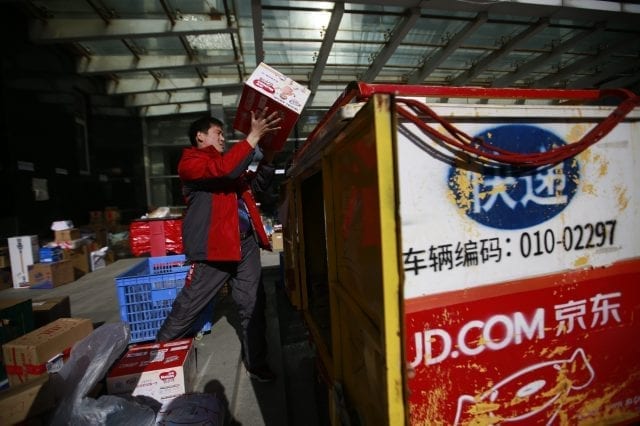
    Chinese e-commerce company JD is opening its logistics network up to consumers to send parcels around the country, marking the first entry by an e-commerce company into the parcel delivery business. The new JD parcel delivery service announced enables users of the company’s app in Beijing, Shanghai and Guangzhou to send items intra-city and throughout Mainland China, using the same fast and reliable delivery service JD offers with online purchases. The company, which will expand the program to include high-value items like luxury products and high-end consumer electronics, as well as more diverse options based on delivery timing, aims to eventually make residential and business deliveries for shippers from anywhere to anywhere within Mainland China in the future.

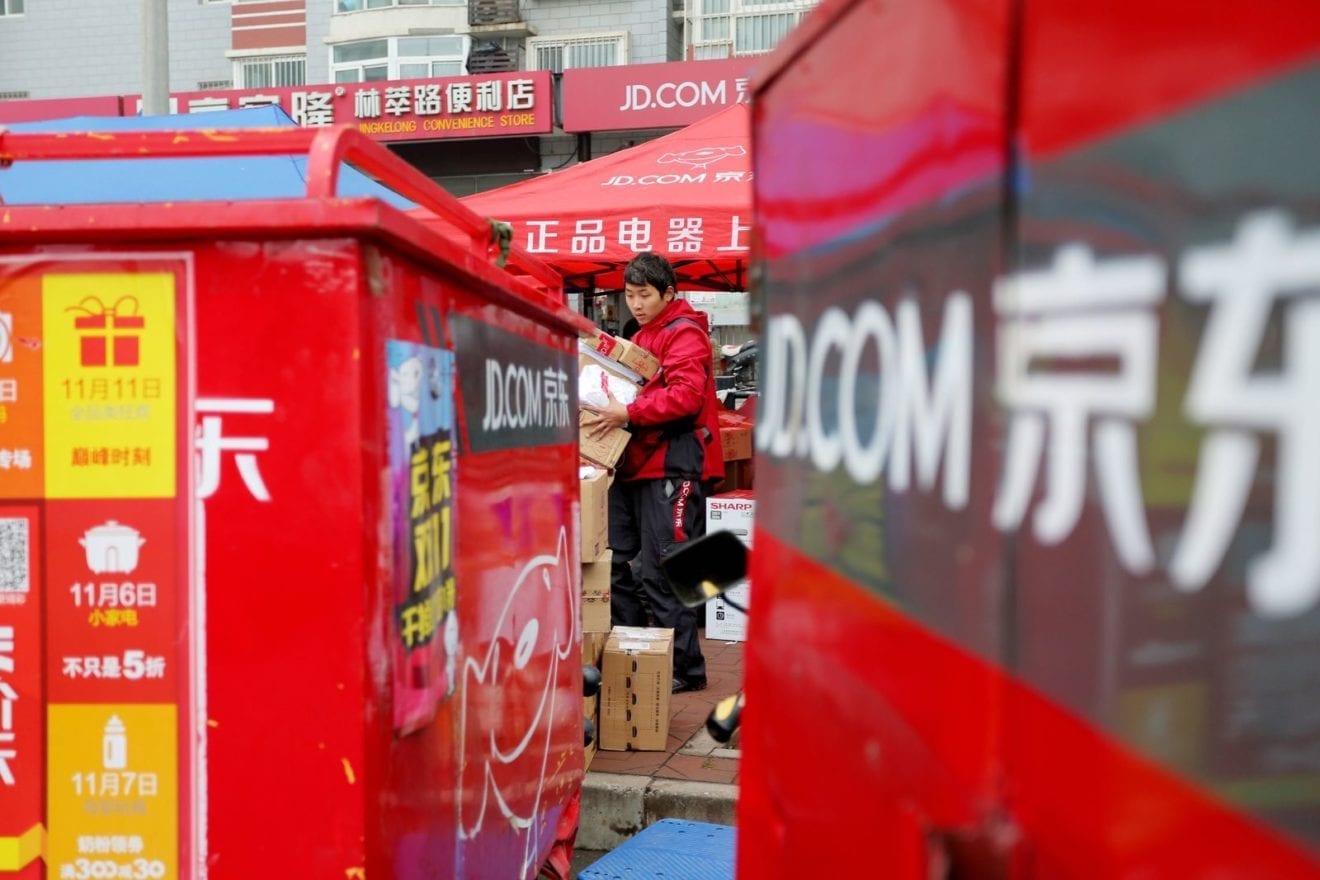
    JD is the only large-scale e-commerce company in the world to operate a nationwide in-house logistics network, down to the last mile. The company says its network, powered by its proprietary supply chain management technology, is able to deliver more than 90 per cent of orders same- or next-day, and reaches 99 per cent of China’s population.

    The new JD parcel delivery service includes a range of competitively priced options, including same-day delivery between different cities; same-day intra-city delivery; standard next-day or two-day delivery and next-day delivery between cities.

    “Depending on the delivery option chosen, packages may be sent by high-speed rail or air,” the company said in a statement. “Individual shippers can use the same JD app they use for shopping to schedule a pickup by one of JD’s full-time logistics staff, and have a parcel delivered thousands of miles away at the speed they choose. They will even be able to select JD’s luxury ‘white glove’ delivery service if they want to make the delivery extra special.”

    Zhenhui Wang, CEO of JD Logistics says the JD parcel delivery service marks the next step in leveraging the nationwide logistics network that JD has built over the past decade, to expand the range of services offered to its customers.

    “JD is known throughout China for the fastest and most reliable delivery, and we are confident that users will appreciate the convenience of this new service.”

    The program has already begun user trials with multiple ways for customers to request pickups. In addition to the JD app, shippers can request pickups on a JD Delivery mini program in WeChat, China’s largest social network operated by JD’s partner Tencent, and a JD “Delivery Team” WeChat account.

    JD unveiled the parcel delivery service at its 2018 Global Smart Supply Chain Summit held in Beijing today. Other initiatives announced at the summit – part of JD’s Global Smart Supply Chain Network Strategy – include JD’s smart warehouse management system initiative, an expansion of the company’s green initiatives, and the formation of a new energy union with 20 industry partners.

  • JD Central plans unmanned retail shop debut in 2020 for Thailand

    JD Central plans unmanned retail shop debut in 2020 for Thailand

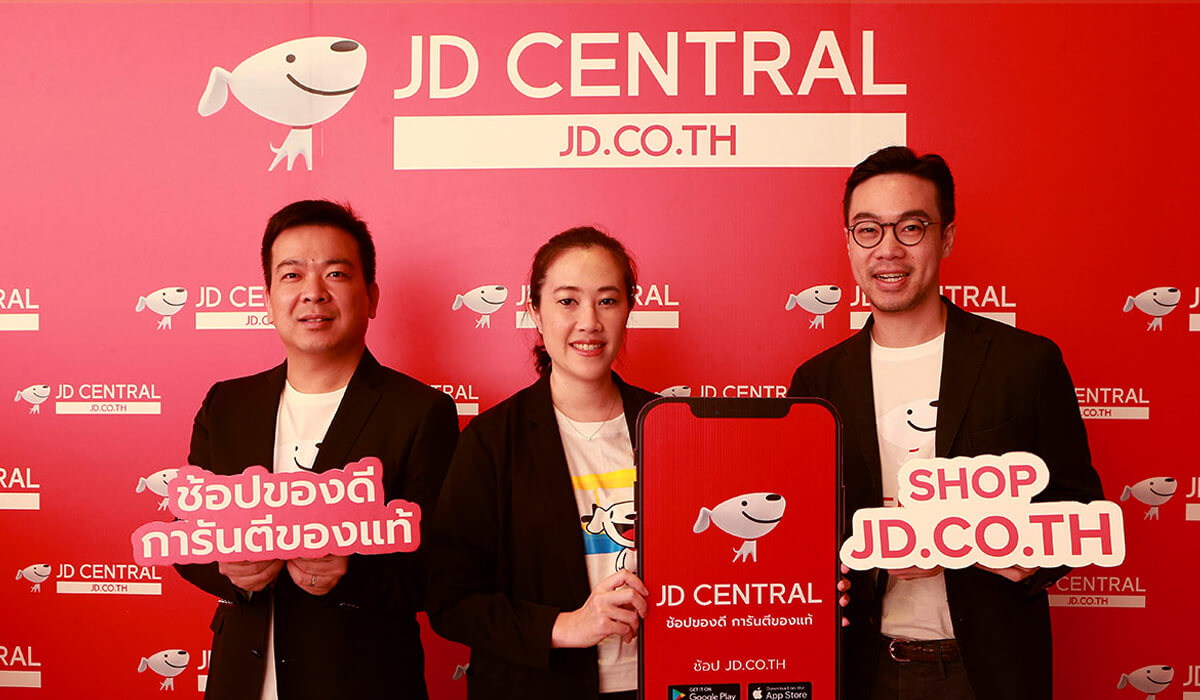
    JD Central – the new joint venture between Chinese online specialist JD and Thailand’s Central Group – has revealed plans to open automated stores, starting next year in Bangkok.

    Vincent Yang, JD Central’s CEO, said the company is evaluating a location where it could test an unmanned store format. Customers would enter the store and transact using facial recognition software.

    The move would be one of several initiatives the company is evaluating using new-generation technology. Another is the use of autonomous warehouse robots to replace humans in warehouses to reduce overheads.

    “We need to get approval to use robots and autonomous delivery vehicles in Thailand,” Yang said.
    Speaking after the official launch of JD Central, which has been operating in pre-launch mode for three months, Yang said the company plans to be Thailand’s largest online retailer by 2020.

    “E-commerce in Thailand will increase to 10 per cent of the total retail market in three years, up from 3-5 per cent today, thanks to competition and user experience,” he said.

    During the three-month trial, orders on the new platform increased 15-fold. Yang claims just 2 per cent of orders were returned and there was a 50 per cent repurchase rate by customers. Four out of every five customers accessed the site via mobile.

    JD Central offers products from 4000 brands, the most popular to date being mobile phones, food, home accessories and apparel.

    The company also has a strong focus on authenticity, guaranteeing no fake goods are on sale on its platform.

    “We are positioned to be the most trusted online platform brand by focusing on customer experience with authentic products. If customers find any fake products on our website, they will be refunded three times the original price,” he said.

  • JD.com e-commerce joint venture launches officially in Thailand

    JD.com e-commerce joint venture launches officially in Thailand

    The JD Thai JV with Central Group has been formally launched this week under the brand JD Central.

    “Our partnership with Central Group – a one-of-a-kind union between China’s biggest retailer and Thailand’s strongest retail player – will provide Thai customers with a truly world-class e-commerce experience and guarantee 100 per cent product authenticity,” said Vincent Yang, CEO at JD Central.

    The new online platform officially debuts today, September 28, and will further extend JD’s footprint in the Southeast Asia region, which already includes an established e-commerce platform in Indonesia and a strategic investment in Tiki, Vietnam’s leading B2C e-commerce business.

    Central Group, Thailand’s largest retail conglomerate, offers JD instant critical mass through customer loyalty program and brand recognition, as well as merchandise. The site has been in testing mode since June 18, offering both direct sales and marketplace models. Pre-launch sales were described as having “exceeded expectations”.

    The JD Thai JV site includes categories for electronics, digital products, fashion, home appliances, books and music through to groceries, cosmetics, toiletries, beverages and processed foods.

    During the pre-launch phase, about 80 per cent of shopper accessed the site via phones, with FMCG products, mobile phones and fashion the most popular items purchased. Products from Chinese companies have proved especially popular, with leading brands including Xiaomi, Huawei, OnePlus and Lenovo.

    Yang said the JD Thai JV will “transform the local market and unlock the boundless consumer potential of the nation’s large population, with the ultimate goal of becoming the most trusted brand in Thailand”.

  • JD to expand 7Fresh grocery chain across China mainland

    JD to expand 7Fresh grocery chain across China mainland

    JD is expanding its 7Fresh grocery store chain across Mainland China.

    The e-commerce and tech company has signed agreements with 16 real estate companies including China Poly Group, Joy City, Vanke, Yuexiu Property and Greenland Holdings to expand the supermarket chain, which was launched earlier this year.

    Consumers in Shanghai, Guangzhou, Shenzhen and Chengdu will be next in line to experience the e-commerce platform’s premium offline stores focused on fresh food. Fresh produce makes up more than 70 per cent of the brand’s offerings.

    Twenty per cent of 7Fresh products are directly sourced from vetted overseas suppliers in response to Chinese shoppers’ increasing focus on food safety and sourcing. All leafy green produce is restocked within 24 hours, and selected produce can be cooked on site.

    CEO of 7Fresh Xiaosong Wang said 7Fresh redefines the offline retail experience by combining the best parts of fresh grocery markets and top-quality restaurants with cutting edge e-commerce technology.

    “With the expansion of 7Fresh into more cities across China, we are bringing ‘Boundaryless Retail’ to even more shoppers for an incredibly convenient and enjoyable way to buy fresher, safer and more reliable products.”

    JD’s own advanced technologies are central to the rollout of the 7Fresh brand. Through the building of customer profiles, JD can determine optimum store locations and layouts. Data analysis also helps improve inventory management by selecting the most appropriate amounts and types of SKUs from JD’s vast selection of goods, according to each store’s unique needs. Meanwhile, ‘Magic Mirrors’ automatically provide product information on a screen when they sense that customers have picked up fresh produce.

    JD’s logistics capabilities enable 30-minute delivery from the stores for online shoppers.

    Korean office

    Meanwhile JD is expanding its international footprint with a new office in the centre of Seoul’s CBD. The office will help JD with outreach to South Korean brands that are highly sought-after in China. It will significantly increase the company’s procurement power in the region, reducing the threshold for Korean brands to enter the Chinese market and tapping JD’s more than 300 million customers.

  • Online boosted 361 Degrees sales growth

    Online boosted 361 Degrees sales growth

    Sportswear retailer 361 Degrees International believes sponsorships of the Asia Games in Indonesia this month, and a focus on e-commerce are helping it attract younger customers.

    The Hong Kong-listed, Mainland China retailer of sports apparel, says sales increased 7.8 per cent in the first half year to RMB2.798 billion (US$411 million), with profit attributable to shareholders up 5.3 per cent to RMB335 million.

    361 Degrees sponsored the debut of esports as a demonstration sport at the Jakarta Palembang Asian Games and has a broader involvement in the fast-growing market.

    “As the youngest leading sports brand in China, 361 Degrees has been committed to establishing a youthful brand image,” said chairman Ding Huihuang.

    In the first half of this year, 361 Degrees launched sportswear and accessories products jointly with QG Club, a mainland esports championship team.

    “In the future, the group will promote the 361 Degrees brand among esports customers, cooperate with more esports teams, increase the esports product lineup, explore multiple sales modes such as physical store sales, and add an esports zone on e-commerce platforms to approach younger generation with the esports and blaze a trail for attracting young generation consumers,” he said.

    Meanwhile, 361 Degrees’ e-commerce business increased by 185.5 per cent to RMB328.9 million, representing 10.9 per cent of the group’s turnover in the first half of this year, compared with just 4.1 per cent in the same period last year.

    In the second half of this year, the group says it plans to continue to optimise its sales network and strengthen cooperation with e-commerce platforms such as Tmall, JD and Vipshop to promote the combination of online and offline sales channels.

  • JD.Com Launches First Cashier-Free Store Overseas In Indonesia

    JD.Com Launches First Cashier-Free Store Overseas In Indonesia

    E-commerce giant JD has introduced its unmanned store technology in a foreign market for the first time.

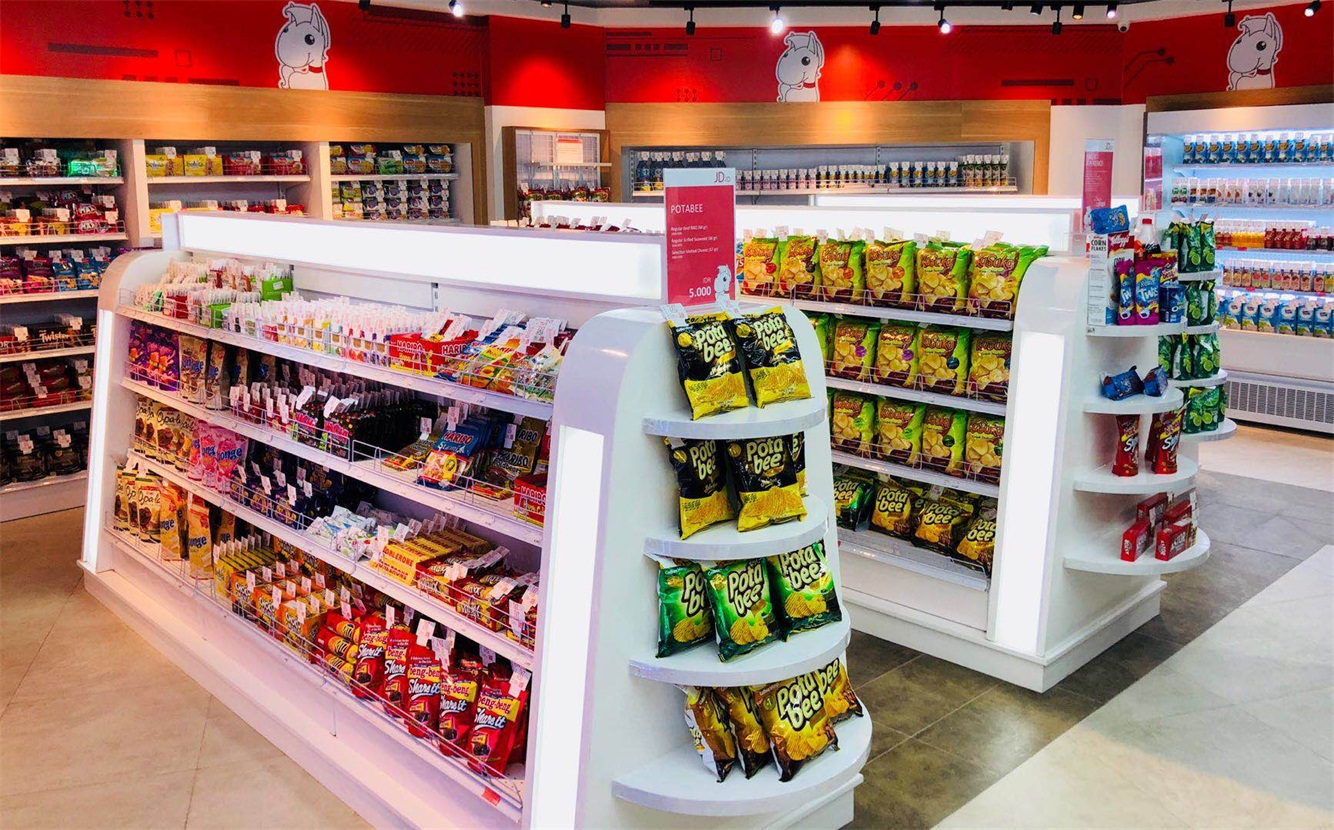
    Jakarta’s new JD.ID X-Mart, a 270sqm AI-powered experience store located in Pik Avenue shopping mall, is the first of its kind in Indonesia and the largest to use JD’s unmanned store technology to date. Customers are encouraged to pick up whatever they want and walk straight out of the store without needing to wait for lines or payments.

    The technology premiered in Beijing last year and has since become increasingly sophisticated with the application of facial recognition and other advanced computer vision technologies.

    JD now operates more than 20 unmanned stores across China.

  • China’s E-Commerce Giants Aren’t Worried About Trade War

    China’s E-Commerce Giants Aren’t Worried About Trade War

    How does the CEO of China’s second largest e-commerce company feel about the escalating U.S.-China trade war?

    Richard Liu, founder and CEO of JD.com–an online retailer with 300 million annual active customers, $56 billion in revenues in 2017, and investors including Tencent, , and –doesn’t like it. But he’s not worried either.

    “I can tell you it’s okay, ” Liu said on Monday. If his customers think the price of American goods has become too high, JD.com can find products, whether it be meat, apparel, or some other item, from Europe or Japan or Korea (among other places) to sell to them instead. “We can find another choice,” he said, adding that he didn’t think the trade war would benefit either party.

    Whatever the case, Liu noted that consumer experience–which comes down to quality, price, and service–remains JD.com’s top priority. It’s that focus that motivated his company’s early and significant investment in drone delivery; it currently uses a daily fleet of 500 drones that has over 100,00 hours of flying time.

    Whatever the product (so long as it costs at least roughly $10) and wherever the customer, JD.com delivers it for free and in less than 24 hours. Competing in Chinese retail–and against its chief rival Alibaba–without that sort of service, said Liu, would be a “disaster.” Liu hinted that may be struggling to achieve that speed in China.

    JD.com, which thrives partly because of “shopping circles”–social media-enhanced shopping–on China’s leading social platform WeChat, plans to enter the American retail market soon.

  • JD changing model to tech company

    JD changing model to tech company

    For the first 12 years of its existence, JD’s business model has largely been based on retailing.

    But now the company is morphing into something quite different, explains Winston Cheng, president international, at JD.

    “For the next 12 years where we want to be is a technology company or technology focused. So the first 12 years as a retailer we were Gross Merchandise Volume-focused. The second 12 years is going to be about helping brands and retailers and others build their online presence, build their brands and have more efficient marketing,” Cheng said.

    “Then we will help them on the supply chain, because there’s increasing pressure on their business – not only are same-store sales under pressure, but also pricing. So they need to make sure they’re producing the right things.”

    Data is driving the new JD approach. Already, JD serves more than 300 million customers per year (82 per cent of them via mobile). For each of those customers, the company has more than 10,000 tags representing online shopping behaviour, browsing habits and history of when, where and how they shop. Now the company’s challenge is expanding that knowledge into consumers’ offline shopping behaviour.

    Shop with JD and the company knows things like how much you are spending in the store. What you are putting into the basket, what you’re taking out. They can see your decision making as you proceed to shop, even if you’re saving an item for the future when it may be on special or a sale is coming.

    “So we want to be able to match that with offline data,” explains Cheng. “We want to help offline retailers collect that data.” And then, seamlessly merge it with online data for a full picture of a customer.

    “So with so much data, how do we integrate the social data, the transaction data and the offline data? And how do we get the offline data? [A retailer’s] offline data is sometimes limited: they may or may not know only when a customer makes a transaction. But we want to help the customer as they enter the store, as they’re browsing and as they are making decisions, spending how much time in front of a certain SKU and touching and feeling. We want to be able to get all of that data for offline stores as well.”

    Mix all that data together and you can build an invaluable picture of demand and transaction history that can be used by supply chain managers.

    JD wants to tell participants along the supply chain what products they should make, where they need to be – and when.

    “Then we can help them connect with the customer and we help them deliver to the customer. We share that data to help them with their total supply chain solution.”

    Local knowhow

    Cheng, who is responsible for global business initiatives as well as international investments and mergers and acquisitions for JD said that one of the company’s strengths, despite its size, is understanding local culture and “local knowhow” when it enters new markets, both in Asia and abroad (where it has recently entered Spain).

    “That’s why we tend to partner with local [companies]. You need to be local – your traffic is local, the language is local, so everything becomes localised.”

    And the range must be tailored market by market. The range of SKUs offered in Indonesia, for example, has to be different to Mainland China and other Asian markets.

    “Retail is local, whether it’s online or offline. So you could do cross border to go into a market [but] will that reach a certain scale? Also, today people have higher and higher expectations. They want anything, anytime, anywhere, right away.” Thus cross-border solutions won’t work in many markets because customers don’t want to wait long enough for delivery.

    Asean is home to 600 million people, which makes it the third or fourth largest market in the world. “But so many countries make up Asean – they have different cultures, different tastes, different languages. Even Indonesia with 280 million people – there are so many islands in Indonesia to satisfy. So from a logistics standpoint, it’s very difficult.”

    Hong Kong misunderstood

    Meanwhile, JD is planning to ramp up its focus on Hong Kong’s online retail market, hinting the scale of e-commerce there is more significant than people believe.

    The Mainland China-headquartered online retailer plans more emphasis on cross-border e-commerce in Hong Kong.

    “We believe it’s a very natural extension in terms of consumer tastes,” he said.

    Given JD’s expertise in logistics, the company stands to deliver products and services in the territory “very easily”.

    Furthermore, while there has been widespread discussion about why e-commerce accounts for less than 5 per cent of the city’s total domestic retail spending, Cheng argues people are missing the point.

    “First of all, the absolute number is actually quite imperative. The absolute dollar number is actually not a small market, it’s quite big. The [market] penetration is low, but that’s an opportunity. I think it’s just that people have been so used to the old way of doing things, they continue to do it that way.”

    Cheng believes younger Hongkongers are ready to embrace e-commerce, especially when it comes to shopping for items that are really “a chore” to buy like dry groceries.

    “They … want to finish these chores easier, right. It’s not exciting to have to go and buy your toilet paper or your bottled water, for example. You should be able to just tap those things and order them.

    “But I think certain things like, you know, making sure that this fruit looks exactly like the picture, is very hard to satisfy.”

    So Cheng believes while consumers want to continue to ‘touch and feel’ goods like fresh produce, when it comes to ordering cups or a mobile phone, that is no longer so important.

    “You know the specs and features.”

  • L Catterton Asia, JD.com Invest In Secoo

    L Catterton Asia, JD.com Invest In Secoo

    LVMH-linked L Catterton Asia and JD have jointly invested US$175 million into Asian luxury fashion platform Secoo, via convertible notes.

    L Catterton and JD together will have the right to appoint a director and an observer to Secoo’s board of directors. But in a broader tie-up, Secoo will have access to L Catterton’s network of luxury leaders and strengthen relationships with leading luxury brands in the L Catterton stable, including Pepe Jeans and eyewear brand Gentle Monster.

    “We are excited about this strategic partnership with L Catterton Asia and JD,” said Richard Li, Secoo’s chairman and CEO. “L Catterton is the leading consumer-focused investment firm in the world, and JD is China’s largest retailer and the leading e-commerce giant in China. By establishing relationships with leading partners in the consumer, luxury goods and e-commerce spaces, Secoo is poised to gain invaluable name recognition and further boost the company’s reputation in the international luxury consumer space.

    Through this partnership, Secoo will be able to leverage L Catterton and JD’s operational expertise and vast resources to expand and deepen our market presence not only in China, but across the globe.”

    Shengli Hu, president of JD fashion & lifestyle, said the partnership will help JD enhance its luxury capabilities and provide the best possible luxury shopping experience to consumers in China.

    “Chinese consumers are increasingly discerning about their luxury purchases, demanding more variety and choice than ever. As we look to continue to meet this demand, we see many potential areas for future collaboration with Secoo.”

    Secoo sells a wide collection of authentic, upscale products and lifestyle services on Secoo.com, mobile applications and offline experience centers, offering more than 300,000 SKUs, covering over 3000 global and domestic brands.

  • Chinese’s Pinduoduo seeks US$1 billion

    Chinese’s Pinduoduo seeks US$1 billion

    Chinese e-commerce startup Pinduoduo is seeking US$1 billion in a US IPO, going head to head with industry giants such as Alibaba.

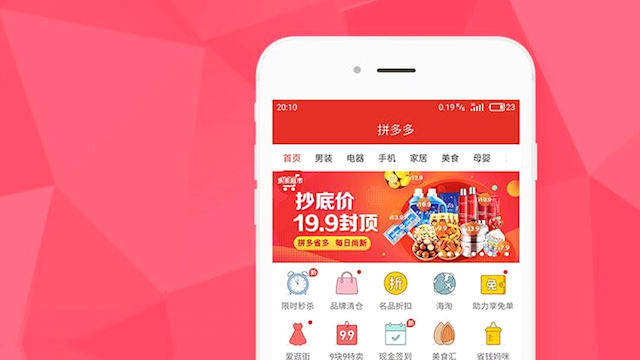
    The company’s business model, in which users recruit friends via social media to enjoy group-discount offers direct from manufacturers, has seen its transaction volumes reach 141.2 billion yuan (US$21.3 billion) in 2017, tripling the company’s revenue. It was founded by ex-Google engineer Colin Huang and is backed by Tencent and Sequoia Capital, among others.

    Pinduoduo raised more than US$1 billion in its last fundraising round in April, against a valuation of around US$15 billion. Its sales have been strongly supported by its large user base in lower-tier Chinese cities. The site’s daily active users reached 55.9 million last month, more than 20 million more than the popular JD e-commerce platform.

  • How JD could help fight a proxy war for its strategic investors

    How JD could help fight a proxy war for its strategic investors

    A proxy war is a strategy that refers to a conflict instigated by opposing powers who do not fight against each other directly.

    By using third parties to do the fighting, it is still possible to bring strategic benefits while minimizing the risks.

    Google has announced that it will invest US$550 million in JD.com for 1 percent stake, joining Tencent and Walmart to become the Chinese online retailer’s third strategic investor.

    In fact, the three may all be seeing JD as a proxy to help them compete with their respective rivals.

    Listed on Nasdaq in 2014, JD has a market capitalization of around US$60 billion.

    It’s China’s second-largest e-commerce company, but its market value is only a fraction of Alibaba’s US$500 billion plus.

    Alibaba’s Taobao and Tmall have snapped up about 70 percent of China’s online shopping market, while JD’s market share is around 22 to 25 percent.

    To Google, JD could serve as a proxy in competing with Amazon.

    Google and JD plan to “collaborate on a range of strategic initiatives, including joint development of retail solutions in a range of regions around the world”, they said.

    In the short term, JD would select a range of high-quality products and offer them worldwide through Google Shopping.

    The two companies would also explore new retail opportunities in Southeast Asia, the United States and Europe. The alliance would combine JD’s strengths in supply chain and logistics with Google’s tech capability to develop a new retail infrastructure.

    We could say that Google and Amazon have a sort of love-hate relationship. Amazon is now Google’s largest advertising client, spending billions of dollars each year. But Amazon is actively exploring direct distribution channels and even starting its own advertising business.

    Google, meanwhile, has launched its Google Shopping unit and JD would add more Chinese offerings to this platform.

    JD will also serve as Walmart’s proxy in its war against Amazon.

    In 2016, Walmart, the world’s largest brick-and-mortar retailer, sold its China e-commerce platform to JD as it pulled out of the market.

    In return, Walmart obtained a 5 percent stake in JD, and became its strategic shareholder. The US retailer has since then steadily increased its stake to 12 percent.

    Walmart is also looking to transform its business into an offline-to-online retail model. But it has achieved limited progress so far. JD serves as a good partner in this pursuit.

    To Tencent, JD would be a proxy in competing with Alibaba.

    Chinese internet giant Tencent spent US$215 million for a stake in JD in 2014. Following a number of additional purchases, Tencent now holds a 21 percent stake and is JD’s largest shareholder.

    If JD is able to put some pressure on Alibaba, the latter would have less time and energy to try encroaching on Tencent’s turf – social networking and online games.

  • JD and Better Life collaborate to fasten deliveries

    JD and Better Life collaborate to fasten deliveries

    JD has developed a partnership with Chinese retailer Better Life as part of its Retail as a Service strategy.

    The cooperation will further speed up delivery for mainland customers and integrates inventory across the two retailers by using technology to identify the most efficient way to source orders on JD.com, whether from JD’s own warehouses, or from Better Life stores.

    Products sourced from Better Life will be delivered in less than an hour by Dada, China’s leading crowdsourcing delivery company. The efforts follow a cooperation with Walmart that uses a similar strategy of supply chain integration to increase overall efficiency and improve user experience.

    “JD is uniquely able to improve our overall inventory management and reach a wider swath of customers more efficiently,” said Kevin Liu, grocery merchandising director at Better Life. “As the retail landscape is rapidly changing, we see this initiative as a prime example of how offline retailers can not only remain relevant, but actually become even more relevant.”

    Ting Qi, director of user experience at JD FMCG and Foods, said the partnership marks another step forward in the Retail as a Service strategy, which leverages JD’s resources to help traditional companies excel in a changing environment.

    “We are pleased that our customers will be able to get an even better shopping experience through this initiative with Better Life.”

    The benefits for the customer, offline stores and JD through the integration of inventory include increased sales, faster inventory turnover, improved cash flow and even faster delivery.

    JD is also exploring the option of integrating its online membership program with offline partner stores, so that offline stores can enjoy even more benefits from their partnerships with JD.

  • JD.com hastens e-commerce race in Southeast Asia

    JD.com hastens e-commerce race in Southeast Asia

    Chinese online retailer JD.com has signed on Google as a strategic partner in a move seen to complement the former’s ambitions to expand into Southeast Asia while giving the latter a toehold in a market that it gave up in 2010.

    Google’s investment in JD.com comes as e-commerce companies, including Alibaba Group and Amazon, race to expand their global reach and carve a larger slice of market share in regions such as Southeast Asia, where the potential for e-commerce is viewed as largely untapped.

    Chinese smartphones brands such as Vivo, Oppo and Xiaomi have proven to be a hit among consumers in the region of 650 million people with their affordably priced models. Tencent Holdings, the online gaming and social media giant, is the largest shareholder in Singapore-based Sea, which operates Shopee, a regional e-commerce platform. Other internet services companies such as Didi Chuxing and Meituan Dianping have invested in local champions such as Singapore-based Grab and Jakarta-based Go-jek, respectively.

    Alibaba bought Singapore-based e-commerce platform Lazada and appointed one of its co-founders and most senior executives, Lucy Peng, to head the push into Southeast Asia.

    JD.com, too, has its eyes on Thailand, with a new online shopping platform developed with Thailand’s Central Group slated to open on June 18. In Vietnam, JD.com invested in local e-commerce firm Tiki.vn earlier this year. In Indonesia, JD.com launched a local online retail business JD.ID two years ago.

    “Logistics and language sites, everything should be localised here,” Winston Cheng, JD.com’s president of international business said in an interview in Singapore last week before the Google tie-up.

    “Today, people have higher and higher demand,” he said. “They want anything anytime anywhere but right away so the cross-border business model takes too long to wait for.”

    JD.com achieved 159.2 billion yuan (US$24.7 billion) in orders from June 1 to June 18, generating annual growth of 37 per cent for the company’s 618 Mid-Year Shopping Festival, an online shopping event similar to Alibaba’s Singles’ Day Shopping event on November 11.

    JD.com has also deepened cooperation with its biggest shareholder Tencent, launching a new shopping function on WeChat before the 618 Shopping Festival. The function enables consumers to shop on JD.com within WeChat, China’s biggest social network and messaging app. Product pages from JD.com pop up when consumers type product-related keywords into the search functions on WeChat.

    Google, together with other US internet companies such as Facebook and Twitter, are blocked in China, although several firms still maintain offices in the country selling advertisements to Chinese firms hoping to reach an overseas audience. Other companies, like Apple, continue to sell their products and services in China after complying with local rules, such as hosting its cloud services for the Chinese market on the mainland.

    “Google’s strategy for investing in JD.com is two-pronged. On one hand, it hopes to have a significant partner in China to support the company, which could help it reintroduce services like cloud or advertisements in China,” said James Yan, research director at Counterpoint. “Secondly, JD.com is strong in areas like logistics, courier delivery and so forth, which Google can tap on to expand its e-commerce ambitions.”

    The partnership is complementary as JD.com is in the business of e-commerce and logistics and is unlikely to clash with Google’s other services, such as cloud or OS services, Yan said.

    “We want to accelerate how retail ecosystems deliver consumer experiences that are helpful, personalized and offer high quality service in a range of countries around the world, including in Southeast Asia,” Karim Temsamani, president of Google’s Asia Pacific operations, said in a statement.

    The Asia-Pacific region is one of the largest and fastest growing e-commerce marketplaces in the world, with people in Southeast Asia alone expected to spend US$88.1 billion online by 2025, according to Temsamani.

    “This partnership with Google opens up a broad range of possibilities to offer a superior retail experience to consumers throughout the world,” Jianwen Liao, JD.com’s chief strategy officer, said in a statement. “This marks an important step in the process of modernising global retail.”

    Southeast Asia consists of 11 countries with a total population of 653.4 million, about 49 per cent of whom live in urban areas, according to the latest United Nations estimates. Only three per cent of the region’s retail sales are currently conducted online.

    Among the biggest barriers to developing a regional Southeast Asian market is the lack of mobile payments, with about 70 per cent of the region’s population still unbanked. The thousands of islands that make up the archipelagic nation of Indonesia also presents logistics challenges.

    JD.com will adopt different strategies to cater to the differences of the region, according to a spokesman. While there is no one-size-fits-all model given the different infrastructure, languages, cultures and religions across the region, e-commerce is still booming because of the commonality of a rising middle class, the spokesman said.

    “Alibaba sees Southeast Asia as a priority region within our global strategy,” an Alibaba spokesperson said in comments made before the JD.com-Google partnership announcement. “We are also committed to contributing to the growth of the digital ecosystem in Southeast Asia by driving initiatives to develop an e-commerce talent pool.”