Tag: JD

  • JD expands into social etail

    JD expands into social etail

    Chinese internet services giant JD has launched a social e-commerce platform named Jingxi, providing discounts on team purchases to target users in small to medium-sized cities in China.

    The business model, which invites buyers to share deals with friends to score significant discounts, emulates those of rivals Pinduoduo and Juhuansuan.

    “We’re going to diversify and enrich our WeChat ecosystem and provide a new model to attract lower-tier cities, especially female users and low-income users,” said JD Retail CEO Lei Xu about the new Jingxi platform.

    “We’ll continue to enhance our user experiences and also gain more potential customers from third to six-tier cities,” added JD.com chairman and CEO Richard Liu.

  • JD Sports defies Brexit to deliver strong growth numbers

    JD Sports defies Brexit to deliver strong growth numbers

    UK sportswear business JD Sports Fashion saw revenue improve 47 percent over the first half of FY20 to £2.72 billion, with global like for like sales growth of 12 percent.

    The group, which runs the JD Sports chain in Australia, also saw group profit before tax and exceptional items increased 30 percent to £158.6 million, up from the £121.9 million seen in the prior corresponding period.

    According to JD Sports executive chairman Peter Cowgill, the management team is very pleased with the result, especially given the ongoing challenge of Brexit’s impact on retail in the UK.

    “We recognize that there is heightened uncertainty surrounding the nature of the UK’s exit from the European Union, and we are very cognizant of the increased risk of a disorderly exit,” Cowgill said.

    The group’s sports fashion businesses saw a strong half, with profit before tax and exceptional items growing 43 percent to £182.4 million.

    “The combined JD businesses in the Asia Pacific region delivered total like for like growth of just under 10 percent, although the earlier timing of Chinese New Year relative to last year did impact on the performance of the business,” Cowgill said.

    “We continue to make learnings in all of our territories which we use to further refine our integrated digital propositions and, with the ongoing support of our key brand partners, we remain confident that further opportunities will prevail to expand the reach of our exciting and dynamic proposition in the region,” Cowgill said.

    Cowgill noted that, in the Asia-Pacific region, JD Sports opened seven new stores during the period across Malaysia, Singapore, and Australia.

    JD’s outdoor business, however, saw more mixed results – finishing the first half with a loss before tax and exceptional items of £20.1 million, compared to the 3.8 million loss seen during the prior period.

    This was due to a challenging first quarter, compounded by a £20.7 million partial impairment due to goodwill from previous years on the acquisition of the Go Outdoors business.

    Preparing for a no-deal exit

    According to Cowgill, the business is well aware of the risk a no-deal exit from the EU would pose to JD Sports, and the UK retail industry as a whole.

    As a result, JD Sports has pulled forward a plan to expand warehouse space in Belgium in order to better serve its EU customers in the event of a no-deal.

    “The group always expect that, for operational purposes, a European warehouse would be required sometime after 2021 with the risks associated with Brexit bringing this decision forward,” Cowgill said.

    “We are working with our logistics partners to secure an additional 80,000 square foot of space at a facility in Belgium which will provide us sufficient capacity to process launch product for footwear for the key brands.”

    Cowgill added that the facility will be available for use in early 2020.

    The looming threat of Brexit has also touched the group’s outlook for the remainder of the year, as well as a shift to a different leasing standard, IFRS 16.

    “Notwithstanding the ongoing uncertainty with regards to Brexit… the group would have been on track to deliver headline profit before tax for the full year at the top end of market expectations which currently rage from £402 million to £424 million,” Cowgill said.

    “However, after adjusting for the impact of the transition to IFRS 16, we would expect to deliver results at the mid-point of expectations.”
  • JD.Com and Thai Retailer Launch Financial App

    JD.Com and Thai Retailer Launch Financial App

    China e-commerce giant JD.com and Thailand’s top retailer Central Group have jointly launched a new financial services app, partnering with the largest Thai lenders to capitalize on the nation’s digital banking opportunity.

    The «Dolfin» app will include an e-wallet, digital lending platform, insurance and wealth management capabilities, according to a statement from the joint-venture, Central JD Fintech. A merchant version will be rolled out next year to target small businesses and Central’s mall tenants with merchant data to be used to further support bank lending.

    Major Thai lenders, Siam Commercial Bank, Kasikornbank and Bangkok Bank are currently partners with Bank of Ayudhya expected to join later.

    Central JD Fintech aims to reach 400,000 Dolfin users by year-end and 1.5 million next year.

  • JD may list Dada-JD Daojia in the US Store

    JD may list Dada-JD Daojia in the US Store

    Chinese e-commerce giant JD is considering a share listing in the US, according to a Reuters report.

    The firm has entered into early-stage discussions with bankers about a deal that could raise US$500 million for the firm’s joint venture in the territory, Dada-JD Daojia.

    According to Coresight Research, Dada-JD Daojia was created in 2016 through the merger of JD’s supermarket business and the crowdsourcing delivery service Dada Nexus, with a 10-per-cent stake owned by US retailer Walmart.

    Dada-JD Daojia provides a one-hour professional delivery service for more than 74 million users, working with more than 5000 retailers including Walmart, Carrefour, Vanguard, Yonghui supermarket and Watsons.

    The JV has already secured roughly the same amount in funding last year with investments from JD and Walmart.

    JD itself has just come off a solid second quarter thanks to strong online sales in recent months.

  • JD exceeds Show Fantastic Growth Numbers

    JD exceeds Show Fantastic Growth Numbers

    Chinese e-commerce giant JD exceeded revenue expectations in the June quarter, net sales up by 23 per cent to 50.28 billion yuan (US$21.28 billion).

    The company has cited forays into the convenience-store sector and supermarkets, as well as the harnessing of artificial intelligence in its advertising and logistics operations for the improved result, as it tries to be less reliant on its core online retail platform for growth.

    Net income for JD reached 618.8 million yuan ($90.1 million), a significant turnaround from the 212.4 million yuan net loss of the same period last year.

    Significantly, the company’s logistics business broke even during the quarter.

    Discussing the results during an analyst briefing, a senior executive said the company was now turning its attention to lower tier Mainland China cities for growth, hoping to broaden its customer base. That strategy has been working for JD’s archrival Alibaba to date.

    Other plans afoot include developing more private-label products and improving its WeChat interface to increase customer engagement there.

  • JD increases stake in Tiki Vietnam

    JD increases stake in Tiki Vietnam

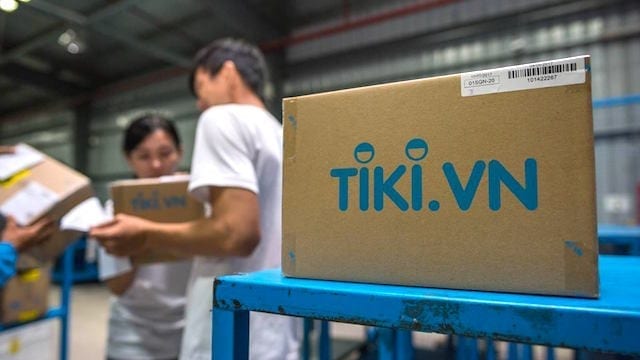
    Chinese online giant JD has become the largest shareholder in e-commerce platform Tiki Vietnam.

    JD has bought a 25.65-per-cent stake in the business, taking its shareholding past that of previous leading investor VNG Corporation, which holds 24.4-per-cent ownership in the platform. VNG has invested US$22.4 million in Tiki over the past two years.

    Tiki Vietnam has grown from an online bookstore to Vietnam’s second-largest e-commerce provider in terms of traffic, after rival Shopee.

    The firm is reportedly seeking a $100 million investment in its next funding round in order to boost its competitive edge.

  • JD takes stake in Beijing Digital Telecom

    JD takes stake in Beijing Digital Telecom

    Chinese online retail platform JD is acquiring 9 percent of Beijing Digital Telecom.

    The consumer electronics retailer, which operates from around 3000 physical stores throughout China selling predominantly phones and computers, will expand JD’s offline presence within the market, including lower-tier cities.

    The transaction value has not been disclosed, as it falls below the amount that requires public notification under US Securities and Exchanges Commission regulations.

    At the same time, Beijing Digital Telecom is entering a joint venture with a network-technologies developer and provider Suqian Jiashi, which is wholly owned by JD. The firm is investing RMB191 million (US$28.5 million) for a 49 percent stake, while Suqian Jiashi is putting in RMB 204 million ($29.6 million).

  • Orders treble just 13 days into JD’s 6.18 shopping festival

    Orders treble just 13 days into JD’s 6.18 shopping festival

    Thirteen days into the 20-day 6.18 shopping festival, JD has already achieved a three times the turnover of last year’s event, and double the orders.

    More than 90 per cent of Hong Kong purchases have been conducted through mobile devices, and geographically, consumers from New Territories accounted for nearly 40 per cent of sales.

    The top five categories in sales and volume so far (not in order) are computers, smartphones, household electronics, digital appliances and groceries. JD singled out smartphones and household electronics as the biggest-moving categories compared with last year.

    Electronics attracted the greatest number of Hong Kong consumers with orders showing quadruple growth. Besides smartphones, products like electric fans, vacuum cleaners, air purifiers and dehumidifiers are proving popular.

    Food and beverage is another hot category, tripling in order size, with turnover up 50 per cent. This includes groceries such as instant hotpots, snacks, dried nuts and biscuits.

    Despite the high volumes, JD says the sales and growth rate for the first 13 days were “in line with expectations”.

  • Farfetch opens flagship on JD.com China

    Farfetch opens flagship on JD.com China

    Farfetch China has opened a flagship store on JD, one of its strategic investors.

    The move follows Farfetch China’s purchase of Toplife announced in February and gives the global luxury-fashion technology platform access to more than 300 million customers in Mainland China.

    According to a statement, Farfetch now has a ‘Level 1’ entry point on the JD app, providing customers with instant access to more than 3000 brands via Farfetch’s network of more than 1000 luxury brand and boutique partners.

    “The partnership builds on the existing successful relationship between Farfetch and JD, started in July 2017,” said Farfetch China MD Judy Liu.

    Since then, the fashion platform has built its China presence by sharing JD’s logistics capabilities and its insights into the behaviour of Chinese luxury consumers.

    “Brands crave ever-better access to the Chinese market, and we are thrilled to deliver this for them,” said Liu.

    “This is an important expansion of our strategic partnership with JD, which strengthens the Farfetch China business as part of our truly global offering. Being able to offer the full suite of Farfetch’s technology and logistics platform to brands wanting to reach high-end Chinese consumers is a major competitive advantage as we seek to continue to grow market share in the rapidly expanding online luxury market.”

  • JD Sports celebrates mums on Mums Day

    JD Sports celebrates mums on Mums Day

    JD Sports marked Mother’s Day with a heart-warming video and a social media contest.

    The retailer launched #JDCelebratesMums campaign across Singapore with an “undisputed message; that jobs can come and go, but a mother is irreplaceable”.

    In the 3-minute video on JD Sports’ Instagram account, Atieqa, a JD senior sales advisor, took her mum to her workplace at JD Ion Orchard, where she shared her daily work routine.

    Under the video’s comment section, there was a contest in which participants should share their most memorable moments with their mum.

    One winner won an S$500 JD gift card.

  • JD.com Closes Australian branch Store

    JD.com Closes Australian branch Store

    Chinese online marketplace JD.com has closed its local branch after only 15 months in the market.

    The e-commerce giant launched its Australian office in Melbourne in February 2018, after its competitor Alibaba opened an office in Melbourne in 2017.

    At the time, the opening was seen as a way for JD.com to work more closely with the Australian and New Zealand brands on its platform, and to pitch its business to new brands looking to expand into China.

    A JD.com spokesperson confirmed that the online marketplace is integrating its Australian office into the business in China. The spokesperson said the move didn’t reflect the business’s performance in Australia, nor the region’s importance.

    The retailer’s head of Australian operations Patrick Nestrel is no longer with the business, likely in an effort to ensure management in China is able to fully integrate Australian operations.

    The online retailer is set to report its first-quarter sales results on May 10. It has had a difficult few months recently after founder Richard Liu was arrested in September 2018 in the US for sexual misconduct. He was not charged.

    In April, the Chinese university student who accused Liu of misconduct filed a civil lawsuit against him.

  • Forever 21 China Closes Down Online Stores

    Forever 21 China Closes Down Online Stores

    Fashion retailer Forever 21 will close its Chinese e-commerce website amist indications of possible physical store closures to come.

    While an April 25 notice on the brand’s home page confirms the e-commerce shutdown, the retailer has declined to issue any official comments, despite the confirmed shuttering of one physical outlet and major discount sales reportedly underway in other stores. It has been operating in the territory since 2011.

    Tmall and JD have released statements indicating that the fashion retailer will cease trading on their platforms from today onward.

    The brand’s last remaining store in Taiwan closed last month, while stores in other markets have reportedly been closing down as well, including France. Forever 21’s multi-storey flagship in Hong Kong closed in 2016, with the space being taken over by Victoria’s Secret. It opened a smaller store on Mong Kok in its place.

    A report in Retail Dive suggested that the possible withdrawal accords with a slowing retail environment within China for international goods, pointing to the withdrawal of Amazon from the territory after investing in the market for 15 years.

    “Overall this is a big and tough market to compete for non-Chinese brands, given strong domestic competition and unique consumer demands,” said China practice lead at global public policy consultancy Access Partnership Xiaomeng Lu. “Domestic e-commerce giants such as Alibaba, JD.com, and Pinduoduo compete fiercely against each other as well as edge out smaller brands.

    “Chinese customers are used to shopping on apps, expect low-cost same-day shipping, and tend to have little brand loyalty.”

    The report also quotes Euromonitor International analyst Arianna Zhai as commenting “Alibaba and JD alone have taken about 70 per cent market share. The strong presence and different strategic positions of both e-commerce retailers leave limited room for others.”

    “The reasons for the shutdown of operations are unclear, but it is likely that Forever 21 has struggled to cut through in what is an increasingly competitive market,” said GlobalData Retail MD Neil Saunders. “Although the Chinese retail market is still growing strongly and offers enormous potential, the proliferation of Western and indigenous brands means it can be hard to stand out from the crowd. There are also concerns that activity is slowing down, although growth remains well above that available in Western markets.”

  • JD takes major stake in Five Star Appliances

    JD takes major stake in Five Star Appliances

    Chinese online retailer JD is to buy nearly half the shares in electrical goods retailer Jiangsu Five Star Appliance, for US$189 million. Jiayuan Chuangsheng currently holds 93 per cent of the Five Star business and after divesting a 46 per cent stake to JD will remain its largest shareholder with 47 per cent.

    Analysts say the investment will allow JD to boost its online profile and provide consumers with a network of about 300 Five Star Appliance storefronts, in much the same way as archrival Alibaba is building physical retail networks in Mainland China, blurring the boundaries between online and offline retailing.

    With stores primarily located in central and southern China, Five Star Appliances has annual sales of about US$2.7 billion.

    Last year, JD accounted for nearly 40 per cent of China’s home appliance sales, making it the largest retail in the space. Partnering with a brick-and-mortar retail network is likely to boost sales for both parties and protect JD from fast-growing Suniung.com which now accounts for 30 per cent of the market. Tmall is also building a share of the appliance sector, its sales now nudging 25 per cent.

  • JD Sports to acquire Footasylum

    JD Sports to acquire Footasylum

    JD Sports has launched a takeover bid for UK footwear retailer Footasylum. The offer, which amounts to up to US$119.6 million (£90.1 million) for the remaining shares the business does not already own, represents a 77.4 per cent premium on the closing price of Footasylum shares on the day prior to the announcement.

    JD executive chairman Peter Cowgill said the footwear business was “very complementary” to JD’s existing UK operations, due to its focus on a slightly older consumer, targeting 16-24 year olds.

    “We believe that there will be significant operational and strategic benefits through the combination of the very experienced and knowledgeable management team at Footasylum and our own expertise,” Cowgill said.

    Footasylum directors intend on accepting the offer in regards to the 63 per cent of shares they hold, and plan to recommend shareholders do the same.

    JD Sports has already procured a further 65.6 per cent of the available shares in the business, but requires 90 per cent of shares in order to make the offer final.

    According to GlobalData UK retail research director Patrick O’Brien, Footasylum had seen the wheels coming off of the business since May last year, with a highly promotional market smothering the business’ margins.

    O’Brien said the move appeared to be a defensive move by JD Sports against a potential acquisition by Sports Direct’s Mike Ashley.

    “With Footasylum’s share price so low, it looked like only a matter of time before the hoover of the high street would strike, before JD Sports began building its stake last month,” O’Brien said.

    “But, the deal seems a positive one for JD Sports, which has the clout to restart Footasylum’s expansion and use its sourcing scale to make it more efficient and we expect it to develop what is still a very marketable fascia.”

  • Fung and JD launch Hong Kong’s first AI checkout

    Fung and JD launch Hong Kong’s first AI checkout

    JD has partnered with Fung Retailing Group to unveil Hong Kong’s first AI checkout solution in a retail store environment.

    The AI-powered checkout technology is a result of a strategic deal between the firms signed last year. It represents the first AI checkout experience featuring image recognition technology in the territory. This technology is currently installed at the AI Retailing Zone in two Circle K stores in Hong Kong.

    Designed to make the checkout experience as easy and hassle-free as possible, customers can complete checkout using the AI-powered solution in just four seconds with three simple steps, including placing the products on the counter, scanning, and paying via Octopus card.

    The advanced AI algorithm enables the checkout counter to recognise up to five products within one second with an accuracy rate of more than 97 per cent, reducing the overall checkout time by 30 per cent.

    “This is an important milestone for Fung Retailing as the first in the industry to unveil the first AI-powered checkout pilot experience in a convenience store environment,” said group MD Sabrina Fung.

    “This underscores our ongoing commitment to experiment with new technologies like AI and to build partnerships like the one with JD to enhance the end-customer experience, further transforming the future of retail for Greater China.”

    “AI will continue to play a critical role in transforming the retail landscape,” said JD VP Dr Bowen Zhou.

    “Retailers who are able to capitalise on this trend, will have a competitive edge among their peers. Leveraging Fung Retailing’s offline retail expertise and JD’s leading retail technology, this pilot project represents a critical first step in collectively realising our vision for smarter and more convenient retail.”