Retail News CRM

Tag: JLL

  • Versace Asia to open Central flagship

    Versace Asia to open Central flagship

    While other luxury brands are scaling back in Hong Kong’s subsiding retail market, international fashion brand Versace Asia plans to open a flagship store in Central in October.

    Shanghai Commercial Bank says the Milan-based fashion house has signed a three-year lease, with an option to renew, for 12,600 sqft (1170 sqm) on the ground and first-floor levels of a redeveloped building owned by the bank in Queen’s Rd.

    “We needed to pick clients in this market,” says the bank’s CEO David Kwok, noting that it interviewed Versace “for quite some time”.

    “Many other players wanted to sign Versace. You can’t miss our tower when driving through Central. It’s a good address for them,” says Kwok.

    “It goes to prove Hong Kong is a true financial centre. We had thought the market would be very bad, so we were quite modest when setting our pricing.”

    Jeannette Chan, JLL regional retail director, said Versace was taking advantage of declining retail rents and the availability of space in Central.

    “Versace sees it is an optimal time to boost its brand presence in Hong Kong.”

    Versace has two retail stores in Hong Kong, in Admiralty and Tsim Sha Tsui. Its new Asia flagship will sell men’s and women’s apparel, jewellery and accessories.

  • Shopping mall vacancies in town highest in 5 years

    Shopping mall vacancies in town highest in 5 years

    Vacancies at retail malls in the central region hit a five-year high in the first quarter of the year, driven largely by more vacant space in the Orchard sub-market.

    The rate went up from 8 per cent to 8.7 per cent, analysis from Colliers showed, the highest since the Urban Redevelopment Authority (URA) started tracking retail space data including food and beverage, fitness and entertainment businesses from the first quarter of 2011.

    In the Orchard planning area, the vacancy rates rose 1.2 percentage points to 8.8 per cent in the first quarter, URA figures showed.

    These disappointing numbers come as the retail sector continues to battle rising costs, weak sentiment and increased supply of space. The islandwide vacancy rate of retail space rose to 7.3 per cent in the first three months of the year, up slightly from 7.2 per cent in the previous quarter.

    Citing URA Realis data, analysts said retail rental volume plunged by 32 per cent to 1,725 transactions in the first quarter from 2,550 deals in the last three months of 2015.

    “We are seeing higher vacancies setting in, particularly for the newer shopping malls,” said Cushman & Wakefield research director Christine Li. “Besides spaces which have yet to fill up, spaces which tenants have pre-terminated also add to rising vacancy levels.”

    Century 21 Singapore chief executive Ku Swee Yong told The Straits Times malls with higher vacancies in the Orchard area include Shaw Centre, Orchard Gateway, Orchard Central and Palais Renaissance. “Vacancy rate in general will likely worsen in the coming quarters because some retailers have said they would be shutting their non-performing stores later this year,” he noted.

    Dubai-based conglomerate Al-Futtaim Group said last month it would shut 10 stores under its distribution and retailing arm RSH in the second half of the year. Its group chief executive for Asia Christophe Cann said yesterday: “At present, we are looking to exit at places where rentals are too high for us to continue to run a business.”

    He said landlords have a stake in the retail industry, and “it would benefit tenants, and the retail industry as a whole, by lending a helping hand during challenging times”.

    Sakae Holdings chairman Douglas Foo made a similar point, citing a good working relationship with the manager of Wheelock Place, where Sakae Sushi has an outlet. “When we talk about rental renewal, they don’t give you heart attack rates. Certain landlords will up rates by 30 to 40 per cent, and you have to ask how retailers can do a sustainable business like that.”

    The slow leasing activity exerted downward pressure on rents, which fell 1.9 per cent in the first quarter, following a 1.3 per cent drop in the previous three months, URA data showed.

    Consultancy JLL expects retail rents to contract by about 7 per cent to 8 per cent this year, in anticipation that some landlords may have to offer greater discounts to maintain stable occupancy.

    Analysts say other challenges such as the manpower crunch are likely to persist for the rest of the year. Colliers International noted, however, that falling rents in the central area are an opportunity for some brands to open new flagship stores and strengthen their presence.

  • Hong Kong leads Asia retail expansion

    Hong Kong leads Asia retail expansion

    Asia Pacific remains retail industry’s growth engine – with Hong Kong at the top of the Asia retail cross-border expansion rankings.

    Despite the sharp decline in Hong Kong retail sales during the last 18 months or so, Hong Kong is the second most favoured destination for global retailers entering new markets – top in Asia and second only to London internationally.

    JLL’s Destination Retail report, which looks at the top cities worldwide for retailing, reveals 50 major global cities which have risen to the top of the list for mainstream, premium and luxury retailers’ expansions. While the list is dominated by cities in Asia Pacific, those in the Middle East are coming on strong, propelled by an ever-increasing array of international retailers. In a battle between historic, established markets versus modern newcomers, JLL indexed the global cross-border retailer activity and attractiveness of 50 meccas and found:

    • London stands at the forefront of international retailing as a global retail powerhouse, and the Number 1 retail market.
    • One-third of the top 15 global retail cities are located in the Middle East (Dubai 4th, Kuwait City 9th, Abu Dhabi 11th and Jeddah and Riyadh tied for 12th.).
    • Asia Pacific outranks all regions with 18 cities making the cut driven by sheer market size.
    • Cities in the United States make up just over one-quarter of the top 50 cities, with only one city (New York 5th) in the top 15.

    “Structural change is sweeping the retail industry as technology and eCommerce platforms become more sophisticated; however, demand for the right physical space, in the right location, is stronger than ever,” said James Brown, director of global retail research for JLL.

    “Borders are becoming less of an issue for retailers pursuing opportunities overseas and we’re seeing the global retail landscape shifting fast to accommodate the change.”

    JLL’s report examines the presence of 240 international retail brands and 140 international cities, including the drivers of their growth, opportunity and barriers, and also ranks and assesses the vitality and attractiveness of cities.

    The top 10 ranked cities on the list are:

    Size matters

    The sheer size of Asia Pacific’s leading cities – in terms of population and economic might – is one of the most compelling drivers for retailers’ expansion into the region.

    “Many Asian markets benefit from a burgeoning middle class and growing levels of affluence, which are attractive in particular to a wide-range of retailers,” the report concludes.

    “The cities also benefit from large amounts of new, fit-for-purpose modern retail space.”

    Hong Kong remains Asia’s leading shopping destination, with top brands from luxury to fast fashion competing for prime locations. Across the region, cities are catching up to modern retail markets in Europe and the US.

    China is the second largest economy in the world, and its key cities, Shanghai and Beijing, have undergone a transformation in the last two decades driven by a swelling middle class and high concentration of high-net-worth individuals. Both are now firmly on international retailers’ maps as key locales for tremendous brand exposure and test markets. Key cities outside of Greater China that are also gaining attention from international retailers include Tokyo, Singapore, Seoul, Osaka and Bangkok.

    Europe’s retail powerhouse

    London has the highest presence of international retailers compared to its global peers, and edges out Hong Kong in terms of international luxury brand presence. London continues to be a magnet for new brands thanks to its unique blend of market size, maturity and high degree of transparency. The UK capital has a long history of success, driven by a diverse base of locals and tourists, and many retailers regard London as the entry point to Europe, including recent entrants J.Crew, Arc’teryx, Club Monaco, Kit and Ace, and John Varvatos.

    Middle East hotbed

    The Middle East’s top cities, including Dubai, Kuwait City, Abu Dhabi, Jeddah and Riyadh are emerging as business and travel hubs, and are increasingly catching the eye of global retail brands. The cities’ strong in-place tourism plays an important role in increasing the flow of foreign money, a key driver for retail spend. The markets each have large quantities of affordable retail space, supported by franchise structures, which present viable options for international retailers and reduce their operational risk at entry. Additionally, the domestic retail market in the Middle East is not as mature as other regions, allowing international brands to enter without too much competition from domestic brands. JLL’s report found that pent up shopping demand across the region has spurred some of the highest sales volumes for retailers.

    Stars, stripes and strong sales

    While the Americas region only captures one-quarter of the top 50 cities for attractiveness, 15 out of the 16 cities identified are located in one country, the US. The ‘Land of Opportunity’ has more retail space than any other country with 12.8 billion sqft, and presents retailers with several options for entry, either in malls, shopping centers, power centers or general retail space. While the US remains one of the most advanced retail markets globally, with significant amounts of retail spend, the market overall is daunting to international retailers. The portal cities of New York, San Francisco, Miami, Chicago and Los Angeles remain robust with global brands, but the 137 remaining key markets are largely untapped by international retailers.

    Looking forward

    “Expansion into new markets is catching on quicker than ever, but not without risk. International retailers that are focused on measured and balanced growth will find that the world’s mega-retail cities are a productive opportunity,” said David Zoba, chairman of JLL’s Global Retail Leasing Board.

    The acceleration of international brand expansion across the world’s best and most attractive cities in the next decade will continue, driven by fast-growing middle classes, new powerhouse economies and rising tourism.

    “Retailers who succeed in acquiring the right space and at the right time are expected to benefit from successful and profitable growth.”

  • Hong Kong’ s New World carves a retailer niche in Tsuen Wan with D.Park for children

    Hong Kong’ s New World carves a retailer niche in Tsuen Wan with D.Park for children

    Dwindling footfalls and intense competition in the Hong Kong retail market is prompting developers of shopping malls to tap unexplored areas for growth.

    New World Development has gone a step further and is using its revamped D.Park shopping mall in Tsuen Wan to tap the niche children’s market. The group has launched Multiple Intelligence Kids Malls targeting children under the age of 12, eight years after it introduced the K11 art mall concept in Tsim Sha Tsui.

    Adrian Cheng Chi-kong, executive vice chairman of New World, said the D.Park in Tsuen Wan will be the first mall in Hong Kong that will operate under the concept of “playing, learning and retailing” under one roof.

    “In Hong Kong, there is not enough spaces for (kids) to play and to learn. We see it as a demand, and therefore, we decided to create the world’s first children’s mall with a theme park and a multiple intelligence mall,” said Cheng.

    Although the government has projected that the number of children under the age of 15 will decrease from 11 per cent in 2014 to 9 per cent in 2064, industry experts believe that parents will not cut their spending on kids.

    Hong Kong’s population is estimated to reach 7.81 million in 2064, from 7.24 million in mid-2014, according to the Census and Statistics Department.

    The 630,000 square feet D.Park has set aside 40,000 square feet for the Multiple Intelligence Zones which will offer a series of ‘experience’ courses for children under the age of 12. In addition, it has also teamed up with 100 educational institutions and international educational groups to offer 1,000 courses for children of various age groups.

    “As we are the pioneers, we don’t see any competition,” Cheng said. New World has invested HK$700 million to revamp the mall since 2012. Rental income has increased by more than 30 per cent since the newly renovated mall was opened in January, with visitor footfalls reaching around 3 million per month.

    Jeannette Chan, regional director of the retail department at JLL said the decline in the number of children will have a limited impact on the market.

    “Parents prefer saving money on themselves, but never for children. They want to give them the best always,” she said.

    Such thematic malls will be hard for other landlords to copy as it needs a huge area and other related facilities, she said.

    Developers have already started becoming aggressive in areas like Tsuen Wan, which has a sizable number of malls. The area already has Sino Land’s City Walk and Sun Hung Kai Properties Tsuen Wan Plaza.

    Helen Mak, head of retail service at property consultant firm Knight Frank said Tsuen Wan has been gaining ground with retailers as an increasing number of extended families have moved back to the area after the opening of West Tsuen Wan Station.

    “The better infrastructure has transformed the area from an old district into an area with more new residential projects and created demand for children facilities,’ she said.

    Cheng said the concept would be expanded to mainland China with Wuhan likely to be the first city to have a children’s mall.

    “In China, about 13 million couples get married every year and this creates ample potential for future development,” he said.

  • Why online retailers are opening Hong Kong pop-up stores

    Why online retailers are opening Hong Kong pop-up stores

    Numerous reports have been written on how eCommerce spells the death for brick-and-mortar stores in the retailing industry.

    But others have written on how the preference of customers taking in the whole in-store shopping experience will ensure that there will always be a need for real world stores.

    Unlike in other markets, eCommerce in Hong Kong has yet to gain a strong foothold. According to Euromonitor International, online retail sales accounted for only 3 per cent of the city’s total retail sales in 2015. The insignificant share of online sales has even seen the tables being turned, with online retailers opening offline stores to communicate brand value and as a means to convert bricks and mortar store shoppers to online platforms.

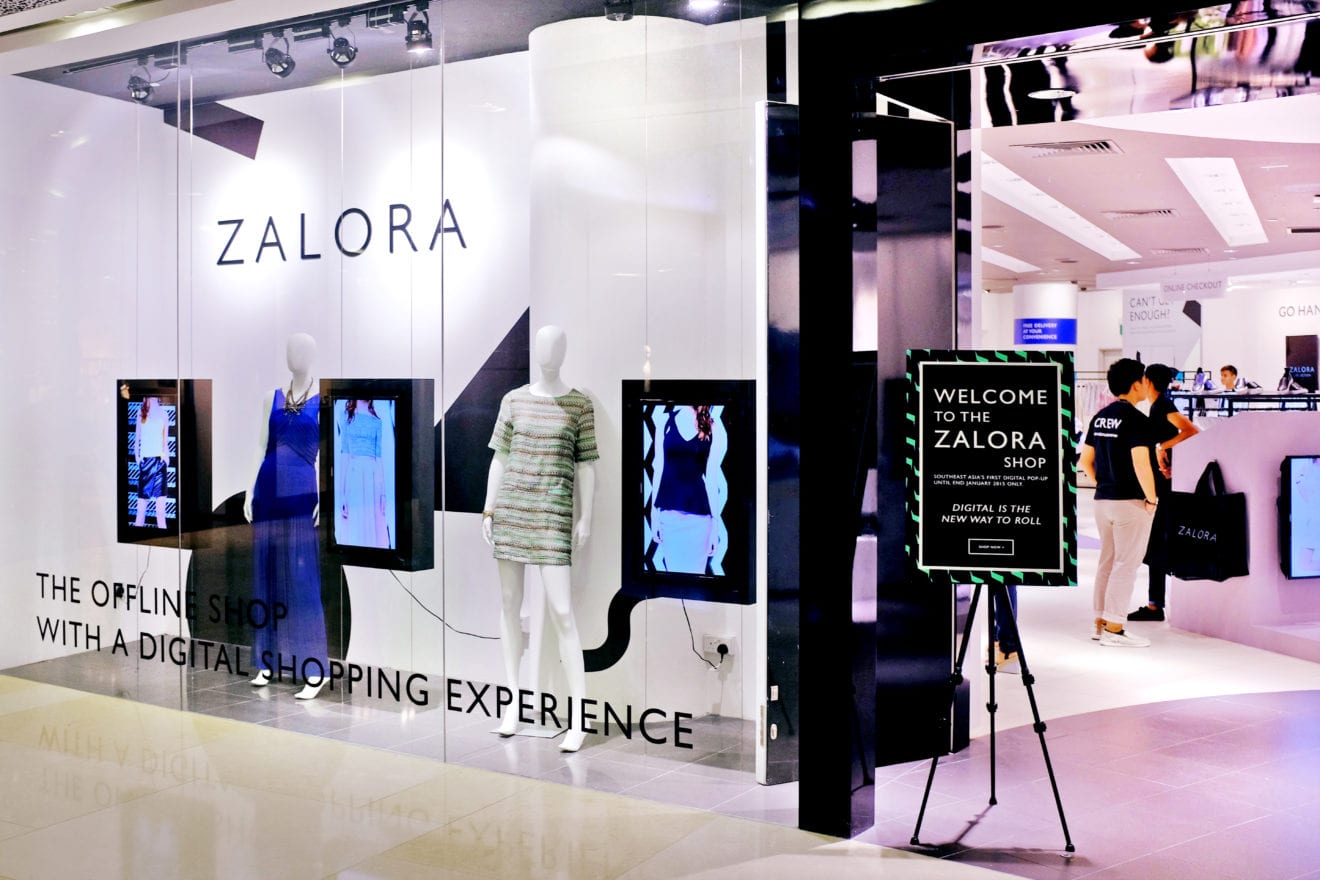
    Online fashion retailer Zalora is just one brand which opened Hong Kong pop-up stores last year to test the waters without committing to a long-term lease. Other than cost concerns, the use of a pop-up store also allowed the retailer to move the store around various shopping centres in the city to maximise exposure.

    Real world stores opened by online retailers are generally designed for experience and as a place to educate potential customers to buy online. Similarly, Line – the mobile social networking platform – also opened a pop-up store last year, before opening a more permanent store to sell Line character merchandise as well as build its brand image and customer base.

    While pop-up stores are the preferred format for Click-to-Brick retailers (at least at the market entry stage), when it comes to setting up a more permanent store, the overwhelming preference is to be located in prime shopping centres in core locations since they provide an all-weather shopping environment, controlled trade mix and a more focused customer base.

    For landlords, the allure of pop-up stores is that they can better utilise space within the shopping centre and minimise void periods; an important consideration given the current challenges facing the city’s retail sector. The ever changing goods offered by different pop-up stores can also freshen the shopping experience of customers.

    The Click-to-Brick trend is still at a nascent stage, hence it is too early to conclude whether it will establish as a key driver of demand in the city’s retail leasing market over the longer-term. In the interim, it will be a welcome addition to shopping centre landlords who continue to look for new means to differentiate against their competitors amid an increasingly challenging retailing environment.

  • Lendlease-ADIA to include 429 apartments in Paya Lebar project

    Lendlease-ADIA to include 429 apartments in Paya Lebar project

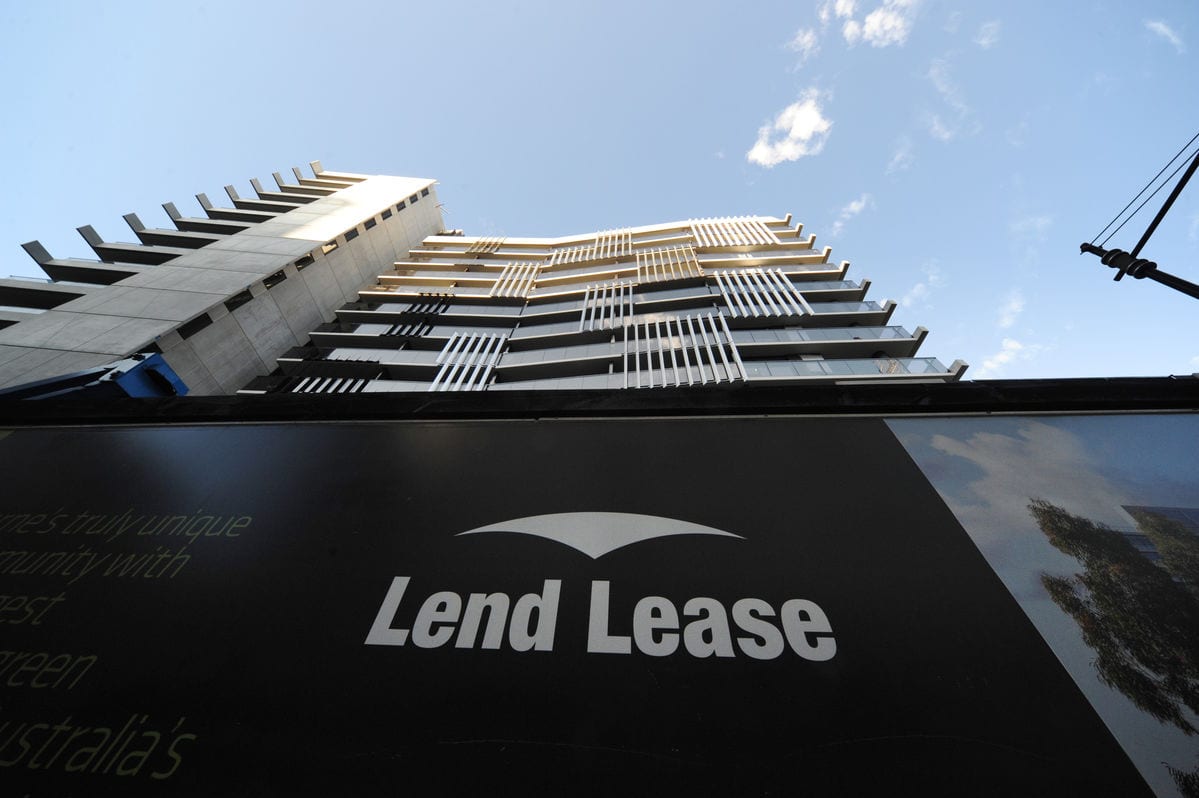
    The consortium comprising Lendlease and Abu Dhabi Investment Authority (ADIA) that last year bagged a plum site in Paya Lebar Central, has obtained provisional permission from Singapore’s planning authority to build a project that will comprise offices, retail space as well as 429 apartments.

    Going by market talk, the apartments are expected to be launched for sale probably next year.

    This will mark the first time the Australian group will be developing homes in Singapore. It has been operating here for more than four decades.

    The Urban Redevelopment Authority (URA) granted provisional permission last month for the developers to build a project that will have 91,340 square metres (983,175 sq ft) gross floor area (GFA) of office space and 43,740 sq m (470,813 sq ft ) of retail space in addition to the 429 apartments.

    The project is expected to be completed, that is, receive Temporary Occupation Permit in 2018, according to fourth quarter 2015 property market data released by the URA recently.

    When contacted, a spokesman for Lendlease said that the apartments will be in three towers. ” . . . Lendlease is confident that the . . . project will rejuvenate the precinct when it is completed,” he added.

    Word on the street is that CBRE and JLL have been appointed as leasing agents for the office space. Given its experience in the Singapore retail market, Lendlease will probably market the retail space itself.

    The Lendlease-ADIA consortium was the highest bidder for the 99-year leasehold site at a state tender that closed on March 31, 2015. Its winning bid of S$1.67 billion worked out to S$942.56 per square foot of potential gross floor area.

    The site comprises four plots – two land parcels, an underground area and an airspace. The site can be developed to a maximum GFA of 164,794 sq m (about 1.77 million sq ft). Of this, at least 90,000 sq m (968,751 sq ft), amounting to nearly 55 per cent of total GFA, has to be for office use. The project will boast direct connection to both the Paya Lebar East-West Line and Circle Line MRT stations .

    Lendlease has a 30 per cent stake in the consortium developing the project, while ADIA holds the majority 70 per cent.

    According to a previous article, the Abu Dhabi sovereign wealth fund (SWF) is said to be an investor in the Asian Retail Investment Fund (ARIF) managed by Lendlease.

    ARIF I has a 75 per cent stake in the 313@Somerset mall in Orchard Road, while ARIF III owns 75 per cent of the Jem office and retail development in Jurong East.

    ADIA is also understood to have invested in BlackRock-managed funds that developed the Asia Square project in the CBD.

    The SWF also previously held a 49 per cent direct stake in AXA Tower along Shenton Way in addition to being one of the investors in a BlackRock-managed fund that had owned the other 51 per cent in the circular office building opposite Tanjong Pagar MRT Station. They sold AXA Tower to a consortium led by Perennial Real Estate Holdings last year for S$1.17 billion.

    Lendlease is an integrated property and infrastructure group that has operated in Singapore since 1973; its capabilities span the entire property spectrum – development, investment management, project management and construction, and asset and property management.

    The URA’s Q4 2015 data also showed that MCL Land, a unit of Hongkong Land, obtained provisional permission in October for a 710-unit condo along Jurong West Street 41. The project’s name is Lake Grande.

    Chinese developer MCC Land received the URA’s provisional nod in December for a condo project of 626 units along Tampines Street 86.

    Meanwhile Gem Homes, the shareholders of which are Malaysia-listed group Gamuda, Evia Real Estate (7) and Maxdin, received provisional permission in November to develop a 578-unit condo in Lorong 5 Toa Payoh. When contacted, Evia Real Estate managing director Vincent Ong said that the project is slated for release in late April or early May; the average price will be S$1,480 psf. The development will have two 38-storey towers.

    The project was slated for launch in late March, but this has been delayed after the authorities turned down an earlier proposed name; the developers are now awaiting approval for a new name that they have proposed for the 99-year leasehold project.


  • Singapore investors buy record US$26.3b of overseas properties in 2015

    Singapore investors buy record US$26.3b of overseas properties in 2015

    Singapore-based investors purchased a record US$26.31 billion (S$37.83 billion) in overseas real estate in 2015, up 49 per cent from US$17.63 billion in 2014, going by preliminary data compiled by real-estate data and analytics firm Real Capital Analytics (RCA) as at Jan 12.

    The increase reflects Singapore investors’ strategy of targeting the world’s most liquid markets to diversify and grow their portfolios in the low-interest-rate environment.

    Last year’s record level of deals was boosted by big-ticket purchases by heavyweights such as GIC and Global Logistic Properties (GLP); however, mid-sized and smaller property purchases were also made by Singapore developers and family offices increasingly turning overseas in the face of a dour outlook for real estate at home, with the imposition of property cooling measures.

    RCA’s numbers may be updated as more transactions come to light.

    Globally, Singapore ranked as the fourth-largest cross-border property investor in 2015, the same as in 2014.

    US buyers were the most active in 2015, pouring US$58.74 billion in capital outside their borders; they were followed by their counterparts in Canada (US$32.17 billion) and Hong Kong (US$31.44 billion). China was in fifth position, at US$23.35 billion.

    Marc Giuffrida, executive director of global capital markets (Asia) at CBRE, said it was not surprising that Singapore-based investors emerged the fourth largest cross-border investors of real estate: “Singapore is a relatively small country, but has a relatively large wealth pool to invest – not just sovereign wealth, but corporates, families and private wealth. So there are only so many opportunities for them to put that money to work in Singapore.”

    The overseas property investment brigade from Singapore last year was led by bigwigs GIC, GLP, Temasek Holdings, Mapletree, ARA Asset Management Group and Ascendas Real Estate Investment Trust.

    RCA’s database covers only transactions above US$10 million in various asset classes, including development sites, office, industrial, retail, apartment, hotel and serviced apartments.

    The US$26.31 billion that Singapore investors ploughed into overseas real estate last year was six times the US$4.24 billion figure for 2009, when central banks embarked on the first round of quantitative easing, noted Petra Blazkova, senior director of analytics for the Asia-Pacific at RCA.

    The firm’s analysis also showed that the US$26.31 billion comprised 126 completed transactions, compared with 139 deals in 2014 and 26 in 2009. RCA also noted that there were 68 Singapore-based investors active overseas in 2015, almost double the 33 five years ago.

    Ms Blazkova said: “As more Singaporean investors look abroad to diversify a growing pool of domestic wealth, they have been drawn to offshore opportunities in real-estate markets that offer stable fundamentals, regulatory support and market transparency.”

    Historically, Singapore investors have been interested in the familiar Chinese property market. It was the top destination for Singaporean capital, attracting about US$25.87 billion of investment from 2009 to 2015. The next most popular destination was the US, which drew US$20.29 billion from the island-state’s investors during the same period, followed by Australia (US$15.35 billion), the UK (US$10.80 billion) and Japan (nearly US$7.1 billion).

    For 2015 itself, the US was the top investment destination for Singapore investors in search of overseas property; the US$14.76 billion they invested there was boosted by mega acquisitions by the likes of GIC and GLP in the industrial property sector. This resulted in industrial property being the most sought-after property class overseas among Singapore investors, drawing US$13.92 billion last year.

    A joint venture between GLP and GIC purchased Blackstone’s Indcor portfolio of 117 million sq ft across the US for slightly over US$8 billion; GLP also paid US$4.52 billion for a portfolio of industrial properties in the US which it acquired from Industrial Income Trust.

    In Australia, Ascendas Real Estate Investment Trust picked up a portfolio of 26 logistics properties for A$1.01 billion from GIC and Frasers Property Australia.

    Office and retail property remained popular among Singapore investors; they bought US$5.45 billion worth of office property and US$3.15 billion in retail property overseas last year.

    Of note was GIC’s purchase of a US retail portfolio comprising five malls from Macerich, said RCA.

    While Singapore’s overseas property investments have expanded over the past few years, the inflow of foreign capital into the Singapore property market remained stable at US$3.51 billion last year. This was in line with most of the previous years, with the exception of 2014, when the figure fell to US$1.22 billion.

    Ms Blazkova said: “Chinese investors maintained their lead as the largest source of foreign capital investing in Singapore property, accounting for US$1.03 billion of properties and development sites purchased in 2015.

    “That said, one of the largest sales of Singapore property to a foreign entity also took place in 2015, when a development site in Paya Lebar was acquired for total of US$1.28 billion by a joint venture between Abu Dhabi’s sovereign wealth fund Abu Dhabi Investment Authority and the Australian developer Lend Lease.”

    Apart from this transaction, China’s MCC (China Metallurgical) and Hao Yuan Investment group were the most active foreign investors in Singapore’s real estate market last year.

    Ms Blazkova noted that between 2011 and last year, the preferred route for foreign investors looking to access real estate in Singapore was by purchasing a development site. During the period, they picked up almost US$8 billion of development sites, accounting for 58 per cent of inward investment into Singapore real estate.

    Market watchers said this is partly due to the ease and transparency of the tender process when it comes to buying land at state tenders as well as a dearth of completed investment-grade properties available for sale, as most owners are long-term holders. Moreover, profit margins from property development are typically higher than rental yields.

    Mr Giuffrida of CBRE highlighted a recent trend of more transactions in the lower price bracket of, say, below US$100 million. This segment is starting to attract keen interest from smaller developers, family offices and private wealth on the lookout for opportunities, particularly for yield plays.

    For this year, he predicts two key trends for global cross-border property investments:

    The first is heightened interest in smaller-ticket deals from Asian investors, including Singaporean investors. The second trend is that more investors will move outside core locations. “In the Australian context, if they were previously looking at downtown CBD office buildings, now they are prepared to look at city-fringe locations.

    “In Europe, they might have previously focused on Central London office buildings, development sites and hotels; now they are looking at regional UK and branching into continental Europe.”

    Greg Hyland, head of capital markets, Singapore at JLL, said: “London is still a very important market, but there is an element of caution because of price appreciation; so investors may see better value in continental Europe – for example, Germany, Portugal, Italy, Spain and France.”

  • Seoul retail rents fuelled by food frenzy

    Seoul retail rents fuelled by food frenzy

    In the backstreets of Seoul, hipster culture is flourishing, and specialist cafés and eateries are jostling with big brand names to gain exposure in so-called “hot” neighborhoods. And as the crowds grow, so too do the retail rents.

    Just 10 years ago, Seoul wouldn’t have been the first city that came to mind as hip. As its economy picked up, a new class of Korean consumer has emerged and many are well travelled, knowledgeable and have discerning tastes, reports JLL Retail Views.

    Nick Kim, head of retail advisory & marketing in JLL’s Seoul offices, attributes the popularity of backstreet food and beverage (F&B) outlets to the fact that locals are always looking for “new, trendy, different places”.

    “They enjoy the blending of Korean and international cultures,” he says, and find cultural innovation on the backstreets, where prices are cheaper and the atmosphere is more casual.

    The rapid rise of artisan eateries and stylish bakeries in these alleyways was aided by the gentrification of districts such as Hongdae and Itaewon – formally avoided because of their association with crimes and drunkenness. F&B entrepreneurs typically set up shop on the back streets for good reason: real estate is far cheaper in the alleys than on the main roads.

    The pull of South Korean cool

    Thanks to promotional efforts by the government and the huge international success of South Korean pop music and television shows, the country’s cultural exports have gone beyond Kimchi and Psy’s global hit Gangham Style.

    According to Food Industry Asia, ‘Seoul Food’ is enjoying an international renaissance. Korean food tops the list of foods purchased at foreign specialty stores in China, is the most prominent emerging style of restaurant and cuisine in Singapore and is among the most popular cuisines for Australian consumers in 2014. his proliferation of modern Korean culture has led to a surge in the number of visitors to South Korea, from the region, notably from mainland China.

    As retail sales growth averaged about 2 per cent in recent years, a rising number of local fashion brands and F&B outlets have contributed to the steady rise of retail rents in Seoul’s prime submarkets.

    One example is Garosugil, one of Gangnam district’s most renowned enclaves, where rents have almost doubled over the past five years. The high street shops in Myeong-dong, the city’s prime shopping district, command the highest rents in South Korea at $6,244 per square meter per annum. Myeong-dong ranked third in Asia Pacific’s high street rents in the second quarter of this year, behind Hong Kong’s Russell St and Tokyo’s Ginza.

    However, when a backstreet turns into a main street, often following the entry of big brand names or retail chains, some diners move on. This sometimes leads to the creation of other alleyways, which is what happened in Garosugil, once known for its unique eateries. After big names such as H&M and Starbucks moved onto the street, newer, authentic outlets started to spread along many vertical roads nearby, says Kim. This has given Serosugil, a series of small alleyways near Garosugil, a new lease of life.

    In recent years, Seoul’s food culture has not only spilled over from its backstreets to Asia’s retail malls but has also hit the streets of London and New York. Following in the footsteps of K-pop, K-beauty and K-movies, K-food is increasingly gaining prominence in Western markets.

    There are already signs of a growing trend towards Korean fusion restaurants such as the American-Italian-Korean cuisine offered at Piora in New York City’s West Village and Jin Jiu in London. Key to the success of K-food culture overseas is the strong advocacy by the country’s Ministry of Agriculture, Food and Rural Affairs, which has been actively organizing food fairs in Indonesia and Malaysia and has even opened Korean culinary classes in universities in Vietnam and China.

    So far it’s been a winning strategy – and the appetite for all things Korean is far from sated.

  • F&B underpinning demand for Singapore retail space

    F&B underpinning demand for Singapore retail space

    Food and beverage has overtaken fashion as the primary driver of demand for retail real estate in Singapore.

    In its Third Quarter Retail Index covering Asia-Pacific, property company Jones Lang LaSalle says that despite declining retail sales and consumer spending, the prime retail sector remained in good shape during the third quarter.

    “Notwithstanding the overall challenging retail environment, Singapore’s most popular prime shopping destinations continued to demonstrate resilient performance, with malls such as Ngee Ann City, Paragon and Ion Orchard maintaining full occupancy,” the report concluded.

    “F&B has overtaken fashion retailers as the top demand driver.”

    Orchard Rd is ranked fifth most expensive in Asia for High Street net face rents with a figure of US$4106 per square metre per annum. That’s a fraction of the $19,476 of top placed Russell St in Hong Kong, and behind Shanghai’s West Nanjing Rd at $5473.

    But on a quarterly basis, the average shopping centre rent in Orchard Rd and District 9 fell by 0.4 per cent quarter on quarter, and by 0.7 per cent year on year. It was the only city of 18 measured by JLL to record a reduction, despite the highly publicised downturn in Hong Kong retail rents. (This is largely due to that comparison measuring shopping centre rental rates which have to date remained relatively unaffected in Hong Kong’s turmoil).

    JLL predicts “further rental correction” in Singapore amid subdued occupier demand “as labour market challenges and weak consumer sentiment prevail in the near term”.

    The report said that despite leasing support from new market entrants into the city, expansion of existing retailers has slowed and some have cut back their store networks.

  • Restaurant operators regain a presence in Hong Kong

    Restaurant operators regain a presence in Hong Kong

    Restaurant operators have regained their presence in Hong Kong’s retail market where an increasing number of top-end retailers have surrendered their spaces in the wake of weakening spending on luxury items and a decline in tourist arrivals.

    JLL said that in 2013 food and beverage operators accounted for only 29 per cent of the leasing deals it handled. This year, that figure has increased to more than 50 per cent.

    “There are in discussions with a number of overseas restaurants to open their first outlets in Hong Kong as part of their their Asian expansion plans,” said Michelle Chiu, an associate director at JLL’s retail department. “They come from the United States, Europe and Southeast Asia.”

    A new trend of incorporating food and beverage elements into their retail businesses has been seen among luxury fashion brands, including Franck Muller and Vivienne Westwood. And then, there is the lifestyle concept, such as the collaboration between Mercedes-Benz and Maximal Concepts, which has led to the creation of Mercedes Me.

    At more than 4,000 square feet, Mercedes Me has taken the space formerly occupied by Porsche Design and Geox on the ground floor of Entertainment Building in Central at an estimated monthly rental of HK$4 million. Meanwhile, Vivienne Westwood opened its first cafe in Tsim Sha Tsui and Swiss luxury watch maker Frank Muller has launched a fine-dining restaurant in Causeway Bay.

    To capture growing leasing demand among restaurants, JLL has formed a seasoned food and beverage team to cater for the industry.

    Terence Chan, head of retail at JLL, said the team will offer specialist services to local operators, international restaurant groups and new-to-market entrepreneurs alike.

    “Apart from the traditional F&B agency services including site introduction, lease negotiation, location analysis, tenant representation and market entry strategy and analysis, we also provide project coordination services. We will assist the clients in liaising with the interior designers, licensing consultants, contractors and maintenance vendors for set-up of their restaurants,” Chan said.

    Helen Mak, the retail services group head at Colliers International, believes the softening retail leasing market will provide more opportunities for the return of restaurants given the high rents the international brands could afford to pay just a few years ago.

    “With a restaurant inside the shop, it will also help to retain customers inside longer as well as serving as a venue for promotional events,” Mak said.

    She said shopping centres intend to allocate more space for restaurants in view of the difficult retail market.

    But the rapid expansion of restaurants could increase direct competition as most shopping centres plan to devote more space for food and beverage operators.

  • Bright spots on the retail property horizon

    Bright spots on the retail property horizon

    Singapore’s retail market has been experiencing a drop in sales values. Tourism arrivals and the ongoing labour shortage against the backdrop of an additional reduction in the foreign dependency ratio effective July 2013 are considered some of the key drivers behind this, along with weaker economic sentiment.

    However, the outlook is not all doom and gloom.

    One bright spot is mixed-use developments within the Central Business District that are proving to be very popular among retailers. Offering offices, residences, hotels and retail podiums within landmark new developments in prime CBD locations such as South Beach, Tanjong Pagar Centre and Downtown Gallery (part of a mixed-use property) has been extremely popular with retailers, given the enormous current catchment and the forecast catchment growth in line with the “Live, Work, Play” guidelines.

    Changing consumer attitudes and preferences are other positive aspects of the retail scene and one that is very popular is the healthy lifestyle theme. Taking the CBD as an example, we have seen a huge influx of gym operators – from large-format mega gyms to more bespoke fitness boutiques. This is being followed by growth in the sports apparel market and healthy food options as people take note of their lifestyle choices.

    BACK TO BASICS

    For the retail market to bounce back we need to not only look forward, but also look back at the underlying principles of retailing. While the global retail environment is moving at a frantic pace, the adage of “location, location, location” is still salient today. The key in all retail markets is ensuring that the retail offer is suitable for the catchment profile of its location: Are the customers looking for ease- of-convenience retail or the experience of a retail destination and does the tenant mix reflect this?

    Given the number of retail malls in Singapore and the difficulties highlighted, retail locations that do not meet these parameters or are secondary in doing so are likely to face further difficulties with increased voids (empty shops) and downward pressure on rentals given the large amount of retail space available and economic headwinds.

    During difficult retail cycles, new trends often arise as landlords seek to address occupancy levels and adapt their retail offerings. Over the past few years, we have seen an increase in pop-up stores, where retailers are able to occupy space on short-term agreements. These pop-ups allow existing retailers to experiment and new retailers to test products without the financial commitment that a standard lease requires. Trends like this are beneficial to the marketplace as they create differentiation and attract consumers to retail locations. Voids breed voids so temporary stores are an important option for landlords, and this is something that JLL envisages growing as traditional lease occupancy rates fall in certain locations.

    TENANT MIX IS KEY

    Ultimately, a key aspect in creating successful retail locations is a strong, differentiated and relevant tenant mix. Singapore has seen numerous new-to-market brands and this trend looks set to continue, with JLL working with many such operators.

    Alongside sourcing the correct real estate, one key factor for any new-to- market brand is the rent and lease terms. JLL is seeing a correction in rents in response to market conditions but in some cases lease terms remain prohibitively rigid.

    Creating flagship stores requires high capital expenditure, which must be depreciated and as such longer lease terms are required; redevelopment, relocation and performance clauses make this depreciation difficult in some cases and impossible in others. While this is not reflective of the entire marketplace, increased flexibility in lease terms is equally important for short-term temporary leases as it is to attract the world’s leading retailers – which is key for a vibrant and differentiated retail market.

    With the exception of true convenience locations, malls can no longer just be places to purchase goods. A successful retail tenant mix must also allow social interaction and enrichment to encourage repeat visits, increased dwell time and subsequent increased retail spending.

    Flexibility to attract leading international retailers, temporary stores, new start-ups and more social interaction often comes at the expense of immediate rental values. For such exercises, a long-term view is required as the upfront cost of repositioning/amending the tenant mix must be balanced against sustaining a long-term income and the overall increased appeal of retail locations.

    Tourism arrivals and economic conditions are undoubtedly affecting retailers’ sales but from a real estate perspective, retailers and their business models are also adapting to changing consumer behaviour and market sentiment.

    One outcome of ever-changing technology is that many retailers are reducing their footprint as a result of e-commerce. Historically, increasing the number of stores was one of the key weapons of a retailer in raising market share by presenting its brand to consumers in numerous locations. A strong online presence now allows retailers to ensure that their brand is never out of consumers’ minds and consumers can research, browse and purchase on the go, which ultimately means certain retailers require fewer stores than before.

    Physical stores do continue, however, to play a very important role in brand building, service, loyalty and, of course, point of sale, but their nature is adapting. JLL is seeing an increase in “brand pavilions/flagship stores” that are used by retailers to showcase the very best of the brand and are located in the prime retail locations. These stores are used alongside an online presence to build brand positioning and awareness and they allow customers to feel and try products. In many cases, the newest technology – think virtual fitting, 3D printing, etc – is utilised to maximise consumer experiences. As a result, JLL foresees demand for prime retail space growing to meet these requirements, although this is complicated by the small size of the Singapore prime market.

    To summarise, the Singapore market has been experiencing difficult times with a drop in sales volumes and the impact upon real estate is being exaggerated by the frenetic pace of change in retail itself. The most successful landlords and retailers will be those able to embrace these changes and JLL expects to see some exciting changes in the future. We do, however, foresee further downward pressure on rentals and an increase in vacancy levels in certain locations as retailers downsize their store numbers.

  • Warning bell for the end of Hong Kong’s 12-year property rally is ringing louder

    Warning bell for the end of Hong Kong’s 12-year property rally is ringing louder

    The warning bell signalling the end of Hong Kong’s 12-year property rally is ringing louder with more experts predicting that the stock market rout and economic uncertainties at home and abroad will accelerate a price correction.

    Analysts widely expect home prices could fall as much as 10 per cent this year. Hong Kong home prices have risen 9.8 per cent since January after soaring more than 360 per cent from 2003.

    “The worrying factor is Hong Kong’s economy, especially the retail market. Some retailers will be forced to close their business or cut staff if the coming Christmas holidays fail to lift sales. It will certainly affect the home buying desire,” said Alvin Cheung Chi-wai, an associate director at Prudential Brokerage.

    He notes the increasing number of transactions recently sold for below market price in the secondary residential market.

    “It is a reverse trend. Previously, flats in the secondary market kept setting records. Today, vendors have to lower their asking prices on rising expectations home prices are going to fall,” said Cheung, who expects home prices could decline 10 per cent next year.

    His forecast comes in the wake of JP Morgan predicting flat values could drop 5 to 10 per cent a year over the next three years.

    The number of flats in the secondary residential market changing hands at steeper discounts is also on the rise. Such cases were seen from blue-chip housing estates in Taikoo Shing to mass-market homes in Castle Peak Road in the New Territories.

    One case in point was a 714 sq ft unit in Taikoo Shing – the most actively traded housing estate in Quarry Bay – which sold on Sunday for HK$12 million, or HK$16,807 per square foot, 6 per cent below prevailing transaction prices, agents said.

    A 572 sq ft unit at Belvedere Garden in Castle Peak Road sold for HK$4.98 million, or HK$8,706 per square foot, according to Louie Lui, a senior manager at Centaline’s Belvedere Garden branch.

    “It is the lowest price in terms of per square foot in the past 12 months,” he said.

    Buying sentiment may further be hit after UBS lowered its year-end target for the stock market’s Hang Seng Index to 19,775 points. The blue-chip index closed 3.28 per cent higher at 21,259.04 points yesterday.

    “Now, as we have seen a combination of the three pillars of Hong Kong’s economy weakening (tourism and re-export) or showing signs of weakness (property), along with decelerating economic growth in China, we believe our ‘black-sky’ scenario could be a better portrayal of the challenges in the current environment,” UBS said.

    Eva Lee, a property analyst with UBS, said stock market turbulence would certainly affect buying confidence.

    “But it is not a key factor to trigger a price correction. The property market outlook still hinges on the performance of our economy,” she said. The brokerage house forecasts home values will fall 5 to 10 per cent this year.

    Morgan Stanley said home prices would decline 5 per cent from the current level to the end of this year and remain flat next year.

    Joseph Tsang, the managing director of property consultancy JLL’s Hong Kong office, believes the worst-case scenario for the mass-market home sector would be a decline of 5 per cent next year because demand remains solid.

    “Development cost for mass residential projects is HK$12,000 to HK$13,000 per square foot. I believe downside risk for unit pricing not exceeding HK$15,000 per square foot will be limited,” he said.

    On September 5, Kowloon Development’s special financing scheme helped to boost the sale of its Upper East development in Hung Hom. It sold 328 units or 89 per cent of the total over the weekend.

    The developer launched the first batch of 368 flats at prices as low as HK$3 million. Buyers will only require as little as a 5 per cent deposit through its scheme of providing second mortgages of up to 35 per cent on top of the bank’s 60 per cent.

    Tsang said the luxury residential sector, particularly for flats worth HK$20 million to HK$100 million, could have room for a 10 per cent downward adjustment once interest rates rose.

    He said individual owners offering flats at discounts had not developed into a trend.

    “There are always some owners who offload their flats at low prices for some personal reasons. But most vendors still have strong holding power and refuse to sell at a low price,” he said.

  • Hong Kong retail sector to suffer most from yuan devaluation

    Hong Kong retail sector to suffer most from yuan devaluation

    A weaker yuan means these tourists will now be spending in a more expensive Hong Kong dollar, denting the city’s retail sales even further.

    “Shopping in Hong Kong will get more expensive for mainlanders,” said Nicole Wong, regional head of property research at CLSA, “Landlords need to be more realistic [in setting their rents].”

    Wong said retail rents would in any case have to correct in view of the slump in Chinese spending and that the yuan devaluation would only steepen the fall.

    Big spenders from China had already been skipping Hong Kong and flying directly to Europe, taking advantage of a cheaper currency, she said. The euro has lost nearly 18 per cent in the past year.

    The yuan has lost more than 3 per cent against the US dollar since the People’s Bank of China shocked the markets by devaluing the currency by 1.85 per cent on Tuesday, the most in one day in more than 20 years.

    “Any meaningful depreciation of the yuan could further dampen Hong Kong retail sales as mainland visitors’ spending represented 38 per cent of Hong Kong’s total sales in 2014, compared to below 20 per cent prior to 2008,” wrote Bank of America Merrill Lynch analyst Raymond Ngai in a note to clients.

    The devaluation would be another direct headwind for Hong Kong retail landlords, he said, citing the widespread market expectation of a 10 per cent depreciation of the yuan against the US dollar in the next 12 months.

    Shares in Causeway Bay’s largest retail landlord Hysan Development have fallen for three straight days since Tuesday. In all, it lost 1.7 per cent to close at HK$33 on Thursday. Hang Lung Development, which owns Fashion Walk in Causeway Bay, lost nearly 3 per cent to close at HK$19.80.

    Sogo department store operator Lifestyle International Holdings fell nearly 1 per cent on Thursday. Only Wharf (Holdings), which owns the city’s largest shopping mall Harbour City, but is diversified into areas other than retail, bucked the trend to edge up nearly 0.5 per cent on Thursday after falling 3.7 per cent the previous day.

    Jefferies downgraded Hysan to “hold” from “buy” for its concentration in retail operations.

    Even before the devaluation, global brands have been pushing landlords to cut rents as mainland footfalls have been dwindling amid an economic slowdown as well as the anti-corruption drive on the mainland that has crimped luxury spending. Swiss watchmaker TAG Heuer last week said it was closing a store in Causeway Bay’s prestigious Russell Street.

    Tom Gaffney, head of retail at property consultancy JLL, said some retail outlets in Central and Causeway Bay had asked for rent reductions of up to a fifth.

    But the yuan depreciation is likely to have a mild impact on Hong Kong’s physical property market.

    Sammy Po, chief executive of Midland Realty’s residential department said mainlanders accounted for 20 to 30 per cent of new luxury homes sales in 2011.

    “Today, mainland buyers have dropped to about 4 per cent due to stamp-duty curbs for non-locals,” he said.

    This article appeared in the South China Morning Post print edition as Devalued yuan to hit retail sector

  • International retailers show great interest in Hong Kong market

    International retailers show great interest in Hong Kong market

    Foreign retailers catering to Hong Kong’s mass retail market are eager to secure shops in Hong Kong, which they consider as a mature market, said Maureen Fung Sau-yim, a director of Sun Hung Kai Development (China), a unit of Sun Hung Kai Properties.

    According to Fung, the company has signed leasing contracts with 20 new international tenants this year at its APM shopping centre in Kwun Tong.

    “Those brands, such as French shoe brands Bensimon and Palladium, as well as Korean fashion brand Stylenanda, have come to Hong Kong for the first time,” said Fung.

    She said recently agreed rents in APM had risen 16 per cent to 20 per cent compared to leases signed one to three years ago.

    Total retail sales growth declined 1.8 per cent year on year in the first five months of this year, against average growth of 11 per cent per year over the past 10 years, constrained by weaker inbound tourism.

    Spending on jewellery and watches continued to fall, affected by the anti-corruption campaign in mainland China and the shifting pattern of mainland Chinese shoppers away from luxury goods and towards mass market products, according to property consultant JLL.

    But a survey by consultancy Arcadis showed that Hong Kong was still an attractive place for retailers.

    In its first report “Retail Operations Index: Where in the world could your retail portfolio thrive?” on Monday, Arcadis said Hong Kong was the most attractive location for retailers globally, followed by Singapore and Japan.

    Asian countries dominated, taking three of the top five spots, the survey showed. It identified the locations that were the most and least difficult to execute, scale and flex large retail programmes based on an in-depth analysis of the global retail market in 50 countries.

    SHKP plans to spend HK$150 million to upgrade the APM mall, which was established 10 years ago.

    The programme, which is due for completion in 2017, includes an upgrade of technology, common and leisure areas and other facilities.

    This article appeared in the South China Morning Post print edition as HK is top pick for foreign retailers