Tag: job

  • Facing Job Insecurity at 40: Why I Accepted a $300 Monthly Salary

    Facing Job Insecurity at 40: Why I Accepted a $300 Monthly Salary

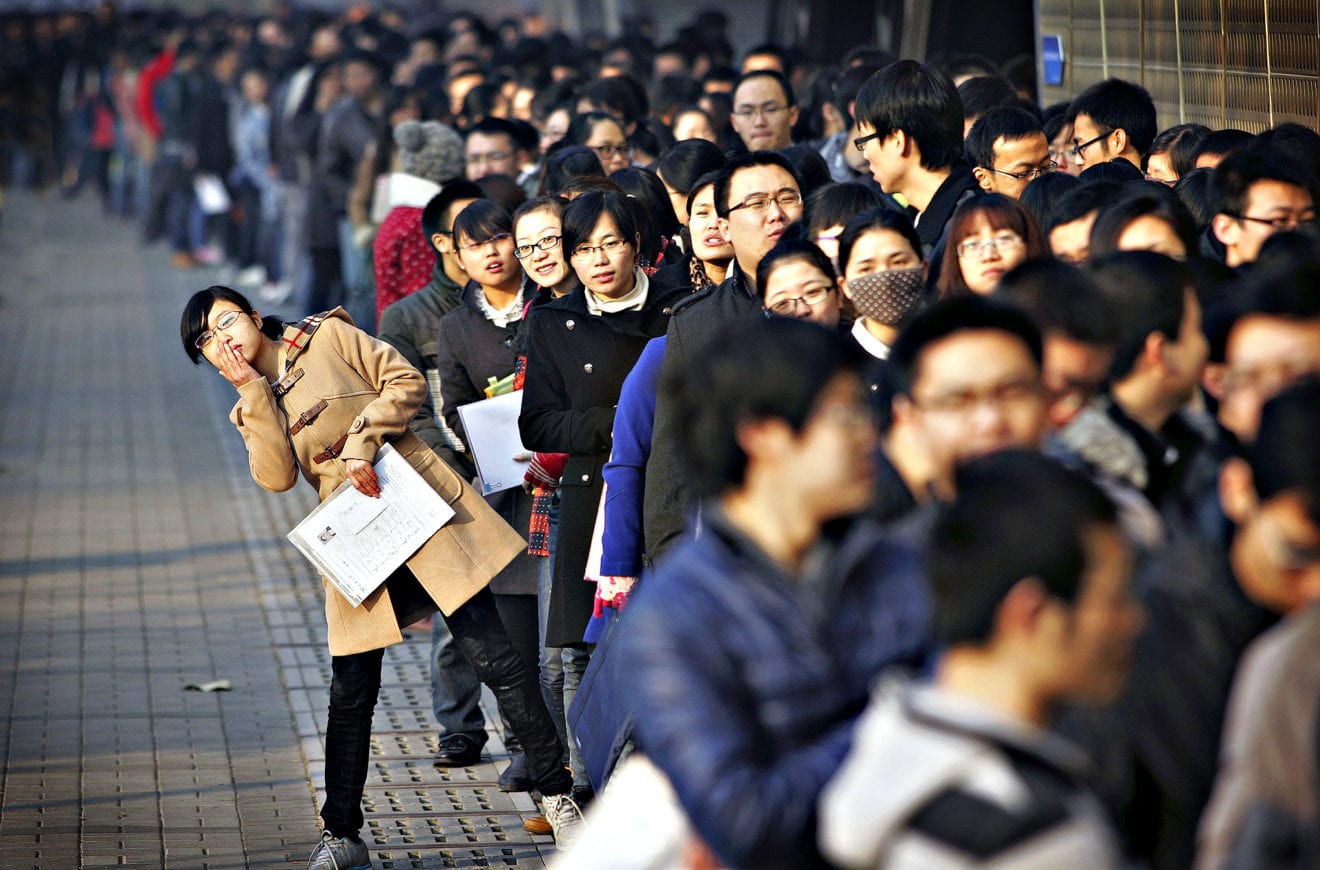
    For many workers in Asia, the reality of job security and career advancement often feels like a distant dream. An anonymous employee, who has spent over a decade in a role defined by administrative tasks, describes a life caught in a rut. The monotony of data entry and paperwork may seem predictable, but for him, it signals both safety and stagnation.

    A Vicious Cycle of Fear and Despair

    At 40, he faces a grip of anxiety over job prospects that weighs heavier than any clipboard he has balanced for years. Friends and family encourage him to pursue better opportunities, yet the thought of venturing into the job market fills him with dread. The fear of rejection looms large, turning resume submissions into exercises in agony.

    Attempts to break free have been met with silence or outright rejection, largely due to the demands of employers for skills he lacks—English proficiency, technological know-how, and managerial experience. A pointed question from one recruiter still haunts him: “You are 40, can you keep up with a high-pressure job?” Left speechless, he ultimately chose to remain in his role, a lifeline to ensure his family’s basic needs are met.

    Stuck in a Comfort Zone

    Each day is a cycle of repetition, with the clock ticking down to monthly bills that must be paid. His job may not promise promotions or skills development, but the stability it provides is invaluable. The threat of long-term unemployment looms even larger, particularly for workers in his demographic. He worries constantly about being a financial burden, even as he grapples with the frustrations of professional stagnation.

    The Invisible Struggle of Middle-Aged Workers

    Voices of encouragement from others suggest he should leap outside his “comfort zone” and embrace new learning opportunities or entrepreneurial ventures. However, for him, these options seem like a luxury reserved for the youth deliriously unaware of the risks that come with age. Health issues and familial responsibilities magnify his reluctance to take chances.

    In his own words, life at 40 feels like precariously balancing on a rotting bridge: every step forward feels risky, yet standing still only delays inevitable decline. His job, which pays VND8 million a month, isn’t an act of love or passion; it’s a decision made from sheer necessity.

    Through this account, he reaches out to younger generations: the struggles of middle-aged workers often go unspoken, trapped between the fear of change and the harsh realities of unemployment. The past choices may reflect a temporary comfort, but they can transform into a lifetime of regret. He urges the younger workforce to remain proactive, to learn, adapt, and prepare for an unpredictable future filled with opportunities yet to be grasped.

    Questions & Answers

    What keeps the individual from pursuing a new job?
    The fear of rejection and the anxiety associated with change prevent him from seeking better job opportunities, compounded by a lack of required skills.

    How does the individual view his current job?
    He sees his administrative role as a necessary lifeline for his family, even though it offers no potential for growth or fulfillment.

    What advice does he offer to younger workers?
    He encourages them to continually learn and improve their skills, warning that complacency can lead to a precarious future as they age.

  • Skillsfuture Jobseeker Support Scheme Approves Nearly 2,900 Applications Amid Economic Challenges

    Skillsfuture Jobseeker Support Scheme Approves Nearly 2,900 Applications Amid Economic Challenges

    In a recent update, nearly 2,900 applications submitted between the launch of the SkillsFuture Jobseeker Support scheme in April and August have been approved. Minister for Manpower Tan See Leng revealed this information while responding to parliamentary inquiries on Tuesday.

    A deep dive into the demographics shows that most applicants fall within the age bracket of 26 to 40, highlighting a significant segment of the workforce seeking assistance during these challenging economic times. However, for those who didn’t make the cut, the reasons for rejection were notably clear. The top three reasons included being not involuntarily unemployed, exceeding a monthly income of S$5,000, or failing to have worked for at least six months within the past year.

    Tan has made it clear that unsuccessful applicants still have the option to appeal on a case-by-case basis. “We have held the line in these cases, as the JS scheme is meant to support those made unemployed involuntarily… rather than those who have chosen to leave,” he noted in comments reported by The Business Times. In instances of ambiguity regarding an applicant’s unemployment status, Workforce Singapore (WSG) takes the initiative to verify claims with employers, ensuring a thorough assessment.

    Eligibility Criteria for Support

    The SkillsFuture Jobseeker Support scheme is available for Singaporeans aged 21 and above, provided they have worked at least six months in the past year with an average monthly income of S$5,000 or less. To qualify, applicants must have faced unemployment due to uncontrollable circumstances, including retrenchment, company closures, or terminations linked to illness, injury, or accident. Additionally, their residential property value must not exceed S$31,000, a detail not lost on those navigating the tricky waters of financial support.

    Supporting the Workforce

    At the scheme’s launch, the government anticipated that it would benefit around 60,000 residents each year. WSG, which oversees the program, carefully verifies unemployment claims, collaborating with previous employers when needed. It’s not just about financial support; successful participants are expected to actively engage in their job searches by attending activities like career coaching or networking events, earning points to maintain their eligibility. Think of it as a game — the more you engage, the better your chances of leveling up in your job search.

    In his address, Tan also underscored the government’s commitment to collaborating with employers and the labor movement to enhance awareness of the program. Companies facing necessary retrenchments are encouraged to facilitate worker applications, emphasizing community support. Regular reviews of the scheme are planned to ensure it continues to meet the evolving needs of those it aims to assist.

    Questions & Answers

    What is the main purpose of the SkillsFuture Jobseeker Support scheme?
    The scheme is designed to support Singaporeans who have become unemployed involuntarily, helping them find new job opportunities during challenging times.

    Who qualifies for the Jobseeker Support scheme?
    Eligibility is restricted to Singaporeans aged 21 and above, who have worked in Singapore for at least six months within the past year, with a monthly income of S$5,000 or less. They must also demonstrate that their unemployment was due to factors beyond their control.

    What are the consequences of being rejected from the scheme?
    Rejected applicants have the option to appeal their cases on an individual basis, allowing them a chance to challenge the decision made regarding their eligibility.

  • 43% of job seekers are under 40

    43% of job seekers are under 40

    In the first quarter 43% of job seekers were aged 30–39 and 37% were in the 20–29 age group, according to statistics from the Ministry of Home Affairs.

    They are from the quarterly labor market bulletin compiled by the ministry’s Institute of State Organizational and Labor Sciences based on data from 18,000 job seekers on recruitment websites, 25,000 employers and 200,000 job postings.

    The candidates were most concentrated in business administration, sales, procurement and brokerage, marketing, and advertising, while employers were mainly looking for workers in engineering, transportation and sales.

    Pham Ngoc Toan, director of the institute’s Center for Strategic Forecasting and Public Service Information, said job seekers used a variety of methods, including in-person visits, public employment service centers, and online job portals.

    The 30–39 age group accounting for a large proportion of job seekers is a trend normally seen early in the year, he said, explaining that it usually has work experience and skills and often seeks changes in position, salary or working environment making it more prone to job-hopping.

    “This doesn’t necessarily mean they are unemployed — it is often about job transition, as reflected in the drop in the unemployment rate compared to the previous quarter.”

    However, this figure also reflects challenges in the labor market.

    The under-40 group is more vulnerable to the so-called “mid-career job trap” as traditional jobs are increasingly being replaced by technology and younger workers enter the market.

    Whether workers are replaced or not depends heavily on their ability to adapt to evolving job requirements, which can be vastly different even compared to just two years ago.

    Global economic conditions and U.S. tariff policies are also expected to impact Vietnam’s labor market in the coming months.

    Toan advised workers to improve their IT skills to better prepare for future opportunities.

    In Q1 demand was highest for workers with university degrees or higher (nearly 53%), followed by those with college or vocational training (40%).

    Only 7% of positions required no technical qualifications.

    Around 51% of job seekers held university degrees or higher, and 29% had vocational or college qualifications.

    A mismatch was noted in temporary jobs, with demand accounting for just 8% of vacancies while 32% of job seekers were looking for such roles.

    The outlook for the next quarter depends largely on domestic business activities, which could be influenced by U.S. tariff policies, particularly in labor-intensive sectors like electronics and garments.

    On the other hand, recruitment is expected to rise in sales, customer service, logistics, transportation, and construction, driven by increased public spending in construction projects.

    Nearly 145,000 people applied for unemployment benefits in Q1, down by almost 30,000 from the final quarter of 2024.

    Nearly 124,000 were approved for benefits, while only 3,600 opted for vocational training support.

    Unskilled workers remained the largest group applying for unemployment benefits (60%) followed by university graduates (19%), college graduates (over 7%), vocational secondary graduates (6%), and those with basic vocational certification (8.5%).

    In terms of occupations, workers in the garment and related industries accounted for the largest share of claimants at 21%, followed by assemblers (7%) and sales staff and accountants (3.6% each).

  • Australian job hunt increasingly difficult for international graduates

    Australian job hunt increasingly difficult for international graduates

    When she began pursuing her master’s degree at Melbourne University, Tran Thi Phuong did not anticipate how challenging it would be for her to secure a job after graduation.

    The 27-year-old Vietnamese woman has now lost track of the number of job applications she has submitted. Her two years of experience at the auditing firm EY Vietnam, along with a master’s degree in a globally respected field (Information Systems) from a prestigious university appear to have done little to aid her job search in Australia.

    “I have never experienced such panic,” Phuong said “At certain points, I’ve doubted whether or not I’ll ever secure employment here.”

    Ever since receiving her diploma in June 2023, it’s been 9 months of persistent effort. Phuong was finally offered a position as a strategy analyst at a land consulting firm associated with the Western Australian state government in Perth, a small city located 3,419 km from Melbourne.

    Phuong’s experience underscores the wider challenges faced by temporary graduate visa holders in Australia as they pursue employment in the country following their studies.

    The 2022 Graduate Outcomes Survey, which was carried out by the Australian government’s Quality Indicators of Learning and Teaching suite, found that 28.5% of international students with undergraduate degrees in Australia had remained jobless for at least six months following graduation. For those with international postgraduate research degrees, the percentage was 14.4%.

    To put it another way, roughly two out of every seven international undergraduates and one out of every seven international postgraduate research graduates in Australia found themselves without employment six months after graduation.

    Moin Rahman, a 28-year-old Bangladeshi graduate from the University of Queensland, found himself in this exact situation. Despite submitting applications for over 80 job openings, he struggled to secure a full-time role in civil engineering, his field of study at university.

    “That takes a psychological toll,” the Australian Broadcasting Corporation (ABC) quoted him as saying.

    Despite being on a temporary graduate visa, Rahman said he encountered “friction” that held him back from progressing beyond casual and part-time jobs.

    “If I somehow miraculously made my way through to an interview stage, I would be asked about my visa status,” he said.

    “When I would say that I am an international student but I have full-time work rights there was a shrug of shoulders and all of the preceding qualities that actually made the employer interested in me was overtaken by this one fact.”

    The struggle has persisted for some international graduates even after obtaining employment, as they have often settled for positions at lower salaries than their local counterparts.

    A report from the Grattan Institute titled “Graduates in limbo: International student visa pathways after graduation,” which was unveiled in October 2023, pointed out that “only half [of international graduates in Australia] secure full-time employment, most work in low-skilled jobs, and half earn less than A$53,300 (US$34,964) a year.”

    This income is significantly below that of domestic graduates, essentially aligning more closely with the earnings of working holiday makers, most of whom come to Australia to travel.

    The report also revealed that almost 75% of those holding a temporary graduate visas had incomes below the median for Australian workers in 2021.

    Specifically, international graduates possessing postgraduate coursework degrees in business management were found to earn approximately A$58,000 annually less than their domestic counterparts holding the same qualifications.

    Similarly, those with postgraduate coursework degrees in computing and engineering faced a yearly income deficit of about A$40,000 compared to domestic graduates.

    International students who graduated with an undergraduate degree in engineering or computing were found earning A$12,000 less annually than their Australian peers, according to the report. The gap for business undergraduates was roughly A$10,000 a year.

    In discussions with her colleagues from India, Thailand, and the Philippines, Phuong learned that achieving a salary comparable to that of Australians is “difficult and uncommon” for them.

    In addition to being underpaid, international graduates in Australia often find themselves accepting jobs that neither require tertiary education nor match their academic fields of expertise.

    A joint study conducted by the Australian Financial Review (AFR), Deakin University and University of Adelaide demonstrated that merely 36% of 1,156 international graduates polled from 35 universities secured full-time jobs in their studied field upon completing their education.

    Some 40% of international graduates in Australia actually found themselves in roles considered low-skilled, notably in sectors such as retail, hospitality, or in positions like cleaning or driving.

    Ruva Muranda, who graduated with a bachelor’s degree in biomedical science in 2018, said she had to work in a warehouse until the early months of 2020.

    “I got really depressed,” she said. “It made me feel like I wasn’t good enough. It made me feel very ‘othered.’”

    As she observed her colleagues advancing in their careers, securing employment, climbing the professional hierarchy, acquiring vehicles, purchasing homes, and achieving their vocational aspirations, her sense of stagnation intensified.

    “It feels like you’re held back at the starting line.”

    With her options constrained, Swastika Samanta, who possesses a master’s degree in environmental management, said she worked casual and part-time jobs for the length of her temporary graduate visa.

    “Beggars can’t be choosers. You take the best job that comes to you,” she said.

    Fear of quick replacement.

    Lack of English language proficiency is a roadblock for many foreign graduates seeking jobs in Australia.

    The situation is evident as even in Victoria, the state with the largest proportion of laborers from non-main English-speaking countries, where these individuals still make up only 28.8% of the total labor force, according to the Australian Labour Market for Migrants report released by the Australian Government in October 2023.

    Visa uncertainties also have employers reluctant in hiring foreign graduates.

    According to the “Australian international graduates and the transition to employment” report by Deakin University and University of Technology Sydney (UTS) researchers, almost every interviewed employer expressed a preference for hiring graduates holding permanent residency visa status.

    Dr. Thanh Pham, a researcher from Monash University said: “They employers make the assumption that international students cannot stay in Australia for long and are unaware of other visa pathways like bridging and residency visas … When I interviewed them, they explained that if they hire an international student, they will have to employ someone new to replace them in a couple of years.”

    This policy was precisely the obstacle Phuong encountered during her job search, a realization that dawned on her only after accumulating significant time and experience.

    -Phuong pursued job openings in the oil and gas industry, as it’s an area she is passionate about and has experience in. “However, employers tend to favor local candidates for positions in this sector within Australia, attributing their preference to the job’s involvement with highly confidential information regarding mineral and gas resources — commodities Australia is renowned for and deems highly sensitive,” she said.

    In some cases, Pham said she found employers discriminated against international students on the basis of what she called “fit-in” culture.

    The report by Deakin University and UTS also showed that employers hesitate to hire international graduates because of higher costs and this necessitates additional on-the-job training to acclimate them to the Australian work environment.

    Consequently, in the absence of an immediate skill shortage, employers show a preference for local graduates, aiming to avoid the perceived lengthy, expensive, and frequently exasperating sponsorship procedure.

    Individuals arriving from nations with little representation in Australia face additional challenges, notably in forging connections within their ethnic communities.

    According to the Australian Department of Education, as of last October, the country hosted about 768,000 international students, with the largest groups from China, India, and Nepal.

    Harder future

    Given changed economic environment and additional considerations, Australia, from mid-2024, will adjust its post-study work rights policy for international students, reducing the duration international graduates can stay in the country for work purposes.

    Previously, the Australian government had extended the post-study work visa durations for undergraduates, master’s, and PhD students in selected programs, allowing them to stay for up to 4-6 years depending on their level of study.

    These durations will now revert to the original 2-3 years, according to the announcement made by the Australia’s Department of Education.

    Additionally, the age limit for applicants has been lowered from 50 to 35 years, and there will be no further opportunities for the extension of post-study work rights, except for those who have completed their education in a regional area. Roughly 350,000 individuals now hold graduate visas in Australia.

    In the context that many employers hesitate to employ foreign graduates due to fear of their perceived visa status uncertainties, this policy could cut employment opportunities for international graduates in the country.

    However, according to the views of some people, this also has positive aspects, which are ensuring more sustainable development for students and for Australia itself.

    Policy analyst Andrew Norton from Australian National University expressed his general support for the reforms to the Times Higher Education: “This is a better, fairer system for the students themselves and it gives better results for Australia overall.”

    He added: “If you’re relatively young and have a good career start, the prospects will be reasonably good.”

    This positive view resonated with Phuong, even amidst the challenges she has faced. She maintains a hopeful outlook about the job-hunting process in Australia for international students.

    “I consider myself luckier than many others I have encountered,” she said. “And while the future remains uncertain, I am resolved to do whatever it takes to surmount any further hurdles that come my way.”


  • IT talents sought after amid frozen labor market

    IT talents sought after amid frozen labor market

    Amid a season of low recruitment demand due to economic challenges, companies are still headhunting for experienced and high-skilled IT staff to speed up their digital transformation.

    Although many companies are scaling down their payroll, demand for IT experts remains high with the most popular recruitment positions being business administration, software development, cybersecurity, artificial intelligence, digital platform development and data analysis.

    Quang Trung Software City, a hub for IT businesses, has seen several companies such as Larion, TMA, Rakus, and SPS recruiting staff in recent weeks.

    An experienced manager at a business there said that companies were overpaying staff to ensure positions were filled even though it was not ideal.

    The gross income of programmers with more than three years of experience in Vietnam ranges from $2,100 to $6,000 per month, according to a survey by recruitment company IT TopDev last year.

    Recruiters say that the price range is the same this year as staff shortages remain.

    Companies expect IT experts to have design and analysis skills, along with team management and expertise in a particular sector such as finance or e-commerce. They are also required to have good communication and language skills.

    Truong Thien Kiem, a deputy director at recruitment firm Adecco Vietnam, said that the decline in orders this year had urged factories to increase automation and therefore hike their needs for high-skilled IT staff.

    Domestic companies must race with foreign enterprises who are also looking for the best IT experts.

    Thailand’s Kasikorn Business-Technology Group (KBTG) last month opened its Vietnam unit in Ho Chi Minh City, its third in Asia, to attract IT talent.

    The group plans to recruit 200 developers this year and will be partnering with universities to find suitable candidates.

    In May, representatives of seven Japanese companies in Hanoi showed up at a job fair at Hanoi University of Science and Technology to find graduate IT candidates.

    Recruitment demand is forecast to be high as Vietnam is estimated to need 600,000 developers this year and 800,000 next year, but the shortage could be between 175,000 and 195,000, according to TopDev.

    This is because only 35% of the 57,000 annual IT graduates meet business demand, it said, adding that beginners in the industry outnumbered seniors.


  • Job cuts continue in embattled property sector

    Job cuts continue in embattled property sector

    The mass layoffs that began last year amid a market decline continue in the struggling property sector, with major developers and brokerages downsizing their sales teams to survive.

    Property developer Dat Xanh Group laid off 1,384 people in the first quarter after letting go 3,191 in the previous one.

    Its brokerage subsidiary, Dat Xanh Services, sacked 1,245 employees last quarter after letting go 3,000 in the final quarter of 2022.

    The company expects more cuts in the remaining months of this year amid the continuing market slump.

    Giant developer Novaland has been downsizing since last year and only had 1,362 employees on its payrolls at the end of March, a stark contrast to 2021 when it sought to hire 2,000 new workers.

    It posted its first quarterly loss — of VND410 billion (US$17.45 million) — since listing its shares on the stock market in 2016, while revenues fell by 70% year-on-year.

    Many brokerages partnering with Novaland have either cut 70-80% of their payroll or closed down as of May.

    Other developers such as Danh Khoi, Hung Thinh, An Gia, Thu Duc House, Hoang Quan, Phat Dat, and LDG have also been laying off staff.

    The marketing head of a Ho Chi Minh City brokerage said since March he has been doing multiple jobs, including as a secretary and customer service officer, after 80% of the staff were sacked.

    The company has been owing salaries since the beginning of this year, which means people are likely quit in the coming months, he said.

    “I have been working in the industry for 18 years, but never seen a layoff wave this big.”

    Data from the Vietnam Association of Realtors shows that 40-50% of property transaction platforms shut down in the first quarter, and the number of brokers was 70% down since the beginning of 2022.

    What property firms are struggling with most are the drying up of cash flows due to plunging sales and inability to repay debts.

    Companies in the construction, architecture and design segments are also struggling, according to the association.

    The number of companies in the property sector registering in the first quarter fell by 63% year-on-year, according to the General Statistics Office.

    The number shutting down temporarily was up 60.7% at 1,816, while 341 closed for good, a 30.2% increase.

    Tran Xuan Ngoc, CEO of developer Nam Long Group, said 2023 would be a challenging year for the sector with the difficulties being even more severe than during the 2013 crisis.

    They would persist in 2024, he said.

    “This is a severe and inevitable crisis. Property companies must restructure completely to survive.”

    Nguyen Mac Hoai Nam, CEO of property consultancy Nam Phat, said the 2016-20 boom caused prices go out of control, and the challenges mushrooming now are a result of that.

  • Tech Roles Dominate Singapore Job Outlook in Finance

    Tech Roles Dominate Singapore Job Outlook in Finance

    Technology continues to play a dominant role in the development of financial services in Singapore with related functions accounting for more than a quarter of job opportunities in the sector. Technology will continue to lead hiring demand in 2021, according to the Monetary Authority of Singapore (MAS), with 1,700 hiring opportunities such opportunities within the financial sector.

    This accounts for more than a quarter of the total 6,500 newly created positions for the year by financial institutions.

    Technology has become central to how financial services are produced, distributed, and consumed, said MAS managing director Ravi Menon in a published statement. The Singapore financial sector has harnessed technology across a wide range of functions – from risk management, business analytics to customer service.

    Within the fintech job market, software engineers were the highly demanded role by employers. Net job growth for software engineers in 2019 was 200, 10 times more than UI or UX designers. These jobs require strong programming skills and in-depth business domain and system knowledge, Menon said, noting that local citizens landed less than one-fifth of such jobs. There are not enough Singaporeans applying for these jobs in the first place, let alone qualifying for them.

    Despite the tech focus, non-tech roles remained in demand especially in areas like relationship management, product sales, compliance, and risk management.

    Relationship managers are will account for 1,300 jobs or 28 percent of hiring

    Menon noted that demand will be underpinned by wealth management growth, highlighting expansion plans by major banks like Citi and DBS.

    Overall, the financial sector posted net job growth of 2,200 in 2020 compared to a 180,000 net loss in the broader economy.

    MAS expects momentum to continue with the sector expected to add 2,500 to 3,500 tech jobs each year over the medium term.

    The size of the tech workforce within the sector is estimated to be 25,000, a 30 percent increase compared to 2014.

  • Myanmar crisis sounds death knell for garment industry, jobs and hope

    Myanmar crisis sounds death knell for garment industry, jobs and hope

    Two years after opening his garment factory in Myanmar, Li Dongliang is on the verge of closing down and laying off his 800 remaining workers. The business had been struggling because of the Covid-19 pandemic, but after a February 1 coup that sparked mass protests and a deadly crackdown – during which his factory was set alight amid a surge of anti-Chinese sentiment – orders stopped.

    His story is emblematic of the perilous situation facing a sector critical to Myanmar’s economy, which accounts for a third of its exports and employs 700,000 low-income workers, according to UN data.

    “We would have no choice but to give up on Myanmar if there are no new orders in the next few months,” said Li, adding he has been operating at about 20 percent capacity, surviving only on orders placed before the coup, and had already shed 400 staff.

    Li said he and many of his peers were considering moving to other low-cost garment hubs like China, Cambodia or Vietnam, as big fashion brands like H&M and Primark have stopped trading with Myanmar due to the coup.

    Chinese nationals like Li fund nearly a third of Myanmar’s 600 garment factories, according to the Myanmar Garment Manufacturers Association, by far the largest investor group.

    At least two other Chinese-funded garment factories in Myanmar, employing a combined 3000 workers, had decided to close, said Khin May Htway, managing partner of MyanWei Consulting Group, which advises Chinese investors in Myanmar. She said the two firms were her clients but declined to identify them citing privacy.

    Foreign investment in garments surged in Myanmar over the past decade as economic reforms, an end to Western sanctions, and trade deals helped establish the sector as the greatest symbol of its nascent emergence as a manufacturing hub.

    Myanmar garment shipments rose from less than $1 billion in 2011, about 10 percent of exports, to more than $6.5 billion in 2019, about 30 percent of exports, according to UN Comtrade data. But the sector has been rocked by the pandemic which plunged the world into recession and choked consumer demand, resulting in tens of thousands of garment factory jobs lost in Myanmar and elsewhere in Asia. Then the coup happened.

    In the weeks that followed, many garment workers joined protests or couldn’t get to work as streets became battlegrounds. The turmoil also jammed the banking system and made it difficult to get goods in and out of the country, factory owners said.

    With international condemnation of the coup growing, European and US fashion brands last month issued a statement through their associations saying they would protect jobs and honor commitments in Myanmar.

    However, many have recently halted orders there including the world’s second-biggest fashion retailer, Sweden’s H&M, Britain’s Next and Primark, and Italy’s Benetton.

    Next said it would split its orders previously going to Myanmar between Bangladesh, Cambodia, and China, while Benetton said it would mainly move the business to China. H&M and Primark have not commented on how they will redistribute orders.

    Escape from poverty

    In Vietnam, garment factory owner Ravi Chunilal told Reuters he was starting to get more business from European buyers diverting from Myanmar.

    “They don’t want to abandon Myanmar … but it’s being forced upon them,” said Peter McAllister of Ethical Trade Initiative, a labor rights organization whose members include European high-street brands.

    McAllister said that it would be very difficult for Myanmar’s garment sector to recover if Chinese investors left.

    Anti-China sentiment has risen since the coup, with opponents of the takeover noting Beijing’s muted criticism compared with Western condemnation. It was against this backdrop that several Chinese-funded factories, including Li’s, were torched by unidentified assailants during a protest last month.

    Rights groups have repeatedly raised concerns about exploitation in Myanmar’s garment sector, where mostly women workers earn as little as 4800 kyat ($3.40) a day, the lowest rates in the region.

    But it has provided an escape from poverty for many, as workers have migrated from rural areas to the factories, mainly around the commercial hub of Yangon, and sent money back to their families.

    Khin Maung Aye, managing director of Lat War garments factory, which employs 3500 people, says the sector faces collapse if the military does not restore a democratically elected government.

    That would result in “terrible outcomes of poverty”, he said, adding that he was also staying afloat on orders placed before the coup but feared orders for next season, normally due later this month, will dry up.

    The US, which has imposed targeted sanctions on Myanmar’s military, late last month suspended trade talks with it and said it was reviewing its eligibility for its Generalized System of Preferences scheme, which reduces tariffs and provides other trade benefits for developing countries.

    That could “portend future disruption” for Myanmar’s garments sector, said Steve Lamar, president of the American Apparel & Footwear Association, which represents more than 1000 fashion brands.

    But some unions representing garment workers have called for the international community to impose tougher sanctions to press the military, even though it may further damage their industry.

    “I accept orders moving away,” Myo Myo Aye, founder of the Solidarity Trade Union of Myanmar, said through a translator. “Workers would face difficulties and hardship because there would be no jobs. On the other hand, we simply don’t accept the military regime.”

  • HSBC Job Cuts Reach Asia

    HSBC Job Cuts Reach Asia

    HSBC’s cost-saving drive is reportedly set to accelerate even in its most profitable markets in Asia following the departure of its global head of equities. Hossein Zaimi is leaving HSBC, according to a report citing two unnamed sources, after joining the bank more than 16 years ago. Zaimi also took on the additional role of co-head of securities financing in March shortly after HSBC revealed plans for its investment bank overhaul.

    Adrian Lewis, EMEA head of equity capital markets (ECM), has also left to pursue opportunities outside of the industry, the report added. Lewis will be succeeded by Andrew Robinson, head of EMEA equity syndicate, reporting to Ed Sankey who was named global head of ECM in June 2019.

    While the lion’s share of cost cuts reside in Europe, the report noted that Asia – the most profitable region for HSBC – will not be immune to restructuring. Following Zaimi’s departure, more exits are expected in the region in the coming weeks.

    The bank originally planned to cut 35,000 jobs, $4.5 billion in costs, and $100 billion in risk-weighted assets before postponing the overhaul in March due to the coronavirus pandemic. In June, HSBC reportedly resumed such activities in June and was considering deeper cuts including more job losses or the possible sale of some businesses.

    Simultaneously, the bank is also expanding its newly created wealth and personal banking unit – a combination of the whole private client business from retail to ultra-high net worth (UHNW) individuals – with around half of its $4 trillion in assets from Asia.

    Since 2017, the bank has hired 800 employees for its affluent and emerging high net worth client businesses – Premier and Jade, respectively – across Hong Kong, Singapore, and mainland China including relationship managers, investment counselors, UHNW solution specialists, and product specialists.

  • Job portal Mybrands launched in Singapore

    Job portal Mybrands launched in Singapore

    Retail-solutions consultancy IDA’SG is launching a niche job portal for fashion, beauty and lifestyle retail firms in Singapore.

    Called, MyBrands SG, the platform will launch on July 3 and is designed to enhance skill matching in the city’s retail industry.

    “With the launch of Mybrands.sg, we hope to help brands become more effective and efficient with managing all their hiring needs using a single touchpoint,” said IDA’SG MD Angeline Yap. “Our algorithm has been tried and tested in Japan and we are confident that it will produce results in Singapore as well. Essentially, we want our clients to be able to fill a role in the shortest time possible, with quality candidates who have the right skill sets for the job.

    “Mybrands will initially be launched in Singapore and we plan to expand the services across Asean and the rest of Asia Pacific region in the near future.”

    The platform features customizable resume templates for jobseekers and cash rewards for successful candidates who complete their probation as well as those who refer friends to the platform.

  • Stores close, jobs shed as Hong Kong retailers survive downturn

    Stores close, jobs shed as Hong Kong retailers survive downturn

    Thousands of stores will close and 5600 jobs will be lost as Hong Kong retailers try to recover from a “severe” sales decline brought on by social unrest and declining mainland visitor numbers, according to a survey by the Hong Kong Retail Management Association.

    Conducted between October 29 and November 22, the survey revealed that 97 per cent of retailers polled have recorded losses since the protest activities began in June with the vast majority of those describing their losses as “heavy” or above moderate.

    The HKRMA said retailers planned to lay off staff if trading conditions did not improve. Based on survey responses, the association calculated that with some 270,000 people working for Hong Kong retailers currently, cuts “may exceed 5600 in the next six months”. And with 64,000 retail outlets currently operating in Hong Kong, as many as 7000 retail stores may close.

    Some companies have stated that even if they have not reached a severe level of trade decline, they anticipate closing stores within the next six months.

    The HKRMA urged shop owners to offer different rents to their retail tenants according to the degree of loss of the shop. Rent and staff costs are the biggest expenses retailers face in doing business and would naturally be the first to need adjusting to maintain commercial viability.

    Chairman Xie Qiu Anyi said rent reductions of 30 per cent were required to provide a lifeline to retailers.

    “All stakeholders need to support the retail industry in the future,” she said in a statement translated from Chinese. Currently, 80 per cent of survey respondents reported inadequate rent relief from landlords.

  • HSBC Grants Extra Day Off in Hong Kong

    HSBC Grants Extra Day Off in Hong Kong

    Due to «unprecedented circumstances» British lender, HSBC is giving its Hong Kong employees an extra day off in 2020. The bank employs about 21,000 people in the city.

    In a gesture of encouragement as six months of continuing street protests have roiled the financial hub, British bank HSBC is giving its Hong Kong employees an extra day off next year. The decision was announced in an internal memo on Monday by Diana Cesar, the bank’s local chief executive. The memo was confirmed by a bank spokeswoman.

    Thanks to your perseverance and dedication, HSBC has been able to sustain our operation and stand by our customers in these unprecedented circumstances, Cesar said in the memo. HSBC employs about 21,000 people in the city and makes around 90 percent of its profit in Asia.

  • Nissan India Lays Off Over 1710 Employees As Part Of Global Exercise

    Nissan India Lays Off Over 1710 Employees As Part Of Global Exercise

    Japanese auto giant Nissan announced earlier this week that it will downsize its workforce globally by firing 12,500 employees. This includes the manufacturer’s India operations as well. A report by ETAuto now states that over 1700 employees from the Indian subsidiary will be axed from the company, contributing 13.68 per cent to the total job cuts. However, Nissan India has clarified that the downsizing process has been completed in India and was a part of the 2018-19 financial year.

    Back in September 2018, Nissan India had announced the Employee Voluntary Separation Scheme for its employees and this was part of the global downsizing exercise, according to the company. The manufacturer did say at the time that it was letting go manpower from its manufacturing vertical, where the need was less and instead would be looking to hire people for expanding the R&D efforts. carandbike reached out to Nissan for a quote on the layoffs but the manufacturer offered “no comments” on the matter.

    As part of the global downsizing or right-sizing exercise in FY2018-19, Nissan laid off over 1420 employees in the US, over 1000 employees from Mexico, 830 in Indonesia and about 880 employees from its two manufacturing facilities in Japan, according to the data provided by the company. That’s about 6400 employees being fired in the first phase of layoffs, while the company will further reduce its direct workforce by over 6100 personnel across six additional sites between FY2020-FY2022.

    The massive restructuring plan comes amidst a massive fall for the Japanese carmaker volumes and profits. The company’s profits plunged 98.5 per cent to 1.6 billion yen ($14.80 million) for the first quarter of FY2019-20, it’s worst since the loss in the March 2008 quarter during the global recession. Moreover, an ageing product portfolio, slowdown in several key markets including Japan, the US and China have further added to the company’s woes.

    Announcing the layoffs at the Quarterly Results press conference this week, Nissan – Chief Executive Hiroto Saikawa said that it was mainly targeting sites where the brand made investments to produce compact cars as part of the Power 88 plan. The plan was implemented globally in 2011 to revive sales that saw Nissan introduce 51 new car models with focused efforts to increase presence in emerging markets like India and Russia. The automaker also revived the Datsun brand as its new entry-level car brand to take on big wigs like Maruti Suzuki. However, Datsun barely managed to make a dent in the volume-friendly small car segment, which turned out to be big disappointment for the manufacturer. Apart from the workforce, Nissan will also axe its low performing products to realign costs and this includes a number of compact cars, possibly including those sold with the Datsun badge.

    That said, India still remains a key market for Nissan. The carmaker has massively invested in its Oragadam-based facility along with partner Renault and still exports a major chunk of its production from the country. The alliance has collectively invested over ₹ 45 billion over the past seven years and the plant has an installed production capacity of 450,000 units per annum. The company currently holds a 0.75 per cent market share in India.

  • Ford Shuts Down Transmission Plant In France

    Ford Shuts Down Transmission Plant In France

    A Ford plant that produced transmissions in southwestern France shut down for good on Wednesday after the carmaker brushed aside efforts save some operations at the facility that had employed up to 3,600 people. The factory in Blanquefort, outside Bordeaux, was scheduled to close on July 31 but “people arrived this morning and were told to go home, and that there was no point in coming back,” union activist Eric Troyas told AFP.

    “People were crying. They were thrown out like trash,” he said, adding that managers of the plant that opened in 1972 and recently employed around 850 people had taken advantage of a thin union presence during the summer months to shut it down early.

    Ford first said it would close the site in February 2018 but until late February this year, there was some hope it could be sold to the Franco-Belgian equipment manufacturer Punch Powerglide, which had floated a plan to save around half the jobs. On Wednesday, “the assembly lines were empty and Ford did not try to keep people occupied, they emptied their lockers and left,” works committee member Gilles Lambersend said.

    A spokesman for Ford France told that the “production is indeed finished,” before noting that the plant had already been operating at a minimum level.

    The French government had tried to come up with a solution for the site and vowed in February to make the US automaker pay for laid-off staff, a clean-up of the plant, and efforts to implant new industrial activity there.

    Ford had received around 15 million euros ($17 million) in state aid in recent years, but the government acknowledged it could not demand it be reimbursed. Ford announced in June it would slash 12,000 jobs across Europe.

  • Hiring persons with disabilities in India’s retail sector up by 53 percent

    Hiring persons with disabilities in India’s retail sector up by 53 percent

    Only 36 per cent of disabled persons in India are employed, of which 90 per cent are in the unorganized sector, said a new report by Trust for Retailers & Retail Associates of India (TRRAIN) here on Wednesday. The report – ‘Disability Employment: Indian Retail Changing Equations’ – said that as per Census 2011, the number of persons with disabilities was 2.21 per cent, or 26.8 million of the total population.

    However, the actual number in India could be between 5-10 percent, belying the Census figures, said TRRAIN.

    Around 50 per cent of the disabled population in the country was in the employable age of 20-59 years but jobs remain a problem for them as nearly 46 per cent are illiterate.

    Though 36 per cent are employed, almost 90 per cent have jobs only in the unorganized sector. And mainstreaming them could add around 5-7 to the country’s GDP, the report said.

    It noted that hiring persons with disabilities in the retail sector had gone up by 53 per cent between 2011 and 2018, but there was more scope to employ and mainstream them as there existed a positive correlation between customers and stores manned by the disabled.

    The report said that with 80 per cent jobs in retail ‘customer-facing’, employing the disabled PwDs serves the dual purpose of providing employment and sensitising the society at large about the challenges encountered by the disabled.

    The report was released at the 3rd Retail Inclusion Summit held here by TRRAIN founder B.S. Nagesh in the presence of big names from the retail industry.

    TRRAIN also runs an initiative ‘Pankh’ that trains and prepares disabled persons for employment opportunities in the retail sector.