Tag: job

  • GM Korea’s union has plan to get workers paid

    GM Korea’s union has plan to get workers paid

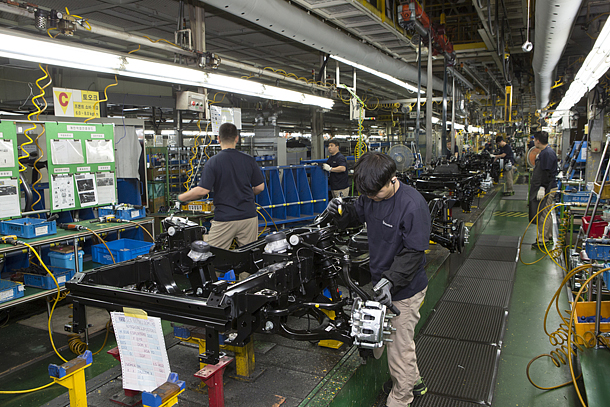
    GM Korea’s union is planning to request further government support for employees who took unpaid leave after the shutdown of the Gunsan manufacturing plant last year. The decision, outlined in a follow-up document detailing a GM Korea union meeting held on Jan. 22, could go back on the original arrangement with the company to share the cost burden of supporting employees who went on unpaid leave.

    Since GM Korea’s Gunsan plant closed last year, the government provided support for six months, until November, to hundreds of workers who took unpaid leave. The company and its union decided to each cover half of the support payments, or 1.125 million won ($1,000) for every worker, for 24 months after the end of the government support. According to the document, the union will work towards gaining further government support by recategorizing unpaid-leave workers as paid-leave workers.

    According to the Ministry of Employment and Labor, companies can apply for government support for workers on paid leave to partially cover their payment. If the company pays 70 percent of the pay for employees on paid leave, the government can provide around two-thirds the amount for up to 180 accounting days.

    The document said the change would require agreement from the company and approval from the Labor Ministry. GM Korea said it has paid what it owes to workers on unpaid leave. It declined to comment on the union’s plans. Korea Development Bank completed last month injection of $750 million into the struggling company.

  • Companies, workers struggle as cracks appear in China’s economy

    Companies, workers struggle as cracks appear in China’s economy

    Cracks are opening in China’s mighty economy: investors are backing away from deals, factories are moving abroad and companies are shedding jobs. The world’s second-largest economy is losing steam, hitting its slowest growth in almost three decades last year, and flagging further in recent months. While gross domestic product grew at 6.6% in 2018 – a rate that would be the envy of most nations – China’s efforts to cut its debt mountain have weighed on the economy.

    Private businesses in particular face new hurdles as costs rise and financing becomes harder to come by, while the trade war with the United States has not helped.

    Here is a look at some of the struggles faced by Chinese companies and people:

    Game over for gamers

    Feeding China’s addiction to video games seemed an easy bet for Beijing Yixin Technology, a tech startup behind the mobile game Farm Take Home.

    The game allows players to harvest wheat, raise chickens and plant apple trees – a bucolic refuge from the pressures of urban China.

    But in real life, the tech firm has struggled to find investors.

    “In December our company’s funding ran out, we had an investment lined up, but the money never came through,” said chairman Cui Yi. “This month I arranged another investor, then he backed out too. I think we can’t hold out.”

    His company is not alone.

    Venture capital funding dried up at the end of last year. Total investment in the fourth quarter fell 13% from a year earlier, according to data from Preqin market research.

    Policymakers are partly to blame, pushing a war on debt and financial risk that has cut the funding flowing into investment firms, industry insiders say.

    Another government diktat halted new video game approvals for months – officially due to youth gaming addiction concerns – sending firms like Beijing Yixin into a deep freeze.

    Trade war

    Other companies are facing the fallout from the trade war with the United States.

    More than a handful of exporters have sought to get around US tariffs by building factories outside China, according to a review of public stock filings.

    Others are sending workers home early for Chinese New Year or cutting overtime.

    Last month China’s exports fell.

    “It has hit our profits,” Harry Shih, manager of Runfine Bearings in eastern Zhejiang province, said of the trade war.

    Washington slapped 25% taxes on many types of ball bearings in July. Shih said he had shared the cost increase with his customers, roughly half of whom are from the US.

    “Business is going down for most companies including factories. Like me they have the same problems, profits are going down” as costs rise, said Shih.

    Job crunch

    Official data shows unemployment at a stable rate, rising slightly to 4.9% last month. But independent data paints a different picture.

    In October-December advertised tech positions fell by 20% from a year earlier, after declining 51% in the third quarter, according to data from Zhaopin, China’s largest recruitment website and Renmin University.

    China’s economy “faces downward pressure, and to some extent this pressure will be transmitted to the job market,” said Meng Wei, a spokeswoman for the National Development and Reform Commission, China’s state planner.

    A lawyer who consults on labour disputes, Guo Xuehai of Beijing Zhonghai Law Firm, said, “there are definitely more employees coming for help than before,” but added this was usually the case at this time of the year.

  • Vietnam makes debut in Bloomberg innovative economy index

    Vietnam makes debut in Bloomberg innovative economy index

    Vietnam has for the first time entered the Bloomberg Innovation Index of the world’s 60 most innovative economies. It scored 45.92 out of 100 in the 2019 index. Other new entrants include India, Mexico and Saudi Arabia. Bloomberg said: “The index analyzes dozens of criteria using seven metrics, including research and development spending, manufacturing capability and concentration of high-tech public companies.”

    Vietnam’s highest rankings were 34th in high-tech density and 39th in patent activity. It ranked a lowly 59th in productivity.

    Its productivity in 2017 was among the lowest in Asia despite growth, according to the Vietnam Annual Economic Report released by the Vietnam Institute for Economic and Policy last year.

    An average Vietnamese worker made VND60.73 million ($2,600), lower than the rate for Cambodia, Indonesia Malaysia, the Philippines, and Thailand, it said.

    In the Bloomberg index, South Korea retained its top place from last year and was followed by Germany, Finland, Switzerland, and Israel.

    Other Southeast Asian countries were Singapore in sixth place, Malaysia (26th) and Thailand (40th).

  • J.Crew Chairman Mickey Drexler Steps Down

    J.Crew Chairman Mickey Drexler Steps Down

    J.Crew chairman and former-chief executive Millard “Mickey” Drexler has stepped down from his position to focus on other interests, including the development of investment business Dexler Ventures, LLC. Chad Leat has been elected as chairman effective immediately. Drexler is set to continue to serve as a strategic advisor to the company’s board and CEO.

    Drexler said it had been a privilege to spend 15 years with the business, and he was thankful to have been a part of its evolution throughout the years.

    “I look forward to working with the Office of the CEO and the board as a strategic advisor to help support J.Crew’s long term success,” Drexler said in an announcement to investors.

    Leat is a former vice-chairman of global banking at Citigroup and holds nearly three decades of markets and banking experience, having led numerous successful and profitable businesses at Citigroup.

    “I am honored to serve has the next chairman of J.Crew,” Leat said.

    “As chairman, my priorities will be to ensure that the J.Crew brand moves quickly to capitalise on recent momentum and to support Madewell’s growth towards becoming a one billion dollar brand, while also working with the board to identify strong, permanent leadership to guide the Company in its next chapter.”

    Drexler’s departure follows the exit of chief executive James Brett and chief marketing officer Vanessa Holden in November 2018. Brett had been in the position for 16 months, while Holden had been with J.Crew for one year.Adtech Ad

    Brett’s exit left the brand leaderless at a pivotal moment, according to GlobalRetail Data managing director Neil Saunders, who noted that the suddenness of the exit suggested a disagreement over how to develop the brand moving forward, and that the brand’s management had been an issue since before

    “If the departure of Jim Brett hails the return to these unrealistic attitudes, J.Crew is going to slip back and undo all of the progress made to date. Given the precariousness of its financial position, this is a mistake it cannot afford to make,” Saunders said.

  • Japan offers most overseas jobs for Vietnamese workers

    Japan offers most overseas jobs for Vietnamese workers

    Japan is expected to receive more Vietnamese workers this year, having become the most attractive labor export market in 2018. Last year marked the first time Japan became the most popular destination for Vietnamese migrant workers with over 68,700 people finding jobs there, beating Taiwan with nearly 60,400 people and South Korea with over 6,500, according to statistics released by the Department of Overseas Labor.

    The department’s deputy director, Nguyen Gia Liem, said the Japanese market’s rise in popularity was due to the implementation of a new law that allows migrant workers to stay for five years instead of three.

    Furthermore, Vietnam was the first country to sign with Japan a memorandum of cooperation on the latter’s technical intern training program, which came into effect last June.

    In 2018, a total of 13 Vietnamese businesses were also licensed to directly bring Vietnamese citizens to Japan to work as caregivers. The long language and skill training required, however, limited the number of Vietnamese citizens taking this route last year.

    However, Liem asserted: “These establishments would help increase even further the number of Vietnamese laborers going to Japan.”

    Deputy Minister of Labor, Invalids and Social Affairs, Doan Mau Diep, has said the ministry will reduce the number of labor export firms. The move follows last October’s request by Japan’s Prime Minister Shinzo Abe that Vietnam shut down bad labor export agencies and reduce costs for people wanting to work abroad.

    “The country currently has 2,000 companies taking workers overseas, which is too many, causing companies to compete with each other for contracts, and they collect high fees,” Diep said.

    The ministry would also review current regulations on overseas students to prevent this system from being abused as many Vietnamese citizens wanting to work in Japan have been using student visas in recent years to reduce cost and time spent on language and skills training.

    Last year, Japanese authorities already reviewed and suspended multiple companies for taking Vietnamese workers to Japan under the guise of international students.

    Diep also warned that citizens wanting to work overseas need to use legal labor export firms and not use tourist visas, as happened in the recent infamous case in Taiwan.

    “If going on a worker’s visa the fees can be expensive, such as about VND80 million [$3,400] for Taiwan. The travel route meanwhile only costs flight tickets and visa fees so many still choose to travel then escape to work, but they will face many risks,” he said.

    A Vietnamese migrant worker can make $1,000 to $1,200 a month in Japan and South Korea, four times the average monthly salary in Vietnam, which was VND6.5 million ($290) last year.

    A total of over 142,800 Vietnamese laborers went to work overseas in 2018, a six percent increase compared to the previous year.

    With this number, which includes about 50,300 female workers, 2018 became the fifth consecutive year in which the number of Vietnamese working overseas exceeded 100,000 people.

  • Vietnamese banks report solid profits, employees hopeful of high bonuses

    Vietnamese banks report solid profits, employees hopeful of high bonuses

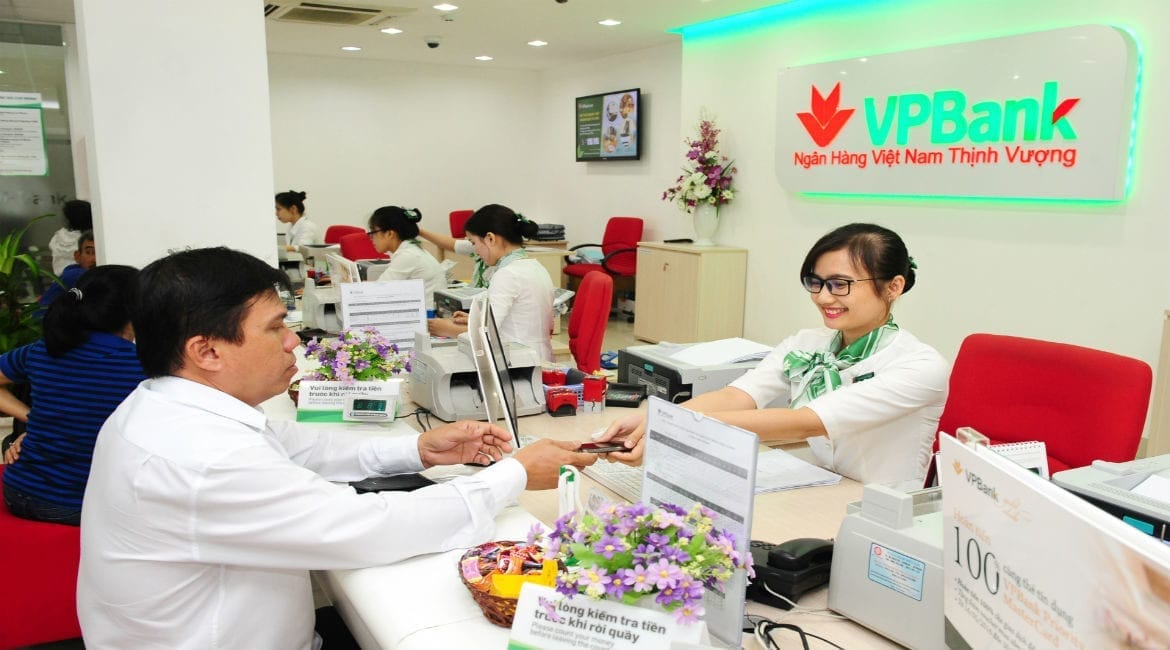
    With Vietnamese banks reporting substantial profits last year many of their employees are expecting higher Lunar New Year bonuses. The banking sector’s overall profit before tax increased by 40 percent year-on-year, according to the National Financial Supervisory Commission. Vietcombank, the largest bank by market capitalization, said in a recent report that its consolidated pre-tax profit was up 62 percent to VND18.3 trillion ($789.55 million).

    TPBank said pre-tax profit doubled to VND2.26 trillion ($97.5 million), exceeding its target of VND2.2 trillion ($94.93 million). The lender’s profit has almost quadrupled against 2015.

    Sacombank’s profit before tax of VND2.2 trillion ($94.93 million) was 20 percent higher than its target.

    Bank employees are thrilled by the performance ahead of Tet, Vietnam’s Lunar New Year, which falls on February 5 this year.

    Mai, a Sacombank worker who asked to be identified only by her given name, said: “Our bank’s profit is a few times that of 2017, so we hope to have a higher bonus.”

    Minh Nhat of Orient Commercial Bank, said his bank determines Tet bonuses based on the performance of each branch and individual. Last year his most productive colleagues had received a five-month bonus, while everyone got at least a month’s salary as bonus. He hopes this year it would be even higher.

    Le Minh Tan, director of the Ho Chi Minh City Department of Labor, Invalids and Social Affairs, told VnExpress that the highest Tet bonus this year is by a HCMC-based bank — VND1.17 billion ($50,493) for an employee.

    Companies plan to pay VND3.4 million ($147) on average, 30 percent higher than last year, he added.

    Three bank leaders said they are still calculating the rewards.

    “We calculate rewards using personal KPI (key performance indicator) and branch productivity, so the bonus will vary between individuals,” one CEO said, adding that some employees would receive a three- or four-month bonus or even higher, while some would get nothing.

  • Look to Singapore, Sarawak for construction jobs, says HLIB

    Look to Singapore, Sarawak for construction jobs, says HLIB

    Contractors should look to neighbouring Singapore and Sarawak for jobs, as a slowdown in award of contracts is expected in 2019, according to Hong Leong Investment Bank (HLIB). The research house said in a note that contract flows are expected to slowdown on the back of slight year-on-year (y-o-y) decline of 0.4% in development expenditure to RM54.7 billion.

    For the cumulative period of 12 months, domestic and foreign contract awards amounted to RM18.3 billion and RM406 million, representing a y-o-y decrease of 37% and 85% respectively. Contract flows continue to slow down after a brief rebound in Q3 18 as the government re-prioritised major infrastructure projects.

    HLIB said foreign contracts (piling works) from Singapore amounted to RM148 million in Q4 18, which is an indication that civil infrastructure projects remain robust in Singapore. HLIB expect more domestic contractors to bid for foreign jobs especially in Singapore given its geographical proximity and the continued slowdown in the domestic construction landscape.

    It expects contractors under its coverage such as Gamuda, Kimlun and Sunway Construction to compete for jobs there.

    “We expect smallish basic infrastructure projects such as road upgrading, hospital, water, sewerage and rural area development projects will be rolled out by government this year which we believe is insufficient to spark any enthusiasm back towards the sector. However, we do not discount potential events such as award of Phase 2 of Klang Valley Double Track project (RM5 billion) and news flow on ECRL (possible revival) and Pan Borneo Sabah could alleviate the pessimistic sentiment towards the sector,” it added.

    While the job flows in Peninsular Malaysia looks lacklustre following the change in government, Sarawak appears to have prospective jobs offers.

    “We understand that industry players are aiming for jobs in Sarawak as its chief minister mentioned emphasis will be put on state water and rural road projects following the decision to shelve Kuching LRT project,” it said.

    Funding for those projects is expected to come from the Sarawak state reserve of RM31 billion which is likely to insulate the projects from risk of cuts in federal government spending. The call for bids for the Sarawak Coastal Road and Second Trunk Road which has an estimated combined value of RM11 billion are expected in the near term.

    In that light, HLIB maintains a “neutral” call on the construction sector post changes in federal government and the scrapping of mega rail projects.

    “The domestic construction industry landscape is expected to remain challenging and we do not expect a significant improvement in the near term. The 37% decline in domestic contract awards in 2018 supports our view,” it added.

    Nonetheless, high orderbook levels (average cover ratio of 4.5 times) following the robust job flows in the past two years coupled with rock bottom valuation (0.5 times price-to-book ratio) should cushion further downside amid subdued near term industry prospects.

  • Vietnam struggles with paucity of AI engineers

    Vietnam struggles with paucity of AI engineers

    IT firms are offering artificial intelligence (AI) engineers salaries of $22,000 a year, but are still struggling to recruit enough people. IT recruiting firm TopDev said in a recent report that companies are having difficulty finding the right people due to a paucity of talents. Salaries are going up as a result. An AI/machine learning engineer could earn up to $1,678 a month, or around $22,000 a year including bonuses and benefits.

    This is higher than what a data scientist ($1,537 a month) or DevOps engineer ($1,505) gets. The latter handles both the development and operations of a product.

    The report said the IT sector generally faces a big shortage as demand is set to go up from 320,000 engineers this year to 400,000 in 2020. The shortfall is 75,000 this year, and set to increase to 100,000 in 2020.

    But they face a struggle as 53 percent of 15,000 IT employees polled for the report are happy with their current job, and 59.8 percent do not want to change their job. This leaves employers considering paying higher salaries to lure away people. The average salary for experienced IT engineers now is $1,318.

    Managers with over five years’ experience can earn from $1,550 to $2,350, while directors with over 10 years’ experience earn at least $2,300.

    But there is a dearth of quality managers and engineers, the report added.

    Gaku Echizenya, general director of Navigos Group, a leading recruitment company, recently said: “The market is experiencing major changes with the fourth industrial revolution. Therefore, businesses need to keep up-to-date with market information from reputable sources to respond promptly to changes, allowing them to set out a strategy to recruit and attract talented people.”

    Employees need to actively educate themselves in IT and digital knowledge, and develop crucial skills such as cooperation with others and people management to increase their competitiveness, he added.


  • SsangYong Motor rehires 60% of its workers

    SsangYong Motor rehires 60% of its workers

    SsangYong Motor said Monday that it has rehired 60 percent of workers who were sacked amid the carmaker’s restructuring efforts over a decade ago. The maker of the Rexton and Tivoli SUVs has been mired in protracted disputes with those who left the company against their will in 2009 after it was placed under court receivership. At that time, 900 workers who carried out a strike at the company’s main Pyeongtaek plant in Gyeonggi were ordered to choose between unpaid leave or voluntary retirement.

    Those who decided not to pick either option were later fired.

    In 2013, the 454 workers who had chosen unpaid leave were all reinstated, but the 165 fired workers were not permitted to return to work.

    After a series of negotiations in 2015, the company and its union agreed to gradually reinstate the fired workers, although some were left out of the agreement.

    In September 2018, the company and its union reached an agreement to rehire the remaining 119 fired workers by this year.

  • Strong sales growth for India’s textile manufacturing sector in Q2

    Strong sales growth for India’s textile manufacturing sector in Q2

    The manufacturing sector, particularly textile and iron and steel segments, maintained its pace of sales growth in the second quarter of 2018-19 as compared to the year-ago period, the RBI said on Wednesday. Demand condition in the manufacturing sector “maintained its pace in the September quarter 2018-19 as reflected in strong sales growth (year-on-year)”, as per the RBI analysis of 2,700 listed private sector non-financial companies.

    “The manufacturing sector sales growth was mainly supported by robust demand conditions in chemical and chemical products, iron and steel, and petroleum products industries coupled with significant improvement recorded by textile industry,” the RBI said.

    The central bank said heavy moderation was seen in the sales growth of motor vehicles and other transport equipment, driven in part by a large adverse base effect, and pharmaceutical and medicine industries.

    The information technology (IT) sector also recorded further improvement in sales growth over the year-ago period.

    The manufacturing sector continued to record strong growth in net profits, which received support from other income.

    The RBI said companies in manufacturing sector posted a net profit of Rs 47,100 crore in the reported quarter, up 29.4 per cent from the same period last year. The data is based on abridged financial results of 1,734 companies in the manufacturing sector.

    “Despite continuous contraction in the telecommunication, the services (non-IT) sector posted a turnaround riding on the support from wholesale and retail trade,” the RBI said.

    The profit of IT sector, based on data of 172 firms, was Rs 17,700 crore in the second quarter, up 5.8 per cent over the July-September period of 2017-18.

    As per the RBI, the combined sales of 2,700 companies was Rs 9,81,800 crore in the September quarter, up 18.2 per cent from the year-ago period.

    Their net profit was Rs 71,900 crore, an increase of 41.7 per cent year-on-year.

    On expenditure front, manufacturing companies continued to face rising input cost (cost of raw materials, staff cost) pressures. In case of IT sector, staff costs accelerated in tandem with the improvement in sales growth, the RBI said.

  • Most Vietnamese graduates interested in startups: survey

    Most Vietnamese graduates interested in startups: survey

    About 75 percent of Vietnamese graduates have either started their own business or are interested in opening one. A survey released Tuesday by Navigos, a leading provider of executive search services in Vietnam, also found hat 52 percent of fresh graduates want to attempt a startup in the near future.

    One in five respondents, or 22 percent, said they have attempted a startup at least once before. Only 26 percent said that they have no plans for a start-up. The survey polled over 1,600 fresh graduates with less than two years of working experience.

    It found that a high number of fresh graduates are not satisfied with their current salaries, incentives and promotion opportunities.

    On a scale of five, they rated their satisfaction with salary at 2.95, and incentives at 2.99. Long-term development opportunities scored lowest at 2.88.

    Salaries and incentives are important factors for graduates in choosing their first jobs. Seventy percent of respondents selected “income and welfare policies” as one of the top criteria for job selection.

    Compatibility with personal strengths came second at 55 percent, while career prospects and opportunities for development come third and fourth at 53 percent and 52 percent respectively.

    The majority of fresh graduates, 34 percent, make VND5-7 million ($215-300) a month. Twenty-nine percent said their monthly salaries were VND7-10 million ($300-430). Only 12 percent made VND10 million ($430) or higher.

    The survey also found that candidates who are proficient in foreign languages have higher salaries. Only five percent of those whose jobs don’t require foreign language skills earn VND10 million ($430) or higher, while this figure is 37 percent among candidates who can speak another language.

    Young employees changed jobs more frequently, posing a retention challenge for employers. Eighty-one percent of the respondents said that “jumping jobs” helps them avoid wasting time on unsuitable or unsatisfactory positions.

    Forty-three percent claimed that switching jobs helped them gain diverse working experience and expand networks.

    Although young candidates value high salaries and benefit packages when choosing jobs, 57 percent said higher earnings was not the motivation for jumping jobs.

    Of the respondents who’d quit their jobs, 45 percent said the reason was personal plans like education or family issues.

    Four out of ten graduates said that they quit because they didn’t like their daily tasks, while almost one in four said they could not fit in with the corporate culture.

  • Securing Raw Materials Key to Competitiveness of Indonesia’s Textile Industry

    Securing Raw Materials Key to Competitiveness of Indonesia’s Textile Industry

    Indonesia is set to become one of the top five textile and textile product producers in the world by 2030, and the Ministry of Trade is forging ahead with its Making Indonesia 4.0 roadmap, which prioritizes the development of a number of industries, including the textile sector.

    Muhdori, the trade ministry’s director tasked with the textile, leather, footwear and various other industries, said the implementation of the roadmap would strengthen the textile sector’s global competitiveness, as it improves efficiencies and product quality.

    “Being highly integrated from upstream to downstream, this sector is competitive and is supported by a large amount of human resources for its production activities,” he said.

    The challenge for the textile industry was to become more efficient, while continuing to improve human resource competencies, in accordance with technological development, he said.

    “Being both an export-oriented and labor-intensive sector, the textile industry has thus far contributed significantly to Indonesia’s economic growth,” Muhdori said.

    According to the Ministry of Industry, textile and textile product exports have continued to increase in recent years. The textile and textile product sector’s contribution to Indonesia’s gross domestic product amounted to a record $10.46 billion last year, while exports were valued at $12.58 billion, up 6 percent from 2016.

    Increased Exports

    The Ministry of Industry pegged textile exports at $13.5 billion this year, along with the creation of 2.95 million new jobs in the industry, while exports are projected to increase further to $15 billion next year, with the creation of up to 3.11 million jobs. This will increase the sector’s share of Indonesia’s total exports to 1.6 percent.

    The ministry is optimistic that this year’s growth target of between 4 percent and 6 percent can be achieved. The textile industry grew 3.45 percent last year, having nearly doubled from 2016.

    However, this growth target also calls for an increased supply of raw materials, which currently consist of 51 percent synthetic fiber, such as polyester and nylon, 37 percent cotton fiber, and 12 percent rayon.

    But the industry still faces obstacles in reaching its full competitive potential, as nearly all cotton must be imported. In contrast, 80 percent of synthetic fiber and 85 percent of rayon are domestically produced, with these numbers expected to increase further.

    Rayon is a cellulose material extracted from soluble wood pulp. It offers better absorption and breathability than cotton. Rayon fiber has various uses, including in clothing, bedding, towels, baby wipes, masks and personal hygiene products.

    According to Redma Gita Wirawasta, secretary general of the Indonesian Synthetic Fiber Producers Association (APSyFI), rayon is most in demand in the fashion industry due to several advantages, such as comfort and disposability, which make it environmentally friendly.

    “Indonesia has the potential to become one of the largest rayon industry players in the world, supported by extensive land availability and a suitable climate. This makes Indonesia comparatively superior to other rayon-producing countries,” he said.

    Raw Materials

    Redma Gita said the growth of the rayon fiber industry requires sustainable raw material supply through industrial plantations.

    “Rayon plants supported by industrial plants not only strengthen the structure of the textile industry, but also reduce its dependence on imported raw materials, which has been an issue for national textile competitiveness,” he said.

    “This upstream industry could even generate foreign exchange as some of its production is exported,” he added.

    The Ministry of Industry noted that the production capacity of the rayon fiber industry has risen substantially over the past three years. Production is expected to increase to about 700,000 metric tons this year, compared with 565,000 tons last year and 470,000 tons in 2016.

    Production capacity growth is expected to continue until 2021, when it is expected to reach 1.2 million tons.

    However, the industry faces challenges from environmental activists. Redma Gita refuted allegations from Canopy, an international nonprofit focused on forest conservation, which stated that raw materials for rayon fiber comes from ancient and endangered forests in Sumatra and Kalimantan.

    “Those accusations are baseless. They have provided no proof of this whatsoever,” he said. He also highlighted the importance of the government in supporting the development of the national textile industry.

    Machmud Thohari, a forestry expert, meanwhile also questioned the Canopy report’s use of terms such as ‘ancient’ and ‘endangered’ to categorize forests.

    “As far as I know, the terms ‘ancient’ and ‘endangered’ aren’t commonly used in the scientific classification of forests,” he said.

    Thohari said the term ‘ancient forest’ may have been used to refer to an old-age forest or one that is many, many years (i.e.: centuries) old.

    On a similar note, Riau Governor Wan Thamrin Hasyim also condemned the Canopy allegations, as he sought to highlight the strategic industrial potential of the province.

    “The accusation must be clarified, as it can deter investors and [negatively impact] Riau’s economic growth,” he said.

  • Best companies for French citizens to work for in 2019

    Best companies for French citizens to work for in 2019

    In its fourth year of running a top employers list for France, Glassdoor has seen several companies — like Thales and Airbus — make a reappearance over the years. This December however, the company that’s been hailed as the best place to work for 2019 is a newcomer to France’s list: fashion designer Hermes.

    It’s fair to say that France is renowned for its luxury brands, yet Hermes is the only group from this field to make it into this year’s top 10, with Louis Vuitton and L’Oreal coming in at 11 and 16 respectively.

    Instead, a few other industries fill the top 10, including transportation and retail.

    To compile, Glassdoor assessed the input that workers give when offering feedback, in addition to recent ratings, which are on a scale from 1 to 5.

    The top 10 firms found in this Glassdoor list surpassed the average global rating of 3.4; with each group receiving a figure of 4.2 or higher.

    Below are the top 10 firms for this year’s ranking.

    10. Amazon

    Coming in at number 10 is e-commerce titan Amazon.

    With a global workforce of more than half a million, Amazon is renowned for its job creation with the e-commerce group stating that in the past five years, it’s created over 125 jobs every day in the States alone.

    While office perks vary from country to country, some benefits mentioned include access to medical care and career development programs.

    9. Leroy Merlin

    Another retailer that’s winning over workers as well as consumers is French-headquartered Leroy Merlin.

    The DIY group’s operations are featured in about a dozen countries, with 100,000 staff members employed to keep the retailer functioning around the clock.

    Having placed on Glassdoor’s “Best Employers” for France since the survey began in 2016, the retailer attributes one reason why it remains popular among employees, is that it sees people as the “central resource” of the business.

    8. Thales

    Moving up from last year’s no. 24 spot, Thales is all about being a responsible leader in the transport, security and defense spheres.

    While Thales has attributed “acting responsibly” as a crucial quality to its long-term success, it’s not the only qualities it aims to foster.

    Inside the firm, Thales is dedicated to supporting its staff, through promoting diversity, team collaboration and career development — it even has an in-house university to support employees through any part of their profession.

    7. AUTO1 Group

    From its small beginnings in 2012, AUTO1 Group has now become Europe’s leading car trading platform with its operations taking place in over 30 countries.

    Inside the company, more than 3,500 people from over 55 nationalities are employed — which AUTO1 attributes as one of its key strengths when it comes to keeping the company thriving on a financial level.

    6. onepoint

    When hiring, onepoint looks for talent that holds “cutting-edge skills, (a) strong commitment to the Group and an open frame of mind.”

    In return, onepoint dedicates a large amount of time on an employee’s first few weeks with its integration period strategy; which can include introducing them to partners, training and different teams.

    On Glassdoor, reviews indicate that the company offers an innovative atmosphere with a strong, upbeat culture.

    5. Saint-Gobain

    With more than 180,000 people hired worldwide, Saint-Gobain asks its large workforce to abide by five key values during each workday: to be agile, uphold the open and engaging culture, foster strong relationship with clients, constantly innovate and embrace their entrepreneurial abilities.

    In return, staff members have a range of work benefits on offer. In France, this can include personalized training and commercial discounts.

    4. Adrexo

    Making its debut in Glassdoor’s rankings for France, Adrexo is considered a leading private operator of advertising print in the country, having collaborated with the likes of McDonald’s and Haribo.

    Inside the firm, over 20,000 individuals in France have been employed by Adrexo and no matter what level they are at, the company wants to make sure it promotes each person’s leadership and entrepreneurial capabilities.

    3. Ubisoft

    The business that’s seen success from the likes of “Assassin’s Creed” and “Far Cry,” is winning over its employees as well as consumers.

    With more than 14,000 workers running its ship, Ubisoft is keen on hiring individuals who are innovative and ooze creativity.

    While game design is an important role at the videogaming firm, it’s not the only job in town, with Ubisoft offering a whole host of divisions including marketing, programming, finance and quality control.

    2. Criteo

    Last year’s winner Criteo has moved down to second place for 2019, yet the ad firm remains a top favorite — with employees applauding the staff who’ve been employed and the strong overall management seen, Glassdoor reviews reveal.

    From what began as a start-up in the mid-2000s, Criteo has now transformed into a business with dozens of international offices and several “success stories,” such as partnering up and helping the likes of Office Depot, Sephora, and Microsoft.

    1. Hermes

    When people think of this high-end luxury brand, the iconic, top-dollar Birkin bag often comes to mind. Yet that’s not the only product on offer at Hermes.

    The luxury group sells jewelry, fragrances, watches, accessories and more to customers across the globe, both in brick-and-mortar stores and online.

    Inside this designer world, over 12,000 people work hard to keep the brand running at full speed and are hired to keep true to its values: high standards and authenticity, imagination and daring, elegance and simplicity.

  • 8 Easy Startup Ideas For Asia

    8 Easy Startup Ideas For Asia

    We live in the times of so many possibilities. Therefore starting a new business to earn some extra money could be very easy and done very quickly wherever you are – it could even be Asia. People are really into new technologies there at the moment, especially mobile payments through various apps, so you could use the benefits of  this trend for your business idea.

    If you love the idea of making some money on your own, here you’ll find some original ideas you could use for your startup and maybe even start today.

    Specialist Of Education Progress Tracking

    Every parent wants their kid to do well at school and gain the best education possible. That’s why there are so many freelance tutors that help kids and students learn the subjects that they are failing at.

    An education progress tracking will help you reach the best result possible. This is done by tracking the progress of your child and comparing it to other students who are moving up to a similar goal. For example, the same degree in business management or biotechnology. Many criteria need to be evaluated and compared, like grades, honors, certificates, additional skills, and so much more.

    Develop An App For Coworking

    Coworking apps are in demand both for teams in creative and non-creative agencies and also for study groups. Therefore if you are not completely new to coding, you could build an entire network where people could work together on a digital platform. Surely there are already some apps that allow you to share, comment files, and work on projects together, but you can always research your competitors and make an even better product. Simply detect what’s lacking in these apps.

    Print On Demand Business

    Print on demand businesses are getting really popular lately. That is because it doesn’t require any investments and therefore is a perfect startup idea for young people like students. The best part is that you don’t need to be responsible for keeping items in stock, producing it or putting logos on it.

    One of the most popular forms of print on demand business is selling t-shirts. All you’ll need to do is come up with the design. If you want to learn more about how to sell t shirts online – there are POD platforms like Printify that are very easy to use and offer you articles that help improve your business.

    App For Acting

    This could be a similar idea to SnapChat or Instagram Stories, but with a completely different concept. Friends would be able to create short videos with specific timing, for example, 20 seconds. And other friends would have to continue the story. After finishing a story, you could watch it as a single movie clip. To access a group, you should have a special code, link or different kind of key to access. Some groups could be open to everyone thought.

    Job Interviews On Video

    Image credit: Seth Doyle

    Wasting time always means wasting money. Companies and their hiring specialist waste tons of time trying to find the best candidates for one or another job position. It’s hard to imagine, how many time has been wasted on candidates that weren’t a good fit for the company.

    And you could be the one to offer these companies a solution and create a platform with already prepared video interviews. They would be short and very specific – candidates would be asked a few questions and answer it on camera. This could be a really good filter for the hiring specialists.

    Local Social Media Network

    Social media is extremely popular nowadays. But what if you were to create a new platform that would be based only on location? You would be capable of connecting with people, see events and other information related only to the place you are currently in. This would filter out a lot of unnecessary information that we see on our Facebook every day.

    Create An App For Recycling

    Image credit: Paula Brustur

    A lot of people today care about nature and recycling, but really lack knowledge about ecology and how it works. It’s hard to determine what is truly toxic for us and our environment and sometimes we just don’t know how to properly utilize specific products.

    If you were to create a recycling app, it could help people understand recycling more, especially with all the pollution is Asia. For example, if someone would be thinking how to recycle one or another item the right way, they could type the product in your apps search and quickly find an answer.

    Sell Your Own Crafts

    If you have some skills for crafting, you should know that it’s a very trendy thing to do at the moment. Especially things like handmade jewelry and gifts. You could sell your crafts on Etsy, but you can also create your own e-store. All you need is to buy a domain, choose the design and add all needed forms for orders and contacting.

    To save some money, don’t pay the programmers for creating the forms for you, simply use CaptainForm wordpress form plugin that will offer you all the forms your website might need.


  • Vietnam 19th best country in the world for expats: HSBC survey

    Vietnam 19th best country in the world for expats: HSBC survey

    Vietnam has climbed four places to 19th in the list of best countries for expats to work and live, an HSBC survey found. With an average annual income of $90,408, nine out of 10 expats said in Vietnam they are as happy as or happier than at home, according to the 11th annual Expat Explorer issued by HSBC on Wednesday.

    Foreigners enjoy working in Vietnam for many benefits: 55 percent of respondents said they take more holidays, 41 percent live in a better home and 39 percent have more household staff compared to their home country.

    Fifty-seven percent said their employment contracts include an annual allowance to fly home or to another place, higher than the global average of 17 percent.

    Forty-two percent get an accommodation allowance while the global average is 18 percent, and 73 percent receive health and medical allowances compared to 43 percent elsewhere.

    Vietnam ranks first in the world with 72 percent saying moving to Vietnam helps them save more and 72 percent also saying they have more disposable income than they did in their home country.

    Both are higher than the global average: 52 percent for savings and 56 percent for disposable income.

    There are also some downsides for foreigners living in the country, respondents said. While more than half of expats across the world said they enjoy the better overall quality of life, only four out of ten foreigners in Vietnam said so.

    Organizing finances is difficult for expats, with only 27 percent of foreigners saying it is easy to open a bank account, buy insurance or pay taxes, while the global average is 43 percent.

    Just more than a third had no difficulty in experiencing healthcare services, but this figure is 46 percent globally.

    Raising a child in Vietnam poses challenges, with just 18 percent saying the quality of child care is better than in their home country, compared to the global average of 38 percent.

    Forty-seven said Vietnam is a good place for expats who want to progress their career, while the global average is 56 percent.

    There are financial issues that concern expats in Vietnam, with 37 percent being worried about restrictions on moving money out of the country and 22 percent each concerned about less favorable exchange rates and job security.

    Sabbir Ahmed, head of retail banking and wealth management at HSBC Vietnam, said: “The survey shows Vietnam is a promising host country for expats who are seeking both opportunities and challenges to boost and develop their careers.

    “We expect Vietnam to improve several areas to enhance the experience of expats and their families by developing further the environment, educational programs and financial services.”

    The ranking listed Singapore as the best place in the world for expats for the fourth year in a row, followed by New Zealand, Germany, Canada, and Bahrain.

    The survey polled 22,318 people from 163 countries and territories through an online questionnaire.