Tag: JV

  • China’s Changan forms electric car JV with local startup Nio

    China’s Changan forms electric car JV with local startup Nio

    China’s fourth-largest automaker Chongqing Changan Automobile Co Ltd and Nio, an electric car startup formerly known as NextEV, will form a joint venture to cooperate on researching and selling electric cars, Nio said on Sunday.

    China is aggressively promoting electric cars to combat urban smog and push the industry to the forefront of automotive technology, loosening rules in recent years to allow startups like Nio to flood the industry and challenge established Chinese automakers.

    The Changan-Nio JV will focus on research, sales and service for green cars, although under a broader partnership the two sides will also share resources related to smart vehicle technology, manufacturing and other areas, according to a statement from Nio.

    Financial terms of the partnership were not disclosed.

    A Changan spokesman said the company had no further information to release regarding the partnership.

    Chinese tech giant Tencent Holdings Ltd was an early backer of Nio, and rival internet company Baidu Inc last month said it was leading a new round of investment into the startup.

    Nio has also partnered with Anhui Jianghuai Automobile Group Corp Ltd to produce electric vehicles on a contract basis.

  • TV programme “Startup Nation” to air shortly in Vietnam

    TV programme “Startup Nation” to air shortly in Vietnam

    Vietnam Television (VTV) and HCM Communist Youth Union on Monday announced a new TV programme titled “Startup Nation,” which is expected to promote startups inVietnam.

    The announcement was witnessed by Deputy Prime Minister Vương Đình Huệ, Minister of Science and Technology Chu Ngọc Anh, Minister of Agriculture and Rural Development Nguyễn Xuân Cường, leaders of the youth union and major companies in Vietnam.

    The talk show format will air on VTV1 every Friday evening from April 14 and rebroadcast Saturday afternoon.

    Another programme titled “Startup Coffee” will air from April 10 every morning as part of the programme “Good Morning” on VTV1.

    VTV Director General Trần Bình Minh said the programme producers wanted to deliver a message on startups, which is “Renovation is continuous and enduring. It’s not just a movement but a path for the nation to follow.”

    He said successful businessmen would be invited to “Startup Nation” to share experiences and comment on startup models or business trends in Vietnam and across the world. They could then suggest or invest in promising startup ideas.

    The TV programme is part of the Government’s mission to makeVietnam a nation of startups.

    First Secretary of HCM Communist Youth Union Lê Quốc Phong said the youth would applaud the new programme, which offers them an opportunity to present their startup dreams, and make those dreams a reality.

    Phong said the youth expected relevant agencies to hear their ideas and suggestions thanks to the TV programme and subsequently timely adjust policies to support them.

    In the first quarter of this year, 26,478 new enterprises were established in Vietnam, a record number in the last six years.

    Last year,Vietnam recorded the establishment of 110,100 new enterprises, the highest number compared with the previous years. Last year is the first time the country had more than 100,000 new enterprises in one year, which is said to be the result of the Government’s strong promotion of startups.

    Vietnam is expected to have one million enterprises by 2020.

  • Liaoning SG Auto cancels new energy car components JV with South Korea’s Samsung SDI

    Liaoning SG Auto cancels new energy car components JV with South Korea’s Samsung SDI

    Liaoning SG Automotive Group Co Ltd Says it will not set up new energy car components JV with partners including South Korea’s Samsung SDI.

    Says it will dissolve a Tianjin-based financial leasing JV, which was set up in 2014.

  • New Silkroutes Group in Joint Venture to Offer Private Equity Funds in Asia Pacific

    New Silkroutes Group in Joint Venture to Offer Private Equity Funds in Asia Pacific

    New Silkroutes Group (“NSG” or “the Group”) has formed a joint venture with three parties, including the Singapore subsidiary of China’s Nanshan Group, to develop private equity funds that will focus on healthcare and infrastructure in the Asia Pacific region, including Japan and Australia.

    The new Singapore-incorporated entity, New Silkroutes Asset Management, is 30% owned by NSG’s subsidiary New Silkroutes Capital Pte Ltd, 30% by Nanshan Group Singapore, 30% by former United Overseas Bank (“UOB”) executive Terence Ong Sea Eng, and 10% by Fuji Capital Pte Ltd.

    New Silkroutes Asset Management, which is applying for the Capital Markets Services licence from the Monetary Authority of Singapore, will initially focus on the healthcare sector in the region.

    The number of people in the middle class in Asia Pacific is expected to rise to 3.2 billion by 2030 from 525 million in 2009, according to the Organisation for Economic Cooperation and Development. This increase, together with growing affluence, is expected to drive demand for better quality medical treatment and care.

    Healthcare is an area NSG recently said it would expand into. The Group announced last month it would acquire a 51% stake in Singapore-based Healthsciences International Pte Ltd (“HSI”) for S$2.17 million. HSI’s management team has experience in developing and managing hospitals and ancillary healthcare services. It also offers primary and preventive care through its three complementary integrative healthcare clinics, and runs employee healthcare benefits programmes in Southeast Asia.

    Mr Ong will head New Silkroutes Asset Management. The veteran banker retired recently from UOB after a 34-year career, during which he ran several of the lender’s key divisions. His last position at the bank was Head of Group Global Markets and Investment Management, where he drove UOB’s global treasury and asset management businesses.

    He was also Chairman of UOB Asset Management and UOB Venture Management, and a member of several of the bank’s key committees, including its management executive committee and investment committee.

    Mr Ong was previously Deputy Chairman of the board of Simex, a futures exchange that merged with the Stock Exchange of Singapore to form the Singapore Exchange. In 2010, he was conferred the Distinguished Financial Industry Certified Professional title by the Institute of Banking and Finance Singapore. In September this year, he received the Lifetime Achievement Award from Futures & Options World, a leading news and data service for the international futures and options industry.

    “The stakeholders in this joint venture have deep expertise in their respective fields. With this collaboration, I am confident we can offer investors an attractive alternative to generate a consistent stream of income,” said Mr Ong, who was instrumental in bringing Nanshan Group Singapore into New Silkroutes Asset Management.

    “Leveraging on the networks and expertise of New Silkroutes Asset Management’s stakeholders, we will be able to source promising healthcare services companies in Asia Pacific and add value to the companies we invest in,” he added.

    Nanshan Group is a privately-held company ranked among the top 500 enterprises in China. It started with an aluminium business, which subsequently listed in Shanghai, and evolved into a conglomerate with interests in textile, finance, healthcare, real estate, tourism, education and aviation.

    Within the healthcare space, Nanshan Group has invested in and built hospitals, nursing homes and related facilities in China. In Singapore, its main focus is real estate development and aluminium trading. It acquired several industrial buildings and hotels and launched its maiden condominium project in Singapore in recent years.

    Singapore-incorporated Fuji Capital provides strategic advisory and fundraising services to companies. Its major stakeholders have investments in the financial services sector in North America. These investments include licensed entities operating in gateway cities across the US.

    “As an associate company of NSG, the new joint venture will complement our wholly owned investment management arm, New Silkroutes Capital, which is also exploring investment opportunities in healthcare, among other sectors,” said Dr Goh Jin Hian, Group CEO at NSG. “Healthcare will be another engine of growth for NSG as we believe this is an area with huge potential in Asia Pacific.”

    Based in Singapore, New Silkroutes Capital offers investment management and strategic advisory services to institutions, enterprises and high-net-worth individuals looking for professionally managed investment products. It has a joint venture in New York that can develop structured products and private-label funds.

    NSG exited the SGX Watchlist in November 2014 and is morphing into an investment holding company with businesses in investment management, energy and resources, healthcare, and infocomm technology. The Group currently gets most of its revenue from oil and gas trading.

  • Blackmores, Kalbe join forces in new Indonesian venture

    Blackmores, Kalbe join forces in new Indonesian venture

    Australian Ambassador to Indonesia Paul Grigson has welcomed the new partnership between Australian company Blackmores and Indonesias Kalbe that will allow new vitamin products to enter the local market.

    Blackmores will initially supply eight products in Indonesia through the joint venture, the Australian Embassy here said on its official website on Saturday (Sept. 3).

    Ambassador Grigson said while the two companies shared many values, it was the small differences between them that had generated the creativity needed for such a partnership.

    “Blackmores experience shows the importance of Australian companies choosing the right local partner to do business in Indonesia,” Ambassador Grigson added.

    The Blackmores – Kalbe partnership was sealed during Indonesia Australia Business Week in November 2015, when 360 Australian businesses travelled to Indonesia to build collaborative partnerships with Indonesian companies and explore investment opportunities.

    Blackmores CEO Christine Holgate has thanked the Indonesian Government and Australian Embassy for their support in finalizing the partnership.

    “We will be launching with eight products and will have 25 products by the end of the year,” Holgate informed.

    She explained that Blackmores had chosen to partner with Kalbe as it was a major supplier of pharmaceutical products and has an institute to train people in natural health care products.

    She hoped that Blackmores would be able to leverage Kalbes training processes and its strong representation in shopping centers throughout Indonesia where it has health centers giving advice on natural health products.

  • Viettel picked for Myanmar telecom JV

    Viettel picked for Myanmar telecom JV

    The Myanmar government has selected Vietnamese military-run operator Viettel as the international partner for the consortium likely to be granted the nation’s fourth telecom license.

    Viettel has been selected from a pool of seven contestants and been granted the rights to negotiate with the local consortium over a potential partnership.

    According to the report, only five of the entrants were deemed eligible to apply, and Viettel was the only one of these five to submit an application before the March 18 deadline.

    If negotiations go well Viettel will become a minority shareholder in a company established by a consortium of 11 local companies from the technology and other sectors, as well as a subsidiary of the Myanmar military run Myanmar Economic Corporation.

    The joint venture is expected to be granted the market’s fourth nationwide telecom license, after Telenor Myanmar, Ooredoo Myanmar and the consortium between Myanmar Posts and Telecom (MPT) and Japan’s KDDI.

    Viettel is expected to pay 49% of the $300 million license fee, equivalent to its stake in the venture.

  • Shopping tech firm Powa in major Chinese joint venture

    Shopping tech firm Powa in major Chinese joint venture

    Powa Technologies, a British e-commerce tech firm, has formed a “strategic alliance” with China’s biggest payments processor, China UnionPay. The joint venture could generate $5bn (£3.3bn) in revenues over three years, Dan Wagner, Powa’s chairman and chief executive, told the BBC.

    China UnionPay has about 4.5 billion credit and debit card users worldwide.

    Powa’s technology enables shoppers to pay for goods quickly in-store and online using their smartphones.

    “This is undoubtedly a huge deal for Powa,” said electronic payments expert, Dave Birch of Hyperion Consulting.

    The joint venture, PowaTag UnionPay, will launch first in Guangdong Province, targeting 400,000 retailers, the company says, before rolling out to one million by the end of 2016.

    “We have a target to reach at least 50 million consumers regularly using the platform within one year from launch,” said PowaTag UnionPay’s chairman, Mr Hu Jinxiong.

    China’s merchants – there are six million in total – will pay about 13p per transaction to the joint venture for access to the technology, said Mr Wagner.

    ‘We’ve trumped Apple Pay’

    The PowaTag system relies on digital tags – quick response (QR) codes – that can be attached to physical goods or inserted into self-service checkout screens, emails, websites, posters, images – even the audio from TV ads.

    Wherever Chinese shoppers see the PowaTag UnionPay symbol they will be able to buy products by scanning them with their phones and tapping the “buy now” button, the company says.

    US retail giant Walmart recently launched a similar quick pay system for mobiles in its stores.

    China’s Commerce Department says the “online to offline” market, whereby shoppers search for products online then complete the purchase in-store, grew 80% in the first half of 2015 and is worth about £31bn ($47bn).

    “Why did China UnionPay decide to partner with a little British technology company?” said Mr Wagner. “We’ve trumped ApplePay and the rest of the world here.”

    ‘Tap-and-go’

    State-owned China UnionPay, has been responding to the rapid take-up of smartphones across the country – about 68% of the population now has one.

    On 12 December, it launched QuickPass – a “tap-and-go” payment system for mobile phones similar to Apple Pay and other digital wallets – in co-operation with more than 20 commercial banks.

    QuickPass is already available at more than 10,000 locations in mainland China, says UnionPay, including at retailers such as Carrefour, McDonald’s, and Costa.

    “The Chinese market is going mobile very quickly,” says Mr Birch. “And the integration of payment systems and messaging platforms such as WeChat is a very interesting development.”

    This latest deal with Powa will give Chinese shoppers yet another way to shop using their mobiles.

  • Siyaram announces joint venture with Italian lifestyle brand Cadini

    Siyaram announces joint venture with Italian lifestyle brand Cadini

    Domestic textile player Siyaram Silk Mills today announced joint venture with leading Italian lifestyle brand Cadini.

    “We have entered into joint venture with leading Italian lifestyle brand Cadini. We have bought ownership rights to manufacture and market Cadini brand for its fabric segment in India, Sri Lanka and few other countries in Middle East,” Siyaram Silk Mills Chairman and MD Ramesh Poddar told PTI here.

    “We want to give Indian consumer the Italian feel at a reasonable price by customizing it to our market. Some products will be imported from Italy, but a major portion will be from India. We will bring the Italian innovation and manufacture it over here,” Poddar said at the launch of the brand in India without disclosing the consideration.

    He added, “Siyaram’s currently has annual revenue of around Rs 1,550 crore and expects to grow by 10-15 per cent annually this year. We expect Cadini to contribute around Rs 100 crore of our total revenues in the next financial year.”

    Cadini will also help Siyaram’s in sourcing and designing. The brand will be available in India in superior fabrics followed by garments and accessories, while the company also plans to open its Cadini exclusive outlets and shop-in shop in the near future.

    Expecting a great response from the humongous and fast growing Indian market Cadini Brand Director Daniella Nicolle said, “This venture has not only provided us a platform to showcase our collection to the Indian consumer but has also helped us to discover various avenues in terms of global marketing.”

    Cadini derives 95 per cent of its revenues from international market and only 5 per cent from Italian market, Faralli said.

    Siyaram’s has spent Rs 80 crore to modernize its manufacturing facility this year and will spend around Rs 70 crore next year funded through internal accruals as well as government incentive Textile Upgradation Fund Scheme (TUFS), Poddar said.

    He added, this will enable the company to add 10-15 per cent more to its monthly sales of 65 lakh metres of fabric per month.

  • Indonesia’s Bank Mandiri partners ASCO, Tunas for multifinance biz JV

    Indonesia’s Bank Mandiri partners ASCO, Tunas for multifinance biz JV

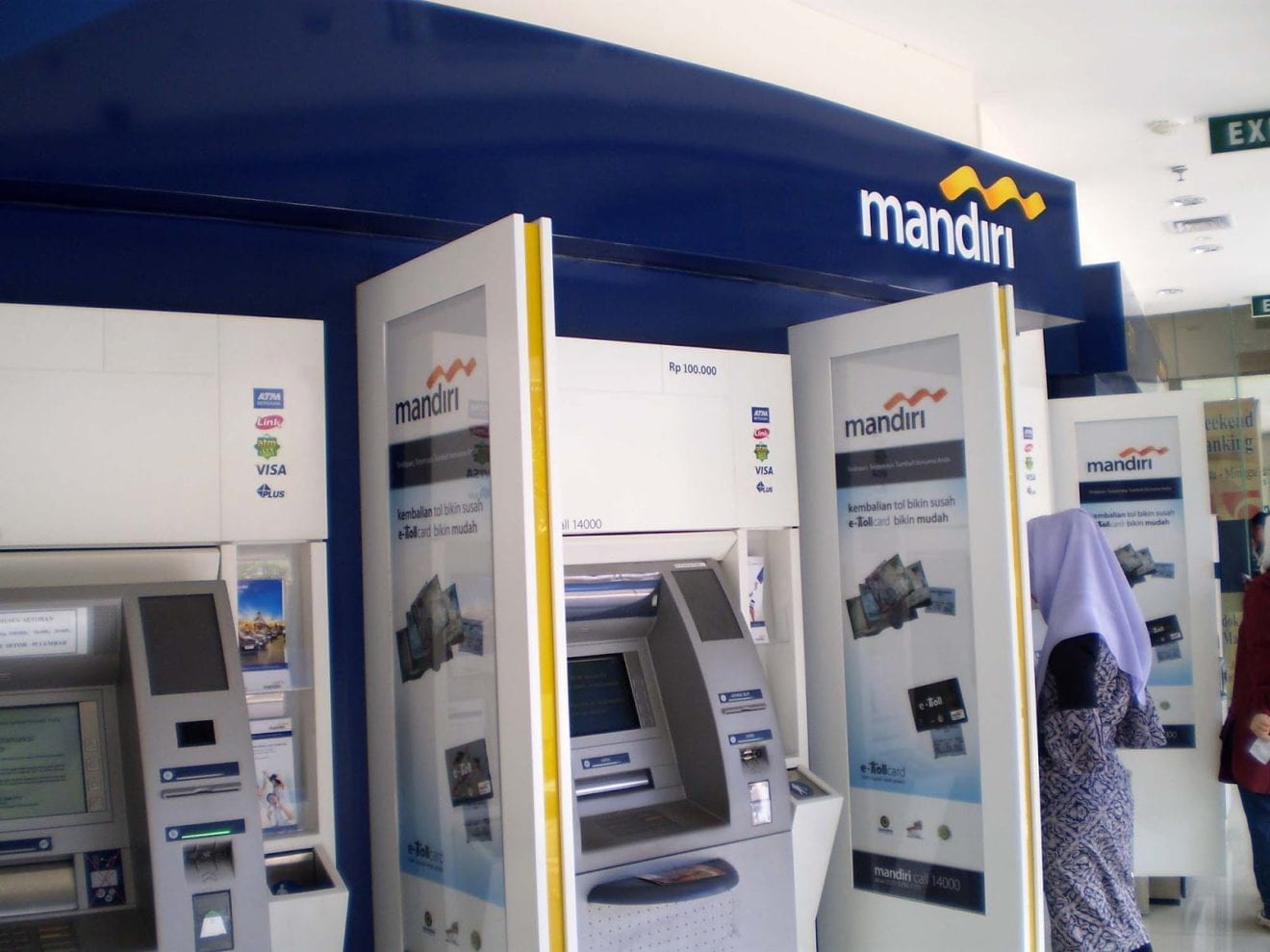
    PT Bank Mandiri Tbk (BMRI), the largest bank by assets in Indonesia, is planning to tap the growing automotive credit market through a joint venture (JV) with a multifinance firm PT Mandiri Utama Finance (MUF).

    The bank plans to collaborate with automotive distribution company ASCO Automotive and Tunas Group for establishing the JV company. In the new JV, Bank Mandiri will hold 51 per cent, while US ASCO will hold 37 per cent stake and Tunas Group 12 per cent.

    MUF expects the new JV firm to begin operations in September.

    MUF was established in January 2015 as a leasing sub unit of Bank Mandiri, which has 10 subsidiaries, including Syariah lender PT Bank Syariah Mandiri (BSM), securities firm PT Mandiri Sekuritas and life insurer firm PT AXA Mandiri Financial Services.

    Hery Gunadi, Consumer Banking Director for the bank told that Bank Mandiri intends to capture market share of 30 per cent by 2018. Currently, the bank has around 10 per cent market share in the multi finance sector.

    MUF plans to open between five and eight branches (Jakarta, Bandung and Surabaya) in the second half of this year.

    Meanwhile, Mandiri Tunas Finance will provide financing for car, heavy equipment and motorcycles, while Mandiri Utama Finance will focus on new and used car and motorcycle financing, said Gunadi.

    President Director and CEO Group of Bank Mandiri, Budi Gunadi Sadikin added that the potential market for automotive credit could reach Rp200 trillion ($14.93 billion) this year with estimated car sales around 1 million units and motorcycle 8 million units.

    “There are a lot of multifinance firms that are encountering funding difficulties. This creates opportunities for us to enter (the financing) business. At present, income contribution from multifinance business, on average grows, by around 31 per cent per annum; and it is the third largest income contribution from subsidiaries after AXA Mandiri and Bank Syariah Mandiri,” he said.

    ASCO Automotive and Tunas Group are among largest automotive distributors in the country. ASCO Automotive, previously called Adira Mobil, was jointly established by former CEO of PT Astra International Tbk (ASII) Teddy P Rahmat and former CEO of financing firm PT Adira Finance TbkStanley Setia Atmadja in 1989.

    Tunas Group was established by businessman Anton Setiawan in early 1970s. In 1980, he establishedPT Tunas Ridean Tbk (TURI) as holding company of Tunas Group and listed the firm in 1995. In 2009, Bank Mandiri acquired 51 per cent shares of PT Tunas Financindo Sarana, a subsidiary of Tunas Group and later changed the company’s name to PT Mandiri Tunas Finance (MTF).

  • Bridgestone to establish auto parts JV in Indonesia

    Bridgestone to establish auto parts JV in Indonesia

    Bridgestone Corp. plans to establish a joint venture company to produce anti-vibration rubber products for automotive vehicles in Indonesia.

    The agreement was concluded on July 2 with PT Astra Otoparts Tbk, which manufactures and sells automotive parts in Indonesia.

    The JV is to build a manufacturing plant of anti-vibration rubber products, which is set to start operations in January 2016, according to a Bridgestone statement. The total amount of the investment by Bridgestone and Astra Otoparts will be $13 million.

    Bridgestone has seven facilities in five countries to manufacture automotive anti-vibration components. To achieve further global expansion, the firm said it needed a manufacturing base in Indonesia, a major car making state in the ASEAN region.

  • IIJ, Biznet launch GIO Cloud JV in Indonesia

    IIJ, Biznet launch GIO Cloud JV in Indonesia

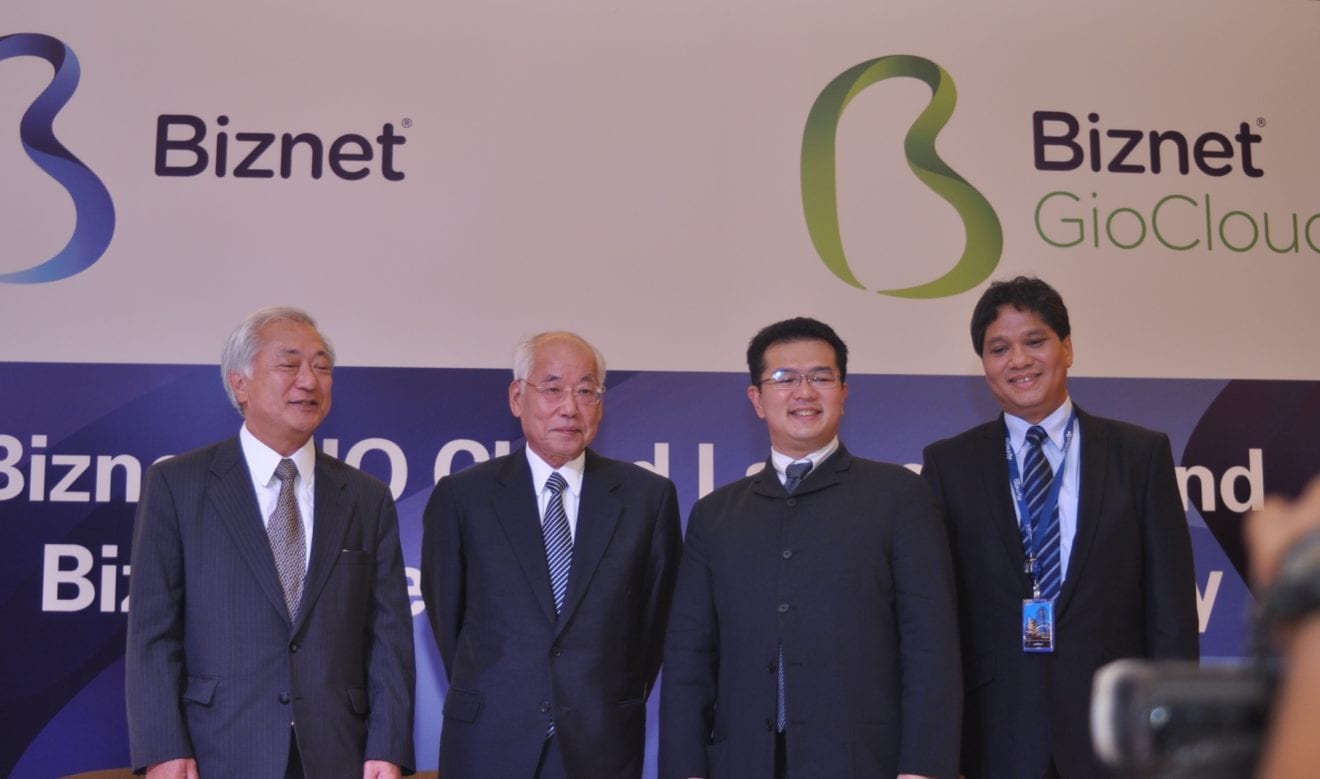
    Japanese internet and network services provider Internet Initiative Japan (IIJ) and Indonesian telecommunications services provider Biznet Networks have launched their Biznet GIO Cloud service in Indonesia. IIJ and Biznet initially announced their joint venture in November 2014 and established it in January this year. Prior to launch, the service had already been implemented on a trial basis at a Japanese insurance company, a retailer and an Indonesian tobacco company among others.

    The joint venture will leverage Biznet’s broadband backbone network and IIJ’s cloud operation technologies to provide cloud services to both local and Japanese companies. The Biznet GIO Cloud service was developed based on the operation and system architecture technologies of IIJ. The service uses Biznet’s broadband network infrastructure in Indonesia to minimize access delays.

    The Biznet GIO Cloud offers two types of services: GIO Cloud, an auto-self provisioning public cloud service, and GIO Enterprise Cloud, a private cloud service for enterprises. Internet access fees are included as standard in both products, and the products offer connectivity through closed networks as well as over the internet. Additionally, the public cloud service comes standard with a host of security functions (including firewalls and load balancers), offers 24/7 support, and provides a service level agreement (SLA) guaranteeing 99.9 percent server uptime.

  • JV ‘revolutionises’ m-commerce

    JV ‘revolutionises’ m-commerce

    Chinese mobile commerce company 99 Wuxian is bringing NFC technology to China.

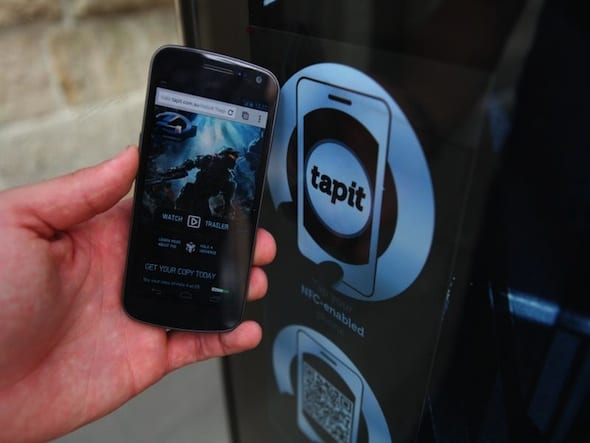
    99 Wuxian and Australian Near Field Communication (NFC) technology startup Tapit Media have joined to “revolutionise” Chinese m-commerce and offline media by integrating NFC enabled interactive offline marketing campaigns with 99 Wuxian’s platform.

    The JV will utilise Tapit’s contactless communication technology which uses a range of contactless standards including NFC and Bluetooth Low Energy (BLE) to deliver content to smartphones from offline physical media assets.

    Users with NFC-enabled smartphones have the ability to tap NFC-enabled objects to access content and information such as videos, mobile optimised pages and instant app downloads.

    It allows 99 Wuxian to provide a new and unique offering to its business partners in China by allowing smartphone users to interact with NFC-enabled offline media and 99 Wuxian m-commerce platform to complete transactions.

    The consumer engagement opportunity is significant and is expected to include using NFC-enabled smartphones to access information, buy movie tickets, receive food and beverage coupons or buy transport tickets.

    “It’s a very exciting development for 99 Wuxian and our business partners and merchants that we are bringing market leading Australian technology to China and drive direct B2C growth,” said 99 Wuxian CEO and executive director Amalisia Zhang.