Tag: KFC

  • Jollibee Foods struggles to make profits in Vietnam with 4 brands

    Jollibee Foods struggles to make profits in Vietnam with 4 brands

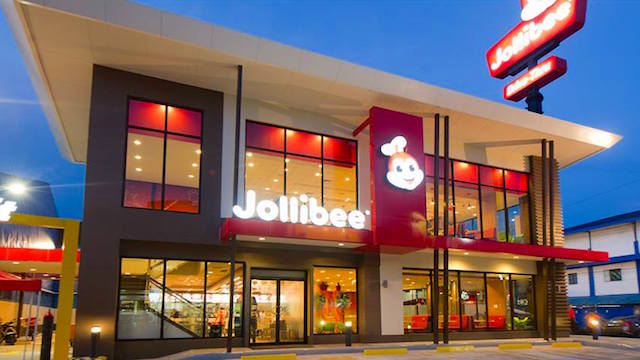
    All four brands that Jollibee Foods Corp of the Philippines operates in Vietnam, including coffee chain Highlands Coffee, posted losses last year.

    The corporation, founded by Filipino billionaire Tony Tan Caktiong, established its first company in the country, Jollibee Vietnam, in 2005, as a fast food operator.

    Since then it has branched into other food and beverage brands: Pho 24, Highlands Coffee and Coffee Bean & Tea Leaf Vietnam. But Highlands Coffee is its only profitable brand (except for last year), while all three other chains have been making losses for years

    Jolibee Vietnam planned to have 300 outlets in the country by 2020, but it only has 150 as of now, lower than its competitors KFC and Lotteria.

    It posted a loss of VND43.9 billion (1.83 million) last year.

    Pho 24, which sells the traditional Vietnamese rice noodles soup, is also struggling to make profits nearly 20 years after it was established.

    At one point, it had targeted 1,000 outlets, but only has 22 now, mostly in Ho Chi Minh City. It also has outlets in South Korea, Indonesia and the Philippines.

    It posted a loss of VND89.4 billion last year.

    The Coffee Bean & Tea Leaf is in an even worse situation with just six outlets in HCMC after 14 years in Vietnam. Its prices are 1.5-2 times higher than that of Highlands Coffee and its outlets are mostly located in large malls.

    It has been reporting an annual loss of VND26-29 billion in the last four years.

    Highlands Coffee, meanwhile, has reported profits for seven of the last eight years.

    The chain topped the VND1 trillion revenue mark in 2017 and doubled it in two years to cross VND2 trillion.

    Except for last year when it posted a VND19 billion loss due to Covid-19, Highlands Coffee had posted annual profits of VND55-100 billion in the previous four years.

    The chain now has 525 outlets in Vietnam and the Philippines.

  • KFC and Hype team up in branded fashion drop

    KFC and Hype team up in branded fashion drop

    KFC may be known for its fried chicken, but it’s about to make a move into the fashion world, teaming up with HYPE to launch a 47-piece clothing line.

    The fast food chain has collaborated with lifestyle brand HYPE to create a collection of clothes and accessories including hoodies, puffer jackets and bucket (no pun intended) hats.

    The line-up of co-branded clothing and accessories features designs inspired by both brands, mixing KFC’s tongue-in-cheek interactive messaging with HYPE bold heritage statements.

    The exclusive range has your everyday staples covered and features bralettes, joggers, tees, caps and backpacks, which the brands claim will ensure you look “festival-ready and feeling finger lickin’ good”.

    Inspired by KFC’s history, including its menus and slogans, the collection includes HYPE’s original dad cap shape with ‘Bargain Bucket’ emblazoned across the front.

  • KFC operator in Thailand explores sale of business

    KFC operator in Thailand explores sale of business

    Restaurants Development Company is exploring the sale of its KFC franchise business in Thailand, valued at roughly $300 million, as revenue rebounds with a recovery in Southeast Asia’s second-largest economy, three sources aware of the matter said.

    The Bangkok-based firm, backed by a consortium led by Southeast Asian focused private equity firm AIGF Advisors Pte Ltd, is in talks with at least one advisor on the potential sale, said the sources, who asked not to be named as they were not authorised to speak to the media.

    Restaurants Development was considering the sale of its KFC business in 2020 but the process was shelved due to the impact of the coronavirus pandemic, two of the sources said.

    Restaurants Development and AIGF did not respond to a request for comment.

    The revival of the sale comes with a pick up in Thai consumer confidence in June, for the first time in six months, boosted by improved economic activity following an easing of COVID-19 curbs.

    Restaurants Development recorded its highest ever quarterly sales in the first three months of 2022, it said on its website, and also the highest annual same-store sales growth rate.

    Its KFC business is expected to grow further over the next few quarters on the back of the economic recovery and easing of travel restrictions, one of the sources said.

    Two sources said potential suitors could include Central Restaurants Group and The QSR of Asia Co Ltd, a unit of Thai Beverage, which run the other KFC franchises in Thailand.

    Thai Beverage declined to comment and there was no response from Central Group to a request for comment.

    Founded in 2016, Restaurants Development employs more than 5,000 people and operates more than 240 restaurants across Thailand. This compared with the 4,000 people and 200 restaurants it employed and managed two years ago.

    It currently owns 236 KFC stores, according to its website.

    As in other markets, Southeast Asian mergers and acquisitions activity is going through a soft patch, hit by high inflation, rising interest rates and weak equity markets.

    Last week, Thailand’s central bank chief said the central bank will ensure the recovery is not interrupted by efforts to tackle higher inflation, amid expectations of an increase in interest rates.

  • Collins Foods’ sales rebound as Europe reopens

    Collins Foods’ sales rebound as Europe reopens

    Listed fast-food chain operator Collins Foods has reported positive same-store sales growth across both its European and Australian markets despite a turbulent economic climate.

    The company’s Taco Bell and KFC franchisees in Australia achieved revenue growth of 11 per cent to $1.2 billion with KFC Australia delivering $955.5 million, up 6.1 per cent.

    KFC’s same-store sales have recovered in Europe with the Netherlands business registering an 18.8 per cent increase followed by Germany at 11.7 per cent. In the Netherlands, Collins Foods will likely open 130 net new restaurants during the next 10 years.

    Taco Bell’s revenue increased 27.5 per cent to $35.8 million with the addition of four new restaurants registering positive growth in the fourth quarter.

    Drew O’Malley, MD and CEO, said significant reinvestments in the business have helped support strong operating cash flow, strengthening the balance sheet.

    “The proven track record of consumer appeal regardless of economic conditions, combined with our relentless pursuit of operational excellence, ensures we are well-positioned to manage through the current inflationary environment,” the company said in its results announcement.

    “With our restaurants performing well and a strong pipeline of new sites, we will continue to grow our store footprint across our QSR brands.”

    The business has plans to open up to 12 more KFC stores in Australia and scale its Taco Bell business alongside.

  • First KFC ‘Green Pioneer Stores’ open in China

    First KFC ‘Green Pioneer Stores’ open in China

    Yum China has just launched KFC’s first Green Pioneer Stores in Beijing and Hangzhou, as it works toward building a network of net-zero restaurants in the future.

    The move is part of the company’s climate strategy and a roadmap to achieving net-zero by 2050, following its pledge to Business Ambition for 1.5°C Commitment Letter to the Science-Based Target initiative (SBTi) last year.

    “We are committed to driving meaningful change and pioneering in the restaurant industry towards net-zero emissions. Building Green Pioneer Stores is an important part of our journey,” said Joey Wat, CEO of Yum China.

    Following the company’s 4R principles (reduce, reuse, recycle, replace), KFC has already incorporated several environmentally friendly practices in its stores across the country, such as:

    • Solar panels in its Hangzhou store generate an estimated 10,000 kWh of energy each year, which helps reduce carbon emissions from electricity consumption.
    • An Internet of Things-based (IoT) intelligent restaurant energy management system which helps improve the energy efficiency of Green Pioneer stores by around 10 per cent annually.
    • Each Green Pioneer Store is equipped with a Tubular Daylighting System that uses natural lighting, reducing electricity consumption.
    • Using eco-friendly materials such as ceramic floor tiles made from recycled energy, low-carbon bamboo and alt-leather made from recycled KFC coffee grounds.

    The company said the Green Pioneer Stores will also allow customers to experience and learn about eco-friendly restaurants by integrating “green interior design”.

    At its Beijing store, a Family Bucket is made entirely of recycled packaging. While in Hangzhou, a wall section was intentionally left unfinished with an opening to show customers the restaurant’s eco-friendly construction process.

    While the restaurant chain has already integrated environmentally friendly initiatives, the company aims to further improve its emissions reduction by 15 per cent each year.

    “We will continue to explore the utilization of innovative technologies in restaurant construction and operations to promote sustainable development and contribute to the low carbon economy,” Wat added.

  • Yum China names new executives

    Yum China names new executives

    Yum China has appointed Johnson Huang as its first chief customer officer and Warton Wang, who is currently the chief development officer, as GM of KFC. Both roles are effective on May 1.

    Yum China says creating the chief customer officer position is one of the company’s strategies to “integrate customer-centricity into its brand-driven culture”.

    Johnson Huang has served as GM of KFC and joined the company in 2006. Prior to that, he was the company’s chief information and marketing support officer and helped build IT functions and digital infrastructure.

    In his new role, Huang will focus on enhancing customer experiences as well as understanding the market demand and creating cross-functional initiatives. He will also supervise some brands like Lavazza, Coffii & Joy and Taco Bell, and continue to report to Joey Wat, the company’s CEO.

    Meanwhile, Warton Wang will succeed Huang as the GM of KFC. Wang joined the brand in 1998 as an operations management trainee and has held various operations roles within KFC, including as market manager of Hangzhou KFC.

    Wang became the regional VP of KFC Field Operations in 2015 and the company’s chief development officer in 2020.

    “Digital is a core growth enabler of Yum China to unlock tremendous opportunities. Johnson’s new leadership role will enable us to continuously strengthen our digital capabilities and elevate the customer experience,” Joey Wat.

    “With his strong technology background and deep understanding of the organisation, Johnson is most suited for this new role. [His] proven track record of leading KFC in the past five years gives us confidence that he can transform our emerging brands into future growth engines for Yum China.”

  • Yum China calls time on Chinese brand

    Yum China calls time on Chinese brand

    Yum China Holdings, the owner of the KFC and Pizza Hut restaurant chains in China, has decided to shut down its struggling fast-food brand, East Dawning, after it failed to survive the Covid-19 pandemic.

    The company said in its annual report that the remaining five outlets of the Chinese-style quick-service restaurant (QSR) brand would cease to operate within 2022.

    “The brand was severely impacted by the Covid-19 pandemic,” the report said. “As a result, we have decided to wind down operations of the brand.”

    The annual report, filed to the Hong Kong stock exchange, did not provide financial data for East Dawning, which was established by Yum on the mainland in 2005. The chain kicked off with about 100 restaurants nationwide located mainly at airports and train stations. But the number has fallen drastically over the years amid stiff competition. By 2012, the chain had dwindled to 30 restaurants, and by 2020 only eight outlets of the brand remained.

    Disease outbreak dealt a fatal blow to the brand, but it has not been successful over the past decade due to stern challenges from a raft of local restaurant chains,” said Chen Xiao, CEO of Shanghai Yacheng Culture, a consultancy dealing with marketing and branding for foreign and local companies. “After all, the five outlets and the brand are of little value to Yum’s businesses in China.”

    East Dawning, in Chinese, literally means that the east is lit up by the light of dawn.

    Su Shi, a poet during the Northern Song dynasty (960-1127) wrote in his poem the Red Cliffs that a group of friends were so obsessed with a dinner party on a boat that they did not notice the east was lit up by the light of dawn.

    East Dawning was the first Chinese-style fast-food brand created by Yum to tap the market potential on the mainland. It combines KFC’s business model with Chinese cuisine. The menu includes steamed pastries such as buns, and Chinese tea.

    The fast-food brand has been eclipsed by the rise of Chinese restaurant chains such as Da Niang Dumpling and Yang’s Dumplings which are adept at cooking Chinese food to appeal to local tastes.

    China’s catering sector has taken a beating from the coronavirus outbreak over the past two years as lockdown measures and social distancing rules have kept customers at bay.

    In 2020, restaurants across the mainland reported total revenue of 3.95 trillion yuan (US$625 billion), down 15.4 percent on the year, according to the National Bureau of Statistics.

    In the first half of 2021, the catering industry raked in sales of 2.17 trillion yuan, up 48.6 per cent from a year ago, but virtually unchanged from the same period of 2019.

    Yum China, whose other brands include Little Sheep, Huang Ji Huang and Coffii & Joy, operates more than 11,700 outlets on the mainland.

    It reported net profit of US$525 million in 2021, down 15 per cent from the previous year. Revenue grew 19 per cent to US$9.85 billion.

    Its shares trading in Hong Kong were changing hands at HK$378 (US$48.37) on Monday afternoon, having slumped 8 per cent from their initial public offering price of HK$412 in September, 2020.

  • KFC Australia pilots drone-delivery service in Queensland

    KFC Australia pilots drone-delivery service in Queensland

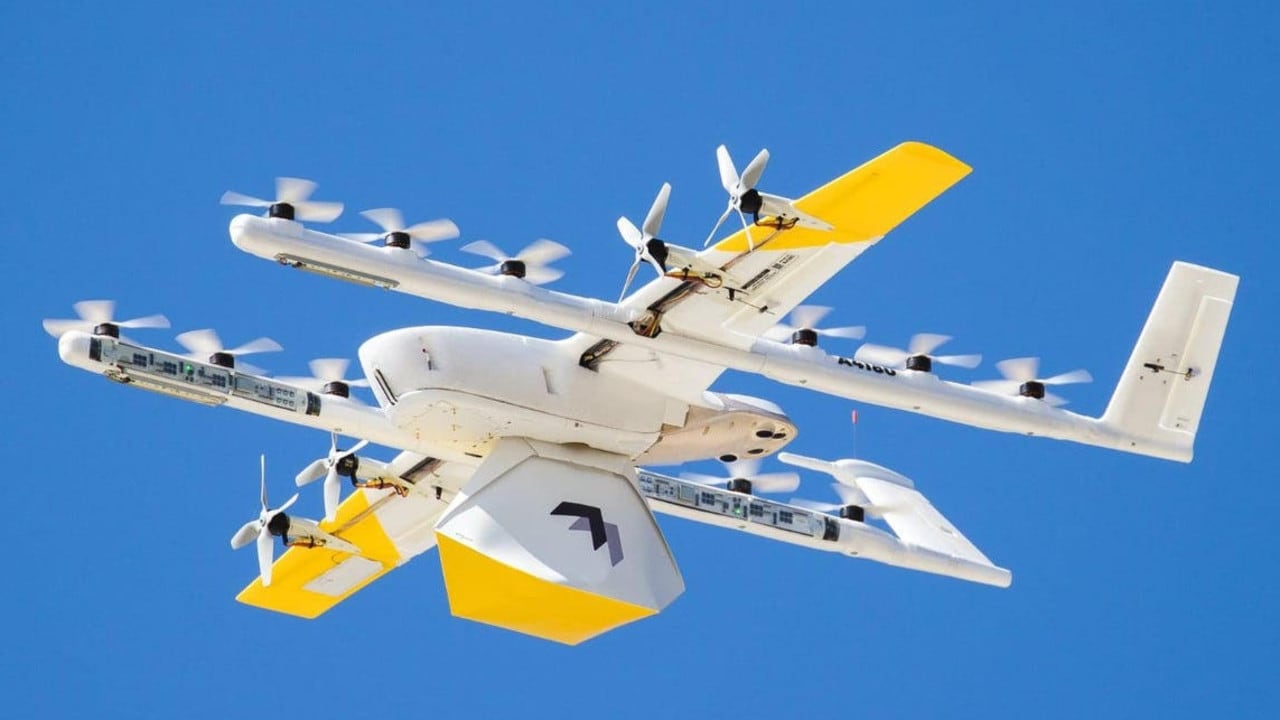
    In an Australian-first, KFC has enlisted a drone delivery company to bring Zingers and other fried faves to homes and workplaces in the Logan area between Brisbane and the Gold Coast.

    Wing, owned by Google parent Alphabet, launched in Canberra in 2019 in a world-first, and in Logan the following year.

    Since then, suburbs within a 10km radius have been having burgers, groceries, pharmacy items, hardware products, coffee and other products zoomed in via 5kg styrofoam drones that can carry up to 1.5kg.

    Under a pilot program kicking off on Friday, the world’s most famous fried chicken brand will initially be available to a small number of households in the South East Queensland suburbs of Kingston, Logan Central, Slacks Creek, Underwood, and Woodridge.

    The service will gradually expand to include other nearby locations, Wing says, dubbing Logan “the drone delivery capital of the world”.

    “You know the future truly is here when you can get hot, fresh Kentucky Fried Chicken delivered by a drone from the click of a few buttons,” KFC Australia chief marketing officer Kristi Woolrych said.

    Wing says the number of deliveries rocketed last year as the pandemic raged on and strong demand has continued in 2022.

    Earlier this week, spokesman Jesse Suskin said the company was planning expansion in Australia.

    “We’ll be in more places in southeast Queensland. We’ve submitted for those permissions from our regulators,” Mr. Suskin said.

    “For other states, we’re actively starting to have those conversations right now.”

  • Restaurant Brands sales exceed $1 billion, despite Covid-19 impact

    Restaurant Brands sales exceed $1 billion, despite Covid-19 impact

    Restaurant Brands NZ Limited reported a 19.7% increase in sales for the year ended 31 December 2021, making total sales of NZ$1.06 billion in 2021. While same-store deals stayed strong in the period, nearly NZ$100 million of the rise in annual sales came from the extra 8 months of trading from the California acquisition.

    The Group released sales numbers for Q4 FY21 on Thursday, reporting total sales of NZ$284 million for the period (+5.5% on pcp). All regions posted positive same-store growth despite the present COVID-19 impact.

    The Group faced COVID-19 impact strongly despite several government curbs, challenging trading atmosphere and altering consumer habits. Subsequently, RBD’s annual sales numbers surpassed NZ$1 billion, setting a robust footing for further growth in sales in all its 4 regions.

    RBD-owned store numbers increased by 11 in Q4 compared to the same period in the previous year to 359. This was majorly due to the purchase of 5 KFC stores in Sydney in early 2021as well as the present construction of new Taco Bell shops in Australia and NZ.

    Restaurant Brands is due to announce its year-end trading results on 28 February 2022.

  • KFC China draws wrath over Pop Mart frenzy that ‘wastes food’

    KFC China draws wrath over Pop Mart frenzy that ‘wastes food’

    KFC is under scrutiny in China over the popularity of an anniversary promotion that allowed customers to collect limited-edition toys with their meals.

    The fried chicken chain partnered with Chinese toymaker Pop Mart to give away Dimoo toy dolls with select KFC orders in celebration of the brand’s 35th anniversary of its first restaurant in China. The giveaway prompted a frenzy to collect the dolls, with at least one customer spending $1,649 to buy 106 meals, according to a statement from The China Consumers Association.

    Some would-be collectors hired helpers to buy meals and find toys for them, in some cases throwing away the food they were required to buy, the group said.

    “KFC, as a food operator, uses the limited-edition blind box sales method to induce and condone consumers’ irrational and excessive purchase of food packages,” the organization wrote, which is “contrary to public order, good customs and the spirit of the law.”

    KFC’s parent company Yum! Brands did not immediately respond to Insider’s request for comment.

    China has taken legal steps in recent years to curb food waste from promotions, including a major campaign in 2020 banning influencers from posting “wasteful binge eating” videos on social media.

    Spending sprees around limited-edition fast-food items aren’t exclusive to China. In 2021, McDonald’s included limited-edition Pokemon cards in some Happy Meals in the US, and fans quickly began buying up 50 to 100 cards at once to keep or resell, prompting some locations to begin limiting order sizes.

    Fan excitement over McDonald’s “Rick and Morty”–inspired Szechuan sauce was even more extreme, with some dedicated customers buying sauce packets online for hundreds of dollars, or even purchasing photos of the packets.

  • Collins Foods strengthens foothold in the Netherlands with KFC

    Collins Foods strengthens foothold in the Netherlands with KFC

    Collins Foods Netherlands B.V. has entered into a share purchase agreement with RDK Holding B.V. and MDK Holding B.V. to acquire nine KFC restaurants in the Netherlands.

    The sellers are the second-largest KFC franchisee in the Netherlands after Collins Foods’ 35 restaurants.

    Once completed, this acquisition will increase the Collins Foods KFC network in the Netherlands to 44 restaurants, or 55% of this market.

    Last week, Collins Foods announced the signing of a Corporate Franchise Agreement (CFA), entered into with a subsidiary of Yum! Brands Inc. (Yum!) for KFC Netherlands. That agreement will allow Collins Foods to fully leverage its experience and operational capabilities for the benefit of both Collins Foods and the KFC brand in the Netherlands.

    This latest acquisition complements the overall direction of the CFA. As existing restaurants, the nine restaurants to be acquired will not count towards the CFA’s target of up to 130 net new KFC restaurants over the next 10 years.

    However, the acquisition provides further scale for Collins Foods in the Netherlands and supports the rollout of new restaurants under the CFA by streamlining the Netherlands’ franchisee structure and enabling access to additional development trade zones for Collins Foods.

    The acquisition consideration of €10.25 million is subject to various adjustments to be made at completion and will be funded from Collins Foods’ existing debt facilities. Completion is expected to be in or around December 2021, and is subject to satisfaction of various conditions precedent including obtaining all relevant government permits to operate the restaurants, and obtaining the consent of Yum! Restaurants International Ltd. and Co. KG as a franchisor of the KFC restaurants.

    The acquisition price was based on pre-COVID revenue of €15.9 million and EBITDA of €1.8 million during the calendar year 2019. Having successfully integrated the eight restaurants acquired in late second half of FY21, Collins Foods is confident of implementing a similar integration for the sellers’ restaurants.

    Commenting on the acquisition, Collins Foods’ Managing Director & CEO Drew O’Malley said: “Today’s acquisition marks another exciting step forward for Collins Foods’ European growth strategy.

    The restaurants we are acquiring are from one of Netherlands’ top KFC operators. It provides us with an opportunity to bring an additional quality network of restaurants into our European business and adds further capability to our team and increased scale to our operations in the Netherlands.

    The acquisition of these nine restaurants increases our presence to 44 KFC restaurants in the Netherlands and going forward, facilitates further growth opportunities.

  • Popeyes takes aim at KFC’s hold on China

    Popeyes takes aim at KFC’s hold on China

    Popeyes has its sights set on China. On Monday, the American fried chicken chain officially announced that it would open its first China-based store right here in Shanghai sometime next year.

    But that’s just the beginning. Popeyes has big plans to become China’s most popular fried chicken joint. No easy feat considering KFC – the world’s most successful fried chicken brand – currently holds the top spot.

    “I think we can be the no.1 chicken brand here in China and all around Asia,” said Jose Cil, CEO of Restaurant Brands International (RBI).

    Popeyes aims to open 1,500 restaurants in China over the next 10 years. KFC currently has a whopping 6,300 branches in over 1,300 cities across the country.

    Popeyes is all the rage in the US right now, after its latest spicy fried chicken sandwich went viral. The sandwich proved to be so popular it sold out and was removed from the menu a few weeks later due to lack of supply.

    The good news is that the famous spicy chicken sandwich will be offered at the Shanghai branch. The bad news is you’ll just have to wait until 2020 to try it.

    Popeyes will be the last of RBI’s major brands to enter the Chinese market. Burger King and Tim Hortons have both proven to be immensely popular in China. Since 2012, Burger King has opened 1,100 stores in China and Tim Hortons has expanded to 28 stores in just one year.

    Hence, Popeyes lofty expectation to take on KFC here in China.

  • Pizza Hut, KFC sales shrink in China as Covid-19 locks restaurants out

    Pizza Hut, KFC sales shrink in China as Covid-19 locks restaurants out

    Running restaurants in China is tough when a big part of the population stays home to avoid catching the coronavirus.

    Yum China , operator of KFC and Pizza Hut in the country, gave a glimpse of the current predicament in results posted after the U.S. close Wednesday. It has temporarily closed more than 30% of its restaurants in China, and business has been bad even for the ones that remain open. Sales during the Lunar New Year holiday were down 40%-50% compared with last year, excluding newly opened outlets.

    The company, which was spun off from Yum Brands in 2016, said it may report operating losses for this quarter—and even for the full year if the trend continues. Yum China’s New York-listed shares fell 3% in after-hours trading.

    KFC and Pizza Hut aren’t the only chains that have had to shut restaurants because of the outbreak, which has infected nearly 30,000 and killed more than 500 so far. Starbucks and McDonald’s have also temporarily closed some of their outlets in China. The former, in particular, could get hurt as customers opt to stay at home instead of chilling out in its coffee shops.

    Yum China could soften the blow with its delivery business, which accounted for nearly a quarter of its revenue last quarter. It said it would also try to reduce its costs. Some of these—food, labor, advertising and rent—are variable, but the company will still incur substantial fixed costs through the closure period.

  • KFC most favored fast food chain in Vietnam

    KFC most favored fast food chain in Vietnam

    American chain KFC is the most frequently visited fast food restaurant chain in Vietnam, with 45 percent of respondents visiting its stores often, a new survey found. It is followed by South Korea’s Lotteria with 17 percent of 600 respondents, and American restaurant chains Pizza Hut and McDonald’s both at 6 percent, according to the survey by Ho Chi Minh City-based market research firm Q&Me.

    Top reasons cited for favoring KFC were: delicious food (66 percent); convenient location (63 percent); suitable for family and the youth (60 percent); and variety on the menu (56 percent).

    The survey found 87 percent ordering food online from fast-food chains. Of these, KFC was the most ordered from at 52 percent, followed by Lotteria (30 percent) and Pizza Hut (21 percent).

    “Now” was the most popular delivery app for fast food online orders with 24 percent of the respondents opting for it, followed by GrabFood (20 percent). In Vietnam since 1997, KFC now has 135 outlets, mainly in HCMC and Hanoi, Vietnam’s two biggest metropolises, while Lotteria has around 200. Market research firm Euromonitor said in a recent report that international players dominate the limited-service restaurant market in Vietnam, since local independent chains are mostly small family-based businesses with insufficient resources to take on the big players.

    But, as a whole, fast food chains are experiencing slower growth. Market observers have said one of the reasons could be that the eating habits of Vietnamese are changing, with health being prioritized over convenience.In 2018, there were 7,000 fast food outlets in Vietnam, a relatively insignificant number considering there are around 540,000 food and beverage businesses comprised of 430,000 street vendors, 80,000 restaurants and 22,000 cafes and bars, according to Dcorp R- Keeper, a global company which provides technological solutions to food and beverage businesses.

  • KFC Thailand for sale

    KFC Thailand for sale

    A slice of KFC Thailand is being considered for sale by franchise owner Restaurants Development in a deal that could net $200 million.

    Sourcing people with knowledge of the matter, the firm is taking advice on a potential sale of the operation – which involves roughly 200 locations and 4000 staff. There is no certainty a sale will proceed and the source said discussions remained at an early stage with no formal bid yet tabled.

    Restaurants Development is backed by investors throughout Asia and operates KFC Thailand alongside Central Group (running 275 stores) and Thai Beverage – which purchased more than 240 KFC restaurants three years ago for roughly $361 million.

    Yum Restaurants International (Thailand) transformed itself into a 100-per-cent franchisor business in 2018 in an effort to yield optimal efficiency across the entire business operation.