Award winning digital agency, Blink Digital devices an innovative route for launching a new product by food giants KFC. Creating a departure from the usual route, they have launched KFCConfidential.com – an exclusive website which can be accessed only by one person at a time, for 30 seconds only. The website is created for the launch of KFC’s new product which is yet to be announced. 150 visitors who access the website will stand a chance to win private passes to KFC’s exclusive pre-launch event slated this week.
The agency conceptualized this innovative approach keeping in mind the market trends and consumer engagement habits. The idea of a ‘secret supper invitation’ for something yet to be introduced was daring, innovative and found an instant connect with the consumers.
The website has already recorded over 28,000 users waiting in line for over 5,100 hours to access the website – the maximum time spent waiting by a single user currently stands at 70 minutes at the time for drafting this release!
We are committed to delivering campaigns that are driven by deep human truths. As experiences are becoming increasingly ubiquitous, consumers are on a constant lookout for newer ways of engagement. With KFC Confidential, we followed a philosophy of ‘less is more’. Instead of bombarding consumers with product advertisements, we decided to keep this campaign aspirational and use a pull approach rather than a push one. The website has no product images; in fact, it doesn’t even have the product name. The response it has received so far has been tremendous.” said Dooj Ramchandani, Co-Founder & Creative Director, Blink Digital.
Yum! Brands has revealed same store sales figures for its KFC China and Pizza Hut China networks.
The US company, which last month revealed plans to spin off its Chinese operations into a separate company, said total Chinese October same-store sales grew an estimated five per cent, compared to same-store sales growth of six per cent in September.
In October, KFC China sales rose 10 per cent but Pizza Hut China sales declined nine per cent.
“We are reiterating our guidance for the fourth quarter of China Division same-store sales growth of zero to four per cent, with positive same-store sales growth at KFC and negative same-store sales at Pizza Hut Casual Dining,”the company said in a statement.
“As previously stated, same-store sales remain difficult to forecast in China, and our overlaps become more difficult for the balance of the year.”
Yum China has 6900 KFC and Pizza Hut restaurants, but has struggled for more than two years after high profile food safety scares involving suppliers.
Mid last year, a Chinese TV network screened footage of a supplier mixing allegedly expired meat with fresh meat. The company, a subsidiary of OSI Group, was a minor supplier to Yum! and its contract was cancelled immediately. But the TV news footage was sufficient to spook Chinese customers, many of whom stopped eating at KFC China outlets.
Breaking with their traditional role as mutual fund managers or short-term profit seekers, homegrown PEFs have now transformed into strategic investors to spearhead the recent boom of mega-sized M&As. And leading the pack is Seoul-based MBK Partners Ltd.
Beating global big-name PEFs like KKR & Co. and Affinity Equity Partners, MBK Partners clinched a 7.2 trillion won (US$6.37 billion) deal last month to acquire U.K. retail giant Tesco Plc’s Korean unit Homeplus, South Korea’s second-largest supermarket chain with 8.6 trillion won in sales last year. It is the country’s largest takeover deal in size.
Last year, Hahn & Co., the second-largest PEF based in South Korea, bought a controlling 70 percent stake in Hanon Systems, formerly Halla Visteon Climate Control Corp., a leading automotive thermal management solutions provider, for about 4 trillion won.
Taihan Electric Wire Co., South Korea’s second-largest electrical materials manufacturers, was sold to No. 3 IMM Private Equity last month for 300 billion won.
Local PEFs’ aggressive investments have spiced up the long-slumped local M&A market as they have registered huge returns from leveraged company buyout deals amid a low interest rate trend.
Many well known brands are owned by PEFs, ranging from Burger King and KFC to NEPA Co., an outdoor apparel manufacturer, and Coway Co., a leading water purifier firm.
PEF managers offer a series of distinct private equity funds to make investments in various equity securities after raising capital from cash-rich individuals and institutional investors such as public pension plans, insurance companies and foundations.
South Korea opened the PEF market in 2004 to encourage corporate takeovers and investment to provide capital to venture start-ups.
According to data compiled by the Financial Supervisory Service (FSS), a total of 51.2 trillion won in assets were under management by 277 PEFs at the end of 2014, compared with 400 billion won tallied in 2004 when two PEFs were floated for the first time in the country.
They have attracted more than 5 trillion won every year since 2008 and collected 9.8 trillion won in investment last year alone.
PEFs have started to draw attention from institutional investors, including the National Pension Service, as the South Korean economy has seemingly entered a low-growth cycle and the benchmark KOSPI has moved in a narrow box range since the 2008 global financial crisis.
Recently, the South Korean government relaxed regulations in a bid to fuel the M&A market by luring PEFs. It has loosened the so-called double reviewing process by the state anti-trust agency and stakeholder filing requirements.
MBK Partners is in the forefront to explore the PEF-led M&A market.
Founded by former Carlyle managers in 2005, MBK Partners has grown into one of the biggest Asian buyout funds with about 14 trillion won in assets under management, with a focus on South Korea and other Asian regions.
It has invested in 23 companies including Coway, cable TV operator C&M Co., NEPA Co. and Homeplus. Its total assets amount to that of Dongbu Group, the 20th largest conglomerate, with 14.6 trillion won.
Hahn & Co. has assets of 3.3 trillion won with 12 businesses including Hanon Systems, Daehan Cement and Woongjin Foods Co. under management. No. 3 IMM Private Equity operates 100 firms worth 2.8 trillion won in total assets, followed by Mirae Asset Global Investments Co. with 2.2 trillion won and Vogo Investment with 1.9 trillion won.
“In the beginning, most PEFs were founded by retired government officials and fund managers with a career in global PEFs. They were financial investors, who bought stakes and sold them to lock in profits,” said Kim Kyung-young from the Asset Management Supervision Office at the FSS.
“Now they are changing into strategic investors, or buyout investors, playing a major role in acquiring large companies and carrying out corporate restructuring.”
Although such PEFs have successfully made their presence felt in the local M&A market, South Korean investors are wary of such buyout funds as many PEFs have still disappeared from the market due to worse-than-expected profitability in a takeover deal.
“PEF-led M&As are not always successful,” said Koo Kyung-hoe, a senior analyst at Hyundai Securities Research Center. “About 66 percent of PEFs reach target profit rates, but we have to bear in mind that the rest, 34 percent, end up in vain.”
For example, MBK Partners, regarded as having the Midas touch in the financial market, took over C&M in 2008 for about 2 trillion won, but its plan to resell the company has been stalled due to a long slump in the cable TV industry.
He said they have to expand the range of investors as nearly all local PEF clients are institutions like pension funds and financial firms.
“In advanced countries, PEFs collect money from universities, foundations and even cash-rich individuals,” said Koo. “They need to draw up plans to lure them as they can serve as an effective, appropriate alternative investment tool in the future.”
Experts also noted that local PEFs have to overcome the negative public perception in South Korea that they clash with labor unions over restructuring after a takeover.
U.S. Lone Star Funds’ purchase and resale of Korea Exchange Bank has deepened such negative perceptions toward PEFs among South Koreans, according to experts. Lone Star bought KEB in 2003 for 1.38 trillion won and then sold it to Hana Financial Group Inc. in 2012, pocketing a profit of 4.5 trillion won.
US fast food giant Yum! Brands is to spin off its troubled Chinese operation into a separate business.
The new company will be called Yum China.
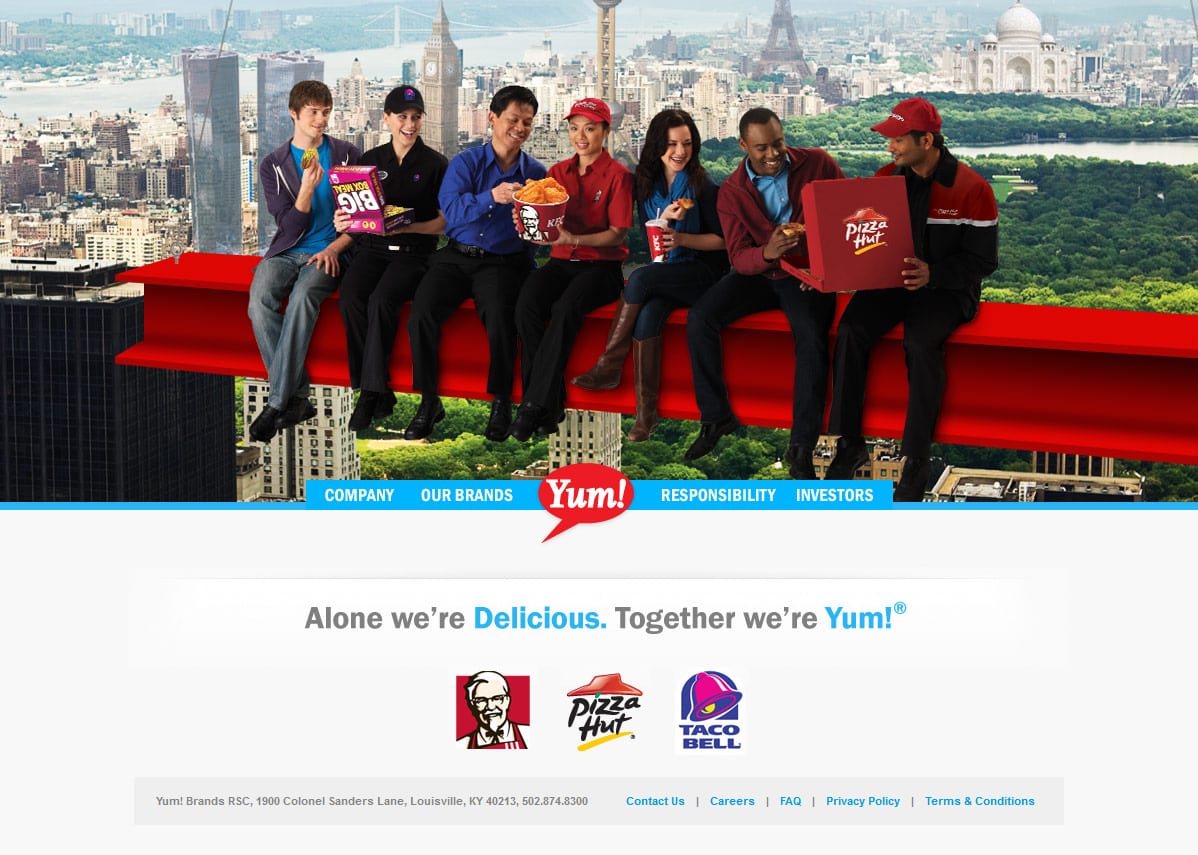
The move will strengthen the parent company which will retain 41,000 restaurants trading under the KFC, Pizza Hut and Taco Bell brands in 125 countries – and which will no loger be saddled with the ongoing losses from the Chinese operations. Nearly all of its restaurants will be operated by franchisees.
“Following the separation, each standalone company will be able to intensify focus on its distinct commercial priorities, allocate its own resources to meet the needs of its business, and pursue distinct capital structures and capital allocation strategies,” said Yum CEO, Greg Creed in a statement.
“This will provide a clear investment thesis and visibility to attract a long-term investor base suited to each business.”
The likely interpretation of that statement is that Yum China will seek local investors or possibly a joint venture partner to help bring the business back on track.
Yum China has 6900 KFC and Pizza Hut restaurants, but has struggled for more than two years after high profile food safety scares involving suppliers.
Mid last year, a Chinese TV network screened footage of a supplier mixing allegedly expired meat with fresh meat. The company, a subsidiary of OSI Group, was a minor supplier to Yum! and its contract was cancelled immediately. But the TV news footage was sufficient to spook Chinese customers, many of whom stopped eating at KFC China outlets.
Yum! Manufacturers’ KFC is about to grow to be the second multinational quick meals chain to enter Myanmar.
Yum! has signed an settlement with native franchise associate Yoma Strategic to open fried hen eating places within the quickly opening-up nation. The primary outlet will open in downtown Yangon quickly.
KFC will comply with South Korean burger chain Lotteria into Myanmar. That chain, owned by Lotte Group, has opened seven eating places because it arrived there in 2013. It has additionally efficiently established first mover benefit in different Southeast Asian markets together with Vietnam.
No date has been launched for the opening of the primary KFC outlet, however Yoma Strategic stated in a press release it is going to be the “first main American fast service restaurant to determine a foothold in Myanmar”.
As much as 4 KFC eating places will open in Yangon by the top of the yr earlier than the corporate appears at different cities, reminiscent of Mandalay.
Laos is now the final remaining Southeast Asian market KFC has but to enter.
Yum Brands shares rallied on Tuesday after the restaurant operator topped earnings expectations as comparable sales in China declined less than forecast.
Yum, which operates KFC, Pizza Hut and Taco Bell restaurants, reported first-quarter earnings of 80 cents per share on revenue of USD2.62 billion.
Same-store sales in China, a key division for the company, fell 12 percent during the quarter after allegations that a former supplier used expired meat. The company’s China unit has been especially hard hit this year because of a supplier scare last summer. Analysts expect same-store sales in the country to shrink 14.4 percent.
t’s a hard concept to grasp: ‘quality coffee’ at a fried chicken chain.
But KFC China is reportedly planning a serious move into the ‘premium’ coffee market, aiming to become a low cost alternative to Starbucks.
Yum! Brands-owned KFC is the leading fast food player in China already and Starbucks has built a strong and loyal following in the market after 16 years there.
According to a report on Bloomberg News, KFC China will start selling freshly ground hot coffee this year.
The new coffee offer made its debut in several restaurants in December and the company is “very pleased with the results” according to CFO Pat Grismer, commending at an investors conference last week.
So by the end of 2015, KFC China will add ‘premium’ coffee to 2500 outlets – 1000 more than the size of Starbucks’ network. It’s following in the footsteps of McDonald’s, which has McCafes at most of its 2000 Chinese outlets.
“Trying to beat Starbucks on higher-quality coffee in China makes more sense than it might seem for KFC, which has a long-established breakfast menu featuring such local fare as congee,” Bloomberg observed.
A premium coffee is priced at about 10 RMB (US$1.60) which is about half the price of a like cup at Starbucks.
While it is not clear quite the range of coffee styles on offer, it is unlikely to be as broad as Starbucks, which is also gaining favour in Asia for its range of teas.
“While Starbucks coffee is positioned as a more luxurious product, the entry of a large competitor such as KFC at a midrange price will certainly complicate those expansion plans in a country where tea is far more popular,” observed Bloomberg.
KFC Thailand says it plans to open 55 new outlets in 2015 and refurbish another 20 as it aims to boost its share of the nation’s fast food market.
According to a report published by the Bangkok Post newspaper, KFC will boost its capital spending by 20 per cent this year, largely with funds from the brand’s parent Yum! Restaurants International, the balance from local partner Central Group.
By the end of the year it will have a chain of 586. Fifteen of the new branches will be configured as drive-thrus.
According to Waewkanee Assoratgoon, KFC country GM with Yum! Thailand, further capital will be invested in a new IT system aimed at speeding up the ordering process for both home-delivery and counter transactions. The company is also developing apps which would allow customers to order from smartphones or computers.
Waewkanee told the newspaper it expects sales to increase by 10 per cent this year, one per cent more than in 2014.
After doubling sales and earnings over the last few years, Domino’s Pizza is chasing a bigger share of the AUD11 billion (USD8.5b) fast-food market by taking sales from fried chicken outlets and drive-through outlets like McDonalds and Hungry Jacks.
Not content with his market-leading 25 percent share of the Australian pizza market and a runner-up position in Japan, Domino’s chief executive Don Meij is going after consumers who would rather snack on KFC’s Original Recipe chicken or a McDonalds’ Big Mac than a Cheesy Crust Meat Lovers or Thin ‘n Crispy margherita.
Domino’s has no plans to open drive-through outlets or branch into fried chicken or burgers. Rather, it plans to tap into the consumer attributes that drive consumption of these products, including the desire for instant gratification, by offering faster and easier ordering and delivery, cheaper menus and new toppings and crusts
Yum Brands Inc, owner of KFC and Pizza Hut, said on Wednesday that sales at established restaurants in its biggest market China fell less than feared in the fourth quarter as it fights to recover from a food scandal involving a minor supplier, and its shares jumped 2.1 percent.
Same-restaurant sales in China, Yum’s number one market for revenue and profit, fell 16 percent for the quarter that ended on 27 December on continued fallout from allegations that a former supplier used expired meat.
But the decline was less severe than the 19.4 percent drop expected by analysts polled by Consensus Metrix, and shares in Yum rose USD1.51 to USD75.16 in extended trading.
American quick-service restaurant (QSR) brand KFC plans to become the largest QSR chain in the country and expects to have over 500 outlets by end-2015.
The company has just launched its “Flaming Crunch Chicken,” which has been spiced using the ‘BhutJolokia’ chilli grown in Assam.
Talking about expansion, Dhruv Kaul, Chief Marketing Officer, KFC India, said: “We have aggressive plans. It’s our ambition to become the number one QSR chain in the country by next year. We target having over 500 outlets by 2015.”
Kaul said despite softer consumer sentiment, the company is continuing to open new stores, not only in cities where it is already present but also in new cities. KFC India has over 300 restaurants across 81 cities, which are a mix of franchisee and company-run outlets.
“Last year was challenging for the industry, but we are confident about 2015. We hope to see an uptick in the economic environment and are well-positioned to leverage it,” added Kaul.
Vegetarian menu
Last year, the company expanded its vegetarian menu and it has kick-started this year by introducing a spicier version of its chicken offering. Kaul said: “We have seen a new trend emerging, where our consumers prefer a more intense, spicy experience in their food, After scouting for chillies from around the world, we narrowed down on “BhutJolokia” from Assam. We will continue to focus on introducing products that are rooted in consumer insights.”
This year, the company will also focus on growing its online ordering facility as an incremental channel for sales. “Last year, we scaled up home delivery significantly across our outlets. Also, without any big push, we have seen growth in online ordering. Stores that offer home delivery are seeing over a quarter of orders coming through the online channel. This year, we will give a big thrust to grow the online ordering,” Kaul added.
The franchise holder of the Kentucky Fried Chicken (KFC) brand in Indonesia, PT Fast Food Indonesia (FAST), plans to open between 60 and 65 new outlets in and outside Java to tap into the country’s growing food retail market.
FAST business development general manager Gandhi Lie said on Tuesday that his firm would spend around IDR240 billion (US$19.2 million) on the expansion, of which about IDR200 billion would be used to open 40 to 45 new “stand alone” outlets, with the remaining IDR40 billion to set up 20 “KFC box” outlets.
“We will use our internal cash as well as partner with landlords to build the new outlets next year,” he said without providing details on the composition of each source of funds.