Retail News CRM

Tag: Kia

  • Kia’s sporty K3 GT balances speed and safety

    Kia’s sporty K3 GT balances speed and safety

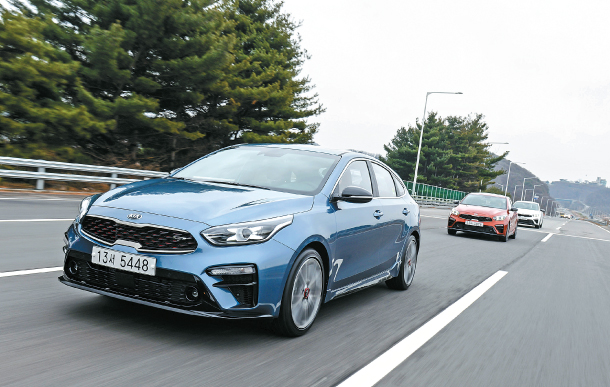
    Kia Motors’ compact K3 GT hatchback stays true to its GT moniker with its impressive driving experience, but sacrifices comfort in search of a sportier style. Across an 80 km (50 mile) drive from Namyangju to Paju in Gyeonggi on Nov. 22, the K3 GT zipped across a course that mostly covered highways.

    Its driving performance was a far cry from the original commuter version as the vehicle’s acceleration responded instantaneously thanks to its 1.6 liter turbocharged engine. The GT responded to even the slightest pressure on the pedal, zooming to 180 kilometers per hour (112 miles per hour) with ease. Along with fast acceleration, the K3 GT rumbled when accelerating as the car’s electronic sound generator (ESG) added to the real sound from its new tuned dual mufflers, similar to the ESG included in Kia’s sports sedan, the Stinger.

    Petrol heads will also appreciate the sporty D-cut steering wheel on the front-wheel drive, which produced accurate steering as the vehicle entered and exited corners and a natural feel when switching lanes.

    While the fast GT may please driving enthusiasts with its performance, it doesn’t provide for the most comfortable ride.

    At high speeds of 150 km per hour, the hatchback model produced some road and tire noise that soon became distracting. The sound from the ESG and the unwanted cacophony of warning beeps from its various safety features didn’t help with the situation either.

    The vehicle also comes with tubular seats, which emphasize its racing theme and hold the driver in place during quick acceleration, but feel quite stiff on the passenger’s side.

    The interior has a clean, simple look with red stitching on the front seats that accentuates the sporty aesthetic. But the car will likely tire passengers during long-hour drives due to its tough and hardy feel.

    The sporty vehicle, however, maintains a competitive edge in safety as it comes loaded with a variety of smart features including forward collision warning and lane keeping assist in all its trims.

    While the various beeps that come in a range of pitches may be obtrusive, the lane keeping and changing features worked perfectly during the drive, as the steering wheel shifted on its own to steady the vehicle and issued alerts whenever a car was nearby when switching lanes.

    As for its exterior, the GT is a familiar offshoot of the original K3. It retains much of the original front design, but adds a touch of flair with subtle red accents in its signature Kia tiger-nose grille and 18-inch alloy wheels with an option of Michelin summer tires.

    The vehicle also keeps in touch with the utilitarian side of the original model, marking a return to foldable back seats that provide spacious room for storage.

    The original K3 has sold 37,125 units in the domestic market until October this year, 63 percent more than during the same period last year. The GT, offered either as a sedan or a hatchback, adds a sporty edge to Kia’s compact lineup, competing with Hyundai Motor’s high-performance offerings, such as the Avante Sport and the hatchback i30 N Line.

    “The K3 GT incorporates a powerful engine and technology optimized for high-speed driving to strengthen the driving performance,” said Kwon Hyug-ho, head of domestic sales at Kia Motors.

    The K3 GT starts at 19.93 million won ($17,800) and the entry hatchback version at 22.24 million won, compared to the 15.71 million won entry version of the 2019 K3 model.

    The competitive pricing puts pressure on Hyundai’s Avante Sport, which starts at 19.64 million won and the i30 N Line at 23.79 million won.
  • Korea’s car companies discuss challenges

    Korea’s car companies discuss challenges

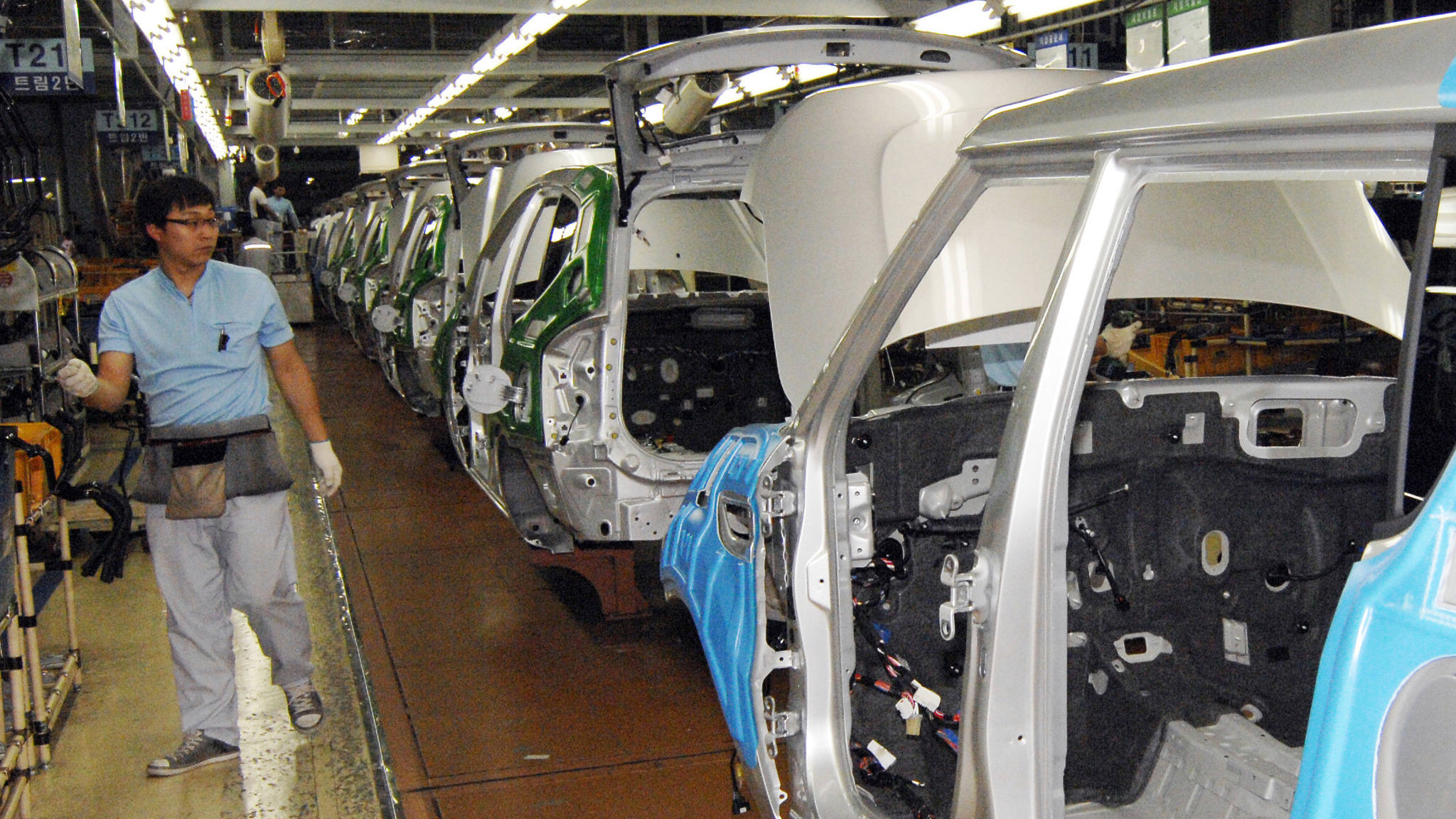
    Representatives of Korea’s major automakers and parts makers and industry officials gathered in Seoul Wednesday to discuss ways to breathe new life into the sluggish sector. The chief executives of the big five automakers — Hyundai Motor, Kia Motors, GM Korea, Renault Samsung and Ssangyong Motor — and their local parts makers and industry associations explored ways to tackle daunting challenges facing the industry.

    Korea’s auto industry is going through a hard time after GM Korea shut down its underutilized Gunsan plant in May, and Hyundai and Kia have been posting generally disappointing earnings this year.

    Small and medium-sized companies that make parts for the carmaker were more vulnerable to falling sales, with more than one-third of such Korean auto parts makers posting losses in the first half of this year, data by the think tank Korea Institute for Industrial Economics and Trade showed.

    They are also in the crosshairs as the United States is weighing slapping tariffs on foreign-made autos and auto parts on national security grounds.

    The participants called for the government to boost domestic demand, provide financial assistance to cash-strapped parts makers and lower regulations in emerging sectors, such as autonomous and electric vehicles.

    The automakers said they will seek ways to maintain over 4 million units in domestic car production and raise the number to 4.5 million by 2025.

    Hyundai Motor, the nation’s leading automaker, said it will invest 220 billion won ($193.8 million) over the next two years to develop an advanced lineup of its hydrogen-fuel electric car Nexo, with a goal of releasing over 30,000 units in the domestic market in 2022.

    GM Korea said it will hold trade shows to help its local contractors tap into the global market and supply 70 billion won in subsidies for small- and medium-sized contractors.

    Renault Samsung said it will operate a research and development fund worth 35 billion won by 2020 and form an alliance with Nissan and Mitsubishi to help its contractors make bids overseas.

    Ssangyong Motor promised to expand use of Korean-made parts and support its contractors in India.

    The Ministry of Trade, Industry and Energy said it will join industry efforts to overcome challenges and drive innovation in the sector.

    “If the auto industry and the government work together, we can come up with measures to deal with the hardship,” Industry Minister Sung Yun-mo said during a meeting with them.

    “We will gather opinions to prepare support measures, especially for parts manufacturers.”

    The ministry said it will unveil a comprehensive support package for the auto industry next month, which includes financial and R&D support as well as deregulatory measures.

  • Hyundai, Kia invest big in Grab

    Hyundai, Kia invest big in Grab

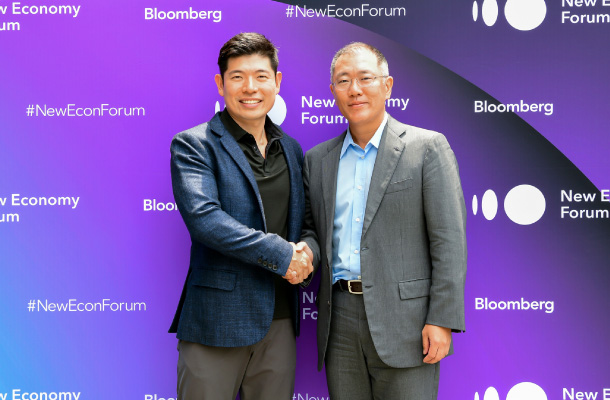
    Hyundai Motor and Kia Motors will jointly invest $250 million into the world’s third-largest ride-hailing operator Grab, eyeing shared mobility services as a way to overcome faltering car sales, the companies said Wednesday.  Hyundai has already injected $25 million into Grab in January, so total investment on the Singapore-based company adds up to $275 million. This is the largest investment made in a single company by the two sister automakers under Hyundai Motor Group, the group said.

    Grab, which has operations in 235 cities in eight countries in Southeast Asia, is the largest ride-hailing service provider in the region, though it is smaller than China’s Didi Chuxing and U.S. company Uber, which have larger operations elsewhere.

    The big bet in Grab comes as the largest auto group in Korea seeks fresh business models for growth. The group said it will make the two carmakers core players in an era where shared mobility is becoming ever more important.

    The three companies will start their collaboration by deploying Hyundai and Kia-made electric cars in Grab’s Singapore business. Hyundai will first supply 200 electric vehicles to the ride-hailing company by early next year. Kia is mulling whether to follow suit soon after.

    The vehicles will be rented out to Grab drivers. This way, Hyundai can introduce its electric cars to Singapore and other Southeast Asian markets once the pilot test in Singapore proves successful.

    “Targeting emerging markets based on strong partnerships with local companies like Grab could be a sustainable way of making profits,” Hyundai said in statement.

    If more people use ride-sharing services and other apps rather than driving their own cars, these large mobility service companies could become the major customers for carmakers in the future, and automakers are already aware of this.

    The three companies will also work on developing car maintenance and repair services as well as car financing services specialized for Grab drivers using the electric cars.

    Going further, they plan to launch electric car models customized for ride-hailing services.

    “Grab is the best partner there is to expand [our] electric car supplies in the Southeast Asian market,” said Chi Young-cho, chief innovation officer at Hyundai Motor Group.

    The latest investment is in line with Hyundai’s aggressive preparation to enter the shared mobility business. It is a relatively late mover into the future mobility business compared to competitors like Germany’s Daimler, which launched its own car-sharing brand Car2Go in 2008.

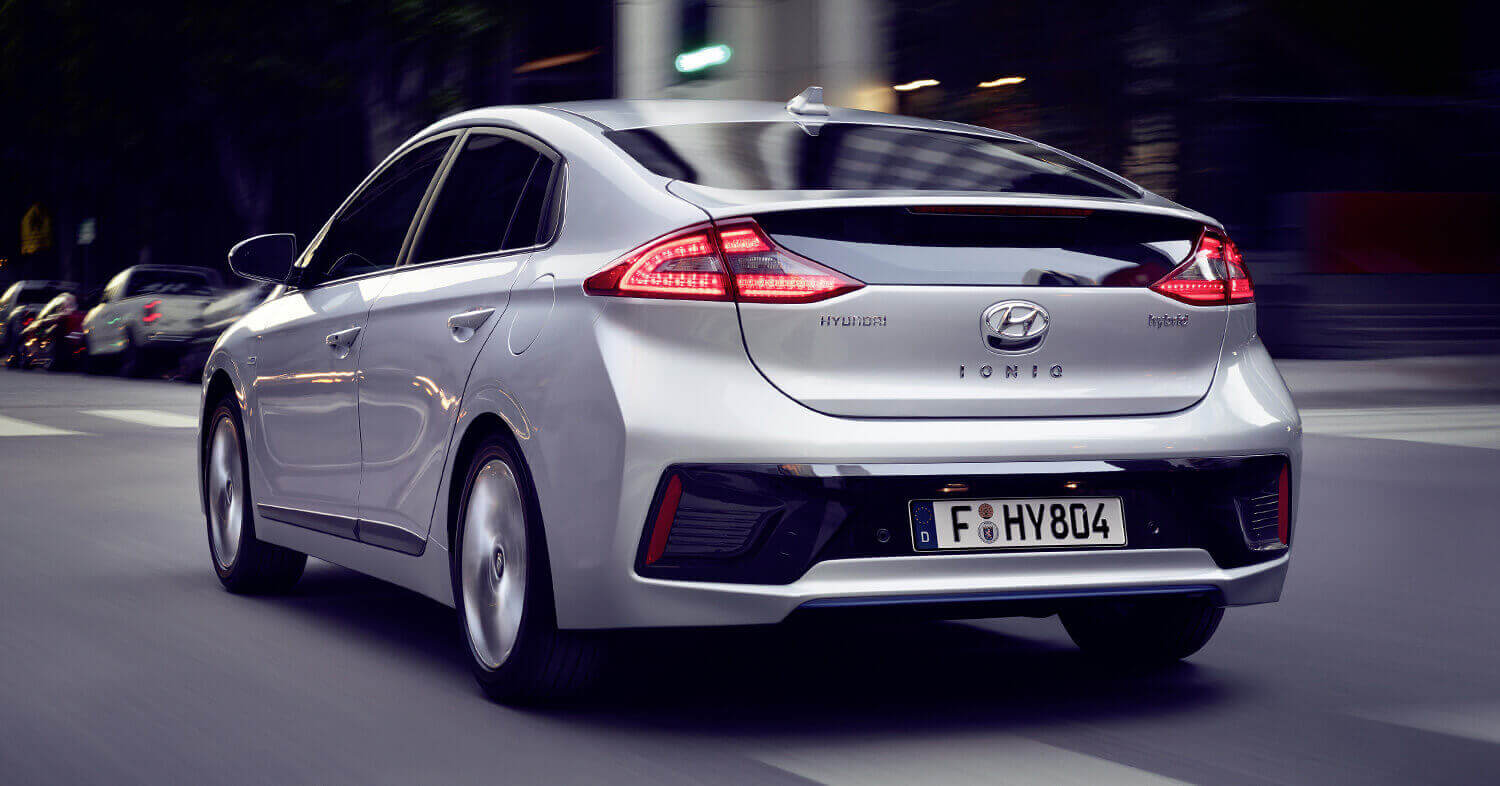
    The automaker landed a partnership with Sydney-based car sharing start-up Car Next Door with the aim of launching a new app-based mobility service in Australia by 2020. It also holds partnerships with India-based car-sharing company Revv, U.S. mobility service company Migo as well as local last-mile delivery service provider Mesh Korea. In Netherlands, it started its own car-sharing business with 100 Ioniq EVs last month.

  • All Kia motoring needs in one handy app

    All Kia motoring needs in one handy app

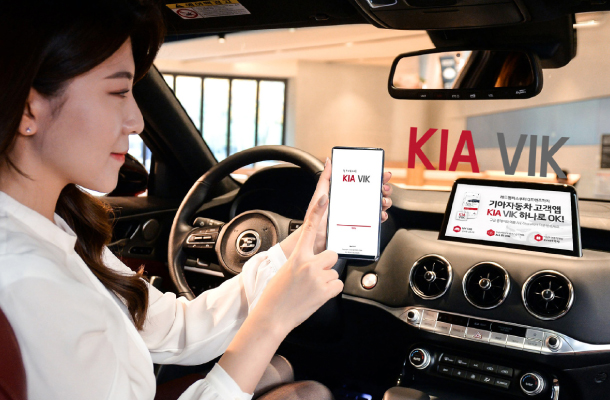
    Kia Motors on Monday launched an all-in-one mobile app that integrates all of its scattered online customer service channels. The new app, dubbed VIK, offers 60 different services including information on car purchases, maintenance and customer membership points and a basic guide to its driver assistive technologies.

    “It’s like having a virtual assistant specializing in car management,” a spokesperson from Kia said.

    The most notable service of the app is the augmented reality (AR) tutorials. If a user scans their steering wheel and dashboard with the in-app camera, the screen shows red dots marked with the specific features that the shown parts control.

    When users click each red dot on their screen, the phone plays a video tutorial of how that particular feature works.

    The AR-based service is made for Kia’s Stinger sedans now, but will be expanded to other models next year, the carmaker said. The app also understands voice commands.

    If a driver thinks something is wrong, they can ask the app where the closest maintenance center is without taking their hands off the steering wheel, Kia said.

    The carmaker said in-app mobile payments will be available soon so that people can pay for maintenance or car accessories without opening up another application. A service dubbed Kia Pay will be added by the end of this year.

    The carmaker is trying to promote the app by adding a social platform for Kia car drivers.

    It created a tab where users can post their trips and experiences with Kia cars. The company said it will award good stories to boost user interest in the newly launched app. To better market the app, Kia inked a partnership with Samsung Electronics on Monday to develop phones customized for Kia customers.

    The two are planning on launching Galaxy smartphones that come with Kia’s service apps, including VIK, preinstalled.

    Kwon Hyug-ho, executive vice president and head of domestic sales at Kia Motors, said the company will continue to expand its partnership with Samsung to make phones specialized for better car management in a press briefing held Monday in Seoul.

  • Kia swings to profit in third quarter after 2017 one-off

    Kia swings to profit in third quarter after 2017 one-off

    Kia Motors Friday reported a swing to profit in the third quarter from a loss a year earlier. For the three months ending Sept. 30, Kia posted a net profit of 297.74 billion won ($262 million) from a net loss of 291.77 billion won a year ago, the company said in a statement.

    “In the third quarter of 2017, a one-off cost of 864.1 billion won was reflected in the bottom line when a local court ordered the company to retroactively make an overdue payment to employees,” a company spokesman said.

    According to the court ruling issued in August last year, regular bonuses are to be included in the “ordinary wage” used as the basis for calculating overtime, severance and other payments.

    The won’s strength against the dollar and currencies in emerging markets also weighed on the quarterly net results, the company said.

    Kia reported an operating profit of 117.28 billion won in the third quarter from an operating loss of 427.02 billion won a year earlier. Sales fell 0.24 percent to 14.074 trillion won from 14.108 trillion won over the same period, it said.

  • Kia to hire 1,300 of its contractors’ workers

    Kia to hire 1,300 of its contractors’ workers

    Kia Motors will directly hire 1,300 employees at its contractors by next year in response to the Moon Jae-in administration’s goal of reducing the number of contract workers, the carmaker announced on Thursday.

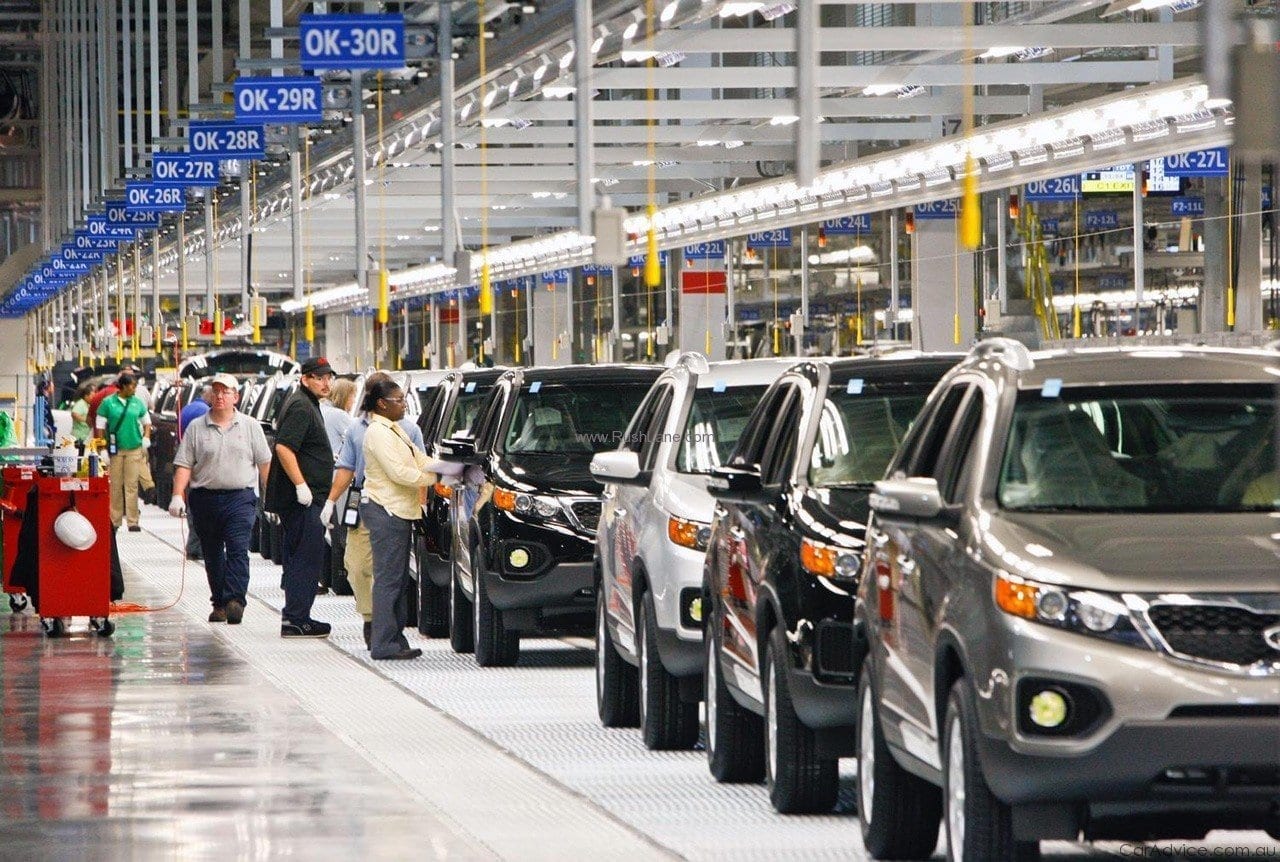
    If it completes the transition, Kia Motors will have directly hired all contracted workers at its factories. Since 2015, Korea’s No. 2 carmaker has already directly hired 1,087 employees of its contractors as of this June.

    “The latest agreement between management and the labor union lives up to the current administration’s initiative on [improving the work environment for] contract workers,” the company said in a written statement Thursday. “The management and the union preemptively approached the issue and came out with a solution.”

    The agreement, which was made at Kia Motors’ Sohari factory in Gwangmyeong, Gyeonggi, on Wednesday comes two weeks after the Ministry of Labor announced that it is considering mediating the employment issue between Kia Motors and its contracted workers. Until recently, Hyundai Motor Group avoided negotiating directly with contracted workers, as it already had its hands full dealing with its permanent employees.

    In July, however, a committee dedicated to reforming unfair administrative issues at Ministry of Labor advised the ministry to resolve an illegal dispatch of workers issue at Hyundai Motor Group. In response, the labor ministry recently told the carmaker to directly negotiate with the contracted workers at its company.

    Kia Motors’ bigger affiliate, Hyundai Motor, has already been working on the issue since 2017. In 2017, the carmaker directly hired some 6,000 employees from its subcontractors. From 2018 to 2021, the carmaker also promised to directly hire an additional 3,500 employees.

    “The latest agreement will put an end once and for all to the issue of contractors’ employees at Kia Motors,” said an official from the carmaker.

    In 2015, Kia Motors’ contract workers’ unit of the Korean Metal Workers’ Union sued Hyundai Motor Group Chairman Chung Mong-koo and Kia Motors CEO Park Han-woo for violating regulations on dispatched workers, but the case has not been decided yet.

  • Kia Motors unveils KX1 entry-level SUV in China

    Kia Motors unveils KX1 entry-level SUV in China

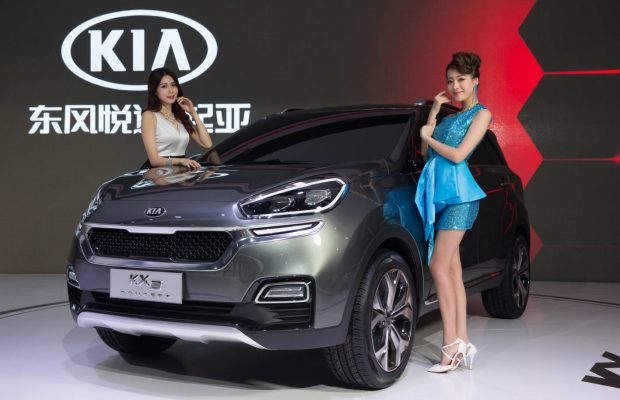
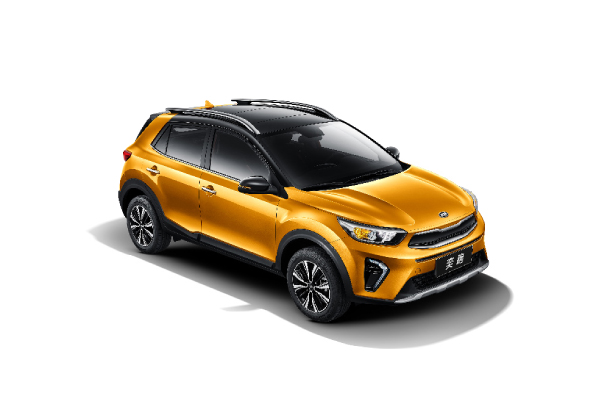
    Kia Motors, Korea’s second-largest automaker, said Thursday that it has unveiled its KX1 entry-level SUV in China in its latest move to meet the demands of young customers.

    The KX1 SUV comes with a 1.4-liter MPI gasoline engine mated to a five-speed manual gearbox or a six-speed automatic transmission, the carmaker said.

    Chen Bingzhen, a senior executive at Dongfeng Yueda Kia, said the KX1 is a trendy SUV that has been tailored specifically to young people.

    Dongfeng Yueda Kia is a joint venture between Kia Motors and China’s Dongfeng Motor.

    Kia has three plants in China, which have a combined capacity of 890,000 units.

    The carmaker sold 191,328 cars in China in the January-July period, up 27.8 percent from the same period a year earlier.

  • Kia Motors says strong won hit its bottom line in Q2

    Kia Motors says strong won hit its bottom line in Q2

    Kia Motors said Friday that its second-quarter net profit fell 15 percent from a year earlier on a strong won and increased incentives to cut inventories.

    Net profit for the three months that ended on June 30 fell to 331.8 billion won from 389.6 billion won a year earlier, the company said in a statement.

    “The won rose sharply against the dollar. And the company spent more incentives in the U.S. market to reduce local inventories [of sedans],” the statement said.

    The dollar fell to an average of 1,078.57 won in the second quarter from 1,129.43 won a year earlier, according to the Bank of Korea.

    Operating profit declined 13 percent to 352.6 billion won in the June quarter from 404 billion won a year ago. Sales rose 3.5 percent to 14.06 trillion won from 13.58 trillion won during the same period.

  • Hyundai, Kia hope to hit targets with SUVs

    Hyundai, Kia hope to hit targets with SUVs

    Hyundai Motor and affiliate Kia Motors said on Friday that they would achieve their sales target for the year by launching new sport utility vehicles in two major auto markets, the United States and Europe, in the second half.

    In separate biannual meetings with overseas sales executives, Hyundai and Kia discussed measures to achieve their sales target of a combined 7.55 million vehicles, up 4.1 percent from the 7.25 million they sold last year, Hyundai Motor Group said in a statement.

    In terms of major challenges in the second half, the company named interest rate increases in the United States, rising oil prices and an unfriendly business environment due to U.S. tariffs on imported vehicles.

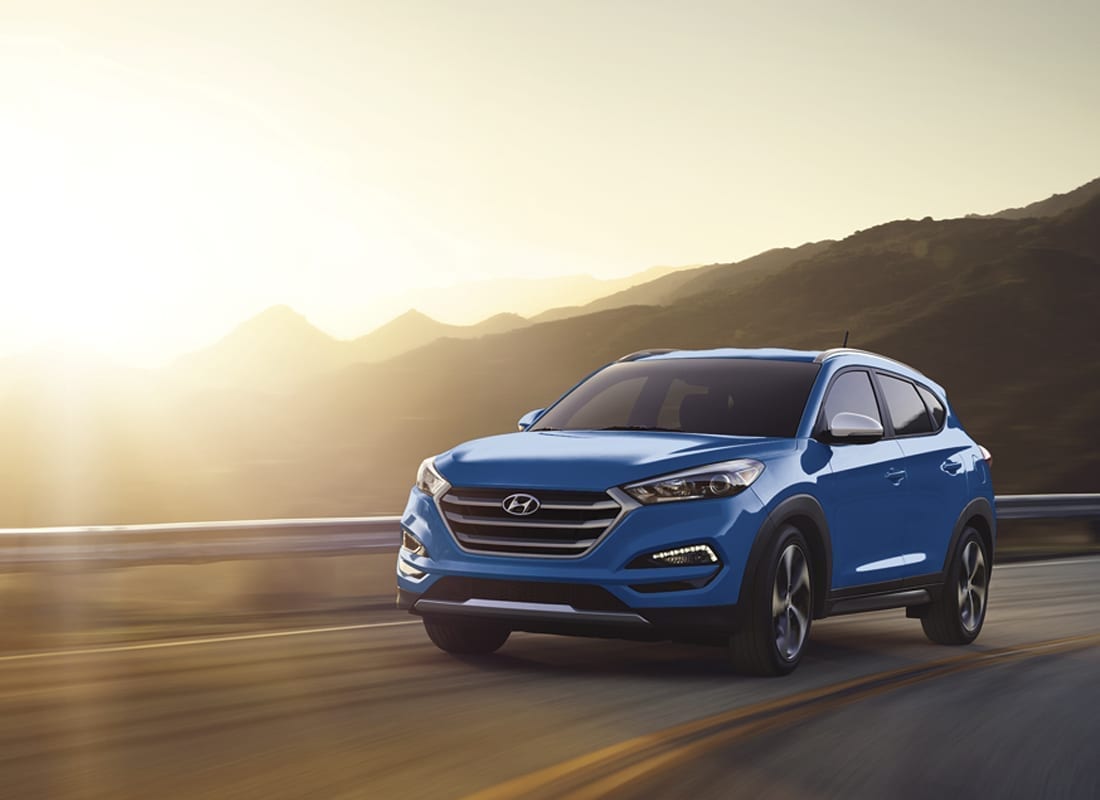
    To boost sales in the second half, Hyundai plans to launch a new Santa Fe and upgraded Tucson in the U.S. market in July and November. Kia will launch a Sorento facelift in June.

    The new Santa Fe is the most essential model in determining Hyundai’s annual earnings results this year. If it is well accepted in the United States, Hyundai will come up with strong financial figures at the end of the year, the company said.

    In Europe, Hyundai will gradually the Santa Fe, Tucson and Kona, and Kia will roll out the Sportage SUV. The company has recently set up a task force to attract female customers in Saudi Arabia after the country permitted women to drive cars.

  • Hyundai, Kia jump ahead in the U.S. hybrid market

    Hyundai, Kia jump ahead in the U.S. hybrid market

    Sales of hybrid vehicles made by Hyundai Motor and its affiliate Kia Motors in the United States rose 7 percent in the first four months of this year from a year earlier, industry data showed Sunday.

    The two Korean carmakers sold a combined 15,930 hybrid models in the January-April period, including 7,927 units of Kia’s Niro crossover and 4,836 units of Hyundai’s Ioniq, according to numbers released by hybridcars.com, a U.S. website.

    The robust sales of Hyundai Motor and Kia Motors came as total sales of hybrid vehicles in the U.S. fell 11.6 percent on-year to 100,456 units.

    Hyundai and Kia trailed Japanese auto giant Toyota and Ford in hybrid sales, which took the first and second places in terms of sales with 56,791 units and 19,583 units, respectively.

    The brisk sales of Hyundai Motor and Kia Motors boosted their combined market share in hybrid vehicles to 15.9 percent in the January-April period, compared with 7.5 percent for the whole of 2011.

  • Hyundai Motor, Kia Motors flag slow sales growth in 2018

    Hyundai Motor, Kia Motors flag slow sales growth in 2018

    South Korea’s Hyundai Motor and Kia Motors on Tuesday flagged only modest sales growth in 2018, suggesting a slow recovery from a slump linked to their lack of SUVs in the United States and diplomatic tensions with China.

    Hyundai and smaller affiliate Kia, which together make the world’s fifth-largest automaker, said demand was expected to soften in the U.S. and Chinese markets as they unveiled a combined sales target of 7.55 million vehicles this year.

    Analysts said that would be a slight increase on 2017, when the automakers are estimated to have sold about 7.3 million vehicles, their lowest in five years.

    “The target for Hyundai and Kia is lower than expected. It seems to be a conservative target, reflecting a slow recovery in China and ongoing U.S difficulties,” Kim Jin-woo, an analyst at Korea Investment & Securities said.

    The 2017 sales figures are due out later on Tuesday but analysts expect the South Korean duo to fall well short of their target of 8.25 million vehicles, marking their third consecutive annual miss.

    Hyundai Motor shares declined 2.2 percent after falling as much as 4.5 percent on Tuesday morning, and Kia Motors stocks were down more than 1.6 percent. The broader market rose 0.2 percent.

    The firms’ sales tumbled last year in China, the world’s largest auto market, amid a chill between Beijing and Seoul over South Korea’s deployment of a U.S. anti-missile system.

    Sales in China and the United States were also hurt by a failure to capitalize on surging demand for sports utility vehicles (SUVs).

    While Hyundai Motor has plans to offer more SUVs in the United States and China, analysts said new models such as the redesigned Santa Fe SUV may come too late in the year to significantly impact sales.

    The expiration of a tax cut on small-engine cars in China also would be a negative for Hyundai’s sedan-heavy line-up, they said.

    Hyundai Motor Group Chairman Chung Mon-koo said in a statement the South Korean automakers would launch 12 new or refreshed models this year.

    They would “actively venture into” new markets like Southeast Asia, as protectionism was expected to grow elsewhere, he added.

    South Korea and the United States will hold talks on a trade deal on Jan. 5 although U.S. President Donald Trump has threatened to withdraw from the pact.

    Chung, 79, skipped his annual New Year speech to employees for a second year in a row. He has not made any public appearances since December, 2016.

  • South Korea’s Kia invests in Indian factory after China troubles hit profit

    South Korea’s Kia invests in Indian factory after China troubles hit profit

    South Korean carmaker Kia Motors Corp signed a deal on Thursday to invest about $1.1 billion to build its first factory in India, aiming to tap a fast growing market at a time when its China sales are sagging.

    The Hyundai Motor Co affiliate posted a 19 percent slump in first-quarter net profit as anti-Korean sentiment and a conflict with dealers hit its China sales, sending its shares down 2.2 percent in a flat market.

    Production at the factory in Anantapur district, Andhra Pradesh state, would begin in the second half of 2019, the company said.

    Kia is expected to leverage Hyundai’s supply chain network built around its factories in the neighboring state of Tamil Nadu to gain a foothold in the Indian market, tipped to become the world’s third-largest by 2020. Hyundai is India’s No.2 automaker by sales.

    The plant, which will have production capacity of 300,000 vehicles a year, will produce a compact sedan and a sport utility vehicle tailored for the Indian market, Kia said in a statement.

    It will break ground in the fourth quarter of this year.

    “Our new India plant will enable us to sell cars in the world’s fifth-largest market, while providing greater flexibility for our global business,” Kia Motors President Park Han-woo said in a statement.

    Reuters reported in February that Kia was close to finalizing Andhra Pradesh as the site for its first Indian factory..

    The announcement came after Kia and Hyundai Motor suffered a March sales slump in China, their biggest market, and sharply cut production in the wake of Seoul’s decision to deploy a U.S. anti-missile system, which angered China.

    “The fall in consumer sentiment in China is stemming from a political issue, a situation which is beyond the control of an individual firm and is difficult to be resolved within the short term,” Han Chun-soo, Kia’s chief financial officer, said during an earnings conference call.

    Kia would adjust its China production to reduce inventories, cut costs and launch new models including a small crossover to minimize the impact of the political row, he said.

    Kia also said its first-quarter profit was hurt by a cost of 160 billion won ($141.53 million) to recall vehicles over an engine issue in North America and South Korea.

  • Hyundai, Kia plan major car recall in South Korea over engine issue

    Hyundai, Kia plan major car recall in South Korea over engine issue

    Hyundai Motor and Kia Motors are expected to recall more than a million vehicles in South Korea and the United States due to engine issues, the latest blow for two firms already struggling in key markets.

    The recall, which could cost the two firms hundreds of millions of dollar each, comes as Hyundai and Kia face a sharp drop in China sales and sluggish demand in the United States and South Korea.

    The two car companies said on Friday they will recall 171,348 vehicles in South Korea because of a manufacturing problem, which leads to possible engine stalling.

    The South Korean automakers have also submitted plans to U.S. authorities to recall an unidentified number of vehicles in the United States over a “similar” engine issue, a spokesperson at the South Korean duo said.

    Yonhap News Agency, citing Hyundai, said the U.S. recall would reach some 1.3 million vehicles, an amount close to the duo’s annual U.S. sales.

    The U.S. recall alone could cost the companies as much as 250 billion won ($220.19 million) each, hitting earnings, said Koh Tae-bong, an analyst at Hi Investment & Securities.

    A Hyundai official declined to confirm to Reuters the expected cost of the U.S. recall, nor the number of vehicles involved.

    The recall helped push Hyundai Motor shares lower by as much as 2.7 percent, compared to a 0.4 percent decline in the broader market .KS11. Kia Motors were down 1.1 percent.

    POSSIBLE ENGINE STALLING

    The recall in South Korea covers Hyundai’s Sonata, Grandeur sedans and Kia’s K5, K7 and Sportage models equipped with a 2-liter or 2.4-liter Theta 2 gasoline engine produced before August 2013, the South Korean transport ministry said.

    The ministry said metal debris in crankshafts could cause engine damage, leading to possible engine stalling.

    “The recall is related to a manufacturing process problem, not the structural problem of Theta 2GDi engines and we have completed improvements through appropriate measures,” the companies said in a statement.

    Hyundai will replace a defective engine with a new one after inspection. The recall will start on May 22.

    In 2015, Hyundai Motor said it would recall 470,000 Sonata sedans in the United States to replace faulty engine parts, sparking questions of safety back home.

    But Hyundai and Kia has said that engines produced at domestic factories were not defective. They instead extended the warranty period for five Theta 2-equipped models in South Korea.

    The Hyundai spokesperson said the latest recall involves a new problem.

  • Hyundai, Kia China sales down 52 pct in March

    Hyundai, Kia China sales down 52 pct in March

    Hyundai Motor, Kia Motors sold 72,032 vehicles in China in March, down 52.2 pct from year earlier. Hyundai Motor China sales 56,026 vehicles in March, down 44.3 percent from year earlier.

    Kia Motors China sales 16,006 vehicles in March, down 68 percent from year earlier.

  • Kia Soul Receives 2017 Consumer Guide Automotive Best Buy Award

    Kia Soul Receives 2017 Consumer Guide Automotive Best Buy Award

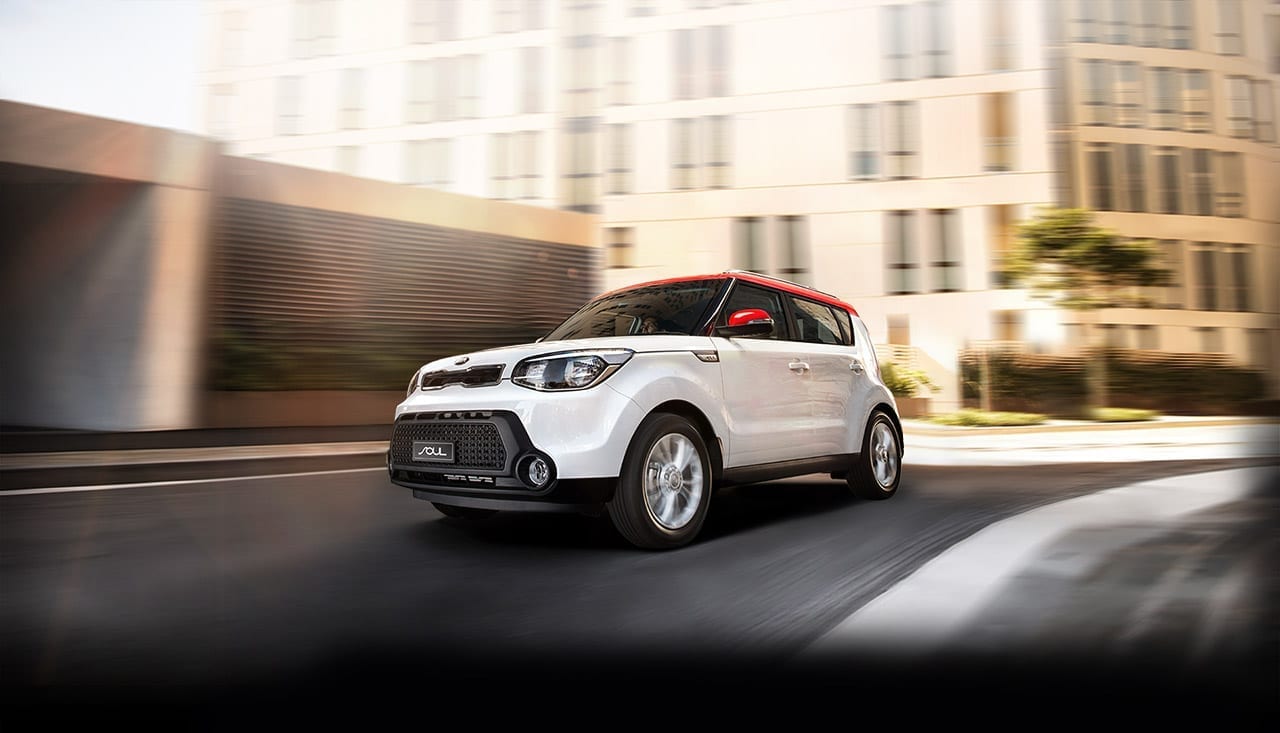
    Consumer Guide Automotive has awarded the Kia Soul one of its coveted Best Buy Awards for 2017 in the Subcompact Car segment, marking the third year in a row the fun-loving box car has received the award. Once again, the Soul’s funky personality resonated with the editors, along with its roomy interior, premium-looking cabin and long list of desirable features.

    “People gravitate toward the Soul because of its head-turning style, extensive feature content, and excellent value. Its practicality makes it a perfect fit for just about every type of lifestyle,” said Orth Hedrick, vice president product planning Kia Motors America. “Being recognized by Consumer Guide Automotive for a third consecutive year proves the Soul continues to be a crowd favorite, and with the new turbocharged version offered for 2017, we anticipate its popularity will surge to new heights.”

    For 2017, the Soul gains a 201-hp 1.6-liter turbocharged engine for more fun than ever. Though the 1.6-liter turbo engine adds 40 horsepower, fuel economy is 28 miles-per-gallon, city and highway combined1 —slightly better than the combined mileage of the 2.0-liter normally-aspirated 161-hp engine in the Soul Plus and in the Soul Base 1.6-liter, which produces 130 horsepower. Performance in the turbocharged Exclaim is further enhanced by the addition of a new 7-speed Dual Clutch Transmission (DCT), which contributes to a more engaging driving experience. Other new options for the 2017 model year are convenience systems such as Rear Cross Traffic Alert and Blind Spot Detection. The 2017 Exclaim also gets standard UVO32 with e-Services with integrated Android Auto and Apple CarPlay.

    Each year Consumer Guide Automotive editors select the best vehicles from 20 segments to receive Best Buy Awards, with vehicle price and value being major factors in their selection process. By prioritizing these key consideration points in the car-buying process, the Consumer Guide Automotive Best Buy Awards serve a practical purpose to everyday car shoppers. Celebrating its 50th Anniversary in 2017, Consumer Guide Automotive is one of the most trusted names in the automobile industry.