Retail News CRM

Tag: Lawson

  • Lawson Japan Joins Forces to Support Free School Lunch Initiative in the Philippines

    Lawson Japan Joins Forces to Support Free School Lunch Initiative in the Philippines

    In an innovative move to deepen its engagement with local communities, Japanese convenience store chain Lawson has formed a partnership with a free school lunch program in the Philippines. This initiative not only aims to boost brand visibility but also underscores Lawson’s commitment to supporting local causes.

    As part of this collaboration, Lawson plans to integrate its offerings with the school lunch program, allowing students access to nutritious meals while enhancing the brand’s footprint in the region. The initiative reflects a growing trend among retailers in Asia to align their brands with initiatives that resonate with community values.

    Comedian Ryota Yamasato made a memorable appearance at the ribbon-cutting ceremony for Akamegane Kitchen on August 29, shining a spotlight on the program and drawing attention to Lawson’s broader objectives. If food is the language of love, this partnership speaks volumes about Lawson’s efforts in nurturing relationships and brand loyalty in the Philippines.

    Lawson’s strategy highlights how retail businesses can leverage social initiatives to foster brand awareness and trust. By stepping into the realm of community health and well-being, they not only benefit from customer good will but contribute positively to society at large.

    This collaboration serves as a telling example of how retail chains can creatively navigate the complexities of brand building in a competitive landscape, making memorable impacts that go beyond profit margins.

    Questions & Answers

    What is Lawson’s latest partnership in the Philippines about?
    Lawson has teamed up with a free school lunch program in the Philippines, aiming to raise brand awareness by supporting local initiatives and providing access to nutritious meals for students.

    How does this partnership align with trends in the retail industry?
    This initiative illustrates the growing trend among retailers in Asia to forge collaborations with community-focused projects, enhancing brand visibility while fostering goodwill and trust within local populations.

    What role did Ryota Yamasato play in the launch of the program?
    Comedian Ryota Yamasato participated in the ribbon-cutting ceremony for Akamegane Kitchen, which is part of the school lunch initiative, helping to elevate the program’s profile and Lawson’s community engagement efforts.
  • Lawson Launches Exciting Car Camping Initiative in Store Parking Lots Across Japan

    Lawson Launches Exciting Car Camping Initiative in Store Parking Lots Across Japan

    In a bold move to enhance its service offerings, Lawson, a leading player in Japan’s convenience store sector, is set to launch a car camping business that will leverage its extensive network of parking lots across the nation. This innovative venture, aims to cater to guests attending events in rural and suburban locales, particularly as skyrocketing accommodation prices pose challenges for tourists flocking to Japan.

    The initiative is not only a nod to the growing popularity of outdoor activities but also a keen response to Japan’s booming tourism market, where more travelers are seeking economical yet unique lodging options. With this move, Lawson is positioning itself as more than just a convenience store; it’s becoming a gateway to adventure for those eager to explore Japan’s picturesque countryside.

    Imagine parking your car at a Lawson lot, popping open a tent just steps away from the latest limited-edition sushi rolls and a piping hot coffee. Who knew camping could come with convenience store snacks? It’s a refreshing take on what traditional camping entails, blending the allure of the great outdoors with the comforts of modern retail.

    As the details of the rollout are finalized, the car camping service is sure to attract various demographics, from families looking for affordable getaways to outdoor enthusiasts eager to mix convenience with nature. Lawson’s ability to tap into this burgeoning trend not only reflects its adaptability but also emphasizes the pivotal role of retail in shaping leisure activities in an increasingly experience-driven society.

    Questions & Answers

    What is Lawson’s new business venture?
    Lawson is launching a car camping business that utilizes its nationwide network of parking lots, aimed at providing accommodation options for guests attending events in rural and suburban areas.

    What challenges does this service address for tourists in Japan?
    The service addresses the high accommodation fees in rural areas as more tourists visit Japan, offering an economical and unique lodging option that blends outdoor adventure with retail convenience.

    How does this initiative reflect Lawson’s approach to retail?
    This initiative showcases Lawson’s adaptability to market trends, demonstrating its role as not just a convenience store but also a facilitator of new experiences for customers seeking leisure and exploration.

  • Lawson Sets Ambitious Growth Plans for China and Southeast Asia Expansion

    Lawson Sets Ambitious Growth Plans for China and Southeast Asia Expansion

    Lawson, the prominent Japanese convenience store chain, is gearing up for an ambitious expansion, unveiling plans to launch over 5,000 new stores across China in the next six years. This initiative marks an impressive 80% growth as Lawson intensifies its efforts to extend its footprint beyond Japan and into the broader Asian market.

    As Lawson celebrates its 50th anniversary this Saturday, it has set an ambitious goal of increasing its Chinese store count to 12,000 by the fiscal year ending February 2031. This expansion is critical for achieving its previously reported target of doubling its total overseas store count to around 14,000 shops over the next six years—an endeavor that aims to bring its international presence nearly in line with that of its home market.

    With each new store opening, Lawson isn’t just selling snacks and drinks; it’s crafting a shared experience, one that aims to blend convenience with community.

    Questions & Answers

    What does Lawson’s expansion plan entail?
    Lawson plans to open over 5,000 new outlets in China over the next six years, aiming for a total of 12,000 stores.

    Why is this expansion significant for Lawson?
    This growth will help Lawson double its overseas store count to approximately 14,000, aligning its international presence with its home market in Japan.

    What milestone is Lawson celebrating this week?
    Lawson is marking its 50th anniversary this Saturday, coinciding with its ambitious growth strategy.

  • Lawson reveals ambitious Southeast Asian expansion plan

    Lawson reveals ambitious Southeast Asian expansion plan

    Japanese convenience store chain Lawson plans to raise its store count in overseas markets and accelerate growth in Southeast Asia over the coming years.

    The chain is targeting 14,000 overseas stores over the next six years. Its international network currently includes 7400 locations in China, Thailand, the Philippines, Indonesia and the US state of Hawaii.

    The retailer also plans to boost growth in Southeast Asia by entering franchise agreements with local retail partners and opening directly managed stores. However, it did not reveal the new markets under evaluation.

    In addition, the company will look into the possibility of expanding to additional countries.

    Founded in 1975, Lawson has about 14,600 domestic stores. As of the end of last year, Japan had approximately 55,736 convenience stores, according to local statistics.

    While the top three convenience chains – Lawson, 7-Eleven and FamilyMart – are projected to achieve a net increase of up to about 400 stores this fiscal year, the industry faces fierce competition from drugstores and online retailers.

    Last August, Lawson shifted to a joint management system involving trading house Mitsubishi Corp and telecommunications operator KDDI to develop products that fit customer tastes and introduce tech-driven services.

  • Lawson to sell Muji grocery products in 14,000 stores

    Lawson to sell Muji grocery products in 14,000 stores

    Lawson will begin offering Muji brand products at its 14,000 stores across Japan, as the Japanese convenience store chain aims to boost customer traffic with the popular ‘no-brand brand’ lifestyle goods.

    Lawson plans to replace 3,500 items with those of Muji, or about 5% of the merchandise on offer at the convenience store chain.

    The move comes as Lawson finds its customers becoming more budget-conscious as inflation heats up around the world. The company believes stocking its shelves with Muji brand can encourage shoppers to spend more.

    The Muji brand is run by Japanese retailer Ryohin Keikaku. The two companies have been working together since June 2020, with Muji items available at 110 Lawson stores in the Tokyo area.

    Starting in May, Lawson will roll out Muji goods across eastern Japan, aiming to cover its 5,000 stores there in about six months.

    Muji items will be in all its stores in Japan by the end of 2023 and will include 170 daily items, such as stationery, cosmetics and socks. In addition, about 30 Muji food products will be sold, including instant curry sauce and sweets.

    Lawson is considering offering even more Muji products and looking at joint development of private label items.

    Muji items are known for their simple design and high quality. The brand’s instant curry sauce has become a hit across all age groups. During a trial run, Lawson found that sales of particular products jumped by around 20% after they were replaced with similar Muji products. Overall store sales also rose by 2% to 5%, according to Lawson.

  • Lawson unveils portable convenience stores in China

    Lawson unveils portable convenience stores in China

    Japanese convenience-store chain Lawson is launching a series of prefabricated stores in China.

    The brand will launch the service from this week, with the first outlet opening in Nanjing. Using the prefab structures will reduce construction costs by 40 percent and allow for flexible growth, the company says. Around 10 stores are expected to be operational by the end of the year.

    There are two varieties of Lawson’s prefab buildings, which were created in partnership with Panasonic. The stores have heat insulation to cut power costs and can be relocated to other areas if a location closes. The larger store layout is a little smaller than a regular 80sqm minimart, while the smaller is a kiosk suitable for transit stations.

    The stores may prove a viable counter to the rise of online shopping during the coronavirus era, owing to their ability to open in small areas that enjoy considerable foot traffic.

    Lawson, which operates 2700 outlets in China, has indicated plans to roll out prefab stores in Japan in the future as well.

  • Lawson Japan to stock Muji products

    Lawson Japan to stock Muji products

    Japanese convenience-store business Lawson will cooperate with local home-goods network Muji in a sales and brand development partnership, according to a Nikkei Asia report.

    The deal will see Muji products stocked in Lawson Japan outlets as well as the development of further daily-use products under a new private brand, which may lead to a fresh store concept. It replaces Muji’s previous supply contract with rival chain FamilyMart.

    The move will take advantage of shifting consumer behaviors as more Japanese shoppers purchase daily items from convenience store chains in the wake of the coronavirus outbreak.

    Around 20 percent of items currently stocked at Lawson are likely to be replaced with Muji-branded products, most probably goods such as eco-friendly detergents and nutritional pre-packaged foods, in high demand since the advent of Covid-19.

    Early customer response to the change in a small number of outlets will determine how broadly the initiative is applied across Lawson’s 15,000-store network.

    The agreement also addresses shrinking opportunities to expand given the gradual decline in Japan’s population, providing a broader product range in existing stores.

    Muji currently operates more than 400 locations in Japan.

  • Lawson plans massive store rollout in Philippines

    Lawson plans massive store rollout in Philippines

    Lawson Philippines plans to grow its network from just 50 stores to about 500 within five years.

    The planned expansion leans on a new agreement between the firm and local partner Ayala Corp.

    Lawson had previously partnered with another local firm, Puregold Price Club, with an earlier rollout schedule. Plans were stymied when Puregold pulled out of the deal last year.

    Lawson may also collaborate with its new partner’s e-commerce business, including making its store network available as shop-and-drop outlets.

    According to reporting in Nikkei, Lawson oversees 2547 offshore locations as of August, up 30 percent from last year, with the majority being in China.

  • Lawson Thailand plans Further Network expansion

    Lawson Thailand plans Further Network expansion

    Saha Group is opening a new wave of Lawson Thailand convenience stores in subway stations and airports.

    The firm is establishing a joint venture with its partner Japanese chain in collaboration with Thai advertising business VGI Global Media, which specialises in public transport facilities. The cooperative will launch this Friday with registered capital of THB20 million (US$645,000). Partnership Saha Lawson will hold 60 per cent of the venture, with VGI taking 30 per cent and Saha Group the remaining 10 per cent.

    Saha expects the brand’s focus on public transit customers will give the initiative an edge over leading competitor Charoen Pokphand’s 7-Eleven, which operates around 11,000 outlets. It plans to open 30 Lawson Thailand stores in transport facilities, joining its existing store network in Bangkok’s elevated mass-transit system BTS, by late February 2021.

  • Japanese convenience store ready to fight new challenge

    Japanese convenience store ready to fight new challenge

    Healthcare is becoming a staple category for Japanese convenience store chains as they seek to counter the encroachment of pharmacies on their traditional product ranges.

    According reports, while Japanese drugstores are increasingly offering snacks and quick meals, convenience stores are now selling medicines and even setting up health consultation stations in stores.

    Lawson-branded stores have launched 17 in-store consultation corners and plans to expand this number to 100 locations.

    Lawson president Sadanobu Takemasu said the company wants to resolve the community issues that arise “in an age where many people live to be 100”. The service is intended to attract more families and elderly people.

    FamilyMart and Seven-Eleven convenience chains in Japan have also been found to be selling medicines, with some also offering pharmacy-style advice.

    Japanese drugstores have been increasingly expanding beyond medical products in recent years, which has paid off. The value of pharmacy industry sales has gone up five per cent in the past two years, as opposed to two per cent on convenience store sales over the same period.

    The number of pharmaceutical outlets increased 11 per cent since 2015, during which time convenience store expansion was limited to just three per cent.

  • FamilyMart Philippines chain up for auction

    FamilyMart Philippines chain up for auction

    FamilyMart Philippines convenience-store chain, partly owned by the Ayala and Tantoco groups, is up for auction.

    With about 70 stores, the Japanese chain has been offered to prospective investors in the past few months.

    Ayala Land and the Rustan’s group, via their equally owned JV firm Sial CVS Retailers, in 2012 signed a deal with FamilyMart and Itochu Corporation to develop and run FamilyMart convenience stores in the Philippines.
    FamilyMart has been closing unprofitable stores over the past 12 months.

    In the convenience store market in past six years, new brands have been challenging 7-Eleven and MiniStop, respectively run by Philippine Seven Corporation (PSC) and Robinsons Retail Holdings.

    Aside from FamilyMart, the Puregold group also brought Japan’s Lawson into the market while the SM group introduced Indonesian brand Alfamart. Meanwhile, real-estate magnate Manuel Villar has also built his own convenience-store network, All Day.

    To date, the two original brands still lead the market, with 7-Eleven surpassing 2000 outlets while Mini-Stop has at least 500 stores.

  • Lawson Japan expecting profit turnaround

    Lawson Japan expecting profit turnaround

    Japanese convenience store chain Lawson is expecting a 4 per cent growth in net profit for its half-year to August, defying a projected 7 per cent decline.

    Lawson Japan attributes the swing to strong sales of salads and other private-label items. Lower costs for store closings also appear to have helped.

    The Tokyo-based retailer says it expects to report a group net profit of around ¥23.5 billion (US$208 million) instead of the ¥21 billion it forecast in July.

    Gross operating revenue is likely to rise 7 per cent to nearly ¥330 billion. The operating profit is predicted to ease 3 per cent at nearly ¥39 billion. Lawson had projected a 6 per cent drop.

    In-house products, which have higher profit margins, have helped boost revenue. Lawson sold out all 2.5 million servings of a cream roll cake in just two weeks, part of a new line of sweets introduced in June.

    The chain also found success with its salad offerings, which it increased from 16 to 26 in response to consumer health consciousness.

    Same-store sales rose 1 per cent on the year during the half. Meanwhile, the chain closed about 150 locations, a third fewer than in the year-earlier period.

  • Thailand’s Susco awarded franchise for Saha Lawson outlets

    Thailand’s Susco awarded franchise for Saha Lawson outlets

    Saha Lawson, which runs Lawson 108 convenience stores in Thailand, has awarded franchise rights to oil group Susco to open outlets at its new petrol stations.

    Under the agreement, part of Japanese company’s bid to grow Lawson 108 outlets to 500 units by 2020, Susco will initially open two stores at new petrol stations in Bangkok and Rayong this year.

    Saha Lawson senior GM Hideki Takechi says the number of Lawson stores at Susco outlets is targeted to reach 20 branches next year.

    Lawson had 84 stores nationwide last year, about 80 per cent of them in Bangkok and the balance in other provinces including Ayutthaya, Chon Buri, Nakhon Ratchasima, Prachin Buri and Rayong. The company plans to increase its outlets to 100 by year-end and open at least 400 branches in the following three years.

    Of these, the company will open half of them with the rest going to franchisees.

    Takechi says Susco is among 20 companies and individual investors that have shown interest in obtaining a licence from Lawson.

    “We are ready to start our franchise with Susco as a pilot project, and we expect that will help springboard the expansion of Lawson convenience stores upcountry.”

    He says that Japan, with an estimated population of 127 million, has 55,000 convenience stores while Thailand, with nearly 69 million people, has 15,000, “leaving ample room for growth”.

    Sales of some Japanese items at Lawson, including Odeng processed seafood-meatballs, have increased 10-fold in Saha Lawson Thailand’s first year, and Takechi says Lawson will be promoting exclusive food items to differentiate its stores. It aims to boost Japanese food items to 30 per cent of its sales mix, up from 20 per cent last year.

    Lawson expanded its convenience-store business to Thailand in August 2013 by setting up Saha Lawson as a JV with Thai consumer products conglomerate Saha Group.

    Lawson also has stores in China, Indonesia, the Philippines and the US.

  • Ginza Six mall on track for April launch

    Ginza Six mall on track for April launch

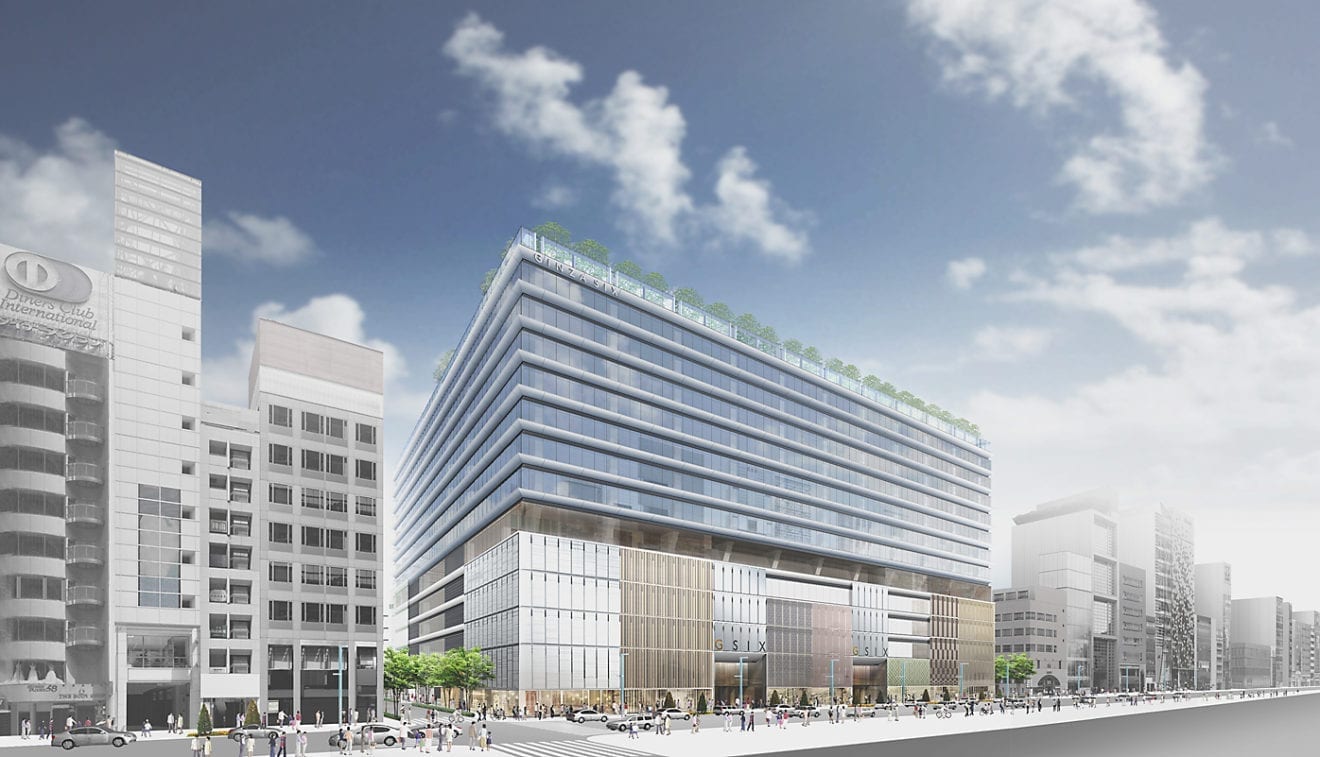
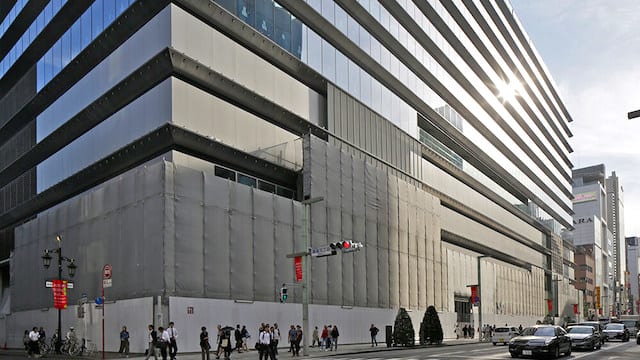
    Tokyo’s Ginza district is gearing up for the opening of its biggest shopping centre, Ginza Six mall.

    It occupies the site of the former Matsuzakaya Ginza department store, which closed in June 2013.

    Ginza Six mall has a total floor area of about 150,000 sqm over 19 floors. Its commercial offering takes up the second of six basement levels through to the sixth level above ground, as well as part of the 13th floor.

    Six high-end fashion brands, including Christian Dior, will fill units facing the main road, while the sixth floor will house Tsutaya Books and a food court.

    Aiming to attract the growing number of tourists visiting Japan, the mall plans to offer a tourist information centre on the ground floor containing an outlet of convenience store Lawson, which will sell souvenirs. There will also be a tourist bus terminal outside.

    From the seventh floor upward will be office space, with about 6000 sqm on each level, the largest floor area of its kind in Tokyo. Already 60 per cent of the office spaces are reserved, and up to 3000 people are expected to work in the offices.

    Ginza Six’s exterior design is inspired by “hisashi” canopies and “noren” store curtains, and the complex is scheduled to open on April 20.

  • Rakuten Books expands store pickups

    Rakuten Books expands store pickups

    Customers of Rakuten Books can now pick up their online purchases at Lawson convenience stores across Japan.

    This follows the forming of a collaboration between Rakuten and the Lawson chain, which has 11,922 stores around Japan, plus 100 Lawson Store outlets.

    Customers who buy products from Rakuten Books can pick up their purchases from the Lawson convenience store of their choice. The stores are open 24 hours a day, 365 days a year. Shipping is free, and customers opt to pay for their goods at the store counter.

    Rakuten Books’ pickup service launched in 2008, with next-day delivery service for certain products and regions added in 2013, broadened last year. Its latest move takes the service nationwide exclusively for Lawson stores. Goods will no longer be available for pickup at Circle K and Sunkus.

    Books, CDs and DVDs bought at Rakuten Books can be picked up from a Lawon store on the evening of the second day after the order is placed (one day longer than express home delivery), and the goods will be held in-store for one week.