Retail News CRM

Tag: Lawson

  • Lawson China launching rewards points

    Lawson China launching rewards points

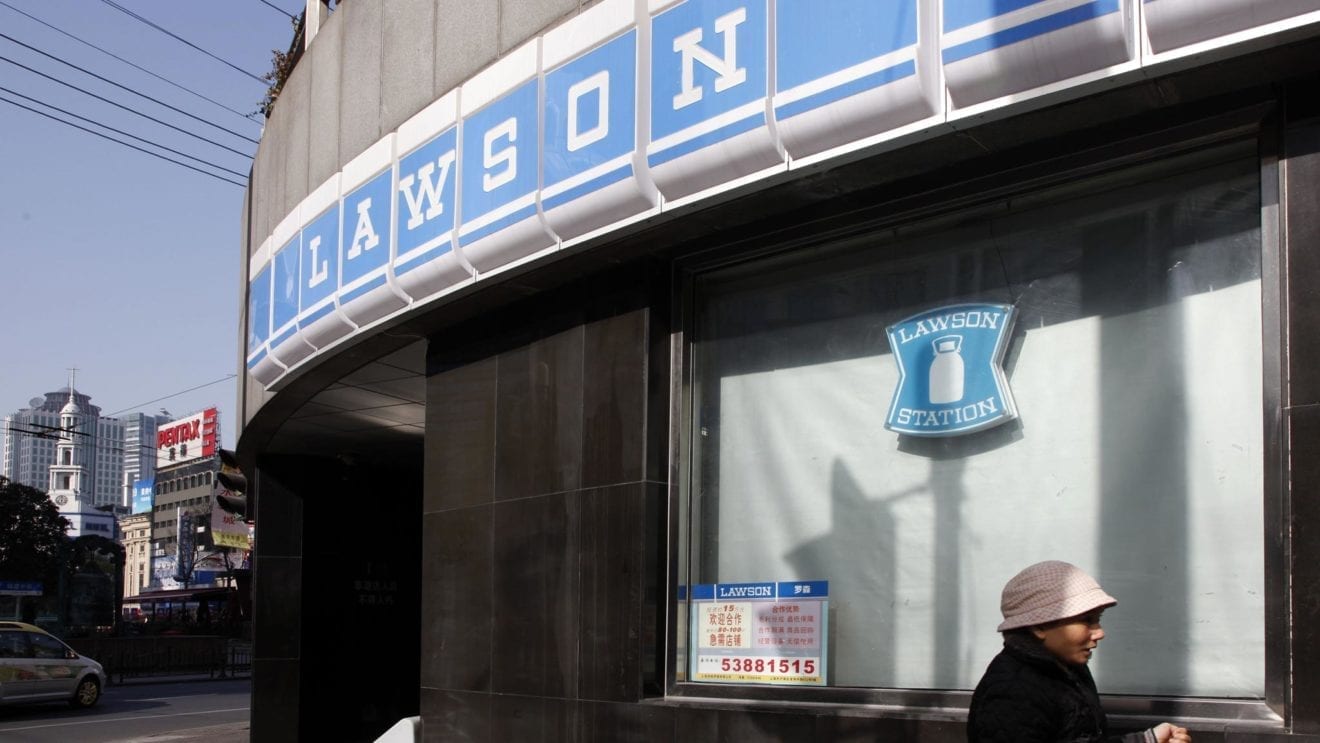
    From next month, Japan’s Lawson China convenience store group will offer rewards points to shoppers at its outlets.

    Points will be administered through the brand’s smartphone app, which already provides product information and discount coupons.

    Each yuan spent is expected to earn shoppers 10 reward points, exchangeable for store credit, likely at the rate of 1000 points for 1 yuan (US15 cents).

    Lawson has invested around $900,000 in Yoren, the Hong Kong-based developer of its app. As well as the points system, the duo has teamed up to analyse users’ purchases so the retailer can design sales campaigns and develop products.

    Lawson is considering similar efforts in other foreign markets. The group’s overseas network exceeds 1000 stores, including locations in Beijing, Dalian, Shanghai and Wuhan, and is rapidly expanding in China via franchise deals, particularly in Shanghai where there are more than 300,000 registered users of its app.

    Lawson will work with trading house Mitsubishi Corporation, which plans to become the retailer’s parent in January, to pursue a goal of having between 3000 and 5000 overseas stores by 2020.

  • Alfamart sales strengthen

    Alfamart sales strengthen

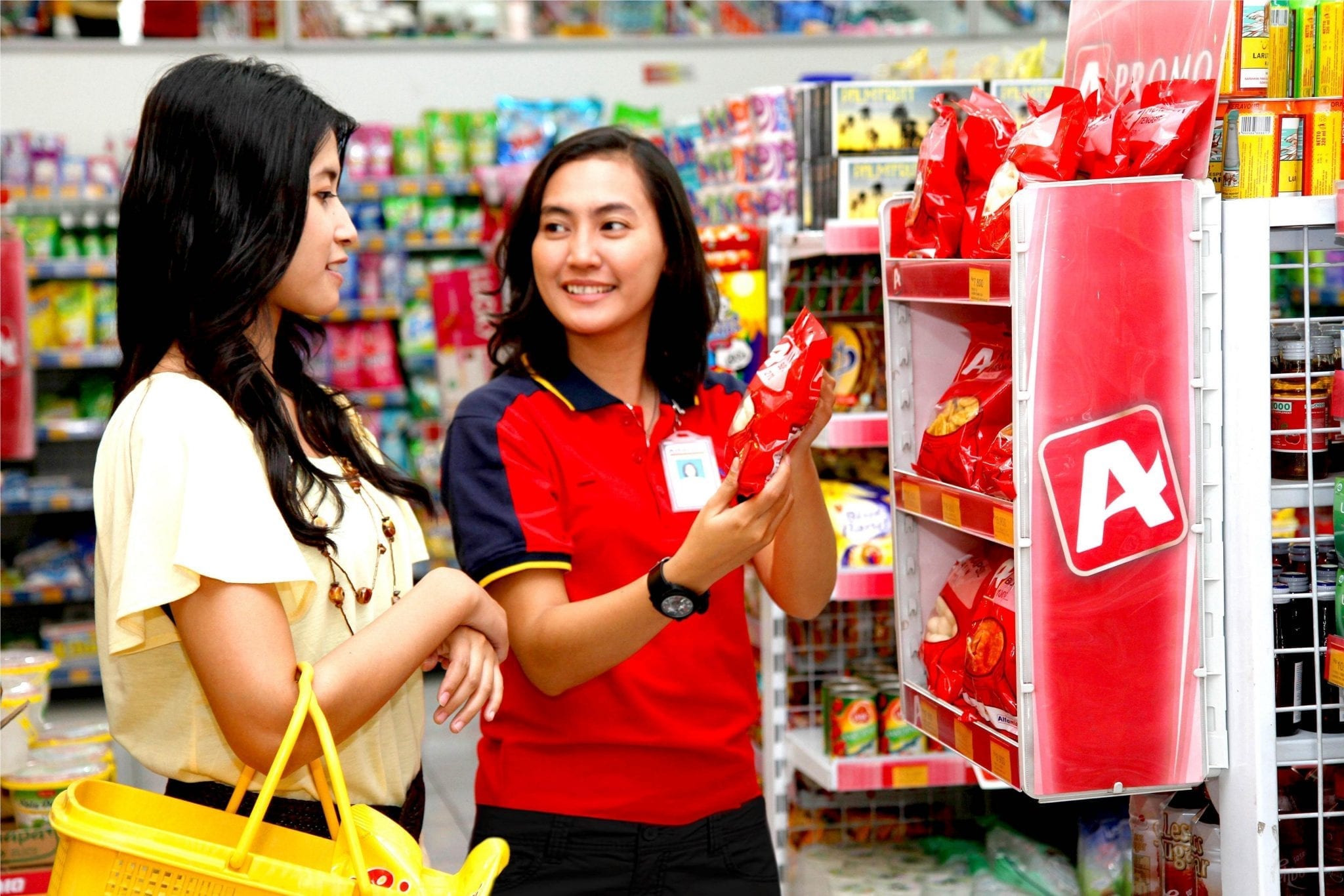
    Indonesia’s Alfamart has reported a healthy first half year’s performance.

    Alfamart sales rose by 21.5 per cent to IDR36,870 billion (US$2 billion) thanks to an aggressive store expansion program.

    The company’s unaudited gross profit increased 20.6 per cent.

    With a network total of 12,971 stores, Alfamart group remains narrowly behind competitor Indomaret, with 13,099, records research house IGD.

    Alfamart added 713 new stores from end of 2015, across the Lawson, Alfa Midi, Alfamart and Dan Dan (health and beauty) banners, compared to 889 reported by Indomaret.

    The new stores are mainly located outside of Greater Jakarta, which still accounts for 35.6 per cent of Alfamart’s stores, IGD reported.

    During the second quarter, the group added a warehouse in Serang, Java to support the Alfamart banner. As of June 2016, the retailer managed 40 warehouses in Indonesia (32 for Alfamart, seven for Alfamidi and one for Dan Dan).

  • Silver consumers driving convenience push

    Silver consumers driving convenience push

    Look for more, but smaller, neighborhood stores, an increase in local delivery trucks and changing store layouts as retailers accommodate aging populations, says The Silver Series IV: Retail Reconfiguration for Seniors.

    The report is the latest in a series of analyses from Fung Global Retail & Technology on the impact of the growing 65-and-over population  – silver consumers – on global economies, industries and retail.

    With smaller households and appetites, seniors shop more frequently, but make smaller purchases, favoring the convenience store sector, the report says. The trend is already being seen in Europe, where large-format retailers such as Tesco and Carrefour are opening smaller stores. While this has yet to take place in the US, ignoring this population segment is unwise, as silvers are growing in number and driving a disproportionate amount of consumer spending.

    “The era of the silver generation has arrived,” writes Deborah Weinswig, MD of Fung Global Retail & Technology.

    The global population silver consumers – aged 65 and older – will account for over one-third of population growth through 2035, according to the United Nations, and will comprise more than 20 per cent of the population overall in Japan, South Korea, Western Europe, North America and China. These households tend to be wealthier, and in the US, senior households spend well above the national average on household supplies and books, though less on apparel and footwear, which could be due to limited choice.

    Long thought to be the province of the young and tech savvy, eCommerce also is a growth market for seniors, who will enjoy or require the convenience of home delivery.

    Not all stores and product manufacturers are accommodating silvers’ changing needs. Seniors can find large-format stores and regional malls overwhelming, and product packaging may need to be redesigned in order to make it easier for seniors to read and open, Weinswig notes.

    But some retailers around the globe are adapting. Japan’s Lawson convenience store chain has renovated units in areas with a high concentration of silvers, widening aisles, lowering shelves and stocking more products that appeal to older shoppers. The 7-Eleven chain in Japan offers a meal delivery service to seniors, while the Aeon Mall offers medical facilities, leisure activities, a concierge and other services for its senior shoppers. Supermarket chains in Germany and Austria have widened aisles, provided customised shopping carts and added nonskid flooring, while in the US, drugstores CVS and Walgreens are adapting store layouts to minimise high- and low-shelving, and have carpeted floors in some stores and even added magnifying lenses to shelves so shoppers can read labels with small print more easily.

    “It is no coincidence that Japan, which is well ahead of most countries in terms of the aging of its population, has a major convenience store sector,” Weinswig writes. “We are now seeing other markets follow Japan in a convenience boom: in France and the UK, for instance, major retailers are pushing into the format as the segment outpaces the wider grocery market.”

    The full report can be found here.

  • Foreign convenience stores in China to face lower-tier challenge

    Foreign convenience stores in China to face lower-tier challenge

    • Convenience store growth is surging, bucking the trend of weakening physical retail store sales. 7-Eleven is the market leader, though FT Confidential Research’s latest consumer brands survey found that other foreign chains were increasingly popular.
    • This is, however, a highly fragmented market and foreign chains will struggle to expand into lower-tier cities, where domestic operators offer greater competition, sometimes supported by local governments.
    • International operators are also coming under pressure from other big foreign retailers in China, while domestic newcomers are expanding aggressively in the belief that online-to-offline (O2O) services will help them seize market share and overcome short-term profitability issues.

    Convenience stores continue to eat into the retail market share of larger formats. In a second-quarter FT Confidential Research survey, 83.4 per cent of urban consumers described themselves as regular convenience store patrons, 0.9 percentage points up on our previous survey in the fourth quarter of last year, while the proportion regularly frequenting supermarkets or hypermarkets fell 1.2 percentage points (see chart).

    The convenience store format has been a standout in an otherwise gloomy market for bricks-and-mortar retailers. Though nationwide sales of fast-moving consumer goods rose 13.2 per cent last year, according to Kantar Retail, a consultancy, hypermarket sales slipped 0.2 per cent and sales at traditional, independent grocery stores fell 10.4 per cent.

    Convenience store chains are stealing market share, with store count growing an average 10 per cent each year from 2010 to 2015. Our survey found that 88.6 per cent of younger shoppers, aged 24-29, frequently go to convenience stores, up 3.4 percentage points from our survey six months ago. In contrast, the proportion of this cohort regularly going to supermarkets or hypermarkets fell 0.8 percentage points in that time.

    Despite growing demand, the convenience store market remains fragmented, with no national leader. The most popular chain was different in 10 of the 11 major markets in China, according to our survey (see chart).

    Beyond Shanghai

    Growth is concentrated in first-tier cities such Beijing and Shenzhen and certain second-tier cities. Shanghai, the biggest market by far, is now saturated, with store count increasing just 2.9 per cent in 2015, having shrunk in 2013, according to the China Chain Store & Franchise Association. Shanghai had one convenience store for every 3,466 residents, a far greater concentration than in Beijing (7,185 people per store) and Chongqing (28,846 people per store). Second-tier Harbin, Wuhan and Changsha were the three cities with the fastest-growing store count in 2015, while Beijing came in seventh (see chart).

    Foreign chains out in front

    Our survey found that foreign brands remain more popular than their domestic peers. Japanese brand 7-Eleven was the most popular, with 20.4 per cent of respondents saying they frequently shopped at its stores, up 1.1 percentage points from the fourth quarter of last year (see chart). The popularity of two other Japanese chains, FamilyMart and Lawson, also rose, up 0.8 and 1.2 percentage points, respectively.

    After years of losses, foreign brands may finally have found ways to consistently turn profits in China. Shanghai FamilyMart, a joint venture between FamilyMart Japan and Ting Hsin Group formed in 2004, turned a profit for the first time in 2013. This ¥745m ($7.4m) profit expanded to ¥1.5bn last year.

    FamilyMart’s clean, reliably stocked outlets appeal to white-collar workers, but it is the prepared fresh food options that have really proved popular. The company now has four factories preparing ready-made food in or around Shanghai and reportedly sells about 300,000 bento boxes each day in the city. Prepared fresh food makes up roughly half of the total sales of each FamilyMart store, according to Ting Hsin vice-president Wei Yingxing.

    Bottlenecks to expansion

    The nature of convenience stores makes brand loyalty tough to engender: is a Shanghai urbanite going to walk further to their favourite chain for something as basic as a bottle of water?

    This is helps explain why the expansion of foreign brands into lower-tier cities has been harder than they anticipated. In 2010, FamilyMart set a goal of opening 4,500 stores in China, but had only reached one-third of that by February 2016. Three years ago, Lawson targeted 1,500 stores in Shanghai and 500 in Chongqing by 2015. As of May 2016 it had opened just 506 and 111, respectively. Among the top 10 chains nationally, the market share of domestic chains has actually rebounded slightly since 2012, while the rapid growth of foreign chains has slowed, according to Kantar (see chart).

    Domestic competition tough to overcome

    Shanghai has provided domestic companies with a case study in how to compete against foreign entrants. Almost all big domestic convenience store chains have beefed up their offerings of ready-to-eat food products, mimicking FamilyMart’s success in Shanghai. Many are now accelerating store openings in areas dominated by foreign chains, while some have managed to poach middle managers from international companies.

    This competition from domestic chains is dragging on store count growth for the multinationals: the number of 7-Eleven stores in Chengdu dropped to just 56 by May this year from 87 in February 2013 (see chart). FamilyMart has also expanded only slowly in Chengdu. In contrast, local leader Hongqi has 1,543 outlets in the city, and reported a 15.2 per cent increase in operating revenue and a 5.3 per cent rise in net profits to Rmb170m ($26m) in 2015.

    The target demographic of foreign convenience stores is much smaller in second-tier cities than in the major coastal hubs, given lower incomes and different consumption patterns. In Beijing in 2015, the daily revenue of each 7-Eleven outlet was, on average, more than Rmb16,000. The equivalent figure in Tianjin and Chengdu rarely breaks Rmb10,000. This has forced foreign companies to be more strategic about where they open outlets in these cities.

    Government policy may also limit expansion. Since 2009, the Chinese government has banned retailers with foreign backgrounds from selling cigarettes nationwide, a business we estimate could account for a third of convenience store sales. In Shanghai, the municipal government also offers subsidies to state-owned firms, and in second-tier cities the relationship between local companies and local government is usually even closer.

    In response, Lawson has signed a franchise contract with Wuhan Zhongbai, authorising Hubei’s leading retailer to open Lawson convenience stores in the province — even though Zhongbai has its own convenience store chain, named Haobang. These sorts of tie-ups may be a solution for foreign chains to expand in the provinces, but maintaining service quality will prove a challenge.

    Here come the newcomers

    Furthermore, the market’s rapid growth is luring in new players. Large, established foreign retailers are looking to leverage their brand popularity and existing infrastructure. Carrefour, for example, has already opened 13 Carrefour Easy convenience stores in Shanghai. Germany’s Metro also recently opened its first two My Mart convenience stores in the city.

    Domestic entrants are even more aggressive. Quanshi has opened 270 stores in Beijing since it was established in 2011. In comparison, 7-Eleven had 192 stores in Beijing as of May 2016, having entered the market in 2004.

    Quanshi’s ampm brand (not to be confused with BP’s chain of service stations) is one of a swath of Chinese operations, across numerous industries, banking on O2O services to drive growth. The chain claims that short-term profitability issues from its model can be overcome once economies of scale are achieved. Companies like Quanshi see O2O services, including package storage but also delivery, as the future of the convenience store business.

    The commercial viability of this strategy is so far unproven. A deal between JD.com and Taiyuan Tangjiu, a Shanxi chain, in which the online mall hosts the convenience store’s online presence while its couriers provide one-hour delivery, has not been a success.

    Given such intense competition, we believe the convenience store market will remain fragmented and locally focused. For now, it is unclear that a national leader will emerge, as 7-Eleven has in Japan. In second- and third-tier cities, lower incomes and local protectionism mean that foreign chains may take over bustling, high-rent street corners, but will struggle to establish a dominant position.
     

  • Lawson chases retail rival in Philippines

    Lawson chases retail rival in Philippines

    Japanese convenience store chain Lawson is cautiously planning its expansion in the Philippines, which the company considers a key market to expanding its global presence.

    Under pressure to keep up with rival Japanese chains 7-Eleven, Ministop and Family Mart, which are rapidly opening new stores, Lawson President and CEO Genichi Tamatsuka said Tuesday that the company and its Philippine partner, supermarket operator Puregold Price Club, are developing “a winning franchising formula.” They plan to test the model in late 2016 before moving into full-scale operation in the next two to three years.

     PG Lawson, the partners’ joint venture, opened fewer than 20 stores when they began doing business in the Philippines last year. In contrast, Family Mart opened more than 30 shops when it entered the Philippine market in 2013.

    Lawson and Philippine partner Puregold Price Club officials open first flagship convenience store in Makati central business district

    Going commercial

    “Franchising is the key,” Tamatsuka said. In Japan, 99% of Lawson’s 12,000 stores are franchises, he said.

    PG Lawson has set a medium-term target of opening 500 outlets in the Philippines by 2020. This year alone, they plan to spend 450 million pesos ($9.7 million) on 75 stores located mostly in office buildings.

    On April 5, the company opened its first flagship store and its 20th outlet along Ayala Avenue in the Makati business district. Last year, Lawson opened shops mostly near schools.

    John Hao, Puregold’s investor relations head, said PG Lawson will partner with independent property developers to gain access to office spaces with tenants like outsourcing companies that operate around the clock.

    Most of Lawson’s competitors already have the backing of big real estate companies. Family Mart is partly owned by Ayala Land and Ministop is operated by Robinsons Retail Holdings of the Gokongwei Group, which also owns Robinsons Land. Alfamart, an Indonesian convenience store operator, has SM Group as its Philippine partner. SM owns SM Prime Holdings, the Philippines’ largest developer.

    Lawson CEO Genichi Tamatsuka

    7-Eleven, despite not having a real estate backer, is expanding aggressively. As of the end of last year, it had 1,602 stores nationwide, up 25% from 2014. This year, it plans to spend 3.5 billion pesos to accelerate its openings.

    With more than 2,000 convenience stores serving 100 million people, Tamatsuka sees great potential in the Philippines, where the retail sector is dominated by 700,000-800,000 neighborhood shops called sari-sari (“variety”) stores. Modernizing just 5% of these mom-and-pop retailers translates to around 35,000 convenience stores, he said.

    Lawson sees the Philippines and other Southeast Asian countries such as Thailand, Indonesia, and Vietnam, as important markets for the company’s global expansion. In the next five to 10 years, it expects to have more outlets overseas than in Japan, Tamatsuka said. At present, overseas shops make up just 5% of the total.

  • Jetro helping convenience stores

    Jetro helping convenience stores

    Four major convenience store chains in Japan are teaming up with a government-related body to work on expanding their businesses overseas.

    FamilyMart, Lawson, Ministop and 7-Eleven Japan have formed a council with the Japan External Trade Organization (Jetro) to accelerate their establishment of branches overseas after the Trans-Pacific Partnership (TPP) goes into effect, reports the Sankei Shimbun.

    With the TPP easing restrictions on foreign distributors entering into the markets of partner countries such as Vietnam and Malaysia, the convenience stores hope to devise a system that will enable them to sell Japanese processed food products and commodities in overseas markets.

    Jetro’s task will be to work with foreign governments to resolve problems and collect relevant retail information. It will also help the convenience store chains find partner companies in Asian countries.

  • Lawson Japan mulls banking foray

    Lawson Japan mulls banking foray

    Convenience store operator Lawson Japan is considering a foray into banking.

    The company says that with more than 12,000 convenience stores operating across Japan it has the physical branch network in place to accept deposits from customers.

    It also has the IT infrastructure in place which could be easily modified to allow customers to pay bills, make bank transfers and other basic banking services – all of which would draw additional customers in store, or increase the frequency of visits of existing customers.

    underlying the seriousness of the planning, Japanese bank Mitsubishi UFJ Financial Group has indicated it would take a small stake in the new bank, and contribute ATMs, IT and other services to a Lawson Bank.

    If Lawson does move into banking, it would not be Japan’s first retailer to do so. Rivel Seven & I Holdings, parent of 7-Eleven, established a bank in 2001. Aeon received a banking licence in 2007 and has since expanded its banking and financial services into other markets such as Malaysia and Thailand.

    Another c-store operator, FamilyMart last year began exploring a banking partnership with Japan Net Bank, although those discussions have not yet born a finite plan.

  • Lawson to accept UnionPay

    Lawson to accept UnionPay

    Japanese retailer Lawson has installed 1000 ATMs in a new network to help Chinese tourists access their cash via UnionPay cards.

    And from September 24, customers will be able to pay for purchases using UnionPay credit cards at all Lawson stores in Japan – that’s 12,195 stores, trading under the Lawson, Natural Lawson and Lawson Store 100 banners.

    From September 28, customers can also withdraw Japanese yen by UnionPay credit or debit card on the newly introduced ATM network which will eventually be expanded to more than 2000.

    During the Chinese National Day holidays, a large number of Chinese tourists are expected to visit Japan. During this holiday season, Lawson will launch a coupon campaign for customers who use the UnionPay credit card for settlement. Customers who have purchased over 2000 JPY worth of goods using a UnionPay credit card can get a 200 JPY coupon ticket which can be used for their next purchase.

    The campaign runs through the month of October and the coupons can be used until November 7.

    At Lawson stores in Japan, the average shopping amount per payment is 600 JPY. Spending on credit cards is more than twice as much, at around 1300 JPY. Furthermore, in some pre-launched stores where payment by UnionPay card is already available, the average shopping amount made by UnionPay card jumps to about 3000 to 4000 JPY.

    Foreign visitors going to Lawson stores buy not only rice balls and drinks, but also confectionery and daily goods as souvenirs. This campaign will be able to meet a wide range of needs from foreign visitors to Lawson stores.

  • Lawson, Three F in partnership talks

    Lawson, Three F in partnership talks

    Japanese convenience store rivals Lawson and Three F say they are “discussing options” for a capital and business alliance.

    The move was announced in a statement which was short on detail.

    Lawson, a subsidiary of Mitsubishi Corporation, is Japan’s second largest c-store operator behind 7-Eleven with a network of more than 11,500 stores in Japan, Indonesia, China and Thailand. Three F Co, headquartered in Yokohama, operates only in Japan where it has about 560 stores in Tokyo, Chiba, Saitama and Kanagawa.

    In the statement, the companies said an alliance would help boost their convenience store operations in an extremely competitive environment. Japan is a mature market, which is main reason its convenience store players are seeking growth offshore.

    While both companies will maintain independent management and protect their individual corporate brands and culture, they would conduct joint product development, procurement and promotional campaigns, and also share information that could boost management efficiency.

    “Both companies are determined to discuss ideas frankly and openly, with the aim of creating a concrete, workable alliance agreement. Further developments will be announced once they are finalised,” the statement said.

  • Lawson to open 450 stores in Japan this year

    Lawson to open 450 stores in Japan this year

    Even though Japan’s convenience store sector faces numerous challenges, the country’s second-largest operator, Lawson, plans to open another 450 stores this year, the company’s CEO has revealed.

    Genichi Tamatsuka said there are 55,000 convenience stores in Japan but the market has not yet reached saturation point.

    He sees massive potential for growth because of demographic and other social changes that are altering consumers’ buying behaviour.

    “Whereas people used to go to a big supermarket and prepare meals for a family of four or five, now they’re busier, they’re older, and they prefer to buy in a small neighbourhood store,” he explained.

    Lawson currently runs a network of 12,000 stores – soon to be expanded – and, combined with its logistical muscle, Tamatsuka expressed confidence that it would be able to meet the needs of these “combini” neighbourhood stores.

    “With our scale of 12,000 stores, our supply chain and platform, we can supply food and necessities to these neighbourhoods,” he said.

    Expansion overseas is another source of potential growth, he indicated, considering the value placed on the high level of customer service provided by Japanese retailers.

    Lawson has 500 stores in China and has also started up operations in Thailand, Indonesia and the Philippines.

    Despite Tamatsuka’s confidence, research group Euromonitor earlier this year published a more downbeat assessment of Japan’s retail landscape.

    “Japanese grocery retailers are expected to face numerous challenges imposed by such factors as changing demographics and operational difficulties,” it warned.

    However, in what could be seen as endorsement of Tamatsuka’s expansion strategy, the report went on to say, “in order to fight against such negative circumstances, grocery retailers may attempt to expand in size and diversify business portfolios”.

  • Migros to sell private label in Japan

    Migros to sell private label in Japan

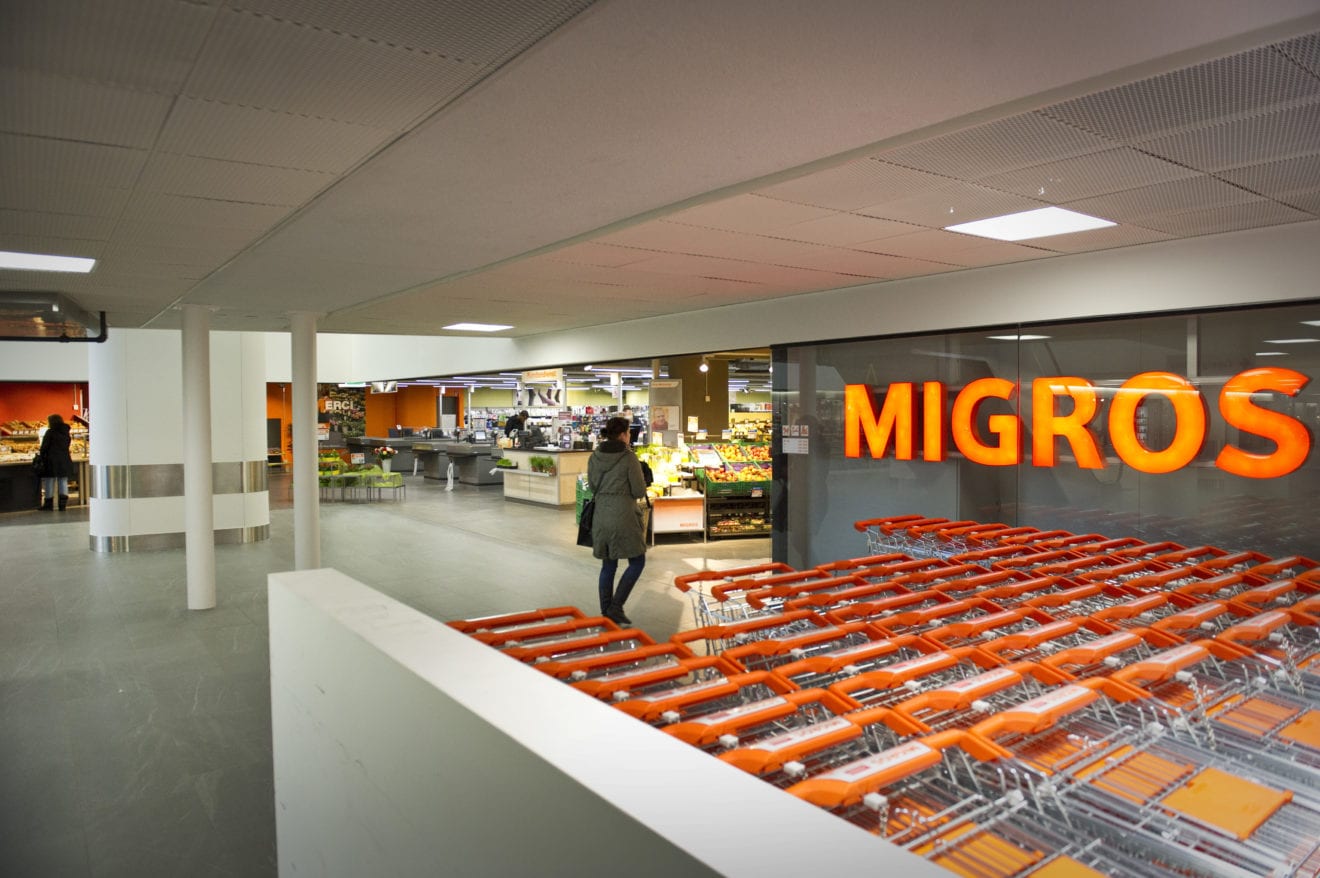
    Swiss retailer Migros is to sell private label products into two Japanese retail chains.

    Switzerland’s largest grocer, and one of the world’s 40 largest supermarket chains, is to sell lines to Lawson’s Seijo Ishii stores and Seiyu, which is Walmart’s Japan business.

    According to the Nikkei Asian Review, Migros will start with 16 premium products including Swiss Delice biscuits and iced tea, which will go on sale in 400 supermarkets trading under the Seiyu and Seijo Ishii banners.

    By 2020, Migros hopes to expand the range to 300 items, including desserts, snacks, cosmetics and skincare products, projecting sales of US$16 million annually.

    Retail research house IGD describes the move as “particularly surprising” for Seiyu, whose range already includes private label lines from Walmart’s own network, including Asda’s Extra Special wines.

    IGD describes Japan as “the most sophisticated private label market in Asia,” with strong players including Seven & I, Aeon, FamilyMart and Lawson.

    “These retailers are exploring the higher margin opportunities that premium private label ranges offer, focusing development around high quality, special ingredients and unique products.”

    Those ranges include Seven Gold and FamilyMart’s Platinum Line.

    But IGD says European influenced products are likely to appeal to shoppers’ increasingly cosmopolitan tastes, and the early line-up includes items which are mutually popular in the Swiss and Japanese markets: ice cream and iced tea.

    “Migros follows in the footsteps of European retailers Waitrose and Carrefour, whose private label products are already available in Japan through partnerships with Aeon.”

  • Lawson Thailand targets 1000 shops

    Lawson Thailand targets 1000 shops

    Lawson Thailand, a three way partnership between the Japanese comfort retailer operator and an area Thai listed firm, says it plans to open 1000 shops throughout the nation.

    At present it has simply 40 buying and selling underneath the brandname Lawson 108, but it says it’s going to attain 1000 inside three years.

    Lawson Thailand is a three way partnership between Saha Pathanapibul Pcl and Lawson Inc of Japan.  Saha Pathanapibul is a subsidiary of Saha Group, Thailand’s largest shopper merchandise enterprise.

    The 2 corporations established a three way partnership in 2012 however progress up to now has been sluggish.

    Now they are saying they may concentrate on creating some extent of distinction between rival comfort retailer chains, such because the market dominant 7-Eleven, together with providing freshly cooked, able to eat meals.

    With 7-Eleven already working 8000 comfort shops in Thailand and Central Group’s Household Mart enterprise increasing, Lawson Thailand might face an uphill battle gaining market share, even with 1000 shops buying and selling.

  • Saha group says Japan’s Lawson stores in Thailand to rise to 1000

    Saha group says Japan’s Lawson stores in Thailand to rise to 1000

    A joint venture of Thailand’s Saha Pathanapibul Pcl and Japan’s Lawson Inc aims to boost the number of ‘Lawson 108’ outlets in the Southeast Asian nation to 1,000 over the next three years from 40 now, a Saha executive said on Friday.

    Saha Pat, part of Saha Group, Thailand’s largest consumer products conglomerate, joined hands with Lawson, one of Japan’s top- three convenience store chains, to form joint venture Saha Lawson Co in 2012 to tap the Thai retail market.

    Saha Lawson will focus on fresh-cooked and ready to eat products, Saha Pat’s director Vathit Chokwatana told a conference. He did not reveal any investment numbers by the partners.

    Lawson is one of several Japanese retailers expanding business in Thailand, despite the Southeast Asian nation’s weak domestic consumption and slowing economy. Others include Tokyu Department Store and MaxValu supermarket, owned by AEON group.

    Lawson competes directly with CP All Pcl, Thailand’s largest convenience store chain with more than 8,000 7-Eleven outlets, and Family Mart, owned by Central Group, Thailand’s leading retailer.

  • Lawson, SG Holdings to offer new delivery service

    Lawson, SG Holdings to offer new delivery service

    Retailer Lawson Inc. and logistics company SG Holdings Co. are to begin a delivery service under a new alliance pitched at time-deprived workers and seniors.

    Lawson, a Tokyo-based convenience store operator, said on Tuesday that it will take a 51 percent stake in the new company to be created in June, with Kyoto-based SG Holdings, which runs Sagawa Express Co., holding the remaining 49 percent.

    They will work together to expand their customer base as demand for home delivery increases with a growing number of elderly people and more women opting to work rather than stay at home.

  • Lawson Philippines debuts today

    Lawson Philippines debuts today

    The much anticipated debut of Lawson Philippines will occur today, Monday.

    The first store will open in the Manila suburb of Sta. Ana.

    Lawson Philippines is a joint venture between local operator Puregold Price Club (70 per cent) and Lawson Japan (30 per cent). The two companies plan a massive network of 500 convenience stores across the Philippines by 2020, with up to 100 opening this calendar year.

    Initially the chain will be focused on metro Manila.

    Lawson’s debut will have little immediate effect on the nation’s cstore sector, but once it builds critical mass, it will present a challenge to the dominance 7-Eleven chain and compete with the rising FamilyMart and Ministop networks.

    “Under the partnership, Lawson will provide its expertise in convenient stores know-how and product development while Puregold will provide its expertise in product procurement and localized knowledge of the retail consumers,” the company said in a statement.

    In May 2014, during a visit to Manila, Lawson Japan chairman Takeshi Niinami said the company was planning as many as 2000 convenience stores in the Philippines in the long term.