Tag: lg

  • LG Energy Solution Expands Horizons: Set to Launch Electric Bike Manufacturing in Vietnam

    LG Energy Solution Expands Horizons: Set to Launch Electric Bike Manufacturing in Vietnam

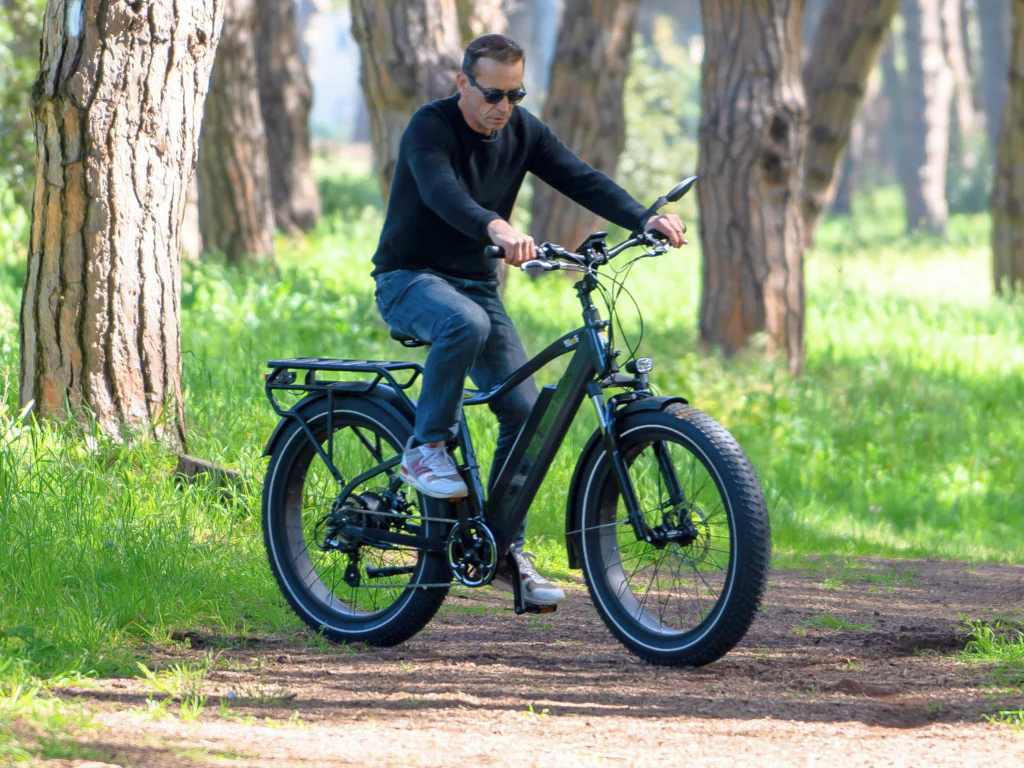
    South Korean battery producer LG Energy Solution is setting its sights on manufacturing electric motorbikes and establishing charging stations in Vietnam. During a recent meeting with local officials in Phu Tho Province, Lee Jin Woo, senior director of LG Energy Solution (LGES), detailed plans for investment that will come through official development assistance, a form of aid aimed at fostering economic growth in developing nations. This venture indicates LGES’s commitment to expanding its footprint in the burgeoning electric vehicle market.

    In addition to manufacturing electric motorbikes, LGES aims to collaborate with local businesses to create a network of charging stations and battery exchange systems tailored for electric vehicles in the province. This move not only promises to enhance the infrastructure for electric mobility but also underscores LGES’s strategic approach to fostering local partnerships.

    Support from Local Authorities

    Phu Tho’s chairman, Tran Duy Dong, has instructed local agencies, including the Investment Promotion and Support Center and the Department of Finance, to facilitate LGES’s investment in the region. The support from local authorities illustrates the government’s eagerness to embrace eco-friendly transportation solutions and bolster the local economy.

    A Leader in Battery Production

    Founded in 1999 as South Korea’s inaugural lithium-ion battery manufacturer, LG Energy Solution has cemented its status as a global powerhouse in battery technology, supplying major automakers such as Ford, Tesla, and General Motors. Beyond electric vehicles, LGES also produces batteries for a range of devices including laptops and smartwatches, demonstrating its versatility in the battery sector.

    Phu Tho’s Vision for the Future

    Positioned approximately 100 kilometers northwest of Hanoi, Phu Tho Province is poised for industrial growth. The local government envisions the establishment of 57 industrial parks covering nearly 13,400 hectares by 2030, with 16 projects already operational. The province has successfully attracted 720 foreign investments, primarily from South Korea and Japan, amounting to approximately US$12.5 billion by the end of 2024. As the home of new investment opportunities and technological advancements, Phu Tho may soon be buzzing with electric motorbike enthusiasts.

    Questions & Answers

    What type of vehicles is LG Energy Solution planning to manufacture in Vietnam?
    LG Energy Solution is planning to manufacture electric motorbikes in Vietnam.

    How will LGES support the electric vehicle infrastructure in Phu Tho?
    LGES aims to collaborate with local companies to establish charging stations and battery exchange networks for electric motorbikes.

    What is the significance of Phu Tho’s local investment vision?
    Phu Tho aims to develop 57 industrial parks by 2030, adapting to the region’s growing industrial needs and promoting foreign investments, while fostering an eco-friendly transportation network.
  • LG promises $4B investment in Vietnam

    LG promises $4B investment in Vietnam

    South Korean electronics giant LG will invest US$4 billion in Vietnam as it seeks to make the country a future smartphone manufacturing hub.

    Its chief operating officer Kwon Bong-seok made this commitment at a meeting with visiting Vietnamese President Nguyen Xuan Phuc Monday.

    LG has invested $5.3 billion in Vietnam since 1995 in sectors such as electronics, household equipment and auto parts, and employs 27,000 workers, Kwon added.

    Phuc said he valued LG’s investment in Vietnam, recalling he had attended the groundbreaking ceremony at its $2-billion factory in Hai Phong Province in 2016.

    He invited further investment, especially in auto and smartphone parts, adding further training is also needed in information technology.

  • EV Battery Giant LG Energy Solution Sees Demand Rising As Chip Shortage Eases

    EV Battery Giant LG Energy Solution Sees Demand Rising As Chip Shortage Eases

    Battery maker LG Energy Solution Ltd (LGES) said on Tuesday it aims to boost sales by about 8% in 2022, forecasting a pick-up in demand for electric vehicle (EV) batteries as a global chip shortage eases later this year. The newly listed South Korean firm, which accounts for a fifth of the global EV battery market, swung to profit in the October-December quarter, even as the chip shortage affecting automakers led to weaker than expected demand for batteries.

    LGES, which became South Korea’s second-largest listed firm last month in the country’s biggest ever IPO, posted an operating profit of 76 billion won ($63.5 million) for the fourth quarter, it said in its maiden earnings report. That compares with a 150 billion won profit estimate by two analysts polled by Refinitiv and a loss of 479 billion won in the same period a year earlier.

    Analysts noted that the global chip shortage has affected demand from automakers, with LGES rivals SK On and Samsung SDI Co Ltd reporting a similar impact on battery demand in the fourth quarter.

    Revenue at LGES, which supplies Tesla Inc and General Motors Co among others, rose 2% to 4.4 trillion won from a year earlier. The company said it has set this year’s capital expenditure budget at 6.3 trillion won, up 58% from a year earlier, to finance capacity expansion at its global manufacturing facilities to meet demand for batteries.

    “LGES will continue to move forward with bold investment plans needed in the long run. We are confident our business model of preparing for the future will definitely help us lead the industry,” LGES chief executive officer Youngsoo Kwon said in a statement.

    LGES made a stellar market debut in late January, surging to a market capitalisation of about $98 billion, second only to Samsung Electronics Co Ltd on the local bourse, reflecting upbeat prospects for EV battery industry. The company’s shares have since risen 8.5% and added a further 2.2% on Tuesday, ahead of a 0.8% rise in the broader market KOSPI. Asked during an analyst conference call about more battery joint ventures with automakers, LGES said it had held working-level discussions with Japan’s Honda Motor Co Ltd about a potential joint venture, but there was no concrete agreement on a deal.

    Revenue at LGES, which supplies Tesla Inc and General Motors Co among others, rose 2% to 4.4 trillion won from a year earlier

    In January, a South Korean local newspaper reported that LGES planned to build a battery joint venture with Honda in the United States. LGES said in late January that it plans to invest a total of $2.6 billion with GM to build their third joint battery plant in the United States, aiming to secure an annual capacity of about 50 gigawatt hours (GWh) of batteries by 2025, enough to power about 700,000 EVs. The two companies are already building two joint battery plants in Ohio and Tennessee.

    Global EV sales, estimated at 2.5 million vehicles in 2020, are forecast to grow more than 12-fold to 31.1 million by 2030 and account for nearly a third of new vehicle sales, according to consulting firm Deloitte.

  • Battery Giants Face Skills Gap That Could Jam Electric Highway

    Battery Giants Face Skills Gap That Could Jam Electric Highway

    The South Korean battery giants powering many of the world’s electric vehicles face a skills shortage that could drag on the global race towards zero-emissions transport. The country’s three major players, which command a third of the global electric vehicle (EV) battery market, told Reuters they were all grappling with a shortage of research and engineering specialists as demand for the technology balloons. LG Energy Solution (LGES), SK On, and Samsung SDI Co Ltd all rank in the top-six global battery makers, and supply the likes of Tesla Inc, Volkswagen and Ford Motor Co among others.

    Yet they are facing growing demands from big automakers and can’t find enough technicians with the training needed to keep advancing cutting-edge tech such as solid-state batteries. “Although we are seeing such a growth in the industry, it appears that we are facing a shortage of talent,” an official at LGES said. “It is crucial to recruit external talents as well as nurturing our own talent.” This was echoed by its two big domestic rivals, with SK On describing the sector’s expansion as “exponential”.

    Indeed the global battery sector has doubled in size over the past five years and South Korea is short of almost 3,000 graduate degree-level positions in areas such as research and design, according to the most recent data from the Korea Battery Industry Association, from late 2020. LGES, SK On and Samsung SDI currently have a total of about 19,000 employees.

    The Korean crunch reflects a growing talent shortage across a wider global battery market that, according to IHS Markit forecasters, will triple in size to almost $90 billion by 2025. The EU’s European Battery Alliance planning group, for example, says “re-/up-skilling” is needed in the bloc because its battery industry needs 800,000 new workers by 2025.

    If the global skills gap is not plugged, some industry experts say it could slow the pace of advances in batteries, which are being counted on to clean up road transport, one of the biggest sources of greenhouse gas emissions. “Talent demand in the battery industry outweighs supply, and battery makers are anxious to ensure that they have got this small group of people who can work on this technology, and won’t be left behind in the fast-growing market,” said Samsung Securities analyst Cho Hyun-ryul.

    ‘COMPETITIVE PACKAGES’

    In a sign of the skills pressure, LGES – South Korea’s No.1 battery maker by volume – plans to launch a new “battery-smart factory department” at the prestigious Korea University next spring with guaranteed jobs for graduates.

    More immediately, executives have been flying to the United States to lead recruiting events at schools there. The LGES CEO and his managers went to Los Angeles last month while the SK Innovation CEO and staff hosted an event in San Francisco on Saturday.

    These companies are not only competing with other established Asian players, including market leader CATL from China and Japan’s Panasonic, but fast-growing U.S. and European rivals like Sweden’s Northvolt bridging the technology gap.

    The talent shortage in South Korea is being compounded by some existing employees moving to foreign competitors that had offered better pay, according to two industry sources with knowledge of the matter. They declined to be named due to the sensitivity of the matter.

    Northvolt, which counts Volkswagen as a client, has previously said that some of its employees were recruited from top battery makers, including LGES and Panasonic.

    “We do have few people working for Northvolt that are from South Korea, which is obviously a very impressive country when it comes to battery manufacturing and development with several well-respected companies active in this space,” a spokesperson for the company told Reuters last week.

    “We try to offer competitive packages to our employees – everyone working here is a shareholder in the company for instance,” he added, though did not specify pay details.

    Battery specialists in South Korea newly graduated with doctorate degrees can earn as much as 100 million won ($85,000) a year, and those without that level of qualification average about 80 million won after gaining a few years of experience, according to two sources at major South Korean battery firms.

    South Korea’s average annual salary was 37.4 million won in 2019, according to tax agency data.

    ‘WIN FOR AMERICAN AUTOS’

    The Korean sector has also been mired in internal conflict, with LGES and SK Innovation, which wholly owns SK On, locked in a two-year dispute over technology, trade secrets and staff poaching until April this year when they settled their differences.

    In a signs of the global importance of the two conglomerates, U.S. President Joe Biden – who has made boosting EVs a top priority – described the settlement as “a win for American workers and the American auto industry.”

    “We need a strong, diversified and resilient U.S.-based electric vehicle battery supply chain,” he added.

    Even in the face of the growing skills gap, the worldwide demand for their products has supercharged the battery makers’ expansion plans.

    LGES expects its production capacity to reach 155 gigawatt-hours (GWh) of batteries by the end of this year and plans to raise that to 430 GWh in 2025 that could power about 7.2 million EVs.

    SK Innovation aims to boost its annual production capacity more than five-fold to 220 GWh by 2025 and last week announced the plan to invest 10.2 trillion won with Ford to build three battery plants in the United States.

    Richard Kim, principal analyst at IHS Markit, said the skills gap was likely to be a problem for years to come.

    “The labour shortage in the battery industry has already been a global issue, and the reality is that there has been an imbalance of supply and demand of manpower as many companies start to expand their capacity,” he added.

  • LG, Samsung are hiring again in Vietnam

    LG, Samsung are hiring again in Vietnam

    Two Korean technology giants are seeking to hire thousands of people in Vietnam, including workers, engineers and IT staff. In September, Samsung announced it is looking to hire 1,000 production staff for its Bac Ninh factory. A month earlier it said it wanted to recruit 3,000 workers for its Thai Nguyen plant.

    The company plans to expand operations at the former to increase production of flagship phones Z Fold and Z Flip to 25 million units a year.

    It is also looking to recruit thousands of employees to work in R&D. It is building a $220-million R&D center in Hanoi with 2,200 – 3,000 researchers and other staff, and plans to open it in 2022.

    LG’s factory in Hai Phong is also hiring new laborers, including IT and R&D engineers.

    It is offering VND9,5-13 million for a technician’s position. The LG Display factory in Hai Phong also announced that it is in need of 5,000 more production workers.

    Due to Covid-19, the recruitment is only in Hai Phong and candidates from elsewhere cannot apply this time, an HR official said.

    LG has three large factories in Hai Phong, mainly producing phones, TVs, air conditioners, vacuum cleaners, washing machines, and refrigerators.

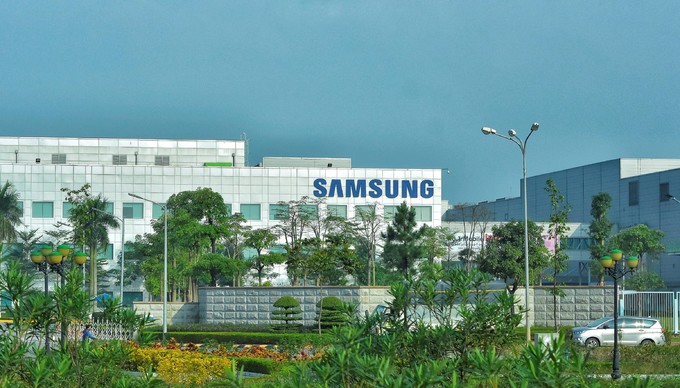
    Samsung has six production facilities in Ho Chi Minh City, Hanoi and Bac Ninh and Thai Nguyen provinces that make handheld devices and home electronics, and employ more than 160,000 workers.

  • LG to use smartphone production line for home appliances

    LG to use smartphone production line for home appliances

    South Korean tech giant LG Electronics plans to use its smartphone production line in Hai Phong to make home appliances instead.

    The company has taken this decision after deciding to withdraw from the smartphone market and failing to find buyers for its production line in the northern port city.

    The Yonhap news agency reported Tuesday that the company will complete the transformation within this year and reallocate affected workers. The factory employs more than 16,000 workers at present.

    “Exiting smartphone production there is part of LG’s plan to restructure our core product portfolio,” said Jung Hai-jin, president of LG Electronics in Vietnam.

    He also affirmed that the shutdown of LG’s smartphone business will not significantly impact LG’s production, business activities or employees in Hai Phong.

    LG launched the production line in Hai Phong, around two hours east of Hanoi, in 2015. The plant has been producing home appliances, smartphones and in-vehicle infotainment components.

    Earlier, a Business Korea report had said that the tech giant has decided to terminate its loss-making mobile phone production and sales business, but not been able to find buyers for its largest smartphone factory in Hai Phong.

    The report mentioned that Vietnamese smartphone makers already have their own facilities and local firms can’t afford to pay the large sum it would take to buy LG’s factory.

    However, at a meeting with the Foreign Investment Agency under the Ministry of Investment and Planning last week, LG leaders said the smartphone factory in Hai Phong was still operating normally. It is also building a new 4-hectare factory to produce refrigerators there, it said.

    LG’s smartphone division has posted losses of around $4.5 billion over the last five years, according to Reuters. The group has said that dropping out of the fiercely competitive smartphone business would allow it to focus on growth areas such as electric vehicle components and connecting devices.

  • South Korea’s LG becomes first major smartphone brand to withdraw from market

    South Korea’s LG becomes first major smartphone brand to withdraw from market

    South Korea’s LG Electronics Inc will wind down its loss-making mobile division after failing to find a buyer, a move that is set to make it the first major smartphone brand to completely withdraw from the market.

    Its decision to pull out will leave its 10% share in North America, where it is the No. 3 brand, to be gobbled up by Samsung Electronics and Apple Inc with its domestic rival expected to have the edge.

    “In the United States, LG has targeted mid-priced – if not ultra-low – models and that means Samsung, which has more mid-priced product lines than Apple, will be better able to attract LG users,” said Ko Eui-young, an analyst at Hi Investment & Securities.

    LG’s smartphone division has logged nearly six years of losses totaling some $4.5 billion. Dropping out of the fiercely competitive sector would allow LG to focus on growth areas such as electric vehicle components, connected devices, and smart homes, it said in a statement.

    In better times, LG was early to market with a number of cell phone innovations including ultra-wide-angle cameras and at its peak in 2013, it was the world’s third-largest smartphone manufacturer behind Samsung and Apple.

    But later, its flagship models suffered from both software and hardware mishaps which combined with slower software updates saw the brand steadily slip in favor. Analysts have also criticized the company for its lack of expertise in marketing compared to Chinese rivals.

    While other well-known mobile brands such as Nokia, HTC, and Blackberry have also fallen from lofty heights, they have yet to disappear completely.

    LG’s current global share is only about 2%. It shipped 23 million phones last year which compares with 256 million for Samsung, according to research provider Counterpoint. In addition to North America, it does have a sizeable presence in Latin America, where it ranks as the No. 5 brands.

    While rival Chinese brands such as Oppo, Vivo, and Xiaomi do not have much of a presence in the United States, in part due to frosty bilateral relations, their and Samsung’s low to mid-range product offerings are set to benefit from LG’s absence in Latin America, analysts said.

    LG’s smartphone division, the smallest of its five divisions accounting for about 7% of revenue, is expected to be wound down by July 31.

    In South Korea, the division’s employees will be moved to other LG Electronics businesses and affiliates, while elsewhere decisions on employment will be made at the local level.

    Analysts said they were told in a conference call that LG plans to retain its 4G and 5G core technology patents as well as core R&D personnel, and will continue to develop communication technologies for 6G. It has yet to decide whether to license out such intellectual property in the future, they added.

    LG will provide service support and software updates for customers of existing mobile products for a period of time which will vary by region, it added.

    Talks to sell part of the business to Vietnam’s Vingroup fell through due to differences about terms, sources with knowledge of the matter have said.

    LG Elec shares have risen about 7% since a January announcement that it was considering all options for the business.

  • Nokia and LG Uplus to test 5G B2B digital platform in South Korea

    Nokia and LG Uplus to test 5G B2B digital platform in South Korea

    Nokia has today announced that it will conduct a 5G Business-to-Business (B2B) digital platform trial for LG Uplus. Once deployed, the platform will allow LG Uplus to reduce time-to-market for launching 5G-powered services to its enterprise and business vertical customers. The platform will also enable LG Uplus to address new business segments, including Industry 4.0, and smart factory. After deployment, the solution will promote the use of 5G by enterprises and verticals to grow their business, aligning with the Korean Government’s Digital New Deal initiative.

    The proof-of-concept test of the 5G B2B digital platform will be completed in two phases starting in February. While the first phase involves a demonstration in the Nokia Lab, the second phase with a field trial is planned in the LG Uplus Regional Operation Center in KyungNam.

    Nokia’s solution is based on multi-domain technology and ensures full automation and near real-time delivery of services. The solution includes a service platform powered by Nokia’s Digital Operations software, Cloud Operations Manager, Network Exposure Function, Registers, Cloud Packet Core, Software Defined Networking, and gNB (5G version of eNodeB), across Nokia’s cloud platform.

    LG Uplus will use the platform to cost-efficiently automate the design and deployment of 5G network slices for the delivery of new services. In addition, LG Uplus’ enterprise customers will be able to leverage 5G capabilities to enhance their business and operational efficiency leading to overall economic gain.

    The service will give LG Uplus customers the flexibility to directly control and manage the platform to meet their needs. Further, it will help LG Uplus offer newer use cases such as Smart Factory and Smart Harbor with 5G wireless connectivity and associated services like network slicing.

    Jaeyong Seo, Vice President of Smart Infrastructure Business Unit, LG Uplus, said: “We are committed to providing best-in-class and innovative services to our customers and this trial is a crucial step in this direction. Once deployed, Nokia’s 5G B2B digital platform will help us expand our enterprise business by allowing us to provide new use cases rapidly. Nokia is our trusted partner and we look forward to working with them on this important trial.”

    Kevin Ahn, Head of Korea, Nokia, said: “We are excited to conduct this pathbreaking trial for LG Uplus to enable its enterprise customers to improve business processes with 5G. Nokia’s 5G B2B digital platform will allow LG Uplus to transform its B2B service creation with agility and automation and delight its enterprise customers with new use cases and operational excellence.”

  • Fresh infusion takes LG Display’s Vietnam investment to $3.25 bln

    Fresh infusion takes LG Display’s Vietnam investment to $3.25 bln

    LG Display will invest an additional $725 million in its manufacturing facility in the northern port city of Hai Phong to take its total investment to $3.25 billion.

    The money will be used to expand the factory starting in March. Manufacturing will begin in May.

    It will create 5,000 new jobs, and contribute around $5 million annually to the government’s coffers.

    LG Display first invested in Hai Phong in April 2016, and currently employs over 13,900 people.

  • LG Display will no longer supply Apple with LCD panels for certain iPhone models

    LG Display will no longer supply Apple with LCD panels for certain iPhone models

    A new report from Korea’s The Elec says that LG Display will no longer be supplying LCD panels to Apple for the low-priced iPhone SE model. The company will continue to sell a small amount of OLED to Apple for the Apple iPhone 12 series. The factories that LG Display used to manufacture LCD for Apple will now make in-vehicle displays.

    The reason for LG Display’s decision to back out of producing LCD panels for Apple might have to do with its inability to make a profit from the business. Starting with last year’s iPhone 12 series, Apple’s new high-end models use OLED only which reduces the demand for LCD from the tech giant. LG Display reportedly stopped producing LCD panels for the iPhone during the third quarter of 2020 and by the end of the following quarter, it also stopped supplying other smartphone firms with LCD displays.

    Apple CEO Tim Cook has made the long trek to the pitcher’s mound where he has signaled to the bullpen for replacements to LG Display; Sharp and JDI will take over the job of supplying LCD screens for the iPhone. The factories that LG Display used to make LCD panels for Apple will now be used to manufacture low-temperature polycrystalline silicon (LTPS) thin-film transistors (TFT). The latter is used for touchscreen displays used in vehicles.

    This year’s iPhone 13 Pro models are rumored to be equipped with ProMotion panels that update the screen 120 times per second (120Hz). At that rate, battery life takes a hit.

    But with low-temperature polycrystalline oxide (LTPO) displays, the screen can adjust the refresh rate to run at 120Hz when needed to make an animation (such as the kind you’d find on mobile games) run and look smoother. At the same time, when the content on the display is more static (like when you’re viewing an email or text), the refresh rate changes to a lower number in order to prevent the phone’s battery from draining to quickly.

    At this point, it isn’t clear whether LG will be involved in the production of the LTPO panels alongside Samsung and BOE. The latter has tried to find a place among Apple’s display suppliers but has had problems with its output passing Apple’s Quality Control.

  • LG Electronics starts eco-friendly clothing line with Net-A-Porter

    LG Electronics starts eco-friendly clothing line with Net-A-Porter

    LG Electronics has unveiled an eco-friendly clothing line in collaboration with British online fashion retailer Net-A-Porter as the South Korean tech giant pushes marketing for its clothing-care appliances.

    The appliance maker said it joined with the premium online fashion marketplace to launch a limited-edition range named LG X Net-A-Porter Sustainable Collection.

    The two partners cooperated with global fashion brands, including Le Kasha of France, Mara Hoffman of the US, and Bondi Born of Australia, to release 13 types of environmentally friendly apparel.

    LG Electronics said the launch of the new clothing line is part of its “Care for What You Wear” global campaign that aims to protect the environment by reducing fabric waste.

    It added that the clothes from the new brand can be easily managed through its clothing care appliances, including the Styler, LG’s steam closet that keeps clothes fresh and deodorized without dry cleaning.

  • LG Uplus opens seven-storey product showroom targeting Gen Z

    LG Uplus opens seven-storey product showroom targeting Gen Z

    South Korean telecom giant LG Uplus Corp. said Thursday it opened a seven-story product showroom in southern Seoul by partnering with local popular establishments as part of its broader efforts to capture young customers.

    The seven-story building, including its underground floor, in the posh southern district of Gangnam houses a cafe, a bookstore and a photo studio popular among South Korean millenials and the younger Generation Z, or those born after the mid-90s.

    LG Uplus said the store allows visitors to experience its 5G services and content, such as augmented and virtual reality, although it does not directly sell the company’s products.

    The telecom operator said it also partnered with Google to set up a filming studio for YouTubers. Visitors to the building can take part in live YouTube broadcasts by reserving a spot through a proprietary application.

    LG Uplus has recently focused on beefing up its services to cater to tech-savvy younger generations.

    The carrier said in July that it started live shopping broadcasts on its online store that allow users to directly interact with shopping hosts via live chats.

  • Japan Display to sell LCD factory to Sharp and use the cash to pay back Apple

    Japan Display to sell LCD factory to Sharp and use the cash to pay back Apple

    Back in 2014-2015, Japan Display (JDI) was considered to be Apple’s major smartphone display supplier. At that time, the iPhone 6 and the iPhone 6 Plus were bringing larger-sized LCD screens to iPhone users. The original 3.5-inch display found on the first iPhone models rose to 4-inches with the iPhone 5 and to 4.7-inches on the iPhone 6. The iPhone 6 Plus carries a screen size of 5.5-inches and those sizes remained the same until 2017’s iPhone X weighed in with a 5.8-inch OLED screen.

    The iPhone X was the beginning of the end of Japan Display’s importance to the iPhone since the supplier was late to embrace OLED. JDI borrowed $1.5 billion from Apple to build a new LCD plant. With smartphone manufacturers-including Apple-turning away from LCD, JDI’s new factory was running at only 50% of capacity. Friday Japan Display announced that it will sell a smartphone display factory and the land it sits on to Sharp for 41.2 billion yen (the equivalent of $386 million). The Hakusan LCD factory along with equipment that will be sold to a customer believed to be Apple, will bring Japan Display $668 million while at the same time cutting excess capacity that has negatively impacted its earnings. This specific factory has been idle since 2019.

    The facility was supposed to have been sold by the end of this past March but the global pandemic caused the plans to change. When the factory was built, Apple covered most of the 170 billion yen cost ($1.61 billion USD) of the facility. Production started in late 2016 with up to seven million smartphone panels manufactured each month. As time went on, the number of panels churned out by the factory declined on a monthly basis. Japan Display will use the funds it receives from the sale of the plant to pay back Apple for the prepayment it made toward the facility.

    Sharp, which is owned by iPhone assembler Foxconn, will rent the necessary equipment from Apple that will allow it to produce LCD displays for older iPhone models. Sharp also expects to use the facility for developing and producing the next generation of displays including microLED screens which use millions of tiny light-emitting-diodes to produce a sharp display (no pun intended). Sharp does plan to spin-off its LCD panel business in October.

    Japan Display has lost money in 11 consecutive quarters and the company does produce the AMOLED displays that grace the Apple Watch.

  • LG robotic waiter serves food in Seoul restaurant

    LG robotic waiter serves food in Seoul restaurant

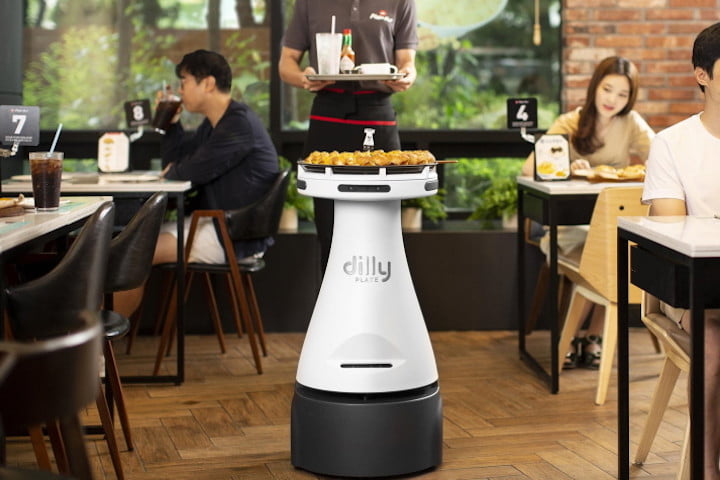
    An LG robotic waiter has made its debut at a local restaurant in Seoul.

    The LG CLOi ServeBot comes with indoor autonomous driving technology and an obstacle avoidance system so it doesn’t crash into furniture, customers or colleagues.

    The robot is capable of delivering food to the table where customers are seated as well as returning the dishes after the customers finish their meal.

    The robot has been put to work at CJ Foodville’s Cheiljemyunso restaurant in Seoul Station.

    The LG robotic waiter – called CLOi ServeBot – avoids obstacles with a voice message saying, “I’m sorry, may I please go through?”

    It also plays a song while moving to help prevent collisions with customers by making them aware of its presence.

  • LG TV lets you shop fashion you see in TV shows

    LG TV lets you shop fashion you see in TV shows

    Video commerce firm TheTake has partnered with smart TV manufacturer LG Electronics and a range of media companies to allow viewers to “shop shows” for fashion, accessories, homeware, tech devices and even menu and recipe items.

    Beginning this spring, owners of LG’s webOS Smart TVs will be able to purchase hundreds of different products identified and tagged by TheTake’s proprietary technology, which has scanned and identified hundreds of items per television episode and film.

    “Shoppable video has been talked about since the days of Rachel’s sweater on ‘Friends’,” said TheTake co-founder and CEO Tyler Cooper. “Previous solutions haven’t addressed the long-tail opportunity where each individual viewer wants to shop for something different. Shoppable video isn’t just about Rachel’s sweater, but also Chandler’s jacket, Joey’s sunglasses, Monica’s couch and so on. To address the full breadth of consumer interest, we leverage machine learning to make more than 500 products shoppable in a given episode of television. We’re excited to bring our AI-powered solution to viewers with LG and our various content partners.”

    With a record amount of TV content produced last year, TheTake’s machine-learning algorithms enable product identification and tagging at scale. TheTake’s technology can currently identify several hundred million products from thousands of retail partners when and where they appear in various TV episodes and movies.

    “The ability to seamlessly shop for the items we see in our favorite shows and movies is something we’ve long wanted to bring to LG smart TV users,” said LG Electronics US head of home entertainment brand marketing Michelle Fernandez. “Now, in partnership with TheTake, we’re introducing the feature on LG’s 2020 smart TVs for the easiest and most consumer-friendly experience for shopping the looks from TV and movies.”

    TheTake’s AI feature will be available on all 2020 LG OLED, LG NanoCell and UHD smart TV models installed with the webOS smart TV platform. TheTake has negotiated an agreement with a large US MVPD to roll out the technology across millions of set-top boxes later this year. And TheTake has also partnered with WarnerMedia, A+E Networks, Crown Media Family Networks, NBC Universal and others to roll out the technology over their various channels throughout the year.