Retail News CRM

Tag: Li-Ning

  • Sportswear retailer Li Ning eyes in-store coffee brand

    Sportswear retailer Li Ning eyes in-store coffee brand

    As coffee gradually penetrates Chinese people’s daily life in recent years, some none-catering companies are starting to utilize the potential of this newly booming industry.

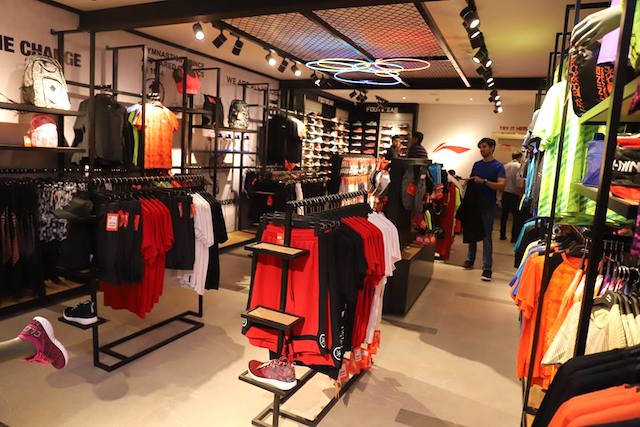
    Sportswear brand Li-Ning bursts into the coffee industry this year with Ning Coffee landing in its several offline stores in Beijing, Xiamen and some areas in Guangdong province.

    Li-Ning said it hopes to improve customers’ comfort level when shopping by optimizing its in-store services.

    In early February, China Post opened its first cafe in Xiamen, Fujian province, and will continue to open more stores in Beijing and Shanghai.

    Tongrentang, a traditional Chinese medicine pharmacy with a history dating back over 350 years, opened a shop featuring herbal coffee in 2020.

    According to market consultancy iMedia Research, China’s coffee market totaled 381.7 billion yuan in 2021, and is expected to maintain a high-speed development with a growth rate at about 27.2 percent.

  • Li Ning products banned from the US over North Korean slave labour claim

    Li Ning products banned from the US over North Korean slave labour claim

    Merchandise manufactured by Chinese sportswear giant Li Ning has been banned from entering the US with the company accused of using North Korean labour in its supply chain.

    The US Customs and Border Protection announced on Tuesday that – under the terms of Countering America’s Adversaries Through Sanctions Act (CAATSA) – the entry of goods “mined, produced, manufactured wholly or in part by North Korean nationals or North Korean citizens anywhere in the world” is prohibited.

    However, the agency has not yet disclosed where it believes Li Ning uses the North Korean labour or in which part of the rogue state Li Ning sources products or materials.

    “CAATSA is yet another tool in CBP’s trade enforcement arsenal that allows us to uphold the fundamental value of human dignity and to ensure the goods that enter the US are free from forced labour,” said AnnMarie Highsmith, of the Office of Trade Executive Assistant Commissioner.

    Under US law, Li Ning now has 30 days to provide “clear and convincing evidence” that its merchandise was not produced with convict labour, forced labour, or indentured labour under penal sanctions in order to export its products to the US.

    Founded in 1989, Li Ning was named after a former Chinese Olympic gymnast, the brand’s founder. The company reported 4.2 per cent growth with US$2.22 billion in sales in 2020 despite the pandemic. Li-Ning was an official marketing partner of the National Basketball Association and had sponsorship deals with 10 players, including Dwayne Wade.

  • Li Ning ready to buy Clarks footwear

    Li Ning ready to buy Clarks footwear

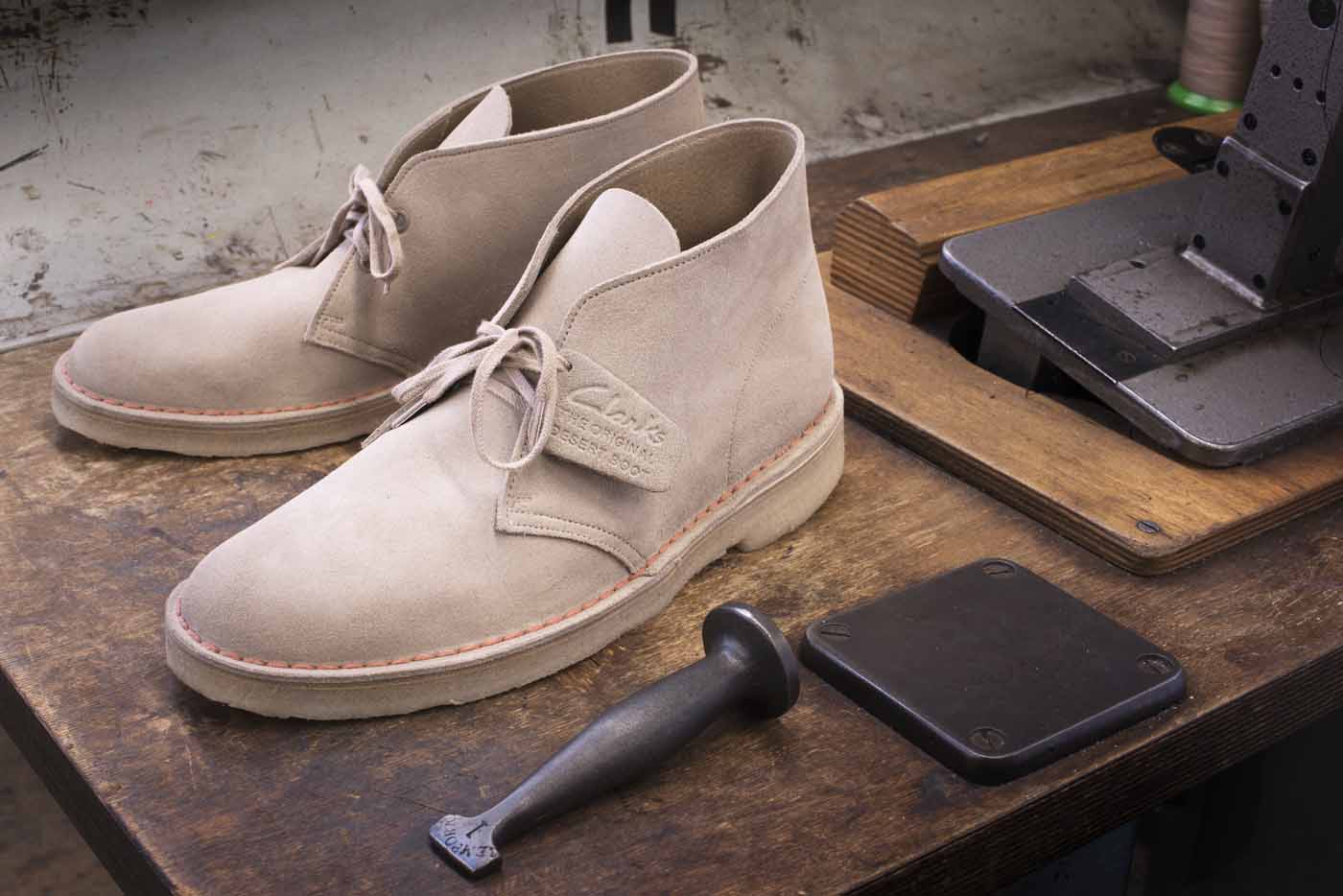
    Li Ning, the gymnast-entrepreneur who lit the Olympic flame during China’s 2008 Games, has bought control of one of Britain’s oldest shoe producers, extending the global shopping spree by Chinese companies for famous international brands. Viva China Holdings, the sports talent agency founded by Li, has agreed to pay £51 million (US$69.7 million) for 51 percent of LionRock Capital Partners QiLe Limited, the private equity firm which will own the Clarks brand, according to a filing to the Hong Kong stock exchange. The investment would give Viva China control of Clarks when LionRock completes its £100 million investment to recapitalize Clarks. Li is the non-executive chairman of LionRock.

    Based in the same village in south-western England’s Somerset county for nearly two centuries since its establishment in 1825, Clarks’ business has struggled along with the global retailing industry, as the raging coronavirus pandemic kept staff from workshops and sapped the appetite for consumption. The retailer, operating 320 stores in the UK alone, had to cut 900 jobs last May out of a global workforce of 13,000, after reporting a 2019 loss of £83 million. The company warned of deteriorating performance in 2020.

    “The challenges to our business brought on by Covid-19 have meant that we need more resources and investment to fully deliver [Clarks’] strategy and safeguard the future of our business,” said the shoemaker’s chief executive Giorgio Presca in November. “The new partnership with LionRock will provide this as well as the expertise to grow the Clarks brand in China, which remains a primary opportunity.”

    Li’s purchase of Clarks follows the acquisitions of dozens of global sports brands by Anta Sports, Xtep, and 361 Degrees International, which make up China’s four largest sportswear producers along with Li’s eponymous brand.

    Anta’s brands cover Fila, and Japan’s Descente, as well as an investment in the Finnish company Amer, which owns multiple brands, from Atomic skis to Salomon snowboards, Arc’teryx outdoor gear to Mavic bicycle wheels and Suunto sports watches.

    Xtep’s stable of brands now includes the hiking brand Merrell, leisure brand Hush Puppies, and running specialist Saucony, as well as the leisure brands K-Swiss, Palladium, and Supra.

    “Clarks is one of the world‘s most recognized consumer names,” LionRock’s founder and managing director Daniel Tseung said in November. “Our investment will not only strengthen Clarks’ position as one of the world’s most recognized brands but also allow growth into key emerging markets.

    Li owns a 92.91 percent of Viva China, which was established in 2009, according to its interim report for 2020.

    The price tag for Clarks would be set off against an equivalent amount of £54 million that Viva China lent to LionRock Capital last September, according to the statement on Friday.

    Shares of Viva China fell by 1.5 percent to HK$0.65 in Hong Kong after the announcement.
  • Li Ning founder bids to acquire Bossini

    Li Ning founder bids to acquire Bossini

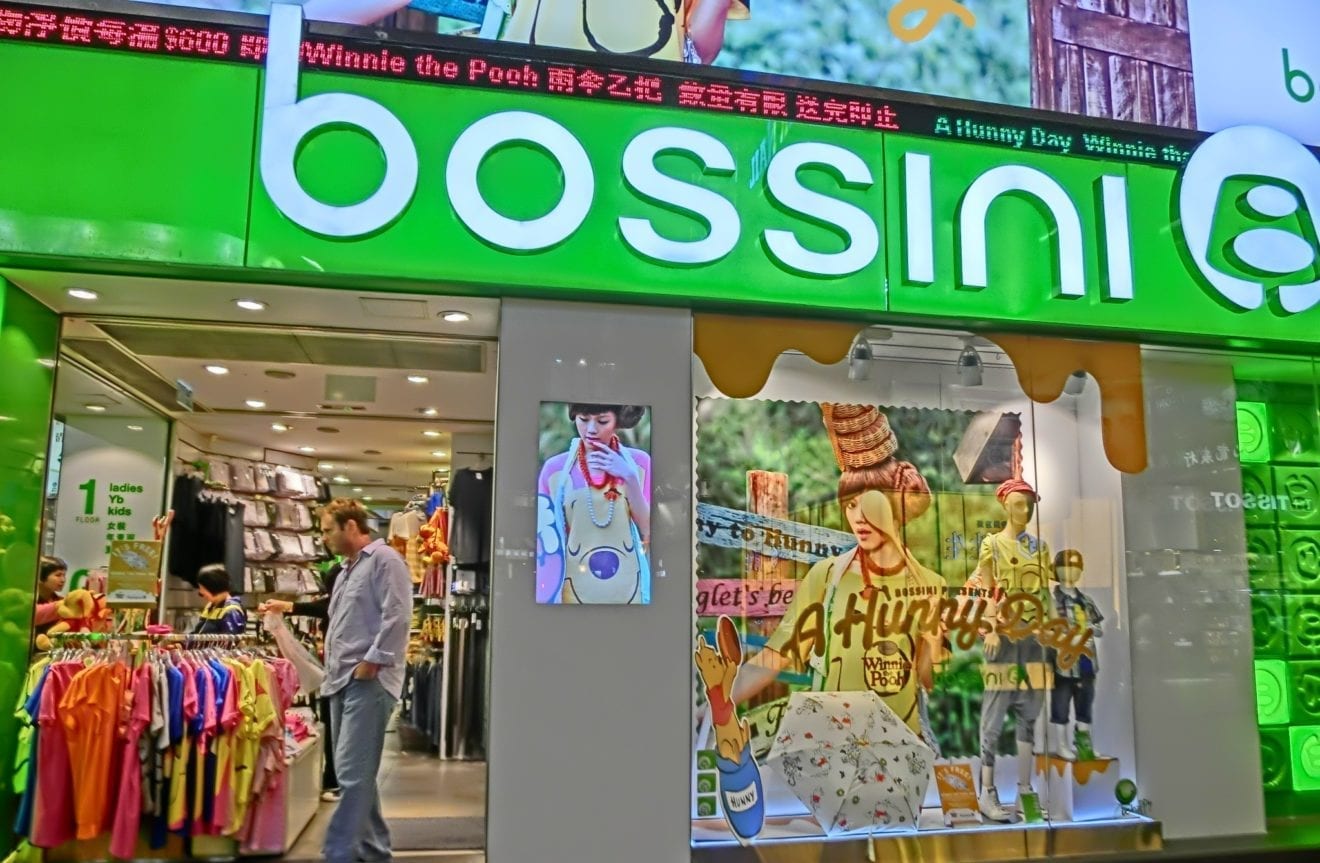
    A Chinese company controlled by Li Ning plans to buy a controlling stake in Hong Kong-listed apparel group Bossini, with plans to expand the business in Mainland China.

    A venture called Viva China will buy 1.09 billion shares in Bossini, paying just HK$46.6 million (US$6 million) for 66.6 percent of Bossini’s issued capital, effectively buying out the family interests of Bossini’s founder Law Ting-pong. After that deal is concluded, the buyer is required under Hong Kong stock exchange rules to offer to buy out the remaining shareholders, which would lead to the company’s privatization. However, in a stock-exchange filing, Viva China said it intends to maintain the company’s listing.

    The offer for Bossini’s shares represents a discount of 71 percent to the 14.8 cents Bossini shares last traded at and an 87.39-per-cent discount to its December net asset value of $560.2 million. The offer reflects “the deteriorating financial performance of Bossini Group and its widening loss in the latest financial years (2018 net loss of $29 million; 2019 net loss of $139.1 million),” according to the filing. A further loss is expected in the current trading year, with the company recording a $93 million deficit in the first half.

    Viva China Group is principally engaged in sports competition, event production and facilities

    management, esports, sports-talent management and last year expanded into the development, design, and sale of sports, health, and leisure consumables. As part of that plan, the company has been actively seeking investment in an apparel brand.

    Viva currently owns about 13.42 percent of Li Ning Company, the sports apparel retail brand established by its namesake, a former Chinese Olympiad. Li Ning facilitated an introduction between Bossini and Viva China and is effectively underwriting the purchase through companies he controls.

    Keystar, the other partner in the entity bidding for Bossini’s shares, is owned by Boso Law, a nephew of the Bossini founder, who is CEO of Laws Fashion Group.

    Viva believes there is strong potential to expand Bossini’s existing network of 180 stores in Mainland China, now largely based in Guangdong province, across the county.

    “The Viva China board will work together with the existing management of the Bossini Group to

    rejuvenate the brand of Bossini with a younger image to appeal to younger generation in the PRC. It will also renovate the stores of Bossini to enhance its layout so as to create a more immersive retail experience to the customers and capture the minds of the young generation,” the company said in the filing.

  • Li Ning profit boosts almost double

    Li Ning profit boosts almost double

    Chinese sportswear giant Li-Ning reported a massive 110-per-cent boost in profit for last year on sales up 32 percent.

    Total revenues reached ¥13.87 billion (US$127.9 million) compared with ¥10.51 billion ($96.95 million) in 2018. Net profit attributable to shareholders increased from ¥715.3 million ($6.6 million) to ¥1.5 billion ($13.8 million).

    CEO and executive chairman Li Ning, said the result reflected the company’s strategy of creating and enhancing the brand’s “experience value”.

    “We have adopted diversified strategies and approaches to consolidate the advantages of online and offline and also made use of digital marketing to further promote our engagement with different consumer groups and hence enhance the image and value of the Li-Ning brand.”

    The former Olympian said throughout last year the company steadily improved profitability and operational efficiency.

    The group improved its gross profit margin by a whole percentage point to 49.1 percent.

    “The increase in gross profit margin was mainly attributable to the group providing a higher percentage of tag price on delivery to franchised distributors due to the increasing brand recognition, and there was better sales discount on both new and old products in self-operated channels, while the tag-cost-ratio further improved,” the company said.

    Last year, Li Ning continued to focus on five core categories: basketball, running, training, badminton and sports casual.

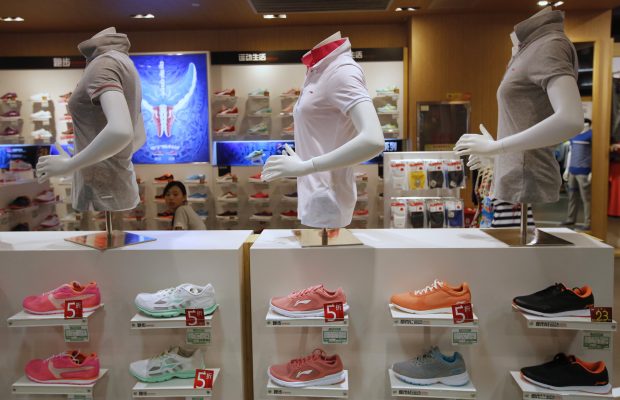
    At the customer front, Li Ning opened full-category flagship stores and China Li-Ning stores in shopping malls, while actively exploring new channel types.

    “To enhance channel efficiency and optimize store structures, the company continued to accelerate the closure of loss-making stores, as well as upgrade and improve low-efficiency stores.”

    The company ended the year with 6449 Li Ning points of sale in Mainland China, a net increase of 105 for the year, along with 1101 Li-Ning Young stores, a net increase of 308.

  • Global athleisure wear market expect strong growth numbers

    Global athleisure wear market expect strong growth numbers

    Consumer desire for a multifunctional wardrobe is set to continue driving the global athleisure wear market, according to data and analytics research group GlobalData.

    Over the last two years, the athleisure trend has risen as demand for comfort, performance and style has driven the need for a multifunctional wardrobe. 68 percent of consumers who purchased sports clothing for exercise also wore such items for eating out or shopping.

    The firm forecasts that the global athleisure wear market will rise 9 percent this year and will continue to outperform the total clothing and footwear market beyond their 2023 forecast period.

    “Over the next five years, the sportswear market will be one of the leading retail sectors,” said GlobalData principal retail analyst Honor Strachan. “Activewear brands are selling consumers a lifestyle, and fashion retailers are leveraging their style credentials to produce affordable fitness ranges to sell alongside core casual and formalwear collections.”

    In the UK, 20 percent of consumers purchased sports clothing specifically for leisure activities and free time, not to exercise in.

    “This willingness to pair sportswear with core wardrobe pieces has opened sportswear brands up to new audiences and allowed them to diversify into new product areas,” said Strachan, “boosting their share of the global clothing & footwear market.”

    While fashion trends and influencers have driven the success of the global athleisure wear market , the sustainability movement will continue to support the desire for a multifunctional wardrobe. Consumers are purchasing more consciously and reducing spend on fast fashion, playing into the hands of those retailers and brands that can showcase the versatility of their items, as well as the durability and quality.

    Moreover, increasing consumer appetite for comfort has also fuelled sales of activewear and trainers with brands utilizing their technical expertise in ensuring products offer freedom of movement, aid temperature and sweat control, shape the body and provide support. These qualities have filtered into consumers’ everyday wear and not just when they are at the gym.

    Adoption of the athleisure trend in much of Asia has been slower, so international and national brands are leveraging social media, third-party selling platforms and brand ambassadors to sell the appeal of having a sports and street-influenced wardrobe.

    “Chinese brand Li-Ning has exploited its credentials as a sports manufacturer to produce high fashion casualwear which can be worn for training or leisure,” concluded Strachan, “while Nike’s instore and online outfit styling provides inspiration on how to wear pieces for multiple uses encouraging consumers in China, Taiwan, South Korea, and Japan to incorporate sportswear into their everyday wardrobes.”

  • Li Ning issues positive-profit alert

    Li Ning issues positive-profit alert

    Li Ning has issued a positive-profit alert after a preliminary review of its half-year results.

    The alert bodes well for the company which has emerged from a troubling era after its founder, Li Ning himself, reasserted control of the business as interim CEO.

    Last year, the company’s first-half profit soared 42 per cent as the effects of the long-term restructure continued to pay dividends. This year is shaping up to be even better with Li Ning saying profit attributable to shareholders will be no less than RMB440 million (US$63.9 million), considerably higher than the RMB268.6 million ($39 million) for the corresponding period last year.

    Li Ning said the improvement was due to increased profit from continuing operations of not less than RMB240 million thanks to higher sales and a stronger operating margin.

    A one-off non-operating income (mainly derived from investments) of not less than RMB200 million also contributed to this year’s result.

    With the half year not yet over, the figures are only provisional. The company expects to release results in August.

  • Li-Ning X EDG Joint Apparel Anounced

    Li-Ning X EDG Joint Apparel Anounced

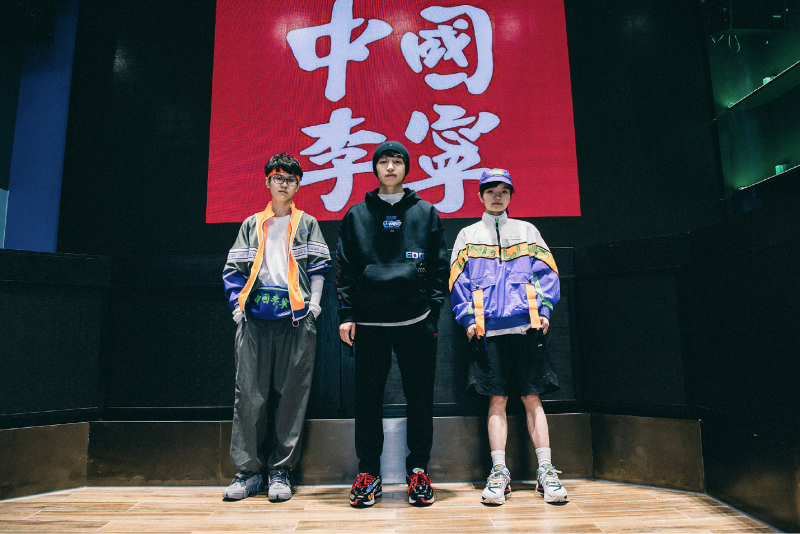
    Chinese sports apparel brand Li-Ning has released a collaboration with esports organisation Edward Gaming (EDG). The Li-Ning X EDG apparel line, which includes hoodies, jackets, tracksuits, and shoes, is now selling at its retail location in Shanghai’s Daning shopping complex.

    Li-Ning has become one of China’s largest sportswear brands, having signed multiple sponsorship deals with international-league athletes. EDG is best known for its League of Legends team, which competed in the world gaming championship earlier this year. It closed a funding round of close to RMB100 million (US$15.7 million) last May.

  • Li-Ning launches outlet in Lahore Pakistan

    Li-Ning launches outlet in Lahore Pakistan

    Li-Ning Pakistan has made its debut with a flagship in the capital city of Lahore.

    The Chinese sportswear and accessories giant says the new Gulberg flagship, opened late last month, signals a nationwide expansion in the territory following the introduction of Li-Ning products in resellers earlier this year.

    Pakistan’s international badminton champion Mahoor Shehzad has been made the face of the brand in this market.

    Li-Ning was founded by its namesake, a prominent Chinese gold medallist athlete in 1990, before becoming one of the world’s largest sports apparel brands.

    Li-Ning operates more than 6400 stores and outlets worldwide.

  • Li-Ning showing positive margin number

    Li-Ning showing positive margin number

    Stronger margins helped Chinese sportswear brand Li-Ning boost profit attributable to shareholders by 56 per cent last year, to RMB515 million (US$82 million).

    The company says sales rose 11 per cent to RMB4.176 billion and the net profit margin from 4.1 per cent to 5.8 per cent, with both brick-and-mortar sales and online turnover rising. E-commerce now accounts for 19 per cent of total sales of its core brand.

    Li-Ning is coming to the end of a major business restructure and brand repositioning which has resulted in shorter product life cycles, reduced in-store inventories and – after widespread discounting and buy-back programs to reduce the excess stock – stronger margins.

    Last year, the company showed the results of placing more emphasis on sports research and investment in product research and development to design and provide professional products to athletes and sports enthusiasts.

    “Incessant imagination, on the other hand, is driving Li-Ning to be more trend-setting by integrating fashion, entertainment and leisure elements with professional sports, therefore creating more professional and stylish products and sports experience for sports enthusiasts and life enjoyers,” the company said in its earnings statement.

    “To enhance retail capability, we are dedicated to enhancing the precision of our product planning and optimising the supply model, so as to satisfy end-user demands in a ‘swift + precise’ way. As for retail stores, we upheld the consumer-oriented approach by enhancing and re-shaping retail experience at stores constantly.”

    As at the end of last year, Li-Ning had 6262 points of sale in China, a net decrease of 178 during the year, excluding its Li-Ning Young channel, which now has 173 stores across 26 mainland provinces.

    “The group has taken continuous initiatives to refine channel structure and raise channel efficiency by implementing various measures including closing down and renovating inefficient and loss-making stores and opening highly efficient stores and key experience-concept stores,” the company said. “During the year, the overall retail sell-through registered a high-single digit growth, with product discount rate and sell-out rate further improved.”

    Li-Ning says competition in the sports-casual market is still intense.

    Founder and executive chairman, Li Ning himself, said the robust development of the sports industry brings new opportunities as well as challenges to the future.

    “We foresee the consumption structure of consumers to be transformed toward a more refined and mature dimension while the influence of brand power and brand value deepened. Looking forward, we will continue to devote major resources into sports knowledge learning, technological research and development and Li-Ning brand experience development, proactively exploring and broadening room for business development.”

  • Li Ning e-commerce sales leap 90pc

    Li Ning e-commerce sales leap 90pc

    Li Ning e-commerce sales soared 90 per cent last year, driving an overall 13 per cent gain.

    The Chinese sportswear company closed the year with CNY8.015 billion (US$1.165 billion) in sales, while its gross margin grew 1.2 points to 46.2 per cent. Its net income also increased, reaching US$144.5 million, compared to $116.2 million the previous year.

    Footwear again led sales, up 15.7 per cent to $569.378 million, while apparel sales rose 12.7 per cent to $512.875 million and equipment/accessories followed with 4.9 per cent growth to $67.369 million.

    In contrast, sales for third-party brands such as Aigle, Kason and Lotto, slumped by 23.6 per cent to $11.957 million.
    Internationally, sales for the Li Ning brand itself grew by 36.4 per cent, reaching $29.356 million – just 2.6 per cent of the brand’s overall revenue.

    At December 31, Li Ning had 6440 stores, up 5 per cent on the previous year. These comprise 4829 franchised stores (up 4.6 per cent) and 1611 (up 6.3 per cent) run directly.

    In its annual report, the company says that while its business covers 44 countries, it believes that developing Asian countries will be crucial. “Cross-border e-commerce will remain our international team’s main focus this year.”

  • Chinese sports brands back in the race

    Chinese sports brands back in the race

    A government-backed campaign to encourage healthy living is helping give Chinese sports brands traction again in the domestic consumer market.

    After three tough years with the slowing economy and over-expansion following the Beijing Olympics in 2008, the brands are ready to compete again, thanks to cutbacks in store networks and more choice in online sales channels.

    When Beijing was preparing to host the Olympics, sportswear companies began to expand aggressively, with leading brands adding nearly 1000 points-of-sale each every year between 2007 and 2011, according to Hong Kong brokerage and investment group CLSA analyst Dawei Feng.

    However, sales were undermined by cheap knock-offs and competition from expanding overseas fashion chains such as H&M, Uniqlo and Zara.

    Between 2012 and 2013, China’s biggest sports brand Anta closed 900 shops across the country. Also cutting stores from 8255 to 6133, Li Ning became profitable last year after three years of losses.

    Anta has been working with its stores on marketing, says Bloomberg Intelligence analyst Catherine Lim. It also started a children’s brand after China scrapped its one-child policy.

    Anta, which holds distribution rights to the Fila brand in China, is the official sportswear sponsor of the Chinese Olympic Committee.

    China’s five publicly traded sportswear companies have a combined market value of about $9.4 billion, or less than a 10th of Nike, the world’s largest sporting-goods maker.

  • Li Ning skips out of the red

    Li Ning skips out of the red

    Thanks to a health boom on the mainland, Chinese sportswear brand Li Ning has skipped out of the red to turn a modest profit after three years of losses.

    For its latest financial year, it had a net profit of Rmb14 million (US$2.2 million), reversing from a Rmb781 million loss in 2014. Revenue grew 17 per cent to nearly Rmb7.1 billion.

    Over the past three years, the brand has restructured, shedding 20 per cent of its inventory, closing thousands of underperforming stores and adding more than 300 directly run outlets. It also increased its eCommerce inventory.

    In a filing with the Hong Kong stock exchange, Li Ning says retail, wholesale and eCommerce outlets all achieved double-digit revenue growth last year.

    “Supportive national policies stood the sportswear industry in good stead,” says the company. “The initiative to lead an eco-friendly life has deeply implanted the idea of pursuing a healthy lifestyle in the hearts of people.”

    Li Ning is backed by private equity group TPG Capital and Singapore sovereign wealth fund GIC. The company was founded by Chinese gymnast Li Ning, who won three gold, two silver and one bronze medal at the Olympic Games in Los Angeles in 1984. Following his retirement, he set up the company in 1990, selling footwear, apparel, accessories and equipment for sport and leisure.

  • China’s Li Ning on track to end bad run

    China’s Li Ning on track to end bad run

    Li Ning, the struggling Chinese sportswear company that is one of the mainland’s best known brands, says it will break even for 2015, leaving behind three years of annual losses.

    In a filing to the Hong Kong stock exchange, the company said it expected to “record an approximate break-even in terms of profit and loss attributable to the equity holders” in the year that ended December 31, “principally due to an increase in both the sales revenue and gross profit of the group and a decrease in expense ratio”.

    Li Ning has spent most of the past three years trying to restructure its business, clearing out inventory built up by third-party distributors, closing thousands of underperforming stores and increasing the percentage of direct-run outlets.

    The brand, which has struggled to shake off the image of a producer of cheap sports shoes that are little more than western knock-offs, announced a net loss of Rmb781m ($119m) for 2014, its third consecutive annual loss. But it reported signs at that time of a recovery in sales growth.

    The company on Wednesday attributed the improved performance to enhanced direct retail operating efficiency and long-term relationships with channel partners, and expanded ecommerce business.

    “It looks like their efforts to shut down unprofitable stores and focus on inventory with better sales and better margins are finally paying off,” said Ben Cavender of China Market Research in Shanghai.

    A recovery in the broader China sportswear market also appears to have played a role, retail analysts said.

    Ma Gang, a China-based footwear and apparel analyst, noted that “the whole industry is now on the upturn . . . and Li Ning has done a lot of work [to stem its losses].” But “whether the company will start to make profit now depends on its future strategy, including whether it keeps opening more stores,” he added.

    Chen Ke, Shanghai-based retail partner at Roland Berger, projects that the Chinese sportswear market will “maintain a 10 per cent growth rate in the next three years” while Li Ning itself “has improved efficiency after a shift . . . to opening more of its own stores”.

    But Mr Cavender pointed out that Li Ning “is still lagging behind some of their major domestic and international competitors and it’s unclear whether they have enough exciting products in place to make a strong run in 2016”.

    Anta, Li Ning’s top domestic sportswear rival, said net profit for the first half of 2015 rose 20 per cent from the same period a year earlier.

    Shares in Li Ning closed up nearly 7 per cent on Wednesday in Hong Kong, in a broader market down almost 1 per cent.


  • Li Ning sells stake in Double Happiness

    Li Ning sells stake in Double Happiness

    Sportswear maker and retailer Li Ning has sold a 10 per cent stake in the Double Happiness table tennis business to Viva China.

    The deal is worth RMB 125 million in cash and will increase Li Ning’s net cash position by 25 per cent relative to the reported interim net cash position.

    Li Ning says it expects an additional disposal gain in excess of RMB200 million, in part from the revaluation of the company’s remaining 47.5 per cent stake in Double Happiness.

    “The net proceeds will be mainly used for investment in product development of the five core sports categories under Li-Ning brand and further expansion of the company’s distribution channels, and general corporate purposes,” the company said in a statement.

    “The transaction increases transparency for investors with respect to Li Ning’s core business through the deconsolidation of Double Happiness. It will also allow the management of Li-Ning and Double Happiness brands to better focus on their respective businesses.”

    After the settlement, Li Ning will remain the largest shareholder in Double Happiness, but will no longer have control of the business.

    Terence Tsang, Li Ning’s CFO, said Double Happiness is one of the top performing brands for the company.

    “This transaction will help unlock its embedded value and provide it with flexibility to develop its strategy. At the same time, Li Ning’s improved cash position will boost our liquidity further so that we are better positioned to capture any upcoming business opportunities in terms of product development and distribution channel expansion.”