Embattled Chinese sportswear brand Li-Ning is continuing to rebuild its massive Chinese store network as it works to return to profitability.
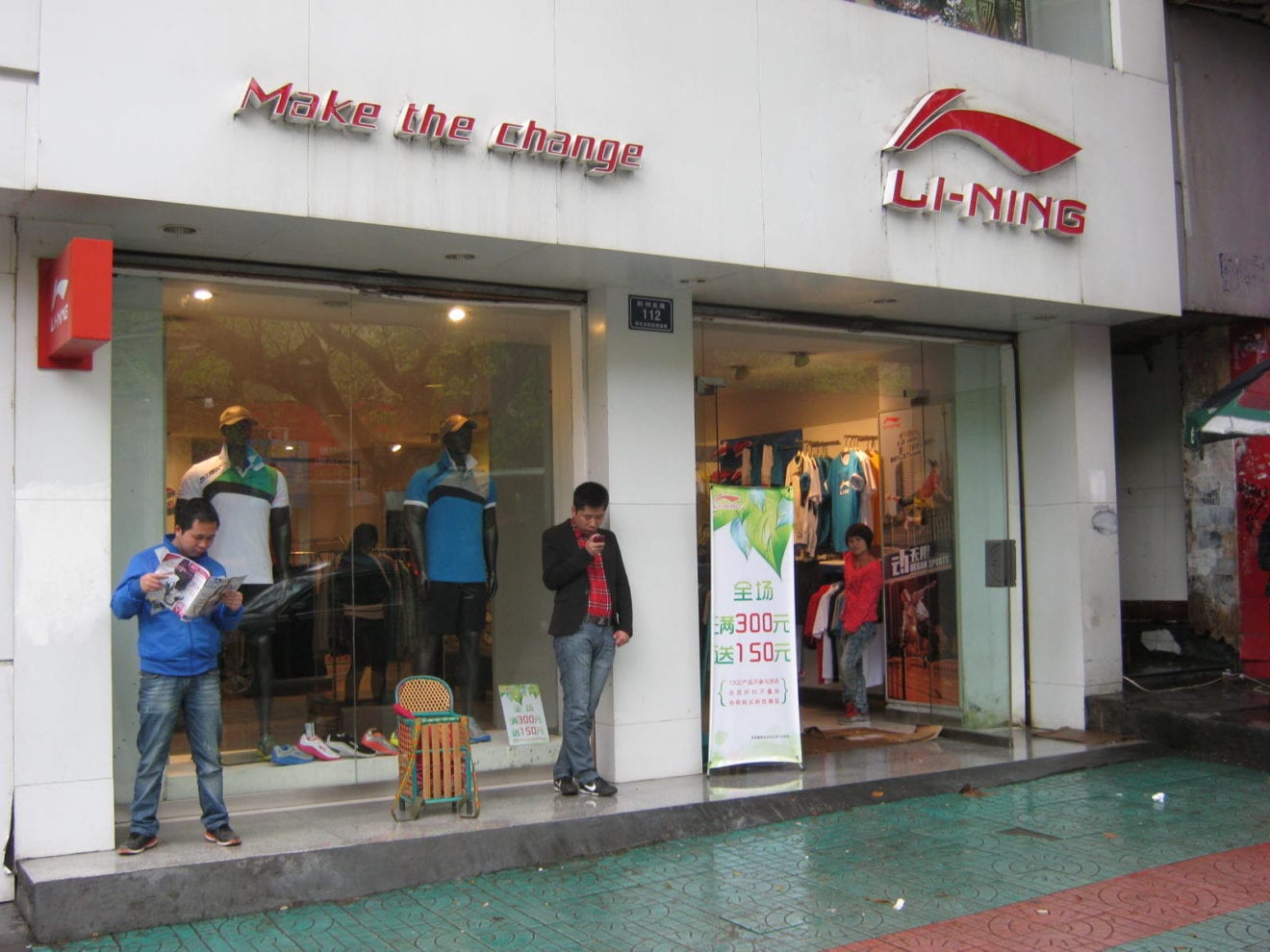
The company ended the year with 5626 stores, a net decrease of 289. But it boosted its company-operated store network by nearly 30 per cent as it continued to cull franchisees across the nation.
Li-Ning expanded its own network from 926 at the end of 2013 to 1201, and culled its franchisees by 565, or 11 per cent, 4424.
“In 2014, we devoted our efforts in improving retail capability among all channels,” the company said in its earnings statement.
“We focused on strengthening management on merchandising, retail execution, channel expansion and innovations. The higher overall efficiency as well as fast response to market and consumer appeals laid a solid ground for better retail results.”
Li-Ning reported a net revenue growth of 16 per cent to RMB6,728 million (US$1.085 billion) for the full year, but said its second half revenue growth rate was a higher 23 per cent.
It reported a pretax loss of RMB323 million ($52 million), although made a second half profit of RMB28 million ($4.5 million), suggesting the turnaround strategy is beginning to work at last.
Much of the rebuilding effort is focused on its retail strategy in the sportswear market, a retail category which is saturated with international and local brands and an oversupply of retailers, a situation dating back to the national sports craze fuelled by the Beijing Olympics in 2008.
Li-Ning says it has established a management team to standardise store opening and operations to ensure they become profitable within six to nine months.
“In 2015, we will continue to review some of the markets we lost while seeking opportunities to open new stores. One of the challenges we are still facing today is that many of our sub-distributors are single-store operators with low productivity and poor retail operations. Many of them have an outdated inventory mix which makes the store look stale and affects its revenue-generating capability, resulting in the threat of operating loss and store closure. In 2014, we identified multiple approaches to address sub-distributor revival, which have made some preliminary positive results.”
Behind the scenes, the Li-Ning retail revamp has seen a variety of processes implemented to improve store performance.
Its sales department worked closely with its product category department and distributors to classify stores by attributes of consumer needs, in order to drive better store assortment planning, which has greatly improved its order accuracy and effectiveness.
“We also started our efforts in making further segmentation and differentiation of commercial districts to align store assortment planning with product categories. Stores were grouped for management by city tier, commercial zone, consumer segments, sports/sports life relativity, etc. based on our product category strategy.”
A new ‘Resources Management Platform’ monitors and optimises inventory resources, helping predict forward order matching and in identifying warehouses, distributors and subsidiaries which have inventory excesses or shortfalls. That enables decisions on order rebalancing, merchandise allocation, sales promotion and clearance to be more accurate.
“We have been able to catch the opportunity to replenish the bestsellers since 2014 Q2 to distributors and sub-distributors with out-of-stock situation. Throughout the year, we also intentionally offloaded the seasonal slow- moving products to discount stores, to clear up the space in regular stores for the bestsellers.”
Li-Ning’s sales promotion strategy has moved actual retail prices more in line with the market needs and authorisation for price changes has been delegated to regional level to allow a more flexible response to competitors.
“These reforms on retail operation resulted in strong growth of more than 18 per cent in our current season product sales in regular stores in 2014, with over 80 per cent of our sales driven by our current and prior season products. Retail discount was improved across the stores, which helped increase gross margin of stores and profitability of distributors. Driven by the improving retail efficiency, our same store growth turned positive in the second half of the year and recorded a high single-digit growth in the fourth quarter.”
Li-Ning also focused on expanding its LNC (Li-Ning Collection) retail brand, which focuses on premium products in the sports life category to expand the middle and premium consumer market. The stores offer a mixture of cross-category products originated by Korean designers, with the endorsement of Jessica (a former member of the Korean pop group Girls’ Generation), which attracted fashion-minded consumers. More than 10 LNC stores have been opened which contributed sound results in the fashion mall channel, and more new stores are scheduled in 2015.
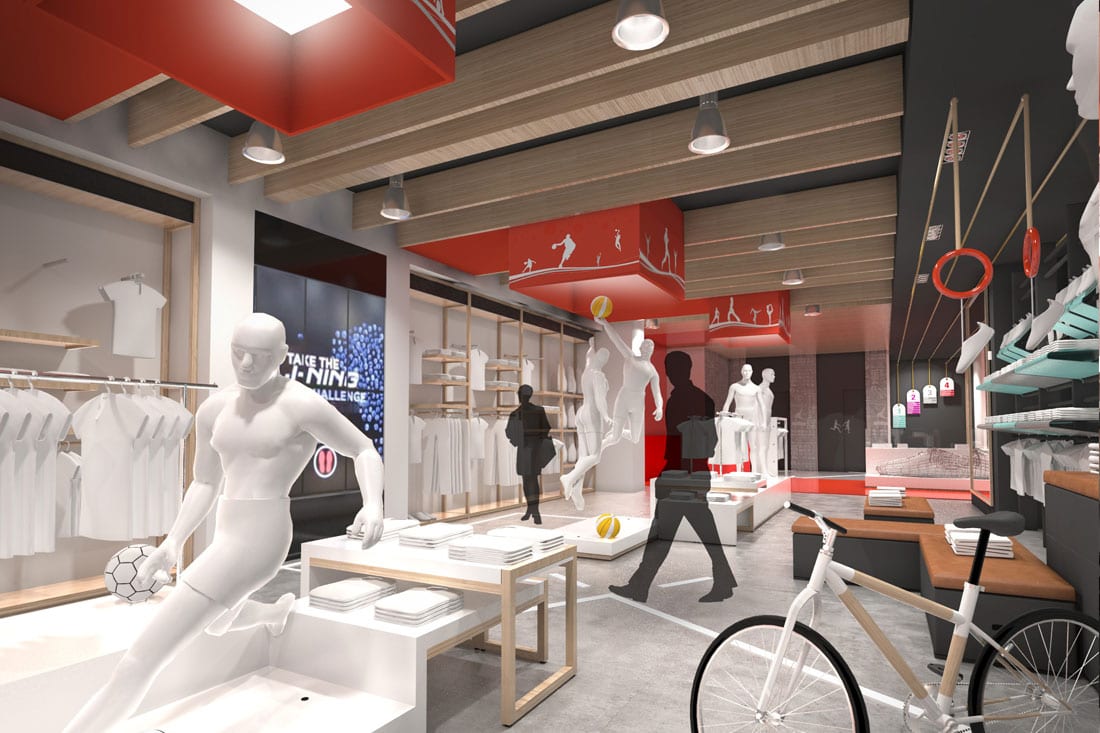
Li-Ning also worked with Korean Visual Merchandising Display specialists ESPEC to revamp its store look and visual displays. The result is a seventh generation store format which highlights sports attributes and introduces more fashion elements.
“Currently, we have four stores of the seventh generation in operation. We believe that, fuelled by the new store image, our retail results will be positioned for effective improvement and enhancement.”
Li-Ning says its eCommerce business posted revenue growth of 48 per cent in 2014.
“Our flagship stores on major eCommerce platforms such as Tmall and JD have more than doubled in size, with wider and better assortment and excellent operations.
On the key November 11 trading day, Li-Ning recorded sales of RMB77 million ($12.4 million), ranking No. 2 in the sports/outdoor category and overtaking both Nike and Adidas.
In 2015, the company plans to further enhance its presence in the fast growing mobile channel, strengthen its digital innovations, build up an ‘O2O’ eco-system and customer relationship management platform and “provide a world-class Omni-channel shopping experience for customers”.